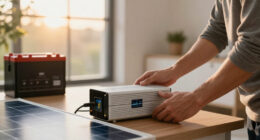
Home energy is no longer just about what arrives through the utility meter. Solar panels, portable power stations, battery backups, and fuel-powered generators give households more ways to prepare for outages, manage essential loads, and take electricity beyond the grid. The challenge is choosing equipment that works as a coordinated system rather than collecting products that do not match your actual needs.
This hub explains the main power options, how they fit together, and what to consider before buying. Whether you want basic emergency backup, dependable power for medical equipment, an RV energy system, or an off-grid job-site setup, the right starting point is the same: identify what must run, how much energy it uses, and how you will recharge or refuel your system.
Understand the Building Blocks of Home and Portable Power
Most backup and off-grid systems combine an energy source, a way to store energy, and equipment that delivers usable electricity. Some products combine multiple functions, but understanding each role makes systems easier to compare.
Solar panels
Solar panels generate electricity when sufficient light is available. They do not usually provide stable, continuous power to household devices on their own. Their output must pass through suitable charging or conversion equipment, and energy storage is typically needed when power must remain available after sunlight fades.
Panel output depends on conditions such as orientation, shading, temperature, weather, and available daylight. A panel’s labeled wattage is therefore a useful comparison point, not a promise of constant real-world production.
Portable power stations
A portable power station combines a rechargeable battery, charging electronics, and output ports in one enclosure. Depending on the model, those outputs may include household-style AC sockets, USB connections, and regulated DC ports. Power stations are quiet at the point of use and do not produce exhaust, which makes them useful around living spaces when operated according to the manufacturer’s instructions.
Battery capacity indicates how much energy the unit can store, while inverter output determines how much AC equipment it can support at once. These are separate limits. A station can have enough stored energy for a long runtime but still be unable to start a high-demand appliance, or it can offer strong output while having too little capacity for extended operation.
Battery chemistry also matters. Shoppers prioritizing cycle life and thermal stability often consider lithium iron phosphate models. The guide to portable power stations with LiFePO4 batteries is a useful next step when comparing this category.
Solar generators
The term solar generator usually describes a portable power station that can be recharged from compatible solar panels. It does not generate energy internally in the way a fuel-powered generator does. Some systems are sold as bundles, while others require panels, cables, or adapters to be selected separately.
Compatibility deserves close attention. Solar input voltage, current, connector type, and maximum accepted wattage must fall within the power station’s specifications. A larger panel array is not automatically usable if its electrical configuration exceeds those limits.
Fuel-powered inverter generators
Fuel-powered generators can supply electricity as long as suitable fuel and routine maintenance are available. Inverter generators regulate their electrical output differently from many conventional generator designs, making pure sine wave models relevant for users powering sensitive electronics.
Every combustion generator produces dangerous exhaust gases. It must be operated outdoors, far from doors, windows, vents, and occupied structures, following its manual and local safety guidance. Never run one in a home, garage, basement, shed, tent, or RV. For models designed around cleaner output for electronics, explore these portable pure sine wave inverter generators.

Portable Solar Generator 300W Portable Power Station with 60W Solar Panel
- Portable power station with solar panel: Includes 60W foldable solar panel
- High-capacity battery: 280Wh battery for multiple device charging
- Multiple outlets for devices: 2 AC, 1 DC, 4 USB ports including quick charge
As an affiliate, we earn on qualifying purchases.
As an affiliate, we earn on qualifying purchases.
Start With an Energy Audit
Choosing by battery size or peak wattage alone often leads to disappointment. Build a simple load plan before comparing equipment.
- List the devices that are genuinely essential during an outage or off-grid trip.
- Record each device’s running wattage and, where applicable, its startup or surge requirement.
- Estimate how many hours per day each device must operate.
- Note whether devices will run simultaneously or can be scheduled one at a time.
- Identify equipment that cannot tolerate an interruption.
- Decide how the backup system will be recharged during a multi-day event.
Energy use is measured over time. A device drawing 100 watts for five hours uses about 500 watt-hours. Add the expected consumption of all loads, then allow for conversion losses, standby consumption, temperature effects, and a sensible reserve. Real-world usable energy will generally be lower than the battery’s headline capacity.
Motors, compressors, pumps, and some power tools can briefly demand considerably more power when starting than while running. Check both continuous and surge output when sizing an inverter. For refrigerators, also consider cycling behavior: a compressor does not necessarily run continuously, but its duty cycle changes with ambient temperature, insulation, door openings, and thermostat settings.
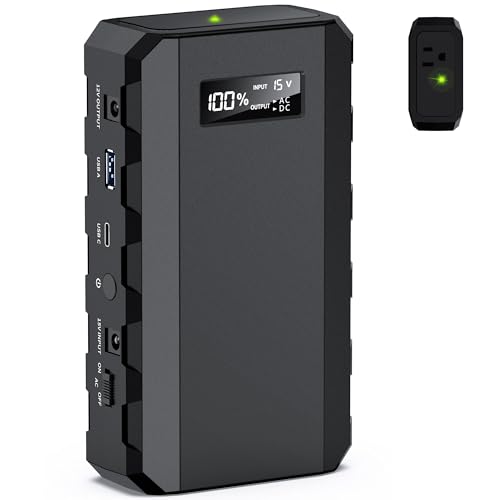
Apowking Portable Power Bank with AC Outlet, 65W Portable Laptop Charger
- High Capacity Battery: 88.8Wh 24000mAh rechargeable power bank
- Multiple Output Ports: USB-A, USB-C, DC, AC outlets for devices
- Portable and Lightweight: Slim design, 1.7 pounds for easy carrying
As an affiliate, we earn on qualifying purchases.
As an affiliate, we earn on qualifying purchases.
Plan Backup Power Around the Need
Medical and overnight equipment
Medical devices require conservative planning. For a CPAP machine, determine the exact power requirements of the prescribed unit and whether accessories such as a heated humidifier or heated tube significantly change consumption. Consider the number of nights required, charging options, battery reserve, and the consequences of an unexpected shutdown.
The comparison of solar generators for CPAP users can help narrow the field, but equipment manuals and guidance from the device manufacturer or healthcare provider should govern the final setup. Test the complete configuration before relying on it, and do not treat a consumer battery as a substitute for medically appropriate emergency planning.
Computers and remote work
Laptops are usually less demanding than heating appliances, air conditioners, or large tools, but a productive setup may also include a monitor, router, mobile hotspot, phone, and task lighting. Add the energy used by the whole workspace rather than sizing only for the laptop charger.
USB-C power delivery may reduce the need for AC conversion when the power station and laptop support compatible charging profiles. Otherwise, confirm that the inverter can supply the charger and that the expected runtime covers both work and communication needs. See the guide to solar generators for laptop charging for systems aimed at mobile computing.
Refrigeration and food protection
Keeping a compact refrigerator running can protect food, medicine, or drinks during an outage or outdoor trip. The main sizing questions are compressor startup demand, average daily energy use, ambient temperature, and how frequently the door will be opened.
Because panels and power stations must work together, a packaged system can simplify compatibility research. Start with these power station bundles for mini fridges, then verify the refrigerator’s measured consumption and starting requirements against the bundle specifications.
Whole-home priorities
Portable equipment is generally best suited to selected circuits or individual appliances unless a qualified professional has designed a broader installation. Never connect a portable generator to household wiring through an improvised cord. Backfeeding can endanger utility workers, occupants, and equipment.
If you want to power fixed home circuits, consult a licensed electrician about code-compliant transfer equipment, inlet connections, grounding considerations, and load management. Decide whether the goal is to support a few essentials or pursue a permanent battery and solar installation. Those are different projects with different budgets, permitting requirements, and maintenance responsibilities.

Kingboss 15000mAh LiFePO4 Power Bank, Small Portable Charger with Digital Display, 22.5W PD & USB-C Fast Charging, Dual Input/Output Backup Battery for Phone Travel Backup, Tablet, Watches, Headphone
- Safety with LiFePO4 Technology: Non-flammable, heat-resistant, long lifespan
- Fast Dual-Port Charging: 22.5W PD & USB-C, 0-60% in 30 min
- Real-Time Digital Display: Shows battery %, wattage, and status
As an affiliate, we earn on qualifying purchases.
As an affiliate, we earn on qualifying purchases.
Build an RV Power Strategy
RV energy planning begins with distinguishing the vehicle’s DC system from its AC loads. Lights, pumps, fans, controls, and refrigerators may operate differently depending on the RV configuration, while household outlets usually require shore power, a generator, or an inverter.
A portable power station can provide a self-contained source for devices and selected RV loads, but the connection method matters. Confirm voltage, polarity, output limits, charging behavior, and whether the RV’s converter creates unnecessary losses by charging one battery from another.
For an overview of mobile all-in-one systems, compare portable power stations for RVs. Travelers who specifically need reserve energy for the RV electrical system can also review battery backups for RV power.
Plan charging around the way you travel. Possible sources include shore power, compatible solar panels, a vehicle charging connection, or a generator. Charging speed, cable ratings, alternator limitations, campground rules, and daily driving time can all affect whether the system replenishes as quickly as it is depleted.

Jackery Solar Generator 1000 v2 and 200W Solar Panel,1070Wh,1500W AC
- Powerful AC Output: 1500W continuous, 3000W surge
- Lightweight & Portable: 23.8 lbs with foldable handle
- Fast Charging: Full charge in 1 hour via app
As an affiliate, we earn on qualifying purchases.
As an affiliate, we earn on qualifying purchases.
Power Tools and Remote Job Sites
Job-site power presents a different load profile from camping or home electronics. Saws, compressors, chargers, pumps, and other tools may have high startup demands or operate in repeated bursts. Dust, rain, vibration, heat, and frequent transport also influence equipment choice.
Create a schedule for tool use and battery charging rather than assuming every device must run simultaneously. Check continuous output, surge capacity, port arrangement, recharge time, weight, and environmental operating limits. If solar is the planned energy source, estimate whether the available panel area and daylight can replace the energy consumed during a typical workday.
The guide to solar generators for job sites provides a focused starting point for portable systems intended to support off-grid work. Always follow tool, extension-cord, and power-source safety instructions, especially in wet or exposed conditions.
Compare Systems With the Right Questions
Product comparisons become clearer when every option is judged against the same checklist:
- Does the continuous output cover the planned simultaneous loads?
- Can the inverter handle motor or compressor startup demand?
- How much usable runtime is available under the expected load?
- Which charging methods are supported, and how long might each take?
- Are solar voltage, current, wattage, and connectors compatible?
- Does the port selection match the devices without excessive adapters?
- Is the equipment practical to lift, store, ventilate, and protect?
- What maintenance, storage charge, or fuel rotation does it require?
- What protections, warranty terms, and service resources are documented?
- Can the system expand if future energy needs increase?
Bundles offer convenient component matching, while modular systems may provide more flexibility. Neither approach is universally better. The useful choice is the one that satisfies the load calculation, works with the intended charging source, and remains manageable in the setting where it will actually be used.
Create a Resilient, Safe Power Plan
A dependable energy plan includes more than hardware. Keep device manuals, charging cables, adapters, extension cords of suitable rating, and an accessible load list together. Install and maintain carbon monoxide alarms where appropriate, store batteries and fuels according to manufacturer guidance, and inspect equipment before seasonal use.
Periodically rehearse the scenario you are preparing for. Confirm that essential devices start correctly, observe actual power consumption, practice safe cable routing, and verify that your recharge plan is realistic. Batteries should be checked and maintained during storage, while fuel-powered equipment requires scheduled care and safe fuel management.
The most resilient setup may combine technologies. A battery system can cover quiet overnight loads and electronics, solar can replenish energy when conditions cooperate, and an appropriately operated generator can provide another charging source during an extended outage. The goal is not maximum capacity at any cost. It is a balanced system with known limits, safe operating procedures, and enough flexibility to keep the loads that matter running when ordinary power is unavailable.