
TL;DR
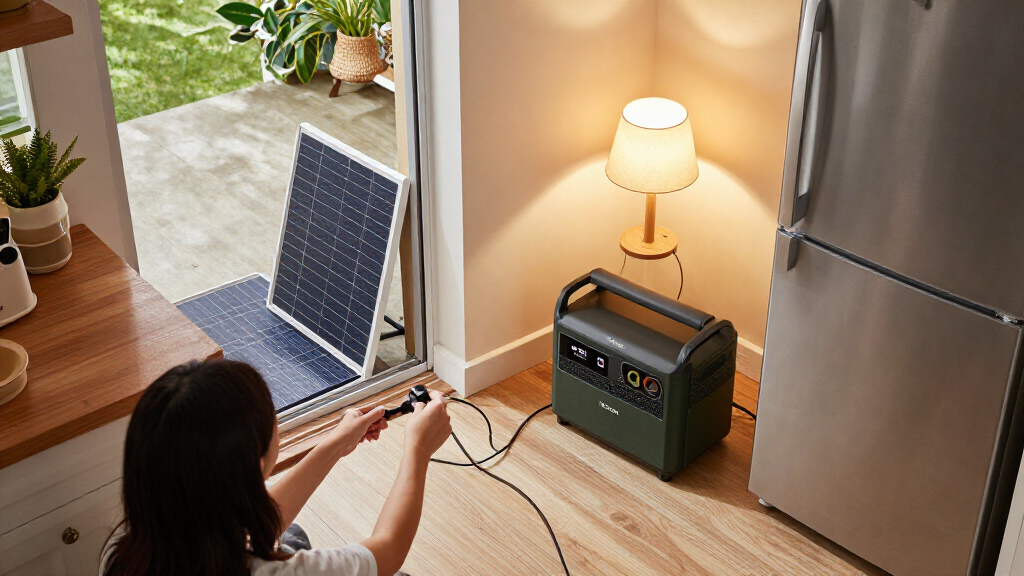
A review of EcoFlow’s DELTA 3800 Gen4 and DELTA 3000 Gen4 compares two portable 120V home-backup power stations. The 3800 offers greater capacity and battery expansion; the lighter, less expensive 3000 cannot be expanded. Both provide a 3,600W inverter, while neither supports 240V appliances such as central air or electric ranges.
A review of EcoFlow’s DELTA 3800 Gen4 and DELTA 3000 Gen4 finds that both offer 3,600W of 120V AC output, but the larger model provides more stored energy and can be expanded with extra batteries. The comparison matters to homeowners weighing outage backup against portability: the 3800 holds 3,763Wh, while the 3000 holds 3,072Wh and costs less.

Get backup power and energy gear delivered free with Prime
- Fast, free delivery on millions of items
- Prime Video, Amazon Music and more included
- Member-only deals all year
The reviewer reports that the DELTA 3800 weighs 67.5 pounds and has a rated 3,600W continuous output with a 7,200W surge rating. Its lithium iron phosphate battery is rated for 6,000 cycles to 70% capacity. The reviewer says the unit ran an outdoor freezer for four days, two hours and 46 minutes in testing, but that result reflects one test and will vary with the appliance and conditions.
The DELTA 3000 weighs 57.3 pounds and costs $400 less at the prices listed in the review. It shares the 3800’s inverter rating and outlet selection, but its battery is smaller and it cannot take additional batteries. The 3800 can be expanded to about 12kWh with two extra batteries, according to the published specifications.
Both models are listed with four 120V/20A outlets, one 120V/30A outlet, USB-C and USB-A ports, and an under-10-millisecond UPS switchover. The 3800 supports up to 2,000W of solar input, compared with 1,000W for the 3000. The review says neither model has a built-in 12V car socket; 12V output requires an optional USB-C-to-12V adapter.
Two portable power options for different backup needs
Both models deliver 3,600W of 120V output. The choice comes down to storage, expansion, weight and price.
More storage, more flexibility
The 3800 can add batteries; the 3000 cannot.
- Expandable to about 12kWh
- Supports up to 2,000W solar input
- 67.5 pounds
- Battery cannot be expanded
- Supports up to 1,000W solar input
- 57.3 pounds
What the listed prices mean
The 3000 costs less, while the 3800 offers more capacity and an expansion path.
| Model | Suggested retail | Early-bird price |
|---|---|---|
| DELTA 3800 | $2,199 | $1,699 |
| DELTA 3000 | $1,699 | $1,299 |
Check appliance needs
The shared 3,600W rating does not make either unit a whole-house backup system.
Match the voltage
Neither model supports 240V appliances such as central air or electric ranges.
Plan the connection
Check appliance requirements and consult a qualified electrician about household circuits.
Choosing Backup Power by Household Needs
The main distinction is not inverter output but how much energy a household can store and whether it may want to add capacity later. A larger battery can run selected devices for longer, depending on their power demand, while the 3800’s expansion option gives buyers a path to increase storage. The 3000’s lower weight and price may suit people who expect to use a power station occasionally or move it more often.
Neither unit is a whole-house, 240V backup system. The reviewer specifically identifies central air, well pumps and electric ranges as loads the 120V-only units cannot support. Buyers would need to check appliance requirements and the available connection method rather than assume that the stated 3,600W rating will cover every household circuit.
Products Worth Considering

Roborock Qrevo 2 Pro Robot Vacuum and Mop

Sony BRAVIA XR8B 65-Inch OLED 4K HDR Smart Google TV (K-65XR8B)

Dyson V15 Detect Cordless Stick Vacuum
As an affiliate, we earn on qualifying purchases.
How the Two Gen4 Models Differ
The review describes the DELTA 3800 as relatively light for a unit with this capacity, comparing it with EcoFlow’s earlier DELTA Pro, which it says weighed about 99 pounds and stored slightly less energy. That comparison is the reviewer’s assessment, not a standardized industry ranking. The 3800 itself has side handles but no wheels; the reviewer found it cumbersome to carry despite its lower weight.
The listed manufacturer suggested retail prices are $2,199 for the 3800 and $1,699 for the 3000. The source also lists early-bird prices of $1,699 and $1,299, respectively, through Dec. 7, 2026. It says EcoFlow is including a folding transport cart with the first 500 early-bird orders; availability and offer terms should be checked with the company. Both models are listed with a three-year warranty, extendable by two years through app registration.
“The EcoFlow DELTA 3800 Gen4 is one of the power stations I’d point most homeowners to if they want solid outage protection without wiring a battery into their house.”
— The reviewer
Limits of the Review Evidence
The source is a product review, not an independent certification of every listed specification. It does not provide the exact load or test setup behind the freezer runtime, so that result should not be treated as a guaranteed outage duration. Actual runtime depends on what is connected, how often devices cycle and operating conditions.
The source does not establish how the units perform across a range of homes or compare total system costs after accessories and optional batteries. It also does not provide a complete account of local installation requirements for connecting a power station to household circuits. The listed early-bird promotion and cart offer may change, and current stock or final eligibility is not confirmed here.
Check Loads Before Buying
Readers considering either model should compare the unit’s 120V outputs and battery capacity with the appliances they need during an outage, then check current prices, accessory availability and warranty registration terms with EcoFlow or a retailer. Anyone seeking to power household circuits should confirm the correct transfer equipment and installation requirements with a qualified electrician rather than connect a unit directly to home wiring.
The next practical question is whether the 3800’s expandable storage is worth its added cost and weight for a particular household. The 3000 is the smaller-capacity choice for buyers who do not need expansion; the 3800 is the option in this comparison for those who want to add batteries or use more solar input.
Key Questions
What is the main difference between the DELTA 3800 Gen4 and DELTA 3000 Gen4?
The 3800 stores 3,763Wh and supports battery expansion to about 12kWh, while the 3000 stores 3,072Wh and cannot be expanded. Both have a listed 3,600W continuous AC output.
Can either EcoFlow model run central air or an electric range?
The review identifies both models as 120V-only and says they cannot run central air, well pumps or electric ranges. Check each appliance’s voltage and power requirements before buying.
How much do the two power stations weigh?
The DELTA 3800 is listed at 67.5 pounds; the DELTA 3000 is 57.3 pounds. The reviewer notes that the 3800 has handles but no built-in wheels.
What are the listed prices?
The source lists suggested retail prices of $2,199 for the 3800 and $1,699 for the 3000, alongside early-bird prices of $1,699 and $1,299 through Dec. 7, 2026. Confirm current pricing and offer terms before purchase.
Source: digitaltrends.com