The best portable power stations balance usable capacity, output, recharge options, and portability for the way you plan to use them. My best overall pick is the EcoFlow DELTA 3, a versatile 1,024Wh-class option with 1,800W output; the BLUETTI AC180 stands out for buyers who want more capacity, while the Jackery Explorer 300 suits lighter trips and smaller devices. The main tradeoff is straightforward: larger stations can run more equipment for longer, but they take up more space and are harder to move. Compact models are easier to carry, yet their limited capacity can run short with power-hungry appliances. Read on for the full breakdown and help matching a station to your needs.

Get backup power and energy gear delivered free with Prime
- Fast, free delivery on millions of items
- Prime Video, Amazon Music and more included
- Member-only deals all year
Complete the kit


Key Takeaways
- The 1,024Wh class is the most balanced group in this lineup: the EcoFlow DELTA 3, Jackery Explorer 1000 v2, and Anker SOLIX C1000 Gen 2 pair useful capacity with more manageable size than the 2,000Wh-plus models.
- Capacity and output are separate buying decisions: watt-hours influence how long a station can run devices, while watts determine which devices it can power at once.
- Small stations are for lighter loads, not miniature home backup: the 288–300Wh Anker SOLIX C300 DC, BLUETTI Elite 30 V2, and Jackery Explorer 300 favor portability over long runtimes.
- Home backup shifts the shortlist toward larger units: the Jackery HomePower 3600 Plus and EcoFlow DELTA Pro offer far more capacity and output than compact camping-focused picks, with added bulk to match.
- There are close alternatives within each size tier: the Anker SOLIX C1000 and C1000 Gen 2 are both near 1,000Wh, while the Jackery Explorer 2000 v2 and Anker SOLIX S2000 sit near 2,000Wh; compare specific output, charging, and portability details before choosing.
| EF ECOFLOW RIVER 2 Pro Portable Power Station, 768Wh, 800W |  | Best for Fast Recharging | Capacity: 768Wh | Running output: 800W | Peak output: 1600W | VIEW LATEST PRICE | See Our Full Breakdown |
| Anker SOLIX C300 DC Portable Power Station, 288Wh, 300W (Renewed) |  | Best for USB-C Travel Charging | Capacity: 288Wh (90,000mAh) | Maximum output: 300W | Battery: LiFePO4 | VIEW LATEST PRICE | See Our Full Breakdown |
| Jackery HomePower 3600 Plus Portable Power Station, 3584Wh, 3600W |  | Best for Wheeled High-Capacity Backup | Battery capacity: 3584Wh | AC output: 3600W | Parallel output: 7200W | VIEW LATEST PRICE | See Our Full Breakdown |
| EF ECOFLOW DELTA Pro Portable Power Station, 3600Wh, 3600W AC Output | 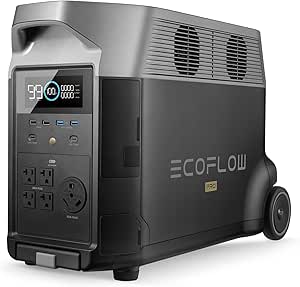 | Best for Expandable Home Backup | Battery capacity: 3600Wh LFP | Running wattage: 3600W | Maximum output: 4500W with X-Boost; 7200W when pairing two units | VIEW LATEST PRICE | See Our Full Breakdown |
| Anker SOLIX C1000 Portable Power Station (1,056Wh) |  | Best Compact 1kWh High-Output Pick | Capacity: 1,056Wh | Battery: LiFePO4 | Continuous output: 1,800W | VIEW LATEST PRICE | See Our Full Breakdown |
| BLUETTI AC180 Portable Power Station, 1152Wh LiFePO4 Battery, 1800W |  | Best for Versatile Home Backup | Battery capacity: 1,152Wh | Battery chemistry: LiFePO4 | Boost output: 2,700W | VIEW LATEST PRICE | See Our Full Breakdown |
| BLUETTI Elite 30 V2 Portable Power Station, 288Wh, 600W |  | Best Compact Power Station | Capacity: 288Wh | Battery chemistry: LFP | Continuous output: 600W | VIEW LATEST PRICE | See Our Full Breakdown |
| Anker SOLIX S2000 Portable Power Station, 2,010Wh, 1,500W |  | Best for Extended Runtime | Battery capacity: 2,010Wh | Battery chemistry: LiFePO4 | Peak output: 3,000W | VIEW LATEST PRICE | See Our Full Breakdown |
| EF ECOFLOW DELTA 3 Portable Power Station, 1024Wh, 1800W |  | Best for Expandable Backup | Battery capacity: 1,024Wh | Battery chemistry: LiFePO4 | AC output: 1,800W | VIEW LATEST PRICE | See Our Full Breakdown |
| Jackery Explorer 300 Portable Power Station, 292Wh |  | Best Lightweight Pick for Basic Charging | Battery capacity: 292Wh | Battery chemistry: LiFePO4 | Peak surge output: 600W | VIEW LATEST PRICE | See Our Full Breakdown |
| Jackery Explorer 1000 v2 Portable Power Station, 1024Wh LiFePO4 Battery |  | Best for Fast Recharging | Battery capacity: 1,024Wh | Battery type: LFP (LiFePO4) | Output / surge: 1,500W / 3,000W | VIEW LATEST PRICE | See Our Full Breakdown |
| Jackery HomePower 3000 Portable Power Station, 3072Wh |  | Best for High-Output Home and RV Backup | Capacity: 3,072Wh | Battery type: LiFePO4 | Running / surge output: 3,600W / 7,200W | VIEW LATEST PRICE | See Our Full Breakdown |
| Anker SOLIX C1000 Gen 2 Portable Power Station, 1,024Wh |  | Best for Higher Output in a 1kWh Station | Battery capacity: 1,024Wh | Battery type: LiFePO4 | Output / peak: 2,000W / 3,000W | VIEW LATEST PRICE | See Our Full Breakdown |
| Jackery Explorer 2000 v2 Portable Power Station, 2042Wh, 2200W |  | Best Mid-Capacity Backup | Battery capacity: 2,042Wh | Battery chemistry: LiFePO4 | AC output: 2,200W | VIEW LATEST PRICE | See Our Full Breakdown |
| LIBRIDS C600 Portable Power Station, 640Wh, 600W |  | Best Compact Multi-Source Backup | Capacity: 640Wh | Battery type: LiFePO4 | Output ports: 8 total, including 4 AC outlets | VIEW LATEST PRICE | See Our Full Breakdown |
| portable power station | Weight | Battery capacity |
|---|---|---|
| EF ECOFLOW RIVER 2 Pro Portabl | 17.2 lbs | — |
| Anker SOLIX C300 DC Portable P | — | — |
| Jackery HomePower 3600 Plus Po | 77.2 lbs | 3584Wh |
| EF ECOFLOW DELTA Pro Portable | 99 lbs | 3600Wh LFP |
| Anker SOLIX C1000 Portable Pow | — | — |
| BLUETTI AC180 Portable Power S | 37.4 lb | 1,152Wh |
| BLUETTI Elite 30 V2 Portable P | 9.5 lb | — |
| Anker SOLIX S2000 Portable Pow | 35.7 lb | 2,010Wh |
| EF ECOFLOW DELTA 3 Portable Po | 12.5kg | 1,024Wh |
| Jackery Explorer 300 Portable | 7.5 lb | 292Wh |
| Jackery Explorer 1000 v2 Porta | 23.4 lbs (10.6 kg) | 1,024Wh |
| Jackery HomePower 3000 Portabl | 59.5 lbs | — |
| Anker SOLIX C1000 Gen 2 Portab | 11.3kg | 1,024Wh |
| Jackery Explorer 2000 v2 Porta | 39.5 lbs | 2,042Wh |
| LIBRIDS C600 Portable Power St | 16.3 lbs | — |
More Details on Our Top Picks
EF ECOFLOW RIVER 2 Pro Portable Power Station, 768Wh, 800W
The RIVER 2 Pro earns this spot by pairing useful midrange capacity with unusually short recharge times: a wall outlet can refill it in about 70 minutes, while compatible solar input can do so in as little as 3.5 hours. Its 768Wh battery and 800W continuous output suit campsite electronics, lights, and modest appliances, while 11 outlets give a group more ways to connect devices than the Anker SOLIX C300 DC. The LFP battery is rated for more than 3,000 cycles to 80% capacity, adding appeal for frequent use. The tradeoff is its output ceiling: unlike the Anker SOLIX C1000, it may not handle higher-wattage appliances. Solar panels are also sold separately, and its 17.2-pound weight is portable but not pocket-sized.
Pros:- AC recharge takes about 70 minutes
- LFP battery rated for more than 3,000 cycles to 80% capacity
- Eleven outlets make it easier to power several devices at once
- Built-in handle and 17.2-pound weight aid transport
Cons:- 800W running output rules out some higher-wattage appliances
- Solar panel is not included
- Heavier than compact device-focused options such as the Anker SOLIX C300 DC
Best for: Campers and frequent weekend travelers who want substantial device capacity, several outlets, and quick wall recharging without carrying a full-size backup unit.
Not ideal for: Buyers who need to run high-wattage appliances or want a solar panel included; its 800W running limit narrows appliance choices, and solar panels are optional.
- Capacity:768Wh
- Running output:800W
- Peak output:1600W
- Battery:LFP (LiFePO4)
- Battery cycle life:More than 3000 cycles to 80% capacity
- AC charging time:About 70 minutes
- Solar input:220W
- Outlets:11 total, including 4 AC outlets
- Weight:17.2 lbs
Our verdict“Choose the RIVER 2 Pro if fast recharging and a broad mix of outlets matter more than running high-wattage appliances.”
Anker SOLIX C300 DC Portable Power Station, 288Wh, 300W (Renewed)
The Anker SOLIX C300 DC is the lineup’s most device-focused choice: its 288Wh capacity and four USB-C ports make it a handy hub for phones, tablets, and laptops, including devices that can use up to 140W USB-C charging. It also recharges by USB-C, solar, or car, giving travelers more flexibility than a basic battery pack. Compared with the EF ECOFLOW RIVER 2 Pro, the C300 DC is smaller in capacity and capped at 300W, but its port mix better suits electronics than AC appliances. There are important caveats: this is a renewed listing with a three-month warranty, and the strap is separate. First use also requires an 18W-or-higher USB-C charger connected to a specified port, so it is less straightforward if you want a ready-to-go AC power station.
Pros:- Four USB-C ports, with two rated up to 140W
- Can recharge by USB-C, solar, or a car
- LiFePO4 battery chemistry
- Compact capacity is suited to charging personal electronics on trips
Cons:- 300W maximum output and 288Wh capacity limit appliance use and runtime
- Renewed listing specifies only a three-month warranty
- No AC outlets are listed, and the strap is sold separately
Best for: Minimalist campers and road travelers who mainly charge USB-C laptops, phones, cameras, and other small electronics.
Not ideal for: Buyers who need AC outlets, more than 300W of output, a long listed warranty, or a turnkey setup without a first-use USB-C charging requirement.
- Capacity:288Wh (90,000mAh)
- Maximum output:300W
- Battery:LiFePO4
- Charging ports:7 total: 1 car socket, 4 USB-C, 2 USB-A
- USB-C output:2 × 140W, 1 × 100W, 1 × 15W
- Car socket output:120W
- Recharge options:USB-C, solar, or car
- Warranty:3 months (renewed listing)
Our verdict“Pick this renewed C300 DC for USB-C-heavy travel, but skip it if you need AC appliance power or a longer listed warranty.”
Jackery HomePower 3600 Plus Portable Power Station, 3584Wh, 3600W
With 3,584Wh of capacity and 3,600W AC output, the Jackery HomePower 3600 Plus is aimed at extended backup and larger power needs—not casual carry-on camping. Its wheels and telescopic handle make moving a 77.2-pound unit more manageable across a home or campsite, and hybrid AC-plus-DC charging is specified to recharge it in two hours. That combination gives it a transport advantage over the heavier, 99-pound EF ECOFLOW DELTA Pro, though EcoFlow lists more output methods and five AC outlets; Jackery lists only two outlets in its specifications. The HomePower can expand to 21kWh per unit and supports 120V/240V output in parallel, but those capabilities involve connecting additional units. Solar panels are optional, and even with wheels, lifting it into a vehicle remains a substantial task.
Pros:- Large 3,584Wh capacity with expansion options
- 3,600W AC output and 120V/240V support when units are paralleled
- Wheels and telescopic handle ease rolling across suitable surfaces
- Hybrid AC-plus-DC recharge is specified at two hours
Cons:- At 77.2 pounds, it is difficult to lift into a vehicle
- Only two outlets are listed in the product specifications
- Solar panel is optional, and expansion requires additional units
Best for: Homeowners or RV users who need multi-kilowatt backup capacity, want a wheeled design, and can plan around its limited listed outlet count.
Not ideal for: Campers seeking a lightweight station, or buyers who need multiple built-in AC outlets without relying on additional equipment.
- Battery capacity:3584Wh
- AC output:3600W
- Parallel output:7200W
- Expandable capacity:Up to 21kWh per unit or 43kWh with multiple units
- Battery:LFP
- Charging options:Hybrid AC+DC, AC, solar, or gas generator
- Recharge time:2 hours hybrid AC+DC; 2.5 hours AC or gas generator; 4 hours solar
- Weight:77.2 lbs
- Outlets listed:2
Our verdict“Choose the HomePower 3600 Plus for wheeled, expandable backup capacity if its two listed outlets and heavy lift are acceptable.”
EF ECOFLOW DELTA Pro Portable Power Station, 3600Wh, 3600W AC Output
The EF ECOFLOW DELTA Pro is the strongest fit here for buyers building a larger backup system: its 3,600Wh LFP battery can expand to up to 25kWh with compatible batteries or smart generators, and it offers 15 output methods. Charging options include wall power, solar, EV stations, a smart generator, and a car outlet, while app control adds remote monitoring and settings adjustments. Against the Jackery HomePower 3600 Plus, the DELTA Pro offers more listed outlet variety and a broader expansion ceiling, but it weighs 99 pounds—22 pounds more than the Jackery—and its specified solar recharge time assumes four 400W panels. Its 3,600W running output suits demanding loads, with higher output available through X-Boost or a paired unit. This is a substantial system to move, not a light camping companion.
Pros:- Expandable capacity up to 25kWh with compatible equipment
- Fifteen output methods and five AC outlets
- Charging support includes wall, solar, EV station, generator, and car
- Wi-Fi and Bluetooth app control for monitoring and settings
Cons:- At 99 pounds, it is difficult to move without help
- The listed 2.8-hour solar recharge time requires four 400W panels
- Expansion and some charging options depend on compatible accessories
Best for: Homeowners planning expandable outage backup who value multiple charging routes, app control, and a wide selection of output connections.
Not ideal for: Buyers who need a power station they can lift and move often, or who want fast solar charging without investing in multiple high-output panels.
- Battery capacity:3600Wh LFP
- Running wattage:3600W
- Maximum output:4500W with X-Boost; 7200W when pairing two units
- Expandable capacity:Up to 25kWh
- Output methods:15
- AC outlets:5
- USB-C output:2 ports, 100W
- Charging methods:EV station, solar, wall outlet, smart generator, or car outlet
- Weight:99 lbs
Our verdict“Choose the DELTA Pro for a configurable home-backup system, not for frequent solo carrying or a minimal solar setup.”
Anker SOLIX C1000 Portable Power Station (1,056Wh)
The Anker SOLIX C1000 makes a strong case for buyers who want roughly 1kWh of storage without moving up to a bulky home-backup unit. It delivers 1,800W continuous output and a 2,400W surge, giving it more appliance headroom than the EF ECOFLOW RIVER 2 Pro’s 800W running output. Its 11 ports also let it serve several devices at once, while the stated 43-minute AC recharge to 80% helps when time between uses is short. Anker lists the design as 15% smaller than comparable 1kWh units, though it does not provide a weight here, so that size claim does not make it a substitute for a small USB-focused station such as the SOLIX C300 DC. The 600W solar input and long-cycle LiFePO4 battery are useful strengths; app setup for UltraFast charging and its specified temperature range add friction.
Pros:- 1,800W continuous output with 2,400W surge capacity
- Reaches 80% charge in 43 minutes via AC, as specified
- LiFePO4 battery rated for 3,000 cycles and a 10-year lifespan
- Eleven ports and 600W solar input support varied use
Cons:- UltraFast recharging requires a smartphone and the Anker app
- Specified optimal recharge temperature range is 68–122°F
- Solar panel is not listed among the included items
Best for: Campers and households who need a compact-class station with enough output for many common appliances and quick AC recharging.
Not ideal for: Buyers who need a lightweight personal-device charger, require a stated weight for transport planning, or cannot use the app and temperature range associated with UltraFast charging.
- Capacity:1,056Wh
- Battery:LiFePO4
- Continuous output:1,800W
- Surge output:2,400W
- Ports:11
- AC recharge time:43 minutes to 80%
- Solar input:600W
- Voltage:230V AC
- Frequency:60Hz
Our verdict“Pick the C1000 if you want near-1kWh capacity, substantial appliance output, and fast AC charging in a smaller-than-comparable class design.”
BLUETTI AC180 Portable Power Station, 1152Wh LiFePO4 Battery, 1800W
The BLUETTI AC180 balances a substantial 1,152Wh capacity with 1,800W of rated output, making it better suited to powering several household essentials than compact picks like the BLUETTI Elite 30 V2. Its 2,700W boost mode adds headroom for compatible loads, while the stated 20 ms UPS switchover can help keep connected equipment running through a power interruption. AC charging is rated at an hour, and solar input reaches 500W, so it supports more than one replenishment route. The tradeoff is portability: at 37.4 pounds, it is a heavier carry than the 9.5-pound Elite 30 V2. The outlet count also varies in the supplied details, which cite both eight and 11 total outlets; check the unit’s outlet layout before buying if that count matters to your setup.
Pros:- 1,152Wh LiFePO4 capacity and 1,800W rated output suit more demanding loads than compact stations.
- 2,700W boost mode supports compatible devices with higher startup or operating demands.
- Supports AC charging and up to 500W solar input.
- Stated 20 ms UPS switchover and five-year warranty.
Cons:- At 37.4 pounds, it is cumbersome for frequent carrying.
- The provided product details conflict on the number of outlets.
- The stated solar recharge time is 2.8–3.3 hours under suitable conditions.
Best for: Households seeking a mid-capacity backup station for essential devices, with both AC and solar charging options.
Not ideal for: Campers who need a light, frequent-carry power source, or buyers who require a confirmed outlet count before choosing.
- Battery capacity:1,152Wh
- Battery chemistry:LiFePO4
- Boost output:2,700W
- Maximum solar input:500W
- AC recharge time:1 hour
- UPS switchover:20 ms
- Weight:37.4 lb
Our verdict“Choose the AC180 for a portable-but-substantial home backup setup, not for lightweight trips where the BLUETTI Elite 30 V2 is easier to carry.”
BLUETTI Elite 30 V2 Portable Power Station, 288Wh, 600W
At 9.5 pounds, the BLUETTI Elite 30 V2 is the portability pick in this group, offering more continuous output than the similarly small Jackery Explorer 300. Its 600W rated output can handle a wider range of small devices, and the 1,500W Power Lifting mode is intended for compatible loads—not a substitute for 1,500W continuous power. Fast wall charging, reaching 80% in 45 minutes, helps when a short stop is all the recharge time available. It also supports AC, solar, and car charging, with a stated UPS switch time of up to 10 ms. The main limit is its 288Wh capacity: it suits shorter outings and light backup, not extended appliance use. Buyers needing longer runtime or more substantial household coverage should step up to the BLUETTI AC180.
Pros:- Light 9.5-pound body is easier to carry than the larger BLUETTI AC180.
- 600W continuous output exceeds the Jackery Explorer 300’s 300W rating.
- Wall charging reaches 80% in a stated 45 minutes.
- Supports AC, solar, and car charging, plus UPS backup with up to 10 ms switching.
Cons:- 288Wh capacity limits runtime for appliances and longer trips.
- Power Lifting mode is for compatible devices and does not raise continuous output to 1,500W.
- 600W continuous output rules out many higher-wattage appliances.
Best for: Day-trippers, van campers, and remote workers who want a lightweight station for phones, laptops, and other modest loads.
Not ideal for: Households needing extended outage coverage or people who plan to run appliances above its 600W continuous output.
- Capacity:288Wh
- Battery chemistry:LFP
- Continuous output:600W
- Power Lifting mode:Up to 1,500W for compatible devices
- Weight:9.5 lb
- Wall charging:0–80% in 45 minutes; 0–100% in 70 minutes
- UPS switch time:Up to 10 ms
- Power outlets:9
Our verdict“Pick the Elite 30 V2 when low weight and quick recharging matter more than the longer runtime offered by the BLUETTI AC180.”
Anker SOLIX S2000 Portable Power Station, 2,010Wh, 1,500W
The Anker SOLIX S2000 stands out for capacity: its 2,010Wh LiFePO4 battery offers substantially more stored energy than the BLUETTI AC180’s 1,152Wh, a useful advantage for longer trips or outages. Eight outlets and six charging methods give owners flexibility to connect devices and replenish the station, while UPS switchover under 10 ms is suited to compatible backup setups. Anker states up to 35 hours of refrigerator runtime, but actual duration depends on the appliance and conditions, so I would treat that as a guide rather than a promise. Despite the larger battery, its 35.7-pound weight is close to the AC180’s, making neither an easy casual carry. The S2000 also lacks a 12V DC port, which may matter to RV users and buyers with car-powered equipment.
Pros:- 2,010Wh capacity exceeds the BLUETTI AC180’s 1,152Wh for longer potential runtime.
- Eight outlets and six charging methods support varied setups.
- UPS switchover is less than 10 ms.
- LiFePO4 battery is rated for up to 10,000 charge cycles.
Cons:- No 12V DC port for compatible vehicle-powered equipment.
- At 35.7 pounds, it is not an easy option for frequent carrying.
- Real-world runtime varies with the appliance and operating conditions.
Best for: Campers and households who prioritize longer stored-energy capacity and need multiple outlets for several devices.
Not ideal for: RV owners or other buyers who need a built-in 12V DC port, or anyone seeking a genuinely lightweight station.
- Battery capacity:2,010Wh
- Battery chemistry:LiFePO4
- Peak output:3,000W
- Solar input:Up to 400W
- Outlets:8
- Recharge methods:6
- UPS switchover:Less than 10 ms
- Weight:35.7 lb
Our verdict“Choose the S2000 over the BLUETTI AC180 when higher capacity is the priority and you do not need a 12V DC port.”
EF ECOFLOW DELTA 3 Portable Power Station, 1024Wh, 1800W
The EF ECOFLOW DELTA 3 is the flexible-capacity choice: it starts with a 1,024Wh LiFePO4 battery and can expand to up to 5kWh with compatible EcoFlow batteries. That makes it a stronger fit for buyers who may add backup capacity later than the fixed-capacity BLUETTI AC180. It also provides 1,800W AC output, a stated 3,600W surge output, 13 total power outlets, and fast charging claims of 80% in 30 minutes and a full charge in 56 minutes. Its battery pack has an IP65 rating, but that protection specification applies to the pack, not necessarily the whole station. Expansion requires compatible extra batteries, so the initial capacity alone may not suit extended outages. At 12.5kg, it is also heavier than the compact BLUETTI Elite 30 V2.
Pros:- Expandable from 1,024Wh to up to 5kWh with compatible EcoFlow batteries.
- 1,800W AC output and 13 outlets support multiple connected devices.
- Stated recharge time is 80% in 30 minutes and full charge in 56 minutes.
- LiFePO4 battery is rated for 4,000 cycles to 80% capacity.
Cons:- Expansion requires compatible extra batteries.
- The IP65 rating applies to the battery pack, not necessarily the whole station.
- At 12.5kg, it is less convenient to carry than compact models such as the BLUETTI Elite 30 V2.
Best for: Homeowners who want a portable station now and the option to add compatible EcoFlow battery capacity for longer backup later.
Not ideal for: Buyers who need high capacity in one purchase without add-on batteries, or those seeking a compact, lightweight unit for frequent carrying.
- Battery capacity:1,024Wh
- Battery chemistry:LiFePO4
- AC output:1,800W
- Surge output:3,600W
- Maximum solar input:500W
- Expandable capacity:Up to 5kWh with compatible batteries
- Total power outlets:13
- Weight:12.5kg
Our verdict“Choose the DELTA 3 if you value fast charging and a path to expanded backup capacity more than the AC180’s higher included battery capacity.”
Jackery Explorer 300 Portable Power Station, 292Wh
The Jackery Explorer 300 is the lightest option here at 7.5 pounds, making it an easy fit for short outings when a heavier station would be more burden than benefit. Its 292Wh battery, two AC outlets, USB ports, and car port cover common small-device needs; the 100W USB-C PD output is useful for compatible laptops. Compared with the BLUETTI Elite 30 V2, the Explorer 300 is lighter but has only 300W rated output, so it is less suited to higher-demand devices. Its LiFePO4 battery is rated for over 4,000 charge cycles, and solar charging is supported, though panels are not included. This is a simple, portable option for charging essentials—not a substitute for the larger-capacity BLUETTI AC180 during a prolonged outage.
Pros:- At 7.5 pounds, it is lighter than the BLUETTI Elite 30 V2.
- Two AC outlets, USB-A, USB-C PD, and a car port cover common charging needs.
- 100W USB-C PD output supports compatible higher-power USB-C devices.
- LiFePO4 battery is rated for over 4,000 charge cycles.
Cons:- 300W rated output limits use with higher-wattage devices.
- 292Wh capacity is suited to short trips and light backup, not extended runtime.
- Solar panel is not included.
Best for: Solo campers and day-trip travelers who want a low-weight station for phones, laptops, cameras, and other modest electronics.
Not ideal for: Buyers who need to run higher-wattage appliances, extend runtime through an outage, or expect a solar panel to come in the box.
- Battery capacity:292Wh
- Battery chemistry:LiFePO4
- Peak surge output:600W
- Weight:7.5 lb
- AC outlets:2
- USB-C PD output:100W
- Solar charging:80% in approximately 2.8 hours with a 100W panel; panel not included
Our verdict“Pick the Explorer 300 for the easiest carry and basic device charging; choose the BLUETTI Elite 30 V2 for higher continuous output.”
Jackery Explorer 1000 v2 Portable Power Station, 1024Wh LiFePO4 Battery
The Explorer 1000 v2 pairs a practical 1,024Wh capacity with 1,500W of output, making it a flexible choice for camping, remote work, and shorter outages. Its standout is 50-minute emergency charging, but that speed requires enabling the mode in the app. Compared with the Anker SOLIX C1000 Gen 2, it has less output headroom and more limited solar compatibility, yet its lighter 23.4-pound body is easier to carry than larger backup models such as the Jackery Explorer 2000 v2. A 10ms UPS switchover adds value for connected electronics, while the LFP battery is rated to retain over 70% capacity after 4,000 cycles. The tradeoffs are clear: solar panels are not included, and solar charging works only with Jackery panels.
Pros:- Emergency charging can reach full capacity in 50 minutes when enabled in the app.
- 10ms UPS switchover helps protect connected electronics during power interruptions.
- LFP battery rated for over 4,000 cycles while retaining more than 70% capacity.
- 23.4-pound weight and foldable handle make it easier to carry than larger-capacity stations.
Cons:- Solar panels are not included and solar compatibility is limited to Jackery panels.
- The fastest charging mode requires an app setting rather than being the default.
- Its 1,500W output is lower than the Anker SOLIX C1000 Gen 2’s 2,000W.
Best for: Campers and remote workers who want a roughly 1kWh station with very fast AC charging and UPS support.
Not ideal for: Buyers who already own non-Jackery solar panels or need more than 1,500W of continuous output.
- Battery capacity:1,024Wh
- Battery type:LFP (LiFePO4)
- Output / surge:1,500W / 3,000W
- Ports:2 AC, 2 USB-C, 1 USB-A, 1 DC car port
- UPS switchover:10ms
- Emergency charging:0–100% in 50 minutes with emergency charging enabled in the app
- Weight:23.4 lbs (10.6 kg)
- Dimensions:12.34 × 7.91 × 9.19 in
- Solar compatibility:Jackery solar panels only; panel not included
Our verdict“Choose the Explorer 1000 v2 if fast AC recharging and manageable carry weight matter more than broad solar compatibility or higher output.”
Jackery HomePower 3000 Portable Power Station, 3072Wh
For buyers who need to run several demanding devices, the HomePower 3000 offers 3,072Wh of capacity, 3,600W running output, and a 7,200W surge rating. That gives it substantially more headroom than the Jackery Explorer 2000 v2, while the included TT-30 RV outlet makes it a more direct fit for RV power needs. Two 100W USB-C ports and a broad mix of AC, USB, and DC connections also let it serve several devices at once. It supports UPS switching in 20ms or less and can recharge through several sources, including hybrid AC/DC. The main compromise is portability: at 59.5 pounds, this is better treated as a movable backup unit than a station to carry far. Solar panels are sold separately.
Pros:- 3,072Wh capacity and 3,600W running output support larger loads than the 2,042Wh Jackery Explorer 2000 v2.
- TT-30 RV outlet and multiple USB, AC, and DC connections serve varied equipment.
- Two 100W USB-C PD ports can charge capable laptops and other devices quickly.
- LiFePO4 battery is rated for 4,000 cycles to 70% capacity.
Cons:- At 59.5 pounds, it is cumbersome for frequent carrying or remote campsites.
- Solar panels are optional, adding equipment to buy for solar recharging.
- Its size and output may be more than needed for buyers powering only small electronics.
Best for: RV owners and households seeking a high-capacity battery backup with strong output, multiple charging methods, and a TT-30 connection.
Not ideal for: Campers who need to carry their power station over distance or buyers seeking a lighter, grab-and-go option.
- Capacity:3,072Wh
- Battery type:LiFePO4
- Running / surge output:3,600W / 7,200W
- Ports:AC, USB-C, USB-A, DC, and TT-30 RV
- USB-C PD:Two 100W ports
- UPS switching:20ms or less
- Charging time:2.2 hours via AC; 1.7 hours via hybrid AC/DC
- Solar charging:Up to 80% in 9 hours with two 200W SolarSaga panels
- Weight:59.5 lbs
Our verdict“Pick the HomePower 3000 for high-demand home or RV backup where output and capacity outweigh the burden of its 59.5-pound weight.”
Anker SOLIX C1000 Gen 2 Portable Power Station, 1,024Wh
The Anker SOLIX C1000 Gen 2 stands out among 1kWh stations by delivering 2,000W of output from a 1,024Wh battery. That extra capacity at the outlet gives it more room for higher-wattage appliances than the Jackery Explorer 1000 v2, whose output is rated at 1,500W. Recharging is also quick: the listed AC charge time is 49 minutes at 1,600W, and solar input reaches 600W, with a stated 1.8-hour solar recharge time. Under-10ms UPS switching suits users who want connected equipment to stay powered through brief interruptions. The tradeoff is that this remains a 1kWh station, so high output does not mean long runtime under heavy loads. At 11.3kg, it is portable, but not especially light for frequent carrying.
Pros:- 2,000W output exceeds the Jackery Explorer 1000 v2’s 1,500W rating.
- AC charging is listed at 49 minutes at 1,600W.
- Supports up to 600W solar input and a stated 1.8-hour solar recharge.
- Under-10ms UPS switchover and a five-year warranty.
Cons:- The 1,024Wh capacity limits runtime when powering demanding appliances.
- Solar input is capped at 600W, limiting the benefit of larger solar arrays.
- At 11.3kg, it may be burdensome for buyers prioritizing light carry weight.
Best for: Van campers, remote workers, and outage planners who need stronger appliance output from a station around 1kWh.
Not ideal for: Buyers who need long runtimes for high-wattage equipment or want a smaller, lighter station for frequent foot travel.
- Battery capacity:1,024Wh
- Battery type:LiFePO4
- Output / peak:2,000W / 3,000W
- AC recharge time:49 minutes at 1,600W
- Solar input:600W maximum; 60V maximum
- Solar recharge time:1.8 hours
- UPS switchover:Under 10ms
- Outlets:9
- Weight:11.3kg
Our verdict“Choose the C1000 Gen 2 if you want more appliance output than the Explorer 1000 v2 offers without moving up to a much larger station.”
Jackery Explorer 2000 v2 Portable Power Station, 2042Wh, 2200W
The Explorer 2000 v2 is a useful middle ground for buyers who need more stored energy than a 1kWh station but do not want the 59.5-pound Jackery HomePower 3000. Its 2,042Wh battery and 2,200W AC output suit longer outages, outdoor setups, and several household devices, while its 39.5-pound weight is still substantial but more manageable than the HomePower. Three AC ports and a 100W USB-C PD port cover common charging needs. Charging options include AC fast charging and solar, plus a quiet mode below 30dB for indoor use. There are tradeoffs: UPS switching takes 20ms, slower than the 10ms options in the Jackery Explorer 1000 v2 and Anker SOLIX C1000 Gen 2, and solar panels are not included.
Pros:- 2,042Wh capacity provides more stored energy than the Jackery Explorer 1000 v2.
- 2,200W AC output and three AC ports support multiple devices.
- Quiet charging mode operates below 30dB.
- AC fast charging reaches 80% in 66 minutes; emergency super charging reaches full charge in 102 minutes.
Cons:- At 39.5 pounds, it is less convenient to carry than 1kWh-class stations.
- 20ms UPS switching is slower than the 10ms switching on the Explorer 1000 v2 and Anker C1000 Gen 2.
- Solar panels are optional and must be supplied separately.
Best for: Households and campers who want more than 2kWh of backup capacity without stepping up to a much heavier 3kWh unit.
Not ideal for: Buyers who need a lightweight station for frequent carrying, faster UPS switching, or solar charging without a separate panel purchase.
- Battery capacity:2,042Wh
- Battery chemistry:LiFePO4
- AC output:2,200W
- AC ports:3
- USB-C PD output:100W
- UPS switching:20ms
- AC fast charging:0–80% in 66 minutes
- Solar charging:As few as 6 hours with 400W panels
- Weight:39.5 lbs
Our verdict“Choose the Explorer 2000 v2 for a meaningful capacity step up from 1kWh stations while avoiding the HomePower 3000’s heavier, larger format.”
LIBRIDS C600 Portable Power Station, 640Wh, 600W
The LIBRIDS C600 is the smallest-capacity pick in this group, but its 640Wh battery, four AC outlets, and four charging methods make it a capable option for modest loads. It is easier to place in a vehicle or campsite than the Jackery Explorer 1000 v2, though its 16.3-pound weight is not especially light for a station of this capacity. The 10ms UPS switching and pure sine wave output add practical support for electronics, and the metal housing gives it a sturdier form than many compact plastic units. It can recharge from AC, solar, a car port, or a gas generator. The main limit is its 600W rated output: unlike the Anker SOLIX C1000 Gen 2, it cannot handle higher-wattage appliances, and its smaller battery means shorter runtimes.
Pros:- Four AC outlets provide more plug-in options than many compact stations.
- Supports AC, solar, car, and gas-generator charging, including combined AC and solar charging.
- 10ms UPS switching and pure sine wave output suit sensitive electronics.
- LiFePO4 battery is rated for over 4,000 cycles while retaining over 80% capacity.
Cons:- 600W rated output rules out appliances that draw more power, even though surge capacity reaches 1,200W.
- 640Wh capacity offers less runtime than the Jackery Explorer 1000 v2.
- At 16.3 pounds, it is not as light as its compact dimensions may suggest.
Best for: Car campers and occasional backup users powering phones, laptops, lights, and other modest loads who value multiple recharging options.
Not ideal for: Buyers who need to run appliances above 600W or want longer outage coverage from a larger-capacity battery.
- Capacity:640Wh
- Battery type:LiFePO4
- Output ports:8 total, including 4 AC outlets
- UPS switching:10ms
- Charging methods:AC wall outlet, solar panel (XT60), car port, or gas generator
- Full recharge time:As little as 1.5 hours
- Dimensions:8.1 × 7.1 × 8.3 in
- Weight:16.3 lbs
Our verdict“Choose the C600 for compact, flexible backup of modest loads, but step up to the Explorer 1000 v2 or Anker C1000 Gen 2 for heavier appliances or longer runtimes.”
How We Picked
I ranked these 15 stations around the job buyers need done: powering small electronics on trips, running larger appliances, or supplying backup electricity during an outage. I compared stated capacity and continuous output, then weighed how those figures shape real use: capacity speaks to runtime, while output determines whether a device can start and run. I also considered battery chemistry where listed, the range of charging and output options described for each model, and the practical effects of size and weight.
The order reflects versatility first, then fit for more specialized needs. Models near 1,000Wh with substantial output rank well for buyers who want one station to cover several situations; smaller units rank for portability, not as substitutes for home backup. Larger models earn a place for longer runtimes and heavier loads, but their size makes them less suitable for frequent carrying. I distinguish close variants by their stated specifications and intended use, and I avoid treating capacity alone as proof of better value or performance.
Factors to Consider When Choosing Best Portable Power Stations
Before choosing a model, I would start with the devices you actually need to run, how long they need power, and how often you will move the station. A large capacity number can still be a poor match if the output is too low for an appliance, while a high-wattage unit may run out sooner than expected. These factors help turn a long product list into a practical shortlist.
Match Output to Your Devices, Not Just Their Labels
Make a list of the devices you plan to run and check both their operating wattage and any startup surge, especially for motor-driven equipment. A station’s continuous output should cover the combined load you expect to use at the same time. A fridge, kettle, or power tool may have needs that differ sharply from phones and lights, so counting ports alone can mislead. If you plan to run appliances one at a time, a lower-output unit may still work even when its total capacity is substantial. Avoid assuming that a high watt-hour figure means the station can power every household device. When appliance compatibility is uncertain, use the device’s specifications and the station’s documented output limits before buying.
Estimate Runtime With Realistic Losses
Capacity is usually listed in watt-hours, but the energy delivered to devices can be lower after conversion losses and other system demands. A useful rough estimate is capacity divided by the load in watts, then allow for less-than-perfect efficiency rather than treating the result as guaranteed runtime. For example, a modest continuous load may run for many hours on a 1,000Wh-class station, while a high-draw appliance can use that energy quickly. Also account for devices that cycle on and off, such as refrigerators, since their average draw differs from their startup draw. Buyers often overestimate runtime by adding up battery capacity without checking the real load. If outages may last multiple days, plan for recharging or choose more capacity than a single evening requires.
Choose a Capacity Tier That Fits How You Travel
Small stations are easier to carry and store, making them a sensible fit for phones, cameras, lights, and short outings. Mid-sized units can serve more devices and longer trips, but their weight may change whether you are willing to move them often. Large stations make more sense for extended power needs or home backup than for carrying between campsites. Think about the full journey: lifting the unit into a car, taking it to a pitch, and finding a place to store it at home. A common mistake is buying the biggest capacity available without checking dimensions and weight. If you will rarely move the station, capacity may matter more; if you will carry it regularly, portability deserves equal weight.
Check Recharge Plans Before an Outage or Trip
Consider where the station will recharge: a household outlet, a vehicle, solar panels, or a mix of sources. Charging speed and supported inputs affect how quickly the unit can be ready again, especially after it has powered high-draw equipment. Solar charging depends on panel compatibility, sunlight, placement, and the station’s input limits, so advertised possibilities should not be mistaken for constant output. For road trips, verify how the model recharges from a vehicle and whether that method suits your schedule. For backup at home, ask whether you can recharge between outages or during daylight. A station that fits your usage but cannot be replenished conveniently may be less useful than a slightly smaller model with a better charging routine.
Read Battery and Maintenance Details Carefully
Battery chemistry can influence service life, weight, and how the manufacturer recommends storing and maintaining the station. Some models in this lineup explicitly list LiFePO4 batteries, while not every product name provides that detail; check the exact listing and manufacturer documentation rather than assuming two similarly sized units use the same battery. Look for guidance on storage charge, operating temperature, and periodic checks. If a station will sit unused as emergency backup, maintenance instructions matter as much as its headline capacity. Warranty coverage and the availability of service information can also affect long-term ownership. Do not compare battery lifespan claims unless the test conditions and cycle definitions are clear.
Pay More Only for Capabilities You Will Use
A larger or more powerful station can be worthwhile when you need longer runtime, higher-output appliances, or a broader range of backup tasks. It brings little benefit if your typical load is just a few small electronics and you value easy carrying. Before stepping up a capacity tier, identify the specific device or runtime that the smaller option cannot cover. Also check whether the model’s ports match your equipment, since adapters and charging limits can affect convenience. Do not treat a higher capacity figure as a value verdict on its own; compare usable output, recharge options, portability, and your expected use. The right purchase is the least burdensome station that covers your real loads with a reasonable margin.
Frequently Asked Questions
Which portable power station size makes sense for occasional home outages?
Start by listing the devices you need during an outage and separating essentials from conveniences. A station around 1,000Wh may cover small electronics, lights, and selected low-draw equipment, but runtime depends on the combined load and how long the outage lasts. Larger models such as the Jackery HomePower 3000 or EcoFlow DELTA Pro are better candidates when you need more capacity or output, though they are bulkier. Check appliance startup requirements and the station’s continuous output before relying on it for a fridge or other motor-driven device. If outages can last several days, include a realistic recharging plan rather than choosing by capacity alone.
Is a 300Wh-class station enough for camping?
It can be enough for a trip centered on phones, cameras, lights, and other modest loads, especially when you can recharge between uses. The Anker SOLIX C300 DC, BLUETTI Elite 30 V2, and Jackery Explorer 300 are the compact options here, but their capacity limits how long they can run higher-draw gear. Check whether the devices you bring need AC power, since a DC-focused model may not suit every setup. Add up your expected watt-hours for the whole trip, not just the devices you plan to charge once. If you need a cooler, cooking appliance, or several days of power without recharging, move up to a larger class.
Should I choose a 1,000Wh station or a 2,000Wh station?
Choose based on runtime and load, not the capacity number alone. A 1,000Wh-class model is easier to manage for mixed trips and shorter backup needs, while a 2,000Wh-class unit can supply more energy before needing a recharge. The larger station will usually be a less convenient carry, so its extra capacity is most useful when it stays in a vehicle, camp, or home. Compare continuous output too: a larger battery does not automatically mean it can run every high-wattage appliance. If you cannot name a device or outage scenario that needs the added energy, the smaller tier may be the more practical choice.
Can I run a refrigerator from a portable power station?
Often, but you need to check the refrigerator’s running draw, startup surge, and the station’s output limits. Runtime depends on the fridge’s average energy use, how often its compressor runs, ambient conditions, and conversion losses, so a simple capacity calculation is only an estimate. A station with more watt-hours may last longer, while sufficient output helps handle startup and operation. Do not assume a small camping unit can power a fridge just because it has an AC outlet. Check the fridge and station specifications together, and leave a margin for other devices you may want to run.
What should I check before pairing a power station with solar panels?
Confirm the station’s supported solar input range, connector type, and maximum input before selecting panels. Panel wattage is a rating under favorable conditions; shade, clouds, angle, and season can reduce real charging output. The station’s input limit may also prevent it from using the full rated output of a larger panel setup. Check whether the panel is included or sold separately and whether any adapter is required. For a trip or outage plan, estimate recharge time using realistic sunlight and consider how you will keep panels positioned safely throughout the day.
Conclusion
For one station to cover a broad mix of travel and backup tasks, I would start with the EcoFlow DELTA 3 as the best overall pick, based on its 1,024Wh capacity and 1,800W output. For a balance of capacity and established LiFePO4 specifications, the BLUETTI AC180 is a strong alternative. The best value depends on what you need: the Jackery Explorer 300 keeps the setup compact for light loads, while buyers wanting a more capable mid-sized station can compare the 1,000Wh-class models feature by feature. For beginners, I would favor a clearly matched 1,000Wh-class option such as the Anker SOLIX C1000 Gen 2 if its ports and charging fit the intended devices. For premium, extended backup needs, look to the Jackery HomePower 3600 Plus or EcoFlow DELTA Pro; for lighter travel, consider the C300 DC, Elite 30 V2, or Explorer 300. Choose by load, runtime, and carrying needs rather than capacity alone.