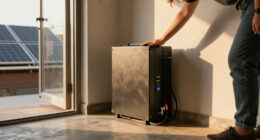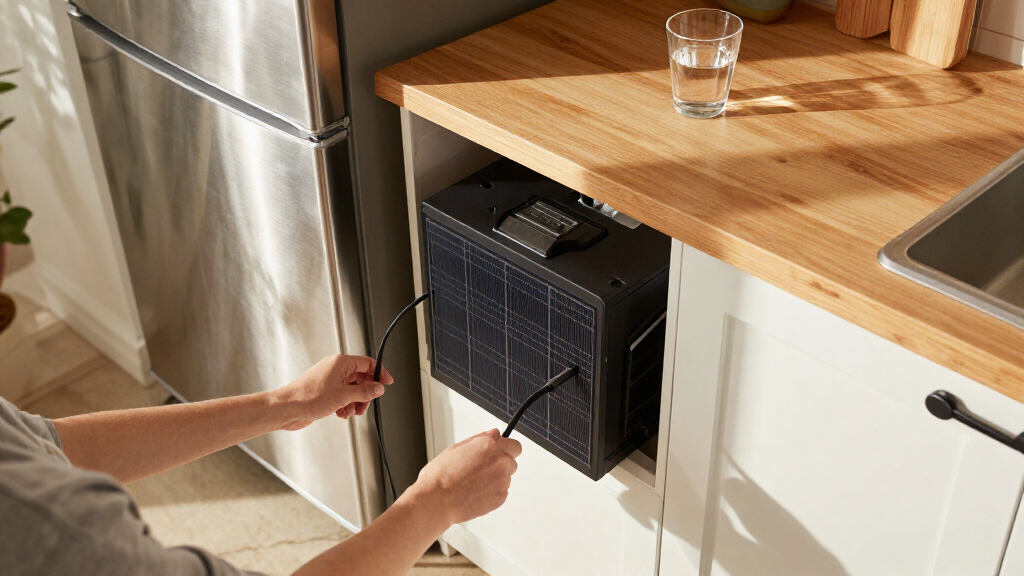

Solar backup systems for refrigerators range from small power stations for short interruptions to expandable batteries and off-grid kits built for longer outages. I’d put the BLUETTI FridgePower with BC200 expansion battery first for its refrigerator-focused setup and added capacity, while the BLUETTI Elite 300 with two solar panels stands out for buyers who want a bundled solar option. For larger household loads, the EcoFlow TITAN 5000 Classic offers much more storage and output, but asks for more space and planning. The key tradeoff is portability and simple setup versus longer runtime, higher output, and a more involved solar arrangement. Read on for how the 14 options differ and which type of refrigerator backup each one suits.

Get backup power and energy gear delivered free with Prime
- Fast, free delivery on millions of items
- Prime Video, Amazon Music and more included
- Member-only deals all year
Complete the kit


Key Takeaways
- Expandable capacity separates the leading refrigerator-focused option. The BLUETTI FridgePower with BC200 can grow from 2016Wh to 4032Wh, making it more adaptable to long outages than a fixed-capacity compact station.
- Bundled panels reduce setup guesswork, but panel wattage and sunlight still shape recharge time. The Elite 300 package includes two 200W panels; the BLAVOR includes a built-in 40W panel, which favors convenience over fast solar replenishment.
- Large batteries suit extended outages, not every household. The EcoFlow TITAN 5000 Classic, Jackery HomePower 3600 Plus, and 5.12kWh off-grid kit offer much more stored energy than the 1024Wh-class portable stations, with greater space and installation demands.
- Small stations are better matched to short runtimes or 12V fridge setups. The BougeRV 266Wh and Powkey 146Wh are compact choices, but their capacities call for modest expectations during a prolonged outage.
- Inverter output and battery capacity solve different problems. Output helps a system handle startup and connected loads; capacity determines how long it can run them. Buyers should check both against their refrigerator’s specifications.
| BLAVOR 1600W Portable Power Station with Built-In 40W Solar Panel |  | Best Portable Mid-Capacity Pick | Battery capacity: 1,024Wh | Battery type: LiFePO4 | Built-in solar panel: 40W | VIEW LATEST PRICE | See Our Full Breakdown |
| EF EcoFlow TITAN 5000 Classic Power Station, 5017Wh, 4000W AC Output |  | Best for Extended Whole-Home Backup | Battery capacity: 5,017Wh | Expandable capacity: 5–30kWh | AC output: 4,000W | VIEW LATEST PRICE | See Our Full Breakdown |
| BLUETTI FridgePower Backup System with BC200 Expansion Battery, 2016Wh, Expandable to 4032Wh |  | Best Refrigerator-Focused Backup | Battery capacity: 2,016Wh, expandable to 4,032Wh | AC output: 1,800W | Surge capacity: 3,600W | VIEW LATEST PRICE | See Our Full Breakdown |
| BougeRV 266Wh Portable Power Station for 12V Refrigerators |  | Best Compact Pick for 12V Fridges | Capacity: 266Wh | Weight: 3.8 lb | Dimensions: 7.2 × 2.9 × 3.3 in | VIEW LATEST PRICE | See Our Full Breakdown |
| Powkey 146Wh Portable Power Station, 200W |  | Best for Short, Low-Wattage Backup | Battery capacity: 146Wh | Maximum output: 200W | Battery type: Lithium-ion | VIEW LATEST PRICE | See Our Full Breakdown |
| ABOK Ark3600 Portable Power Station with 400W Solar Panel |  | Best for Expandable Whole-Home Refrigerator Backup | Battery capacity: 3,840Wh | Expandable capacity: Up to 11,520Wh | Battery type and cycle life: LiFePO₄; over 4,000 cycles | VIEW LATEST PRICE | See Our Full Breakdown |
| Jackery HomePower 3600 Plus Portable Power Station, 3584Wh, 3600W |  | Best for Cold-Weather and Multi-Unit Expansion | Battery capacity: 3,584Wh | AC output: 3,600W | Parallel output: Up to 7,200W | VIEW LATEST PRICE | See Our Full Breakdown |
| BLUETTI Elite 300 Solar Generator with Two 200W Solar Panels, 3014Wh LiFePO4 Battery |  | Best Ready-to-Recharge Solar Kit | Battery capacity and chemistry: 3,014Wh; LiFePO₄ | Battery cycle life: 6,000+ cycles | AC output / surge output: 2,400W / 4,800W | VIEW LATEST PRICE | See Our Full Breakdown |
| Anker SOLIX S2000 Portable Power Station with 400W Solar Panel |  | Best Compact Solar Backup | Battery capacity and type: 2,010Wh; LiFePO₄ | Battery cycle life: Up to 10,000 cycles | Continuous / peak output: 1,500W / 3,000W | VIEW LATEST PRICE | See Our Full Breakdown |
| BLUETTI FridgePower 2016Wh Portable Power Station |  | Best Dedicated Refrigerator Backup | Battery capacity: 2,016Wh | Expandable capacity: Up to 4,032Wh | Battery type: LFP | VIEW LATEST PRICE | See Our Full Breakdown |
| Jackery Solar Generator 1000 v2 with 200W Solar Panel, 1024Wh LiFePO4 Battery |  | Best Portable Solar Bundle | Battery capacity: 1,024Wh | Battery type: LiFePO4 (LFP) | AC output: 1,500W | VIEW LATEST PRICE | See Our Full Breakdown |
| 3000W 24V Off-Grid Solar Power Kit with 1440W Panels, 5.12kWh Battery and 6000W Peak Inverter |  | Best for Extended Off-Grid Backup | Solar panel output: 1,440W (12 × 120W) | Battery capacity: 5.12kWh | Battery configuration: 4 × 12.8V, 100Ah LiFePO4 batteries | VIEW LATEST PRICE | See Our Full Breakdown |
| EcoFlow DELTA 3 Portable Power Station, 1024Wh, 1800W |  | Best Expandable Portable Pick | Capacity: 1,024Wh | AC output: 1,800W | Surge output: 3,600W | VIEW LATEST PRICE | See Our Full Breakdown |
| LIBRIDS Portable Power Station C600 – 640 Wh Solar Generator, 600 W Continuous, 4 AC Outlets |  | Best Compact UPS Backup | Capacity: 640Wh | Battery type: LiFePO4 (automotive grade) | Continuous output: 600W | VIEW LATEST PRICE | See Our Full Breakdown |
| solar backup systems for refrigerator | Battery capacity | Weight |
|---|---|---|
| BLAVOR 1600W Portable Power St | 1,024Wh | 26 lb |
| EF EcoFlow TITAN 5000 Classic | 5,017Wh | 102.5 lb |
| BLUETTI FridgePower Backup Sys | 2,016Wh, expandable to 4,032Wh | 41.9 lb |
| BougeRV 266Wh Portable Power S | — | 3.8 lb |
| Powkey 146Wh Portable Power St | 146Wh | 3.2 lb |
| ABOK Ark3600 Portable Power St | 3,840Wh | — |
| Jackery HomePower 3600 Plus Po | 3,584Wh | — |
| BLUETTI Elite 300 Solar Genera | — | — |
| Anker SOLIX S2000 Portable Pow | — | — |
| BLUETTI FridgePower 2016Wh Por | 2,016Wh | — |
| Jackery Solar Generator 1000 v | 1,024Wh | 23.4 lb |
| 3000W 24V Off-Grid Solar Power | 5.12kWh | — |
| EcoFlow DELTA 3 Portable Power | — | 12.5kg |
| LIBRIDS Portable Power Station | — | 16.3 lb |
More Details on Our Top Picks
BLAVOR 1600W Portable Power Station with Built-In 40W Solar Panel
For refrigerator backup that may need to move between home, car, and campsite, the BLAVOR balances a 1,024Wh LiFePO4 battery with a comparatively portable 26-pound body. Its 1,600W rated output and 3,200W peak give it more appliance headroom than the smaller BougeRV 266Wh, though actual refrigerator runtime depends on the fridge’s energy use and starting surge. The built-in 40W solar panel is convenient for topping up without packing a separate panel, but it is modest for replenishing this battery; faster solar charging requires a compatible external panel, sold separately. I’d choose it over a refrigerator-specific 12V unit when AC outlets and broader device support matter. Skip it if your priority is long outage coverage or effortless carrying: the EcoFlow TITAN offers far more capacity, while weighing substantially more.
Pros:- 1,024Wh LiFePO4 battery rated for more than 3,500 cycles
- 1,600W rated output and 3,200W peak output for compatible appliances
- Built-in 40W solar panel and support for four charging methods
- Eight output ports, including a 100W bidirectional USB-C port
Cons:- The built-in 40W panel is slow for replenishing a 1,024Wh battery
- A compatible external solar panel for charging up to 200W is sold separately
- At 26 pounds, it is less convenient to carry than the BougeRV or Powkey
Best for: People who want a portable battery for a refrigerator and other household devices, with occasional solar charging and multiple ways to recharge.
Not ideal for: Households planning extended refrigerator backup without access to AC or a larger external solar panel, or buyers who need a lightweight unit for frequent long-distance carrying.
- Battery capacity:1,024Wh
- Battery type:LiFePO4
- Built-in solar panel:40W
- Maximum solar input:200W with compatible external panel
- Battery cycle life:More than 3,500 cycles
- Weight:26 lb
- Output ports:8
Our verdict“Choose the BLAVOR if you want useful refrigerator capacity and versatile outputs in a portable package, but plan on an external panel for meaningful solar replenishment.”
EF EcoFlow TITAN 5000 Classic Power Station, 5017Wh, 4000W AC Output
The TITAN is the capacity-first choice here: its 5,017Wh battery gives a refrigerator substantially more stored energy to draw from than the BLAVOR or Powkey, while 4,000W AC output can support additional compatible household loads. Its capacity can expand to 30kWh, making it better suited to a planned home backup setup than a grab-and-go refrigerator battery. Solar charging is supported, but the product details do not specify a solar input rate, so I would not assume a particular recharge speed. Automatic backup is another distinction: the under-20ms switchover requires the EcoFlow Smart Home Panel 10, which is a separate dependency, not a stand-alone feature. At 102.5 pounds, this is far less portable than the 41.9-pound BLUETTI FridgePower system. Choose it for stationary capacity, not easy repositioning.
Pros:- 5,017Wh capacity can provide much more stored energy than the smaller portable units
- Expandable capacity from 5kWh to 30kWh
- 4,000W AC output supports multiple compatible household appliances
- LiFePO4 chemistry, BMS monitoring, and a five-year warranty
Cons:- Weighs 102.5 pounds, making it a stationary rather than portable choice
- Automatic switchover requires the EcoFlow Smart Home Panel 10
- Solar charging is supported, but the supplied product data gives no maximum solar input
Best for: Homeowners who want substantial refrigerator backup, room to expand storage, and the ability to support multiple essential appliances from a mostly stationary system.
Not ideal for: Renters, campers, or anyone who needs a battery they can routinely move; also a poor fit for buyers expecting automatic switchover without the Smart Home Panel 10.
- Battery capacity:5,017Wh
- Expandable capacity:5–30kWh
- AC output:4,000W
- Battery chemistry:LiFePO4
- Automatic switchover:Under 20ms with Smart Home Panel 10
- Noise level:Under 30dB
- Weight:102.5 lb
- Outlets:6
- Warranty:5 years
Our verdict“Pick the TITAN for expandable, high-capacity home refrigerator backup if you can accommodate its weight and the separate hardware needed for automatic switchover.”
BLUETTI FridgePower Backup System with BC200 Expansion Battery, 2016Wh, Expandable to 4032Wh
This bundle puts refrigerator continuity ahead of general portability. The included BC200 expansion battery brings total capacity to 2,016Wh, with support for expansion up to 4,032Wh; that gives it a more fridge-centered storage path than the BLAVOR, whose built-in panel is convenient but small. Its 10ms UPS switchover is aimed at keeping connected equipment powered during an outage, and 1,800W output with a 3,600W surge rating provides headroom for compatible appliances’ startup demands. The slim, 75mm design is easier to place along a wall than the bulky EcoFlow TITAN, although the system still weighs 41.9 pounds. One data point needs careful interpretation: the listed runtime is only two minutes, so it does not establish expected refrigerator runtime. I’d verify runtime against the refrigerator’s draw before relying on it for outage duration.
Pros:- Includes the BC200 expansion battery for 2,016Wh total capacity
- Expandable to 4,032Wh for added stored energy
- 10ms UPS switchover supports continuity during power interruptions
- 1,800W output and 3,600W surge rating for compatible appliances
Cons:- The listed two-minute runtime does not establish expected refrigerator runtime
- At 41.9 pounds, it is heavier than the BLAVOR and small portable units
- The bundled expansion setup is less compact than a single-battery option
Best for: Households seeking a refrigerator-oriented backup system with fast UPS switchover, included expansion capacity, and a slim form for indoor placement.
Not ideal for: Buyers who need a clearly documented long runtime without checking appliance-specific estimates, or anyone expecting a lightweight unit to carry around regularly.
- Battery capacity:2,016Wh, expandable to 4,032Wh
- AC output:1,800W
- Surge capacity:3,600W
- UPS switch time:10ms
- Standby power draw:4W
- Design thickness:75mm
- Weight:41.9 lb
- Power sources:Solar, AC, car, lead-acid, and generator
Our verdict“Choose this BLUETTI bundle for refrigerator-focused backup and fast switchover, but confirm appliance-specific runtime before relying on it through a long outage.”
BougeRV 266Wh Portable Power Station for 12V Refrigerators
For a compatible 12V refrigerator, the BougeRV is the easiest unit here to carry and place: it weighs just 3.8 pounds and has a 266Wh capacity. That makes it a practical companion for short trips or limited backup, not a substitute for the multi-kilowatt-hour EcoFlow TITAN when a household needs longer outage coverage. The dedicated DC output avoids relying on an AC outlet for a 12V fridge, while up to 100W solar input offers a more direct recharge route than the BLAVOR’s built-in 40W panel. Its claimed runtime of up to 17 hours applies in ECO mode and varies with settings and conditions, so I would treat it as a reference rather than a guarantee. Pass-through charging and the display add convenience, but the small capacity limits how much reserve it can provide.
Pros:- Lightweight 3.8-pound design is easy to carry and store
- DC cigarette-lighter output is suited to compatible 12V refrigerators
- Accepts up to 100W solar input
- Display and pass-through charging help with monitoring and use while charging
Cons:- 266Wh capacity limits backup duration for a refrigerator
- Stated runtime depends on ECO mode, temperature settings, and usage
- 100W USB-C charging needs a compatible charger and cable that are not included
Best for: Campers and owners of compatible 12V refrigerators who want a lightweight battery for short trips, brief interruptions, or device charging.
Not ideal for: Households with a standard AC refrigerator or buyers needing dependable, extended outage coverage; its 266Wh capacity is far below the larger BLUETTI and EcoFlow systems.
- Capacity:266Wh
- Weight:3.8 lb
- Dimensions:7.2 × 2.9 × 3.3 in
- Maximum solar input:100W
- Maximum runtime:Up to 17 hours in ECO mode
- Outputs:DC cigarette lighter, USB-C, USB-A
- Charging inputs:XT60, USB-C, AC, DC
- Solar recharge time:About 3 hours under optimal sunlight
- Warranty support:2-year tech support
Our verdict“Choose the BougeRV for a compatible 12V fridge when low weight matters more than long refrigerator runtime.”
Powkey 146Wh Portable Power Station, 200W
The Powkey is the smallest-capacity option in this group, so I’d treat it as a short-duration backup for a refrigerator only when the appliance’s input draw and startup needs fit its limits. Its 200W maximum output and 146Wh battery make it much less suited to a full-size fridge than the BLAVOR or BLUETTI FridgePower system. The pure sine wave AC output and mix of AC, USB, and DC ports are useful for compatible loads, but two AC outlets do not mean it can run any refrigerator: check both running wattage and startup surge against the unit’s ratings. At 3.2 pounds, it is easier to carry than the 26-pound BLAVOR. Solar charging is possible, but the panel is optional and no maximum solar input is provided, so it is not the strongest choice for solar-led refrigerator backup.
Pros:- Compact 3.2-pound design with an included carrying bag
- Pure sine wave AC output for compatible appliances
- AC, USB, and DC ports support different small devices
- Can recharge from a wall outlet, car charger, or optional solar panel
Cons:- 146Wh capacity offers limited energy for refrigerator backup
- 200W maximum output excludes appliances that draw more or require a higher startup surge
- Solar panel is not included and the supplied specs do not state maximum solar input
Best for: Buyers who need a very small battery for a compatible low-wattage compact refrigerator or brief backup, alongside charging for phones and other small devices.
Not ideal for: Owners of full-size refrigerators, anyone needing long outage coverage, or buyers who want a solar panel and a specified solar charging rate included.
- Battery capacity:146Wh
- Maximum output:200W
- Battery type:Lithium-ion
- AC outlets:2, 110V
- USB ports:4, 5V/3.1A max
- DC outlet:1, 15V/2A max
- AC output waveform:Pure sine wave
- Recharge time:Approximately 5–9 hours
- Weight:3.2 lb
Our verdict“Pick the Powkey only for a compatible low-wattage refrigerator or short backup window, not as a primary system for a household fridge.”
ABOK Ark3600 Portable Power Station with 400W Solar Panel
The ABOK Ark3600 suits households that want substantial refrigerator backup now and room to add capacity later. Its 3,840Wh LiFePO₄ battery starts larger than the BLUETTI FridgePower’s 2,016Wh base battery, and expansion can raise it to 11,520Wh for longer outages. The 3,600W rated output and 4,500W peak output also leave headroom for refrigerator startup surges and other household loads. Solar input reaches 2,000W, though the included panel is 400W, so faster solar replenishment requires additional compatible input. The tradeoff is its 92-pound weight: wheels and a telescoping handle help, but this is not a unit to carry between floors. AC-only charging takes three hours, so it favors planned backup over a quick top-up.
Pros:- 3,840Wh starting capacity provides substantial stored energy for refrigerator backup
- Expandable to 11,520Wh for longer outages or additional household loads
- LiFePO₄ battery is rated for over 4,000 cycles
- 15 output ports, wheels, telescoping handle, and Bluetooth app control add flexibility
Cons:- At 92 pounds, it is difficult to move without using the wheels
- AC-only charging takes three hours
- The included 400W panel is below the station’s 2,000W maximum solar input
Best for: Households seeking expandable, high-capacity refrigerator backup that can also power other appliances during extended outages
Not ideal for: Apartment dwellers or anyone who needs to carry a power station up stairs, given its 92-pound weight and large footprint
- Battery capacity:3,840Wh
- Expandable capacity:Up to 11,520Wh
- Battery type and cycle life:LiFePO₄; over 4,000 cycles
- Solar input / included panel:2,000W / 400W
- Output ports:15
- AC charging time:3 hours
- Weight and dimensions:92 lb; 21.6 × 12.6 × 18.5 in
Our verdict“Choose the ABOK Ark3600 if you want more expandable refrigerator backup capacity than the BLUETTI FridgePower and can accommodate a heavy, large-format station.”
Jackery HomePower 3600 Plus Portable Power Station, 3584Wh, 3600W
For refrigerator backup where freezing conditions or future system growth matter, the Jackery HomePower 3600 Plus has a more specialized advantage than the ABOK Ark3600: it is rated to operate down to -4°F, and its capacity can expand substantially through connected units. The 3,584Wh battery and 3,600W output put it in a similar starting class to the ABOK, while parallel operation supports 240V output for compatible equipment beyond a typical refrigerator. Hybrid AC and DC charging can recharge it in two hours, faster than the ABOK’s three-hour AC-only figure. The compromises are its 77.2-pound weight and just two listed outlets, which may limit simultaneous connections without adapters. Solar panels are optional, so its solar-ready capability does not mean a panel comes in the box.
Pros:- 3,584Wh capacity and 3,600W AC output suit substantial refrigerator loads
- Expandable capacity and parallel operation support larger systems and 240V output
- Hybrid AC and DC charging is specified at two hours
- LFP battery is rated for 6,000 cycles and operation down to -4°F
Cons:- At 77.2 pounds, moving it still takes effort despite the wheels and telescopic handle
- Solar panel is optional, adding a separate component for solar recharging
- Only two outlets are listed
Best for: Rural homeowners or cabin owners who need refrigerator backup in cold conditions and may expand to a multi-unit system
Not ideal for: Buyers seeking an all-in-one solar kit or many direct device connections, since the panel is optional and only two outlets are listed
- Battery capacity:3,584Wh
- AC output:3,600W
- Parallel output:Up to 7,200W
- Expandable capacity:Up to 21kWh per unit; up to 43kWh with multiple units
- Battery type and cycle life:LFP; 6,000 cycles
- Charging options:Hybrid AC+DC, AC, solar, or gas generator
- Recharge times:2 hours hybrid AC+DC; 2.5 hours AC; 4 hours solar; 2.5 hours gas generator
- Weight and operating temperature:77.2 lb; down to -4°F
Our verdict“Pick the Jackery over the ABOK Ark3600 if cold-weather operation and multi-unit expansion matter more than a larger outlet count or an included solar panel.”
BLUETTI Elite 300 Solar Generator with Two 200W Solar Panels, 3014Wh LiFePO4 Battery
The BLUETTI Elite 300 is the most straightforward choice here for buyers who want solar panels included alongside a substantial battery. Its 3,014Wh capacity is below the ABOK Ark3600 and Jackery HomePower 3600 Plus, but two 200W panels provide a defined starting point for replenishing power without sourcing a panel separately. A 2,400W AC output and 4,800W surge rating give it useful headroom for refrigerator startup, while the TT-30 and 12V/30A DC ports add RV connections that the home-focused BLUETTI FridgePower does not list. The tradeoff is slower specified solar charging—about 7–15 hours—and less stored energy than the two larger stations. The panels ship separately, which may also affect when the complete setup is on hand.
Pros:- Includes two 200W solar panels for a ready-made solar charging setup
- 3,014Wh LiFePO₄ battery is rated for 6,000+ cycles
- 2,400W AC output and 4,800W surge output provide startup headroom
- TT-30 outlet and 12V/30A DC port suit RV power needs
Cons:- Solar charging is specified at approximately 7–15 hours
- Battery capacity is lower than the ABOK Ark3600 and Jackery HomePower 3600 Plus
- Panels ship separately from the power station
Best for: RV owners and homeowners who want a high-capacity station with solar panels and refrigerator-compatible surge headroom in one kit
Not ideal for: Households planning long outages with multiple appliances, since its 3,014Wh capacity is lower than the ABOK and Jackery options
- Battery capacity and chemistry:3,014Wh; LiFePO₄
- Battery cycle life:6,000+ cycles
- AC output / surge output:2,400W / 4,800W
- Included solar panels:2 × 200W
- Solar charging time:Approximately 7–15 hours
- AC charging time to 80%:78 minutes maximum
- RV connections:TT-30 outlet; 12V/30A DC port
- AC voltage:120V
Our verdict“Choose the Elite 300 if included solar panels and RV connections outweigh the longer solar recharge window and lower capacity than the ABOK or Jackery.”
Anker SOLIX S2000 Portable Power Station with 400W Solar Panel
The Anker SOLIX S2000 makes more sense for a refrigerator owner who prioritizes a smaller, easier-to-place backup setup over multi-day capacity. At 35.7 pounds, it is far easier to reposition than the 77.2-pound Jackery HomePower 3600 Plus, and its 2,010Wh battery can cover a refrigerator outage while leaving room for select smaller loads. The 1,500W continuous output and 3,000W peak rating are less powerful than the larger stations, so buyers should check their refrigerator’s startup demand. A less-than-10ms UPS switchover is a useful distinction for appliances that benefit from staying powered through an outage. The included 400W bifacial panel and six charging methods add flexibility, but the missing 12V DC port limits direct DC appliance connections, and the station and panel ship separately.
Pros:- 35.7-pound weight is easier to move than the larger Jackery and ABOK stations
- Less-than-10ms UPS switchover supports near-continuous backup
- 400W bifacial solar panel is included in the package listing
- Six charging methods and eight outlets offer flexible connections
Cons:- 2,010Wh capacity is substantially below the 3,000Wh-class options
- 1,500W continuous output may not suit refrigerators with higher startup or operating demands
- No 12V DC port, and the station and panel ship separately
Best for: Apartment residents or homeowners who need a more manageable backup for one refrigerator and value UPS switching and multiple recharge options
Not ideal for: Households needing extended refrigerator runtime or backup for several high-draw appliances, because its capacity and continuous output are below the larger stations
- Battery capacity and type:2,010Wh; LiFePO₄
- Battery cycle life:Up to 10,000 cycles
- Continuous / peak output:1,500W / 3,000W
- Solar input and panel:Up to 400W; 400W bifacial panel
- Charging methods:AC, solar, generator, alternator charger, and car outlet among six methods
- Outlets:8
- UPS switchover:Less than 10ms
- Weight and dimensions:35.7 lb; 8.19 × 11.1 × 12.7 in
Our verdict“Choose the Anker over the larger Jackery if easier handling and rapid UPS switchover matter more than extended runtime and higher output.”
BLUETTI FridgePower 2016Wh Portable Power Station
Unlike the larger, general-purpose ABOK Ark3600, the BLUETTI FridgePower is shaped around keeping household essentials powered with minimal interruption. Its 10ms UPS transfer automatically switches to battery backup when mains power fails, while the specified 4W standby draw is designed to limit the station’s own energy use while waiting. The slim 2.95-inch profile supports wall-mounted or freestanding placement near a refrigerator, and the 2,016Wh battery can expand to 4,032Wh with an expansion pack. That makes it a more tailored fit for a dedicated appliance circuit than a portable station built around many ports and broad output. The tradeoffs are a lower 1,800W output than the ABOK or Jackery, a 44-pound weight despite its slim shape, and a plastic enclosure.
Pros:- 10ms UPS transfer provides automatic mains-to-battery backup
- 4W standby draw is specified for low idle consumption
- Slim profile supports wall-mounted or freestanding installation near a refrigerator
- Capacity can expand from 2,016Wh to 4,032Wh
Cons:- 44-pound weight makes repositioning difficult
- 1,800W output is lower than the ABOK Ark3600 and Jackery HomePower 3600 Plus
- Plastic enclosure and no solar input details in the supplied specifications
Best for: Homeowners who want a permanently placed refrigerator backup with automatic UPS switching and the option to add capacity
Not ideal for: People seeking a lightweight, broadly portable solar kit or high-output backup for several appliances; solar input is not specified in the supplied product data
- Battery capacity:2,016Wh
- Expandable capacity:Up to 4,032Wh
- Battery type:LFP
- Output / surge output:1,800W / 3,600W
- UPS transfer time:10ms
- Standby power draw:4W
- Battery charge time:3 hours
- Dimensions and weight:2.95 × 13.78 × 22.83 in; 44 lb
Our verdict“Choose FridgePower over the ABOK Ark3600 if you want a slim, automatic refrigerator-focused backup rather than a larger, higher-output portable power station.”
Jackery Solar Generator 1000 v2 with 200W Solar Panel, 1024Wh LiFePO4 Battery
For refrigerator owners who want a ready-to-use solar bundle rather than a collection of separate components, the Jackery Solar Generator 1000 v2 pairs a 1,024Wh battery with a 200W panel. Its 1,500W AC output and 3,000W surge peak give it more headroom for a refrigerator’s startup draw than the smaller LIBRIDS C600, though the Jackery still has limited stored energy for extended outages. The 10ms UPS switchover can help keep connected equipment powered during an interruption, while app settings offer quiet overnight and energy-efficient charging modes. Emergency charging can reach a full charge in 50 minutes, but only when enabled in the app. At 23.4 pounds, it is portable, though heavier than the EcoFlow DELTA 3. The panel and station ship separately, so delivery may not be simultaneous.
Pros:- Includes a 200W solar panel for recharging away from the grid.
- 1,500W AC output and 3,000W surge peak provide headroom for refrigerator startup.
- 10ms UPS switchover and app charging modes support outage use and quieter overnight operation.
- LiFePO4 battery is specified to retain over 70% capacity after 4,000 charge cycles.
Cons:- The 1,024Wh battery may not keep a refrigerator running through a long outage without solar replenishment.
- Emergency 50-minute charging requires enabling the setting in the app.
- The power station and included solar panel ship separately.
Best for: Refrigerator owners seeking a portable, panel-included backup with enough inverter headroom for startup surges and short outages.
Not ideal for: Households needing multi-day refrigerator coverage without dependable sunlight or a larger expandable battery; its 1,024Wh capacity is limited for that job.
- Battery capacity:1,024Wh
- Battery type:LiFePO4 (LFP)
- AC output:1,500W
- Surge peak:3,000W
- Included solar panel:200W
- UPS switchover:10ms
- Weight:23.4 lb
- Ports:2 AC, 2 USB-C, 1 USB-A, 1 DC car port
- Warranty:5 years
Our verdict“Choose the Jackery for portable refrigerator backup with an included panel and strong surge capacity, but choose a larger system for longer outages.”
3000W 24V Off-Grid Solar Power Kit with 1440W Panels, 5.12kWh Battery and 6000W Peak Inverter
This kit is the lineup’s system-scale choice for buyers who want substantial stored energy and a larger solar array, not a grab-and-go station. Its 5.12kWh LiFePO4 battery offers five times the nominal capacity of the EcoFlow DELTA 3, while the included 1,440W of panels can replenish the bank when conditions allow. A 3,000W pure sine wave inverter with a 6,000W one-second peak is better suited to a refrigerator plus other household loads than the Jackery 1000 v2, although the brief peak rating deserves attention when checking appliance startup demands. The 24V DC design and separate components make installation and system matching more involved than using a portable unit. Actual solar production also varies with location, weather, and panel placement, so this kit cannot promise a fixed runtime.
Pros:- 5.12kWh of LiFePO4 storage provides substantially more reserve than the 1,024Wh portable stations.
- Includes twelve panels totaling 1,440W, batteries, inverter, controller, combiner box, and cables.
- 3,000W pure sine wave inverter supports a refrigerator alongside additional AC loads.
- 60A MPPT controller includes monitoring and system protections.
Cons:- The 24V DC system requires more setup and electrical planning than a portable power station.
- The 6,000W peak is specified for only one second, so buyers must check refrigerator startup requirements.
- Solar production depends on sunlight, location, and panel placement.
Best for: Cabin, RV, or home owners planning a stationary off-grid setup who need a sizable battery bank, included panels, and capacity for multiple loads.
Not ideal for: Renters or buyers wanting simple, portable refrigerator backup; the 24V system and array of components call for installation planning and space.
- Solar panel output:1,440W (12 × 120W)
- Battery capacity:5.12kWh
- Battery configuration:4 × 12.8V, 100Ah LiFePO4 batteries
- Inverter continuous output:3,000W
- Inverter peak output:6,000W for 1 second
- Inverter input/output:24V DC to 120V AC
- Charge controller:60A MPPT
- Inverter THD:≤3%
Our verdict“Pick this kit for a planned, higher-capacity off-grid installation; skip it if you need portable backup that works straight out of the box.”
EcoFlow DELTA 3 Portable Power Station, 1024Wh, 1800W
The EcoFlow DELTA 3 suits refrigerator owners who want portable backup now with a path to more storage later. It matches the Jackery 1000 v2 at 1,024Wh, but raises AC output to 1,800W and offers expansion to 5kWh with compatible EcoFlow batteries. That makes it more adaptable for longer outages, although the extra batteries are separate purchases and add bulk. Its 500W maximum solar input can support faster solar replenishment than the Jackery’s included 200W panel can accept as a bundle, but the DELTA 3 does not include a panel in the listed package. The 3,600W surge rating gives refrigerator motors startup headroom, and the 13 outlets make it useful for other essentials. Full charging in 56 minutes depends on the specified AC and solar inputs.
Pros:- 1,800W AC output and 3,600W surge output offer ample stated inverter capacity for many refrigerator loads.
- Expandable to 5kWh with compatible EcoFlow extra batteries.
- Accepts up to 500W solar input for replenishment with a suitably sized panel setup.
- LiFePO4 battery is rated for 4,000 cycles to 80% capacity.
Cons:- The listed package does not include a solar panel.
- Longer runtime requires compatible expansion batteries, which are separate components.
- The 56-minute full-charge claim depends on using specified AC and solar inputs.
Best for: Buyers who want a portable refrigerator backup station today and may add compatible batteries for longer outage coverage later.
Not ideal for: Shoppers seeking a complete solar bundle in one package or a fixed, lower-complexity backup setup; solar panels and expansion batteries are separate.
- Capacity:1,024Wh
- AC output:1,800W
- Surge output:3,600W
- Battery chemistry:LiFePO4 (LFP)
- Maximum expansion:5kWh
- Maximum solar input:500W
- Outlets:13
- Weight:12.5kg
- Warranty:5 years
Our verdict“Choose the DELTA 3 if you value expandable storage and higher output in a portable unit, and plan separately for panels or added batteries.”
LIBRIDS Portable Power Station C600 – 640 Wh Solar Generator, 600 W Continuous, 4 AC Outlets
The LIBRIDS C600 is a compact choice for keeping a modest refrigerator load or essential electronics powered through brief interruptions, rather than a substitute for a large home battery. Its 640Wh capacity is notably lower than the 1,024Wh Jackery 1000 v2 and EcoFlow DELTA 3, so runtime headroom is limited; its 600W continuous output also rules it out for appliances whose running or startup draw exceeds its ratings. Where it stands apart is the combination of 10ms UPS switching, pure sine wave AC, four AC outlets, and a 1.5-hour fast recharge. That can make it convenient for a small backup station that stays close to the refrigerator. The rugged metal case and carry handle help with moving it, though 16.3 pounds is not especially light for its size.
Pros:- 10ms UPS switching and pure sine wave AC suit backup for sensitive connected electronics.
- Four AC outlets provide more plug-in options than many compact stations.
- LiFePO4 battery is specified for over 4,000 charge cycles.
- Fast recharge is listed at 1.5 hours via AC or solar input.
Cons:- 640Wh capacity offers less refrigerator runtime reserve than the Jackery 1000 v2 or EcoFlow DELTA 3.
- 600W continuous output may not support refrigerators with higher running or startup demands.
- At 16.3 pounds, it may be cumbersome for long-distance carrying.
Best for: Owners of compact or energy-efficient refrigerators who want a small UPS-style backup for short outages and occasional portable use.
Not ideal for: Buyers backing up a full-size refrigerator with high startup demand or seeking overnight-to-multi-day runtime; its 600W output and 640Wh capacity may be limiting.
- Capacity:640Wh
- Battery type:LiFePO4 (automotive grade)
- Continuous output:600W
- Surge output:1,200W
- AC outlets:4
- Total output ports:8
- UPS switch time:10ms
- Fast charging time:1.5 hours
- Weight:16.3 lb
Our verdict“Choose the C600 for compact, short-duration UPS-style refrigerator backup when the appliance stays within its 600W output limit.”
How We Picked
I ranked these systems around the job at hand: keeping a refrigerator powered through an outage, then restoring the battery when solar conditions allow. I weighed usable battery capacity, stated AC output, expandability, included or compatible solar equipment, portability, and how clearly each product fits a short-term, extended, or off-grid use case. Refrigerator runtime varies with model, temperature, door openings, and compressor cycling, so I did not treat capacity figures as guaranteed hours of operation.
The order favors useful balance and a clear refrigerator-backup fit over headline numbers alone. Expandable and refrigerator-oriented systems rank ahead of small emergency units for buyers seeking meaningful outage coverage; portable systems remain relevant for short outages and lighter needs. Large power stations and fixed off-grid kits can serve demanding setups, but their size, cost of installation effort, and more complex planning make them less suitable as a default choice. I also considered whether a product’s bundled solar hardware helps simplify setup or leaves panel selection to the buyer.
Factors to Consider When Choosing Solar Backup Systems For Refrigerators
Choosing a refrigerator backup starts with your outage pattern, not the largest battery figure. I’d work out the refrigerator’s actual energy use, how long the grid may be down, and whether solar can recharge the system during that period. The following checks help prevent a mismatch between a capable-looking power station and the job you need it to do.
Estimate Runtime From Energy Use, Not Capacity Alone
Battery capacity is usually listed in watt-hours, while refrigerators report energy use over time or provide a nameplate rating. Those numbers do not convert neatly into exact runtime because AC conversion loses energy and a compressor cycles rather than drawing constant power. Check the refrigerator’s manual or energy label, then leave room for conversion losses and real operating conditions. A fridge in a hot room, frequent door openings, or a freezer compartment can use more energy than a mild-weather estimate suggests. Avoid choosing a small station based only on a low average draw: the backup may need to last overnight or through several cloudy days. A longer outage calls for a larger battery, solar recharge, or both.
Check Startup Demand and What Else Will Share the System
A refrigerator’s compressor may briefly draw more power when it starts than it uses while running. Compare the power station’s continuous output and surge rating with the refrigerator requirements, and check the manufacturer’s guidance if the startup figure is unclear. A system that can run the fridge alone may struggle if you also connect a freezer, lights, or a kettle. High-wattage appliances can drain stored energy quickly even when the inverter can support them. For dependable backup, decide which loads have priority and avoid treating every outlet as available household power. The inverter’s wattage answers what can run at once; battery capacity answers how long.
Match Solar Recharging to Your Outage Pattern
Solar panels are useful only when they can deliver enough energy to replace what the refrigerator and other loads consume. Panel wattage is a rated maximum, not a promise of constant output; clouds, shade, angle, season, and daylight hours all affect charging. A built-in or bundled panel may simplify a small setup, while a larger system often needs separate panels and compatible cabling. Confirm the power station’s solar input limits and connector requirements before buying panels. If outages often last multiple days, compare realistic daily solar harvest with daily consumption, rather than assuming the battery will refill in one sunny afternoon. A grid charging option can also matter when sunlight is unreliable.
Choose Portability or Expandability Deliberately
Compact stations are easier to store and move, but their smaller batteries leave less reserve for extended outages. Larger units and expansion batteries can support longer runtimes, though they take up more room and may be harder to reposition. If the system will stay beside a refrigerator, portability may matter less than capacity and charging flexibility. If it must move between a kitchen, vehicle, or cabin, check the full system’s weight and how many pieces need carrying. Expandability can be a sensible middle path when outage needs may grow, but confirm which batteries are compatible and whether expansion requires additional accessories. Do not pay for capacity you cannot store or recharge effectively.
Decide Whether a Portable Station or Off-Grid Kit Fits
Portable power stations usually combine a battery, inverter, and charging controls in one unit, making them easier to set up for temporary backup. An off-grid kit can provide more storage and solar capacity, but it may involve separate components, wiring, mounting, and installation planning. A kit is a better fit for a cabin or a dedicated backup area than for someone who wants to move a battery around the home. Before choosing a fixed system, check where panels can be placed, how batteries will be protected, and whether the installation meets local electrical requirements. For a single refrigerator during occasional outages, a portable unit may be simpler even if its capacity is lower. For recurring outages and multiple loads, the extra planning of a larger system may be worthwhile.
Plan for Safe, Practical Refrigerator Operation
Place the power station where its vents can remain clear and where cords do not create a trip hazard. Keep the refrigerator closed during an outage; opening it repeatedly can increase energy use and shorten the backup window. Follow the power station and refrigerator instructions for connection, grounding, extension cords, and indoor use. Never connect a portable power station to a home outlet in a way that can feed power back into utility wiring; home circuits need approved transfer equipment and qualified installation. Check whether the system can run the refrigerator while charging if you expect simultaneous solar input. A realistic operating plan can matter as much as choosing a larger battery.
Frequently Asked Questions
How do I know whether a power station can start my refrigerator?
Check the refrigerator’s electrical label or manual for its running wattage and, if available, compressor startup or surge demand. Compare those figures with the station’s continuous output and surge rating rather than relying on battery capacity alone. If the startup demand is not listed, ask the refrigerator maker or power station manufacturer for guidance before relying on the combination. Other devices plugged into the station also count toward its output limit. A unit that can run the refrigerator after startup may still fail if its inverter cannot handle the initial surge.
Is a 1024Wh power station enough for a refrigerator overnight?
It may be enough for some refrigerators and outage conditions, but the capacity number cannot guarantee an overnight runtime. Actual use depends on the refrigerator’s energy consumption, room temperature, compressor cycling, AC conversion losses, and any other connected loads. Check the appliance’s energy information and keep a reserve rather than planning to use every watt-hour. A 1024Wh-class station is more defensible for a short backup window than for a multi-day outage without recharging. If the refrigerator is essential or unusually energy-hungry, a larger or expandable system provides more margin.
Can solar panels keep a refrigerator running continuously during an outage?
They can help, but continuous operation depends on whether daily solar generation can replace the refrigerator’s daily energy use and cover charging losses. Panel output changes with cloud cover, shading, season, panel angle, and available daylight, so a system may draw from its battery overnight or during poor weather. Compare the station’s solar input limit with the panels’ rated output, and check that the connectors are compatible. A larger battery gives more reserve for low-sun periods, while more panel capacity can improve recovery when conditions are good. For critical refrigeration, plan for several low-production days rather than assuming ideal sun.
Should I choose a refrigerator-specific backup system or a general portable power station?
A refrigerator-focused system can make sense when its battery capacity, output, and expansion options match your appliance and outage length. A general portable station may be a better fit if you also need to power electronics, lights, or other small appliances. Compare the actual specs rather than relying on the product category: both types still need suitable inverter output and enough stored energy. Also check whether solar panels are included, sold separately, or limited by the station’s charging input. Choose around your priority loads and likely outage duration, not the label alone.
When does an off-grid solar kit make more sense than a portable power station?
An off-grid kit is more compelling when the system will remain in one place, outages are frequent or lengthy, and you want substantial solar and battery capacity for several loads. It can be a poor match for occasional refrigerator backup if you do not have a suitable panel location or want a simple setup. Separate components may call for wiring, mounting, and installation work, so factor in the practical requirements as well as the listed capacity. A portable station is easier to relocate and can be simpler to deploy during a short outage. The deciding question is whether your needs justify a fixed, planned system rather than a movable backup unit.
Conclusion
For most buyers seeking a balanced refrigerator backup, I recommend the BLUETTI FridgePower with BC200 as the best overall because its refrigerator-oriented setup pairs with capacity that can expand for longer outages. The best value for short, modest backup needs is the BougeRV 266Wh, provided you accept its limited stored energy; buyers wanting an affordable compact alternative should also compare the Powkey 146Wh against their runtime needs. For best premium and extended household coverage, the EcoFlow TITAN 5000 Classic brings substantially more storage and output, while the Jackery HomePower 3600 Plus is another large-capacity option. Beginners who want solar hardware in the package can start with the BLUETTI Elite 300 and two 200W panels, though they should still check charging conditions and appliance requirements. For a specific need, choose the BougeRV for a compact 12V refrigerator setup, the expandable FridgePower for longer backup, or the 5.12kWh off-grid kit for a stationary system with greater installation demands. Before deciding, match output to refrigerator startup needs and capacity to the outage you expect to cover.