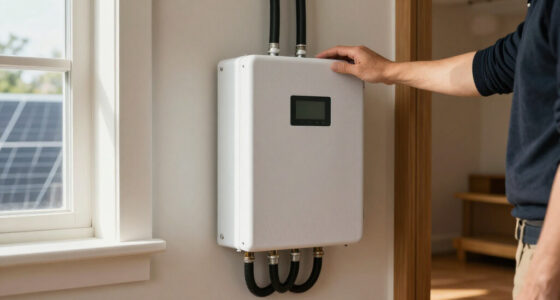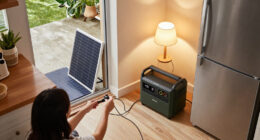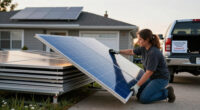
When the power goes out, a power station bundle for emergency use gives you both stored energy and a way to recharge it with sunlight, which is why bundles beat standalone batteries for blackout readiness. After comparing 14 of the most popular kits, the Jackery Solar Generator 1000 v2 with 200W panel stands out as the best overall pick thanks to its balance of usable capacity (1070Wh), fast solar recharging, and trusted reliability. If you want serious whole-home coverage, the Jackery HomePower 3600 Plus is the premium choice, while the MARBERO 155Wh kit covers phones, lights, and a router on a tight budget. The main tradeoff in this category is capacity versus cost and portability: bigger kits run refrigerators and medical devices but cost more and weigh far more, while small kits are grab-and-go easy but can’t power heating or major appliances. Read on for the full breakdown of all 14 bundles and which one fits your emergency plan.

Get backup power and energy gear delivered free with Prime
- Fast, free delivery on millions of items
- Prime Video, Amazon Music and more included
- Member-only deals all year
Complete the kit


Key Takeaways
- Bundled solar panels ranged from a barely useful 30W to a genuinely blackout-capable 400W (2x200W); anything under 100W is a trickle charger, not an emergency recharging solution.
- Capacity clusters emerged clearly: sub-300Wh kits (MARBERO, DARAN, Flashfish, BLUETTI Elite 30) suit communication devices only, while 1000Wh-plus kits (Jackery 1000 v2, UDPOWER S1200, Anker SOLIX S2000, HomePower 3600) can run refrigerators and medical equipment.
- LiFePO4 chemistry in the DARAN 1200W and BLUETTI Elite 30 V2 means roughly 3,000 charge cycles versus roughly 500-800 for standard lithium-ion — a major factor for a device that may sit unused for years between emergencies.
- The Jackery HomePower 3600 Plus and Anker SOLIX S2000 are in a different class from everything else here; buyers should compare them against each other, not against the mid-size kits, because their price and weight assume whole-home backup intentions.
- Several budget kits (MARBERO, LIBRIDS, generic 300W) quote surge wattage prominently in their names — always check continuous output versus surge, because a ‘1200W surge’ unit may only run 300W devices continuously.
| BLAVOR 1600W Solar Generator, 1024Wh Power Station with Built-In 40W Panel |  | Best Self-Contained Design | Capacity: 1,024Wh | Built-In Solar: 40W panel, up to 200W external input | Battery Chemistry: LiFePO4, 4,000+ cycles | VIEW ON AMAZON | See Our Full Breakdown |
| MARBERO 155Wh Solar Generator with Solar Panel Included 30W Solar Panel Kit |  | Best Budget Starter Kit | Capacity: 155Wh (42,000mAh) | Included Panel: 30W foldable, IP65, 23% efficiency | Solar Recharge Time: 6–7 hours | VIEW ON AMAZON | See Our Full Breakdown |
| Jackery Solar Generator 1000 v2 and 200W Solar Panel, 1070Wh, 1500W AC |  | Best Overall | Capacity: 1,070Wh | AC Recharge: 1 hour (emergency mode) / 1.7 hours standard | Included Panel: 200W solar panel | VIEW ON AMAZON | See Our Full Breakdown |
| Jackery Solar Generator 300 and 40W Solar Panel, 292Wh, 300W AC |  | Best Portable Mid-Size | Capacity: 292Wh | Included Panel: 40W Air solar panel | Solar Recharge: ~7.5 hours to 80% with 40W panel | VIEW ON AMAZON | See Our Full Breakdown |
| UDPOWER S1200 1190Wh Solar Generator Kit with 120W Panel, 1200W Power Station |  | Best for UPS-Style Auto Backup | Capacity: 1,190Wh | UPS Switchover: <0.01 seconds | Included Panel: 120W foldable, IP65, 90° adjustable stand | VIEW ON AMAZON | See Our Full Breakdown |
| DARAN Portable Power Station 1200W Surge, 288Wh LiFePO4 Solar Generator |  | Best for Medical Devices | Capacity: 288Wh | Battery Type: LiFePO4 | AC Output: 600W (1200W surge), pure sine wave | VIEW ON AMAZON | See Our Full Breakdown |
| ZeroKor Portable Solar Generator 300W with 60W Solar Panel | 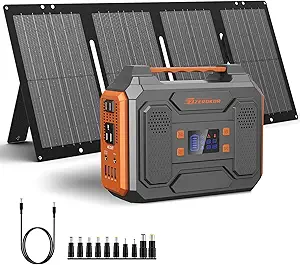 | Best Budget Solar Kit | AC Output: 2 x 300W max AC outlets | Ports: 2 AC, 1 DC (9V-12.6V/10A max), 3 USB (5V/3A), 1 quick-charge USB | Solar Panel: 60W monocrystalline, 20.5% conversion efficiency, included | VIEW ON AMAZON | See Our Full Breakdown |
| FF Flashfish Portable Power Station 200W, 151Wh Backup Battery Pack |  | Best Ultra-Light Grab-and-Go | Capacity: 151Wh / 40,800mAh | AC Output: 110V, 200W | Ports: 1 AC, 2 DC, 2 USB QC3.0, 1 USB 2.4A | VIEW ON AMAZON | See Our Full Breakdown |
| Jackery HomePower 3600 Plus & 2x200W Solar Panels, 3584Wh |  | Best Premium Whole-Home Backup | Capacity: 3584Wh (expandable to 21kWh per unit, 43kWh multi-unit) | AC Output: 3600W (7200W parallel), 120V/240V capable | Battery: LFP cells with high-temp resistant ceramic membrane, 6,000 cycles, 10-year lifespan | VIEW ON AMAZON | See Our Full Breakdown |
| BLUETTI Elite 30 V2 Portable Power Station 288Wh 600W LFP |  | Best Fast-Recharge Compact | Capacity: 288Wh | Battery Type: LFP (LiFePO4) | Continuous Output: 600W | VIEW ON AMAZON | See Our Full Breakdown |
| Anker SOLIX S2000 Portable Power Station, 2,010Wh, 1,500W |  | Best Premium Pick | Capacity: 2,010Wh | AC Output: 1,500W continuous / 3,000W peak | Battery Chemistry: LFP (314Ah), rated 10,000 cycles | VIEW ON AMAZON | See Our Full Breakdown |
| DARAN 350W Portable Power Station with 40W Solar Panel (600W Surge), 288Wh |  | Best Value Solar Kit | Capacity: 288Wh | AC Output: 350W continuous / 600W surge | Battery Chemistry: LiFePO4, 3,000+ cycles | VIEW ON AMAZON | See Our Full Breakdown |
| LIBRIDS Portable Power Station 640Wh, 1200W Surge, Solar Generator 4 AC |  | Best UPS Backup for Home Offices | Capacity: 640Wh | AC Output: 600W continuous / 1,200W surge (PowerRaise) | Battery Chemistry: Automotive-grade LiFePO4, 4,000+ cycles | VIEW ON AMAZON | See Our Full Breakdown |
| MARBERO 172Wh Solar Generator with Panels Included Solar Panel Kit 40W |  | Best Ultra-Light Emergency Kit | Capacity: 172Wh | AC Output: 200W continuous / 270W peak | Solar Panel: 40W foldable, 21.5-23.5% efficiency, included | VIEW ON AMAZON | See Our Full Breakdown |
| power station bundle for emergency | Capacity | Weight | AC Output | Battery Chemistry |
|---|---|---|---|---|
| BLAVOR 1600W Solar Generator | 1,024Wh | — | — | LiFePO4, 4,000+ cycles |
| MARBERO 155Wh Solar Generator | 155Wh (42,000mAh) | 3.7 lbs | — | — |
| Jackery Solar Generator 1000 v | 1,070Wh | 23.8 lbs | — | LFP, 4,000+ cycles to 70% |
| Jackery Solar Generator 300 an | 292Wh | 7.5 lbs | — | LiFePO4, 4,000+ cycles |
| UDPOWER S1200 1190Wh Solar Gen | 1,190Wh | — | — | LiFePO4, 4,000+ cycles, 15+ year design life |
| DARAN Portable Power Station 1 | 288Wh | 8.86 lbs | 600W (1200W surge), pure sine wave | — |
| ZeroKor Portable Solar Generat | — | — | 2 x 300W max AC outlets | — |
| FF Flashfish Portable Power St | 151Wh / 40,800mAh | 4.1 lbs | 110V, 200W | — |
| Jackery HomePower 3600 Plus & | 3584Wh (expandable to 21kWh per unit, 43kWh multi-unit) | — | 3600W (7200W parallel), 120V/240V capable | — |
| BLUETTI Elite 30 V2 Portable P | 288Wh | 9.4 lbs | — | — |
| Anker SOLIX S2000 Portable Pow | 2,010Wh | 35.7 lbs | 1,500W continuous / 3,000W peak | LFP (314Ah), rated 10,000 cycles |
| DARAN 350W Portable Power Stat | 288Wh | 8.2 lbs | 350W continuous / 600W surge | LiFePO4, 3,000+ cycles |
| LIBRIDS Portable Power Station | 640Wh | — | 600W continuous / 1,200W surge (PowerRaise) | Automotive-grade LiFePO4, 4,000+ cycles |
| MARBERO 172Wh Solar Generator | 172Wh | 3.3 lbs station / 2.3 lbs panel | 200W continuous / 270W peak | — |
More Details on Our Top Picks
BLAVOR 1600W Solar Generator, 1024Wh Power Station with Built-In 40W Panel
What makes this BLAVOR S1600 stand out in a crowded field is its built-in 40W solar panel — there is no separate panel to store, lose, or forget when an outage hits. Most rivals, like the UDPOWER S1200, ship a foldable panel you have to unwrap and position, which matters when you’re scrambling during a storm. The tradeoff is honest, though: 40W of integrated solar is trickle-charging, not serious replenishment, so you’ll want to add an external panel (up to 200W input) for real recovery speed. With 1,024Wh of capacity and 1,600W of output, it covers refrigerators, CPAP machines, and coffee makers — the same practical load range as the Jackery 1000 v2, but with the panel included rather than tethered. The LiFePO4 chemistry rated for 4,000+ cycles means it will still be viable a decade from now.
Pros:- Built-in solar panel eliminates a separate component to store and deploy
- 1,024Wh capacity with 1,600W rated output handles major appliances
- LiFePO4 cells rated for 4,000+ cycles for long-term emergency readiness
- Eight output ports plus 100W bidirectional USB-C keep essential devices powered together
Cons:- Integrated 40W panel charges far too slowly to offset real outage drain without an external panel purchase
- Lower brand recognition than Jackery or Anker means a shorter track record for long-term support
Best for: Households that want one grab-and-go box with solar built in, ready for outages without managing separate components
Not ideal for: Anyone expecting the integrated panel to meaningfully recharge a 1,024Wh battery — 40W is a maintenance trickle, not a recovery system
- Capacity:1,024Wh
- Built-In Solar:40W panel, up to 200W external input
- Battery Chemistry:LiFePO4, 4,000+ cycles
- Output Ports:8 ports including 100W USB-C
- Recharge Options:AC wall, car socket, built-in panel, external panel
Our verdict“This is the pick if you want everything in a single case for emergencies, provided you accept that serious solar recharging means buying an extra panel.”
MARBERO 155Wh Solar Generator with Solar Panel Included 30W Solar Panel Kit
At 155Wh and just 3.7 pounds, the MARBERO M365 kit is the definition of a starter emergency setup — everything arrives in one box, panel included, with no compatibility guesswork. Compared with the Jackery Explorer 300 bundle, it sacrifices roughly half the capacity and most of the output headroom (100W running versus 300W), but it wins on simplicity for someone building a first blackout kit on a tight budget. The 6.5-foot panel cable is a smarter design than it sounds: you can leave the station shaded and cool while the panel chases the sun, something integrated-panel designs like the BLAVOR S1600 can’t do. The 3-mode LED flashlight with SOS adds genuine emergency value. Just know the ceiling: this powers phones, lights, and a router — not a refrigerator, not a CPAP machine through the night in most cases.
Pros:- Complete out-of-the-box kit with station, 30W panel, and converter included
- Featherweight 3.7 lb build is easy to store in a closet or carry on foot
- 6.5-foot cable lets the panel sit in sun while devices stay shaded
- Built-in LED flashlight with SOS and strobe modes adds real emergency utility
Cons:- 155Wh capacity drains quickly — a single laptop recharge cycle eats a large share of the battery
- 100W running output rules out nearly all kitchen appliances and power tools
- 6–7 hour solar recharge time limits recovery during multi-day events
Best for: First-time buyers or apartment dwellers who want a low-cost kit for phones, lights, and a router during short outages
Not ideal for: Anyone who needs to run a fridge, medical device, or anything beyond 100W — the capacity and output simply aren’t there
- Capacity:155Wh (42,000mAh)
- Included Panel:30W foldable, IP65, 23% efficiency
- Solar Recharge Time:6–7 hours
- Output Ports:2× AC, 3× USB-A, 1× USB-C, 3× DC, 1× car port
- Weight:3.7 lbs
Our verdict“A sensible, low-commitment entry point for device-level backup, as long as you understand it’s a phone-and-lights solution, not a home-resilience system.”
Jackery Solar Generator 1000 v2 and 200W Solar Panel, 1070Wh, 1500W AC
If I had to point one reader toward a single bundle for emergency readiness, this is it. The Jackery Explorer 1000 v2 hits the sweet spot where capacity, speed, and usability overlap: 1,070Wh of storage, 1,500W of pure sine wave output, and — the feature that separates it from the BLAVOR S1600 — a genuine one-hour full AC recharge via the app’s emergency mode. In an outage, recharge speed is what determines whether you’re ready for the next one. The included 200W panel is also four to five times more solar than the 40W panels bundled with the smaller kits here, making off-grid recovery realistic rather than theoretical. Against the UDPOWER S1200, you give up a few AC outlets and the UPS pass-through function, but gain faster charging, a refined app, and Jackery’s five-year coverage. The main compromise is portability: at 23.8 pounds, this is a carry-with-two-hands unit, not a backpack companion.
Pros:- 1-hour emergency AC recharge is the fastest full recharge in this lineup
- Included 200W panel makes solar recovery genuinely practical, not symbolic
- 1,500W pure sine wave output with 3,000W surge handles refrigerators and appliances cleanly
- LFP battery with 4,000-cycle rating and five-year coverage
Cons:- One-hour charging must be manually enabled in the app before each use — easy to forget mid-emergency
- Heavier and bulkier than smaller kits, limiting its grab-and-go appeal
Best for: Homeowners who want a fridge-and-essentials backup with fast recharging and serious solar included
Not ideal for: Hikers and vehicle-campers prioritizing ultralight gear — at nearly 24 lbs it’s overkill for keeping a phone alive
- Capacity:1,070Wh
- AC Recharge:1 hour (emergency mode) / 1.7 hours standard
- Included Panel:200W solar panel
- Battery Chemistry:LFP, 4,000+ cycles to 70%
- Output Ports:3× AC, 2× USB-C, 1× USB-A, 1× car port
- Weight:23.8 lbs
Our verdict“The most balanced emergency bundle here for a household that needs real appliance backup and the reassurance of rapid recharging.”
Jackery Solar Generator 300 and 40W Solar Panel, 292Wh, 300W AC
The Explorer 300 bundle occupies the middle ground between the featherweight MARBERO 155Wh kit and the appliance-class Jackery 1000 v2 — and that middle ground is where weekend readiness lives. At 7.5 pounds with a 300W output, it runs a laptop, camera gear, drone batteries, or a small fan without straining, which the MARBERO simply cannot do. The upgrade to LiFePO4 chemistry with 4,000+ cycles is a meaningful shift from older NMC units in this size class, meaning this kit won’t be a paperweight in five years. The bundled 40W Air panel, however, is the weak link: 80% charge takes roughly 7.5 hours of good sun, so off-grid recovery is slow. Compared with the BLUETTI Elite 30 V2, output is lower, but the included panel and lighter frame make it more of a complete field kit than a bedside battery.
Pros:- Light 7.5 lb build with integrated handle is genuinely portable
- 300W rated output with 600W surge covers most personal electronics comfortably
- LiFePO4 chemistry rated for 4,000+ cycles and 11+ years of service
- Six output ports including 100W USB-C PD charge devices without adapters
Cons:- Included 40W panel is slow — roughly 7.5 hours to reach 80% capacity
- 292Wh capacity is a personal-electronics tier, not a household tier
Best for: Campers, hunters, and road-trippers who need laptop-and-drone power that’s still carryable in one hand
Not ideal for: Home backup buyers — 292Wh won’t sustain a refrigerator or cover an overnight CPAP session with margin
- Capacity:292Wh
- Included Panel:40W Air solar panel
- Solar Recharge:~7.5 hours to 80% with 40W panel
- Battery Chemistry:LiFePO4, 4,000+ cycles
- Output Ports:2× AC, 1× 100W USB-C, 2× USB-A, 1× car port
- Weight:7.5 lbs
Our verdict“The right size for people whose emergencies happen away from home — it’s a field kit first and a blackout backup second.”
UDPOWER S1200 1190Wh Solar Generator Kit with 120W Panel, 1200W Power Station
The UDPOWER S1200 solves a problem most bundles here ignore: what happens to devices that are running when the power dies. Its sub-0.01s UPS switchover keeps a CPAP machine, router, or NAS alive through the transition — something the Jackery 1000 v2 can’t match, since it isn’t designed as a pass-through UPS. With 1,190Wh, 1,800W peak output, and a 14-port hub, it leans toward whole-desk and small-apartment backup rather than camping, and the 120W panel with a 90° adjustable stand captures noticeably more sun than the fixed 40W panels in the smaller kits. Against the BLAVOR S1600, you trade the integrated-panel convenience for a bigger panel, more outlets, and the UPS function. The honest downsides: solar recovery is still modest relative to the battery size, and the panel-to-battery ratio means multi-day heavy use will outpace the sun.
Pros:- Sub-0.01s UPS switchover protects medical devices and prevents data loss
- 14 output ports including 5 AC outlets power an entire desk or small RV setup
- 1,190Wh LiFePO4 battery rated for 4,000+ cycles with strong capacity retention
- 120W panel with adjustable stand and IP65 weather resistance
Cons:- 120W of included solar is undersized for a battery this large during extended outages
- Fewer smart controls than app-driven rivals like the Jackery 1000 v2
Best for: People with CPAP machines, home networking gear, or workstations who need uninterrupted power during the switchover
Not ideal for: Multi-day high-draw backup scenarios — the 120W panel can’t keep pace with sustained heavy loads
- Capacity:1,190Wh
- UPS Switchover:<0.01 seconds
- Included Panel:120W foldable, IP65, 90° adjustable stand
- Battery Chemistry:LiFePO4, 4,000+ cycles, 15+ year design life
- Output Ports:5× AC, 2× 100W USB-C, 4× USB-A, car port, 2× DC5521
Our verdict“The bundle to buy if your emergency plan hinges on devices that must never see a power interruption.”
DARAN Portable Power Station 1200W Surge, 288Wh LiFePO4 Solar Generator
What sets this DARAN apart in a crowded field of 288Wh units is its pure sine wave output, which matters far more than most buyers realize if you’re running a CPAP machine or other medical equipment during an outage. Modified sine wave units like the ZeroKor 300W can cause motors and compressors to run hot or behave erratically, while this model delivers grid-quality power. Compared with the similarly sized BLUETTI Elite 30 V2, the DARAN charges more slowly (80% in 2 hours versus 45 minutes), but its LiFePO4 chemistry promises far more charge cycles than the lead-acid-style budget units in this roundup. The tradeoffs are real: solar panel and cables are not included, the 600W ceiling rules out kettles or space heaters, and the unit needs two full charge/discharge cycles before performing at its best.
Pros:- Pure sine wave output safe for CPAP machines and sensitive electronics
- LiFePO4 battery chemistry for long cycle life
- Lightweight at 8.86 lbs with shock-resistant casing
- Built-in LED light with SOS mode for emergencies
Cons:- Solar panel and charging cables not included
- 600W continuous output limits appliance choices
- Requires two full charge/discharge cycles before optimal performance
Best for: CPAP users and anyone running sensitive electronics who needs clean, reliable overnight power during outages
Not ideal for: Households wanting to run heating appliances or high-wattage kitchen gear — the 600W limit stops that cold
- Capacity:288Wh
- Battery Type:LiFePO4
- AC Output:600W (1200W surge), pure sine wave
- Outlets:2 x AC, 1 x car socket, 1 x USB-C (100W PD), 2 x USB-A
- Charge Time:80% in 2 hours (AC)
- Solar Input:Up to 100W (panel not included)
- Weight:8.86 lbs
- Warranty:1 year
Our verdict“If a medical device must stay running through a blackout, this is the safest small-format choice in the lineup.”
ZeroKor Portable Solar Generator 300W with 60W Solar Panel
This ZeroKor bundle earns its spot for one reason: everything you need is in the box. Unlike the DARAN or the BLUETTI Elite 30 V2, both of which require buying a solar panel separately, this kit ships with a 60W monocrystalline panel, an AC adapter, and car-charging cables — a genuine off-grid starter package. The panel’s own USB-A and USB-C outputs also let you charge phones directly from sunlight without draining the station at all. The compromises are obvious next to bigger rivals: 300W is a hard ceiling, and the listing itself warns against coffee makers, hair dryers, or anything with a compressor. Compared with the Flashfish 200W, you get more inverter headroom and the included panel, but the ZeroKor demands maintenance — it should be cycled regularly and never stored fully depleted, which is a chore some owners will neglect.
Pros:- 60W solar panel included in the box for true off-grid use
- Multiple recharging options: AC, solar, and 12V carport
- Panel has its own USB-A and USB-C outputs for direct device charging
- Built-in BMS with multi-layer protection and auto cooling fan
Cons:- 300W output ceiling excludes most heat-producing appliances
- Requires regular charge/discharge cycling to stay healthy
- Solar junction box is not waterproof
Best for: Budget-minded campers and preppers who want a complete solar charging kit without buying accessories separately
Not ideal for: Anyone expecting set-and-forget emergency storage — long idle periods can push the unit into a protection state
- AC Output:2 x 300W max AC outlets
- Ports:2 AC, 1 DC (9V-12.6V/10A max), 3 USB (5V/3A), 1 quick-charge USB
- Solar Panel:60W monocrystalline, 20.5% conversion efficiency, included
- Recharging:AC outlet, solar (DC5521, built-in MPPT), 12V carport
- Panel Outputs:USB-A, USB-C (up to 15V/2A), DC 18V/3.3A
- Safety:BMS with short circuit, over-current, over-voltage, overload, and overheat protection
- Flashlight:Reading mode and SOS mode
Our verdict“The most complete low-cost entry point into solar backup here — just accept the modest power ceiling and upkeep routine.”
FF Flashfish Portable Power Station 200W, 151Wh Backup Battery Pack
At 4.1 lbs with a soft carry handle, the Flashfish is the lightest meaningful backup option in this roundup — the unit you actually grab when the lights go out, rather than the one you wheel out of the garage like the Jackery HomePower 3600 Plus. Its 151Wh capacity is roughly half the DARAN’s 288Wh, but for keeping phones, a laptop, a camera, or a router alive through an evening outage, that’s often enough. The variety of ports — AC, dual DC, QC3.0 USB — means one device can cover a whole family’s small electronics. The tradeoffs are predictable: 200W won’t run a mini-fridge or most kitchen appliances, recharging takes 4–4.5 hours, and unlike the ZeroKor kit, no solar panel is included, so off-grid recharging requires an extra purchase. As a pure value-per-pound emergency buffer, though, it’s hard to beat.
Pros:- Featherweight at 4.1 lbs with a comfortable soft handle
- Wide port selection: AC, 2 DC, 2 QC3.0 USB, plus standard USB
- Three recharge methods: AC, car, and compatible solar panel
- LCD display shows remaining power and charge status at a glance
Cons:- Solar panel sold separately
- 200W output limit excludes most household appliances
- 151Wh capacity only covers small devices for short periods
Best for: Apartment dwellers, car campers, and roadside-travel types who want light, affordable backup for phones and small electronics
Not ideal for: Anyone planning to run refrigeration, fans, or appliances — 200W and 151Wh simply can’t cover that
- Capacity:151Wh / 40,800mAh
- AC Output:110V, 200W
- Ports:1 AC, 2 DC, 2 USB QC3.0, 1 USB 2.4A
- Weight:4.1 lbs
- Dimensions:8.2 x 4.3 x 6.2 in
- Recharge Time:4-4.5 hrs (AC); 5-6 hrs (60W solar, panel sold separately)
- Safety:Built-in BMS with overload, temperature, and short-circuit protection
Our verdict“The best pick here when weight and simplicity matter more than raw capacity.”
Jackery HomePower 3600 Plus & 2x200W Solar Panels, 3584Wh
This is the heavyweight of the roundup, and it plays a different sport entirely. Where the DARAN or Flashfish units keep a few devices alive, the Jackery HomePower 3600 Plus can run pumps, heaters, and dryers at 3600W — or 7200W and 240V when paired in parallel. Its 3584Wh capacity is expandable to 43kWh across linked units, enough to carry a small household through a multi-day outage, and the bundled 2x200W panels give you a genuine recharge path when the grid is down. Battery tech is the other differentiator: cells tested for high-temperature resistance and rated for 6,000 cycles, with operation down to -4°F — relevant for winter-storm regions where lesser units shut off. The costs are size and complexity: despite the wheeled luggage design, it’s far heavier than everything else here, and tapping the parallel or 240V capability means buying a second unit and accessories.
Pros:- 3600W output (7200W parallel) runs high-draw appliances like pumps and heaters
- Expandable from 3584Wh up to 43kWh with additional units
- High-temp resistant cells rated for 6,000 cycles and -4°F operation
- Four recharge methods, including 0-100% in 2 hours via hybrid AC+DC
Cons:- Far heavier and bulkier than every other pick despite the wheeled design
- Parallel and 240V features require purchasing a second unit and accessories
- Complete home coverage requires significant extra investment in expansion batteries
Best for: Homeowners in outage-prone or storm-prone regions who want fridge, heat, and well-pump coverage without a gas generator
Not ideal for: Campers and casual users — the size, weight, and capability are wasted on phone charging and weekend trips
- Capacity:3584Wh (expandable to 21kWh per unit, 43kWh multi-unit)
- AC Output:3600W (7200W parallel), 120V/240V capable
- Battery:LFP cells with high-temp resistant ceramic membrane, 6,000 cycles, 10-year lifespan
- Solar Panels:2 x 200W included (shipped separately)
- Recharge Time:2 hrs hybrid AC+DC; 2.5 hrs AC; 4 hrs solar
- Operating Range:Down to -4°F
- Design:Luggage-style wheels and telescopic handle; 34% smaller, 29.3% lighter than comparable 3.6kWh units
Our verdict“The pick for treating a power outage as an inconvenience rather than a crisis — if your budget matches your backup ambitions.”
BLUETTI Elite 30 V2 Portable Power Station 288Wh 600W LFP
The BLUETTI Elite 30 V2 attacks the emergency-power problem from a different angle: recharge speed. Going from empty to 80% in 45 minutes via 380W wall charging means you can top up between grid interruptions — a genuine advantage during rolling outages, and roughly four times faster than the DARAN’s 2-hour window to the same level. Two other emergency-focused features stand out: a 10ms UPS switchover that keeps a CPAP or router running through a blackout without a hiccup, and a Power Lifting Mode that handles 1500W surge demands, letting it briefly start devices its 600W rating couldn’t otherwise touch. Compared with the Jackery Solar Generator 300’s 292Wh, the BLUETTI doubles the continuous output while staying under 10 lbs. The catches: 288Wh is entry-level capacity, so multi-day off-grid use is off the table, and like the DARAN, the solar panel is a separate purchase.
Pros:- 0-80% recharge in 45 minutes via 380W fast wall charging
- 10ms UPS switchover protects critical devices during blackouts
- Power Lifting Mode handles up to 1500W surge for demanding appliances
- Eight charging modes including solar and car charging
Cons:- 288Wh capacity limits extended or multi-day use
- Solar panel (PV60L) sold separately
Best for: Urban dwellers dealing with short, repeated outages who need rapid top-ups and uninterruptible power for routers or medical gear
Not ideal for: Extended off-grid living — 288Wh drains quickly once you move beyond phones and a laptop
- Capacity:288Wh
- Battery Type:LFP (LiFePO4)
- Continuous Output:600W
- Surge Output:1500W (Power Lifting Mode)
- Fast Charging:380W (0-80% in 45 mins, 0-100% in 70 mins)
- UPS Switch Time:10ms
- Charging Modes:8 (AC wall, solar, car, etc.)
- Weight:9.4 lbs
Our verdict“The smartest small unit here when quick recovery between outages matters more than total capacity.”
Anker SOLIX S2000 Portable Power Station, 2,010Wh, 1,500W
Whole-fridge emergency backup is the promise here, and the S2000 delivers it with roughly 35 hours of refrigerator runtime thanks to a 6W idle draw and higher conversion efficiency. Compared with the Jackery Solar Generator 1000 v2 at just over half the capacity, the S2000 is the station you buy when an outage stretching past a day is a realistic scenario, not a hypothetical. The 10,000-cycle LFP cells and 15-year lifespan mean this is a decade-plus investment, while the sub-10ms UPS switchover rivals the LIBRDS for keeping always-on gear like routers alive. The tradeoff: it’s a bare station—no solar panel in the box—so building a full emergency kit costs more, and the total absence of a 12V DC port will frustrate anyone running older car-style accessories.
Pros:- 2,010Wh capacity with high efficiency delivers unusually long fridge runtime
- 10,000-cycle LFP battery with a roughly 15-year service life
- Compact and light for its class at 35.7 lbs
- Sub-10ms UPS switchover for uninterrupted home-office and router power
Cons:- No solar panel included, so a complete emergency setup requires extra spending
- No 12V DC outlet despite eight AC and USB ports
Best for: Homeowners who want multi-day fridge and appliance backup during extended outages and plan to add solar separately
Not ideal for: Buyers wanting an all-in-one kit out of the box—there’s no panel included, and campers who need 12V DC output will have to adapt
- Capacity:2,010Wh
- AC Output:1,500W continuous / 3,000W peak
- Battery Chemistry:LFP (314Ah), rated 10,000 cycles
- Solar Input:Up to 400W
- Recharge Methods:6 (AC, solar, generator, alternator, car outlet, AC+solar)
- Outlets:8 total, front and rear
- Weight:35.7 lbs
- UPS Switchover:Under 10ms
Our verdict“The pick for serious multi-day home backup, provided you budget for panels and don’t need DC output.”
DARAN 350W Portable Power Station with 40W Solar Panel (600W Surge), 288Wh
This is the rare bundle that actually includes a panel at a modest price point, and that changes the emergency math: sunlight becomes a free recharge source when the grid is down. Compared with the similarly sized Jackery Solar Generator 300, the DARAN pulls ahead on output—350W continuous versus 300W—enough to run a mini-fridge or CPAP reliably. The 288Wh LFP battery rated for 3,000+ cycles outlasts the older chemistry in the Flashfish 200W by years. Fast AC recharging (0-80% in 2.4 hours) means you can top it up between outage windows. The honest tradeoff is capacity: this covers phones, lights, a laptop, and one medical device, not a refrigerator. If your emergency plan centers on a full-size fridge, step up to the Anker S2000.
Pros:- 40W foldable solar panel included, so it recharges off-grid out of the box
- LFP battery rated for 3,000+ cycles for long-term reliability
- Six simultaneous output ports, including 60W PD USB-C
- 8.2 lbs one-handed carry weight with SOS/Strobe LED modes for emergencies
Cons:- Limited 288Wh capacity won’t sustain major appliances
- 40W panel recharges the battery slowly under real-world sun conditions
Best for: Budget-conscious buyers and apartment dwellers who need a true solar-capable kit for phones, lights, CPAP, and a mini-fridge
Not ideal for: Households planning to run a full-size refrigerator—288Wh runs out in hours, not days
- Capacity:288Wh
- AC Output:350W continuous / 600W surge
- Battery Chemistry:LiFePO4, 3,000+ cycles
- Solar Panel:40W foldable, included
- Recharge Speed:0-80% in 2.4 hours via 100W AC
- Ports:2 AC, 1 USB-C PD 60W, 2 USB-A 18W, 1× 12V
- Weight:8.2 lbs
Our verdict“The smartest low-cost entry into solar emergency power, ideal for device-level backup rather than appliances.”
LIBRIDS Portable Power Station 640Wh, 1200W Surge, Solar Generator 4 AC
What separates this unit is its 10ms UPS switchover paired with four AC outlets—a combination that lets a router, modem, desktop, and monitor ride through a blackout without ever noticing it. Where the DARAN 350W kit covers the device level and the Anker S2000 covers whole-appliance backup, the LIBRIDS occupies the practical middle: 640Wh with 600W continuous output and 1,200W surge headroom for appliance startup loads. The 1.5-hour full AC recharge is faster than most rivals at this capacity, which matters when outage windows are short and unpredictable. Tradeoffs are real, though: 600W continuous rules out microwaves and most kitchen appliances, no solar panel is bundled, and the metal enclosure, while great for heat dissipation, makes this an indoor-first unit that shouldn’t see rain.
Pros:- True 10ms UPS pass-through keeps networks and medical devices running seamlessly
- Four AC outlets plus USB ports power up to 8 devices at once
- Very fast 1.5-hour full AC recharge
- Automotive-grade LFP cells rated 4,000+ cycles with 5-year warranty
Cons:- 600W continuous output can’t handle heaters, microwaves, or most kitchen appliances
- No solar panel included despite ‘solar generator’ positioning
Best for: Remote workers and CPAP users who need uninterrupted, clean power for sensitive electronics the instant the grid drops
Not ideal for: Anyone expecting to run power-hungry kitchen appliances—600W continuous is the ceiling—and outdoor use in wet conditions is off-limits
- Capacity:640Wh
- AC Output:600W continuous / 1,200W surge (PowerRaise)
- Battery Chemistry:Automotive-grade LiFePO4, 4,000+ cycles
- UPS Switchover:10ms
- Ports:4 AC plus USB, up to 8 devices
- AC Recharge Time:1.5 hours to full
- Warranty:5 years
Our verdict“A work-from-home blackout insurance policy—seamless UPS behavior for networks and medical gear, as long as your appliance ambitions stay modest.”
MARBERO 172Wh Solar Generator with Panels Included Solar Panel Kit 40W
At 3.3 lbs for the station and 2.3 lbs for the panel, this is the kit that lives in a closet, a car trunk, or a hiking pack until the moment you need it—and that portability is its entire value proposition. Compared with its sibling MARBERO 155Wh kit, the M822MAX adds a modest capacity bump and a broader port spread, including a genuine 18W PD USB-C. The included 40W panel, with its 21.5-23.5% conversion efficiency, gives it the same off-grid recharge capability as the DARAN 350W bundle at nearly half the carry weight. Be clear-eyed about limits: 200W AC output and 172Wh capacity mean phones, lights, radios, and maybe a laptop—not a fridge or CPAP overnight. The 7-8 hour wall recharge is also slow, so this is a trickle-top-up device rather than a rapid-response station.
Pros:- Featherweight 5.6 lb total kit weight including the 40W panel
- Genuine solar recharging included with high-efficiency cells
- Wide port variety for the size: 2 AC, 5 USB, and a DC port
- Three recharge methods: wall, solar, or car lighter
Cons:- Only 172Wh capacity and 200W AC output limits it to small electronics
- Slow 7-8 hour AC wall recharge
Best for: Hikers, road-trippers, and car-trunk preparedness buyers who want grab-and-go solar power for phones, lights, and small devices
Not ideal for: Anyone with medical devices or refrigeration needs—172Wh and 200W output are strictly for small electronics
- Capacity:172Wh
- AC Output:200W continuous / 270W peak
- Solar Panel:40W foldable, 21.5-23.5% efficiency, included
- Ports:2 AC, 4 USB-A, 1 USB-C PD, 1 DC
- AC Recharge Time:Approximately 7-8 hours
- Weight:3.3 lbs station / 2.3 lbs panel
- Recharge Methods:3 (AC wall, solar, car lighter)
Our verdict“The lightest true solar kit in the lineup—a sensible emergency light-and-phone backup that fits in a backpack, not a home power solution.”

How We Picked
I judged every bundle through one lens: performance during an actual outage. That meant looking at usable watt-hours (not marketing numbers), continuous AC output versus surge ratings, whether the included solar panel can realistically recharge the battery in a day, and input limits that determine how fast the station refills from wall power before a storm. I also weighed battery chemistry, since an emergency kit that sits in a closet for two years needs to hold charge and survive long-term storage without degrading.
The second set of criteria covered practicality under stress: weight and grab-and-go portability, outlet variety for mixed device loads, an readable display for monitoring remaining runtime, and whether the bundle represents real value as a kit versus buying the pieces separately. Kits were then ranked by how well their capacity, output, and panel size match realistic emergency scenarios — from keeping phones alive to running a refrigerator through a multi-day outage — which is why the ordering favors mid-to-large bundles with fast solar input over cheap small kits with underpowered panels.
| power station bundle for emergency | Battery Chemistry |
|---|---|
| BLAVOR 1600W Solar Generator | LiFePO4, 4,000+ cycles |
| MARBERO 155Wh Solar Generator | — |
| Jackery Solar Generator 1000 v | LFP, 4,000+ cycles to 70% |
| Jackery Solar Generator 300 an | LiFePO4, 4,000+ cycles |
| UDPOWER S1200 1190Wh Solar Gen | LiFePO4, 4,000+ cycles, 15+ year design life |
| DARAN Portable Power Station 1 | — |
| ZeroKor Portable Solar Generat | — |
| FF Flashfish Portable Power St | — |
| Jackery HomePower 3600 Plus & | — |
| BLUETTI Elite 30 V2 Portable P | — |
| Anker SOLIX S2000 Portable Pow | LFP (314Ah), rated 10,000 cycles |
| DARAN 350W Portable Power Stat | LiFePO4, 3,000+ cycles |
| LIBRIDS Portable Power Station | Automotive-grade LiFePO4, 4,000+ cycles |
| MARBERO 172Wh Solar Generator | — |
Factors to Consider When Choosing Power Station Bundle For Emergency
Choosing an emergency power bundle comes down to matching capacity and recharging speed to the scenarios you actually face. These are the factors that separated the good kits from the compromised ones in this comparison.Size Your Capacity to Realistic Outage Scenarios
The most common mistake buyers make is purchasing capacity based on price rather than a load calculation. A 155-300Wh bundle keeps phones, a router, LED lights, and a CPAP running for a night or two, but it cannot touch a refrigerator, which draws roughly 600-800Wh per day. For food safety through a multi-day outage, you need at least 1000Wh, and for whole-circuit coverage with heating or cooling equipment, the 2000Wh-plus class is where the real options begin. Write down the devices you genuinely need during an outage, look up their wattage, and multiply by the hours you’d run them — that single calculation will tell you which of the fourteen bundles is even a candidate, and it usually eliminates half of them immediately.
The Included Panel Is Often the Weakest Link
Many budget bundles include a small panel more for marketing than function — a 30W or 40W panel in partial winter sun may deliver 15-20W, meaning a 300Wh station could take several sunny days to refill. If your emergency plan assumes solar recharging during an extended grid-down scenario, you want at least 100W of panel per 500Wh of battery, and ideally more. Another factor buyers overlook is the station’s solar input limit: some units in this roundup can accept far more panel wattage than they ship with, which means you can buy a stronger panel later without replacing the station. Check the maximum input wattage before assuming the bundled panel is your ceiling.
Battery Chemistry Determines Longevity in Storage
An emergency kit lives a different life than a camping battery — it may sit untouched for a year, then get deeply discharged during a crisis. LiFePO4 (LFP) chemistry handles this pattern far better than standard lithium-ion, offering thousands of cycles instead of hundreds, better tolerance of being stored at partial charge, and greater thermal stability. The tradeoff is weight: LFP cells are heavier per watt-hour, which is why the LFP units in this lineup feel denser than their lithium-ion counterparts. If you’re buying primarily for infrequent emergency use rather than weekly camping trips, chemistry longevity matters more than a few pounds of saved weight, because a degraded battery discovered mid-outage is worse than no battery at all.
Continuous Output Versus Surge Ratings
Marketing names love surge numbers — a ‘1200W’ unit may only sustain 300-600W continuously, and that gap determines whether your refrigerator compressor starts and keeps running. Motors and compressors need two to three times their running wattage just to start, so a station with a low surge rating can fail on appliances that technically fit within its continuous output. Before buying, list the highest-wattage appliance you’d want to run and check both numbers on the station’s spec sheet, not its product title. Also confirm whether the unit uses a pure sine wave inverter if you plan to run sensitive electronics or anything with a variable-speed motor, because modified sine wave output can cause overheating or odd behavior in those devices.
Weight, Portability, and Where You’ll Store It
A 3600Wh powerhouse that lives in your garage is useless if your emergency scenario is evacuating with essentials in a car — and a 6-pound kit is equally useless for keeping a freezer cold at home. Think honestly about whether your plan is shelter-in-place or mobility, because that answer changes which half of this lineup applies to you. Mid-size bundles around 1000Wh hit a practical middle ground at roughly 25-30 pounds: heavy for a hike, manageable for moving between rooms or a vehicle. Also consider storage conditions — batteries prefer cool, dry locations away from freezing temperatures, and a station too heavy to lift off a shelf safely is a station you’ll resent owning.
Expandability and Warranty Fine Print
Some larger stations support extra battery modules, letting you start with a base unit and grow capacity as budget allows — a smart path if you can’t fund a whole-home system upfront. Beyond expansion, read the warranty terms carefully: coverage periods vary widely in this category, and battery warranties often differ from the overall product warranty, sometimes capping cycle counts or requiring proof of proper storage. Check whether the manufacturer offers firmware updates and app support, because input limits and charging behavior occasionally improve over time on well-supported models. A kit from a company with a track record of honoring claims is worth a modest premium when the entire purpose of the purchase is performing during a disaster you can’t schedule.
Frequently Asked Questions
How big of a power station do I need to run a refrigerator during an outage?
A typical refrigerator consumes 600-800Wh per day, though older or larger models can exceed 1,200Wh. That means a 1000Wh bundle like the Jackery 1000 v2 or UDPOWER S1200 can keep a fridge running for roughly a full day per charge, while a 2000Wh-class unit like the Anker SOLIX S2000 stretches that to two or three days. Don’t forget the startup surge — refrigerators need two to three times their running wattage to start the compressor, so verify the station’s surge rating handles it. For multi-day outages, pair the larger capacity with at least 200W of solar so you can partially refill during daylight hours rather than draining toward zero with no recovery path.
Are the small sub-300Wh bundles actually useful for emergencies, or a waste of money?
They’re genuinely useful, but only for a specific job: keeping communication and lighting alive. A 155-300Wh kit will recharge a phone a dozen times, run LED lights for nights, and keep a wifi router going for 10-20 hours — which covers the most common short outage scenario where you just need information and visibility. Where they fall apart is anything thermal: no space heaters, no electric blankets for long, no refrigeration. The best use case for the MARBERO and Flashfish-sized units is as a bedside or car emergency kit, or as a supplement to a larger home station so the big battery isn’t drained by trivial phone charges.
Is a built-in solar panel like the BLAVOR’s better than a separate panel?
Integration is convenient — nothing to lose, nothing to connect, and the panel is always with the battery — but it comes at a real cost in recharging speed. A built-in 40W panel only works when the whole unit is positioned in direct sun, and its small surface area charges the 1024Wh battery very slowly, potentially taking multiple full sunny days. A separate panel can be angled and repositioned throughout the day while the station stays indoors in the shade, which matters both for efficiency and for protecting the battery from heat. My take: built-in panels suit occasional top-ups and casual outdoor use, while separate higher-wattage panels are the better emergency strategy.
How long can an emergency power station sit in storage and still work when I need it?
Plan on recharging to full and then topping up every three to six months, because all lithium batteries self-discharge and the battery management system draws a small amount of power even when idle. Lithium-ion units degrade faster in this pattern, while LiFePO4 models like the DARAN 1200W and BLUETTI Elite 30 V2 tolerate storage far better and retain more of their capacity after years of this maintenance cycle. Storage temperature matters as much as frequency — a cool, dry closet around 50-70°F is ideal, while a hot garage or freezing shed accelerates degradation or can trigger protection lockouts. Set a recurring calendar reminder to check and top up the battery; a quarterly five-minute habit is the difference between a working emergency kit and a paperweight.
Should I buy one large bundle or two smaller ones for the same total capacity?
Two smaller bundles give you redundancy and flexibility — one can stay in the car while the other sits at home, and if one fails mid-outage you’re not left dark. Splitting capacity also lets you dedicate one unit to low-draw essentials like phones and radios while the other handles an appliance, which avoids the inefficiency of running a big inverter for tiny loads. The case for one large unit is efficiency and convenience: a single 2000Wh station with high output can run appliances that two small units combined cannot, because the small units’ inverters cap what each can power individually. If your emergency plan centers on keeping a refrigerator or medical device running, go large; if your needs are communications, lighting, and flexibility across locations, splitting the budget across two kits makes more sense.
Conclusion
The right choice here depends entirely on what ’emergency’ means in your household. For best overall, the Jackery Solar Generator 1000 v2 with 200W panel hits the sweet spot: enough capacity for refrigeration and devices, fast solar recharging, and a brand with a strong track record for support. The best premium pick is clearly the Jackery HomePower 3600 Plus — it plays in a different league with 3584Wh and 3600W output for whole-home circuits, though you pay and lift accordingly, with the Anker SOLIX S2000 as the smarter premium alternative if you want big capacity in a more manageable package. For best value, the UDPOWER S1200 with 120W panel delivers genuine 1000Wh-class emergency capability with a decent panel at a mid-tier price point. Beginners should start with the MARBERO 155Wh or BLUETTI Elite 30 V2 — cheap, simple, and a low-risk way to learn what you actually use during an outage before committing to a larger system. For specific needs: CPAP or medical-device users get peace of mind from the DARAN 1200W’s LiFePO4 chemistry and high-wattage charging, car-kit builders should grab the Flashfish 200W or MARBERO 172Wh, and anyone prioritizing storage longevity over raw capacity will prefer the LFP chemistry picks. Whatever you choose, buy the capacity that matches your real outage plan — not the wattage on the box.