When selecting a solar generator for CPAP machines, reliability and clean power are essential. The LibRIDs Portable Power Station C600 stands out as the overall best for its large capacity and fast charging, ensuring your CPAP stays powered during outages or trips. For those seeking portability, the MARBERO 172Wh Solar Generator offers a compact design for outdoor use, though with limited run time. The Jackery Explorer 1000 v2 balances capacity and versatility, making it a strong choice for varied needs, but it’s more expensive. The main tradeoffs involve balancing capacity, portability, and cost—larger units tend to be heavier and pricier, while smaller options may not last through the night. Keep reading for a detailed breakdown of these options and how to choose the right one for your needs.

Get backup power and energy gear delivered free — and shop member deals
- Fast, free delivery on millions of items
- Access to Prime Big Deal Days deals on October 6–7
- Prime Video, Amazon Music and more included
Complete the kit


Key Takeaways
- The best solar generators for CPAP prioritize reliable pure sine wave output for safe, steady power.
- Capacity is critical; larger batteries like the Jackery Explorer 1000 v2 provide longer run times but are heavier and more expensive.
- Portability varies widely; compact models like the MARBERO 172Wh are ideal for outdoor use but may require frequent recharging.
- Fast charging and multiple output ports enhance usability, especially during emergencies or extended trips.
- Price often correlates with capacity and features, so balancing your budget with your power needs is key.




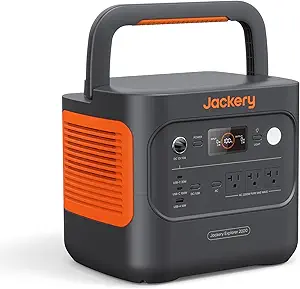


| solar generator for cpap | Capacity | Weight |
|---|---|---|
| LIBRIDS Portable Power Station | 640Wh | — |
| VTOMAN Jump 600X Portable Powe | 299Wh | — |
| Jackery Explorer 1000 v2 Porta | 1070Wh | 23.8 lbs |
| Portable Solar Generator | 296Wh | 6.5 lbs |
| Portable Solar Generator | — | Approx. 10 lbs |
| Jackery Portable Power Station | 292Wh | 7.5 lbs |
| Solar Powered Generator 200W P | 146Wh | 3.3 lbs |
| Jackery Explorer 2000 v2 Porta | 2042Wh | 39.5 lbs |
| MARBERO 200W Portable Power St | 146Wh (40,000mAh/3.7V) | 3.3 lbs |
| Jackery Solar Generator 1000 v | 1070Wh | 23.8 lbs |
| Jackery Solar Generator 300 | 292Wh | 7.5 lbs |
More Details on Our Top Picks
LIBRIDS Portable Power Station C600, 640Wh LiFePO4 Battery, 600W (Peak 1200W) Solar Generator, 1.5H Fast Charge, 10ms UPS, 8 Ports(4 AC) for Camping, Home Backup & Outages
This model stands out for combining a large 640Wh LiFePO4 battery with a pure sine wave inverter, making it ideal for running sensitive devices like CPAP machines during outages or camping. Its 600W continuous output handles most small appliances and medical devices smoothly, unlike less robust options such as the MARBERO 172Wh generator, which may struggle with higher wattage needs. The ultra-fast 1.5-hour full charge and 10ms UPS switching provide peace of mind in emergencies, but its indoor-only safety warning limits outdoor exposure. Compared to the Jackery Explorer 1000, this offers similar clean power but with quicker recharging and a longer battery lifespan, though at a slightly higher price. Its 8 ports allow powering multiple devices simultaneously, making it highly versatile. The main tradeoff is its size and weight, which may be less portable for some users.
Pros:- Large 640Wh LiFePO4 battery for extended use
- Pure sine wave inverter ensures safe power for sensitive devices
- Fast recharge in 1.5 hours with industry-leading UPS switching
- 8 ports for multiple device charging
Cons:- Indoor-only use due to safety warning limits outdoor exposure
- Heavier and bulkier compared to smaller units like MARBERO 172Wh
Best for: Home users needing reliable, stable power for CPAP during outages and outdoor enthusiasts seeking a robust portable solution.
Not ideal for: Lightweight backpackers or those needing ultra-compact units, as this is relatively bulky and indoor-safety restricted.
- Capacity:640Wh
- Wattage:600W continuous
- Surge Power:1200W
- Charge Time:1.5 hours
- Battery Type:LiFePO4
- Ports:4 AC, USB, USB-C
- UPS:10ms
- Safety Warning:Indoor use only
Our verdict“This pick is best for those who prioritize reliable, clean power for CPAP and sensitive electronics in a versatile, durable package.”
VTOMAN Jump 600X Portable Power Station 600W, 299Wh LiFePO4 Battery Power Station with Jump Start for Car, 1200W AC Outlet, PD 60W USB-C, 3x Regulated 12V/10A DC for Camping, RV Travel
This model excels as a dual-purpose device, combining a 299Wh LiFePO4 power station with a car jump-start feature, making it ideal for RVers and roadside emergencies. While the 600W surge capacity and 1200W peak power match the LIBRIDS C600, its smaller battery capacity limits extended use for CPAP or multiple devices. Its ability to expand capacity with an extra battery is a plus, but the 2.7-hour recharge time for full capacity is longer than the LIBRIDS’ rapid charging. Its multiple output ports, including PD 60W USB-C and regulated 12V DC, make it flexible for charging laptops, CPAPs, and other electronics. Compared to the Jackery Explorer 1000, the Jump 600X is more portable but less suitable for prolonged off-grid power without additional batteries. The main trade-off is its limited battery size, which restricts long-term use without expansion.
Pros:- Integrated car jump-start feature for roadside emergencies
- Expandable capacity with optional extra battery
- Multiple outputs including PD 60W USB-C and regulated DC
- Surge power up to 1200W for demanding appliances
Cons:- Limited 299Wh capacity for prolonged use
- Longer recharge time compared to larger units
Best for: RV travelers and car owners needing emergency jump-starts combined with portable power for small devices.
Not ideal for: Those seeking long-lasting power for extended camping or medical device use, due to its smaller capacity.
- Capacity:299Wh
- Wattage:600W continuous
- Surge Power:1200W
- Charge Time:2.7 hours
- Battery Type:LiFePO4
- Ports:AC, USB-C, DC
- Expandability:Yes, with extra battery
- Special Feature:Car jump start
Our verdict“Ideal for RVers and drivers who need emergency jump-starts combined with versatile, portable power for short-term needs.”
Jackery Explorer 1000 v2 Portable Power Station,1070Wh LiFePO4 Battery,1500W AC/100W USB-C Output, 1 Hr Fast Charge, Solar Generator for Camping,Emergency, RV, Off-Grid Living(Solar Panel Optional)
The Jackery Explorer 1000 v2 offers a massive 1070Wh capacity with a durable LiFePO4 battery, making it suitable for powering CPAPs and multiple devices over extended periods. Its 1500W AC output surpasses many competitors, including the LIBRIDS C600, providing power for high-wattage appliances if needed. The one-hour fast charge via the Jackery App adds convenience, especially for emergency scenarios. Its lightweight 23.8 lbs and foldable handle enhance portability, and the advanced ChargeShield 2.0 technology promises long-term durability exceeding 10 years. While it does not include solar panels, compatibility with solar charging makes it ideal for off-grid or emergency use. Compared with smaller models like MARBERO or EnginStar, this is better suited for longer, more demanding power needs but involves a higher cost and bulkier size. Its main tradeoff is the higher price relative to smaller units.
Pros:- Massive 1070Wh capacity for prolonged use
- Fast one-hour recharging capability
- High 1500W continuous output for demanding devices
- Long battery lifespan over 4000 cycles
Cons:- Heavier and bulkier than smaller units like MARBERO or EnginStar
- Requires additional purchase of solar panels for solar charging
Best for: Users needing large-capacity power for extended off-grid use, including CPAP machine operation and multiple device charging.
Not ideal for: Light travelers or those with limited space, due to its size and higher price point.
- Capacity:1070Wh
- Wattage:1500W continuous
- Surge Power:3000W
- Charge Time:1 hour
- Battery Type:LiFePO4
- Ports:AC, USB-C, USB-A, DC
- Weight:23.8 lbs
- Special Feature:App control
Our verdict“This device is best for those seeking substantial, reliable power for extended off-grid or emergency use, with fast recharge times.”
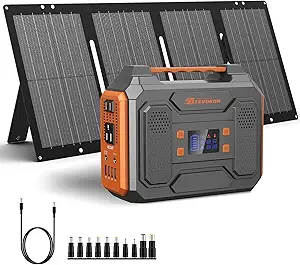
Portable Solar Generator, 300W Portable Power Station with Foldable 60W Solar Panel, 110V Pure Sine Wave 296Wh 80000mAh Lithium Battery Pack for Home Use RV Van Outdoor Camping-Panel included
This compact unit offers 296Wh with a 300W pure sine wave inverter, making it suitable for powering CPAPs and small electronics during short trips or backup scenarios. Its foldable 60W solar panel helps recharge in sunlight, providing a sustainable option, but the modest 296Wh capacity limits its runtime for longer power needs, especially compared to larger units like LIBRIDS or Jackery Explorer 1000. The lightweight design at just 6.5 pounds boosts portability, yet its 300W output may restrict use to low-wattage devices. Compared to the MARBERO 172Wh generator, it offers a similar size but with slightly higher output, though at a higher price for the solar panel bundle. The main drawback remains its limited capacity and output, making it less suitable for extended off-grid power or running multiple devices simultaneously.
Pros:- Lightweight and portable at only 6.5 pounds
- Pure sine wave inverter protects sensitive devices
- Includes foldable 60W solar panel for eco-friendly recharging
- Multiple output ports for versatile device charging
Cons:- Limited 296Wh capacity for prolonged use
- Maximum 300W output restricts high-wattage device operation
Best for: Outdoor enthusiasts or emergency kit owners needing a small, portable, and solar-rechargeable power source for CPAP and basic devices.
Not ideal for: Users requiring longer runtimes or higher wattage power, like multiple appliances or extended camping trips.
- Capacity:296Wh
- Wattage:300W
- Surge Power:270W
- Weight:6.5 lbs
- Solar Panel Power:60W
- Recharging Methods:Solar, AC, Car
- Dimensions:7.6 x 3.6 x 5.4 inches
- Special Feature:Foldable solar panel
Our verdict“This unit is best suited for light, short-term power needs in outdoor or emergency situations where portability is paramount.”
Portable Solar Generator, 300W Portable Power Station with Foldable 60W Solar Panel,110V Pure Sine Wave 280Wh Battery Power Pack with USB DC AC Outlet for Camping Smart Devices RV Van Outdoor-Orange
This compact option excels for campers or emergency prep with its included foldable 60W solar panel and multiple outputs, making it ideal for powering CPAP devices in off-grid scenarios. Unlike the Jackery Explorer 300, which offers higher capacity, the ZeroKor 300W is more affordable and lightweight, but it limits your power to devices under 300W, restricting larger appliances. Its high-efficiency monocrystalline panels and multiple charging options make it versatile, yet the smaller battery capacity (280Wh) means you’ll need to recharge more often, especially with heavier loads. Compared to the Jackery model, it’s less durable over long-term use, but it provides a solid balance for portable, flexible power on camping trips or short-term outages.
Pros:- Affordable price point for portable solar power
- Includes foldable 60W solar panel for easy setup
- Multiple charging outlets including USB-C and quick charge ports
- Built-in SOS flashlight enhances outdoor safety
Cons:- Limited to devices under 300W, restricting larger appliances
- Relatively small 280Wh capacity requires frequent recharging
- Build quality and durability may be less than premium models
Best for: Budget-conscious outdoor enthusiasts who need reliable CPAP power in off-grid settings.
Not ideal for: Users needing long-term backup power or to run high-wattage appliances continuously, as the battery capacity and output limit sustained use.
- Battery Capacity:280Wh
- AC Outlets:2 x 300W max
- USB Ports:3 x 5V/3A, quick charge USB
- Solar Panel:60W foldable
- Weight:Approx. 10 lbs
- Charging Options:AC, Solar, Car
Our verdict“This pick suits those needing a budget-friendly, portable CPAP power solution for short trips or emergency use without high wattage demands.”
Jackery Portable Power Station Explorer 300, 292Wh Backup LiFePO4 Battery, Solar Generator for Outdoors Camping Travel Hunting Blackout (Solar Panel Optional)
The Explorer 300’s lightweight design and robust LiFePO4 chemistry make it stand out for extended outdoor use, especially for powering CPAP machines during camping or short-term outages. Compared to the ZeroKor, it offers a slightly higher capacity (292Wh) and more durable battery life, supporting over 4,000 cycles. Its compact form, with an integrated handle, makes it easier to carry on hikes or in RVs, while its fast solar charging (about 2.8 hours to 80%) ensures you won’t be left powerless for long. The drawback is that it lacks an integrated solar panel, requiring a separate purchase, and its maximum wattage is limited to 300W, which may restrict some higher-wattage devices. Overall, this is ideal for users who prioritize longevity and reliable power for CPAP in remote locations.
Pros:- Long-lasting LiFePO4 battery with over 4,000 cycles
- Lightweight and easy to carry for outdoor activities
- Fast charging via solar panels or AC, with 80% in under 3 hours
- Reliable for powering CPAP machines and small devices
Cons:- Requires separate purchase of solar panels
- Limited to 300W maximum output, restricting larger devices
- Higher price point compared to smaller portable units
Best for: Outdoor adventurers seeking a durable, long-lasting power source for CPAP devices and small electronics.
Not ideal for: Users who want an all-in-one solar kit or need to power high-wattage appliances for extended periods, as this model is best suited for moderate loads and long-term reliability.
- Capacity:292Wh
- Power Output:300W continuous
- Battery Type:LiFePO4
- Weight:7.5 lbs
- Charging Time:2.8 hours (solar)
- USB-C PD:100W
Our verdict“This unit makes sense for users prioritizing durability and long-term performance for CPAP backup in remote or camping environments.”
Solar Powered Generator 200W Peak/100W Rated, Portable Solar Generator Power Station with Solar Panels 40W Included, 146Wh Solar Power Bank with AC Outlet 110V for Home Use Camping Outdoor Adventure
This small, lightweight unit stands out for its portability, making it perfect for short camping trips or emergency backup for CPAP devices. Its 146Wh capacity is enough for a night or two of CPAP use but limits longer-term power. The inclusion of a 40W solar panel and multiple outlets, including dual AC and USB, provides flexibility, but the limited battery capacity means it’s better suited for brief outages or supplementary power rather than extended use. Compared with larger units like the Jackery Explorer 2000, it’s less capable of handling high wattage or prolonged loads, yet it remains a practical choice for minimalists or those with space constraints. Its built-in LED flashlight adds emergency value.
Pros:- Very portable, lightweight at just over 3 lbs
- Includes solar panel for off-grid charging
- Multiple charging options with AC and USB ports
- Integrated LED flashlight with SOS mode
Cons:- Limited battery capacity for extended use
- Not suitable for high-wattage appliances or long-term backup
- Small size restricts power availability for larger devices
Best for: Emergency preparedness or short outdoor excursions where size and weight matter most.
Not ideal for: Heavy-duty or long-duration power needs, especially for continuous CPAP operation over multiple nights.
- Capacity:146Wh
- AC Output:110V, 100W
- Solar Panel:40W included
- Weight:3.3 lbs
- Charging Time:Approx. 4-5 hours
- Built-in Light:Yes
Our verdict“This unit is ideal for emergency or short-term camping power, especially for CPAP devices during brief outages.”
Jackery Explorer 2000 v2 Portable Power Station, 2042Wh LiFePO4 Battery, 2200W Solar Generator, USB-C PD 100W Fast Charging
The Jackery Explorer 2000 v2 offers a substantial 2042Wh capacity, making it well-suited for extended CPAP use during power outages or off-grid living. Its high-capacity LiFePO4 battery supports over 10 years of service and more than 4,000 cycles, surpassing smaller models in durability and longevity. While its weight of nearly 40 lbs makes it less portable, it compensates with the ability to run multiple devices simultaneously, including high-wattage appliances. Its fast recharge time of about 1.7 hours with AC and compatibility with solar panels allows flexible recharging in remote locations. However, due to its size and weight, it’s less suitable for frequent hikes or quick trips, but it excels for backup power at home or in RVs where long-term reliability matters most.
Pros:- Exceptional 2042Wh capacity for long-lasting power
- High cycle life with LiFePO4 chemistry (over 4,000 cycles)
- Fast charging with AC or solar, recharge in under 2 hours
- Supports multiple devices simultaneously with 2200W peak output
Cons:- Heavy and less portable, not ideal for frequent moving
- Higher cost compared to smaller units
- Requires larger storage space
Best for: Homeowners or campers needing a high-capacity, durable power source for CPAP and multiple devices during extended outages.
Not ideal for: Lightweight travelers or those requiring a small, portable unit for brief outdoor excursions, due to its size and weight.
- Capacity:2042Wh
- Power Output:2200W peak
- Battery Type:LiFePO4
- Weight:39.5 lbs
- Charge Time:102 min
- USB-C PD:100W
Our verdict“This model is best suited for those who need extended, reliable CPAP backup power in a stationary or semi-permanent setup.”
MARBERO 200W Portable Power Station 148Wh Camping Solar Generator Laptop Power Bank with AC Outlet 110V, DC, USB QC3.0, LED Flashlights for CPAP Home Outdoor Trip Emergency Backup
The MARBERO 200W Portable Power Station stands out for its small size and multiple output options, making it a practical choice for powering a CPAP during short trips or outages. Compared with larger units like the Jackery Explorer 1000, it offers less capacity but excels in portability — fitting easily in a backpack or bedside table. Its 146Wh capacity means it can run a CPAP for about 1-2 nights, but it’s not suited for extended outages or high-power appliances. The built-in LED flashlight adds emergency value, and the pass-through charging allows for continuous power while recharging. However, the limited capacity and 200W max output mean it isn’t ideal for powering other heavy devices or longer-term needs. This pick makes the most sense for users seeking a lightweight, portable backup for one night’s CPAP or light devices.
Pros:- Very compact and lightweight at only 3.3 lbs
- Multiple output ports including AC, USB, and DC
- Pass-through charging for convenience during recharges
Cons:- Limited 146Wh capacity restricts run time for CPAP to about 1-2 nights
- Maximum 200W output limits use with higher-power devices
Best for: Travelers or campers needing a lightweight, portable backup for CPAP and small devices.
Not ideal for: People who require long-term power backup or to run high-wattage appliances, due to its limited capacity.
- Capacity:146Wh (40,000mAh/3.7V)
- AC Output:200W (270W peak)
- Outputs:2 x USB A QC3.0, 2 x USB A, 1 x PD USB-C, 2 x AC outlets, 1 x DC 5.5mm
- Recharging Methods:Wall, car, solar (not included)
- Size:7.5 x 5.3 x 3.6 inches
- Weight:3.3 lbs
Our verdict“This portable power station is best suited for short-term CPAP backup during outdoor activities or emergency situations where size matters.”
Jackery Solar Generator 1000 v2 with 200W Solar Panel, 1070Wh Portable Power Station LiFePO4 Battery, 1500W AC/100W USB-C Output, 1Hr Fast Charge for Outdoor, Off-Grid Living, RV, Emergency
The Jackery Explorer 1000 v2 makes a compelling choice for those needing reliable, long-duration power for a CPAP, especially when paired with its 200W solar panel. Its 1070Wh capacity far surpasses smaller options like the MARBERO, enabling multiple nights of CPAP operation without recharging, and it supports a wide array of devices via pure sine wave AC outlets and multiple USB ports. The fast one-hour recharge feature sets it apart from many competitors, making it ideal for users with unpredictable power needs or frequent outdoor trips. Its LiFePO4 battery ensures over a decade of service life, which adds value for long-term users. Compared to the Jackery Explorer 300, it offers significantly higher capacity but at a higher weight and size—still manageable for most outdoor setups. This model is best for campers, RV travelers, or emergency prepppers seeking dependable, scalable power for CPAP and other critical appliances.
Pros:- Large 1070Wh capacity supports multiple nights of CPAP use
- Fast 1-hour recharge with optional solar or AC
- Long battery lifespan of over 4,000 cycles with LiFePO4 chemistry
- Multiple outlets including USB-C PD and pure sine wave AC
Cons:- Relatively heavy at 23.8 lbs, less portable for backpacking
- Higher initial cost compared to smaller units
Best for: Users needing dependable, long-term power for CPAP during extended trips or off-grid living.
Not ideal for: Those seeking ultra-lightweight or budget-friendly options for short-term, single-night use.
- Capacity:1070Wh
- AC Output:1500W
- Battery Chemistry:LiFePO4
- Fast Charging:1 hour
- Weight:23.8 lbs
- Solar Panel:200W included
Our verdict“This power station is ideal for those who need a durable, scalable solution for extended CPAP use and off-grid living.”
Jackery Solar Generator 300, 292Wh Power Station with 40W Solar Panel, 300W Pure Sine Wave AC Outlet for RV Outdoors Camping Travel Blackout
The Jackery Explorer 300 offers a lightweight, reliable option for powering a CPAP during short camping trips or power outages. Its 292Wh capacity is enough to run a CPAP for roughly one night, similar to the MARBERO, but it benefits from a slightly larger battery and the addition of a 40W solar panel for quick recharges in off-grid settings. Its 300W pure sine wave inverter ensures clean power for sensitive devices like CPAP machines. Compared to larger units, it’s less suited for multi-day outages, but its portability and quick recharge via solar make it a versatile companion for outdoor enthusiasts. The LiFePO4 chemistry guarantees over 4,000 charge cycles, promising years of dependable use. However, its limited capacity restricts operation time and high-wattage appliances. This model works best for users who need a lightweight, portable power source for short-term CPAP backup and outdoor adventures.
Pros:- Lightweight at only 7.5 lbs, easy to carry
- Includes a 40W solar panel for quick recharging
- Pure sine wave AC outlets for safe operation of CPAP machines
- Durable LiFePO4 battery with over 4,000 cycles
Cons:- Limited 292Wh capacity restricts run time to about one night
- Solar panel capacity may be insufficient for rapid full recharge in cloudy conditions
Best for: Outdoor enthusiasts or travelers needing a compact, quick-charging power source for CPAP and small devices.
Not ideal for: People with high power demands or extended outages, due to its limited capacity.
- Capacity:292Wh
- AC Output:300W
- Battery Chemistry:LiFePO4
- Solar Panel:40W included
- Weight:7.5 lbs
- Charge Cycles:Over 4,000
Our verdict“This generator is best for quick, portable backup of CPAP during outdoor trips or short outages where weight and size matter.”
How We Picked
I evaluated these solar generators based on several key criteria: power output, battery capacity, portability, recharging speed, and safety features like pure sine wave technology. Units with higher watt-hour ratings can power CPAP machines longer, which is vital for overnight use. Portability was also a focus, as many CPAP users need a lightweight option for travel or outdoor activities. Additionally, I considered the versatility of output ports and how quickly the units recharge via solar or AC power. Products were ranked by how well they balance these factors for consistent, safe CPAP operation, with a premium tier for those prioritizing capacity and a budget tier for portability.Factors to Consider When Choosing Solar Generator For Cpap
Choosing the right solar generator for CPAP depends on understanding several key factors. Capacity determines how many nights your CPAP can run without recharging, so larger batteries are preferable for extended use. The quality of the power output—specifically pure sine wave—ensures your device runs smoothly and safely. Portability is critical if you plan to travel or camp, balancing size and weight against battery life. Recharging options and speed also matter, especially during emergencies, to keep your power source ready. Lastly, consider your budget and which features are non-negotiable for your specific needs.Capacity and Battery Life
Battery capacity is measured in watt-hours (Wh) and directly impacts how long your CPAP can run overnight. A typical CPAP consumes about 30-60W, so a unit with 300Wh could last roughly 5-10 hours depending on your device’s power draw. Larger capacities like 1000Wh or more provide longer run times but tend to be heavier and more expensive. If you experience frequent outages or travel often, investing in a higher capacity can save you from frequent recharging or replacement. However, for occasional use, a smaller, more portable unit may suffice, even if it requires recharging mid-night.
Pure Sine Wave Output
Ensuring the generator produces pure sine wave power is essential for CPAP machines, which are sensitive to power quality. Modified sine wave generators can cause noise or malfunction, risking your sleep quality or device damage. While pure sine wave units tend to be pricier, their stability and safety justify the extra cost. For consistent, safe operation during outages or travel, prioritize generators explicitly rated for pure sine wave output, especially if your CPAP has a heater or humidifier that demands steady power.
Portability and Size
Portability varies widely and impacts how you’ll use the generator. Smaller units like the MARBERO 172Wh are lightweight and easy to carry, ideal for camping or short trips, but they typically offer limited run time. Larger models, such as the Jackery Explorer 1000, provide extended power but are bulkier and heavier, making them less convenient for frequent transport. Think about your typical use cases—if you need a backup for emergencies at home, size matters less than capacity. For outdoor adventures, a compact, lightweight unit is usually preferable, even if it means shorter run times.
Recharging Options and Speed
Fast and flexible recharging methods are critical, especially during extended outages or remote camping. Many units support solar charging, which allows for off-grid recharging, but the solar input capacity varies. Units with higher solar input ratings recharge faster, reducing downtime. AC wall charging is usually quicker but less practical outdoors. Some generators, like the Jackery Explorer 1000, can recharge to full in around 4-5 hours with wall power, while solar recharging may take significantly longer. Consider your typical recharge environment and how quickly you need to restore power for your CPAP.
Budget vs. Features
Price often reflects capacity, build quality, and feature set. Higher-capacity units with fast charging and multiple ports cost more but provide peace of mind during prolonged outages or travel. Budget models may be suitable for short-term or emergency use but might fall short for extended needs. Carefully evaluate your primary use—if you need reliable, overnight power for CPAP, investing in a higher-capacity, pure sine wave generator makes sense. Conversely, for occasional, short-term backup, more affordable options could suffice, provided they meet your power requirements.
Frequently Asked Questions
Can I run my CPAP with a small portable solar generator?
Running your CPAP with a small portable solar generator depends on its power capacity and output quality. Many compact units, like the MARBERO 172Wh, can power a CPAP for a few hours, making them suitable for short trips or backup. However, if you need to run your CPAP overnight consistently, a larger capacity unit with at least 300Wh and pure sine wave output is recommended. Always check your CPAP’s wattage requirements and confirm that the generator can deliver stable, clean power to avoid interruptions or damage.
Is pure sine wave power necessary for CPAP machines?
Yes, pure sine wave power is highly recommended for CPAP machines because it provides a clean, stable current similar to grid power. Using modified sine wave generators can cause noise, malfunction, or even damage sensitive components. For the safety and longevity of your CPAP, investing in a generator with pure sine wave output is a wise choice, especially during long-term outages or frequent travel. While pure sine wave units are typically more expensive, the peace of mind and device safety they offer are well worth it.
How long will a 300Wh solar generator power my CPAP?
A 300Wh solar generator can power a typical CPAP that consumes around 50W for approximately 6 hours. Actual run time depends on your device’s specific wattage and whether features like humidifiers are used. If your CPAP uses less power or has an adjustable setting, you might get longer. For overnight use, a 300Wh unit is often enough for one or two nights, but for extended trips or if your CPAP has higher power demands, a larger capacity is advisable.
Can I recharge my solar generator with a portable solar panel?
Yes, most portable solar generators support recharging via solar panels, making them suitable for off-grid use. The recharging speed depends on the panel’s wattage and sunlight conditions. For example, a 60W panel can fully recharge a 300Wh unit in about 5-6 hours under ideal conditions. When choosing a panel, ensure it’s compatible with your generator’s input specifications. Efficient solar recharging offers a sustainable way to keep your generator ready for CPAP use during extended outages or outdoor trips.
Conclusion
The best overall choice for most users is the LibRIDs Portable Power Station C600 due to its large capacity, fast recharge, and reliable pure sine wave output. If portability is your priority, the MARBERO 172Wh Solar Generator offers a compact, lightweight option for outdoor adventures, though with limited run time. For those needing a versatile, high-capacity unit that can handle a variety of devices, the Jackery Explorer 1000 v2 balances size, power, and charging speed. Beginners or casual users might favor smaller models, while emergency preparedness advocates should consider larger, more robust options. Ultimately, your choice should align with your specific power needs, travel habits, and budget constraints.
Fall Picks
fall essentials
As an affiliate, we earn on qualifying purchases.