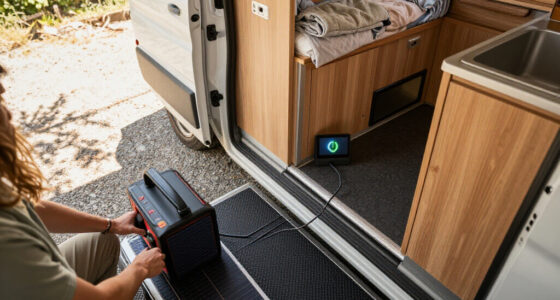
The best home solar generator overall in this lineup is the Anker SOLIX C1000 Gen 2, a balanced choice for household essentials that is easier to manage than the largest systems. For longer outages, the Jackery HomePower 3600 Plus offers more stored energy, while the EcoFlow DELTA Pro stands out for its high output and larger-home potential. The main tradeoff is between portability and capacity: compact units are simpler to store and move, but run fewer or smaller appliances, while high-capacity models take up more space and need a bigger budget. Solar panels can extend runtime, but actual recharging depends on sunlight, panel placement, and the load running at the same time. Read on for the full breakdown and help matching a generator to your backup priorities.

Get backup power and energy gear delivered free with Prime
- Fast, free delivery on millions of items
- Prime Video, Amazon Music and more included
- Member-only deals all year
Complete the kit


Key Takeaways
- The 1,000Wh class is the practical middle ground: the Anker SOLIX C1000 Gen 2 and EcoFlow DELTA 3 Classic offer more usable household backup potential than the 288–300Wh models without the footprint of multi-kilowatt-hour systems.
- Capacity and output solve different problems: a larger battery can run a modest load longer, while higher AC wattage is what lets a unit start or operate more demanding appliances.
- For extended outages, compare the 2,000Wh-plus options by more than capacity: the Jackery HomePower 3000, HomePower 3600 Plus, BLUETTI Elite 200 V2, and EcoFlow DELTA 3 Max vary in output, included panels, and intended scale.
- The 300Wh picks are for small loads, not whole-home backup: the Jackery 300 and BLUETTI Elite 30 V2 suit phones, lights, and modest electronics, but their limited stored energy narrows outage coverage.
- The Jackery Solar Generator 5000 Plus sits in a different class: its 5040Wh capacity and 7200W output target larger backup needs, but buyers must be ready for greater space, setup, and system-planning demands.







| home solar generator | Battery capacity | Weight | Dimensions | Battery type |
|---|---|---|---|---|
| Jackery Solar Generator 300 wi | 292Wh | 12.9 pounds | 15.43 x 9.92 x 11.89 inches | — |
| BLUETTI Elite 30 V2 Portable P | 288Wh | 9.4 pounds | 9.8 x 7 x 6.6 inches | — |
| Anker SOLIX C1000 Gen 2 Portab | 1,024Wh | — | — | LiFePO4 |
| EcoFlow Portable Power Station | 3,600Wh | 99 pounds | 25 x 11.2 x 16.4 inches | — |
| EF ECOFLOW Solar Generator Del | 1,024Wh | — | — | LiFePO4 |
| Jackery Explorer 2000 v2 with | 2,042Wh | 66.8 lb | 13.2 × 10.4 × 11.5 in | LiFePO4 |
| Portable Solar Generator 300W | — | — | — | — |
| BLUETTI Elite 200 V2 Solar Gen | 2,073.6Wh | 53.4 lb | — | LiFePO4 |
| EcoFlow DELTA 3 Max Portable P | 2,048Wh | — | 19.5 × 9.4 × 12 in | — |
| Jackery HomePower 3000 with 2x | 3,072Wh | 59.5 lb | 16 × 13 × 20 in | LiFePO4 |
| Jackery HomePower 3600 Plus wi | 3584Wh | 77.2 pounds | 15.2 x 12.2 x 19.3 inches | LFP |
| Jackery Solar Generator 1000 v | 1070Wh | 23.8 pounds | 12.87 x 8.82 x 9.72 inches | — |
| Anker SOLIX S2000 Portable Pow | 2010Wh | 35.7 pounds | 8.2 x 11.1 x 12.7 inches | LiFePO4 |
| Jackery Solar Generator 5000 P | 5040Wh | 134.5 pounds | 16.5 x 15.5 x 25 inches | LiFePO4 |
More Details on Our Top Picks
Jackery Solar Generator 300 with 40W Solar Panel, 292Wh, 300W AC
The Jackery Explorer 300 suits buyers who value a small, portable backup kit over whole-home coverage. At 12.9 pounds with a 300W continuous output, it can keep phones, lights, and other modest loads running, but it cannot handle high-draw appliances. Compared with the BLUETTI Elite 30 V2, it is heavier and offers half the continuous output, so the BLUETTI is the stronger choice when surge capacity and lighter carry matter. Jackery’s advantage here is the included 40W solar panel, which gives buyers a solar-ready setup in the box; expect slow replenishment from a panel of that size, especially when sunlight is limited. I’d choose it for short outages or camping, not as a household’s main solar backup.
Pros:- Includes a 40W solar panel for a ready-to-use solar charging setup
- Portable 12.9-pound design is manageable for camping and occasional relocation
- AC, USB-C, USB-A, and car charging options support a mix of small devices
Cons:- 300W continuous output rules out many household appliances
- The small included panel can make solar recharging slow
- Heavier and lower-output than the 9.4-pound BLUETTI Elite 30 V2
Best for: Campers and apartment residents who want an included solar panel for charging phones, lights, and other low-wattage essentials.
Not ideal for: Households seeking to run refrigerators, kitchen appliances, or several high-draw devices during an outage; its 300W continuous output is restrictive.
- Battery capacity:292Wh
- Continuous output:300W
- Starting wattage:600W
- Included solar panel:40W
- Weight:12.9 pounds
- Voltage:120V
- Dimensions:15.43 x 9.92 x 11.89 inches
Our verdict“Choose the Jackery Explorer 300 for portable, low-wattage backup with a panel included, but pick a larger unit for meaningful home coverage.”
BLUETTI Elite 30 V2 Portable Power Station 288Wh 600W LFP Solar Generator
The BLUETTI Elite 30 V2 packs useful output into a 9.4-pound unit: its 600W continuous output and 1,500W surge rating give it more headroom for brief startup loads than the Jackery Explorer 300. Its 288Wh capacity is still modest, though, so that extra power is about what it can run at once—not how long it can run. The listed 10ms UPS feature makes it a better fit than the Jackery for keeping compatible electronics supplied through brief outages. AC charging can reach 80% in 45 minutes, but solar charging requires a compatible panel, unlike the Jackery bundle that includes a 40W panel. I’d favor the BLUETTI when compact backup speed and output matter more than an all-in-one solar package.
Pros:- 600W continuous output and 1,500W surge provide more headroom than the Jackery Explorer 300
- At 9.4 pounds, it is the lightest option among these compact units
- Listed 45-minute AC charge to 80% helps shorten downtime
- 10ms UPS support is useful for compatible electronics during outages
Cons:- 288Wh capacity limits runtime, even when powering modest devices
- Solar charging requires a compatible panel, which is not included in the listed package
- Fast charging does not solve the limited energy reserve for extended outages
Best for: People who want a light emergency power station for routers, laptops, and small devices, with fast AC recharge and UPS support.
Not ideal for: Buyers who need long runtimes for household appliances or want a solar panel bundled for immediate off-grid charging.
- Battery capacity:288Wh
- Continuous output:600W
- Surge power:1,500W
- Battery chemistry:LFP
- Weight:9.4 pounds
- AC recharge:45 minutes to 80%
- UPS switching time:10ms
- Dimensions:9.8 x 7 x 6.6 inches
Our verdict“Pick the Elite 30 V2 for a lightweight, quick-recharging device backup station, not for extended household power.”
Anker SOLIX C1000 Gen 2 Portable Power Station with 200W Solar Panel
The Anker SOLIX C1000 Gen 2 is a more practical home-backup step up from the compact Jackery Explorer 300 and BLUETTI Elite 30 V2: its 1,024Wh capacity and 2,000W continuous output can support several devices or more demanding appliances, within their limits. A listed 200W solar panel gives this package a more substantial solar starting point than the Jackery’s 40W panel, though actual recharge time depends on sunlight and the supplied data does not specify solar input conditions. It also offers nine outlets and a 3,000W peak rating, useful when multiple devices need connection or a load has a brief startup surge. The tradeoff is that it remains a portable battery, not a multi-day household system; the EcoFlow DELTA Pro’s much larger, expandable capacity is better suited to longer outages.
Pros:- 1,024Wh capacity and 2,000W output offer a substantial step up from compact 288–292Wh stations
- Includes a 200W solar panel, a larger listed panel than the Jackery Explorer 300 bundle
- Nine outlets allow several devices to connect at once
- LiFePO4 battery and five-year warranty are listed
Cons:- A 1,024Wh reserve may run down quickly when powering larger household loads
- The supplied data does not give a clear solar recharge time for the bundled 200W panel
- Less suitable for extended outages than the expandable 3,600Wh EcoFlow DELTA Pro
Best for: Households wanting a portable station for essential devices and moderate appliance loads, plus a bundled 200W panel for solar charging.
Not ideal for: Buyers who need multi-day whole-home backup or frequent high-capacity solar replenishment; a 1,024Wh battery is limited for those demands.
- Battery capacity:1,024Wh
- Continuous output:2,000W
- Peak power:3,000W
- Included solar panel:200W
- Number of outlets:9
- Battery type:LiFePO4
- Solar recharge time:1.8 hours (listed)
- Warranty:5 years
Our verdict“Choose the Anker C1000 Gen 2 for portable essential-load backup with a bundled 200W panel, but look to an expandable system for longer outages.”
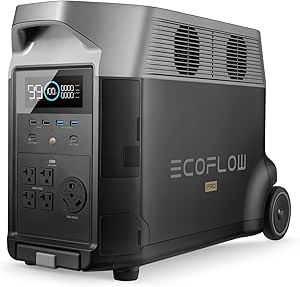
EcoFlow Portable Power Station DELTA Pro 3600Wh, 120V 3600W AC Output
For buyers prioritizing stored energy and room to grow, the EcoFlow DELTA Pro sits well above the smaller Anker C1000 Gen 2 and DELTA 3 Classic. Its 3,600Wh capacity gives essential household loads a much deeper reserve, and the system can expand up to 25kWh with additional batteries or generators. That scale makes it a stronger fit for longer outages, while multiple charging options and 15 outlets support a broader backup setup. The cost of that capability is physical: at 99 pounds, this is not a station to carry casually between rooms or take on a camping trip. I’d choose it as a stationary or wheeled backup hub where capacity and expansion matter more than portability. The supplied data lists differing output figures, so buyers should confirm the unit’s exact output rating before matching it to appliances.
Pros:- 3,600Wh capacity provides a much larger energy reserve than the 1,024Wh Anker C1000 Gen 2
- Expandable capacity up to 25kWh supports a larger backup plan
- Fifteen outlets offer many connection options for a home setup
- Multiple charging methods and app control support flexible operation
Cons:- At 99 pounds, it is difficult to reposition without help
- Expansion requires additional batteries or generators rather than being built into the base unit
- The supplied listing gives conflicting output wattage figures, so buyers should verify appliance compatibility
Best for: Homeowners planning a substantial backup system for essential household loads who have space for a heavy unit and may expand capacity later.
Not ideal for: Campers, frequent movers, and buyers who need an easy-to-carry station; its 99-pound weight makes portability a real limitation.
- Battery capacity:3,600Wh
- Output wattage:Listing specifies 3,600W running and also 4,500W output
- Starting wattage:7,200W
- Expandable capacity:Up to 25kWh
- Number of outlets:15
- Voltage:120V
- Weight:99 pounds
- Dimensions:25 x 11.2 x 16.4 inches
Our verdict“Choose the DELTA Pro when home backup capacity and future expansion outweigh the inconvenience of a 99-pound base unit.”
EF ECOFLOW Solar Generator Delta 3 Classic with 220W Solar Panel, 1024Wh
The EcoFlow DELTA 3 Classic targets buyers who want a useful home-backup capacity without the DELTA Pro’s 99-pound scale. Its 1,024Wh battery matches the Anker SOLIX C1000 Gen 2 on capacity, while the 1,800W output and 3,600W surge rating provide substantial power for compatible household essentials. The included 220W panel is slightly larger than Anker’s listed 200W panel, and AC charging reaches 80% in 45 minutes. A 10ms UPS feature also gives it a specific role for electronics that benefit from rapid backup switching. Those strengths do not make it a whole-home substitute: the battery reserve remains modest beside the expandable DELTA Pro, and the 220W solar input can make replenishment slow for frequent, heavy use. I’d pick it for a portable essentials setup rather than long-duration backup.
Pros:- 1,024Wh capacity and 1,800W output can support a range of essential devices
- Includes a 220W solar panel, slightly higher wattage than the Anker C1000 Gen 2 bundle
- AC charging reaches 80% in 45 minutes
- 10ms UPS and LiFePO4 battery suit electronics backup and long-term use
Cons:- 220W solar input can be slow for replenishing the battery after heavy use
- Its 1,024Wh capacity is far below the 3,600Wh EcoFlow DELTA Pro
- The generator and panel may arrive separately, complicating setup timing
Best for: Households seeking a portable 1,024Wh backup for essential appliances and electronics, with a bundled panel and UPS support.
Not ideal for: Buyers who need long-duration home backup, rapid large-battery solar replenishment, or the expandability offered by the EcoFlow DELTA Pro.
- Battery capacity:1,024Wh
- Continuous output:1,800W
- Surge power:3,600W
- Included solar panel:220W
- AC recharge time:45 minutes from 0–80%
- Solar panel efficiency:Up to 25%
- Battery type:LiFePO4
- UPS switching time:10ms
- Warranty:5 years
Our verdict“Pick the DELTA 3 Classic for fast-recharging, portable essential-load backup with UPS support, not for extended whole-home coverage.”
Jackery Explorer 2000 v2 with 2x200W Solar Panels, 2042Wh Portable Power Station
The Jackery Explorer 2000 v2 pairs a 2,042Wh LiFePO4 battery with 2,200W of AC output, a useful middle ground for households backing up essentials rather than trying to run an entire home. Its UPS feature can support devices that need a quick switch to battery during an outage, while the included two 200W solar panels give buyers a solar-charging setup from the start. Compared with the smaller Portable Solar Generator 300, it can handle much more demanding equipment; the BLUETTI Elite 200 V2 offers higher listed output and a longer stated cycle life. The Jackery’s tradeoff is its 66.8-pound weight, which makes frequent carrying awkward, and its roughly 2kWh capacity still calls for careful load choices during a long outage.
Pros:- 2,200W AC output supports a broad range of household devices.
- Includes two 200W solar panels for solar charging.
- LiFePO4 battery is specified to last up to 10 years.
- UPS feature supports backup for outage-sensitive electronics.
Cons:- At 66.8 pounds, it is cumbersome to carry regularly.
- A 2,042Wh battery may not sustain multiple high-demand appliances for long.
- Three listed power outlets can limit simultaneous AC connections.
Best for: Households seeking a ready-to-use solar kit for essential appliances, communications gear, and short outages.
Not ideal for: Buyers who need to power several high-draw appliances for extended outages or move the unit often; its capacity is limited for the former and its 66.8-pound weight complicates the latter.
- Battery capacity:2,042Wh
- AC output:2,200W
- Battery type:LiFePO4
- Included solar panels:2 × 200W
- Power outlets:3
- UPS:Yes
- Weight:66.8 lb
- Dimensions:13.2 × 10.4 × 11.5 in
Our verdict“Choose the Explorer 2000 v2 if you want a complete solar kit for essential home backup and can accept its weight and midrange capacity.”
Portable Solar Generator 300W with 60W Solar Panel
The Portable Solar Generator 300W is the small-load option in this group: its included 60W foldable panel and multiple USB and DC connections suit phones, lights, and other modest devices. That makes it easier to pack and a simpler way to add basic solar charging than the much larger Jackery Explorer 2000 v2 or BLUETTI Elite 200 V2. But its 300W output puts a firm ceiling on what it can run, so it is not a substitute for a home-backup station capable of supporting larger appliances. The supplied panel is useful for topping up in suitable sun, though its 60W rating makes replenishment a slower proposition than the 200W-panel kits in this roundup. The junction box also needs dry conditions, narrowing its fit for exposed outdoor use.
Pros:- Includes a 60W foldable monocrystalline solar panel.
- Offers AC, DC, USB, and quick-charge USB connections.
- Supports AC, solar, and car charging.
- Includes protection against overload, overheating, and electrical faults.
Cons:- 300W output excludes many household appliances and high-demand devices.
- The junction box is not waterproof and needs dry conditions.
- The included 60W panel is modest for recharging the station quickly.
Best for: Campers and apartment dwellers who want solar charging for phones, lights, and other low-wattage essentials.
Not ideal for: Households seeking outage backup for refrigerators, kitchen appliances, or multiple high-draw devices; the 300W output is too limited.
- Power output:300W
- Included solar panel:60W monocrystalline
- AC outlets:2
- DC ports:1
- USB ports:3 USB ports and 1 quick-charge USB port
- Conversion efficiency:20.5%
- Charging methods:AC, solar, and car
- Protection features:Short circuit, over-current, over-voltage, overload, and overheating protection
Our verdict“Pick this compact kit for low-wattage camping and emergency essentials, not as a replacement for a full-size home solar generator.”
BLUETTI Elite 200 V2 Solar Generator with 2x200W Solar Panels – 2073.6Wh
The BLUETTI Elite 200 V2 stands out for pairing a 2,073.6Wh LiFePO4 battery with 2,600W of listed AC output and a 3,900W lifting mode. That extra output gives it more headroom for demanding appliances than the Jackery Explorer 2000 v2, while its stated 6,000-plus cycle life favors buyers planning frequent use over many years. It also offers four outlets and support for multiple charging methods, making it a flexible base for outage backup or off-grid setups. The tradeoff is a 53.4-pound chassis: lighter than the Explorer 2000 v2, but still not an easy grab-and-go unit. The two 200W panels are listed as part of the kit, though the product information says they ship separately. Its battery capacity remains around 2kWh, so high output does not mean long runtime under heavy loads.
Pros:- 2,600W AC output with a 3,900W lifting mode for demanding loads.
- LiFePO4 battery is specified for more than 6,000 cycles.
- Four power outlets and support for up to nine devices.
- Includes two 200W solar panels in the listed kit.
Cons:- At 53.4 pounds, it remains heavy for regular transport.
- The roughly 2kWh capacity can drain quickly under high loads.
- Solar panels are reported to ship separately.
Best for: Households that need higher appliance-starting headroom and expect to cycle their backup battery frequently.
Not ideal for: Buyers prioritizing a light, frequently carried station or long runtimes for several high-demand appliances; it is still heavy and has roughly 2kWh of capacity.
- Battery capacity:2,073.6Wh
- Battery type:LiFePO4
- AC output:2,600W
- Power lifting mode:3,900W
- Cycle life:More than 6,000 cycles
- Included solar panels:2 × 200W
- Power outlets:4
- Weight:53.4 lb
Our verdict“Choose the Elite 200 V2 over the Jackery Explorer 2000 v2 when higher output and a long stated cycle life matter more than portability.”
EcoFlow DELTA 3 Max Portable Power Station with 220W Solar Panel, 2048Wh
The EcoFlow DELTA 3 Max is the recharge-focused choice for buyers who want to get a home backup station ready again quickly between outages or outings. Its product description highlights ultra-fast charging, and the included 220W solar panel offers a way to replenish the 2,048Wh battery from sunlight. The listed 2,400W output puts it above the small Portable Solar Generator 300 for appliance use, while the Jackery HomePower 3000 offers a much larger 3,072Wh reserve for longer outages. One spec detail needs care: the listing gives 2,400W as output but also labels 3,400W as running wattage, so buyers should verify the applicable output rating before matching it to an appliance. Three outlets may also constrain larger setups, and the supplied dimensions do not include a listed weight.
Pros:- Includes a 220W solar panel for solar charging.
- Product description emphasizes ultra-fast charging.
- 2,048Wh capacity and 2,400W listed output suit more than small USB loads.
- Five-year service warranty is listed.
Cons:- Only three power outlets are listed, limiting larger setups.
- The output specifications conflict, listing 2,400W and 3,400W in different fields.
- Product data does not provide a weight, making portability harder to judge.
Best for: Buyers who value fast recharging and want a roughly 2kWh solar kit for home essentials, camping, or RV use.
Not ideal for: Households that need a clearly documented high starting-power rating, many simultaneous AC connections, or a large energy reserve for extended outages.
- Battery capacity:2,048Wh
- Listed output wattage:2,400W
- Additional running wattage listing:3,400W
- Included solar panel:220W
- Power outlets:3
- Warranty:5-year service
- Dimensions:19.5 × 9.4 × 12 in
- Materials:Aluminum, plastics, and metals
Our verdict“Consider the DELTA 3 Max for fast-recharge priorities, but verify its output rating and choose the Jackery HomePower 3000 if longer reserve capacity matters more.”
Jackery HomePower 3000 with 2x200W Solar Panels, 3072Wh, 3600W AC Output
With a 3,072Wh battery and 3,600W AC output, the Jackery HomePower 3000 is the strongest fit here for households that want more runtime and appliance headroom than a roughly 2kWh station can provide. Its 7,200W surge rating adds starting capacity for compatible equipment, while the listed hybrid AC/DC recharge time of 1.7 hours gives owners a faster route back to a full reserve when those inputs are available. Compared with the Explorer 2000 v2, this model offers substantially more stored energy and output, but it is also heavier at 59.5 pounds and has a larger footprint. Its LiFePO4 battery and stated 4,000-cycle life support regular backup use. The kit lists two 200W panels, though the product information says solar panels ship separately, so confirm what is included before planning a solar setup.
Pros:- 3,072Wh capacity provides more stored energy than the roughly 2kWh options here.
- 3,600W AC output and 7,200W surge rating support larger loads and compatible startup demands.
- LiFePO4 battery is rated for 4,000 cycles.
- Multiple recharge options include solar, AC, car charger, and gas generator.
Cons:- At 59.5 pounds, it is difficult to move frequently.
- Its 16 × 13 × 20-inch dimensions require more storage space than the smaller stations.
- Solar panels are reported to ship separately, despite being named in the kit title.
Best for: Households seeking a higher-capacity battery for longer outages and backup of several essential appliances.
Not ideal for: Buyers with limited storage space, a need to carry the station often, or a requirement for confirmed included solar panels without checking kit contents.
- Battery capacity:3,072Wh
- AC output:3,600W
- Surge power:7,200W
- Battery type:LiFePO4
- Cycle life:4,000 cycles
- Recharge time:1.7 hours hybrid AC/DC; 2.2 hours AC
- Weight:59.5 lb
- Dimensions:16 × 13 × 20 in
- Ports:4 total, including 1 USB-C port
Our verdict“Choose the HomePower 3000 over the Explorer 2000 v2 when longer backup runtime and higher output outweigh added size and weight.”
Jackery HomePower 3600 Plus with 2x200W Solar Panels, 3584Wh, 3600W AC Output
The HomePower 3600 Plus is a strong fit for households that want substantial outage capacity without stepping up to the much larger Jackery Solar Generator 5000 Plus. Its 3584Wh battery and 3600W output can support a broader mix of household appliances than the 1500W Anker SOLIX S2000, while its wheels and telescopic handle make moving a 77.2-pound unit more manageable. The LFP battery is rated for 6,000 cycles, and the system can expand as backup needs grow. Hybrid AC-and-DC charging is listed at two hours, with solar, AC, and gas-generator charging options. The tradeoff is that it remains heavy, and its four outlets may limit how many devices can connect directly. Solar panels may also arrive separately, so the full setup might not be ready at once.
Pros:- 3584Wh capacity and 3600W AC output suit more demanding home backup needs than the 1500W Anker SOLIX S2000.
- Expandable capacity can accommodate changing backup requirements.
- Wheels and a telescopic handle make repositioning easier than carrying a 77.2-pound unit.
- Supports solar, AC, and gas-generator charging.
Cons:- At 77.2 pounds, it is still difficult to lift or carry without help.
- Four outlets can restrict direct connections for a busy backup setup.
- Solar panels may ship separately, delaying a complete solar-ready setup.
Best for: Households seeking a wheeled, expandable backup unit with enough output for larger appliances and more capacity than mid-size stations provide.
Not ideal for: Buyers who need a lightweight power source or want the largest listed battery and 7200W output; the 5000 Plus offers substantially more headroom.
- Battery capacity:3584Wh
- AC output:3600W
- Voltage:120V; 240V in parallel
- Battery type:LFP
- Cycle life:6,000 cycles
- Weight:77.2 pounds
- Dimensions:15.2 x 12.2 x 19.3 inches
- Charging time:2 hours via hybrid AC+DC
Our verdict“Choose the HomePower 3600 Plus for expandable, high-output home backup that is easier to reposition than the much larger 5000 Plus.”
Jackery Solar Generator 1000 v2 with 200W Solar Panel, 1070Wh, 1500W AC
For buyers who want solar backup that can move from home to car camping, the Jackery Solar Generator 1000 v2 is more practical to carry than the 35.7-pound Anker SOLIX S2000 and far lighter than the HomePower 3600 Plus. Its 1070Wh capacity and 1500W output can handle smaller appliances and device charging, but this is not a substitute for a high-output household backup station. The listed one-hour fast charge depends on enabling emergency charging mode, so it is a conditional convenience rather than the default expectation. At 23.8 pounds, it is easier to transport, and its USB-C, USB-A, and AC connections cover common gear. The tradeoff is limited runtime under heavy loads: the supplied data lists about two hours at full load. Choose it for mobility and modest backup needs, not prolonged appliance use.
Pros:- 23.8-pound weight makes it easier to transport than the Anker SOLIX S2000.
- 1070Wh capacity provides more reserve than compact sub-300Wh stations.
- USB-C, USB-A, and AC outputs support a range of common devices.
- Fast charging can reach a listed one-hour charge when emergency charging mode is enabled.
Cons:- About two hours of runtime is listed at full load, limiting sustained high-power use.
- 1500W output is not suited to appliances that exceed that continuous load.
- Fast charging requires a specific mode, and the solar panel may arrive separately.
Best for: Campers, road-trippers, and households wanting a portable station for phones, electronics, and short-duration backup for smaller appliances.
Not ideal for: Families looking to run major appliances or maintain home backup for long outages; its 1070Wh capacity and 1500W output are below the larger Jackery HomePower models.
- Battery capacity:1070Wh
- AC output:1500W
- Starting wattage:3000W
- Voltage:120V
- Weight:23.8 pounds
- Dimensions:12.87 x 8.82 x 9.72 inches
- Outlets:3 total power outlets
- Listed runtime:2 hours
Our verdict“Pick the 1000 v2 if portability and short-duration, modest-load backup matter more than running major home appliances.”
Anker SOLIX S2000 Portable Power Station, 2010Wh, 1500W
The Anker SOLIX S2000 stands out for pairing a 2010Wh LiFePO4 battery with a listed life of up to 10,000 cycles, making it a durability-focused choice for recurring backup and outdoor use. Its capacity is close to the Jackery Explorer 2000 v2, but its 1500W continuous output is better suited to moderate loads than to power-hungry appliances. That output ceiling is the key compromise: the Jackery HomePower 3600 Plus delivers 3600W and supports a wider class of household equipment. At 35.7 pounds, the S2000 is more manageable than the 77.2-pound HomePower, though it is still not a casual carry. The listed 400W solar input offers a charging path, but the absence of a 12V DC port can rule it out for buyers with gear that needs that connection.
Pros:- 2010Wh capacity provides more reserve than the Jackery 1000 v2.
- LiFePO4 battery is listed for up to 10,000 charge cycles.
- 35.7-pound weight is lower than the larger home-backup stations in this group.
- 400W solar input and AC charging provide more than one recharge route.
Cons:- 1500W continuous output limits use with high-wattage household appliances.
- No 12V DC port for equipment that requires that connection.
- At 35.7 pounds, it is less convenient to carry than the Jackery 1000 v2.
Best for: Buyers prioritizing a long-cycle LiFePO4 battery and roughly 2kWh of capacity for moderate loads, outdoor use, or recurring short outages.
Not ideal for: Households needing to run high-wattage appliances or power 12V DC equipment; the HomePower 3600 Plus offers higher continuous output, and the S2000 has no 12V DC port.
- Battery capacity:2010Wh
- Battery type:LiFePO4
- Continuous output:1500W
- Peak power:3000W
- Solar input:400W
- Charge cycles:Up to 10,000
- Weight:35.7 pounds
- Dimensions:8.2 x 11.1 x 12.7 inches
Our verdict“Choose the S2000 for a durable, mid-capacity battery when long cycle life matters more than high appliance output or 12V connectivity.”
Jackery Solar Generator 5000 Plus with 2x200W Solar Panels, 5040Wh, 7200W AC Output
The Jackery Solar Generator 5000 Plus is the most capable option here for buyers who need high output and room to build a larger backup system. Its 7200W rated output, 14,400W surge power, and 120V/240V support set it apart from the HomePower 3600 Plus, which has less than half the listed battery capacity and 3600W output. The 5040Wh battery can expand to up to 60kWh, making this a more serious residential backup platform rather than a grab-and-go power station. It can accept up to 4000W of input, with a listed recharge time of about two hours under compatible conditions. The costs of that capability are physical and practical: at 134.5 pounds, it is bulky, and fast solar recharging depends on high-wattage panels. Basic backup needs may be better served by the smaller 3600 Plus.
Pros:- 7200W rated output and 14,400W surge power support heavier loads than the HomePower 3600 Plus.
- 5040Wh capacity can expand to as much as 60kWh for longer backup plans.
- 120V/240V output supports a broader range of residential power needs.
- LiFePO4 battery is listed with a lifespan of up to 11 years.
Cons:- At 134.5 pounds, it is bulky and difficult to move without help.
- Quick solar recharging depends on compatible high-wattage panels and sufficient input.
- Its scale and capabilities are excessive for buyers seeking basic device or short outage backup.
Best for: Homeowners planning extended backup for major appliances, with room and budget for a heavy, expandable system and compatible high-wattage solar panels.
Not ideal for: Campers, apartment dwellers, or buyers with modest emergency needs who need a unit they can lift or move easily; the 134.5-pound frame is much less portable than the HomePower 3600 Plus.
- Battery capacity:5040Wh
- Expandable capacity:Up to 60kWh
- Surge power:14,400W
- Voltage:120V / 240V
- Maximum input:Up to 4000W
- Battery type:LiFePO4
- Weight:134.5 pounds
- Dimensions:16.5 x 15.5 x 25 inches
Our verdict“Choose the 5000 Plus when high-output, expandable residential backup justifies its substantial weight and system requirements.”

How We Picked
I ranked these generators by how well their stated capacity and AC output match realistic home backup needs, then weighed portability, included solar panels, and the range of loads each class can serve. Battery capacity matters for runtime; output matters for whether an appliance can run at all, especially when it draws more power at startup. I also treated the included panel package as part of the buying decision, since a generator sold with panels offers a different starting point from a power station that needs a separate solar purchase.
The ranking favors useful balance over the biggest number on a spec sheet. Mid-capacity models rise when they offer a practical mix of storage, output, and manageable scale; compact units rank lower for home backup because their runtime is limited, even when they work well for small electronics. Larger systems earn a place for extended outages or heavier loads, but their size and setup make them less suitable for every household. The listed specifications support comparisons, but they do not replace checking appliance startup draw, solar input limits, or compatibility with a home’s electrical setup.
Factors to Consider When Choosing Best Home Solar Generators
Choosing among these models starts with the loads you need to keep running, not the largest capacity you can find. I would plan around outage duration, appliance power, and how you expect to recharge before comparing individual product features.
Match Capacity to the Outage You Need to Cover
Make a short list of the devices you would actually run during an outage and estimate their watt-hours over the time you need them. A refrigerator cycling on and off, for example, uses energy differently from a light that stays on continuously, so a simple total based on appliance wattage can overstate or understate runtime. Small 288–300Wh units are better suited to communication devices and brief backup than multi-day household coverage. A roughly 1,000Wh generator can cover a more useful mix of essentials, while 2,000Wh-plus systems support longer use or more devices. Leave headroom because conversion losses and changing loads reduce the energy available at outlets. If you need several days of coverage, plan a recharging routine rather than assuming the battery alone will carry the full load.
Check AC Output and Appliance Startup Draw
Capacity tells you how long a generator may run a load; its AC output rating tells you whether it can run that load in the first place. Motors in refrigerators, pumps, and some tools can briefly demand more power when starting than they use once running. Check both the appliance’s running wattage and its startup or surge requirement against the generator’s published limits. A large battery does not compensate for an inverter that cannot handle the appliance’s draw. Avoid planning to run every major appliance at once unless their combined demand stays within the unit’s output capacity. For critical equipment, verify exact compatibility with the manufacturer before relying on it during an outage.
Plan Solar Recharging Around Real Conditions
Panel wattage describes rated output under favorable conditions, not a guaranteed daily energy yield. Shade, clouds, season, panel angle, and shorter winter days can all reduce charging, while some household loads may consume power as the battery is being replenished. Compare the generator’s solar input limits with the panels you plan to use so the system can accept their output safely and effectively. Bundled panels simplify the initial setup, but they may not provide enough collection area for rapid recovery after a deep discharge. Buyers who need dependable recharge during prolonged outages should ask how many panels the unit accepts and what accessories are required. Keep a backup charging plan, such as wall charging when power returns, rather than relying on ideal sunshine.
Decide How Much Portability You Actually Need
A generator that moves easily between rooms can be more useful than a higher-capacity unit that is difficult to reposition. Think about where it will be stored, whether you need to carry it upstairs, and how close it can sit to the appliances or extension cords it will power. Larger systems can reduce battery anxiety but take up more floor space and may require a deliberate setup area. A compact model is easier to store and carry, yet its limited capacity can mean frequent load choices and recharging. Do not judge portability from the product name alone; check the listed weight, handles, and whether the solar panels are separate pieces to carry and position. Match the unit to the people who may need to set it up under stressful conditions.
Choose a Battery Size With Your Next Few Years in Mind
Buy for the backup tasks you expect to repeat, not only for a rare worst-case scenario. A modest system may be enough for phones and lights, but adding a refrigerator, medical equipment, or more occupants can change the required capacity quickly. At the other extreme, buying a high-capacity system without a clear plan can leave you storing a heavy unit that is rarely used. Check the manufacturer’s battery-life and warranty terms, along with the recommended storage charge and maintenance routine. Also confirm whether the product supports expansion if your needs may grow, rather than assuming another battery can be added later. The best fit is the smallest system that can reliably cover your priority loads and recharge plan.
Set Expectations for Home-Circuit Backup
A portable solar generator with AC outlets is not automatically a whole-home backup system. Powering individual appliances with cords differs from connecting a unit to household circuits, which may require compatible equipment and a licensed electrician. Before purchasing for fixed wiring, confirm the generator’s supported connection method, transfer equipment, and local electrical requirements. A high output rating alone does not establish that a unit can safely power every circuit or provide uninterrupted service. For essential loads, decide whether you want a portable station near each appliance or a professionally planned home backup arrangement. This distinction can prevent buying a large generator that still does not connect to the parts of the home you want to power.
Frequently Asked Questions
How large a solar generator do I need to keep a refrigerator running?
Start with the refrigerator’s energy use over a full day, not only its running wattage, and check its startup draw as well. A compact 288–300Wh model is generally a limited match for this job because the stored energy leaves little room for other loads or a long outage. Around 1,000Wh can be a more practical starting point, but actual runtime depends on the refrigerator, ambient temperature, and how often its compressor runs. If outages may last multiple days, plan for solar recharging and account for cloudy weather. Check the generator’s continuous and surge output against the refrigerator specifications before relying on it.
Can I run a refrigerator and other appliances at the same time?
Possibly, but the combined demand must fit within the generator’s AC output, and motor startup surges can briefly raise the load. Add the running wattage of the devices you plan to use, then check the startup requirements for anything with a compressor or motor. A larger-capacity battery may provide more runtime without increasing the power the inverter can deliver at once. If the combined load is too high, stagger appliance use or choose a model with greater output. Leave some margin rather than planning to operate continuously at the published limit.
Are the included solar panels enough to recharge a generator during an outage?
Included panels provide a starting setup, but they do not promise a full recharge every day. Solar yield changes with cloud cover, season, shading, panel angle, and the number of usable daylight hours. Larger batteries also need more collected energy to recover after heavy use, so the included panel wattage should be compared with both capacity and expected daily consumption. Check the generator’s maximum solar input and whether it can accept additional compatible panels. For an outage plan, estimate likely charging time conservatively and keep essential loads below what your panels can replace.
Is a 2,000Wh generator a better choice than a 1,000Wh model for home backup?
A 2,000Wh model stores roughly twice as much energy on paper, which can support longer runtime or a broader set of loads. It is not automatically a better choice if you mainly need to charge phones, run lights, or cover short outages. Compare AC output too: a larger battery may still have limits on which appliances it can power at once. Bigger units generally take more storage space and are less convenient to move, while their recharge needs are greater after deep use. Choose the larger class when your load list or outage duration justifies it, rather than treating capacity as a stand-in for every performance measure.
Can I connect one of these portable generators to my home’s wiring?
Do not assume that a portable power station can connect directly to household circuits just because it has a high AC output. Home wiring usually calls for compatible transfer equipment and a connection method that meets electrical codes; an electrician can confirm what a specific system supports. Plugging a generator into a wall outlet can create serious hazards and should not be done. Many buyers instead power individual appliances with the generator’s outlets and suitable cords. Before purchasing for circuit backup, verify the exact model’s supported setup and the equipment and installation it requires.
Conclusion
For a balanced mix of capacity and everyday manageability, I recommend the Anker SOLIX C1000 Gen 2 as the best overall. Buyers seeking a straightforward, smaller setup for lights and personal electronics should look at the Jackery Solar Generator 300 as the best beginner pick, while recognizing its limited runtime. The EF ECOFLOW DELTA 3 Classic is a strong value-oriented choice for households wanting around 1,000Wh of storage with a bundled panel. For longer backup and higher-demand needs, I would choose the Jackery HomePower 3600 Plus as the best premium fit for substantial stored energy, or the Jackery Solar Generator 5000 Plus when the priority is much higher capacity and output. If your needs are limited to small electronics, favor a compact unit; if you need home-circuit backup, confirm the connection requirements before choosing any model.
Halloween Picks
halloween
As an affiliate, we earn on qualifying purchases.