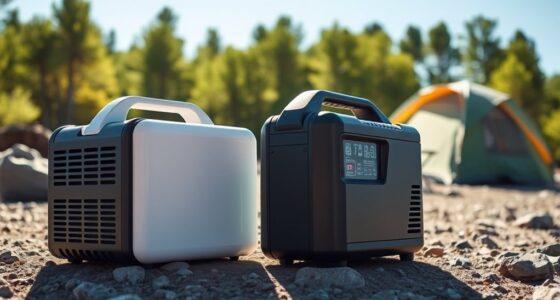
The best RV solar generator overall in this roundup is the EF ECOFLOW Delta 3 Ultra, which pairs a substantial 3,072Wh battery with a 400W panel for a useful balance of stored power and included solar. For larger loads and longer stays, the EcoFlow DELTA Pro 3 offers a bigger 4,096Wh capacity and two 400W panels; for a smaller, lighter setup, the Jackery Explorer 300 is easier to bring along but better suited to modest devices. The main tradeoff is between capacity and portability, with solar-panel output, inverter power, and charging time also shaping how well a unit fits RV life. A larger battery can run more gear, but it can take more space and more sun or charging time to refill. Continue reading for the full breakdown, buying advice, and picks for different RV power needs.

Get backup power and energy gear delivered free with Prime
- Fast, free delivery on millions of items
- Prime Video, Amazon Music and more included
- Member-only deals all year
Complete the kit


Key Takeaways
- Capacity and included solar are separate advantages: the DELTA Pro 3 has the largest stated battery capacity in this lineup at 4,096Wh and comes with two 400W panels, while the 3,072Wh Delta 3 Ultra includes one 400W panel.
- Several models cluster around 3,000–3,600Wh: the Jackery HomePower 3600 Plus, Anker SOLIX F3000, Jackery HomePower 3000, and ABOK Ark3600 offer substantial storage, so panel configuration, output limits, and practical portability help distinguish them.
- There are genuine smaller-system options: the Jackery Explorer 300, Jackery Solar Generator 1000 v2, EcoFlow DELTA 3 Classic, and BROWEY S1600 suit lighter power needs better than the largest units, but they are not substitutes for high-capacity setups.
- Kit contents affect readiness: many picks include solar panels, but panel wattage varies widely—from the 40W panel with the Explorer 300 to the two 400W panels with the DELTA Pro 3—so buyers should compare the whole kit rather than battery capacity alone.
- There is no single right size for every RV: extended off-grid stays and higher-demand appliances favor the larger-capacity models, while occasional trips and device charging can make a compact station easier to store and manage.
| EF ECOFLOW Delta 3 Ultra 3072Wh Solar Generator with 400W Solar Panel |  | Best Overall for Quiet, High-Output RV Power | Battery capacity: 3,072Wh | Battery chemistry: LiFePO4 | Continuous output: 3,600W | VIEW LATEST PRICE | See Our Full Breakdown |
| Jackery HomePower 3600 Plus Portable Power Station with Two 200W Solar Panels |  | Best for Expandable, Wheeled RV Power | Battery capacity: 3,584Wh | Output: 3,600W | Parallel output: Up to 7,200W | VIEW LATEST PRICE | See Our Full Breakdown |
| Jackery Explorer 300 Portable Power Station with 40W Solar Panel |  | Best Compact Pick for Light-Duty RV Trips | Battery capacity: 292Wh | Peak output: 600W | Battery chemistry: LiFePO4 | VIEW LATEST PRICE | See Our Full Breakdown |
| Anker SOLIX F3000 Portable Power Station, 3,072Wh |  | Best for Building a Large Expandable RV System | Battery capacity: 3,072Wh | Battery chemistry: LiFePO4 | Output: 3,600W | VIEW LATEST PRICE | See Our Full Breakdown |
| BLUETTI Elite 300 Solar Generator Kit with Two 200W Solar Panels |  | Best RV-Ready Connection Kit | Battery capacity: 3,014Wh | Battery chemistry: LiFePO4 | AC output: 2,400W | VIEW LATEST PRICE | See Our Full Breakdown |
| Jackery HomePower 3000 Portable Power Station with 2 SolarSaga 200W Panels |  | Best for RV Hookups and Heavy Loads | Battery capacity: 3,072Wh | Battery type: LiFePO4 | AC output: 3,600W | VIEW LATEST PRICE | See Our Full Breakdown |
| Jackery Solar Generator 1000 v2 with 200W Solar Panel |  | Best Portable Mid-Capacity Pick | Battery capacity: 1,070Wh | Battery type: LFP | AC output: 1,500W | VIEW LATEST PRICE | See Our Full Breakdown |
| EF EcoFlow DELTA Pro 3 Solar Generator, 4096Wh, with Two 400W Solar Panels |  | Best Premium Expandable System | Battery capacity: 4,096Wh | Battery type: LFP | Output: 4,000W | VIEW LATEST PRICE | See Our Full Breakdown |
| BLUETTI Elite 400 Solar Generator with Two 200W Solar Panels |  | Best for Rolling Campsite Setup | Battery capacity: 3,840Wh | Battery type: LiFePO4 | AC output: 2,600W | VIEW LATEST PRICE | See Our Full Breakdown |
| EF ECOFLOW DELTA 3 Classic Solar Generator with 110W Solar Panel, 1024Wh |  | Best for Fast Backup Charging | Battery capacity: 1,024Wh | Battery chemistry: LiFePO4 | AC output: 1,800W | VIEW LATEST PRICE | See Our Full Breakdown |
| ABOK Ark3600 Portable Power Station, 3600W, 3840Wh LiFePO4 Battery with 200W Solar Panel |  | Best for Extended Off-Grid Stays | Battery capacity: 3,840Wh; expandable to 11,520Wh | Battery type: LiFePO4 | Solar charging input: Up to 2,000W | VIEW LATEST PRICE | See Our Full Breakdown |
| Anker SOLIX C2000 Gen 2 Portable Power Station, 2,048Wh, 2,400W |  | Best for Fast Recharging | Battery capacity: 2,048Wh | Battery type: LiFePO4 | Expandable capacity: Up to 4kWh with expansion battery | VIEW LATEST PRICE | See Our Full Breakdown |
| BROWEY S1600 Portable Power Station with Built-In Solar Panel |  | Best Compact Solar-Ready Pick | Battery capacity: 1,024Wh | Battery chemistry: LiFePO4 | Ports: 8 | VIEW LATEST PRICE | See Our Full Breakdown |
| Jackery Explorer 2000 v2 Portable Power Station with Two 200W Solar Panels |  | Best Solar Kit for Balanced RV Use | Battery capacity: 2,042Wh | Battery type: LiFePO4 | AC output: 2,200W | VIEW LATEST PRICE | See Our Full Breakdown |
| PECRON F3000LFP Portable Power Station with 200W Solar Panel | 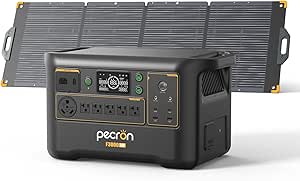 | Best Expandable High-Output Value | Battery capacity: 3,072Wh | Expandable capacity: Up to 10,752Wh | Battery type: LiFePO4 | VIEW LATEST PRICE | See Our Full Breakdown |
| RV solar generator | Battery capacity | Weight | Battery type |
|---|---|---|---|
| EF ECOFLOW Delta 3 Ultra 3072W | 3,072Wh | — | — |
| Jackery HomePower 3600 Plus Po | 3,584Wh | 77.2 pounds | — |
| Jackery Explorer 300 Portable | 292Wh | 12.9 pounds | — |
| Anker SOLIX F3000 Portable Pow | 3,072Wh | 91.5 pounds | — |
| BLUETTI Elite 300 Solar Genera | 3,014Wh | — | — |
| Jackery HomePower 3000 Portabl | 3,072Wh | 59.5 lb | LiFePO4 |
| Jackery Solar Generator 1000 v | 1,070Wh | 23.8 lb | LFP |
| EF EcoFlow DELTA Pro 3 Solar G | 4,096Wh | 115 lb | LFP |
| BLUETTI Elite 400 Solar Genera | 3,840Wh | 86 lb | LiFePO4 |
| EF ECOFLOW DELTA 3 Classic Sol | 1,024Wh | — | — |
| ABOK Ark3600 Portable Power St | 3,840Wh; expandable to 11,520Wh | 92 lb | LiFePO4 |
| Anker SOLIX C2000 Gen 2 Portab | 2,048Wh | 41.7 lb | LiFePO4 |
| BROWEY S1600 Portable Power St | 1,024Wh | — | — |
| Jackery Explorer 2000 v2 Porta | 2,042Wh | 39.5 lb power station; 66.8 lb listed item weight | LiFePO4 |
| PECRON F3000LFP Portable Power | 3,072Wh | 63.3 lb | LiFePO4 |
More Details on Our Top Picks
EF ECOFLOW Delta 3 Ultra 3072Wh Solar Generator with 400W Solar Panel
I rank the DELTA 3 Ultra first for RVers who want substantial appliance support without giving up a quieter campsite. Its 3,600W continuous output and 7,200W surge rating offer more headroom for starting demanding loads than the BLUETTI Elite 300, which supplies 2,400W continuously. The included 400W solar panel also gives this kit a stronger stated panel rating than the Jackery Explorer 300’s 40W panel, though actual charging depends on conditions and setup.
Its 3,072Wh LiFePO4 battery, four charging methods, and sub-10ms UPS switching make it versatile for both travel and backup duty. The tradeoffs are a large 24.6-inch-long unit and only three listed outlets; RVers seeking a dedicated TT-30 connection should compare it with the BLUETTI Elite 300. The station and panel ship separately.
Pros:- 3,600W continuous output with 7,200W surge capacity supports demanding appliances
- Included 400W solar panel offers a higher stated panel rating than the smaller kits here
- LiFePO4 battery and four charging methods suit varied travel and backup use
- Sub-10ms UPS switching and stated 25dB operation add useful home and campsite flexibility
Cons:- Large 24.6 x 12.9 x 15.6-inch dimensions can complicate RV storage
- Only three outlets are listed in the product details
- Power station and solar panel ship in separate packages
Best for: RV owners who need high-output appliance support, quiet overnight operation, and a substantial included solar panel.
Not ideal for: Travelers with tight storage or a need for a listed TT-30 outlet; the unit is sizable and its product details list only three outlets.
- Battery capacity:3,072Wh
- Battery chemistry:LiFePO4
- Continuous output:3,600W
- Surge output:7,200W
- Included solar panel:400W
- Charging methods:AC, solar, car input, EcoFlow Smart Generator
- UPS switching:Under 10ms
- Dimensions:24.6 x 12.9 x 15.6 inches
Our verdict“Choose the DELTA 3 Ultra if quiet, high-output power matters more than compact storage or a dedicated RV outlet.”
Jackery HomePower 3600 Plus Portable Power Station with Two 200W Solar Panels
The Jackery HomePower 3600 Plus is the clearest fit for RV owners who want a high-capacity system that can grow beyond a single battery. Its 3,584Wh capacity already exceeds the EF ECOFLOW DELTA 3 Ultra and can expand up to 21kWh per unit, giving longer-term travelers a path to more stored power. The kit includes two 200W panels, while its wheels and telescopic handle address a practical weakness shared by many large power stations: moving them around camp.
Charging flexibility is another strength, with AC, solar, gas-generator, and hybrid options; the listed hybrid charge time is two hours. But at 77.2 pounds, it is still heavy to lift into an RV, and its 3,600W output is not a special advantage over the EcoFlow. The panels may ship separately, and parallel operation is required for the listed 7,200W output and 240V support.
Pros:- 3,584Wh capacity with expansion support up to 21kWh per unit
- Two included 200W solar panels provide a 400W stated panel total
- Wheels and telescopic handle help with campsite positioning
- AC, solar, gas-generator, and hybrid charging provide multiple replenishment routes
Cons:- 77.2-pound weight remains difficult to lift into or out of an RV
- 240V output and up to 7,200W output require parallel operation
- Power station and solar panels may arrive in separate packages
Best for: Full-time RVers or extended-trip travelers who want room to expand capacity and prefer wheels for moving a heavy station.
Not ideal for: Owners who must lift the unit frequently or want 240V from one station; the listed 240V support requires parallel operation.
- Battery capacity:3,584Wh
- Output:3,600W
- Parallel output:Up to 7,200W
- Expandable capacity:Up to 21kWh per unit
- Solar panels:Two 200W panels
- Charging options:Hybrid AC+DC, AC, solar, gas generator
- Weight:77.2 pounds
- Warranty:5 years
Our verdict“Pick the HomePower 3600 Plus if expandable capacity and easier rolling matter more than low lifting weight or single-unit 240V output.”
Jackery Explorer 300 Portable Power Station with 40W Solar Panel
Among these five options, the Jackery Explorer 300 is the one I’d choose for a small RV setup centered on phones, lights, and other modest loads—not for running major appliances. Its 292Wh capacity and 300W rated output are a different class from the 3,000Wh-plus systems such as the BLUETTI Elite 300. That smaller footprint and 12.9-pound weight are useful when storage and portability matter more than multi-day power reserves.
The included 40W solar panel offers a way to recharge off-grid, but the listed time to reach 80% is about 7.5 hours, so it is better treated as supplemental charging than a quick refill. Two AC outlets, a 100W USB-C port, USB-A ports, and a car port cover common small-device needs. Its 600W peak rating helps with brief startup demands, but it does not turn this into an appliance-running generator.
Pros:- 12.9-pound weight is far easier to handle than the large-capacity stations here
- LiFePO4 battery is rated for over 4,000 charge cycles to 70% capacity
- 100W USB-C PD, USB-A, car, and AC ports cover varied small-device needs
- Included 40W solar panel enables off-grid charging
Cons:- 292Wh capacity is small for extended RV use or appliance loads
- 300W rated output rules out many high-draw devices
- Included 40W panel takes approximately 7.5 hours to charge the station to 80%
Best for: Solo RV travelers and weekend campers who need to recharge personal devices and run low-wattage accessories from a compact station.
Not ideal for: Families or RVers seeking refrigerator, microwave, or air-conditioning support; its 292Wh capacity and 300W rated output are limited for those loads.
- Battery capacity:292Wh
- Peak output:600W
- Battery chemistry:LiFePO4
- AC outlets:2
- USB-C port:100W USB-C PD
- Included solar panel:40W
- Weight:12.9 pounds
Our verdict“Choose the Explorer 300 for compact device charging on light-duty trips, not as your RV’s main appliance power source.”
Anker SOLIX F3000 Portable Power Station, 3,072Wh
The Anker SOLIX F3000 earns its place for RVers who want to add storage over time rather than settle for one fixed battery size. Its 3,072Wh starting capacity can expand up to 24kWh, more than the Jackery HomePower 3600 Plus’s listed 21kWh expansion ceiling. The 3,600W output matches the EcoFlow DELTA 3 Ultra on continuous power, while up to 2,400W solar input gives this model a notable charging-input specification for a larger system.
That scale comes with real compromises: at 91.5 pounds, this is the heaviest option in this batch, and its 25.6-inch length needs generous storage space. It supports 120V output, but 240V requires pairing two units, unlike a setup already configured for 240V through parallel operation. The product details list solar and generator charging, but no solar panels are included in the provided kit information, so panel costs and setup are a separate decision.
Pros:- Expandable capacity reaches up to 24kWh
- 3,600W output supports substantial 120V loads
- Solar input is rated up to 2,400W
- Eleven outlets and low idle power consumption support extended backup use
Cons:- 91.5-pound weight makes frequent lifting difficult
- 240V output requires pairing two power stations
- Solar panels are not listed among the provided product details
Best for: RV owners planning a high-capacity, expandable battery system who have space to store and a way to move a 91.5-pound unit.
Not ideal for: Travelers who need a lightweight grab-and-go station, built-in 240V from one unit, or an included solar panel kit.
- Battery capacity:3,072Wh
- Battery chemistry:LiFePO4
- Output:3,600W
- Expandable capacity:Up to 24kWh
- Solar charging input:Up to 2,400W
- Voltage:120V
- Outlets:11
- Weight:91.5 pounds
Our verdict“Choose the SOLIX F3000 if your priority is a large expandable system and you can accommodate its weight and separate solar setup.”
BLUETTI Elite 300 Solar Generator Kit with Two 200W Solar Panels
The BLUETTI Elite 300 is the most directly RV-oriented package in this group because its TT-30 outlet and 12V/30A DC port provide connections aimed at RV use. That makes it a better match for compatible RV hookups than the EF ECOFLOW DELTA 3 Ultra, whose provided specs list three outlets but no TT-30 connection. The kit also includes two 200W panels, giving buyers a stated 400W of solar panel capacity alongside its 3,014Wh LiFePO4 battery.
The main compromise is output: at 2,400W AC, it sits below the 3,600W EcoFlow, Jackery, and Anker stations, so it offers less headroom for high-draw appliances. A 4,800W surge rating helps with brief startup loads, but does not replace higher continuous output. The listed solar charging estimate of 7–15 hours can mean a long wait, and the panels ship separately. Battery weight is also not specified, making RV loading plans harder to judge from the supplied details.
Pros:- TT-30 outlet and 12V/30A DC port are tailored to RV connections
- 3,014Wh LiFePO4 battery offers substantial stored energy
- Two included 200W panels provide a 400W stated solar total
- 4,800W surge rating offers headroom for some brief startup loads
Cons:- 2,400W continuous AC output is lower than the 3,600W units in this batch
- Listed solar charging time is approximately 7–15 hours
- Weight is not specified, limiting confidence when planning RV storage and handling
Best for: RV owners with compatible TT-30 or 12V/30A connections who want a large battery and included solar panels in one kit.
Not ideal for: RVers who regularly run several high-draw appliances or need a clear weight figure before planning storage and lifting.
- Battery capacity:3,014Wh
- Battery chemistry:LiFePO4
- AC output:2,400W
- Surge output:4,800W
- Solar panels:Two 200W panels
- RV ports:TT-30 outlet; 12V/30A DC port
- Voltage:120V
- Battery cycle life:6,000+ cycles
Our verdict“Choose the Elite 300 if RV-specific ports and an included panel kit matter more than maximum continuous output.”
Jackery HomePower 3000 Portable Power Station with 2 SolarSaga 200W Panels
The HomePower 3000 pairs 3,072Wh of storage with 3,600W AC output and a dedicated TT-30 RV outlet, making it a strong fit for RVers who want to power substantial loads without relying on several smaller stations. Its 4,000-cycle LiFePO4 rating favors repeat seasonal use, and the included pair of 200W panels gives you a solar starting point. Compared with the Jackery Solar Generator 1000 v2, it offers far more capacity and output, but at 59.5 pounds it is much less convenient to move around camp. Multiple charging methods add flexibility, while the ≤20ms UPS switching can support compatible equipment during an outage. The main tradeoff is portability: this is better treated as a movable campsite power hub than a grab-and-go battery, and the panels ship separately from the station.
Pros:- 3,072Wh capacity and 3,600W AC output support heavier RV power needs.
- Dedicated TT-30 RV outlet simplifies connection to compatible RVs.
- LiFePO4 battery is rated for 4,000 cycles to 70% capacity.
- Includes two 200W solar panels and supports several other charging methods.
Cons:- At 59.5 pounds, it is cumbersome to carry or reposition alone.
- The included panels ship separately from the power station.
- Its larger capacity takes up more storage space than compact RV options.
Best for: RVers with a TT-30 connection who need substantial stored power for multiple appliances and can accommodate a 59.5-pound station.
Not ideal for: Minimalist campers or anyone who frequently lifts gear in and out of a vehicle; the heavier unit is less portable than the Jackery Solar Generator 1000 v2.
- Battery capacity:3,072Wh
- Battery type:LiFePO4
- AC output:3,600W
- Surge output:7,200W
- RV outlet:TT-30
- Solar panels included:2 × 200W
- Battery life:4,000 cycles to 70% capacity
- Weight:59.5 lb
Our verdict“Choose the HomePower 3000 if RV outlet compatibility and high output matter more than easy lifting and compact storage.”
Jackery Solar Generator 1000 v2 with 200W Solar Panel
For RVers who need a useful reserve without hauling a large power station, the Jackery Solar Generator 1000 v2 is the most portable balance in this group. Its 1,070Wh battery and 1,500W AC output can cover device charging and moderate appliance use, while the 23.8-pound weight is far easier to manage than the BLUETTI Elite 400 or EcoFlow DELTA Pro 3. The included 200W panel gives it a larger solar input starting point than the EcoFlow DELTA 3 Classic’s 110W panel. That portability comes with less stored energy and output than the larger kits, so it is not the pick for sustained heavy loads. App controls offer charging options, but the one-hour AC recharge depends on enabling emergency charging; the default full-charge time is 1.7 hours.
Pros:- 23.8-pound weight is easier to move than the larger-capacity models here.
- 1,500W AC output and 3,000W surge support a range of moderate loads.
- Includes a 200W solar panel.
- LFP battery is rated to retain over 70% capacity after 4,000 cycles.
Cons:- Its 1,070Wh capacity limits runtime compared with the HomePower 3000 and BLUETTI Elite 400.
- The one-hour AC charge time requires emergency charging to be enabled in the app.
- The generator and solar panel ship separately.
Best for: RV travelers who want to carry a solar-ready power station between the vehicle, campsite, and home, and mainly run smaller appliances and electronics.
Not ideal for: RVers who need long runtimes for high-demand appliances or a dedicated high-capacity backup; its 1,070Wh storage is well below the larger kits.
- Battery capacity:1,070Wh
- Battery type:LFP
- AC output:1,500W
- Surge peak:3,000W
- Solar panel included:200W
- Weight:23.8 lb
- USB-C output:Up to 100W
- Battery lifespan:Over 70% capacity after 4,000 charge cycles
Our verdict“Pick the Solar Generator 1000 v2 if easy carrying matters more than the extended runtimes offered by larger RV power stations.”
EF EcoFlow DELTA Pro 3 Solar Generator, 4096Wh, with Two 400W Solar Panels
The EcoFlow DELTA Pro 3 is the most ambitious option here for RVers building around high loads and future expansion. Its 4,096Wh LFP battery, 4,000W output, and 120V/240V support give it more electrical headroom than the Jackery HomePower 3000, while expandable capacity can reach 48kWh for a larger backup setup. Two 400W panels provide the biggest listed solar array in this batch, though real recharge time depends on conditions. A 10ms switchover and operation as low as 30 dB also suit backup use where noise and interruption matter. The substantial drawback is its 115-pound weight: despite being described as portable, it is not a casual carry-in station. Buyers seeking simple campsite power may find the lighter Jackery or BLUETTI kits easier to live with.
Pros:- 4,096Wh battery and 4,000W output provide substantial capacity and power.
- Supports 120V/240V appliances and expandable output.
- Capacity can expand up to 48kWh.
- Two 400W solar panels, 10ms switching, and operation as low as 30 dB broaden its use.
Cons:- At 115 pounds, moving it is difficult compared with the other listed stations.
- The solar panels ship separately.
- Its expansion features may be unnecessary for RVers with modest power needs.
Best for: RV owners with high electrical demands who want 120V/240V capability, a large solar array, and room to expand into a bigger backup system.
Not ideal for: Campers who need to lift or frequently reposition their power station; at 115 pounds, it is far less manageable than the HomePower 3000 or Solar Generator 1000 v2.
- Battery capacity:4,096Wh
- Battery type:LFP
- Output:4,000W
- Output voltage:120V/240V
- Expandable capacity:Up to 48kWh
- Solar panels included:2 × 400W
- Switch-over time:10ms
- Weight:115 lb
Our verdict“Choose the DELTA Pro 3 for high-demand RV and backup setups that can make use of expansion, not for frequent carrying.”
BLUETTI Elite 400 Solar Generator with Two 200W Solar Panels
The BLUETTI Elite 400 combines 3,840Wh of LiFePO4 storage with two included 200W panels, giving RVers a substantial solar-ready package without stepping up to the EcoFlow DELTA Pro 3’s 4,000W output or expansion potential. Its 2,600W output and 3,900W surge rating are suited to a range of campsite appliances, while ≤15ms UPS switchover adds backup utility. The rolling trolley is a practical distinction: at 86 pounds, this is heavy, but wheels make repositioning more manageable than carrying it by hand. Solar replenishment is listed at about 9.5–19 hours, so the panel pair may not quickly refill the large battery. Compared with the Jackery HomePower 3000, it offers more storage but less AC output and a bulkier, trolley-style footprint.
Pros:- 3,840Wh LiFePO4 battery provides substantial stored energy.
- Includes two 200W solar panels.
- Rolling trolley helps move the 86-pound unit on suitable surfaces.
- 2,600W AC output, 3,900W surge, and ≤15ms UPS switchover.
Cons:- At 86 pounds, it is heavy to lift into or out of an RV.
- Solar charging is listed at about 9.5–19 hours.
- Its 2,600W output is lower than the EcoFlow DELTA Pro 3 and Jackery HomePower 3000.
Best for: RV owners who want a large battery and included solar panels, and can roll the unit over suitable ground rather than carry it.
Not ideal for: Travelers with tight storage or rough, uneven routes between vehicle and campsite; the 86-pound trolley-style unit is bulky and solar charging can take many hours.
- Battery capacity:3,840Wh
- Battery type:LiFePO4
- AC output:2,600W
- Surge output:3,900W
- Solar panels included:2 × 200W
- Solar charging time:About 9.5–19 hours
- UPS switchover:≤15ms
- Weight:86 lb
Our verdict“Choose the Elite 400 if you want a large included-panel kit with wheels and can accept its weight and slower solar refill.”
EF ECOFLOW DELTA 3 Classic Solar Generator with 110W Solar Panel, 1024Wh
The EcoFlow DELTA 3 Classic suits RVers who value quick AC replenishment and a compact setup more than a large energy reserve. Its 1,024Wh LiFePO4 battery and 1,800W output put it close to the Jackery Solar Generator 1000 v2 in capacity, but the EcoFlow offers higher listed AC output and under-10ms UPS switching. It also charges from AC to 80% in 45 minutes, a useful advantage when shore power is available between stops. The included 110W panel is smaller than the Jackery’s 200W panel, and the listed solar recharge time is 11.6 hours, so off-grid recovery is comparatively slow. This makes it a better match for moderate loads and backup than for extended high-consumption trips. Its 100W USB-C output and five-year warranty round out the practical appeal.
Pros:- AC charging reaches 80% in 45 minutes.
- 1,800W AC output and 3,600W surge offer more output than the Jackery Solar Generator 1000 v2.
- Under-10ms UPS switching supports fast backup response.
- Includes a 110W solar panel and provides 100W USB-C output.
Cons:- The included 110W panel is smaller than the Jackery Solar Generator 1000 v2’s 200W panel.
- Solar recharge is listed at 11.6 hours with the included panel.
- Its 1,024Wh battery is better suited to moderate use than extended heavy loads.
Best for: RV travelers who can recharge from AC between outings and want a compact station for moderate loads, device charging, and fast backup switching.
Not ideal for: RVers relying mainly on solar for frequent full recharges or powering heavy appliances for long stretches; the included 110W panel and 1,024Wh capacity limit that use.
- Battery capacity:1,024Wh
- Battery chemistry:LiFePO4
- AC output:1,800W
- Surge output:3,600W
- Solar panel included:110W
- USB-C output:100W
- AC charging time:0–80% in 45 minutes
- UPS switching time:Under 10ms
Our verdict“Pick the DELTA 3 Classic if quick AC charging and fast backup switching matter more than large capacity or rapid solar refill.”
ABOK Ark3600 Portable Power Station, 3600W, 3840Wh LiFePO4 Battery with 200W Solar Panel
The ABOK Ark3600 pairs a 3,840Wh battery with 3,600W rated output, making it a strong fit for RVers who want to run several appliances without quickly draining their reserve. Its capacity can expand to 11,520Wh, a higher stated ceiling than the PECRON F3000LFP, so it suits longer stays away from hookups. Solar, AC, and car charging add flexibility, while the included 200W panel is only a modest part of that system: its 2,000W solar input is much greater than the panel’s output, so using that input potential requires additional solar. The tradeoff is portability. At 92 pounds, the wheels and telescoping handle help with rolling, but lifting it into an RV is still a two-person job for many buyers. AC-only recharge is also listed at three hours.
Pros:- 3,840Wh capacity with expansion up to 11,520Wh supports longer off-grid use.
- 3,600W rated output can serve demanding appliances and multiple devices.
- AC, solar, and car charging provide several ways to replenish the battery.
- Wheels, telescoping handle, and Bluetooth app support easier movement and monitoring.
Cons:- At 92 pounds, it is difficult to lift into an RV without help.
- The included 200W panel is small relative to the station’s 2,000W solar input.
- AC-only charging is listed as taking three hours.
Best for: RV owners staying off-grid for multiple days who want a large expandable battery and can roll the unit rather than lift it often.
Not ideal for: Solo travelers who need to lift a generator into a truck or RV frequently, or buyers expecting the included 200W panel to make full use of the station’s 2,000W solar input.
- Battery capacity:3,840Wh; expandable to 11,520Wh
- Battery type:LiFePO4
- Solar charging input:Up to 2,000W
- AC charging input:1,500W
- Included solar panel:200W
- Output ports:15
- Weight:92 lb
Our verdict“Choose the ABOK if long off-grid runtime and substantial expansion matter more than easy lifting.”
Anker SOLIX C2000 Gen 2 Portable Power Station, 2,048Wh, 2,400W
For RVers who can recharge between stops, the Anker SOLIX C2000 Gen 2 puts speed and manageable size ahead of maximum stored energy. Its 2,048Wh battery and 2,400W rated output are a more compact alternative to the much larger ABOK Ark3600, while the listed 58-minute AC-and-solar recharge can help shorten downtime when suitable charging sources are available. Six recharge methods, including 800W alternator charging, give road travelers options beyond a campground outlet. Capacity can expand to 4kWh, but that requires a separate expansion battery; the base unit does not match the ABOK’s listed 3,840Wh capacity. At 41.7 pounds, it is easier to move than several high-capacity options here, though still a substantial carry. I’d favor it for frequent travel and quick turnarounds, not for maximizing days of reserve power.
Pros:- Listed 58-minute recharge using AC and solar can reduce time tied to a charging stop.
- 2,400W rated and 4,000W peak output provide substantial appliance support for its size.
- Six recharge methods include 800W alternator charging for road use.
- 41.7-pound weight is lower than the larger ABOK Ark3600 and PECRON F3000LFP.
Cons:- Base capacity is 2,048Wh, well below the ABOK Ark3600’s 3,840Wh.
- Reaching 4kWh requires purchasing and carrying an expansion battery.
- At 41.7 pounds, it may still be awkward for frequent one-handed lifting.
Best for: RV travelers who move frequently, have access to charging opportunities, and want a relatively compact unit with fast recharge options.
Not ideal for: Campers seeking the longest runtime from a single base unit, or buyers who want 4kWh capacity without adding an expansion battery.
- Battery capacity:2,048Wh
- Battery type:LiFePO4
- Expandable capacity:Up to 4kWh with expansion battery
- Recharge time:58 minutes using AC and solar
- Alternator charging:800W
- Recharge methods:6
- Weight:41.7 lb
Our verdict“Pick the Anker C2000 Gen 2 if quick recharge and easier transport matter more than a larger built-in battery.”
BROWEY S1600 Portable Power Station with Built-In Solar Panel
The BROWEY S1600 takes a different approach from the larger RV-focused units here: it has a 1,024Wh battery and built-in solar panels, so it is better suited to lighter electrical loads and shorter trips than to powering an RV for days. Its 1,600W pure sine wave output can handle compatible appliances, and the 100W USB-C PD port is useful for laptops and other higher-draw portable electronics. Compared with the Jackery Explorer 2000 v2, it stores about half the energy, but the integrated panel gives it a self-contained solar feature without a separate panel setup. The limitation is solar speed: listed solar charging is only 40W, too little to replenish a 1,024Wh battery quickly. The advertised three-hour AC recharge also depends on using the AC adapter and a 100W USB-C PD source together.
Pros:- Built-in solar panels and MPPT controller avoid a separate panel setup.
- LiFePO4 battery is stated to provide 3,000+ cycles to 80% capacity.
- 1,600W pure sine wave output supports compatible sensitive electronics and appliances.
- 100W USB-C PD output can charge higher-power devices such as laptops.
Cons:- At 1,024Wh, capacity is about half that of the Jackery Explorer 2000 v2.
- Listed 40W solar charging is slow for replenishing the battery.
- The stated three-hour AC recharge uses the AC adapter and 100W USB-C PD simultaneously.
Best for: Solo RV travelers or weekend campers running modest loads who value an integrated panel and built-in device charging.
Not ideal for: RV households needing multi-day power for refrigerators or several appliances, or buyers relying on solar to recharge quickly.
- Battery capacity:1,024Wh
- Battery chemistry:LiFePO4
- Ports:8
- USB-C PD output:100W
- Listed solar charging:40W
- AC recharge claim:80% in 3 hours with AC adapter and 100W USB-C PD simultaneously
- Battery life claim:3,000+ cycles to 80% capacity
Our verdict“Choose the BROWEY for modest RV loads and integrated solar convenience, but skip it if you need substantial stored energy or fast solar replenishment.”
Jackery Explorer 2000 v2 Portable Power Station with Two 200W Solar Panels
The Jackery Explorer 2000 v2 is a balanced kit for RVers who want meaningful battery capacity and panels in the same package. Its 2,042Wh LiFePO4 battery and 2,200W AC output sit between the smaller BROWEY S1600 and high-output choices such as the PECRON F3000LFP. The two included 200W panels provide a more substantial solar setup than the BROWEY’s listed 40W built-in charging, with a stated six-hour solar charge time using the full 400W array. A 20ms UPS switching time adds value if you also want backup for selected home devices. The station itself weighs 39.5 pounds, but the listed item weight is 66.8 pounds with the kit, and the panels may ship separately. Solar connection also requires the specified straight DC8020 plug, so setup compatibility deserves attention before travel.
Pros:- 2,042Wh LiFePO4 battery offers more stored energy than the BROWEY S1600.
- Two included 200W panels provide a 400W solar array.
- 2,200W AC output and three AC outlets support a range of RV devices.
- 20ms UPS switching can help maintain power for connected backup devices.
Cons:- Lower capacity and output than the PECRON F3000LFP for heavier or longer-duration loads.
- The listed 66.8-pound item weight includes the panels and is cumbersome as a kit.
- Solar connection needs the specified straight DC8020 plug, and panels may ship separately.
Best for: RV owners who want a mid-capacity power station bundled with a useful 400W solar array for campsites and backup use.
Not ideal for: Buyers prioritizing high-output appliances or large expandable capacity, and travelers who need a kit that is easy to lift as one load.
- Battery capacity:2,042Wh
- Battery type:LiFePO4
- AC output:2,200W
- Included solar panels:2 × 200W
- AC outlets:3
- Solar charging time:6 hours with 400W panels
- UPS switching time:20ms
- Weight:39.5 lb power station; 66.8 lb listed item weight
Our verdict“Choose the Jackery Explorer 2000 v2 if you want a ready-made 400W solar kit with balanced capacity rather than maximum output.”
PECRON F3000LFP Portable Power Station with 200W Solar Panel
The PECRON F3000LFP combines a 3,072Wh LiFePO4 battery with 3,600W pure sine wave output, making it a capable choice for RVers with power-hungry appliances who want room to add capacity later. Its expansion ceiling of 10,752Wh is substantial, although below the ABOK Ark3600’s stated 11,520Wh. The PECRON counters with a lighter listed weight of 63.3 pounds and six AC outlets among its 13 ports, plus app monitoring and UPS backup for broader campsite and home-backup use. The included 200W panel is a starting point, not a match for the station’s 1,600W solar input; more solar capacity would be needed to use that input fully. It remains heavy for frequent lifting, and the solar panel has a shorter one-year warranty than the power station’s stated warranty term.
Pros:- 3,600W output supports demanding appliances and heavy RV loads.
- 3,072Wh battery expands to a stated maximum of 10,752Wh.
- Thirteen ports include six AC outlets and 100W USB-C PD output.
- UPS backup and app monitoring add utility beyond campsite power.
Cons:- At 63.3 pounds, it is difficult to lift frequently without help.
- Included 200W panel is far below the station’s 1,600W maximum solar input.
- Solar panel warranty is one year, shorter than the power station warranty.
Best for: RV owners running demanding appliances who want high output, expandable storage, UPS backup, and the option to add more solar.
Not ideal for: Travelers who need a light, frequently hand-carried unit or buyers expecting the included 200W panel to take full advantage of the 1,600W solar input.
- Battery capacity:3,072Wh
- Expandable capacity:Up to 10,752Wh
- Battery type:LiFePO4
- Output power:3,600W
- Solar input:Up to 1,600W; 25–120V
- Included solar panel:200W
- Output ports:13
- Weight:63.3 lb
Our verdict“Pick the PECRON F3000LFP for high-output RV use and future expansion, provided its weight and modest included panel suit your setup.”
How We Picked
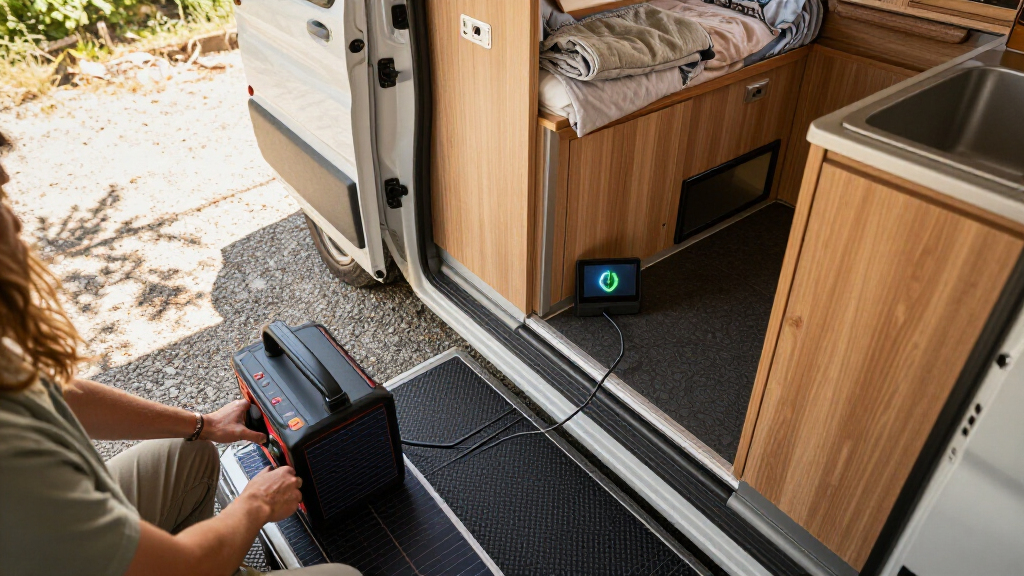
I compared these 15 options as RV power systems, not just as portable batteries. The main criteria were stated battery capacity and AC output, the included solar panel quantity and wattage, portability relative to stored energy, and how clearly each setup suits occasional trips, everyday boondocking, or heavier off-grid demand. I also weighed practical value through the contents of each listed kit, since a station bundled with panels is not directly comparable to one sold with a smaller panel or a different configuration.
The ranking favors balanced RV usefulness over the biggest number on a spec sheet. That puts the Delta 3 Ultra first for its combination of 3,072Wh and a 400W panel, while the DELTA Pro 3 earns a distinct premium role for greater capacity and more included solar. Smaller models rank for portability and lighter loads rather than being treated as weaker versions of large systems. Where the product names do not establish details such as weight, charging limits, or outlet specifications, I avoid treating those details as known; buyers should confirm them before matching a unit to an RV appliance.
Factors to Consider When Choosing Best RV Solar Generators
Choosing an RV solar generator starts with how you camp and what you expect it to power. A battery that suits phone charging and lights may fall short when asked to run a refrigerator or other high-draw appliance, while a high-capacity system can take up storage space you need elsewhere. These factors help you match the generator to your actual routine rather than buying by capacity alone.
Estimate Daily Energy Use, Not Just Peak Wattage
Write down the devices you plan to run, their wattage, and roughly how many hours each will operate per day. Wattage describes the power an appliance needs at a moment; watt-hours help estimate the energy it consumes over time. A device with a motor or compressor may also need more power briefly when starting than its running specification suggests. Check both the generator’s continuous output and any stated surge capability against the appliances you intend to use. A common mistake is choosing a battery that looks large while overlooking whether the inverter can start the appliance. If your load list is mostly electronics and lights, a smaller unit may be easier to live with than a large generator you rarely use fully.
Treat Battery Capacity and Solar Refill as a Pair
Battery capacity tells you how much energy is stored; panel wattage indicates how much solar power the kit can collect under suitable conditions. A large battery paired with limited panel capacity can take a long time to recharge, especially with shade, cloud, short winter days, or panels that cannot face the sun well. The listed kits make this distinction clear: the Explorer 300 includes a 40W panel, while the DELTA Pro 3 includes two 400W panels. Those bundled wattages are not a promise of a fixed daily yield, since sunlight and setup affect real output. Before choosing, check the station’s maximum solar input and supported panel connections as well as the wattage included. That helps you avoid buying extra panels the unit cannot use at full capacity.
Check Appliance Compatibility and RV Connections
Capacity alone does not tell you whether a generator can power your RV equipment. Confirm the outlet types, AC output, voltage, and any required connection equipment against your appliances and RV electrical setup. If you want to power a built-in refrigerator, air conditioner, or other higher-demand load, check its starting and running requirements before purchase rather than relying on a broad wattage label. Also confirm whether the product supports the charging method you plan to use, such as solar, vehicle charging, or shore power. Adapters can solve some connection mismatches, but they do not increase the generator’s output or make an incompatible load safe to run. A short compatibility check can prevent a costly mismatch between a portable station and the RV system.
Make Portability a Storage and Handling Question
In an RV, portability is not only about carrying a unit from a car; it also affects whether you can store it securely, reach its ports, and position it near a charging source. Larger-capacity models can reduce the need to conserve power, but they may be less convenient to move or fit into a crowded storage compartment. Compact options such as the Explorer 300 take less room but offer a narrower range of uses than the 3,000Wh-class systems. Check product weight and dimensions directly, since capacity alone does not reveal how manageable a particular model is. Think about whether the generator will stay in one place or move between the RV, campsite, and home. Buyers often regret choosing maximum capacity without planning where the unit and panels will go.
Choose a Kit for Your Typical Trip, Not Every Possible Trip
A bundled panel can make a system easier to start using, but the included solar may not match every camping pattern. Weekend travelers with access to shore power may need less panel capacity than people who stay off-grid for several days. Conversely, a large battery does not remove the need to replenish energy when daily use is high. Consider whether you can store and set up multiple panels at camp, and whether the kit’s panel count fits your available ground space. Paying more for extra capacity and panels makes sense when your trips regularly demand them; it may be unnecessary for occasional device charging. Check whether the station supports expansion before treating a starter kit as a long-term system.
Account for Battery Chemistry, Support, and Long-Term Use
Battery chemistry and service details influence how a generator holds up beyond the first trip, but product names alone do not provide enough information to compare every model on those points. Confirm the battery chemistry, stated cycle life, warranty terms, and service process in the manufacturer’s documentation. Look at charging and operating temperature limits too, since RV travel can expose equipment to heat, cold, and long periods in storage. A feature list is less useful if replacement or support options are unclear. For frequent travel, a well-documented warranty and clear operating guidance may matter more than a small capacity difference. Avoid assuming that models with similar capacities have the same lifespan or support.
Frequently Asked Questions
How large a solar generator do I need to run an RV refrigerator?
Start with the refrigerator’s running consumption and expected daily runtime, then check its startup demand against the generator’s AC output. Refrigerator energy use varies by model, temperature, ventilation, and how often the door opens, so a wattage label alone may not predict a full day’s draw. A larger battery can provide more stored energy, but you also need enough solar input or another charging source to replenish it. Compare the refrigerator’s needs with the station’s usable capacity and output specifications before choosing. If you cannot find reliable consumption figures, allow more capacity rather than assuming the smallest unit will cover it.
Can an RV solar generator run an air conditioner?
Some generators may run an air conditioner for a limited period, but the answer depends on the air conditioner’s starting surge, running draw, and the station’s continuous and surge output. Battery capacity then determines how long the system can supply that load, while solar conditions affect how much energy returns during the day. Check the appliance and generator specifications together; a large watt-hour rating does not prove the inverter can start the unit. You may also need a compatible connection or soft-start equipment, depending on the RV air conditioner. For sustained cooling, calculate expected runtime carefully and plan for shore power or another charging source if needed.
Are the solar panels included with these generators enough for off-grid RV trips?
That depends on your daily energy use, weather, campsite shade, and how much time you can leave panels in direct sun. The kits in this roundup range from a 40W panel with the Jackery Explorer 300 to two 400W panels with the EcoFlow DELTA Pro 3, so their included solar capacity is not equivalent. Even higher panel wattage will not guarantee a full recharge every day in poor conditions or when panels are shaded. Compare the station’s maximum solar input with its included panel capacity and your expected consumption. If you camp off-grid for several days, plan a backup charging method or additional compatible panels rather than relying on ideal sunlight.
Should I choose one large power station or a smaller unit for RV travel?
A larger station makes more sense when you need to power several devices, run higher-demand appliances, or stay off-grid longer between charges. A smaller unit is easier to store and can suit lights, phones, laptops, and other modest loads without taking up as much RV space. One large battery also concentrates your stored power in a single device, while a compact unit may be easier to carry outside the RV for separate tasks. Compare the weight and dimensions as well as capacity, since the product names do not establish how easy each unit is to handle. Let your regular trips guide the choice; do not buy for rare high-demand use unless that extra capacity is worth the storage and charging burden.
What should I verify before connecting a solar generator to my RV?
Check the generator’s outlet type, voltage, continuous output, surge output, and the RV’s input requirements before connecting anything. Confirm whether the connection needs a particular adapter and whether the generator is approved for the setup you plan to use. Do not assume a standard outlet or a high capacity rating means the unit can feed every RV circuit. Review the manufacturer’s instructions for grounding, charging, and safe operating conditions, and ask a qualified RV electrician if the connection is unclear. This check is especially useful when you want to power built-in appliances or connect through the RV’s electrical inlet.
Conclusion
For most RVers seeking a ready-to-use balance of stored power and included solar, I recommend the EF ECOFLOW Delta 3 Ultra as the best overall pick. The best premium choice is the EcoFlow DELTA Pro 3, with 4,096Wh of capacity and two 400W panels for buyers with higher off-grid demands and room for a larger setup. For value-minded shoppers, compare the Anker SOLIX C2000 Gen 2 and the other mid-capacity kits by their included panels, output, and confirmed specifications rather than capacity alone. Beginners with modest power needs may find the Jackery Explorer 300 easier to store and start with, while accepting its limited 40W panel and smaller capacity. For a specific need, choose among the compact models for light loads or the 3,000Wh-class and larger options for longer stays and heavier use; verify appliance compatibility and dimensions before deciding.
Halloween Picks
halloween
As an affiliate, we earn on qualifying purchases.