For a solar panel kit for travel, I’d start with the Renogy 100W Portable Solar Panel Kit for its balance of useful output and included charge control; the FlexSolar 40W is a lighter choice for directly charging small devices, while the DOKIO 300W kits suit travelers who need more panel capacity. The main tradeoff is between compact, simple USB charging and larger panels that can serve a 12V battery or power station but take more room to carry and position. Some kits include a controller, while others need a compatible power station or battery setup. Match the kit to your devices, storage space, and expected sun exposure. Continue reading for the full breakdown of all 14 options and how I’d choose among them.

Get backup power and energy gear delivered free with Prime
- Fast, free delivery on millions of items
- Prime Video, Amazon Music and more included
- Member-only deals all year
Key Takeaways
- The Renogy 100W Portable Solar Panel Kit is my best overall pick because it pairs travel-friendly folding hardware with a 20A controller for 12V battery or compatible power-station use.
- Higher wattage comes with a carrying and setup tradeoff: the DOKIO 200W and 300W kits offer more panel capacity, but suit vehicle-based travel better than trips where every item must be carried far.
- Small USB chargers fill a different role from battery kits: the FlexSolar 40W and SOLUPUP 30W focus on charging personal devices, not replenishing a large battery bank quickly.
- Controller compatibility matters as much as panel wattage: some options include charge control, while a bare panel may require a compatible power station or separate equipment.
- The 300W portable solar generator package is a distinct all-in-one route, but its 60W panel is a smaller charging source than the panel capacity in the DOKIO 300W kits.


| solar panel kit for travel | Weight | Power |
|---|---|---|
| Renogy 100W Portable Solar Pan | 17.42 lbs | 100W |
| Renogy 200W Portable Solar Pan | 13.9 lbs | — |
| ECO-WORTHY 200 Watts 12V/24V S | — | — |
| FlexSolar 40W Foldable Solar P | 1.76 lbs (0.8 kg) | 40W |
| ZOUPW 100W Portable Monocrysta | 9.48 lbs | 100W |
| DOKIO 300W Portable Foldable S | 15.2 lb | — |
| DOKIO 200W Portable Foldable S | 9.7 lb | — |
| FlexSolar 100W Foldable Portab | 4.1 lb | 100W |
| Renogy 100W 12V Solar Panel St | — | — |
| DOKIO 300W Portable Foldable S | 15.3 lb | 300W |
| DOKIO 100W Portable Foldable S | 6 lb | 100W |
| DOKIO 300W Foldable Solar Pane | 15.2 lb | — |
| SOLUPUP 30W Portable Foldable | 2.4 lb | 30W |
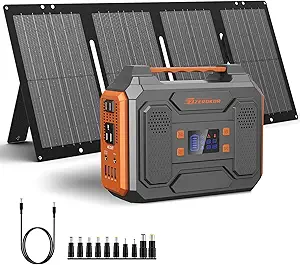
| Portable Solar Generator 300W | — | — |
More Details on Our Top Picks
Renogy 100W Portable Solar Panel Kit with 20A Charge Controller for 12V Batteries and Power Stations
The Renogy earns its place for travelers who want a folding panel and a battery charge controller in one kit. Its 20A waterproof PWM controller supports 12V gel, AGM, flooded, and lithium batteries, giving it a clearer battery-charging role than the Renogy 200W Portable Solar Panel, which is oriented toward power stations and direct device connections. At 100W, it suits topping up a camper battery or keeping modest off-grid loads supplied, but it cannot match the output of the 200W options in this lineup. The 17.42-pound weight is manageable for an RV or car-camping setup, though less appealing for frequent carrying. I’d choose it for battery compatibility and simple kit integration, not for the lightest loadout or permanent mounting; mounting hardware is not included.
Pros:- Includes a pre-installed 20A waterproof PWM charge controller.
- Supports 12V gel, AGM, flooded, and lithium batteries.
- Foldable design and 17.42-pound weight suit vehicle-based travel.
- IP65-rated construction with tempered-glass panels and an aluminum frame.
Cons:- 100W output is limited for high-energy loads or rapid battery recovery.
- At 17.42 pounds, it is heavier than the 13.9-pound Renogy 200W portable panel.
- No mounting hardware is included for a fixed installation.
Best for: RV and car campers charging a compatible 12V battery who want a panel with its own controller.
Not ideal for: Travelers seeking a lightweight backpacking panel, more than 100W of generation, or hardware for a permanent installation.
- Power:100W
- Cell efficiency:Up to 25%
- Weight:17.42 lbs
- Charge controller:20A waterproof PWM
- Battery compatibility:12V gel, AGM, flooded, and lithium
- Panel materials:Tempered glass and aluminum frame
- Weather resistance:IP65
Our verdict“Choose this kit for straightforward 12V battery charging on RV or car trips, but look elsewhere for higher output or lighter carrying weight.”
Renogy 200W Portable Solar Panel for Power Stations
Among these picks, this Renogy is the stronger choice when travel power needs extend beyond phones and small accessories. Its 200W rating and 25% cell efficiency offer more generation potential than the 100W Renogy battery kit, while its 13.9-pound weight is lower than that kit’s 17.42 pounds. The foldable format, adjustable kickstands, and MC4, USB-C PD, and USB-A connections give travelers several ways to position and use it around camp. That flexibility is useful, but it does not remove the need to match the panel’s output to a power station’s input limits. Compared with the ECO-WORTHY 200W kit, this model favors portable power-station use over a fixed, hardware-included installation. Its 200W ceiling also makes it less suited to sustained, high-demand setups.
Pros:- 200W maximum output provides more generation capacity than the 100W panels in this group.
- 25% efficiency and foldable design combine higher output with a portable form.
- Includes MC4, USB-C PD, and USB-A connection options.
- 13.9-pound weight is lighter than the 17.42-pound Renogy 100W kit.
Cons:- Power-station input limits can restrict how much of the panel’s output is usable.
- Requires careful positioning and setup for effective charging.
- Its 200W capacity may still fall short for sustained high-energy use.
Best for: Car campers and RV travelers with a compatible power station who need more generation than a 100W panel can provide.
Not ideal for: Backpackers prioritizing the smallest, lightest charger, or buyers who need a complete panel-and-mounting kit for fixed installation.
- Maximum power:200W
- Cell efficiency:25%
- Amperage capacity:11.3A
- Maximum voltage:21.6V
- Cell count:16
- Connectors:MC4, USB-C PD, and USB-A
- Weight:13.9 lbs
- Folded dimensions:23.72 x 22.99 x 1.97 in
- Warranty:2 years
Our verdict“Pick this Renogy for portable power-station users who want a 200W panel without stepping up to a bulkier fixed-install kit.”
ECO-WORTHY 200 Watts 12V/24V Solar Panel Kit with Monocrystalline Panels and 30A PWM Charge Controller
The ECO-WORTHY stands apart from the foldable travel panels because it is a two-panel installation kit, not a grab-and-go charger. It includes two 100W panels, a 30A PWM controller, brackets, cables, and connectors, so an RV or camper owner can build a more integrated setup than with the Renogy 200W portable panel, which is geared toward power stations. Its 12V/24V connection options give the kit added flexibility for a suitable battery system, while the aluminum frames are rated for stated wind and snow loads. The tradeoff is travel convenience: each panel measures 35.2 x 23.1 inches, and mounting the set takes more planning than unfolding the ZOUPW 100W panel at camp. I’d favor this for a vehicle that stays equipped, not for frequent pack-up-and-move trips.
Pros:- Includes two 100W panels, a 30A PWM controller, brackets, cables, and connectors.
- Supports 12V or 24V configurations through series or parallel connections.
- Aluminum-alloy frames are rated for 2400Pa wind resistance and 5400Pa snow load.
- 200W total output exceeds the 100W Renogy battery kit and ZOUPW panel.
Cons:- The two-panel installation format is less convenient to carry and redeploy than a folding panel.
- Setup calls for more electrical and mounting knowledge than direct-use portable options.
- Warranty information beyond one year is not specified in the product data.
Best for: RV, camper, or boat owners who want a component-complete 200W setup for installation and battery charging.
Not ideal for: Travelers who need a compact, quick-deploy panel to move between campsites or carry by hand.
- Total power:200W
- System voltage:12V/24V
- Panel count:2 x 100W
- Panel dimensions:35.2 x 23.1 x 1.37 in each
- Cell efficiency:Up to 21.5%
- Charge controller:30A PWM
- Included hardware:Mounting brackets, cables, and connectors
- Frame material:Aluminum alloy
Our verdict“Choose ECO-WORTHY for an RV or camper installation with included components, not for compact, frequently relocated travel charging.”
FlexSolar 40W Foldable Solar Panel Charger with USB-C, USB-A & DC Outputs
For travelers who mainly need to recharge personal electronics, the FlexSolar’s 1.76-pound weight and compact folded size matter more than the larger panels’ headline wattage. It has USB-C PD 2.0, USB-A QC 3.0, and a 19V DC output, so it can connect directly to compatible devices without the battery-focused setup of the Renogy 100W kit. That convenience comes with a clear limit: 40W is a modest supply, and the panel has no built-in energy storage, so there is no reserve after sunlight fades. The ZOUPW 100W panel is a better fit for travelers charging a power station or seeking more capacity; this FlexSolar is easier to carry when the load is phones and small electronics. Its junction box also needs protection from heavy rain.
Pros:- Weighs 1.76 pounds, making it much easier to carry than the 100W and 200W panels.
- Folded dimensions of 8.0 x 11.1 x 1.8 inches fit a compact travel kit.
- Offers USB-C PD 2.0, USB-A QC 3.0, and 19V DC outputs.
- ETFE laminate coating and 24% stated efficiency suit outdoor device charging.
Cons:- 40W output is far below the Renogy 200W panel and limits larger charging tasks.
- The junction box is not fully waterproof and needs indoor storage in heavy rain.
- Shade or partial coverage can sharply reduce output, and there is no onboard energy storage.
Best for: Campers and hikers who want a light, foldable panel for charging compatible phones and small devices during daylight.
Not ideal for: Travelers needing to charge a large power station, run substantial loads, or leave the panel exposed to heavy rain.
- Power:40W
- Cell efficiency:24%
- Weight:1.76 lbs (0.8 kg)
- Folded dimensions:8.0 x 11.1 x 1.8 in
- USB-C output:PD 2.0
- USB-A output:QC 3.0
- DC output:19V
- Material:ETFE laminate coating
Our verdict“Choose the FlexSolar when light carry weight and direct device charging matter more than powering a battery or larger travel loads.”
ZOUPW 100W Portable Monocrystalline Foldable Solar Panel with Universal Connectors, IP67 Waterproof for Camping and Emergency Power
The ZOUPW is a practical middle ground for travelers who want more capacity than the 40W FlexSolar but prefer a foldable panel over the ECO-WORTHY kit’s installation format. Its 100W output, adjustable kickstands, and range of connectors make it adaptable to many power-station setups, while USB-C and dual USB-A ports support direct device charging. At 9.48 pounds, it is lighter than the Renogy 100W kit, though the Renogy includes a charge controller specifically for 12V batteries. The ZOUPW’s IP67 rating and ETFE coating suit outdoor use, but the 100W ceiling still limits how quickly it can replenish larger power stations or serve high-demand loads. Compatibility also depends on the receiving station’s input limits, so the connector selection does not guarantee full-rate charging with every unit.
Pros:- Includes DC8020, XT60, Anderson, DC7909/8mm, and DC5521 connectors for broad compatibility.
- At 9.48 pounds, it weighs less than the Renogy 100W kit.
- IP67 waterproof rating and ETFE coating support outdoor use.
- Provides USB-C PD and two USB-A QC 3.0 ports for direct device charging.
Cons:- 100W output may be insufficient for high-demand loads or fast power-station recovery.
- Charging speed depends on the connected power station’s input limit.
- Does not include the battery charge controller found with the Renogy 100W kit.
Best for: Car campers and emergency-kit owners with a compatible power station who want a foldable 100W panel and several connector choices.
Not ideal for: Travelers charging a 12V battery directly who need an included controller, or users with power demands beyond a 100W panel.
- Power:100W
- Cell efficiency:23.5%
- Cell type:Monocrystalline A+ silicon
- Weight:9.48 lbs
- Dimensions:24.13 x 21.06 x 1.77 in
- Charging ports:USB-C PD 15V/3A; 2 x USB-A QC 3.0 12V/1.5A
- Connector types:DC8020, XT60, Anderson, DC7909/8mm, DC5521
- Warranty:12 months
Our verdict“Pick the ZOUPW for a portable 100W panel with varied power-station connections, but choose Renogy if direct 12V battery charging is your priority.”
DOKIO 300W Portable Foldable Solar Panel Kit with Charge Controller
For travelers who want a foldable panel with substantial stated capacity, this DOKIO 300W kit offers more headroom than the DOKIO 200W Portable Foldable Solar Panel Kit. Its monocrystalline panel, separate PWM controller, USB ports, and adapters give campers several ways to connect gear, while the 15.2-pound weight is manageable for car-based trips and RV stops. The tradeoff is that 300W is not a guarantee of useful output in every setup: some power stations limit incoming solar power, so check your unit’s input limits before packing this larger panel. Its surface is described as weather-resistant, but the supplied details caution against prolonged heavy rain or strong sun. I’d choose it for flexible campsite charging, not rough-weather exposure or weight-sensitive hiking.
Pros:- 300W stated capacity offers more potential charging headroom than the DOKIO 200W kit.
- Monocrystalline construction and a foldable form support portable campsite use.
- Separate PWM charge controller is included for battery charging.
- USB ports and adapters provide multiple connection options.
Cons:- Some power stations may restrict input below the panel’s stated capacity.
- Weather resistance is limited; prolonged heavy rain or strong sun is discouraged.
- Foldable components need careful handling to reduce damage risk.
Best for: Car campers and RV travelers who want a foldable panel for 12V battery charging and have checked their power station’s solar input limit.
Not ideal for: Backpackers and travelers expecting prolonged exposure to heavy rain or harsh sun; its 15.2-pound weight and handling-sensitive folding components are better suited to vehicle-based trips.
- Maximum power:300W
- Output voltage:12V DC
- Amperage capacity:16.67A
- Maximum voltage:18V
- Cell material:Monocrystalline silicon
- Weight:15.2 lb
- Folded dimensions:19.3 × 37.4 × 1.1 in
- Controller:Separate PWM charge controller
Our verdict“Choose this DOKIO for vehicle-based trips where its 300W capacity suits your power station, but skip it if low weight or stronger weather protection matters more.”
DOKIO 200W Portable Foldable Solar Panel Kit for 12V Battery Charging
The DOKIO 200W is the more manageable pick for travelers who want battery-charging hardware without carrying the larger DOKIO 300W kits. At 9.7 pounds, it is lighter than the other DOKIO options here, and its 3m cable gives some flexibility when placing the panel in sunlight while the vehicle stays parked. The included PWM controller and dual USB ports cover basic 12V battery and device charging. Its stated maximum power is 220W, but a power station’s input cap can limit what the panel actually supplies; check compatibility before choosing it over the FlexSolar 100W Foldable Portable Solar Panel Charger, which emphasizes weather protection and a compact folded footprint instead. Weather-resistance details are limited, so this is a better fit for fair-weather camping than exposed, wet travel.
Pros:- At 9.7 lb, it is lighter than the DOKIO 300W foldable kits in this batch.
- Includes a PWM controller for 12V battery charging.
- Dual USB ports allow direct charging of compatible devices.
- A 3m cable allows more flexible panel placement at camp.
Cons:- Power stations with lower solar input caps may not use its full stated output.
- Weather-resistance information is limited.
- The supplied maximum-power figure is 220W, so buyers should not assume a consistent 200W output.
Best for: Car campers and RV travelers who want a lighter foldable kit for 12V battery charging, with a controller and USB ports included.
Not ideal for: Hikers seeking a small, packable panel or travelers who need clearly specified weather protection; also check power-station input limits before buying.
- Maximum power:220W
- Output voltage:12V DC
- Amperage capacity:6.1A
- Maximum voltage:18V
- Weight:9.7 lb
- Cable length:9.84 ft (3m)
- Cell material:Monocrystalline silicon
- Controller:PWM controller
Our verdict“Pick this DOKIO for a lighter vehicle-camping kit with basic charging connections, but verify power-station compatibility and plan for fair weather.”
FlexSolar 100W Foldable Portable Solar Panel Charger IP67 Waterproof
The FlexSolar 100W prioritizes protection and packability over the higher stated capacity of the DOKIO 200W and 300W kits. Its IP67 rating is the clearest reason to choose it for travel where dust or wet conditions may be part of the plan, and its 4.1-pound weight is much easier to manage for outings away from the car. The folded dimensions are compact enough for storage, though unfolding the panel takes up a broad 45.47 × 26.18-inch area that may be awkward at a crowded campsite. With 100W output, it is better suited to topping up compatible devices or a power station than to travelers seeking faster, higher-capacity battery charging. Compared with the Renogy 100W starter kit, this is the more portable, weather-rated choice; the Renogy is oriented toward a controller-based battery setup.
Pros:- IP67 rating makes its stated dust and water protection a useful travel distinction.
- At 4.1 lb, it is lighter than the DOKIO foldable kits in this batch.
- Compact folded dimensions aid packing and storage.
- Stated efficiency is 23%+.
Cons:- 100W output is lower than the DOKIO 200W and 300W options.
- The unfolded panel covers a wide area that can be awkward in tight campsites.
- The supplied specs do not identify a charge controller for 12V battery charging.
Best for: Hikers, campers, and travelers who value a lightweight panel with a stated IP67 dust- and water-protection rating for charging compatible devices or power stations.
Not ideal for: Travelers who need high-capacity 12V battery charging or have very limited space to position a wide unfolded panel.
- Power:100W
- Weight:4.1 lb
- Unfolded dimensions:45.47 × 26.18 in
- Folded dimensions:12.99 × 10.43 × 2.17 in
- Waterproof standard:IP67
- Efficiency:23%+
- Cell type:Monocrystalline
Our verdict“Choose the FlexSolar for lightweight travel and a stated IP67 rating, but opt for a higher-capacity kit if charging a larger battery is your main goal.”
Renogy 100W 12V Solar Panel Starter Kit with 30A PWM Controller
This Renogy kit is the most system-oriented choice in this group: it pairs a 100W, 12V panel with a 30A PWM controller and supports expansion up to 400W with additional panels. That makes it a stronger fit for travelers setting up a camper or trailer power system than for someone who wants a quick-fold panel to carry from campsite to campsite. Compared with the FlexSolar 100W Foldable Portable Solar Panel Charger, Renogy offers controller-based battery compatibility and a path to a larger array, while FlexSolar weighs just 4.1 pounds and lists IP67 protection. Remote monitoring via an RS232 Bluetooth port may appeal to owners who want system information, but this kit’s setup can be more involved and requires extra components to expand. Choose it for a planned installation, not minimal-bag travel.
Pros:- Includes a 30A PWM controller for a 12V solar setup.
- Supports expansion up to 400W with additional panels.
- Lists compatibility with AGM, Gel, Flooded, and Lithium batteries.
- Provides RS232 Bluetooth connectivity for remote monitoring.
Cons:- Expansion requires additional panels and components.
- Setup may be complex for beginners seeking a simple travel charger.
- A fixed starter-kit format is less convenient to carry than the FlexSolar foldable panel.
Best for: RV, trailer, and camper travelers building a mounted 12V battery system that may grow beyond a single 100W panel.
Not ideal for: Backpackers or travelers who need a lightweight foldable panel for frequent setup and packing; the kit is system-focused and can be more involved to install.
- Panel power:100W
- Panel voltage:12V
- Cell efficiency:22.5%
- Charge controller:30A PWM
- Expansion support:Up to 400W with additional panels
- Battery compatibility:AGM, Gel, Flooded, Lithium
- Connectivity:RS232 Bluetooth port
- Certifications:UL 61730, CSA C22.2#61730, IEC 61730, IEC 61215
Our verdict“Choose Renogy if your travel plans include a camper or trailer battery system you may expand; skip it for lightweight, frequent pack-and-go use.”
DOKIO 300W Portable Foldable Solar Panel Kit for 12V Battery Charging
This DOKIO 300W kit is aimed at travelers who want to set a panel in a sunny spot while keeping the battery or vehicle farther away. Its 9.84ft cable, foldable build, PWM controller, and dual USB ports make that setup more flexible than a basic panel alone. The stated 15.3-pound weight is close to the other DOKIO 300W Portable Foldable Solar Panel Kit in this batch, so the main distinction is its listed cable length and explicit 12V battery-charging focus, not a major portability advantage. Both 300W DOKIO kits may exceed the solar input limit of some power stations, so check the device specifications before relying on their full capacity. It also performs less predictably when powering devices directly without a battery. I’d favor it for vehicle-based charging, not lightweight travel or direct, uninterrupted device power.
Pros:- 300W stated capacity suits travelers seeking more charging headroom than a 100W panel.
- A 9.84ft cable allows flexible positioning around a campsite.
- Foldable design supports transport and storage in a vehicle.
- Includes a PWM controller and dual USB ports.
Cons:- Some power stations may cap input below the panel’s stated capacity.
- At 15.3 lb, it is a vehicle-camping option rather than a light hiking panel.
- Direct device performance may vary without a battery.
Best for: RV and car campers who want a foldable 300W panel with a 3m cable, PWM controller, and USB ports for a 12V battery setup.
Not ideal for: Backpackers, travelers using a power station with a low solar input cap, or anyone expecting stable direct device power without a battery.
- Power:300W
- Weight:15.3 lb
- Dimensions:20 × 38 × 1.1 in
- Cable length:9.84 ft (3m)
- Controller:PWM controller
- USB ports:Dual USB ports
- Intended charging:12V battery charging
Our verdict“Pick this DOKIO for flexible panel placement at a vehicle campsite, but check power-station limits and avoid relying on it for direct device charging alone.”
DOKIO 100W Portable Foldable Solar Panel Kit for 12V Battery Charging
At 6 pounds, this DOKIO is the easiest of these battery-charging kits to carry between a vehicle, campsite, and storage spot. Its 9.84-foot cable lets me place the panel in sun while keeping a 12V battery or compatible controller in a more convenient position. The included PWM controller and USB ports also make it more self-contained than the SOLUPUP 30W, which is aimed at charging small devices directly rather than a 12V battery setup.
The tradeoff is modest capacity: its 100W output suits light charging needs, not fast replenishment of a larger battery. It is also limited to 12V systems, and a power station may accept less than the panel can produce. I would choose this over the heavier DOKIO 300W foldable kit when low carry weight matters more than charging speed.
Pros:- Six-pound weight makes it easier to carry than the higher-output DOKIO kits
- 9.84-foot cable allows flexible panel placement in sunny spots
- PWM controller is included for 12V battery charging
- USB ports provide a direct option for small devices
Cons:- 100W capacity is limited for replenishing larger batteries quickly
- Power station input limits may restrict the usable panel output
- USB current can vary without a connected battery
Best for: Travelers with a 12V battery who want a light panel for topping up power at campsites or beside an RV
Not ideal for: People seeking direct phone-only charging, a high-capacity setup, or compatibility beyond 12V battery systems
- Power:100W
- Weight:6 lb
- Dimensions:19 x 26 x 0.5 in
- Cable length:9.84 ft (3 m)
- Controller:PWM controller
- Ports:USB ports
- Battery system:12V
Our verdict“Choose this DOKIO if you want a light, foldable 100W kit for a 12V travel battery and can accept slower charging than larger panels offer.”
DOKIO 300W Foldable Solar Panel Kit with PWM Controller and USB Ports
This DOKIO is the higher-output choice for travelers who want one foldable kit to support a 12V battery setup, rather than just keep phones topped up. Its 300W maximum power and monocrystalline cells offer more charging potential than the DOKIO 100W kit, while the PWM controller and dual USB ports keep the kit useful for battery charging and small devices. At 15.2 pounds, it remains portable enough for vehicle-based trips, though it is a bigger load to carry away from the car.
That output only helps if the battery or power station can accept it; I would check input limits before traveling. Like the smaller DOKIO, it is limited to 12V systems, so it is not a universal plug-in solution. Compared with the Portable Solar Generator 300W with 60W Solar Panel, this is a panel kit for a compatible battery, not a bundled battery-and-outlet package.
Pros:- 300W maximum output offers more charging capacity than the DOKIO 100W kit
- Monocrystalline cells are specified for efficient power generation
- PWM controller and setup components are included
- Dual USB ports can charge small devices directly
Cons:- 15.2-pound weight is substantial for carrying far from a vehicle
- 12V system limitation narrows compatibility
- Power station input capacity must be checked to avoid underusing the panel
Best for: RV and car campers with a compatible 12V battery or power station that accepts higher solar input
Not ideal for: Backpackers, travelers with low-input power stations, or buyers who want an all-in-one generator with a battery
- Maximum power:300W
- Amperage capacity:16.67A
- Output voltage:12V
- Dimensions:37.4 x 19.3 x 1.1 in
- Weight:15.2 lb
- Cell material:Monocrystalline silicon
- Controller:PWM controller
- USB ports:Dual USB ports
Our verdict“Pick this DOKIO for vehicle-based travel when a compatible 12V battery can make use of its higher panel output.”
SOLUPUP 30W Portable Foldable Solar Charger with USB-A and USB-C, IPX5 Waterproof
The SOLUPUP is the clearest choice here for travelers who want to charge phones and other small electronics without carrying a battery-focused kit. At 2.4 pounds and about 10.63 inches folded, it is much easier to pack than the DOKIO 100W and 300W panels. Its USB-A and USB-C ports support direct device charging, while the included stand and carabiners give me practical ways to position or attach it outdoors.
The compromise is its 30W capacity: this is not a substitute for a 12V battery panel or a way to run larger camping equipment. Unlike the Portable Solar Generator 300W with 60W Solar Panel, it includes no battery or AC outlets, so charging depends on usable sunlight and device connection. The IPX5 rating adds weather resistance, but output still varies with placement and conditions.
Pros:- 2.4-pound weight and compact folded size suit travel with limited space
- USB-A and USB-C ports allow direct charging of compatible devices
- IPX5 waterproof rating supports use in damp outdoor conditions
- Stand and carabiners provide flexible setup options
Cons:- 30W output is limited to small electronics
- Charging speed depends heavily on sunlight and panel placement
- No included battery for storing energy when sunlight is unavailable
Best for: Hikers and day campers who need a compact panel to charge phones and other small USB devices in sunny conditions
Not ideal for: RV travelers charging a 12V battery or anyone needing reliable power for laptops, appliances, or larger equipment
- Power:30W
- Output ports:USB-A and USB-C
- Weight:2.4 lb
- Folded dimension:10.63 in
- Cell technology:Monocrystalline silicon
- Included setup accessories:Stand and carabiners
Our verdict“Choose the SOLUPUP if compact size and direct USB charging matter more than battery charging capacity or stored power.”
Portable Solar Generator 300W with 60W Solar Panel
This bundle is the most self-contained travel option in this group: it pairs a 300W power station with a 60W solar panel, so I can store energy and use it through AC, DC, or USB outlets instead of connecting a separate panel to a 12V battery. That makes it a simpler fit for campers carrying phones, tablets, laptops, and small devices. Compared with the SOLUPUP 30W, it adds a battery and multiple outlet types; compared with the DOKIO 300W kit, it gives up panel capacity in exchange for a bundled power source.
The limit is the 300W power output, which rules out higher-draw equipment, while a 60W panel will recharge the pack more slowly than the larger DOKIO panels can charge a suitable battery. The junction box also needs dry conditions, and the battery performs best when kept charged between trips.
Pros:- Bundled battery and panel provide a more complete travel power setup
- AC, DC, and USB outlets support a range of small devices
- Can be recharged through solar, AC, or a car power source
- Built-in BMS provides battery protection features
Cons:- 300W output excludes higher-power appliances
- Included 60W panel recharges more slowly than the 300W DOKIO kit
- Junction box is not waterproof and requires dry conditions
Best for: Campers who want a ready-to-use battery pack with several outlet types for phones, tablets, laptops, and small devices
Not ideal for: Travelers powering equipment above 300W or seeking the fastest solar recharge for a compatible large battery
- Power output:300W
- Included solar panel:60W monocrystalline
- Conversion efficiency:20.5%
- Battery management:Built-in BMS with protection features
- AC outlets:2
- DC ports:1
- USB ports:3 USB ports and 1 Quick Charge USB port
- Recharge options:Solar, AC, and car power
Our verdict“Choose this bundle if you want stored power and multiple outlets in one travel kit, and your devices stay within its 300W output limit.”

How We Picked
I ranked these options for travel around the job they can realistically do away from home: charge small electronics, support a 12V battery, or replenish a power station. I weighed stated panel output against portability, included charge-control equipment, connector flexibility, and practical setup needs. A larger wattage rating matters only when the panel can be carried, unfolded, positioned in sun, and connected to compatible storage.
The order favors useful versatility for common vehicle and camping trips, then separates compact device chargers from higher-output battery-charging kits and all-in-one power options. Models with similar names or overlapping wattage are not treated as interchangeable: controller inclusion, output ports, and the type of storage they support change their travel fit. I also considered the downside of each approach, including added bulk, limited charging capacity, and the need to supply a battery or power station separately.
Factors to Consider When Choosing Solar Panel Kit For Travel
Before choosing a travel solar kit, decide what you need to charge and how you will carry the setup. Panel wattage alone does not tell you whether a kit fits your trip; battery compatibility, sun access, storage, and connection requirements shape what you can actually use.
Start With the Device You Need to Keep Charged
List the devices you expect to use and sort them by urgency: a phone, a laptop, a 12V cooler, and a battery bank place very different demands on a panel. A small USB charger can make sense for phones and modest electronics, but it is not a substitute for a battery-charging system. For larger loads, plan to charge a battery or power station and run devices from that storage rather than expecting sunlight to match demand at every moment. Add up approximate daily energy use, not just the highest wattage printed on one device. This can prevent a common mismatch: buying a compact panel for a load that needs a much larger energy reserve.
Treat Rated Output as a Starting Point, Not a Daily Guarantee
Panel wattage describes rated output under favorable conditions, not the energy you will collect throughout a travel day. Shade, clouds, panel angle, heat, and the hours spent moving can all reduce useful charging time. A larger panel can recover energy faster when placed in good sun, but it cannot make up for a campsite that stays shaded all day. Think about where you will set it up and whether you can reposition it as the sun moves. If your route or schedule offers short windows of direct sun, storage capacity and efficient charging may matter as much as headline panel output.
Check the Whole Electrical Path Before Packing
Trace the connection from panel to controller to battery or power station, and confirm that each part accepts the same connector and electrical input. A panel with a charge controller is not automatically compatible with every battery, and a power station may require a particular input cable or voltage range. Do not assume that a USB port, DC output, and battery charging connection serve the same purpose. Check the manufacturer’s specifications for supported battery types and input limits before buying additional adapters. This simple check can prevent a trip kit from arriving with plenty of panel area but no safe, workable way to store its output.
Choose Portability for Your Actual Travel Style
For car camping, a larger folding panel may be reasonable because it travels in a vehicle and can stay at camp while you explore. Backpacking and frequent roadside stops favor lighter, simpler panels that are quick to deploy and stow. Consider folded dimensions, packed weight, the time needed to position supports, and whether the panel has a protected place during transport. A high-output kit can be poor travel gear if it is too awkward to set up regularly. Match the format to how often you move camp, rather than selecting by wattage alone.
Separate Weather Resistance From Ruggedness
Water-resistance claims can help when a panel may encounter splashes or damp conditions, but they do not establish that the entire charging setup can stay outdoors in every storm. Controllers, connectors, cables, and battery equipment may have different protection levels from the panel itself. A foldable panel also needs careful handling at hinges, seams, and cable connections, especially when packed beside hard gear. Check the care instructions and store the system dry when practical. Buyers who travel in changeable weather should plan a sheltered place for electronics instead of relying on a panel’s rating to protect every component.
Decide When More Capacity Is Worth the Extra Gear
Paying for higher panel capacity makes sense when you have substantial daily energy use, several devices, or limited time in direct sun. It is less useful if your only regular load is a phone and you cannot store or transport the extra output. A power station bundle can simplify setup by combining storage and a panel, though its bundled panel may be smaller than the separate high-output kits in this roundup. Before choosing an all-in-one package, compare its storage capacity and charging inputs with your expected use. The best value is the system that covers your needs without making travel heavier or more complicated than it needs to be.
Frequently Asked Questions
Can a 30W or 40W foldable charger power a camping fridge?
These smaller USB-focused chargers are intended for personal electronics, not as a dependable direct source for a camping fridge. A fridge typically needs a battery or power station to handle its changing draw and keep running when the panel is shaded or the sun goes down. A small charger might contribute to recharging a suitable storage unit if the connections and input limits match, but it is unlikely to replace a purpose-built battery-charging setup. Check the fridge’s energy use and the storage unit’s supported solar input before assembling a system. For a fridge, prioritize the complete panel-and-storage plan rather than panel wattage in isolation.
Do I need a separate charge controller with a portable solar panel?
It depends on what the panel connects to. A 12V battery generally needs compatible charge control between the panel and battery, while many power stations include their own charging electronics and accept a panel through a designated solar input. Some kits in this roundup include a controller, but not every portable panel does. Confirm the intended connection method, voltage limits, and battery chemistry support in the product specifications. Do not connect a panel directly to a battery unless the manufacturer’s instructions explicitly allow that arrangement.
Is a 200W or 300W kit a better choice for a road trip?
A higher-output kit can be useful if you have a vehicle, space to store it, and enough electrical demand to use the additional capacity. It may help replenish a battery or power station faster in good sunlight than a smaller panel, but it also takes more room and can be more cumbersome to deploy. For a phone-focused trip or frequent stops with little setup time, a smaller panel may be easier to use consistently. Compare the panel’s folded size and weight with your vehicle storage and campsite routine. Choose the larger kit only when its added capacity solves a real charging need.
Should I choose a solar generator bundle or a separate panel kit?
A bundle can reduce guesswork by pairing a power station with a panel, which is appealing to buyers who do not already own compatible storage. The tradeoff is that the included panel may have less capacity than a separate panel kit, and the power station’s storage and input limits still define what the package can do. A separate kit can be a better fit if you already own a compatible battery or power station and want to select panel capacity independently. Check whether cables are included and verify that panel output falls within the power station’s solar input range. Compare the full system, not just the panel or generator headline figure.
What should I prioritize if I camp in partly shaded places?
In partial shade, panel placement and the ability to move the panel into direct sun can matter more than choosing the highest rated output. Avoid placing the panel under tree cover if a clear patch nearby is available, and reposition it as sunlight shifts. Keep the battery or power station in a protected spot so stored energy remains available after the panel stops charging. If your campsite is shaded for most of the day, do not count on solar as your only source for high-demand equipment. Plan a larger storage reserve or another charging option around the energy you need.
Conclusion
For the best overall balance, I’d choose the Renogy 100W Portable Solar Panel Kit for travel that includes a 12V battery or compatible power station. For value-minded vehicle campers who need more panel capacity, the DOKIO 200W kit is a practical step up, while the DOKIO 300W kits suit buyers with higher demand and room to carry a larger setup. For beginners who mainly charge personal electronics, the FlexSolar 40W is the simpler, smaller-format choice; the SOLUPUP 30W is another compact option. For an all-in-one setup, consider the 300W portable solar generator package, keeping in mind its bundled panel is 60W. For specific needs, pick a compact USB charger for phones, a controller-equipped kit for a 12V battery, or a higher-output foldable panel for a vehicle-based power station setup. The right choice depends less on the biggest wattage claim than on whether the complete system fits your devices, storage, and travel routine.