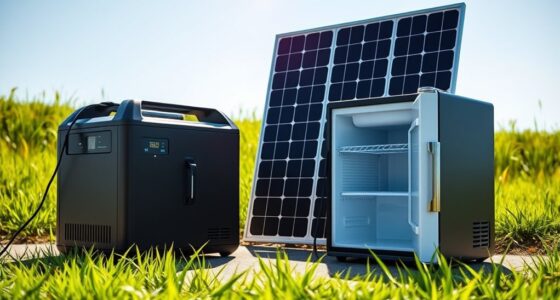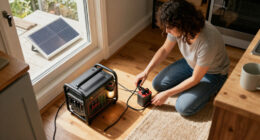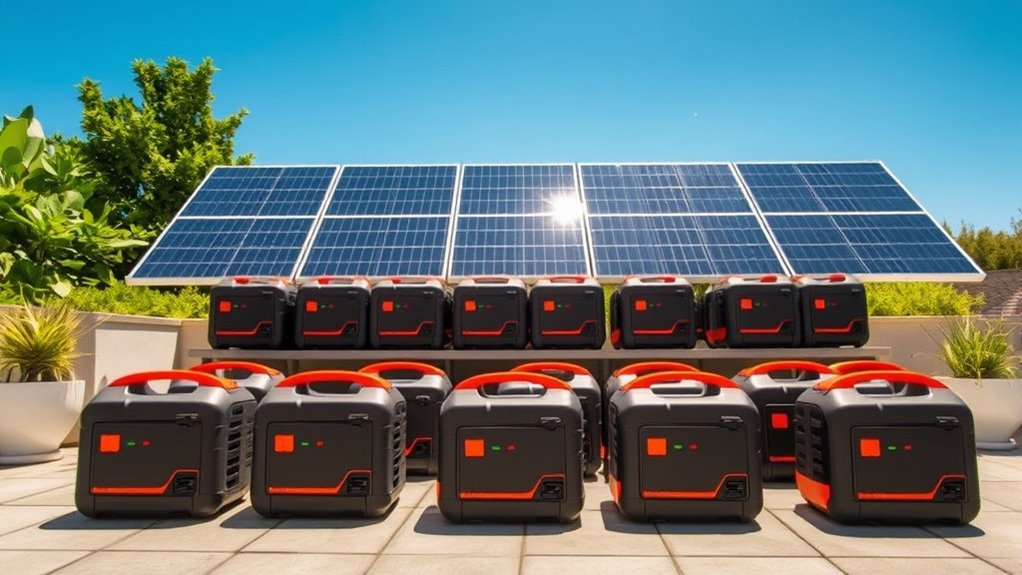

A solar generator bundle for home backup pairs a battery power station with solar panels, but the right setup depends on what you need to keep running and for how long. My best overall pick is the Jackery HomePower 3000, whose 3072Wh capacity and 3600W AC output make it better suited to meaningful household backup than the smaller kits. The OSCAL PowerMax 6000 stands out for buyers seeking a larger system and three included 400W panels, while the Jackery Explorer 300 suits light-duty essentials where portability matters more than runtime. The main tradeoff is between battery capacity and output for heavier loads versus a smaller, easier-to-carry kit that can only cover select devices. Read on for how all 14 options compare, who each setup fits, and what to check before choosing.

Get backup power and energy gear delivered free with Prime
- Fast, free delivery on millions of items
- Prime Video, Amazon Music and more included
- Member-only deals all year
Complete the kit


Key Takeaways
- The Jackery HomePower 3000 offers a useful middle ground for home backup: 3072Wh of capacity and 3600W AC output, without moving to the much larger OSCAL PowerMax 6000.
- The OSCAL PowerMax 6000 is the standout for buyers who prioritize a larger-capacity system and substantial included solar input, but its size and power may be more than a short-outage plan needs.
- Several bundles include panels rated at only 30W to 200W; these can help recharge a station in sunlight, but they do not make a small battery equivalent to a whole-home backup system.
- Expandable capacity changes the buying decision: the AFERIY 1024Wh model can grow to 5120Wh, while fixed-capacity compact kits are simpler but offer less room to scale.
- The roundup spans distinct jobs: 300W-class kits suit small electronics, 1–2kWh stations can support a more selective outage plan, and higher-capacity units are better starting points for longer runtimes or demanding loads.




| solar generator bundle for home backup | Capacity | Battery type | AC charging time |
|---|---|---|---|
| Jackery Solar Generator 1000 V | 1,070Wh | LFP | 1 hour fast charging; 3 hours standard |
| OSCAL PowerMax 6000 Solar Gene | 3,600Wh | LiFePO4 | — |
| ZeroKor 300W Portable Solar Ge | — | — | — |
| Jackery Explorer 2000 v2 Porta | 2,042Wh | LiFePO4 | 80% in 66 minutes; full in 102 minutes with Super Charge |
| DaranEner 300W Portable Power | 192Wh | LiFePO4 | — |
| Jackery HomePower 3600 Plus Po | 3,584Wh | — | 2.5 hours |
| BROWEY 1600W Portable Power St | 1,024Wh | LiFePO4 | — |
| AFERIY Expandable Portable Pow | 1,024Wh, expandable to 5,120Wh | LiFePO4 | — |
| Jackery Explorer 300 Portable | 292Wh | — | — |
| Jackery HomePower 3000 with 2x | 3,072Wh | LiFePO4 | 2.2 hours |
| UDPOWER S1200 1190Wh Solar Gen | — | LiFePO4 | — |
| UDPOWER S2400 Portable Power S | — | LiFePO4 | 1.3 hours from 0% to 100% |
| BLUETTI Elite 100 V2 Solar Gen | — | — | About 70 minutes from 0% to 100% |
| EBL 2400W Portable Power Stati | — | — | 1.6–2 hours |
More Details on Our Top Picks
Jackery Solar Generator 1000 V2 with 200W Solar Panel, 1070Wh, 1500W AC
At 1,070Wh and 1,500W, this Jackery is a better fit for short outages and essential devices than for keeping a whole household running. It has more headroom for appliances than the ZeroKor 300W or DaranEner 300W, while its 23.8-pound weight makes it easier to move than the larger Jackery Explorer 2000 v2. The LFP battery and fast AC charging are useful when an outage is brief or power returns intermittently. Its limits show up with longer interruptions: the capacity is modest for sustained appliance use, and the included 200W panel is not a substitute for a large home-backup solar array. I’d choose it for a portable, manageable reserve, not for whole-home coverage. The super-fast charging mode also requires app access.
Pros:- 1,070Wh capacity and 1,500W AC output suit more than just small electronics.
- At 23.8 pounds, it is easier to relocate than the Jackery Explorer 2000 v2.
- LFP battery chemistry is specified for long service life.
- Fast AC charging can reduce downtime between outages.
Cons:- Capacity is limited for extended outages or several high-draw appliances.
- Super-fast charging requires enabling the mode in the app.
- Solar panel and power station may ship separately.
Best for: Households seeking portable backup for phones, networking gear, lights, and limited small-appliance use during shorter outages.
Not ideal for: Buyers who need multi-day appliance backup, high solar recharge rates, or a unit that can be moved without using its app for fast charging.
- Capacity:1,070Wh
- AC output:1,500W
- Surge peak:3,000W
- Weight:23.8 lb
- Battery type:LFP
- AC charging time:1 hour fast charging; 3 hours standard
- Ports:3 AC, 2 USB-C, 1 USB-A, 1 DC car port
- Included solar panel:200W
Our verdict“Choose this Jackery for portable, short-outage backup with more appliance headroom than the 300W picks, but skip it for prolonged household coverage.”
OSCAL PowerMax 6000 Solar Generator with 3×400W Solar Panels
For buyers prioritizing appliance capacity and solar input, the OSCAL PowerMax 6000 is the strongest home-backup option in this batch. Its 3,600Wh battery, stated 6,000W AC output, and three included 400W panels put it in a different class from the Jackery 1000 V2 and Explorer 2000 v2, which are easier to move but store less energy and accept less bundled solar. Automatic switchover can help keep connected equipment powered during an outage, while the 2,400W solar input gives the bundle a stronger path to replenishing its battery in daylight. The tradeoff is practical: the listing does not provide dimensions or weight, so I can’t judge whether it suits a home where the unit must be moved often. Its high output also does not remove the need to plan loads and runtime.
Pros:- 3,600Wh capacity and 6,000W AC output support a broader range of appliance loads than the smaller Jackery bundles.
- Three 400W panels are included for a substantial solar setup.
- Up to 2,400W solar charging input supports faster replenishment in suitable conditions.
- LiFePO4 battery is specified for up to 3,500 charge cycles, with automatic outage switchover.
Cons:- Weight and dimensions are not provided, making portability and storage difficult to judge.
- A 3,600Wh capacity still calls for careful load planning during long outages.
- High output and multiple panels mean a larger setup than compact, grab-and-go options.
Best for: Households that want a high-output portable backup station, substantial included solar, and automatic outage switchover for selected connected equipment.
Not ideal for: People who need a lightweight, clearly specified portable unit or expect a 3,600Wh battery to run a whole home for an extended outage.
- Capacity:3,600Wh
- AC output:6,000W; 9,000W peak
- AC outlets:4
- AC charging power:2,200W
- Solar input:Up to 2,400W
- Battery type:LiFePO4
- Charge cycles:Up to 3,500
- Included solar panels:3 × 400W
Our verdict“Pick the OSCAL for higher-output backup and a large included solar array, provided its unspecified size and weight fit your setup.”
ZeroKor 300W Portable Solar Generator with 60W Solar Panel
The ZeroKor is an essentials-only backup choice, not a small version of the higher-capacity Jackery bundles. Its 300W continuous output is suited to phones, lights, and other modest loads, while the included 60W monocrystalline panel offers a way to recharge off-grid. That solar panel is a more substantial inclusion than the DaranEner’s 30W panel, but the ZeroKor listing does not state battery capacity, so I can’t estimate how long it will keep those devices running or how quickly the panel can refill it. Its multiple USB, DC, and AC outputs make it flexible for low-power devices; the 300W ceiling rules out many household appliances. I’d keep the panel junction box dry and treat this as backup for communications and lighting rather than a household power source.
Pros:- Includes a 60W monocrystalline solar panel, twice the panel wattage bundled with the DaranEner.
- Multiple AC, DC, and USB outputs allow several small devices to connect.
- MPPT solar input supports panel charging.
- Built-in battery protections and cooling fan address several operating risks.
Cons:- Battery capacity is not specified, so runtime and recharge expectations are hard to plan.
- 300W output excludes higher-draw household appliances.
- The solar panel junction box is not waterproof and must be kept dry.
Best for: Campers and outage planners who want a small, low-load reserve for phones, lights, and other modest electronics, with a panel included.
Not ideal for: Households needing appliance backup, dependable runtime estimates, or a weather-exposed solar setup.
- Continuous output:300W
- Solar panel:60W monocrystalline; 20.5% efficiency
- AC outlets:2; 300W maximum each
- DC port:9–12.6V / 10A maximum
- USB ports:3 × 5V/3A; 1 Quick Charge port
- Charging inputs:AC wall outlet, 12V car charger, or solar
- Solar charging:MPPT input
- Battery protection:Short-circuit, over-current, over-voltage, overload, and overheating protection
Our verdict“Choose the ZeroKor for modest electronics and a useful included panel, but not for appliance loads or backup that needs predictable runtime.”
Jackery Explorer 2000 v2 Portable Power Station with 2x200W Solar Panels
The Explorer 2000 v2 balances useful capacity with outage-focused switching. At 2,042Wh and 2,200W AC output, it offers considerably more reserve and appliance headroom than the Jackery 1000 V2, while staying far below the OSCAL PowerMax 6000’s stated output and solar input. Its 20ms UPS switching is the differentiator for buyers protecting connected electronics that should not lose power when the grid fails. The 400W panel bundle also gives it more solar collection capacity than the 1000 V2’s 200W panel. At 39.5 pounds, it remains portable for its capacity, though it is no longer a casual one-hand carry for many people. Solar connection setup may require a plug adjustment, and the panels and station may arrive separately; this is a capable backup bundle, not a whole-house system.
Pros:- 2,042Wh capacity and 2,200W output provide more reserve and load headroom than the Jackery 1000 V2.
- 20ms UPS switching is suited to connected critical electronics.
- Two 200W panels provide 400W of bundled solar input.
- Fast AC charging and a 39.5-pound unit weight balance recharge speed with portability.
Cons:- The 400W solar input is less than the OSCAL PowerMax 6000’s stated 2,400W maximum.
- Solar connection may require a specific cable plug adjustment.
- Power station and panels may ship separately.
Best for: Households protecting networking equipment, computers, and selected essential devices that benefit from fast UPS-style switchover and roughly 2kWh of stored energy.
Not ideal for: Buyers who need high solar input, longer multi-day capacity, or a unit that is especially light and simple to connect to panels.
- Capacity:2,042Wh
- AC output:2,200W
- Weight:39.5 lb (unit)
- Dimensions:13.2 × 10.4 × 11.5 in
- Battery type:LiFePO4
- Included solar input:400W via 2 × 200W panels
- AC charging time:80% in 66 minutes; full in 102 minutes with Super Charge
- UPS switching time:20ms
Our verdict“Choose the Explorer 2000 v2 when UPS switching and 2kWh-class capacity matter more than maximum solar input or whole-home scale.”
DaranEner 300W Portable Power Station with 30W Solar Panel
At just 5.84 pounds, the DaranEner is the easiest unit here to move and store, but its 192Wh capacity makes it a reserve for small electronics rather than a meaningful household backup supply. Its 300W output is similar to the ZeroKor’s, while the DaranEner provides a clearly stated capacity and a LiFePO4 battery rated for over 3,500 cycles. That makes runtime planning more straightforward than with the ZeroKor, whose capacity is unspecified. The tradeoff is the included 30W solar panel: it is less powerful than the ZeroKor’s 60W panel and may recharge the station slowly. Eight outlets sound flexible, but the 300W continuous limit still governs what can run at once. I’d choose it for a portable emergency kit, not for powering appliances or supporting a long outage.
Pros:- 5.84-pound weight and compact dimensions make it the easiest product here to carry and store.
- 192Wh capacity is specified, unlike the ZeroKor’s listing.
- LiFePO4 battery is rated for over 3,500 charge cycles.
- Supports AC, car, and solar charging.
Cons:- 192Wh capacity limits how long even small devices can run.
- 300W continuous output cannot handle many household appliances.
- Included 30W panel is lower-powered than the ZeroKor’s 60W panel.
Best for: People assembling a lightweight car, camping, or home emergency kit for phones, lights, and other low-power electronics.
Not ideal for: Households seeking appliance backup, long runtimes, or meaningful solar replenishment during a short daylight window.
- Capacity:192Wh
- Continuous output:300W
- Surge power:600W
- Battery type:LiFePO4
- Weight:5.84 lb
- Dimensions:8.4 × 5.3 × 7.4 in
- Outlets:8
- Charging options:AC, car, and solar; 30W solar panel included
Our verdict“Pick the DaranEner for a compact, clearly specified emergency reserve for small electronics, not for sustained home backup.”
Jackery HomePower 3600 Plus Portable Power Station with 2x200W Solar Panels
The HomePower 3600 Plus is the strongest fit here for buyers who need substantial output for home essentials, rather than a small emergency battery. Its 3,584Wh capacity and 3,600W AC output provide more headroom than the 3,072Wh Jackery HomePower 3000, while parallel operation can raise output to 7,200W and provide 120V and 240V. Multiple charging routes, including solar and a gas generator, give it more ways to recover during a prolonged outage. The wheeled, luggage-style design helps with moving it around a home, though it is still a large-capacity unit, not a grab-and-go power bank. I would skip it if a buyer needs detailed dimensions or weight before planning storage: those figures are not provided, and larger expansion requires additional units.
Pros:- 3,584Wh capacity and 3,600W AC output suit a broader range of home backup loads than compact stations.
- Parallel capability supports up to 7,200W output and 120V/240V operation.
- AC, solar, and gas-generator charging provide multiple recovery options.
- Wheels and a telescopic handle make the large station easier to move.
Cons:- Specific weight and dimensions are not provided, complicating storage and transport planning.
- Higher capacity expansion requires multiple units.
- Solar panels may ship separately and arrive in different packages.
Best for: Households seeking high AC output and several days of flexible recharging options for outage essentials.
Not ideal for: Buyers who need a small, clearly specified unit or expect one station to provide higher-capacity expansion without adding another unit.
- Capacity:3,584Wh
- AC output:3,600W
- Parallel output:7,200W
- Parallel voltage:120V and 240V
- Cycle life:6,000 cycles
- AC charging time:2.5 hours
- Solar charging time:4 hours
- Form factor:Wheeled luggage-style design with telescopic handle
Our verdict“Choose the HomePower 3600 Plus if high output and flexible charging matter more than compact size and precise portability details.”
BROWEY 1600W Portable Power Station with Built-in Solar Panel
The BROWEY’s defining advantage is its built-in solar panel: it can collect sunlight without first setting up a separate panel, a practical distinction from the Jackery HomePower 3000 and HomePower 3600 Plus bundles. Its 1,024Wh battery and 1,600W output can support selected appliances and electronics, while the 3,200W peak rating gives some short-duration surge headroom. Eight ports, including 100W USB-C PD, make it useful for powering several device types from one station. For home backup, though, this is a more limited reserve than either larger Jackery. Built-in panels also make solar charging dependent on suitable sunlight and don’t turn the unit into a high-capacity household system. Its reported bulk is another reason to prioritize stationary emergency use over frequent carrying.
Pros:- Built-in solar panel avoids relying solely on a separate panel setup.
- 1,600W output with 3,200W peak power supports a useful range of selected appliances.
- Eight ports include USB-C PD up to 100W for compatible devices.
- LiFePO4 battery is specified for over 3,000 cycles.
Cons:- 1,024Wh capacity offers much less reserve than the HomePower 3000 or HomePower 3600 Plus.
- Solar charging depends on adequate sunlight and the built-in panel’s available exposure.
- The unit is described as relatively heavy and bulky for portable use.
Best for: Buyers who want a mid-capacity station with solar collection built in for occasional outages, device charging, and outdoor use.
Not ideal for: Households needing long runtimes for multiple appliances or buyers who need a lightweight station to carry frequently.
- Capacity:1,024Wh
- Peak output:3,200W
- Battery type:LiFePO4
- Charging time:3 hours to 80%
- Ports:8, including AC, DC, and USB-C PD
- USB-C PD:100W
- Solar design:Built-in solar panel
Our verdict“Pick the BROWEY if integrated solar convenience matters more than the longer appliance runtimes offered by larger home-backup stations.”
AFERIY Expandable Portable Power Station, 1024Wh LiFePO4 Solar Generator (Up to 5120Wh) with DC600 580W Alternator Charger
The AFERIY is the clearest choice for buyers who want to start with a manageable battery and add reserve later: capacity can grow from 1,024Wh to 5,120Wh. That flexibility sets it apart from the BROWEY, whose listed capacity is fixed at 1,024Wh, and it gives this model a more credible path toward longer home-backup runtimes. Its 1,800W output, 14 outlets, and 580W DC input cover a practical mix of loads and charging options. LiFePO4 cells rated for over 4,000 cycles suit repeat use over time. The tradeoff is a setup that becomes more involved as expansion components are added; buyers wanting a simple, ready-to-use system may prefer the Jackery HomePower 3000. The station is also described as bulky, and its expansion potential depends on configuring the extra capacity.
Pros:- Expandable capacity scales from 1,024Wh up to 5,120Wh.
- 1,800W output and 3,600W peak support selected household appliances.
- Fourteen output ports offer flexibility for multiple connected devices.
- LiFePO4 battery is rated for over 4,000 cycles and supports long-term use.
Cons:- Expansion adds connection and setup steps compared with a fixed-capacity station.
- The unit is described as relatively heavy and bulky for portable use.
- The expandable system may require additional components to reach its maximum capacity.
Best for: Homeowners who want to begin with a moderate-capacity station and add battery capacity as backup needs grow.
Not ideal for: Buyers who want a simple single-box setup, a compact carry-around station, or a large reserve without configuring expansion components.
- Capacity:1,024Wh, expandable to 5,120Wh
- Battery type:LiFePO4
- Maximum output:1,800W
- Peak power:3,600W
- DC input:580W
- Output ports:14
- Cycle life:Over 4,000 cycles
- Dimensions:13.77 × 8.66 × 10.35 inches
Our verdict“Choose the AFERIY if you want a scalable backup system and are willing to manage a more involved setup as capacity grows.”
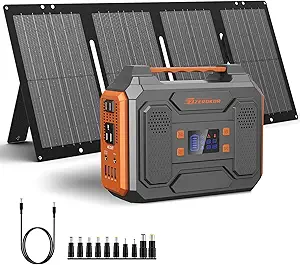
Jackery Explorer 300 Portable Power Station with 40W Solar Panel
The Explorer 300 is a compact companion for essential electronics, not a primary home-backup station. At 7.5 pounds with 292Wh of capacity, it is easier to store or move than the HomePower 3000 and HomePower 3600 Plus, but its 300W rated output limits it to modest loads. Two AC outlets, USB ports, and a 120W car port allow several small devices to share the battery; the 100W USB-C PD port is useful for compatible electronics. That combination makes it a reasonable fit for communications, lights, and device charging during a short interruption. It cannot match the larger models’ appliance capacity or runtime, and charging through a small panel can take a while. I’d treat it as a supplemental unit rather than the household’s main outage reserve.
Pros:- At 7.5 pounds, it is much easier to move and store than the HomePower models.
- Two AC outlets plus USB and car-port options support several small devices.
- 100W USB-C PD can serve compatible laptops and electronics.
- Battery is specified for over 4,000 charge cycles.
Cons:- 292Wh capacity is far below the larger home-backup stations in this lineup.
- 300W rated output rules out many household appliances.
- Charging with a small solar panel can take a relatively long time.
Best for: People in apartments or homes who want a lightweight backup for phones, laptops, lights, and other low-wattage essentials.
Not ideal for: Households expecting to run refrigerators, high-wattage appliances, or several home loads for extended outages.
- Capacity:292Wh
- Weight:7.5 lb
- AC outlets:2
- Peak surge power:600W
- USB-C PD:100W
- USB-A ports:2
- Charge cycles:Over 4,000
Our verdict“Buy the Explorer 300 as a portable reserve for electronics and lights, not as a replacement for a full-size home-backup system.”
Jackery HomePower 3000 with 2x200W Solar Panels, 3072Wh, 3600W AC Output
The HomePower 3000 balances substantial storage and output in a simpler package than the expandable AFERIY: it has 3,072Wh, 3,600W AC output, and a listed UL-certified UPS for seamless backup during outages. That makes it a stronger fit for keeping selected home essentials running than the BROWEY or Explorer 300, whose smaller batteries provide less reserve. Its 7,200W surge rating offers headroom for brief startup demands, while AC charging is listed at 2.2 hours. The tradeoff against the HomePower 3600 Plus is lower capacity and no listed 120V/240V parallel output, though this model still pairs a large battery with a high AC rating. Solar panels may arrive separately, and limited weather-resistance information leaves outdoor placement less clear.
Pros:- 3,072Wh capacity and 3,600W AC output suit more demanding backup loads than compact stations.
- Listed UL-certified UPS supports seamless power during outages.
- 7,200W surge rating provides headroom for brief startup demands.
- AC recharge is listed at 2.2 hours, with solar and car charging also described.
Cons:- Capacity is lower than the HomePower 3600 Plus.
- Solar panels may ship separately and arrive in different packages.
- Weather-resistance and outdoor-durability details are limited.
Best for: Households wanting a high-output station with a listed UPS function for selected essential circuits or appliances during outages.
Not ideal for: Buyers who need expandable capacity, clearly documented weather resistance, or a complete solar setup guaranteed to arrive in one shipment.
- Capacity:3,072Wh
- AC output:3,600W
- Surge power:7,200W
- Battery type:LiFePO4
- Cycle life:4,000 cycles
- AC charging time:2.2 hours
- Solar charging:Up to 80% in 9 hours
- UPS:UL-certified UPS
Our verdict“Choose the HomePower 3000 if you want a high-output home station with a listed UPS function, but do not need the 3600 Plus’s greater capacity or parallel capability.”
UDPOWER S1200 1190Wh Solar Generator Kit with 120W Panel, Portable Power Station for Home Backup, RV, Outdoor, Emergency
The UDPOWER S1200 suits buyers who want more battery capacity than a compact 1kWh-class station without stepping up to the heavier S2400. Its 1190Wh LiFePO4 battery can support essentials such as communications gear, lights, and smaller appliances during an outage, while five AC outlets and several USB ports let multiple devices stay connected. The included 120W foldable panel adds a solar option, though its lower wattage means replenishing the battery will take longer than with the BLUETTI Elite 100 V2’s 200W panel, based on panel ratings alone. The panel’s IP65 water resistance is useful outdoors, but the product data says the panel and generator ship separately, which can complicate setup. I’d choose this over the S2400 for a less demanding backup plan, not for long outages or high-load appliances.
Pros:- 1190Wh LiFePO4 battery offers more stored energy than many compact backup stations.
- Five AC outlets plus USB and DC ports support several devices at once.
- Included 120W foldable solar panel is IP65 rated for water resistance.
- LiFePO4 chemistry is specified with a 15+ year lifespan claim.
Cons:- The 120W panel is modest for replenishing a 1190Wh battery during limited daylight.
- The panel and generator ship separately, which may delay putting the full kit to use.
- Product data does not specify the station’s weight, making portability harder to judge.
Best for: Households seeking a mid-size battery for phones, lights, routers, and other modest essentials, with occasional outdoor solar charging.
Not ideal for: Buyers who need to run high-wattage appliances for extended outages or need clearly documented system weight and easy one-piece delivery.
- Battery capacity:1190Wh
- Battery type:LiFePO4
- Solar panel:120W foldable, IP65 water-resistant
- Peak power:1800W
- AC outlets:5
- USB ports:2 USB-C and 4 USB-A
- Other DC connections:1 car port and 2 DC5521 ports
- Dimensions:18.7 x 31.5 x 0.59 inches
Our verdict“Choose the S1200 for moderate essential-device backup and a bundled outdoor panel, but pick the S2400 if you need substantially more stored energy.”
UDPOWER S2400 Portable Power Station with Solar Panel Option, 2083Wh LiFePO4, 2400W (Surge 3000W) UPS, 6 AC Outlets, Solar Generator for RVs Camping Emergency and Home Backup
For a home backup plan centered on keeping more devices running for longer, the UDPOWER S2400 offers the largest battery in this group at 2083Wh. Its 2400W output and six AC outlets give it a wider household-use range than the S1200, while its automatic transfer switch is intended to keep connected equipment powered during an outage. That combination makes it a stronger choice for routers, lighting, and several small appliances, though it is still a portable station rather than a whole-home system. At 41 pounds, it is also less convenient to move than the 25-pound BLUETTI Elite 100 V2. The listed 1.3-hour AC recharge is a strong recovery option between outages, but solar panels are not included in the supplied product details, so solar readiness requires a compatible panel.
Pros:- 2083Wh LiFePO4 capacity exceeds the S1200 and supports longer use between charges.
- 2400W peak output and six AC outlets accommodate multiple connected devices.
- Automatic transfer switch supports continuity for connected equipment during outages.
- Specified AC recharge time is 1.3 hours from empty to full.
Cons:- At 41 pounds, carrying it between rooms or outdoors is less convenient than the BLUETTI Elite 100 V2.
- A compatible solar panel is needed for solar charging and is not specified as included.
- Its 2083Wh capacity remains limited for extended whole-home backup or sustained high-power loads.
Best for: Households that want a higher-capacity portable station for several essential devices and value automatic transfer support.
Not ideal for: Buyers who need a lightweight grab-and-go unit, a ready-to-use solar bundle, or whole-home output for large appliances.
- Battery capacity:2083Wh
- Battery type:LiFePO4
- Peak power:3000W
- AC outlets:6
- USB ports:2 USB-C and 4 USB-A
- Other connections:2 DC5521 ports and 1 car port
- Solar input:Up to 440W
- AC charging time:1.3 hours from 0% to 100%
- Weight and dimensions:41 lbs; 15.8 x 9.5 x 10.1 inches
Our verdict“Pick the S2400 when longer essential-load runtime and transfer support matter more than low weight or an included solar panel.”
BLUETTI Elite 100 V2 Solar Generator with 200W Solar Panel
The BLUETTI Elite 100 V2 prioritizes quick recovery and quiet indoor use over maximum stored energy. Its 1024Wh battery is smaller than the UDPOWER S2400’s 2083Wh, so I’d favor it for routers, laptops, lights, and shorter outages rather than trying to stretch backup across many appliances. Its 1800W AC output and sub-10ms UPS switchover add practical protection for sensitive electronics, while silent mode is rated at 30dB. The 200W panel gives this bundle a higher panel rating than the UDPOWER S1200’s 120W panel, and AC charging is listed at about 70 minutes. One caveat: the product description says the panel ships separately, so buyers should confirm what arrives together. At 25 pounds, it is easier to relocate than either larger UDPOWER or EBL option.
Pros:- About 70-minute AC recharge time helps restore the station between outages.
- Sub-10ms UPS switchover is suited to protecting connected computers and networking gear.
- 30dB silent mode is a useful fit for bedrooms and indoor work areas.
- At 25 pounds, it is lighter than the UDPOWER S2400 and EBL 2400W.
Cons:- Its 1024Wh capacity is substantially below the UDPOWER S2400, limiting backup duration.
- The product description says the solar panel ships separately, despite the bundle title.
- A 25-pound unit is still heavy for backpacking or frequent long-distance carrying.
Best for: People working from home who want quiet, fast-recharging backup for computers, routers, and essential electronics.
Not ideal for: Households seeking the longest runtime for multiple appliances or buyers who need a solar panel guaranteed to arrive with the station.
- Battery capacity:1024Wh
- Battery type and cycle life:LiFePO4; 4000+ cycles to 80%
- AC output:1800W, 2700W surge
- Solar panel:200W
- Maximum solar input:Up to 1000W
- AC charging time:About 70 minutes from 0% to 100%
- Solar charging time:About 7 hours from 0% to 100%
- UPS and noise:Less than 10ms switchover; 30dB in silent mode
- Weight and dimensions:25 lbs; 12.6 x 8.5 x 9.8 inches
Our verdict“Choose the Elite 100 V2 for quiet, quick-recharging backup for electronics, not for the longest household runtime.”
EBL 2400W Portable Power Station with 200W Solar Panel
The EBL 2400W is the power-focused pick here: its 2400W continuous output is specified for heavier loads such as microwaves and air conditioners, while its 1843.2Wh LiFePO4 battery holds more energy than the BLUETTI Elite 100 V2. That extra output does not make it a light-duty travel choice. At 55 pounds and 15 x 21 x 15 inches, it is the least convenient option in this group to move around the home, and its 200W panel may take up to 14 hours to fully recharge the battery in stated conditions. The UDPOWER S2400 stores more energy and weighs less, though its listed peak output is higher only as a surge figure, not a continuous rating. I’d shortlist the EBL when appliance output matters most and plan around its weight and solar replenishment time.
Pros:- 2400W continuous output is suited to heavier loads than the BLUETTI Elite 100 V2’s 1800W output.
- 1843.2Wh LiFePO4 battery provides substantial stored energy for portable backup.
- Up to 800W maximum solar input allows for more solar capacity than the included 200W panel alone.
- Twelve output ports include AC, USB, wireless, car, and DC options.
Cons:- At 55 pounds, it is heavier than the UDPOWER S2400 and BLUETTI Elite 100 V2.
- The included 200W panel can take up to 14 hours to fully recharge the station.
- Its 15 x 21 x 15-inch footprint is relatively bulky for a portable backup unit.
Best for: Buyers who need high continuous output for heavier appliances and can keep the station in a fixed or easily accessible spot.
Not ideal for: People who need a lightweight emergency carry unit, frequent outdoor portability, or fast full-battery solar charging from the included panel.
- Battery capacity and type:1843.2Wh LiFePO4
- Continuous output:2400W
- AC outlets:4
- USB ports:2 USB-A, 2 USB-C
- Other output ports:1 car port, 2 DC ports, wireless charging
- Total output ports:12
- Solar panel and maximum solar input:200W panel; up to 800W input
- AC charging time:1.6–2 hours
- Weight and dimensions:55 lbs; 15 x 21 x 15 inches
Our verdict“Choose the EBL when continuous appliance output is your priority and you can accept a heavy unit with slow recharging from its included panel.”

How We Picked
I compared these bundles as home-backup systems, not just portable batteries. The main factors were stated battery capacity, AC output, included panel wattage, expansion options, and features relevant to outage use, such as UPS support where listed. I also weighed usability: a bundle should make sense as a complete setup, and its power limits and likely role should be clear to a buyer planning around essential devices.
The ranking favors products that balance useful stored energy, output for household devices, and a practical solar-recharging path. That puts the Jackery HomePower 3000 ahead as a balanced pick, while the OSCAL PowerMax 6000 earns attention for scale and panel input. Smaller kits rank lower for home backup because their limited capacity and panel wattage narrow what they can cover; they can still be stronger choices for portability or a few low-power essentials. Where details such as transfer behavior or expansion compatibility matter, I treat those as points to verify rather than assume.
| solar generator bundle for home backup | Battery type |
|---|---|
| Jackery Solar Generator 1000 V | LFP |
| OSCAL PowerMax 6000 Solar Gene | LiFePO4 |
| ZeroKor 300W Portable Solar Ge | — |
| Jackery Explorer 2000 v2 Porta | LiFePO4 |
| DaranEner 300W Portable Power | LiFePO4 |
| Jackery HomePower 3600 Plus Po | — |
| BROWEY 1600W Portable Power St | LiFePO4 |
| AFERIY Expandable Portable Pow | LiFePO4 |
| Jackery Explorer 300 Portable | — |
| Jackery HomePower 3000 with 2x | LiFePO4 |
| UDPOWER S1200 1190Wh Solar Gen | LiFePO4 |
| UDPOWER S2400 Portable Power S | LiFePO4 |
| BLUETTI Elite 100 V2 Solar Gen | — |
| EBL 2400W Portable Power Stati | — |
Factors to Consider When Choosing Solar Generator Bundle For Home Backup
Choosing a bundle starts with a backup plan, not a panel count. I would list the devices that must stay on, check their running and startup power, and decide how long they need to operate. These broader checks help separate a useful outage setup from a kit that looks capable but cannot support your actual loads.
1. Build a Load List Before Comparing Watt-Hours
Write down the devices you expect to power and their wattage, then separate continuous loads from items used only for short periods. A refrigerator, for example, has startup demands that can exceed its typical running draw, so AC output and surge capability both matter. Add the energy each device uses over the hours you want backup; that gives a more useful capacity target than choosing by battery size alone. Avoid assuming that a generator can run every appliance just because its total wattage seems high. A selective plan for communications, lights, and a few essential devices can call for a very different system from one that includes kitchen appliances or heating equipment.
2. Treat Solar Panels as a Recharge Rate, Not More Battery
Battery capacity measures stored energy, while panel wattage describes a potential charging rate under suitable conditions. A small included panel can be handy for topping up a portable station, but it may not replace energy quickly enough for repeated household use during cloudy weather or short winter days. Compare the panel input the station accepts with the panels supplied, and check whether additional panels can be connected. Think about where you can place panels in full sun and how often you can reposition them. A larger battery paired with modest solar input may provide a long first run but a slow recovery between outages.
3. Check Output, Surge, and Outlet Needs Separately
Watt-hours do not tell you whether a unit can start a motor or run several devices at once. Match the station’s continuous AC output to the combined load, then check surge capacity for appliances with compressors or motors. Count outlets and review the mix of AC and DC connections if you plan to power several essentials without adapters. A UPS feature can be useful for electronics that should remain powered through a brief interruption, but it is not automatically the same as a whole-home transfer setup. Confirm how the unit connects to your intended loads before treating it as a substitute for installed backup equipment.
4. Decide Whether Expansion Is Worth the Complexity
An expandable station can let you begin with a smaller battery and add storage if your backup plan grows. That flexibility matters when you cannot yet predict whether you will need a few hours of coverage or a longer outage setup. Before paying for expansion potential, confirm which battery modules are compatible and whether adding capacity affects portability or charging needs. A fixed-capacity model is often simpler when your load list is stable and modest. Do not count optional batteries as part of your usable system unless you plan to acquire them and have checked their fit with the main unit.
5. Match Portability to Where the Backup Will Sit
A compact station is easier to move between rooms, a vehicle, and a campsite, but portability usually comes with less stored energy and fewer watts of output. A larger home-oriented unit can support more demanding loads, yet it may be harder to relocate or store. Think through the full setup, including the station, panels, cables, and a place to keep everything dry and accessible. If the unit needs to move during an outage, check its weight and handle design rather than relying on the word portable. Buyers with a fixed indoor backup location may get more value from capacity than from a smaller footprint.
6. Plan for Safe Connections and Real Outage Limits
A portable power station is not automatically wired into household circuits. Decide whether you will plug individual devices directly into the unit or use a properly installed transfer arrangement, and follow the manufacturer’s instructions for the setup. Never feed power into a wall outlet with a makeshift cord; that can create a serious hazard. Check operating limits, ventilation requirements, storage guidance, and charging conditions before placing a station in a utility space. If you need to power hardwired equipment or a whole panel, ask a qualified electrician what equipment and installation your home requires.
Frequently Asked Questions
Can a solar generator bundle run my refrigerator during an outage?
It can, if the station’s AC output can handle the refrigerator’s startup demand and its battery has enough energy for the runtime you want. Check the refrigerator label or manual for power information, and remember that actual use varies with temperature, door openings, and compressor cycles. Compare that demand with both the generator’s continuous and surge ratings rather than relying on capacity alone. Solar panels may extend runtime in good sun, but their output changes with weather and placement. For a reliable plan, test the refrigerator’s expected load against the unit specifications and leave room for other devices you need.
Is a 200W solar panel enough to recharge a home-backup battery?
A 200W panel can contribute useful charging energy, but it is not a guarantee of a full recharge in a day. Real output depends on sunlight, season, angle, shade, and the station’s accepted solar input. A large battery may take a long time to refill from one modest panel, especially if you are still drawing power while charging. Check the station’s solar input limits and estimate charging time using realistic daylight rather than the panel’s peak rating. If recovery speed matters, look for a bundle with more panel wattage or a station that can accept compatible added panels.
Should I choose the largest battery or the highest AC output?
Choose based on the constraint your backup plan is most likely to hit. Battery capacity determines how much energy is stored and helps estimate runtime, while AC output limits how powerful a device or combined set of devices the station can run at once. A large battery with low output may last a long time on small loads but fail to start a demanding appliance. A high-output unit with limited capacity may run a heavy load briefly. Make a load list, check startup needs, and then compare both figures against your planned duration.
Do I need an expandable station if I only want backup for essentials?
Not necessarily. If your plan is limited to a few low-power devices for a known period, a fixed-capacity station may be easier to choose and use. Expansion is more useful when your needs may grow, when you expect longer outages, or when you want to add storage later rather than buying the full system immediately. Check the actual expansion path, compatible battery models, and added charging requirements before paying for that flexibility. A theoretical maximum capacity does not help unless the extra batteries are available, compatible, and part of your plan.
Can I connect a portable solar generator to my home’s electrical panel?
Do not assume a portable station can connect directly to a household panel. Panel connection may require compatible equipment, an approved transfer method, and installation by a qualified electrician. Never plug a generator into a wall outlet to send power through home wiring; improvised backfeeding can put people and utility workers at risk. Many portable units are intended to power devices plugged directly into their outlets instead. Check the manufacturer’s connection instructions and ask an electrician about your home’s requirements before planning panel-level backup.
Conclusion
For a balanced home-backup setup, I would start with the Jackery HomePower 3000 as the best overall pick: its 3072Wh capacity and 3600W AC output serve a broader range of outage plans than the compact kits. Buyers seeking a larger system with substantial included solar input should compare the OSCAL PowerMax 6000 as the premium-scale choice, while those who want a lower-complexity entry point for a few essentials can look at the Jackery Explorer 1000 V2 bundle. For value, I would match the UDPOWER S1200 to modest loads and confirm that its 120W panel suits the expected recharge schedule. The AFERIY expandable station is the specific-needs pick for shoppers who want a path to add capacity, and the Jackery Explorer 300 is the compact choice for phones, lights, and other small loads—not broad household coverage. Before deciding, match your load list to both battery capacity and AC output, then check whether the included panels can recharge at the pace your outage plan requires.