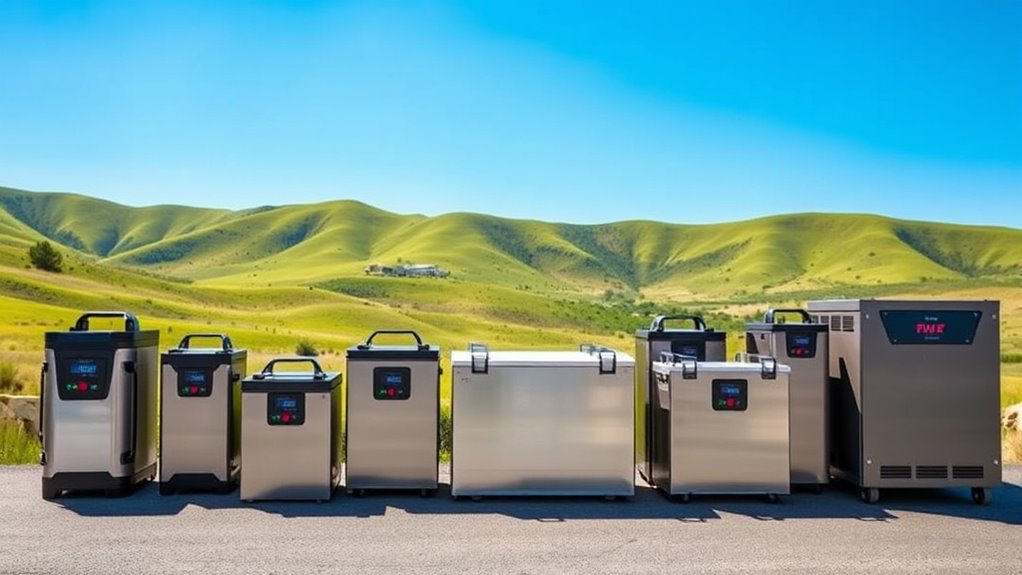

If you’re searching for a reliable battery backup for RV, you’re likely balancing power capacity, portability, and budget. The Anker SOLIX F3800 stands out as the best overall, offering massive capacity and high output for most RV needs. For those prioritizing portability, the Jackery Explorer 1000 v2 delivers a balance of power and ease of use. Meanwhile, the BLUETTI AC200L offers expandable capacity for larger setups, but at a higher price point. The main tradeoffs revolve around size, cost, and whether you need pure backup power or more flexible, portable solutions. Continue reading for a detailed breakdown to match your specific needs.

Get backup power and energy gear delivered free — and shop member deals
- Fast, free delivery on millions of items
- Access to Prime Big Deal Days deals on October 6–7
- Prime Video, Amazon Music and more included
Complete the kit


Key Takeaways
- Large-capacity models like the Anker SOLIX F3800 and ABOK Ark3600 are ideal for full-time RVers or extended stays, but they tend to be heavier and more expensive.
- Portability is key for casual campers; smaller units like Jackery 300 or Jackery Explorer 1000 are lightweight and easier to handle, though with less total power.
- Expandable systems such as BLUETTI AC200L and ABOK Ark3600 offer flexibility for future upgrades but come at a premium and require more space.
- Pure sine wave inverters are vital for sensitive electronics, which makes units like EcoFlow DELTA models a better choice for delicate devices.
- Price often correlates with capacity and features—higher-priced options tend to support more outlets, faster charging, and longer run times.


| battery backup for rv | Battery capacity | AC outlets | Battery chemistry | Capacity |
|---|---|---|---|---|
| ZeroKor 300W Portable Solar Ge | 280Wh | 2 × 110V pure sine wave | — | — |
| Anker SOLIX F3800 | 3,840Wh | — | EV-class LiFePO4 | — |
| ABOK Ark3600 | 3,840Wh | — | — | — |
| EcoFlow DELTA 3 Plus | 1,024Wh | — | — | — |
| EcoFlow DELTA 3 Max | 2,048Wh | — | LiFePO4 | — |
| Jackery Solar Generator 300 | — | 2 | — | 292Wh |
| BLUETTI AC200L Portable Power | — | 4 | LiFePO4 | 2048Wh |
| BLUETTI Elite 300 Portable Pow | — | 2 | LiFePO4 | 3014Wh |
| Jackery Explorer 1000 v2 Porta | — | — | LiFePO4 | 1070Wh |
| EF ECOFLOW Portable Power Stat | — | Multiple, up to 15 | — | 1024Wh |
More Details on Our Top Picks
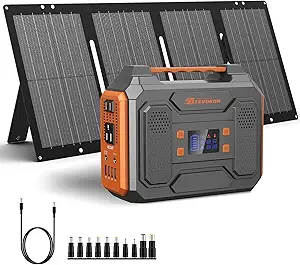
ZeroKor 300W Portable Solar Generator Kit
I rank ZeroKor 300W Portable Solar Generator Kit as the best budget solar bundle because the 60W panel is included, while the similarly sized Jackery Solar Generator 300 pairs a 292Wh station with a smaller 40W panel. Its 280Wh battery can cover phones, lights, a laptop, and brief low-draw entertainment, making it useful as a secondary RV battery backup rather than a coach-wide power source. The catch is firm: the 300W ceiling rules out coffee makers, hair dryers, water pumps, and most cooking appliances. I give the Jackery an advantage in battery capacity, while ZeroKor counters with more USB connections and panel-direct USB-C charging. Because the junction box is not waterproof and the battery needs periodic cycling, this kit asks for more care than a set-aside emergency unit.
Pros:- Includes a foldable 60W monocrystalline solar panel
- Pure sine wave AC output is suitable for sensitive electronics
- Multiple USB, AC, and DC connections support mixed camping gear
- Built-in MPPT charging and BMS protections
Cons:- The 300W maximum output excludes most high-draw RV appliances
- A 280Wh battery provides limited runtime beyond small electronics
- Solar-panel junction box is not waterproof
Best for: I recommend it for budget campers who need a solar-ready backup for phones, laptops, lights, and other devices below 300W.
Not ideal for: I would skip it for RV owners expecting to run heating appliances, pumps, air conditioners, or kitchen equipment.
- Battery capacity:280Wh
- Maximum AC output:300W
- AC outlets:2 × 110V pure sine wave
- Included solar panel:60W monocrystalline, 20.5% conversion efficiency
- Charging methods:AC outlet, 13–23V solar input, or 12V car port
- Station USB ports:3 × USB-A plus 1 × quick-charge USB
- DC output:9–12.6V, 10A maximum
- Safety system:BMS with overload, thermal, voltage, current, and short-circuit protection
Our verdict“I would choose this as an affordable device-charging kit, not as the primary electrical backup for an RV.”
Anker SOLIX F3800
I rank Anker SOLIX F3800 as the best premium whole-RV backup because its 6,000W, 120V/240V output can feed an RV directly through NEMA 14-50 or L14-30 connections. The BLUETTI AC200L offers a handy 30A RV outlet in a smaller 2,048Wh class, but Anker supplies nearly twice the base energy and far more output for air conditioning, cooking, and other concurrent loads. ABOK Ark3600 matches the 3,840Wh starting capacity, yet stops at 3,600W and lacks Anker’s 240V and direct EV-charging reach. I place the F3800 this high for fewer power-management compromises, plus expansion to 26.9kWh. The tradeoff is a system sized beyond many weekend rigs, and solar panels and expansion batteries cost extra. It makes little sense if lights, refrigeration, and device charging are the only priorities.
Pros:- 6,000W output supports multiple high-draw RV appliances
- Native 120V and 240V operation broadens appliance compatibility
- NEMA 14-50 and L14-30 connections provide direct RV integration
- Capacity can expand from 3.84kWh to 26.9kWh
Cons:- Far more system than small trailers and basic weekend trips require
- Solar panels and expansion batteries are not included
- Large-capacity hardware is less convenient for frequent unloading and repositioning
Best for: I recommend it for large motorhomes, fifth wheels, and long off-grid stays involving air conditioning, cooking appliances, or several simultaneous loads.
Not ideal for: I would skip it for weekend campers with modest 120V needs because its capacity, output, and expansion platform may be excessive.
- Battery capacity:3,840Wh
- Maximum expansion:26.9kWh with up to 6 expansion batteries
- AC output:6,000W
- Output voltage:120V and 240V
- RV connections:NEMA 14-50 and L14-30
- EV charging:Up to 6,000W through NEMA 14-50
- Battery chemistry:EV-class LiFePO4
- Service and control:5-year warranty; Wi-Fi and Bluetooth app control
Our verdict“I would buy the F3800 for whole-RV capability and 240V flexibility, provided portability and a modest budget are not the main priorities.”
ABOK Ark3600
I give ABOK Ark3600 the best fast-recharging role for buyers who can pair its 1,500W AC input with up to 2,000W of solar input. That combination can refill 3,840Wh in a claimed 1.29 hours, a strong result when campground hookups or daylight windows are brief. It also provides a 30A AC connection and 15 total outputs, so it suits an RV better than a general-purpose bank built around household sockets alone. Compared with the Anker SOLIX F3800, though, its 3,600W rated output, 11,520Wh expansion cap, and lack of 240V support put it a tier lower for large coaches. I treat the panel-compatibility checks and above-freezing charging requirement as real planning burdens. Its 2+3-year service wording is also less straightforward than Anker’s stated five-year warranty.
Pros:- Large 3,840Wh base capacity
- Combined AC and solar charging can reach full capacity in a claimed 1.29 hours
- Fifteen outputs include a 30A AC connection and 100W USB-C
- Wheels and a telescoping handle aid ground-level transport
Cons:- Charging may be delayed when the surrounding temperature is below 32°F
- Solar-panel and inverter compatibility must be checked carefully
- No 240V output, unlike the Anker SOLIX F3800
Best for: I recommend it for power-hungry RV travelers who have access to high-input solar arrays or short charging windows.
Not ideal for: I would skip it for cold-weather campers, 240V users, or buyers who want a simple plug-and-play solar package.
- Battery capacity:3,840Wh
- Maximum expansion:11,520Wh
- AC output:3,600W rated, 4,500W peak
- Battery life:LiFePO4, more than 4,000 cycles, up to 10 years
- Charging time:3 hours by AC or 1.29 hours with combined AC and solar
- Input ratings:1,500W AC, 2,000W solar, and 120W car charging
- Output count:15 ports
- UPS switch-over:10ms
- Mobility:Integrated wheels and telescoping handle
Our verdict“I would pick the Ark3600 when rapid refilling and many connections matter more than 240V support or a polished expansion platform.”
EcoFlow DELTA 3 Plus
I choose EcoFlow DELTA 3 Plus as the best compact UPS pick for RV owners who want one manageable 1,024Wh unit for electronics, refrigeration, and short appliance runs. Its 1,800W AC output edges past the 1,500W Jackery Explorer 1000 v2, while a 10ms switch-over makes the EcoFlow better suited to routers, computers, or an RV workstation during hookup interruptions. Expansion to 5kWh also gives it more room to grow than its base capacity suggests. Still, the Jackery advertises a one-hour fast charge, and EcoFlow’s 40-minute figure reaches only 80%, not full. The harder limit is that 1,024Wh is modest for overnight climate control or long off-grid stays. I rank it below the DELTA 3 Max because the Max doubles stored energy; the Plus wins when portability and UPS behavior matter more than runtime.
Pros:- 10ms UPS switch-over suits sensitive electronics
- 1,800W AC output is strong for the 1,024Wh capacity class
- Multiple fast-charging methods reduce time tied to an outlet
- Expandable to 5kWh through compatible EcoFlow batteries
Cons:- Base capacity is limited for climate control and extended off-grid use
- Solar panel and alternator charger are optional
- X-Boost support does not make every high-draw appliance suitable
Best for: I recommend it for smaller RVs, mobile workstations, and travelers who need quick backup for electronics and moderate appliance loads.
Not ideal for: I would skip it for extended boondocking or overnight air-conditioner use because the 1,024Wh base battery can drain quickly.
- Battery capacity:1,024Wh
- AC output:1,800W
- X-Boost support:Resistive appliances above 2,200W
- Battery durability:LiFePO4, 4,000 cycles to 80% capacity
- AC charging:1,500W input; 80% in 40 minutes
- Solar charging:80% in 1 hour; full in 70 minutes
- Expansion capacity:Up to 5kWh
- UPS switch-over:10ms
- Battery-pack protection:IP65 splash, dust, and oil resistance
Our verdict“I would choose the DELTA 3 Plus for portable UPS protection and everyday RV loads, but not for long runtimes away from hookups.”
EcoFlow DELTA 3 Max
I place EcoFlow DELTA 3 Max first as the best overall RV battery backup because its 2,048Wh capacity sits in the practical middle between the 1,024Wh DELTA 3 Plus and the 3,840Wh Anker SOLIX F3800. That balance gives a typical camper more overnight reserve without jumping to a whole-home-scale system. Its 3,400W continuous X-Boost mode adds room for fridges, microwaves, and tools, while the sub-10ms transfer time supports sensitive electronics during shore-power loss. I also favor its claimed 0-to-80% recharge in 1.13 hours for quick campground turnarounds. Yet X-Boost is not the same as unrestricted native output, so demanding air conditioners or motor loads still need careful matching. The optional solar panel adds cost, and buyers needing 240V or a direct NEMA 14-50 RV connection should move up to the Anker instead.
Pros:- 2,048Wh capacity offers a useful middle ground for RV travel
- Continuous X-Boost mode supports loads up to 3,400W
- Reaches a claimed 80% charge in 1.13 hours
- Sub-10ms transfer time supports sensitive electronics
Cons:- Solar panel is optional rather than included
- X-Boost performance may not suit every compressor or motorized appliance
- Lacks the 120V/240V flexibility of the Anker SOLIX F3800
Best for: I recommend it for RV owners seeking a balanced mix of two-kilowatt-hour capacity, fast charging, appliance support, and manageable portability.
Not ideal for: I would skip it for large 240V motorhomes or buyers who need several days of off-grid air conditioning without expansion.
- Battery capacity:2,048Wh
- Battery chemistry:LiFePO4
- X-Boost output:Up to 3,400W continuous
- Recharge speed:0–80% in 1.13 hours
- Transfer time:Less than 10ms
- Claimed service life:10 years of daily use
- Service coverage:5 years
- Solar configuration:Solar panel optional
Our verdict“I would choose the DELTA 3 Max for the strongest balance of capacity, charging speed, and RV-friendly output in this group.”
Jackery Solar Generator 300, 292Wh Power Station with 40W Solar Panel, 300W Pure Sine Wave AC Outlet for RV Outdoors Camping Travel Blackout
This ultra-lightweight power station shines for campers or RV travelers who prioritize portability without sacrificing essential power. Weighing only 7.5 lbs, it’s significantly lighter than larger models like the BLUETTI AC200L, making it ideal for long hikes or quick setup. Its versatile outlets—including 2 AC, USB-C, USB-A, and a car port—cover most small device needs, though it can’t handle heavy-duty appliances. The LiFePO4 chemistry promises over 4,000 charge cycles, translating to more than a decade of reliable service—perfect for those seeking durability. However, its 300W output limits it to smaller devices, and the solar recharge time with a 40W panel is quite lengthy for off-grid use. Overall, this pick is best for outdoor enthusiasts needing lightweight, solar-compatible backup for phones, cameras, or small gadgets, but not for powering larger appliances or home backup scenarios.
Pros:- Extremely lightweight and portable at just 7.5 lbs
- Versatile charging options including USB-C PD and AC outlets
- Long-lasting LiFePO4 battery with over 4,000 cycles
Cons:- Limited to 300W continuous output, unsuitable for heavy appliances
- Slow solar recharge with a 40W panel, not ideal for quick off-grid recharging
Best for: Backpackers, short-term campers, or RV owners needing portable, solar-ready power for small devices
Not ideal for: Users needing to power large appliances or run an RV’s entire electrical system for extended periods
- Weight:7.5 lbs
- Capacity:292Wh
- AC Outlets:2
- USB-C PD Port:100W
- Output Power:300W
- Charge Cycles:Over 4,000
Our verdict“This solar generator is perfect for lightweight, off-grid power needs in outdoor or RV travel, but not for demanding appliances.”
BLUETTI AC200L Portable Power Station, 2048Wh LiFePO4 Battery Backup, Expandable to 8192Wh w/ 4 2400W AC Outlets (3600W Power Lifting), 30A RV Output, Solar Generator for Camping, Home Use, Emergency
Compared with the smaller Jackery Explorer 300, the BLUETTI AC200L offers a massive 2048Wh capacity, making it well-suited for longer trips or emergency home backup. Its 2400W continuous output can power larger appliances, and the 4 AC outlets provide flexibility for multiple devices at once. The support for expansion to 8192Wh with additional batteries makes it a durable, future-proof choice for serious off-grid living or comprehensive RV power needs. The fast 45-minute recharge from AC power ensures quick turnaround, and its LiFePO4 chemistry guarantees over 4,000 cycles, promising long-term reliability. The tradeoff is its bulk and weight—over 50 lbs—which makes portability less ideal for casual outdoor use. This model makes the most sense for users who need substantial, expandable power for RVs, homes, or prolonged off-grid scenarios, but not for lightweight camping or quick trips.
Pros:- Large 2048Wh capacity with expandable options up to 8192Wh
- Supports multiple high-wattage appliances simultaneously
- Fast recharge time of about 45 minutes from AC
Cons:- Heavy and bulky at over 50 lbs, less portable for casual use
- Higher price point compared to smaller, less capable units
Best for: RVers, homeowners, or outdoor enthusiasts requiring substantial, expandable power for multiple devices or appliances
Not ideal for: Lightweight backpackers or those seeking ultra-portable solutions for small gadgets
- Capacity:2048Wh
- Expandable Capacity:Up to 8192Wh
- AC Outlets:4
- Output Power:2400W
- Charge Time:Approx. 45 min
- Battery Chemistry:LiFePO4
Our verdict“This power station is ideal for those needing high capacity and expandability for RV, home backup, or off-grid living, but not for lightweight portability.”
BLUETTI Elite 300 Portable Power Station, 3014Wh LiFePO4 Battery Backup for Home Power Outage, 2400W Solar Generator (4800W Surge), 3kWh Compact Home Backup & RV Power with TT-30 RV Port & 12V/30A DC
Compared to larger models like the BLUETTI AC200L, the Elite 300 offers a remarkably compact 3,014Wh capacity, making it easier to store and transport. Its high 2400W continuous output and 4800W surge make it suitable for critical appliances, including refrigerators and CPAP machines, with the added benefit of a 10ms UPS switch for seamless backup during outages. The built-in TT-30 RV port and 12V/30A DC output enhance its compatibility with RV systems. Its fast 78-minute recharge from AC power and the ability to recharge via solar add to its versatility. The main tradeoff is its size—smaller than traditional power stations but still substantial—so it’s not the lightest option for backpackers. Overall, this model fits those wanting a space-saving, reliable power source for home or RV use, especially with a focus on critical device backup, but not for large-scale power demands.
Pros:- Nearly 60% smaller than traditional large stations, easy to store
- Includes TT-30 RV port and 12V/30A DC for RV compatibility
- 10ms UPS for critical device backup during outages
Cons:- Still relatively heavy and not ultra-lightweight
- Limited to 3,014Wh, less than larger units for long-term power needs
Best for: RV travelers or homeowners needing reliable, compact backup power for essential appliances and devices
Not ideal for: Those requiring large-scale power for heavy appliances or extended off-grid living without portability considerations
- Capacity:3014Wh
- Surge Power:4800W
- AC Outlets:2
- UPS Delay:10ms
- Charging Time:78 min
- Battery Chemistry:LiFePO4
Our verdict“This compact, reliable backup is ideal for RV or home use where space and critical power continuity matter, but not for high-capacity demands.”
Jackery Explorer 1000 v2 Portable Power Station, 1070Wh LiFePO4 Battery, 1500W AC/100W USB-C Output, 1 Hr Fast Charge, Solar Generator for Camping, Emergency, RV, Off-Grid Living(Solar Panel Optional)
Compared with the smaller Explorer 300, the Jackery Explorer 1000 v2 offers a substantial 1070Wh capacity, making it suitable for longer camping trips or emergency use where multiple devices need power. Its 1500W AC output can handle larger appliances like small refrigerators or electric kettles, while the 1-hour fast charge from zero to full adds convenience in emergency scenarios. The durable LiFePO4 battery ensures over 4,000 cycles, promising a decade of reliable use. Its versatile port selection—including two USB-C, USB-A, and multiple AC outlets—caters to various device needs. The main tradeoff is its weight—about 24 lbs—which makes it less portable than the Jackery Explorer 300 but still manageable for car camping. This pick is best for users who need a balance of capacity, speed, and durability for off-grid or emergency situations, but not for ultra-lightweight backpacking.
Pros:- Large 1070Wh capacity suitable for multiple devices
- Fast 1-hour recharge from zero with optional solar charging
- Over 4,000 charge cycles for long-term durability
Cons:- Relatively heavy at 24 lbs, less suitable for solo backpacking
- Limited to 1500W AC output, not for very large appliances
Best for: Campers, emergency preppers, or RV travelers needing reliable, high-capacity portable power
Not ideal for: Lightweight hikers or those seeking ultra-portable, small gadget-only solutions
- Capacity:1070Wh
- AC Output:1500W
- Charge Time:1 hour
- Battery Chemistry:LiFePO4
- Weight:23.8 lbs
Our verdict“This power station offers a strong mix of capacity, fast charging, and durability for camping or emergency use, but isn’t designed for ultra-lightweight travel.”
EF ECOFLOW Portable Power Station DELTA2 with Smart Extra Battery, Expand Capacity from 1024Wh to 2048Wh, Solar Generator for Home Backup, Emergency, Outdoor Camping
Compared with the Jackery Explorer 1000, the EcoFlow DELTA2 offers a larger starting capacity of 1024Wh, expandable to 2048Wh with the optional extra battery, making it suitable for those who want flexibility in power storage. Its 1800W AC output supports a wide range of appliances, and with the X-Stream fast charging tech, it can reach 80% in just 50 minutes—significantly faster than many competitors. Its capacity expansion and 7x faster AC charging make it appealing for users with evolving power needs, such as growing RV setups or home backup plans. The large outlets—up to 15 devices—provide unmatched versatility. The main tradeoff is its higher cost and larger size compared to smaller units, which may not suit those seeking ultra-portability. This model makes sense for consumers who want rapid, expandable power for both home and RV use, but not for those with minimal space or weight restrictions.
Pros:- Expandable capacity from 1024Wh to 2048Wh or more
- Supports up to 15 devices simultaneously
- Fast recharge in about 50 minutes from AC power
Cons:- Larger and heavier than smaller portable units
- Higher price point for expanded capabilities
Best for: Homeowners, RV owners, or outdoor enthusiasts seeking fast, expandable power solutions with high versatility
Not ideal for: Travelers requiring ultra-lightweight, compact units for simple gadget charging
- Capacity:1024Wh
- Expandable Capacity:Up to 2048Wh
- AC Outlets:Multiple, up to 15
- Fast Charging:50 min from 0-80%
- Output Power:1800W
Our verdict“This expandable, fast-charging power station is ideal for users who need versatile, scalable power for RVs or home backup, but not for ultralight portability.”
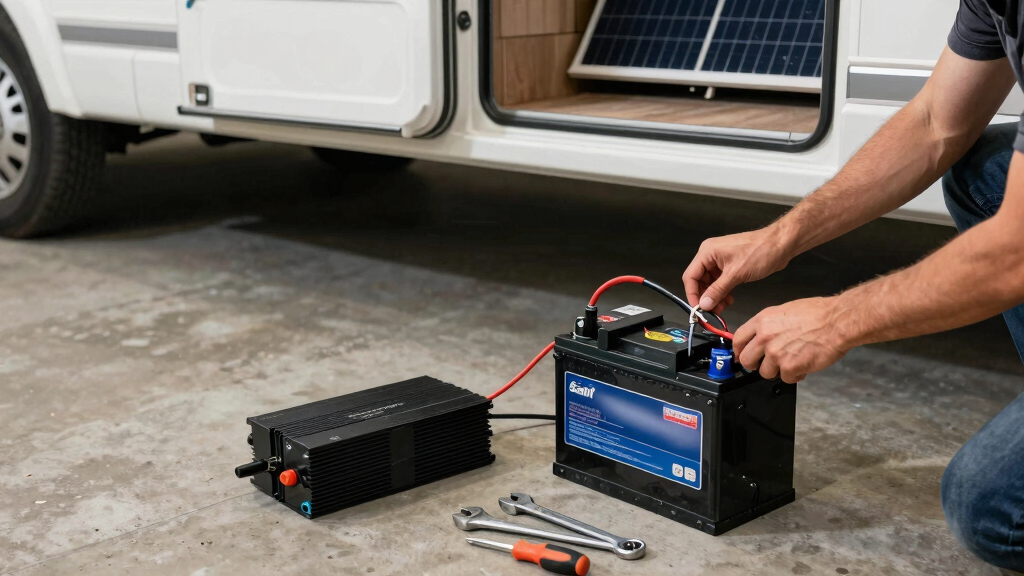
How We Picked
These products were evaluated based on several core criteria: capacity to handle typical RV power needs, portability and weight for ease of use during travel, build quality and reliability, charging speed, and value for money. We prioritized units with durable batteries like LiFePO4 for longer lifespan, and those with multiple outlets for versatility. The ranking reflects a balance between high-capacity, advanced features, and user-friendly design, ensuring options for different budgets and use cases. We also considered customer reviews and industry reputation to identify models that deliver consistent performance over time.| battery backup for rv | Battery chemistry |
|---|---|
| ZeroKor 300W Portable Solar Ge | — |
| Anker SOLIX F3800 | EV-class LiFePO4 |
| ABOK Ark3600 | — |
| EcoFlow DELTA 3 Plus | — |
| EcoFlow DELTA 3 Max | LiFePO4 |
| Jackery Solar Generator 300 | — |
| BLUETTI AC200L Portable Power | LiFePO4 |
| BLUETTI Elite 300 Portable Pow | LiFePO4 |
| Jackery Explorer 1000 v2 Porta | LiFePO4 |
| EF ECOFLOW Portable Power Stat | — |
Factors to Consider When Choosing Battery Backup For Rv
Choosing the right battery backup for an RV involves more than just capacity. Understanding how different features align with your camping style and electrical demands can prevent costly mistakes and ensure reliable power when needed. Here are key factors to consider before making a purchase.Capacity and Power Output
Assess the total wattage your RV appliances require, including the startup surge of motors or refrigerators. Larger capacity units like the Anker SOLIX F3800 or ABOK Ark3600 provide ample power for extended use, but their size and weight increase. Smaller units such as Jackery Explorer 1000 are suitable for basic needs or short trips, offering a good balance of portability and power. Match your power needs to the unit’s capacity to avoid underpowering or overpaying for unused capacity.
Portability and Size
If you frequently move your RV or have limited storage, consider lightweight models like Jackery 300 or the EcoFlow DELTA 3 Plus. Heavier, larger units may offer more capacity but can complicate setup and transport. Think about where you’ll store the backup and how often you’ll need to move it—this can significantly influence your choice. For full-timers, a more robust, stationary setup might be worthwhile, while casual campers benefit from compact, lightweight options.
Battery Chemistry and Longevity
LiFePO4 batteries are increasingly popular due to their longer lifespan, safety, and stable performance, making them a smart choice for RV backup systems. Cheaper lead-acid or older lithium-ion units may degrade faster and require more maintenance. Investing in a lithium-based system saves money long-term, especially for frequent use. However, these batteries typically come with a higher upfront cost, which should be weighed against their durability and performance benefits.
Charging Speed and Flexibility
Fast charging capabilities, like those seen in the ABOK Ark3600 or EcoFlow DELTA 3 Max, can be a game-changer during quick trips or emergency recharges. Solar compatibility adds another layer of flexibility, allowing off-grid recharging and reducing reliance on grid power. Consider how you plan to recharge—if you’re often parked in shaded or remote locations, solar support becomes more critical. Also, check for multiple charging options, including AC wall outlets, solar, and vehicle DC ports.
Cost and Value
Higher capacity and more features come with increased price tags, but they also provide more reliable and versatile power. Budget models are suitable for short-term or basic needs, but may lack longevity or expandability. Look for systems that offer a good balance of capacity, durability, and features for your budget. Don’t forget to factor in accessories like solar panels, cables, and mounting options, which can add to the total investment.
Frequently Asked Questions
Can I run my RV air conditioner directly from a battery backup?
Running an RV air conditioner from a battery backup is possible if the system has sufficient capacity and a high enough surge capacity to handle the compressor startup. Many portable power stations lack the power needed for this task, especially during initial startup. Larger units like the Anker SOLIX F3800 or BLUETTI AC200L are better suited for running appliances like air conditioners, but even then, you should verify the specific wattage requirements and ensure the system can handle the surge. For most RVs, a dedicated inverter and high-capacity system are recommended for air conditioner operation.
How long can a typical RV battery backup power my appliances?
The runtime depends heavily on the capacity of the unit and the power draw of your devices. For example, a 1000Wh system might run a small fridge or lights for about 8-10 hours, but it won’t power high-wattage devices for long. Larger systems like the ABOK Ark3600 or BLUETTI AC200L can run essential appliances for days, but this also depends on your load and usage patterns. Always calculate your total wattage needs and choose a system with at least 20-30% more capacity than your expected consumption for reliable performance.
Is solar charging effective for RV battery backups?
Solar charging can significantly extend your RV’s power independence, especially with larger, expandable systems like the EcoFlow DELTA 3 Max or ABOK Ark3600. The effectiveness depends on your solar panel size, sunlight availability, and system compatibility. While solar can’t fully replace grid charging in cloudy regions, it provides a steady trickle charge that keeps your system topped off during extended stays off-grid. For regular use, investing in high-quality, efficient solar panels maximizes your system’s sustainability and reduces reliance on external power sources.
What safety features should I look for in an RV battery backup?
Safety features such as over-voltage, over-current, short-circuit protection, and thermal management are vital for protecting both the system and your devices. Lithium iron phosphate (LiFePO4) batteries inherently offer better safety and stability over other chemistries. Additionally, look for units with built-in surge protection and automatic shutoffs to prevent damage during power fluctuations. Choosing a reputable brand with certified safety standards ensures your backup system is reliable and safe for regular use in your RV environment.
How do I choose between a portable power station and a fixed system?
Deciding between portable and fixed backup systems depends on your travel style and power needs. Portable units like the Jackery Explorer 1000 are ideal for occasional trips, outdoor adventures, or emergencies, offering flexibility and ease of transport. Fixed systems, such as the BLUETTI AC200L or ABOK Ark3600, are better suited for full-time RVers or those who prefer a more permanent setup, providing larger capacity and higher power output. Consider your space, budget, and whether you prioritize mobility or maximum power capacity when making your choice.
Conclusion
For most RV owners, the best overall choice is the Anker SOLIX F3800 because it combines high capacity, versatile outlets, and durability suitable for extended use. Those on a tighter budget or seeking portability should consider the Jackery Explorer 1000, which offers reliable power without the bulk. For full-time RVers or those planning for future expansion, the BLUETTI AC200L provides the most flexibility with its expandable capacity. Beginners should look for units with simple interfaces and solid safety features, while experienced users might prioritize high surge capacity and solar compatibility. Ultimately, matching your power needs and travel habits will guide you to the right system.
Halloween Picks
halloween
As an affiliate, we earn on qualifying purchases.