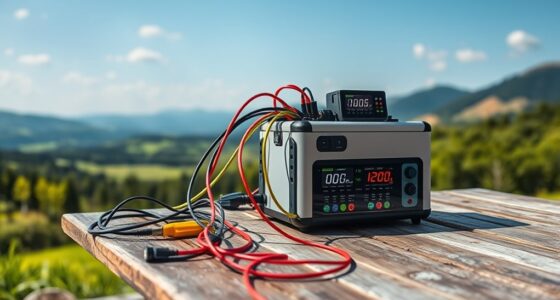
To maximize your portable power station’s battery health, avoid deep discharges below 10-20%, and aim to keep recharge levels between 20% and 80%. Use eco-friendly charging methods like solar but balance them with others to prevent overuse. Protect your device from extreme temperatures—stay in a cool, dry environment—and avoid heat exposure, especially in cars. Proper maintenance and storage help prolong battery life, so stay vigilant for more tips on keeping your power station in top shape.

Get backup power and energy gear delivered free with Prime
- Fast, free delivery on millions of items
- Prime Video, Amazon Music and more included
- Member-only deals all year
Key Takeaways
- Maintain a charge level between 20% and 80% to prolong battery lifespan and prevent capacity loss.
- Avoid exposing the power station to high temperatures, especially in hot environments like cars.
- Regularly monitor and avoid deep discharges below 10-20% to preserve battery health.
- Use eco-friendly solar charging alongside other methods for balanced, sustainable recharging.
- Store the device in a cool, dry place with a partial charge to minimize stress and extend battery life.
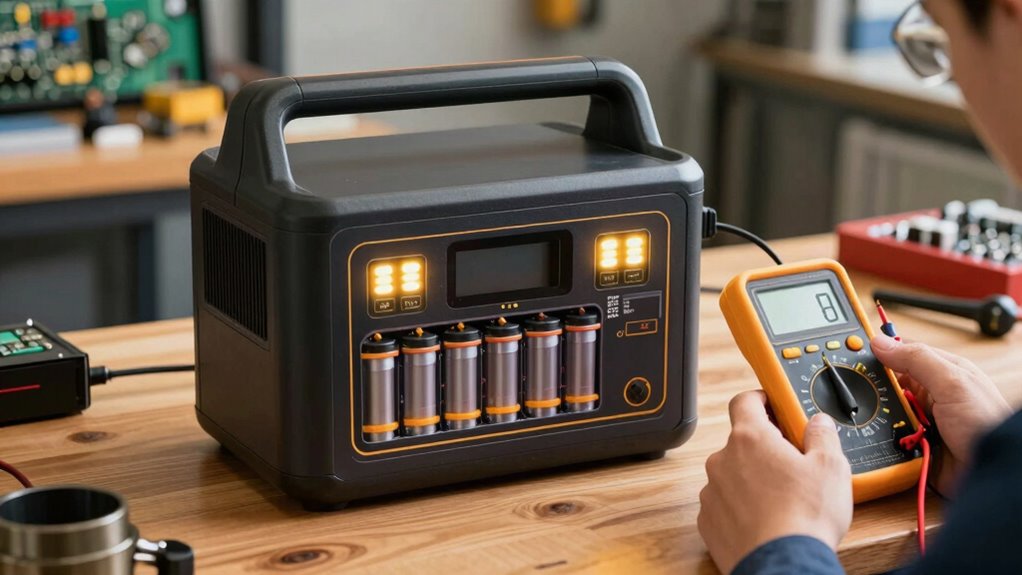
Maintaining the health of your portable power station battery is vital to guarantee reliable performance and longevity. A well-maintained battery ensures your device is ready whenever you need it, whether during outdoor adventures, power outages, or remote work. One of the key factors influencing battery health is how you recharge it. Solar recharge, in particular, provides an eco-friendly and cost-effective way to keep your power station topped up. By harnessing sunlight, you can prolong the overall battery lifespan, especially if you use solar panels regularly. However, it’s important to avoid overexposing the battery to frequent full cycles of charging and discharging, which can accelerate wear and reduce its capacity over time.
Proper recharge habits, especially using solar power wisely, are key to extending your power station’s battery life.
To maximize your portable power station’s battery lifespan, you should pay attention to how often and how you recharge it. While solar recharge is a sustainable option, it’s best to balance it with other charging methods to prevent overtaxing the battery. When using solar panels, avoid leaving the device in direct sunlight for extended periods once it’s fully charged, as excess heat can damage the battery cells. Instead, aim for partial, consistent recharges that keep the battery at an ideal level—around 20% to 80%. Keeping the battery within this range helps slow down capacity loss, preserving its ability to hold a charge for longer periods. Additionally, being aware of battery capacity can help you understand how much energy your power station can store and utilize effectively. Regularly monitoring your battery’s state of charge can also help prevent overdischarging and maintain optimal performance. Proper battery management techniques, such as avoiding rapid charge cycles, can further enhance the longevity of your battery. Incorporating battery maintenance practices can also contribute significantly to extending your battery’s lifespan.
Temperature management also plays an important role in maintaining battery health. High temperatures can cause the battery to degrade faster, so avoid exposing your power station to excessive heat sources or leaving it in a hot car. Conversely, extremely cold conditions can temporarily reduce battery efficiency. Store and operate your device within the recommended temperature range to prevent unnecessary stress on the cells. Additionally, avoid letting the battery fully drain regularly, as deep discharges can shorten its lifespan. Instead, recharge it before it drops below the critical threshold, which is usually around 10-20%. Proper battery calibration can further optimize performance and longevity of your device.
Regularly inspecting your power station and keeping it clean helps prevent dust and debris from affecting the charging ports and internal components. Proper storage when not in use is equally important—store it in a cool, dry place, ideally with a partial charge. This approach minimizes stress on the battery and ensures it remains ready for use when needed. By understanding these principles—balancing solar recharge, managing temperature, and avoiding deep discharges—you can greatly extend your portable power station’s battery lifespan, ensuring it delivers reliable power whenever you rely on it.
portable power station battery monitor
As an affiliate, we earn on qualifying purchases.
As an affiliate, we earn on qualifying purchases.
Frequently Asked Questions
How Does Temperature Affect Portable Power Station Battery Life?
Temperature fluctuations greatly impact your portable power station’s battery life. Exposure to high temperatures accelerates battery degradation, shortening its lifespan, while extreme cold can reduce its efficiency temporarily. To maintain ideal battery health, avoid leaving your station in hot or freezing environments. Keep it in a cool, dry place and make sure it’s not exposed to direct sunlight or freezing temperatures for extended periods. Proper temperature management helps extend your battery’s performance and longevity.
Can Overcharging Damage My Power Station’s Battery?
Yes, overcharging can damage your power station’s battery. Continuously charging beyond full capacity can lead to reduced battery life over time. To prevent this, regularly perform battery calibration and avoid excessive charging cycles. Most power stations have built-in safeguards, but it’s still best to unplug once fully charged. Proper care guarantees your battery remains healthy and prolongs its overall lifespan, maximizing your device’s performance and reliability.
How Often Should I Fully Discharge and Recharge the Battery?
You should fully discharge and recharge your power station’s battery about once every three to six months for proper battery calibration. This helps maintain ideal performance. When not in use, follow storage best practices by keeping the battery in a cool, dry place and avoiding extreme temperatures. Regular calibration ensures accurate capacity readings, prolonging your power station’s lifespan and ensuring reliable performance whenever you need it.
What Are Signs of Declining Battery Health in a Power Station?
You’ll notice signs of declining battery health in your power station if it takes longer to charge, discharges quickly, or shows inconsistent power output. Performing regular battery calibration helps maintain accuracy, while proper storage tips—like keeping it in a cool, dry place—prevent deterioration. If you see reduced capacity or erratic performance, it’s a sign to evaluate replacing the battery or seeking professional maintenance to extend your power station’s lifespan.
Does Using High-Drain Devices Reduce Battery Lifespan?
Using high-drain devices can reduce your battery’s lifespan because it accelerates battery capacity loss over time. Every time you charge and discharge your power station, it completes a charging cycle. Frequent use of high-drain devices speeds up these cycles, leading to quicker capacity decline. To prolong your power station’s battery health, avoid overloading it with high-drain devices and try to limit the number of charging cycles.
solar portable power station charger
As an affiliate, we earn on qualifying purchases.
As an affiliate, we earn on qualifying purchases.
Conclusion
Now that you understand how to care for your portable power station’s battery, picture it as a trusty companion on your adventures. When you keep it charged wisely and store it properly, it’ll be ready to light up your campsite or power your emergencies. Just like tending a garden, nurturing your battery guarantees it stays healthy and reliable. With proper care, your power station will be there, quietly humming along, whenever you need it most.
portable power station battery maintenance kit
As an affiliate, we earn on qualifying purchases.
As an affiliate, we earn on qualifying purchases.
high capacity portable power station
As an affiliate, we earn on qualifying purchases.
As an affiliate, we earn on qualifying purchases.
Halloween Picks
halloween
As an affiliate, we earn on qualifying purchases.