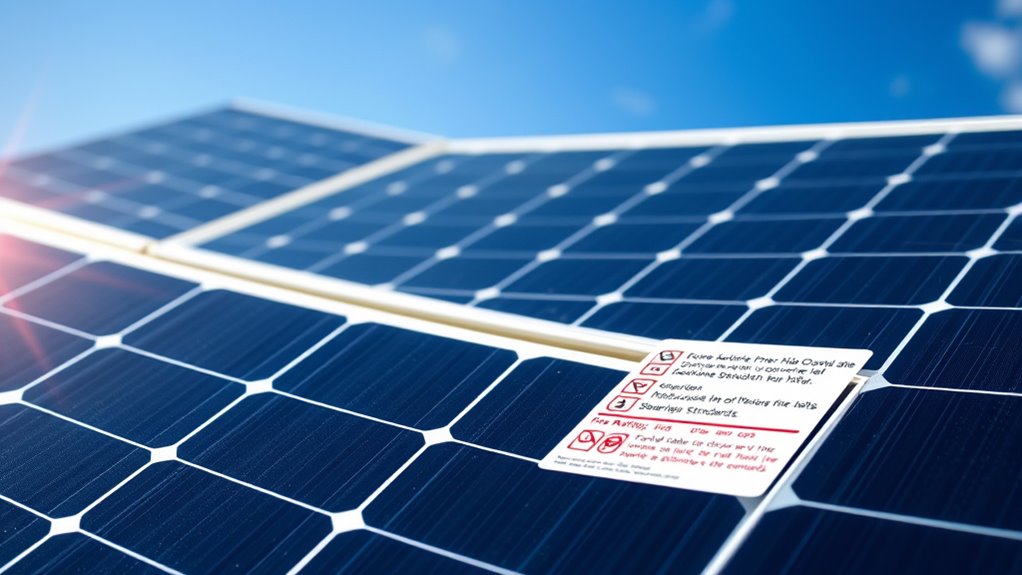

Understanding solar panel fire ratings and safety standards is essential for ensuring your system’s safe installation and operation. Fire ratings measure how well panels resist ignition and handle heat, influencing safety, insurance, and compliance. Many panels require specific mounting or safety measures based on their ratings. Staying informed helps you follow regulations, perform proper maintenance, and prepare for emergencies. Keep exploring to discover how these standards impact your solar energy setup and safety efforts.
Key Takeaways
- Fire ratings evaluate a solar panel’s resistance to ignition and fire propagation, ensuring safety compliance.
- Safety standards specify installation practices and mounting requirements based on fire rating classifications.
- Regular maintenance and inspections help prevent fire hazards caused by damage or electrical faults.
- Higher fire-rated panels can improve insurance terms and inform emergency response planning.
- Understanding fire safety standards supports proper installation, reduces risks, and promotes occupant safety.

Understanding the fire ratings of solar panels is fundamental when considering solar energy systems for your home or business. Fire ratings help you assess the safety of different panels and understand how they perform under heat and fire conditions. Knowing these ratings can influence your decision, especially if safety regulations or insurance requirements are a concern. The fire rating essentially indicates how well a panel resists ignition and how it behaves during a fire, which is critical for protecting your property and occupants.
Understanding solar panel fire ratings is key to ensuring safety and compliance in your solar energy system.
When you’re installing solar panels, fire safety standards come into play early on. Installation challenges can arise if panels aren’t rated appropriately, as some systems may require additional safety measures or specific mounting techniques to meet fire safety codes. For instance, certain panels with higher fire ratings might be more resistant to ignition, but they could also demand specialized mounting hardware or clearance space, complicating the installation process. Ignoring these factors can lead to delays, increased costs, or even non-compliance with local regulations. Consequently, it’s essential to choose panels that align with your building’s safety standards and to work with experienced installers who understand these nuances.
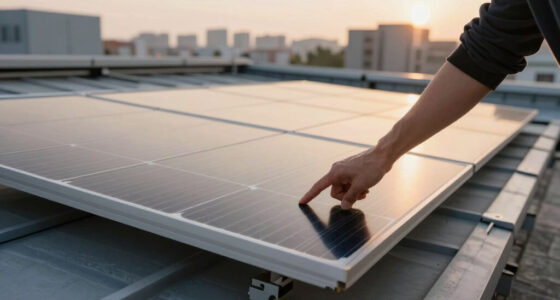
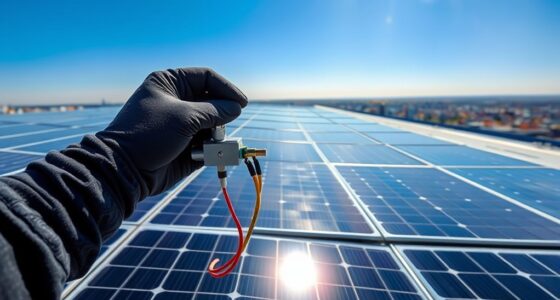
Maintenance procedures also tie into fire safety considerations. Regular inspections are necessary to guarantee that panels are functioning correctly and haven’t sustained damage that could pose fire risks. For example, cracked or degraded panels might increase the chance of electrical faults or sparks, especially if they’re exposed to high heat. Keeping wiring connections secure and replacing worn components promptly are key steps to prevent fire hazards. Some panels with higher fire ratings may require specific maintenance routines or periodic safety checks mandated by manufacturers or local codes. Staying vigilant with maintenance not only prolongs the lifespan of your solar system but also minimizes the risk of fire-related incidents.
In addition to installation and maintenance, understanding the fire ratings helps you evaluate insurance coverage and emergency response plans. Systems with higher fire ratings could qualify for better insurance terms or reduced premiums, reflecting their lower fire risk. Moreover, knowing the fire behavior of your solar panels allows you to prepare appropriate firefighting strategies or evacuation plans in case of an emergency.
Ultimately, paying attention to fire ratings and safety standards guarantees you’re making an informed decision about your solar energy system. It helps you navigate installation challenges, adhere to safety protocols, and implement effective maintenance procedures. By prioritizing safety and compliance, you protect your investment and create a safer environment for everyone around your solar-powered property.

SmartSign "Fire Alarm Panel Inside" Label | 5" x 10" 3M Engineer Grade Reflective
3M AUTHORIZED. Made from Certified 3M components: inks, laminate and films. 3M Engineer Grade reflective labels shine brilliantly…
As an affiliate, we earn on qualifying purchases.
As an affiliate, we earn on qualifying purchases.
Frequently Asked Questions
How Do Fire Ratings Impact Solar Panel Installation Permits?
Fire ratings directly influence your solar panel installation permits because they make certain your fire safety compliance. When applying for permits, you need to demonstrate that your panels meet specific fire safety standards, which can affect approval timelines. Higher fire ratings often streamline permit requirements, while lower ratings may cause delays or additional safety inspections. Understanding these ratings helps you ensure your installation adheres to local permit requirements and safety regulations.
Are There Specific Safety Standards for Residential Versus Commercial Solar Panels?
Yes, there are specific safety standards for residential and commercial solar panels. You should follow installation guidelines tailored for each type, guaranteeing proper placement, wiring, and fire safety measures. Maintenance protocols also differ, with commercial systems requiring more rigorous inspections and safety checks. These standards help prevent fire risks, protect property, and ensure peak operation, so always adhere to the relevant codes and manufacturer recommendations for your specific installation.
What Testing Methods Are Used to Determine Fire Ratings?
You should know that fire testing involves exposing solar panels to controlled conditions to evaluate their fire resistance and behavior. Safety certification agencies conduct these tests, including flame spread, heat exposure, and electrical safety assessments. These methods help determine a panel’s fire ratings, ensuring they meet established safety standards. By passing fire testing, solar panels earn safety certification, giving you confidence in their fire safety performance and compliance with industry regulations.
Can Fire Ratings Change Over a Solar Panel’s Lifespan?
You might think a solar panel’s fire rating stays the same forever, but surprise—fire rating erosion and panel degradation can actually cause it to alter over time. As your panel ages, its materials weaken, possibly lowering its fire safety standards. So, even if it’s rated safe today, don’t assume that’ll last forever; regular inspections are a smart move to ensure ongoing safety.
How Do Fire Ratings Compare Between Different Solar Panel Brands?
You’ll find that fire rating variations exist between different solar panel brands, affecting your safety comparison. Some brands prioritize enhanced fire resistance, leading to higher fire ratings, while others may have lower scores. It’s essential to compare these ratings when selecting panels, as a higher fire rating generally indicates better safety standards. Always review manufacturer safety data and certifications to guarantee you choose a reliable, fire-resistant solar panel that meets your safety needs.

860 watt Bifacial Solar Panels,UL61730 Certified 2PCS 430W 24V/48V High Efficiency Solar Panel with A+ Grade Solar Cells for Residential Farm Garden Off Grid Home
1. UL61730 Certified & 30-Year Long Lifespan ETL certified to meet North American safety standards, ensuring compliance with…
As an affiliate, we earn on qualifying purchases.
As an affiliate, we earn on qualifying purchases.
Conclusion
Just as a sturdy shield guards a warrior, fire ratings symbolize the silent promise of safety beneath solar panels. By understanding these standards, you’re choosing not just a product, but a beacon of trust and resilience. When you prioritize fire safety, you’re planting seeds of hope in a future powered by the sun’s promise—bright, sustainable, and secure. Let these standards be your guiding star, illuminating a safer path forward for all.
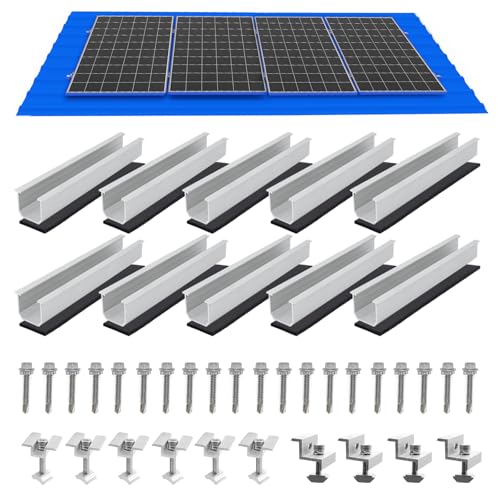
Solar Panel Mounting Brackets, Roof Mount Kit, Rails and Clamps Included for Thickness 1.18”-1.38”, 4pcs in A Row Assembly on Tin, Flat and Sheet Rooftop, Aluminum Alloy
【Secure Solar Panel Mounting Rail】 The solar panel roof mounting brackets kit features high-strength aluminum alloy solar panel…
As an affiliate, we earn on qualifying purchases.
As an affiliate, we earn on qualifying purchases.
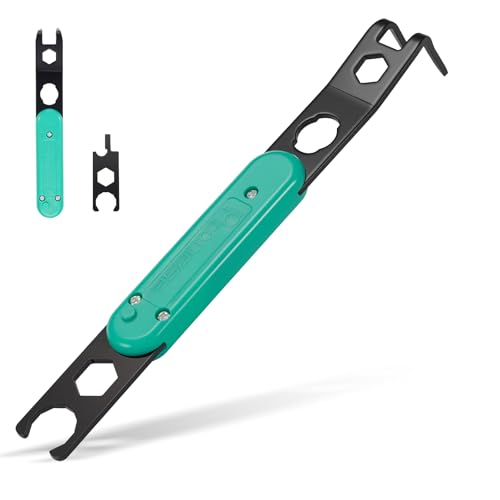
Pronese Metal Solar Mc4 Disconnect Tool made by Heavy-Duty Steel, Spring-Loaded Slot Design,Easy Installation with Secure Fit,T4, PV4,PV4-S H4 Solar Panels Spanner 5-in-1 Wrench for PV Connectors
5-in-One Design:Combines MC4 disconnector, ¼”/3/8” wrenches, and flathead screwdriver in a single tool. Work faster with 5 essential…
As an affiliate, we earn on qualifying purchases.
As an affiliate, we earn on qualifying purchases.