TL;DR

Get backup power and energy gear delivered free — and shop member deals
- Fast, free delivery on millions of items
- Access to Prime Big Deal Days deals on October 6–7
- Prime Video, Amazon Music and more included
Ireland’s new energy grants package takes effect Oct. 6 and adds a residential battery grant worth up to €600. The package also expands solar support, including grants for lower-income households and full funding for eligible medically vulnerable people, subject to capacity limits.
Ireland has approved a new energy grants package that will offer householders up to €600 for residential batteries from Oct. 6, alongside expanded solar, heating and retrofit supports. The measures extend state assistance to home battery storage as the government prepares its 2027 budget.
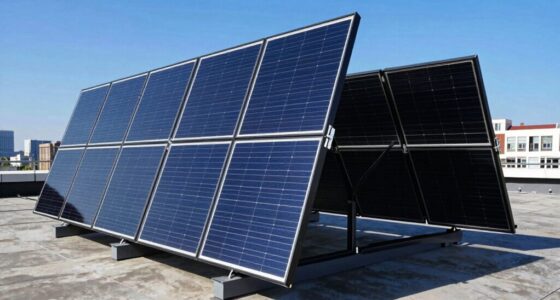
The package adds the battery grant to an existing solar scheme that provides homeowners with up to €1,800 for solar panels. From Oct. 6, the solar grant will also cover newer homes that were built and occupied before 2025. The source report does not specify the detailed application process or whether households must meet particular technical or eligibility requirements for the new battery grant.
Additional support is planned for lower-income householders installing solar and batteries, with grants of up to €9,000. People classed as medically vulnerable will have eligible solar and battery systems fully funded, according to the report. For both groups, funding is capped at 5 kWh of battery capacity and 4 kW of solar photovoltaic capacity. The package also includes a €2,000 grant for people replacing boilers with heat pumps.
The measures cover businesses as well as homes. The government says expanded solar support could help participating businesses reduce annual energy costs by up to €300,000; that figure is a government estimate, not a guaranteed saving. Solar thermal and heat pump grants are also included. The Sustainable Energy Authority of Ireland (SEAI), the state body administering the grants, will handle the schemes.
More Options for Home Solar
The battery grant could help households store some of the electricity their solar panels produce for use later, though the amount of support is capped and the source report does not state the grant’s detailed conditions. Solar Ireland, which represents the country’s solar sector, said batteries can help households use more of their own solar electricity and rely less on the grid during peak periods.
The wider package also directs support toward households identified as lower-income or medically vulnerable. Those schemes have higher potential support than the €600 residential battery grant, but their stated system limits mean the maximum funded battery and solar capacities are defined. For businesses, the government’s projected savings point to the potential financial value of solar and heating upgrades, while actual results will vary by business and installation.
Demand may affect how many people can access the measures and how quickly applications are processed. SEAI chief executive William Walsh said applications for some grants had risen sharply this year. The new package is intended to extend support in the coming year, with further policy decisions still possible through the 2027 budget.
Existing Grants Gain New Reach
Ireland already offered homeowners up to €1,800 for solar panels, according to the source report. The package widens eligibility for that support to include newer homes built and occupied before 2025 and introduces a separate grant for residential batteries. The source material does not say when battery grants were last available or provide a comparison with earlier battery schemes.
The package combines renewable energy supports with measures for heating and home upgrades. Alongside solar and battery funding, it includes a €2,000 boiler replacement grant for people installing heat pumps, as well as retrofit support. The government approved the package ahead of its 2027 budget, which is due to be announced in the coming weeks. Climate, Energy and Environment Minister Darragh O’Brien said further measures would be considered in that budget.
““The government has already introduced more than €1.4 billion in energy affordability measures since March.””
— Darragh O’Brien, Minister for Climate, Energy and the Environment
Application Rules Still Pending
The source report gives the grant amounts and some capacity limits, but does not set out the application rules for the €600 household battery grant. It is not yet clear whether the grant will require an existing solar installation, whether batteries must meet specific technical standards, or how householders should apply.
The report also does not provide a start date for individual application windows, a total budget for the schemes, or details on how applications will be prioritized if demand exceeds available funding. The government’s estimate of up to €300,000 in annual business energy savings is a potential maximum, and the report does not describe the assumptions behind it. Further policy details may emerge with the 2027 budget.
October Launch and Budget Details
The package is scheduled to take effect on Oct. 6, 2026. Householders and businesses will need further information from the government or SEAI on eligibility, application procedures and the timing of funding. The SEAI administers the grants, according to the source report.
The government is expected to announce its 2027 budget in the coming weeks. O’Brien said additional measures would be considered as part of that budget, so the scope of energy affordability support could be revisited then. The available source material does not specify whether any further grants will be announced.
Key Questions
How much is Ireland’s new residential battery grant?
Householders will be able to apply for up to €600 under the new grant, which takes effect Oct. 6, 2026. The source report does not give the full eligibility rules.
When does the new energy grants package start?
The package is scheduled to take effect on Oct. 6, 2026. Application dates and procedures for each grant have not been provided in the source material.
What support is available for lower-income households?
Lower-income householders installing solar and batteries may receive up to €9,000. The funded system is capped at 5 kWh of battery capacity and 4 kW of solar photovoltaic capacity.
What support is available for medically vulnerable people?
The package provides for full funding of solar and battery systems for people classed as medically vulnerable. The same stated limits apply: up to 5 kWh of battery capacity and 4 kW of solar photovoltaic capacity.
Does the package include grants for businesses?
Yes. It includes expanded solar support, along with solar thermal and heat pump grants. The government says participating businesses could reduce annual energy costs by up to €300,000; actual savings are not guaranteed.
Source: rss
Fall Picks
fall essentials
As an affiliate, we earn on qualifying purchases.