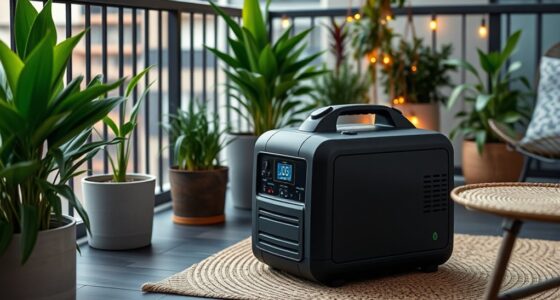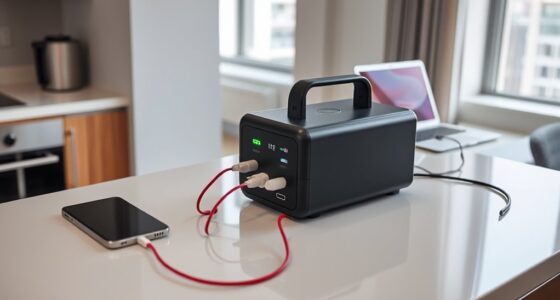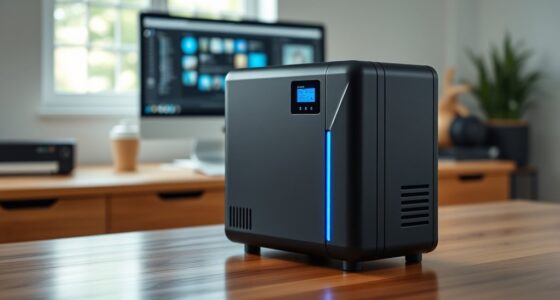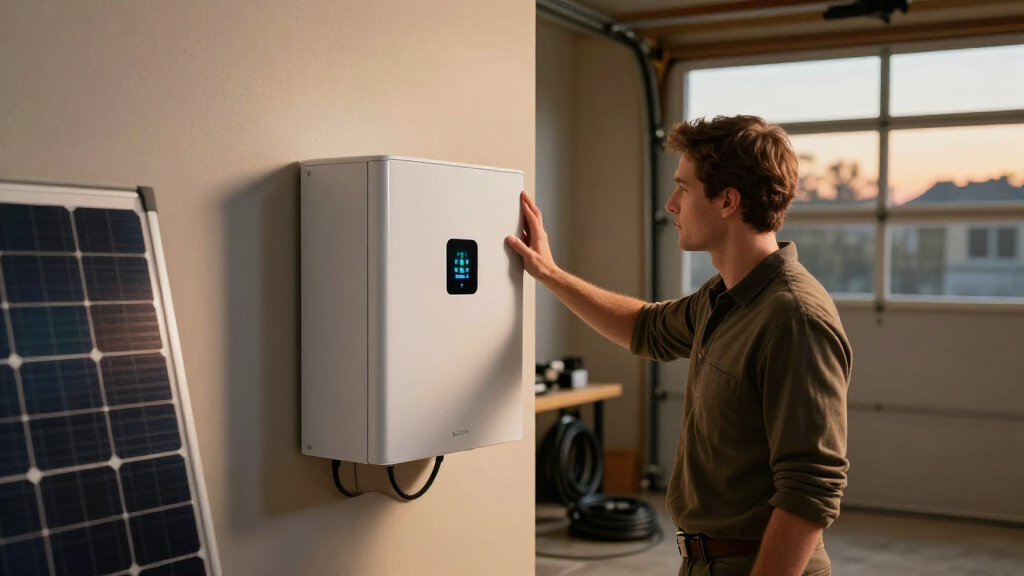

Choosing among the best home battery backup systems comes down to one question: do you need to keep a Wi-Fi router alive during a flicker, or run your refrigerator and well pump through a multi-hour outage? The ECO-WORTHY 48V Powermega Energy Storage System earns my top overall spot because its 314Ah LiFePO4 capacity and 10kW hybrid inverter handle genuine whole-home loads, including solar input for recharging during extended outages. For smaller budgets, the Anker SOLIX C1000 Gen 2 delivers impressive portable capacity with fast recharging, while the CyberPower CP1500PFCLCD remains the smart pick for protecting computers and networking gear from momentary power interruptions. The main tradeoff in this category is capacity versus convenience — permanent high-capacity systems cost more and need installation, while plug-and-play units cover fewer circuits. Keep reading for the full breakdown of all 15 systems.

Get backup power and energy gear delivered free with Prime
- Fast, free delivery on millions of items
- Prime Video, Amazon Music and more included
- Member-only deals all year
Key Takeaways
- Whole-home systems dominated the comparison on capacity: the three ECO-WORTHY kits (10,240Wh to 15,059Wh usable) offer five to ten times the stored energy of any portable power station in this lineup.
- LiFePO4 chemistry was the dividing line for longevity — every top-ranked system uses it, while cheaper UPS units with sealed lead-acid batteries typically need replacement within three to five years.
- A UPS and a battery backup system solve different problems: UPS units like the CyberPower OR2200PFCRT2U bridge milliseconds-long outages for sensitive electronics, while power stations and 48V kits sustain appliances for hours or days.
- The Anker SOLIX C1000 Gen 2’s fast recharging (roughly 90 minutes from a wall outlet) makes it far more practical for repeated outages than competitors that take several hours to refill.
- The GOLDENMATE 1500VA UPS is the rare budget UPS using LiFePO4 chemistry, closing the gap between traditional UPS protection and modern battery longevity — a notable value if you only need computer-grade backup.
| ECO-WORTHY 48V Home Backup Power Kit – 10240Wh LiFePO4 Batteries with Liber 10KP 10KW Inverter |  | Best Whole-Home Backup | Battery Capacity: 10240Wh (2x 51.2V 100Ah LiFePO4) | Output Power: 10000W continuous, 20000W peak | Output Voltage: 120V/240V split-phase or 120V single-phase | VIEW LATEST PRICE | See Our Full Breakdown |
| CyberPower CP1500PFCLCD PFC Sinewave UPS Battery Backup and Surge Protector |  | Best UPS for Gaming and Work PCs | Capacity: 1500VA / 1000W | Output Waveform: Sine wave | Outlets: 12 NEMA 5-15R (6 battery backup, 6 surge only) | VIEW LATEST PRICE | See Our Full Breakdown |
| CyberPower OR2200PFCRT2U PFC Sinewave UPS Battery Backup (2200VA/1540W, Rack/Tower) |  | Best for Servers and Network Racks | Capacity: 2200VA / 1540W | Topology: Line interactive with AVR | Output Waveform: Pure sine wave | VIEW LATEST PRICE | See Our Full Breakdown |
| CyberPower CP1500AVRLCD3 1500VA/900W LCD UPS Battery Backup |  | Best Value UPS | Capacity: 1500VA / 900W | Output Waveform: Simulated sine wave | Outlets: 12 NEMA 5-15R (6 battery backup, 6 surge only) | VIEW LATEST PRICE | See Our Full Breakdown |
| CyberPower EC850LCD Ecologic UPS Battery Backup and Surge Protector |  | Best Budget Pick for Basic Protection | Capacity: 850VA / 510W | Topology: Standby (simulated sine wave) | Outlets: 12 (6 battery backup + surge, 6 surge only, 3 ECO controlled) | VIEW LATEST PRICE | See Our Full Breakdown |
| Anker SOLIX C1000 Gen 2 Portable Power Station |  | Best Fast-Charging Midsize Option | Capacity: 1024Wh LiFePO4 | Output: 2000W (3000W peak) | AC Recharge: 49 minutes (1600W HyperFlash) | VIEW LATEST PRICE | See Our Full Breakdown |
| Anker SOLIX S2000 Portable Power Station |  | Best Balanced Capacity for Weekend Outages | Capacity: 2,010Wh LFP (314Ah cells) | Output: 1500W continuous / 3000W peak | Solar Input: Up to 400W | VIEW LATEST PRICE | See Our Full Breakdown |
| APC BX1500M UPS Battery Backup & Surge Protector |  | Best Budget Desk-Side Power Guard | Capacity: 1500VA / 900W | Runtime: Up to 68 minutes at 100W load | Outlets: 10 (5 battery backup + 5 surge-only) | VIEW LATEST PRICE | See Our Full Breakdown |
| Jackery HomePower 3600 Plus Portable Power Station with 2x200W Solar Panels |  | Best Whole-Appliance Portable Pick | Capacity: 3584Wh (expandable to 43kWh) | AC Output: 3600W (7200W parallel) | Voltage: 120V / 240V (parallel) | VIEW LATEST PRICE | See Our Full Breakdown |
| ECO-WORTHY 48V Home Backup Power Kit – 10240Wh Battery & 5000W Inverter |  | Best Permanent Whole-Home Foundation | Battery: 2x 51.2V 100Ah LiFePO4 (10,240Wh) | Inverter Output: 5000W rated / 10,000W peak pure sine wave | Inverter Type: 3-in-1: inverter + 100A MPPT + 100A charger | VIEW LATEST PRICE | See Our Full Breakdown |
| APC BE600M1 UPS Battery Backup & Surge Protector |  | Best for Keeping Your Router Online | Runtime: 23 minutes at 100W load | Battery Backup Outlets: 5 | Surge-Only Outlets: 2 | VIEW LATEST PRICE | See Our Full Breakdown |
| Jackery HomePower 3600 Plus Portable Power Station, 3584Wh |  | Best Whole-Home Portable Backup | Capacity: 3584Wh | AC Output: 3600W (7200W parallel) | Expandable Capacity: Up to 21kWh per unit or 43kWh with multiple units | VIEW LATEST PRICE | See Our Full Breakdown |
| ECO-WORTHY Powermega 48V 314Ah LiFePO4 Energy Storage System with Liber 10KP 10kW Hybrid Inverter |  | Best Permanent Whole-Home Energy Storage | Usable Energy: 16.1 kWh | Voltage: 51.2V (48V nominal) | Inverter Wattage: 10,000 W pure sine wave | VIEW LATEST PRICE | See Our Full Breakdown |
| CyberPower ST425 Standby UPS Battery Backup and Surge Protector |  | Best Budget Desk Protection | Capacity: 425VA / 260W | Output Waveform: Simulated sine wave | Outlets: 8 NEMA 5-15R (4 battery backup + surge, 4 surge only) | VIEW LATEST PRICE | See Our Full Breakdown |
| GOLDENMATE 1500VA/1000W LiFePO4 Pure Sine Wave UPS Battery Backup and Surge Protector |  | Best Battery Longevity in a Desktop UPS | Battery Type: LiFePO4 | Capacity: 1500VA / 1000W | Waveform: Pure sine wave | VIEW LATEST PRICE | See Our Full Breakdown |
| home battery backup system | Capacity | Outlets |
|---|---|---|
| ECO-WORTHY 48V Home Backup Pow | — | — |
| CyberPower CP1500PFCLCD PFC Si | 1500VA / 1000W | 12 NEMA 5-15R (6 battery backup, 6 surge only) |
| CyberPower OR2200PFCRT2U PFC S | 2200VA / 1540W | 8 (2x NEMA 5-20R, 6x NEMA 5-15R) |
| CyberPower CP1500AVRLCD3 1500V | 1500VA / 900W | 12 NEMA 5-15R (6 battery backup, 6 surge only) |
| CyberPower EC850LCD Ecologic U | 850VA / 510W | 12 (6 battery backup + surge, 6 surge only, 3 ECO controlled) |
| Anker SOLIX C1000 Gen 2 Portab | 1024Wh LiFePO4 | — |
| Anker SOLIX S2000 Portable Pow | 2,010Wh LFP (314Ah cells) | 8 |
| APC BX1500M UPS Battery Backup | 1500VA / 900W | 10 (5 battery backup + 5 surge-only) |
| Jackery HomePower 3600 Plus Po | 3584Wh (expandable to 43kWh) | — |
| ECO-WORTHY 48V Home Backup Pow | — | — |
| APC BE600M1 UPS Battery Backup | — | — |
| Jackery HomePower 3600 Plus Po | 3584Wh | — |
| ECO-WORTHY Powermega 48V 314Ah | — | — |
| CyberPower ST425 Standby UPS B | 425VA / 260W | 8 NEMA 5-15R (4 battery backup + surge, 4 surge only) |
| GOLDENMATE 1500VA/1000W LiFePO | 1500VA / 1000W | 8 NEMA outlets |
More Details on Our Top Picks
ECO-WORTHY 48V Home Backup Power Kit – 10240Wh LiFePO4 Batteries with Liber 10KP 10KW Inverter
This kit plays in a different league than every other option here. While the CyberPower OR2200PFCRT2U buys you four minutes to shut down a server, this system delivers 10240Wh of storage and 10000W of continuous output — enough to run refrigerators, well pumps, and HVAC simultaneously through an extended outage. Dual MPPT solar controllers mean it can recharge from panels without the grid, which no UPS in this roundup can do. The UL1973 and UL1741 certifications also matter for anyone pursuing permits or insurance approval. The tradeoff is real: unlike a Jackery HomePower you can wheel into place, this is a multi-component rack system that needs professional installation and solar panels purchased separately to reach its full potential.
Pros:- 10240Wh capacity with 10000W output runs major household appliances, not just electronics
- UL1973 and UL1741 safety certifications support permitting and utility requirements
- Massive expansion path to 60kW output and 163.84kWh storage
- Dual MPPT charge controllers enable off-grid solar recharging
Cons:- Requires professional installation and ships as separate heavy components
- Solar panels sold separately, so the full off-grid capability costs more than the base kit
- Far more complex than portable power stations for basic backup needs
Best for: Homeowners who want true whole-house outage protection with solar recharging and room to expand over time
Not ideal for: Renters or anyone wanting plug-and-play setup — this requires electrical work, mounting space, and likely an electrician
- Battery Capacity:10240Wh (2x 51.2V 100Ah LiFePO4)
- Output Power:10000W continuous, 20000W peak
- Output Voltage:120V/240V split-phase or 120V single-phase
- Waveform:Pure sine wave
- Parallel Expansion:Up to 6 inverters (60kW) and 32 batteries (163.84kWh)
- Certifications:UL1973, UL1741 (Intertek), CEC compliant
- Connectivity:CAN/RS485, Bluetooth, WiFi app monitoring
Our verdict“If you want to keep your house running for days rather than minutes, this is the only option in this lineup that truly qualifies.”
CyberPower CP1500PFCLCD PFC Sinewave UPS Battery Backup and Surge Protector
The pure sine wave output is what separates this model from its cheaper sibling, the CP1500AVRLCD3. Modern PCs with Active PFC power supplies — which includes most gaming rigs and workstations — can shut down or behave erratically on simulated sine wave power, defeating the purpose of a UPS. Here, the battery delivers grid-quality power, so an unexpected outage mid-render or mid-match becomes a non-event. The tilting color LCD makes it easy to confirm load levels and estimated runtime at a glance, and AVR trims or boosts voltage during brownouts without draining the battery. Compared with the rack-mounted OR2200PFCRT2U, this tower format fits under a desk but offers fewer watts — a fair trade for most home offices.
Pros:- Pure sine wave output compatible with Active PFC power supplies
- AVR corrects brownouts and surges without draining the battery
- 12 outlets split between battery backup and surge-only protection
- Tilting LCD shows load, runtime, and power conditions clearly
Cons:- Runtime at high load only covers a safe shutdown, not continued work
- Right-angle 5-15P plug can block adjacent outlets on some power strips
Best for: Owners of gaming PCs, workstations, and network gear with Active PFC power supplies who need clean battery power
Not ideal for: Anyone expecting to keep working through a long outage — runtime is measured in minutes, designed for safe shutdown
- Capacity:1500VA / 1000W
- Output Waveform:Sine wave
- Outlets:12 NEMA 5-15R (6 battery backup, 6 surge only)
- USB Ports:1 Type-A, 1 Type-C
- Voltage Regulation:Automatic Voltage Regulation (AVR)
- Power Cord:5 feet
- Warranty:3 years including battery; $500,000 connected equipment guarantee
Our verdict“The safest pairing for a modern gaming or workstation PC — clean sine wave power that cheaper simulated-wave UPS models can’t guarantee.”
CyberPower OR2200PFCRT2U PFC Sinewave UPS Battery Backup (2200VA/1540W, Rack/Tower)
Built for the equipment room rather than the desk, this 2U rack/tower unit pushes 1540W — over 50% more than the CP1500PFCLCD — making it the right size for a server, NAS, and network switch stacked together. The rotatable LCD stays readable whether it’s rack-mounted or standing vertically, a small detail that matters in tight closets. AVR handles voltage sags and spikes without touching the battery, extending the sealed lead acid battery’s useful life. The honest limitation is runtime: at full load you get roughly four minutes, enough for an orderly shutdown sequence or to bridge a blip, but not for riding out a sustained outage. If your gear draws closer to 1000W, the CP1500PFCLCD is the more sensible and cheaper choice.
Pros:- 1540W capacity handles combined server and network loads
- Pure sine wave output protects Active PFC server power supplies
- AVR extends battery life by absorbing minor fluctuations
- Rack or tower mounting with a rotatable LCD for either orientation
Cons:- Only about 4 minutes of runtime at full load
- Heavy metal form factor is bulky for small setups and needs a 20A circuit
Best for: Small business or home-lab operators running servers, NAS units, and networking gear in a rack
Not ideal for: Desktop users — the metal rack chassis and 20A circuit requirement are overkill for a single PC setup
- Capacity:2200VA / 1540W
- Topology:Line interactive with AVR
- Output Waveform:Pure sine wave
- Outlets:8 (2x NEMA 5-20R, 6x NEMA 5-15R)
- Form Factor:2U rack / tower, metal enclosure
- Power Cord:10 feet, NEMA 5-20P
- Warranty:3 years including batteries; $300,000 connected equipment guarantee
Our verdict“The pick when a rack of always-on equipment needs clean, high-wattage backup with graceful shutdown — not for casual desktop use.”
CyberPower CP1500AVRLCD3 1500VA/900W LCD UPS Battery Backup
This is the pragmatic middle ground of the UPS lineup. You get the same 12-outlet layout, color LCD, and AVR protection as the step-up CP1500PFCLCD, but at a lower cost — provided your equipment tolerates simulated sine wave output. Basic desktops, routers, modems, and home theater gear generally don’t care; modern Active PFC power supplies might. That’s the entire decision between these two models, and it’s worth knowing before buying. Compared with the compact EC850LCD, this model’s 900W capacity comfortably covers a desktop plus monitor plus networking gear with headroom to spare, where the smaller unit tops out at roughly 510W. Note that only six of the twelve outlets are on battery — the other six are surge-only, a common tripping point if you plug in expecting backup on all of them.
Pros:- AVR corrects voltage fluctuations without draining the battery
- 12 outlets plus USB-A and USB-C charging ports
- Color LCD provides clear battery and power status
- 3-year warranty that includes the battery
Cons:- Simulated sine wave output can cause issues with Active PFC power supplies
- Only 6 of the 12 outlets provide battery backup
- 8-hour recharge time after a full discharge
Best for: Budget-conscious buyers protecting standard desktops, routers, and entertainment gear that doesn’t need pure sine wave
Not ideal for: Owners of Active PFC gaming PCs or workstations — spend the extra on the CP1500PFCLCD for sine wave output
- Capacity:1500VA / 900W
- Output Waveform:Simulated sine wave
- Outlets:12 NEMA 5-15R (6 battery backup, 6 surge only)
- USB Ports:1 Type-A, 1 Type-C
- Voltage Regulation:Automatic Voltage Regulation (AVR)
- Battery Charge Time:8 hours
- Warranty:3 years including battery
Our verdict“A sensible value pick for everyday electronics — just confirm your PC’s power supply doesn’t demand pure sine wave first.”
CyberPower EC850LCD Ecologic UPS Battery Backup and Surge Protector
Sitting at the entry level of this roundup, the EC850LCD focuses on one job: keeping a basic desktop or network setup alive long enough to save and shut down. Its standout trick is ECO Mode — three surge-only outlets automatically cut power to peripherals like printers and speakers when the main computer sleeps or shuts off, trimming standby power draw over time. That’s a feature none of the larger CyberPower models here include. The limitations are clear next to the CP1500AVRLCD3: roughly half the wattage, simulated sine wave, and a 2-minute runtime at load that’s strictly a shutdown window, not a working window. For a modem, router, and one desktop, though, it covers the essentials without occupying much space or much of a budget.
Pros:- ECO Mode automatically powers down peripherals to cut standby energy use
- 12 outlets across battery backup, surge-only, and ECO-controlled configurations
- Compact footprint fits easily on or under a desk
- 3-year warranty including battery plus $100,000 connected equipment guarantee
Cons:- Roughly 2-minute runtime — enough to save work, not to keep working
- Simulated sine wave output unsuitable for some sensitive electronics
- USB connection required to enable ECO Mode
Best for: Households or home offices protecting a modem, router, and single desktop on a tight budget
Not ideal for: Anyone running powerful PCs or expecting to keep working through an outage — 510W and 2 minutes won’t cut it
- Capacity:850VA / 510W
- Topology:Standby (simulated sine wave)
- Outlets:12 (6 battery backup + surge, 6 surge only, 3 ECO controlled)
- Battery Type:Sealed lead acid, ~3 year average life
- Runtime:Approximately 2 minutes at load
- Power Cord:5 feet
- Warranty:3 years including battery; $100,000 connected equipment guarantee
Our verdict“A low-cost safety net for modest setups where the goal is graceful shutdowns and surge protection, not sustained runtime.”
Anker SOLIX C1000 Gen 2 Portable Power Station
This model stands out for one number that changes daily use: a 49-minute full recharge. While most power stations in this roundup need several hours to refill, the Anker SOLIX C1000 Gen 2 plugs in during a morning outage and is ready again before lunch. The 1,024Wh capacity and 2,000W output cover fridges, routers, and medical gear like CPAP machines, and the 10ms UPS switchover keeps sensitive devices running without a reboot. Compared with the Anker SOLIX S2000, it holds roughly half the energy but recharges far faster and weighs about 10 pounds less. The tradeoff is that HyperFlash fast charging must be toggled on in the Anker app — a hurdle for less tech-savvy households — and 24.9 lbs is still a two-hand carry.
Pros:- 49-minute full recharge with HyperFlash technology
- LiFePO4 chemistry retains 80% capacity after 4,000 cycles (~10 years)
- 10 ports powering up to 10 devices at 2,000W
- 10ms UPS switchover protects sensitive medical and network devices
Cons:- Fast charging must be enabled manually through the Anker app
- Heavier and bulkier than compact power stations at 24.9 lbs
Best for: Households that want quick turnaround between outages and need reliable CPAP or router backup overnight
Not ideal for: Buyers needing multi-day whole-appliance coverage — the 1kWh capacity runs out quickly with heavy loads
- Capacity:1024Wh LiFePO4
- Output:2000W (3000W peak)
- AC Recharge:49 minutes (1600W HyperFlash)
- Solar Input:600W, 1.8-hour recharge
- UPS Switchover:Under 10 ms
- Ports:10 total
- Weight:24.9 lbs
Our verdict“This pick makes the most sense for buyers who value rapid recharging and overnight UPS protection over sheer capacity.”
Anker SOLIX S2000 Portable Power Station
Double the energy of the C1000 Gen 2 without stepping up to a whole-home system is the core appeal here. The S2000 carries a 2,010Wh LFP battery — enough to run a refrigerator for most of a weekend — while staying at 35.7 lbs and compact enough to tuck beside a desk. Anker claims up to 10,000 charge cycles or 15 years, which beats the cycle ratings of the Jackery HomePower 3600 Plus on paper. The sub-10ms UPS switchover matches its sibling, making it a credible always-plugged-in option like the APC BX1500M, but with vastly more runtime. Drawbacks are real, though: there’s no 12V DC port for car-style accessories, solar input caps at 400W, and 1,500W continuous output rules out power-hungry appliances.
Pros:- 2,010Wh capacity doubles the runtime of smaller Anker units
- Claimed 10,000-cycle / 15-year battery lifespan
- Sub-10ms UPS switchover for always-on critical devices
- Eight outlets with multiple recharge methods including 400W solar
Cons:- No 12V DC port limits compatibility with automotive accessories
- 1,500W continuous output can’t run high-draw appliances
Best for: Suburban homeowners prepping for 1-2 day outages who need fridge and electronics coverage in one box
Not ideal for: Off-grid users or anyone running heaters, dryers, or well pumps — the 1,500W ceiling is too low
- Capacity:2,010Wh LFP (314Ah cells)
- Output:1500W continuous / 3000W peak
- Solar Input:Up to 400W
- UPS Switchover:Under 10 ms
- Outlets:8
- Weight:35.7 lbs
- Battery Lifespan:Up to 10,000 cycles / 15 years
Our verdict“A sensible middle ground for buyers who find 1kWh too little but a 3.5kWh-plus station too much.”
APC BX1500M UPS Battery Backup & Surge Protector
Not everyone needs to run a fridge — some buyers just want their modem, PC, and NAS to survive a flicker. That’s the job the APC BX1500M does well, and for far less complexity than a portable power station. Its Automatic Voltage Regulation corrects brownouts and surges without tapping the battery, which stretches runtime and component life in a way the Anker SOLIX C1000 doesn’t attempt. The LCD panel shows load, runtime, and voltage at a glance, and the user-replaceable battery means zero-downtime maintenance instead of replacing the whole unit. Compared with rack units like the CyberPower OR2200PFCRT2U, it trades raw capacity for a friendlier tower form. The catches: only 5 of 10 outlets are battery-backed, the spare battery is sold separately, and it can’t power anything beyond roughly 900W.
Pros:- AVR corrects brownouts and surges without draining the battery
- Up to 68 minutes of runtime at light loads
- User-replaceable battery avoids full-unit replacement
- Coaxial and Ethernet surge protection plus ENERGY STAR certification
Cons:- Only 5 of the 10 outlets provide battery backup
- Replacement battery (APCRBC124) sold separately
Best for: Home-office workers who want clean UPS protection and graceful shutdowns for computers and network gear
Not ideal for: Outage preppers who need refrigeration or appliance runtime — 68 minutes at 100W is the ceiling
- Capacity:1500VA / 900W
- Runtime:Up to 68 minutes at 100W load
- Outlets:10 (5 battery backup + 5 surge-only)
- Voltage Regulation:AVR corrects brownouts from 88V and surges +/-13%
- Surge Protection:Coaxial and Ethernet
- Display:LCD status panel
Our verdict“The right choice if your priority is protecting electronics from dirty power, not surviving a multi-day blackout.”
Jackery HomePower 3600 Plus Portable Power Station with 2x200W Solar Panels
When the grid goes down for days, 1-2kWh isn’t enough. The Jackery HomePower 3600 Plus brings 3,584Wh of capacity and 3,600W of output — enough for well pumps, space heaters, and even a dryer — and expands to 43kWh if you stack units. The included pair of 200W solar panels recharges it in roughly four hours off-grid, and the luggage-style wheels and telescopic handle make it genuinely movable despite its size, a real advantage over the fixed ECO-WORTHY 48V kit, which demands installation. Its ceramic-membrane LFP cells are rated for 6,000 cycles. The tradeoffs: full 240V output requires buying and paralleling a second unit, the panels and station ship separately, and this is far more money and bulk than anyone protecting just a router needs.
Pros:- 3,584Wh capacity expandable to 43kWh with additional units
- 3,600W output runs high-draw appliances like pumps and heaters
- Two included 200W solar panels enable ~4-hour off-grid recharge
- Wheels and telescopic handle make it 29.3% lighter to move than comparable models
Cons:- Full 240V output requires a second unit in parallel
- Station and solar panels ship separately and may arrive days apart
Best for: Rural homeowners and campers who need to run real appliances for days and want solar recharging included
Not ideal for: Apartment dwellers or anyone with modest needs — the size, cost, and panel setup are overkill for electronics backup
- Capacity:3584Wh (expandable to 43kWh)
- AC Output:3600W (7200W parallel)
- Voltage:120V / 240V (parallel)
- Battery:LFP with ceramic membrane cells, 6,000 cycles
- Recharge Time:2 hours hybrid AC+DC, 4 hours solar
- Solar Panels:2x 200W included
- Design:Luggage-style with wheels and handle
Our verdict“The strongest portable option here for multi-day, whole-appliance backup — if you accept the price and the second-unit requirement for 240V.”
ECO-WORTHY 48V Home Backup Power Kit – 10240Wh Battery & 5000W Inverter
This kit plays a different sport than everything else in this roundup. With 10,240Wh of 48V LiFePO4 storage and a 5,000W pure sine wave inverter, the ECO-WORTHY kit is a permanent installation rather than something you wheel out during a storm. The 3-in-1 inverter integrates the MPPT controller and charger, supports up to 6 inverters in parallel (30kW), and scales to 163.84kWh of storage — triple the ceiling of the Jackery HomePower 3600 Plus. UL1973 and UL1741 certification and app-based Bluetooth/WiFi monitoring add legitimacy for permit-happy jurisdictions. The friction is equally real: components arrive across multiple shipments, professional installation is close to mandatory for breaker-panel wiring, and the upfront cost dwarfs any UPS or portable station. This is infrastructure, not a gadget.
Pros:- 10,240Wh capacity expandable to 163.84kWh with 32 batteries
- UL1973 and UL1741 certified with Grade A cells
- 3-in-1 inverter combines inverter, 100A MPPT, and charger
- Bluetooth and WiFi app monitoring with closed-loop inverter communication
Cons:- Professional installation likely required for home wiring
- Multiple separate deliveries complicate setup
- Much higher upfront cost than any portable option in this roundup
Best for: Homeowners building a permanent solar-plus-storage system who can hire an electrician and want massive expansion headroom
Not ideal for: Renters and casual users — it’s not portable, needs professional wiring, and costs far more than plug-and-play alternatives
- Battery:2x 51.2V 100Ah LiFePO4 (10,240Wh)
- Inverter Output:5000W rated / 10,000W peak pure sine wave
- Inverter Type:3-in-1: inverter + 100A MPPT + 100A charger
- PV Input:120-500V DC
- Expansion:Up to 6 inverters (30kW) / 32 batteries (163.84kWh)
- Monitoring:CAN/RS485, Bluetooth, WiFi app
- Certifications:UL1973, UL1741, CEC compliant
Our verdict“Choose this only if you’re committed to a whole-home energy system — it’s the most capable pick here and the least plug-and-play.”
APC BE600M1 UPS Battery Backup & Surge Protector
Most people buying a UPS don’t need to run their whole house — they need their internet and modem to survive a blackout. That’s exactly where the BE600M1 shines. With 5 battery-backed outlets and roughly 23 minutes of runtime at 100W, it keeps a router, modem, and a laptop alive long enough to ride out short outages or shut down cleanly. The built-in 1.5A USB port is a thoughtful touch, letting you keep a phone charged without burning an outlet. Compared with the CyberPower ST425, this APC trades raw outlet count for a more focused, proven design, and its user-replaceable battery means you can extend its life instead of tossing the whole unit. The tradeoff is honest: this is a bridge, not a power plant. Anyone expecting to run a desktop with multiple monitors should step up to the GOLDENMATE 1500VA instead.
Pros:- Keeps internet connectivity alive and allows safe computer shutdown during outages
- Built-in 1.5A USB port charges phones even when the power is out
- Well-spaced outlets fit bulky power adapters
- User-replaceable battery lowers long-term ownership cost
Cons:- Runtime is limited to about 23 minutes at a 100W load
- Replacement battery is sold separately
- Only 2 surge-only outlets for non-critical gear
Best for: Households who mainly want to keep their router, modem, and one small device online through brief outages
Not ideal for: Anyone running power-hungry desktops or home theaters — 23 minutes at 100W runs out fast under real loads
- Runtime:23 minutes at 100W load
- Battery Backup Outlets:5
- Surge-Only Outlets:2
- USB Charging Port:1.5A
- Replacement Battery Model:APCRBC154 (sold separately)
Our verdict“If your real goal is an internet connection that outlasts the blackout, this is the cheapest, most focused way to get it.”
Jackery HomePower 3600 Plus Portable Power Station, 3584Wh
The Jackery HomePower 3600 Plus sits in a different category from desktop UPS units like the APC BE600M1 — it’s built to actually run appliances through an extended outage. With 3600W of output and 3584Wh of capacity, expandable to 43kWh when paralleled with additional units, it can carry a refrigerator, lights, and electronics for a day or far longer. What sets it apart from fixed systems like the ECO-WORTHY Powermega is flexibility: four charging methods (AC, solar, gas generator, and hybrid), 2-hour hybrid recharging, and wheels with a telescopic handle so you can move it or lend it out. The 6,000-cycle battery rating and 10-year lifespan mean it won’t be obsolete in three years. The catch is that 240V output requires parallel operation, and even with wheels, a unit this size is a two-hand, plan-ahead move. You pay for capability with bulk.
Pros:- High 3600W output with capacity expandable up to 43kWh across multiple units
- Four charging methods including solar and gas generator
- Wheels and telescopic handle make relocation manageable
- Battery rated for 6,000 cycles over a 10-year lifespan
Cons:- Still cumbersome to move despite the luggage-style design
- 240V output only works in parallel with a second unit
Best for: Homeowners who want serious, expandable outage coverage without a permanently installed system
Not ideal for: Apartment dwellers or anyone wanting set-and-forget desk protection — it’s oversized, overpowered, and physically demanding for that job
- Capacity:3584Wh
- AC Output:3600W (7200W parallel)
- Expandable Capacity:Up to 21kWh per unit or 43kWh with multiple units
- Charging Options:Hybrid AC+DC, AC, solar, or gas generator
- Recharge Time:2 hours hybrid; 4 hours solar
- Battery Cycle Life:6,000 cycles
- Stated Lifespan:10 years
- Portability:Wheels and telescopic handle
Our verdict“This is the pick for buyers who want generator-class home backup with solar input and none of the installation paperwork.”
ECO-WORTHY Powermega 48V 314Ah LiFePO4 Energy Storage System with Liber 10KP 10kW Hybrid Inverter
Where the Jackery HomePower 3600 Plus is a big portable battery, the Powermega is infrastructure. Pairing a UL 1973-certified 16.1kWh LiFePO4 battery with a 10kW hybrid inverter at 99.9% MPPT efficiency, this system is designed to be wired into your home for good — backing up circuits, running off-grid, or storing solar. Compared with the ECO-WORTHY 48V kits elsewhere in this roundup, the Powermega stands out for its safety engineering: fire suppression, a built-in breaker, and an Active Balancing BMS. The 9,000+ cycle rating and 10-year warranty make the long-term math work in a way smaller units can’t touch. The compromises are logistical rather than functional: at 293 lbs it arrives by truck freight on a pallet, shipments may split across multiple deliveries, and ECO-WORTHY sends two inverter versions at random. None of that matters once installed — but it makes delivery day a project.
Pros:- Massive 16.1kWh usable capacity with 9,000+ cycle life
- Safety-focused design with fire suppression and built-in breaker
- WiFi/Bluetooth app monitoring plus LCD screen
- Broad inverter compatibility via RS485/CAN/RS232
Cons:- Very heavy at 293 lbs, requiring truck-freight delivery
- Orders may arrive in multiple packages at different times
- Two inverter versions ship randomly, so exterior appearance varies
Best for: Homeowners committing to a permanent, solar-ready whole-house backup with professional-grade capacity
Not ideal for: Renters or anyone wanting portable, plug-in backup — this is a 293-pound installed system, not something you wheel to the garage
- Usable Energy:16.1 kWh
- Voltage:51.2V (48V nominal)
- Inverter Wattage:10,000 W pure sine wave
- MPPT Efficiency:99.9%
- Cycle Life:9,000+ cycles at 80% DoD
- Communication:RS485, CAN, RS232, WiFi, Bluetooth
- Weight:293.2 lbs
- Certifications:FCC, UL 1973
- Warranty:10 years
Our verdict“If you’re building permanent home energy storage rather than buying an emergency gadget, this delivers the capacity and warranty to justify the install.”
CyberPower ST425 Standby UPS Battery Backup and Surge Protector
Not every backup needs to be fancy. The ST425 covers the basics — eight outlets split between battery-backed and surge-only, a five-foot cord with a right-angle plug that tucks behind furniture, and a $75,000 connected equipment guarantee — at the accessible end of the market. Its GreenPower efficiency design trims standby draw, which matters for a device plugged in 24/7. Set against the APC BE600M1, you get more outlets and a longer warranty (3 years including the battery), though the APC’s USB charging port and replaceable battery give it an edge in longevity. The real limitation is the simulated sine wave output from its standby topology: active PFC power supplies in gaming PCs and modern desktops can behave unpredictably on it. For a router, console, or basic office box, that’s a non-issue. For a serious workstation, step up to the GOLDENMATE’s pure sine wave.
Pros:- Combines battery backup and surge protection in one affordable unit
- Eight outlets including transformer-spaced positions
- GreenPower design reduces idle power consumption
- UL certified with 3-year warranty including battery and $75,000 equipment guarantee
Cons:- Standby topology with simulated sine wave may not suit sensitive active PFC equipment
- 260W capacity is insufficient for high-power setups
Best for: Budget-conscious buyers protecting a basic home office, console, or network gear through brief outages
Not ideal for: Owners of active PFC power supplies or high-wattage workstations — the simulated sine wave and 260W ceiling won’t cut it
- Capacity:425VA / 260W
- Output Waveform:Simulated sine wave
- Outlets:8 NEMA 5-15R (4 battery backup + surge, 4 surge only)
- Power Cord:5 ft, right-angle 45-degree offset plug
- Warranty:3 years including battery
- Connected Equipment Guarantee:$75,000
- Safety Certification:UL listed
Our verdict“A sensible, no-frills choice for keeping modest gear safe and online — just know its waveform limits before plugging in a gaming rig.”
GOLDENMATE 1500VA/1000W LiFePO4 Pure Sine Wave UPS Battery Backup and Surge Protector
Traditional UPS units die when their sealed lead-acid batteries wear out — often within a few years. The GOLDENMATE attacks that problem directly with a LiFePO4 battery rated for over 3,000 cycles and up to 10 years of service, roughly triple the typical lifespan of the chemistry inside the CyberPower ST425 or APC BE600M1. With 1000W of capacity and pure sine wave output, it also handles active PFC power supplies that cheaper standby units struggle with, making it a safer match for gaming PCs and workstations. The smart LCD, communication port for automated shutdowns, and USB-C/USB-A charging round out a modern feature set. Two caveats temper the enthusiasm: the cooling fan kicks in during heavy battery use (running under 50 dB, but audible in a quiet room), and the unit may not recognize or charge from generator power — a real limitation if a generator is part of your outage plan.
Pros:- LiFePO4 battery rated for 3,000+ cycles and up to 10 years of use
- Pure sine wave output safe for sensitive active PFC equipment
- Eight outlets plus USB-C and USB-A charging
- LCD display and communication port for automated safe shutdown
Cons:- Cooling fan activates during heavy battery use
- Generator power may not be recognized or recharge the battery
Best for: Workstation and gaming-PC owners who want clean power and a UPS that won’t need a battery swap every few years
Not ideal for: Anyone planning to recharge from a generator during extended outages — the unit may not recognize generator input
- Battery Type:LiFePO4
- Capacity:1500VA / 1000W
- Waveform:Pure sine wave
- Outlets:8 NEMA outlets
- USB Ports:1 USB-C and 1 USB-A (10W total)
- Battery Life:Over 3,000 cycles; up to 10 years
- Cooling Fan Noise:Below 50 dB
Our verdict“The desktop UPS to buy if you’re tired of replacing lead-acid units — just skip it if generator charging is in your plans.”

How We Picked
My ranking logic starts with usable capacity and sustained output, because that determines what a system can actually run during an outage — a 600VA UPS keeps a modem alive, while a 10kWh kit runs a kitchen. I then weighed battery chemistry and cycle life, favoring LiFePO4 systems rated for thousands of cycles over lead-acid units that degrade within a few years. Third, I evaluated usability: how quickly a system deploys, whether it needs professional installation, and how fast it recharges between outages. Finally, I considered expandability and solar compatibility, since systems that accept panels or extra battery modules hold their value as your needs grow.
The lineup is ordered so each product occupies a distinct role rather than competing on the same axis. Whole-home kits rank highest for serious backup needs, portable power stations fill the middle ground for flexible, moderate loads, and UPS units round out the list for electronics protection and short outages. Within each tier, output rating, waveform quality (pure sine wave versus simulated), and warranty coverage separated close contenders. Every product here has real drawbacks too — I flag them so the ranking reflects tradeoffs, not just spec sheets.
Factors to Consider When Choosing Best Home Battery Backup Systems
Before settling on a specific model, it helps to understand the broader landscape of home backup power. The biggest mistake buyers make is purchasing a system sized for the wrong job — either overspending on whole-home capacity they will never use, or underbuying a small UPS that fails the first time the refrigerator needs to run. These factors will help you match the system to your actual outage profile.Calculate Your Real Watt-Hours, Not Your Wishlist
Most buyers overestimate what they need for essentials and underestimate what comfort items consume. A refrigerator cycles at 100–200W but surges to 800W or more at compressor startup, which is why surge capacity matters as much as continuous output. Add up the devices you genuinely need during an outage — refrigeration, a few lights, phone charging, a medical device, maybe a furnace fan — and multiply by the hours you expect to be without power. That number in watt-hours tells you the minimum battery capacity to shop for. Remember that usable capacity is typically 80–90% of the rated figure, since lithium systems reserve a buffer to protect the cells. A household in an area with frequent multi-hour outages should target at least 2,000Wh; areas with multi-day storm outages justify the 10kWh-plus tier.
Match the System Type to the Outage Length You Actually Experience
Power problems come in three durations, and each calls for different equipment. Sub-second flickers and sags only affect computers and networking gear, and a standby UPS like the CyberPower ST425 handles these for minimal cost. Outages lasting minutes to several hours are the domain of portable power stations and larger line-interactive UPS units. Day-plus outages require either a whole-home battery kit or a power station paired with solar panels to recharge. Buyers frequently buy a large UPS expecting it to run appliances, but UPS units are designed for graceful shutdowns, not sustained loads. Conversely, paying for a 10kW inverter when your essential loads total 1,500W wastes serious money on hardware you cannot use.
Why Battery Chemistry Determines Your Total Cost of Ownership
The upfront sticker price hides the real cost difference between lead-acid and lithium iron phosphate. Lead-acid UPS batteries typically need replacement every three to five years, which quietly doubles the cost of ownership over a decade. LiFePO4 cells, by contrast, are commonly rated for 3,000-plus cycles, which translates to a decade or more of daily use. That chemistry also tolerates deeper discharge without damage, so a lithium system delivers more usable energy per rated watt-hour. The GOLDENMATE LiFePO4 UPS illustrates how this technology is filtering down into budget categories. If you expect to use your backup system regularly — whether for outages or time-of-use load shifting — the lithium premium pays for itself. If you only need rare, brief protection for a router, lead-acid remains a defensible economy choice.
Pure Sine Wave Output Is Non-Negotiable for Sensitive Electronics
Inverter waveform quality is the spec buyers most often overlook, and it determines what you can safely plug in. Simulated or modified sine wave output can cause motors to run hot, produce audible hum in audio equipment, and occasionally trip or damage sensitive electronics like CPAP machines and some laptop chargers. Pure sine wave output replicates grid power cleanly, and every whole-home system in this roundup provides it — but cheaper UPS and power station models sometimes cut corners here. CyberPower’s PFC sinewave line exists specifically because modern power-factor-corrected power supplies malfunction on simulated waveforms. If you plan to back up anything with a motor, transformer, or active PFC power supply, verify the waveform before buying. The small price premium disappears the first time a furnace blower or refrigerator compressor runs without complaint.
Installation, Expandability, and Recharge Speed
How a system gets installed and refilled shapes its day-to-day usefulness more than most buyers expect. Hardwired 48V kits like the ECO-WORTHY systems generally need an electrician and permitting, which adds cost and lead time but delivers seamless automatic transfer when the grid drops. Portable stations deploy in minutes but require you to manually run extension cords to what matters. Recharge speed is the hidden bottleneck: a power station that takes six hours to refill cannot support daily rolling outages, while the Anker C1000’s fast charging can. Expandability matters if your needs might grow — modular systems that accept extra battery modules or solar input protect your initial investment. Finally, hybrid inverters that accept solar panels turn a backup system into an everyday energy asset rather than equipment that sits idle between storms.
Frequently Asked Questions
Can a portable power station replace a whole-home battery system?
For many households, a large power station like the Jackery HomePower 3600 Plus covers the genuine essentials during an outage — refrigeration, lights, phones, and a fan for many hours. Where it falls short is automation and coverage: you must physically move devices to the station or run cords, and nothing turns on automatically when the grid fails. A whole-home kit like the ECO-WORTHY 48V systems connects to your electrical panel with automatic transfer, so the outage is barely noticeable, and they can recharge from solar during extended blackouts. Portable stations also top out around 3,600Wh in this lineup, while fixed systems reach 10,000Wh-plus. If your outages are infrequent and you can tolerate a manual setup, a power station is a reasonable and far cheaper substitute. For seamless, multi-day coverage, the installed systems win decisively.
How many watt-hours do I need to run a refrigerator during an outage?
A typical modern refrigerator consumes roughly 1–2kWh per day depending on size, efficiency, and how often the door opens, so even a 1,000Wh power station can keep one running for most of a day. The catch is surge power: compressors can draw three to five times their running wattage at startup, so your system needs enough peak output — the Anker SOLIX C1000’s 3,000W peak rating handles this comfortably. Older or larger fridges, chest freezers, and any additional appliances stack the math quickly, and an outage stretching past 24 hours means you either need solar recharging or a much larger battery. This is why the whole-home kits with solar input rank so highly for storm-prone areas. Measure your refrigerator’s actual running watts with a plug-in meter if you want precision before buying.
Is a UPS worth it if I already own a portable power station?
Yes, because the two devices solve fundamentally different problems that overlap less than you might think. A UPS transfers to battery within milliseconds, which prevents your computer from crashing and your work from being lost during a flicker — a power station cannot react that fast sitting in a closet. UPS units also condition dirty power and protect against surges continuously, which a power station only does for the devices plugged directly into it. The practical setup many households land on is a small UPS like the APC BE600M1 for the router and modem, plus a mid-size power station for longer outages. If you work from home on a desktop, a pure sine wave UPS such as the CyberPower CP1500PFCLCD is cheap insurance against both lost work and damaged components.
What’s the difference between the two ECO-WORTHY 48V home backup kits in this lineup?
The battery capacity is identical at 10,240Wh of LiFePO4 storage, but the inverters differ in ways that change what each kit can run. The kit with the Liber 10KP 10kW inverter can start and sustain heavy loads — central air conditioning compressors, well pumps, and electric water heaters — while the 5,000W inverter version covers a typical home’s essential circuits but not simultaneous high-draw appliances. The 10kW system also provides more headroom for surge loads, which matters if your appliances have hungry startup behavior. Households with gas heat and modest needs will find the 5kW kit sufficient and better value; homes with larger electrical demands should step up to the 10kW unit. The Powermega system sits above both with higher-capacity 314Ah cells and hybrid solar functionality, making it the most future-proof of the three.
Do I need an electrician to install a home battery backup system?
Hardwired 48V systems that connect to your electrical panel absolutely require a licensed electrician, and in most jurisdictions the installation also involves permits and inspection — budget for this when comparing prices against plug-in alternatives. The electrician will install a transfer switch or subpanel so the battery can safely isolate your home from the grid during an outage, which is not a DIY-appropriate task. Portable power stations and UPS units, by contrast, involve no installation beyond plugging them in and connecting your devices. There is a middle path worth knowing about: a power station paired with a manual transfer switch installed by an electrician gives you panel-level circuit coverage without the cost of a full battery system. Also check whether the whole-home kit you are considering qualifies for local battery installation incentives, which can offset a meaningful share of the labor cost.
Conclusion
After comparing all 15 systems, the right choice maps cleanly to how you actually experience power loss. For best overall whole-home protection, the ECO-WORTHY Powermega 48V Energy Storage System stands apart with its massive 314Ah LiFePO4 capacity, 10kW hybrid inverter, and solar compatibility — the closest thing here to true energy independence. The ECO-WORTHY 10,240Wh kit with the 5,000W inverter takes the best value spot for whole-home coverage, delivering the same battery capacity for less if your essential loads stay modest.
For portable flexibility, the Anker SOLIX C1000 Gen 2 is my best pick for beginners and most households — fast recharging and simple operation make it forgiving to own, while the Jackery HomePower 3600 Plus with solar panels suits storm-prone areas where recharging from the grid is not guaranteed. On the electronics-protection side, the CyberPower CP1500PFCLCD is the standout UPS for home offices, the APC BE600M1 covers network gear on a tight budget, and the GOLDENMATE LiFePO4 UPS earns a look for anyone wanting UPS convenience with modern battery longevity. Match the system to your outage length and the loads that genuinely matter, and you will not overspend on capacity you never use.