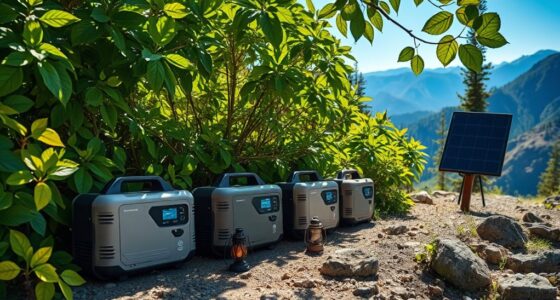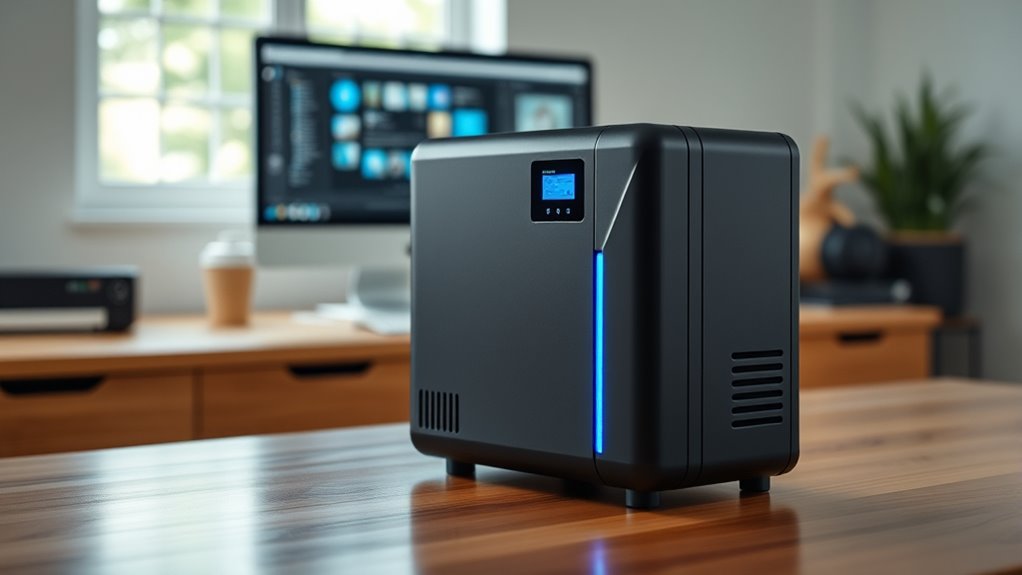
A battery backup with pure sine wave output can keep sensitive electronics running through an outage while supplying the kind of AC power many active-PFC computer power supplies are designed to accept. My best overall pick is the CyberPower PR1500LCD for buyers who want a higher-capacity, feature-rich UPS; the APC BR1500MS2 is a strong choice for a familiar desktop-and-home-office setup, while GOLDENMATE’s 1500VA LiFePO4 models stand out for buyers prioritizing battery longevity. The main tradeoffs are output capacity, battery chemistry, monitoring features, and the amount of runtime your actual load requires. A larger VA figure alone does not tell you how long your equipment will stay on, so match watt capacity and expected load before choosing. Read on for the ranked comparison, selection criteria, and practical guidance for finding the right fit.

Get backup power and energy gear delivered free with Prime
- Fast, free delivery on millions of items
- Prime Video, Amazon Music and more included
- Member-only deals all year
Key Takeaways
- The CyberPower PR1500LCD leads for capacity and controls, while its larger feature set may be more than a basic desktop needs.
- GOLDENMATE’s 1500VA/1000W LiFePO4 units form a recurring high-capacity option; the listed variations appear closely related, so check the exact model and configuration rather than treating every listing as a distinct design.
- Battery chemistry separates the roundup’s main choices: LiFePO4 models emphasize longer service life, while the APC, CyberPower, and Eaton options suit buyers comparing established conventional UPS formats and feature sets.
- Watt capacity matters alongside VA: the APC BR1000MS is rated at 600W, while the APC BR1350MS and BR1500MS2 offer different capacity headroom for heavier connected loads.
- The CyberPower CP850PFCLCD is the compact, lower-capacity pick; it is a better match for a modest PC or network setup than for several power-hungry devices.
| GOLDENMATE 1500VA/1000W Lithium UPS Battery Backup & Surge Protector, White |  | Best Long-Life Battery Value | Capacity: 1500VA / 1000W | Battery type: LiFePO4 | Battery lifespan: Over 10 years and more than 3,000 charge cycles | VIEW ON AMAZON | See Our Full Breakdown |
| CyberPower PR1500LCD Smart App Sinewave UPS Battery Backup |  | Best for High-Output Equipment | Capacity: 1500VA / 1500W | Output waveform: Sine wave | Input and output voltage: 120V | VIEW ON AMAZON | See Our Full Breakdown |
| GOLDENMATE 1500VA/1000W Lithium UPS Battery Backup & Surge Protector, White |  | Best for Sensitive Home and Office Electronics | Capacity: 1500VA / 1000W | Output waveform: Pure sine wave | Battery type and lifespan: LiFePO4; over 10 years and 3,000-plus charge cycles | VIEW ON AMAZON | See Our Full Breakdown |
| GOLDENMATE 1000VA/800W Lithium UPS Battery Backup & Surge Protector, White |  | Best for Lower-Power Setups | Capacity: 1000VA / 800W | Battery type: Lithium-phosphate | Battery average life: 10 years | VIEW ON AMAZON | See Our Full Breakdown |
| 1500VA/1000W LiFePO4 UPS Battery Backup & Surge Protector, Dual Metal Case |  | Best Metal-Enclosure Pick | Capacity: 1500VA / 1000W | Battery type and lifespan: Lithium-phosphate; 10-year average life | Runtime: Up to 24 minutes at 500W load | VIEW ON AMAZON | See Our Full Breakdown |
| Eaton Tripp Lite OMNIVS1500LCD 1500VA/900W UPS with 8 Outlets |  | Best for Quiet Office Use | Capacity: 1500VA / 900W | Outlets: 8 | Output waveform: Pure sine wave on AC; pulse-modified width sine wave on battery | VIEW ON AMAZON | See Our Full Breakdown |
| APC BR1000MS Back-UPS Pro 1000VA/600W Pure Sine Wave UPS for Computer and Electronics |  | Best for Compact Pure Sine Protection | Capacity: 1000VA / 600W | Output waveform: Pure sine wave | Outlets: 10 | VIEW ON AMAZON | See Our Full Breakdown |
| APC BR1500MS2 Pure Sine Wave UPS Battery Backup & Surge Protector |  | Best for High-Capacity Pure Sine Backup | Capacity: 1500VA / 900W | Output waveform: Pure sine wave | Outlets: 10 total: 6 battery-backed and 4 surge-only | VIEW ON AMAZON | See Our Full Breakdown |
| CyberPower CP850PFCLCD PFC Sinewave UPS Battery Backup and Surge Protector |  | Best for Smaller PFC-Compatible Setups | Capacity: 850VA / 510W | Output: Sine wave | Outlets: 10 | VIEW ON AMAZON | See Our Full Breakdown |
| GOLDENMATE 1000VA/600W Lithium UPS Battery Backup & Surge Protector, White | | Best for Long-Life Lithium Ownership | Capacity: 1000VA / 600W | Output waveform: Pure sine wave | Outlets: 8 | VIEW ON AMAZON | See Our Full Breakdown |
| APC Back-UPS Pro BR1350MS 1350VA/810W Pure Sine Wave UPS for Computer and Electronics |  | Best for Home-Office Capacity | Capacity: 1350VA / 810W | Output waveform: Pure sine wave | Outlets: 10 | VIEW ON AMAZON | See Our Full Breakdown |
| GOLDENMATE 1500VA/1000W Lithium UPS Battery Backup & Surge Protector |  | Best for Long-Term Lithium Service | Capacity: 1500VA / 1000W | Battery type: LiFePO4 | Output waveform: Pure sine wave | VIEW ON AMAZON | See Our Full Breakdown |
| GoldenMate 1000VA/800W Lithium UPS Battery Backup & Surge Protector, White | | Best Mid-Capacity Lithium Pick | Capacity: 1000VA / 800W | Output waveform: Pure sine wave | Outlets: 8 NEMA outlets | VIEW ON AMAZON | See Our Full Breakdown |
| GOLDENMATE 1000VA/600W Lithium UPS Battery Backup & Surge Protector |  | Best for Lower-Power Setups | Capacity: 1000VA / 600W | Output waveform: Not specified in the supplied product data | Battery type: Lithium-phosphate | VIEW ON AMAZON | See Our Full Breakdown |
| battery backup with pure sine wave | Capacity | Outlets | Output waveform | Runtime |
|---|---|---|---|---|
| GOLDENMATE 1500VA/1000W Lithiu | 1500VA / 1000W | — | — | — |
| CyberPower PR1500LCD Smart App | 1500VA / 1500W | 8 | Sine wave | Approximately 4 minutes at full load |
| GOLDENMATE 1500VA/1000W Lithiu | 1500VA / 1000W | 8 | Pure sine wave | — |
| GOLDENMATE 1000VA/800W Lithium | 1000VA / 800W | 8 | — | 30 minutes at full load |
| 1500VA/1000W LiFePO4 UPS Batte | 1500VA / 1000W | 8 | — | Up to 24 minutes at 500W load |
| Eaton Tripp Lite OMNIVS1500LCD | 1500VA / 900W | 8 | Pure sine wave on AC; pulse-modified width sine wave on battery | Approximately 16.4 minutes at 250W |
| APC BR1000MS Back-UPS Pro 1000 | 1000VA / 600W | 10 | Pure sine wave | Up to 42 minutes at 100W load; 3 minutes also listed |
| APC BR1500MS2 Pure Sine Wave U | 1500VA / 900W | 10 total: 6 battery-backed and 4 surge-only | Pure sine wave | 4 minutes listed |
| CyberPower CP850PFCLCD PFC Sin | 850VA / 510W | 10 | — | 4 hours listed; load not specified |
| GOLDENMATE 1000VA/600W Lithium | 1000VA / 600W | 8 | Pure sine wave | — |
| APC Back-UPS Pro BR1350MS 1350 | 1350VA / 810W | 10 | Pure sine wave | Up to 54 minutes at 100W load; listed runtime also states 3 minutes |
| GOLDENMATE 1500VA/1000W Lithiu | 1500VA / 1000W | 8 NEMA 5-15P outlets with surge protection and battery backup | Pure sine wave | — |
| GoldenMate 1000VA/800W Lithium | 1000VA / 800W | 8 NEMA outlets | Pure sine wave | 30 minutes at full load |
| GOLDENMATE 1000VA/600W Lithium | 1000VA / 600W | 8 | Not specified in the supplied product data | 30 minutes |
More Details on Our Top Picks
GOLDENMATE 1500VA/1000W Lithium UPS Battery Backup & Surge Protector, White
I’d choose this GOLDENMATE when long battery service life matters more than maximum output. Its LiFePO4 battery is rated for over 3,000 charge cycles and more than 10 years of use, a different ownership proposition from the CyberPower PR1500LCD, whose listed battery average life is three years. The 1000W capacity suits a computer, router, and related equipment, while the LCD and USB ports make status checks and small-device charging straightforward. Automatic voltage regulation adds protection against input fluctuations, not just outages. The tradeoff is a larger, heavier enclosure, and its stated 90–140V input range may make generator compatibility uncertain. I’d pick the 800W GOLDENMATE for a lower-load setup, but this model gives more output headroom.
Pros:- LiFePO4 battery rated for over 3,000 charge cycles and more than 10 years of lifespan
- 1000W output capacity for a computer and connected network equipment
- Multiple outlets with battery backup and surge protection
- LCD monitoring, USB charging ports, and automatic voltage regulation
Cons:- Larger, heavier enclosure than a compact UPS
- 90–140V AC input range may not suit some generator power
- No runtime figure is provided for comparing outage duration
Best for: Home-office and small-network owners who want a long-cycle LiFePO4 battery and need up to 1000W of backup capacity.
Not ideal for: Users who depend on generator power or need a lightweight UPS; the input range may limit generator compatibility, and the enclosure is relatively large and heavy.
- Capacity:1500VA / 1000W
- Battery type:LiFePO4
- Battery lifespan:Over 10 years and more than 3,000 charge cycles
- Input voltage:120V; stated operating range 90–140V AC
- Voltage:120V
- Form factor:Compact
- Monitoring and connections:LCD display, multiple outlets, and USB charging ports
Our verdict“Choose this model for long-cycle lithium backup and 1000W capacity, but skip it if generator compatibility or a smaller enclosure is a priority.”
CyberPower PR1500LCD Smart App Sinewave UPS Battery Backup
The CyberPower PR1500LCD is the clearest pick here for buyers who need 1500W of pure sine wave output, rather than the 1000W ceiling of either 1500VA GOLDENMATE model. That extra output headroom can accommodate a more demanding server or network setup, while automatic voltage regulation helps handle voltage dips without using battery power for every fluctuation. Its removable LCD panel is useful when the UPS sits somewhere awkward to reach, and UL certification adds a documented safety credential. The main compromise is backup duration: the supplied spec lists just four minutes at full load, so this is better for bridging an outage and allowing a controlled shutdown than for extended operation. Compared with the lithium GOLDENMATE units, its listed battery life is shorter and replacement may take technical know-how.
Pros:- 1500VA / 1500W sine-wave output, the highest stated wattage among these five picks
- Automatic voltage regulation helps manage input fluctuations
- Removable LCD panel supports monitoring when the UPS is difficult to reach
- UL safety certified
Cons:- Listed runtime is approximately four minutes at full load
- Battery average life is listed as three years, shorter than the GOLDENMATE LiFePO4 options
- Battery replacement may require technical knowledge; remote management card is optional
Best for: Small server-room and telecom operators who need up to 1500W of sine-wave output for brief outage coverage and orderly shutdowns.
Not ideal for: Buyers seeking extended battery runtime or low-maintenance, long-cycle lithium ownership; full-load runtime is listed at about four minutes, and battery replacement may require technical skill.
- Capacity:1500VA / 1500W
- Output waveform:Sine wave
- Input and output voltage:120V
- Outlets:8
- Runtime:Approximately 4 minutes at full load
- Battery average life:3 years
- Form factor:Mini-tower
- Safety certification:UL
Our verdict“Pick the CyberPower for high-output server or telecom loads that need short-term sine-wave backup, not for long outage runtime.”
GOLDENMATE 1500VA/1000W Lithium UPS Battery Backup & Surge Protector, White
This GOLDENMATE earns a distinct place for buyers who want explicitly stated pure sine wave output alongside a long-life LiFePO4 battery. It offers eight outlets and USB charging, with a smart LCD for checking operating status; that makes it a practical fit for a workstation or a small collection of sensitive electronics. Like the B0DQ4RH4SL GOLDENMATE, it is rated at 1500VA/1000W and uses LiFePO4, so neither has the CyberPower PR1500LCD’s higher 1500W output ceiling. Its listed communication ports and advanced cooling add flexibility, but cooling can bring noticeable fan noise under heavier use. The input is specified for standard 120V utility power, and the product data warns that generator-supplied power may not work properly. I’d favor it when waveform clarity is a deciding factor, not when quiet operation is essential.
Pros:- Pure sine wave output is explicitly listed
- LiFePO4 battery rated for over 10 years and 3,000-plus charge cycles
- Eight outlets plus USB charging and communication ports
- Smart LCD provides real-time status monitoring
Cons:- 1000W output is below the CyberPower PR1500LCD’s 1500W capacity
- Generator-supplied power may not work properly
- Cooling fan may produce noise during heavy use
Best for: Home-office users protecting sensitive computers and connected devices who want stated pure sine wave output, eight outlets, and LiFePO4 longevity.
Not ideal for: People running equipment from a generator or placing the UPS in a quiet workspace under heavy load; generator compatibility is limited and the fan may be audible.
- Capacity:1500VA / 1000W
- Output waveform:Pure sine wave
- Battery type and lifespan:LiFePO4; over 10 years and 3,000-plus charge cycles
- Input and output voltage:120V
- Outlets:8
- Form factor:Tower
- Connections and monitoring:NEMA connector, communication ports, USB charging, and smart LCD
Our verdict“Choose this GOLDENMATE when stated pure sine wave output and long-life lithium matter more than higher wattage or silent operation.”
GOLDENMATE 1000VA/800W Lithium UPS Battery Backup & Surge Protector, White
For a router, computer, and modest network stack, I’d choose this 800W GOLDENMATE over the 1000W GOLDENMATE models when the extra output capacity is unlikely to be used. It keeps the lineup’s LiFePO4 focus, with a listed 10-year battery life, eight outlets, surge protection, and an LCD that makes battery and power status visible. The supplied runtime is 30 minutes at full load, giving a useful reference point, though actual duration depends on the connected load. Compared with the CyberPower PR1500LCD, this unit offers less wattage but a longer stated runtime and lithium battery longevity; the CyberPower is the better match for equipment drawing close to 1500W. This model’s 10-hour charge time and possible fan noise under heavy use are tradeoffs, and buyers should check that their input voltage falls within the stated range.
Pros:- LiFePO4 battery with a listed average life of 10 years
- Eight outlets combine backup power and surge protection for multiple devices
- LCD displays power and battery status
- Runtime is listed as 30 minutes at full load
Cons:- 800W capacity is lower than the 1000W GOLDENMATE models and 1500W CyberPower
- Battery charge time is listed as 10 hours
- Cooling fan noise may be noticeable during heavy use
Best for: People backing up a home-office computer, router, and network accessories whose combined load stays comfortably below 800W.
Not ideal for: Users with power-hungry servers or equipment that may exceed 800W, or anyone who needs a fast recharge after a full discharge.
- Capacity:1000VA / 800W
- Battery type:Lithium-phosphate
- Battery average life:10 years
- Input and output voltage:120V; verify input compatibility within the stated 90–140V range
- Outlets:8
- Runtime:30 minutes at full load
- Battery charge time:10 hours
- Safety specifications:UL1642, UL1973, UL1778, FCC, TUV
Our verdict“Pick this model for a lower-power setup that benefits from LiFePO4 longevity, but move up to a 1000W or 1500W UPS if your load demands it.”
1500VA/1000W LiFePO4 UPS Battery Backup & Surge Protector, Dual Metal Case
This UPS stands apart from the white GOLDENMATE towers through its dual-metal case and stated cooling vents, making it the choice here for buyers who value a sturdier enclosure and flexible placement. It supplies 1000W of output and lists up to 24 minutes of runtime at a 500W load, a more useful load-specific reference than the CyberPower PR1500LCD’s four-minute full-load figure, though the two figures cannot be compared as equivalent conditions. A transfer time under 10ms is intended to reduce interruption when power fails, while USB-C and USB-A ports add direct charging options. The tradeoff is weight: the metal case and heavy-duty transformer make it less convenient to move than the compact plastic-bodied alternatives. Its runtime also falls as connected demand rises, so I wouldn’t select it for long outages at high loads.
Pros:- Dual-metal case with cooling vents
- LiFePO4 battery with a listed average life of 10 years
- Up to 24 minutes of runtime at a 500W load
- Transfer time under 10ms and USB-C and USB-A charging ports
Cons:- Heavier than similar UPS units because of the metal case and transformer
- Listed runtime is tied to a 500W load and may be shorter at higher demand
- Battery charge time is listed as 10 hours
Best for: Home-office or small-business users who want 1000W of UPS capacity in a metal enclosure and expect a moderate load around 500W.
Not ideal for: Buyers who need a lightweight UPS or long backup at high power draw; the metal construction adds weight and listed runtime is 24 minutes at 500W.
- Capacity:1500VA / 1000W
- Battery type and lifespan:Lithium-phosphate; 10-year average life
- Runtime:Up to 24 minutes at 500W load
- Transfer time:Less than 10ms
- Input and output voltage:120V
- Outlets:8
- Enclosure and form factor:Dual metal case; compact metal tower
- Connections:USB-C and USB-A ports
Our verdict“Choose this model for a metal enclosure and moderate-load backup, but skip it if portability or extended runtime under heavy load matters most.”
Eaton Tripp Lite OMNIVS1500LCD 1500VA/900W UPS with 8 Outlets
The Eaton Tripp Lite OMNIVS1500LCD pairs a 1500VA/900W capacity with silent operation and AVR, making it a practical fit for a quiet office where voltage dips are more common than long outages. Its AVR can correct input voltage fluctuations without using battery power, and the listed runtime is about 16.4 minutes at 250W. But buyers choosing a battery backup specifically for pure sine wave should note the key distinction: this unit provides pure sine wave on AC power, while its battery output is pulse-modified sine wave. That makes it less suitable for sensitive equipment that requires pure sine during an outage than the APC BR1500MS2 or CyberPower CP850PFCLCD. Eight outlets, compact tower styling, and equipment insurance add practical value, but higher loads shorten its backup window.
Pros:- Silent operation in line and battery modes suits shared workspaces and bedrooms.
- AVR corrects brownouts without spending battery charge.
- Eight outlets and a compact tower design simplify desktop placement.
- $200,000 connected equipment insurance and a three-year warranty provide added protection.
Cons:- Battery output is pulse-modified sine wave, not pure sine wave.
- Runtime is limited at higher loads; the listed estimate is about 16.4 minutes at 250W.
- Its waveform tradeoff makes it a weaker match for sensitive equipment than the APC BR1500MS2.
Best for: Home-office users who prioritize silent operation, AVR, and surge protection for standard computers and peripherals, and whose equipment does not require pure sine output on battery.
Not ideal for: Owners of active-PFC power supplies or other sensitive electronics that need pure sine wave output during a power failure.
- Capacity:1500VA / 900W
- Outlets:8
- Output waveform:Pure sine wave on AC; pulse-modified width sine wave on battery
- Runtime:Approximately 16.4 minutes at 250W
- AVR range:89V–145V
- Design:Silent tower
- Warranty:3 years
- Connected equipment insurance:$200,000
Our verdict“Choose the Eaton for a quiet office and voltage regulation, but skip it if pure sine wave battery output is a firm requirement.”
APC BR1000MS Back-UPS Pro 1000VA/600W Pure Sine Wave UPS for Computer and Electronics
The APC BR1000MS is the lineup’s more modest-capacity route to pure sine wave battery power. At 1000VA/600W, it has less output capacity than the APC BR1500MS2, but its 10 outlets, AVR, and LCD monitoring make it a capable match for a computer, router, and selected peripherals. The listed runtime reaches 42 minutes at a 100W load, so it is better understood as a low-load backup than a promise of long operation for a gaming PC or workstation. Compared with the Eaton Tripp Lite OMNIVS1500LCD, the APC is the stronger choice when battery-mode waveform matters; unlike the Eaton, it supplies pure sine wave output during an outage. The tradeoffs are a 600W ceiling, a heavy 22.4-pound body, and a replacement battery that must be purchased separately.
Pros:- Pure sine wave output suits sensitive electronics and active-PFC power supplies.
- Up to 42 minutes of runtime is listed at a 100W load.
- AVR and an LCD display help manage voltage fluctuations and monitor status.
- Ten outlets provide room for a computer and supporting devices.
Cons:- The 600W capacity is below the APC BR1500MS2’s 900W ceiling.
- Runtime drops as the connected load rises.
- The battery is user-replaceable but replacement is a separate purchase, and the unit weighs 22.4 pounds.
Best for: Computer and networking users who need pure sine wave output and extended low-load backup for a router, modem, and efficient desktop setup.
Not ideal for: Buyers running several high-draw devices or seeking an easy-to-move UPS; the 600W limit and 22.4-pound weight are limiting factors.
- Capacity:1000VA / 600W
- Output waveform:Pure sine wave
- Outlets:10
- Runtime:Up to 42 minutes at 100W load; 3 minutes also listed
- Voltage:120V input and output
- Form factor:Tower
- Weight:22.4 pounds
- Warranty:3 years
Our verdict“Pick the BR1000MS for pure sine protection and low-load runtime in a modest setup, rather than for high-wattage equipment.”
APC BR1500MS2 Pure Sine Wave UPS Battery Backup & Surge Protector
For buyers who want pure sine output without giving up capacity, the APC BR1500MS2 is the clearest all-round fit here: its 1500VA/900W rating matches the Eaton Tripp Lite’s capacity while providing pure sine wave output on battery. That distinction matters for sensitive computers and active-PFC power supplies that may not suit the Eaton’s pulse-modified battery waveform. The APC adds six battery-backed outlets, four surge-only outlets, coaxial and Ethernet line protection, and front USB-A/USB-C charging. Those connections help keep network and charging gear organized, though only six outlets keep running from the battery. Its listed runtime is four minutes, with the figure tied to a load condition that is not specified, so I would not treat it as a long-outage solution. The user-replaceable lead-acid battery is useful for service life but sold separately.
Pros:- Pure sine wave output and 900W capacity suit sensitive, higher-demand equipment.
- AVR handles voltage fluctuations without relying on battery power.
- Six battery-backed and four surge-only outlets support a mixed device setup.
- Coaxial and Ethernet protection plus front USB-A and USB-C ports add useful connections.
Cons:- The listed runtime is only four minutes, and its load condition is not specified.
- Only six of the ten outlets provide battery backup.
- Replacement lead-acid battery is sold separately, and the tower can take up desk space.
Best for: Home-office owners with a sensitive desktop, networking gear, and peripherals who want 900W of pure sine wave backup plus line protection.
Not ideal for: People who need extended runtime under heavy load, want every outlet battery-backed, or have very limited desk space.
- Capacity:1500VA / 900W
- Output waveform:Pure sine wave
- Outlets:10 total: 6 battery-backed and 4 surge-only
- Runtime:4 minutes listed
- Input and output voltage:120V
- Battery charge time:16 hours
- Average battery life:5 years
- Form factor:Tower
Our verdict“Choose the BR1500MS2 for a 900W pure sine wave setup with broad connection protection, not for long backup at full load.”
CyberPower CP850PFCLCD PFC Sinewave UPS Battery Backup and Surge Protector
The CyberPower CP850PFCLCD gives buyers a lower-capacity alternative to the APC BR1500MS2 while retaining the sine-wave output sought for PFC-compatible computer equipment. Its 850VA/510W rating is better matched to a desktop, router, and a few peripherals than a more demanding workstation, and the color LCD makes operating status easy to check at the unit. Ten outlets offer plenty of connection points, but outlet count should not be confused with battery capacity: the 510W ceiling remains the deciding limit. Compared with the APC BR1000MS, this CyberPower supplies less rated power, while its mini-tower footprint and listed three-year warranty including the battery may appeal to buyers with a smaller setup. The supplied runtime figure is four hours, but no load is given, so it is not a reliable estimate for a full-load system.
Pros:- Sine-wave output is suited to PFC-compatible computer equipment.
- AVR can regulate input voltage without using battery backup.
- Color LCD provides clear status information.
- Ten outlets and a three-year warranty that includes the battery add practical convenience.
Cons:- The 510W limit is lower than the APC BR1000MS’s 600W and the APC BR1500MS2’s 900W.
- The four-hour runtime listing does not specify load, limiting its usefulness for planning.
- At 14.9 pounds, it is not especially light for a mini-tower UPS.
Best for: Owners of a modest desktop and network setup who want sine-wave backup, AVR, and an at-a-glance LCD without stepping up to a 900W UPS.
Not ideal for: Users with high-draw PCs or those who need dependable runtime estimates at full load; its capacity is 510W and the runtime load is unspecified.
- Capacity:850VA / 510W
- Output:Sine wave
- Outlets:10
- Runtime:4 hours listed; load not specified
- Voltage:120V input and output
- Form factor:Mini-tower
- Dimensions:10.2 × 3.9 × 9.7 inches
- Warranty:3 years, including battery
Our verdict“Choose the CP850PFCLCD for a smaller PFC-compatible setup with clear status monitoring, but look to a higher-capacity model for demanding PCs.”
GOLDENMATE 1000VA/600W Lithium UPS Battery Backup & Surge Protector, White
The GOLDENMATE 1000VA/600W stands apart from the lead-acid APC and CyberPower options with its LiFePO4 battery, which the product data describes as lasting over 10 years. That makes it a distinctive pick for buyers who want to reduce battery replacement frequency, while its pure sine wave output and 600W capacity suit sensitive electronics in a small office or home setup. Smart monitoring, an LCD, and auto-shutdown features add control beyond the simpler Eaton Tripp Lite OMNIVS1500LCD, whose battery output is not pure sine wave. The tradeoff is that the GOLDENMATE has eight outlets rather than the 10 on the APC BR1000MS, and no runtime estimate is provided here. Its specified 90–140V AC input range also makes outlet compatibility worth checking before purchase.
Pros:- Pure sine wave output supports sensitive electronics.
- LiFePO4 battery is described as having a lifespan of over 10 years.
- Smart monitoring, LCD status, and auto-shutdown features support managed operation.
- Metal enclosure and advanced cooling are listed design features.
Cons:- The 600W output is lower than the APC BR1500MS2’s 900W capacity.
- No runtime estimate is provided in the product data.
- The 90–140V AC input range may not suit every outlet, and the unit weighs 4.8 kg.
Best for: Home-office users who want pure sine wave backup with a long-life LiFePO4 battery and smart monitoring for a moderate-load setup.
Not ideal for: Buyers who need a stated runtime estimate, more than 600W of capacity, or a UPS that is easy to carry; this model weighs 4.8 kg.
- Capacity:1000VA / 600W
- Output waveform:Pure sine wave
- Outlets:8
- Battery type:LiFePO4
- Battery lifespan:Over 10 years, as stated in product data
- Input voltage range:90–140V AC
- Battery charge time:6 hours
- Dimensions:13 × 4.1 × 9.8 inches
Our verdict“Pick the GOLDENMATE for long-life LiFePO4 storage and pure sine output in a moderate-load setup, after checking its input-voltage range.”
APC Back-UPS Pro BR1350MS 1350VA/810W Pure Sine Wave UPS for Computer and Electronics
The APC Back-UPS Pro BR1350MS stands out for buyers who want a conventional, serviceable UPS with 810W output and ten outlets. Its pure sine wave output and automatic voltage regulation suit computers and other sensitive gear, while a replaceable battery gives it a clearer maintenance path than the lithium GoldenMate models in this group. APC lists up to 54 minutes at a 100W load, but the supplied runtime spec also lists three minutes, so expect backup time to change sharply with load and confirm the estimate for your setup. The tradeoff is a 16-hour recharge and a heavier tower at 25.7 pounds. Compared with the GoldenMate 1500VA/1000W, it offers less output but a replaceable battery rather than a long-cycle LiFePO4 design.
Pros:- Pure sine wave output and automatic voltage regulation support sensitive electronics.
- 810W capacity and 10 outlets suit a multi-device home-office setup.
- User-replaceable battery can extend the UPS’s useful service life.
- USB-C and USB-A ports provide device charging without taking an AC outlet.
Cons:- The listed 16-hour battery recharge is slow compared with a setup that needs quick recovery after an outage.
- Runtime falls as connected load rises; the data gives both up to 54 minutes at 100W and a three-minute runtime figure.
- At 25.7 pounds, it is less convenient to move than a compact backup unit.
Best for: Home-office users who need pure sine wave backup for a computer, router, and peripherals, and value a user-replaceable battery.
Not ideal for: Buyers prioritizing lithium battery cycle life, fast recharge, or a lightweight UPS; its listed recharge time is 16 hours and the unit weighs 25.7 pounds.
- Capacity:1350VA / 810W
- Output waveform:Pure sine wave
- Outlets:10
- Input/output voltage:120V
- Battery recharge time:16 hours
- Runtime:Up to 54 minutes at 100W load; listed runtime also states 3 minutes
- Form factor and dimensions:Tower; 14.5 x 3.9 x 10.2 inches
- Weight:25.7 pounds
- Connectivity:USB-C and USB-A
Our verdict“Choose the BR1350MS if you want an 810W pure sine wave UPS with a replaceable battery and can accommodate its weight and slow recharge.”
GOLDENMATE 1500VA/1000W Lithium UPS Battery Backup & Surge Protector
The GOLDENMATE 1500VA/1000W is the strongest fit here for buyers who want high output and long battery cycle life in one unit. Its LiFePO4 battery is rated for more than 3,000 charge cycles and a 10-year lifespan, making it a different proposition from the APC BR1350MS, whose advantage is a user-replaceable battery rather than a stated long-cycle lithium pack. Eight backed-up outlets, a fast transfer time under 10ms, and USB communication for automatic computer or NAS shutdown add practical protection for a small network setup. The LCD and emergency LED light also help during an outage. The limits are real: it is specified for 90–140V AC and is not compatible with generator-supplied power, so it is a poor match for generator-backed locations.
Pros:- 1000W output provides more capacity than the APC BR1350MS’s 810W rating.
- LiFePO4 battery is specified for 3,000-plus charge cycles and a 10-year lifespan.
- Transfer time under 10ms helps connected equipment ride through a power interruption.
- USB communication supports automatic shutdown for compatible computers and NAS devices.
Cons:- The product is specified as incompatible with generator-supplied power.
- Its 90–140V AC input range limits suitability for power environments outside that range.
- Eight outlets may offer less connection capacity than the APC BR1350MS’s ten.
Best for: Computer, NAS, and home-network owners who want 1000W pure sine wave backup and a long-cycle LiFePO4 battery for frequent or long-term use.
Not ideal for: People who need a UPS that can accept generator power or whose electrical supply falls outside the stated 90–140V AC input range.
- Capacity:1500VA / 1000W
- Battery type:LiFePO4
- Output waveform:Pure sine wave
- Transfer time:Under 10ms
- Outlets:8 NEMA 5-15P outlets with surge protection and battery backup
- Input voltage range:90–140V AC
- Display and mounting:Intelligent LCD; wall-mountable
- USB ports:1 USB-C and 1 USB-A; 10W total
Our verdict“Pick this GoldenMate if high wattage and a long-life LiFePO4 battery matter more than generator compatibility.”
GoldenMate 1000VA/800W Lithium UPS Battery Backup & Surge Protector, White
This GoldenMate 1000VA/800W offers a useful middle ground: more output than the GoldenMate 1000VA/600W, without moving up to the 1500VA/1000W model. Its pure sine wave output, eight NEMA outlets, and communication port for automatic shutdown cover the core needs of a desktop, network equipment, or telecom setup. The LiFePO4 battery is rated for more than 5,000 cycles and over 10 years, a stronger stated cycle-life figure than the 1500VA GoldenMate’s 3,000-plus cycles. Its quiet cooling system stays below 50 dB and activates under heavy load, which may suit a work area better than a louder constantly running fan. The tradeoff is capacity: at 800W it cannot match the 1000W GoldenMate, and the stated 30-minute runtime is at full load, not a promise for every setup.
Pros:- 800W capacity sits between the 600W and 1000W GoldenMate models.
- LiFePO4 battery is rated for more than 5,000 charge cycles and over 10 years.
- Communication port supports automatic shutdown of connected equipment.
- Cooling stays below 50 dB and activates only under heavy load.
Cons:- Its 800W limit provides less headroom than the GOLDENMATE 1500VA/1000W.
- The listed 30-minute runtime is specified at full load and will vary with connected equipment.
- The supplied input-voltage spec gives 90V AC without a full operating range.
Best for: Home-office and small-network users who need up to 800W pure sine wave backup, automatic device shutdown, and a long-life LiFePO4 battery.
Not ideal for: Buyers running equipment near or above 800W, or anyone expecting 30 minutes of backup at lighter or heavier loads without checking runtime for their configuration.
- Capacity:1000VA / 800W
- Output waveform:Pure sine wave
- Outlets:8 NEMA outlets
- Output voltage:120V
- Input voltage:90V AC listed
- Runtime:30 minutes at full load
- Battery recharge time:10 hours
- Form factor and color:Tower; white
Our verdict“Choose this model for an 800W-class setup where long LiFePO4 cycle life and quiet, load-triggered cooling matter.”
GOLDENMATE 1000VA/600W Lithium UPS Battery Backup & Surge Protector
The GOLDENMATE 1000VA/600W makes the most sense when the connected load is modest and a long-life lithium battery matters more than extra wattage. Its 600W output and eight outlets can suit a computer, router, and a few peripherals, while its stated 10-year warranty distinguishes it from the APC BR1350MS, which instead highlights a user-replaceable battery. This GoldenMate is also a more restrained choice than the 800W GoldenMate: you give up 200W of capacity, but may avoid buying headroom your setup does not need. It provides real-time monitoring and surge protection, though the supplied specs do not identify a waveform, so buyers specifically seeking confirmed pure sine wave output should verify that detail before choosing it. The listed 30-minute runtime is at full load and should not be treated as a universal estimate.
Pros:- Eight outlets provide room for a modest computer and network setup.
- Lithium iron phosphate battery is described as lasting over 10 years and 5,000-plus charge cycles.
- Real-time monitoring and surge protection support basic power management.
- A 10-year warranty is stated in the product data.
Cons:- 600W output offers less headroom than the GoldenMate 1000VA/800W.
- The supplied specs do not state an output waveform, so pure sine wave buyers should confirm it before purchase.
- The listed 30-minute runtime is at full load and will vary with connected devices.
Best for: Buyers with a lower-power computer or network setup who want eight protected outlets, monitoring, and a long warranty.
Not ideal for: Anyone who needs a confirmed pure sine wave specification, runs equipment close to 600W, or relies on generator-supplied power without verifying compatibility.
- Capacity:1000VA / 600W
- Output waveform:Not specified in the supplied product data
- Battery type:Lithium-phosphate
- Outlets:8
- Input/output voltage:120V
- Runtime:30 minutes
- Battery recharge time:10 hours
- Warranty:10 years
Our verdict“Choose this GoldenMate for a modest-load setup only after confirming its waveform meets your pure sine wave requirement.”
How We Picked
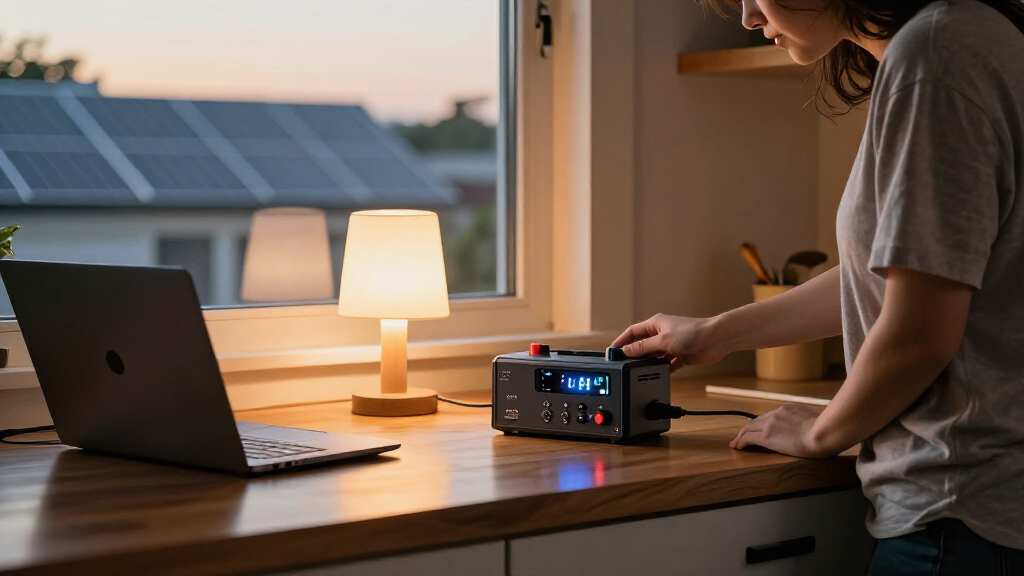
I compared the listed models on the factors that shape a useful pure sine wave UPS: stated watt capacity, battery chemistry, outlet and monitoring features, and suitability for common computer and home-office loads. I gave greater weight to clear capacity and practical controls than to a large VA number alone, since the connected equipment’s watt draw determines whether a UPS can support it. Battery type also affected placement in the ranking: LiFePO4 can appeal to buyers seeking a longer-lived battery, while conventional UPS designs may better suit buyers who prioritize familiar product lines and specific monitoring features.
The order reflects the intended buyer, not a claim that one model wins every use case. Higher-capacity units rank ahead for flexible desktop and workstation support, while compact models sit lower because they cannot serve as many or as demanding loads. Several GOLDENMATE entries share names and ratings, including repeated 1500VA/1000W and 1000VA/800W listings, so I treat their stated specifications as the basis for comparison and recommend confirming the exact model, battery configuration, and outlet layout before purchase. I did not infer runtime where the supplied product information does not specify it.
| battery backup with pure sine wave | Output waveform |
|---|---|
| GOLDENMATE 1500VA/1000W Lithiu | — |
| CyberPower PR1500LCD Smart App | Sine wave |
| GOLDENMATE 1500VA/1000W Lithiu | Pure sine wave |
| GOLDENMATE 1000VA/800W Lithium | — |
| 1500VA/1000W LiFePO4 UPS Batte | — |
| Eaton Tripp Lite OMNIVS1500LCD | Pure sine wave on AC; pulse-modified width sine wave on battery |
| APC BR1000MS Back-UPS Pro 1000 | Pure sine wave |
| APC BR1500MS2 Pure Sine Wave U | Pure sine wave |
| CyberPower CP850PFCLCD PFC Sin | — |
| GOLDENMATE 1000VA/600W Lithium | Pure sine wave |
| APC Back-UPS Pro BR1350MS 1350 | Pure sine wave |
| GOLDENMATE 1500VA/1000W Lithiu | Pure sine wave |
| GoldenMate 1000VA/800W Lithium | Pure sine wave |
| GOLDENMATE 1000VA/600W Lithium | Not specified in the supplied product data |
Factors to Consider When Choosing Battery Backup With Pure Sine Wave
Choosing a UPS is less about collecting the highest specification and more about matching the unit to your equipment and the outage you want to handle. These broader checks can prevent an undersized purchase or an expensive system whose features you will not use.
Match Watt Capacity to Your Real Load
VA describes apparent power, while the watt rating is the more direct limit for the devices plugged into the UPS. Add the watt draw of the equipment you expect to keep running, then leave headroom for load changes and startup behavior. A computer, monitor, router, and external drive can add up faster than their standby draw suggests. Do not assume a 1500VA unit can support any 1500-watt load; check its stated watt limit. If your load sits close to that limit, choose a model with more capacity rather than relying on a larger VA number. For backup of only a router and modest desktop, a compact model may be the more sensible fit.
Estimate Runtime From the Load, Not the Product Name
Runtime changes with connected wattage, battery condition, and how the UPS manages its output, so a headline capacity cannot answer how long your setup will run. Decide whether you need enough time to save work and shut down or enough time to keep networking gear active through a longer interruption. Ask for a runtime chart at a load close to yours, not only the maximum runtime at a very light load. A common mistake is buying extra outlets or capacity without checking the actual backup duration. If the manufacturer does not publish useful runtime figures, treat runtime as uncertain rather than assuming a particular number of minutes. For critical equipment, plan a graceful shutdown instead of expecting the UPS to act as a generator.
Choose Battery Chemistry With Replacement in Mind
Battery chemistry affects more than the first day of ownership: it can influence service life, replacement planning, and the system’s long-term upkeep. The LiFePO4 models in this roundup may appeal to people who want a battery designed for repeated use over a longer service period, while conventional UPS models remain familiar choices for routine backup. Check whether the battery is user-replaceable, whether replacement packs are available, and what the manufacturer says about expected battery life. A battery described as long-lasting still has operating limits, including temperature and charge conditions. Avoid placing any UPS in a hot, poorly ventilated spot, since heat can shorten battery life. Compare total maintenance expectations, not just the chemistry label.
Treat Pure Sine Wave as One Compatibility Check
Pure sine wave output is useful for many sensitive electronics and active-PFC power supplies, but it does not by itself guarantee compatibility with every connected device. Check the power supply or equipment maker’s guidance, especially for systems with unusual power demands, motors, or specialized adapters. Also look at how the UPS behaves when switching to battery; the output waveform is only one part of the backup experience. Buyers sometimes focus on the sine-wave claim and overlook watt limits, outlet type, or transfer behavior. Confirm that the model’s outlets and included cables suit your equipment. If a device has strict power requirements, verify compatibility with its manufacturer before relying on a UPS.
Count the Outlets You Can Actually Use
UPS outlet layouts often divide between battery-backed sockets and surge-only sockets, so count the protected outlets that match your intended setup. Include the modem, router, monitor, and any storage device you want to keep available during an outage. Large power adapters can block nearby sockets even when the outlet count looks sufficient on paper. Check whether the unit provides useful display or software monitoring if you need load readings, battery status, or shutdown controls. A basic setup may not benefit from app features, while a home server or work computer can make better use of them. Avoid plugging a power strip into a UPS unless the manufacturer permits it.
Set Priorities Before Paying for More Capacity
Paying for a larger system makes sense when you have a higher continuous load, need more backup outlets, or want room for future equipment. It is less useful when the only goal is to keep a low-draw router online or save one desktop document. Decide which devices must stay powered and which can shut off; this simple list can reduce the capacity you need. Compare the space, weight, noise, and maintenance burden of larger units as well as their output. A beginner may prefer clear status information and a straightforward outlet layout over advanced management features. For demanding or business-critical equipment, prioritize documented capacity and support options over a long feature list.
Frequently Asked Questions
How do I know whether a pure sine wave UPS can support my computer?
Check the computer power supply’s guidance and compare its expected watt draw with the UPS’s stated watt capacity. Pure sine wave output can suit many active-PFC power supplies, but the waveform alone does not confirm that the system can handle your load. Include the monitor and any other equipment you want backed up in your total. Leave capacity headroom rather than choosing a UPS that would operate near its maximum. If the computer maker lists specific UPS requirements, follow those before relying on a general compatibility claim.
Should I choose a LiFePO4 UPS over a conventional UPS battery?
LiFePO4 may be a better fit if you value longer battery service life and want to reduce how often you plan for battery replacement. A conventional UPS may suit you better if you prefer a familiar model line or have an established replacement-battery process. Compare replaceability, support, physical size, and manufacturer guidance rather than judging by chemistry alone. Battery lifespan depends on operating conditions, including heat and charge habits. Choose the type whose maintenance expectations match how you plan to use the backup.
Can I run a router and modem from a computer UPS during an outage?
Usually, a UPS can power networking equipment if its combined load stays within the unit’s limits and the devices use compatible plugs. Check which sockets provide battery backup, since some outlets may offer surge protection only. A router and modem often draw less power than a desktop, but runtime still depends on their combined load and the UPS battery. If keeping internet access is the main goal, look for runtime information at a light load and avoid connecting unnecessary equipment. Remember that the internet connection may still fail if neighborhood network equipment loses power.
Is a 1500VA model always a better choice than a 1000VA model?
No. VA is only one rating, and the watt limit determines how much real load the UPS can support. A higher-capacity model can offer more headroom, but it may take more space and include capacity you will not use. Compare the watt rating, outlet layout, and runtime at your expected load instead of choosing from VA alone. A 1000VA unit may be a better fit for a modest computer and network setup. Select 1500VA when your equipment or planned expansion justifies the added capacity.
What should I verify before buying one of the repeated GOLDENMATE listings?
Compare the full model name and stated ratings, because this roundup includes repeated or closely matching GOLDENMATE listings. Confirm the watt capacity, battery chemistry, outlet count, physical design, and included monitoring features on the exact product page. Do not assume two listings with similar names have identical hardware or warranty terms. Check whether the battery is replaceable and what support documentation applies to that specific model. If the listing does not clearly distinguish its configuration, seek clarification before choosing it over a uniquely identified alternative.
Conclusion
For a higher-capacity system with monitoring features, I would start with the CyberPower PR1500LCD as the best overall choice. The GOLDENMATE 1000VA/800W LiFePO4 models are the best value direction for buyers who want lithium chemistry and a moderate capacity, provided the exact listing and configuration check out. For a premium, established desktop UPS, compare the APC BR1500MS2 and CyberPower PR1500LCD against your load and preferred controls. Beginners with a modest setup may find the CyberPower CP850PFCLCD easier to match to a small PC or networking load than a larger unit. For longer-term battery-life priorities, consider a GOLDENMATE LiFePO4 model; for a familiar APC option at a lower stated watt capacity, look at the BR1000MS. Before ordering, verify watt demand, runtime at your load, and the exact product configuration.
Halloween Picks
halloween
As an affiliate, we earn on qualifying purchases.