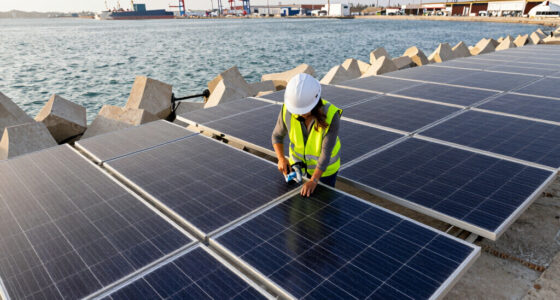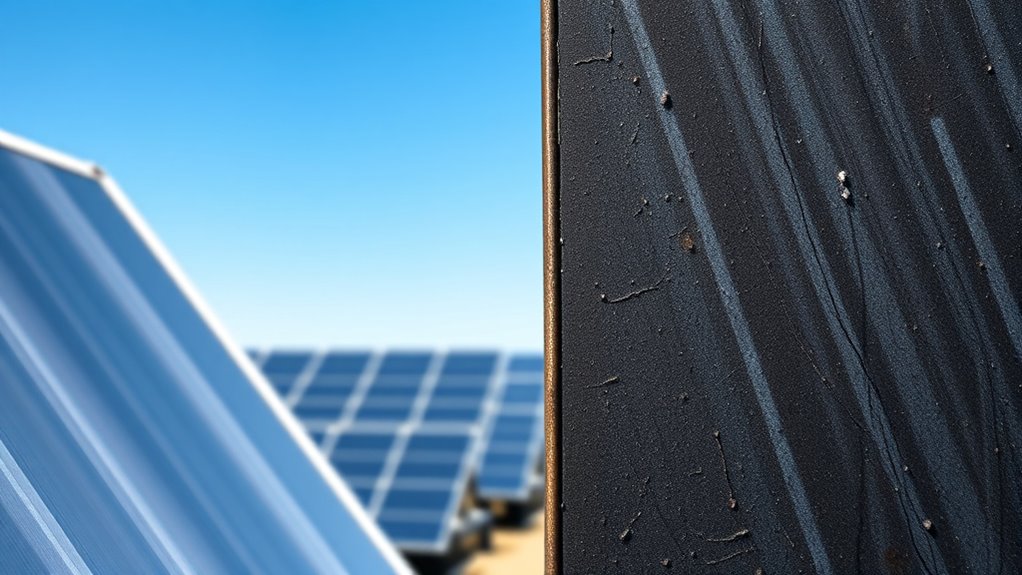

When choosing between aluminum and steel for solar racking, consider your environment and budget. Aluminum offers superior corrosion resistance, making it ideal for coastal or humid areas, and requires less maintenance, which can save you money long-term. Steel is typically more affordable upfront but may need coatings or treatments to prevent rust. If you keep environment and durability in mind, you’ll see which option suits your project best. Keep going to discover how each material performs in different conditions.

Get backup power and energy gear delivered free with Prime
- Fast, free delivery on millions of items
- Prime Video, Amazon Music and more included
- Member-only deals all year
Key Takeaways
- Aluminum offers superior corrosion resistance, especially in coastal and humid environments, reducing maintenance needs.
- Steel is generally more affordable initially but may incur higher costs over time due to corrosion and maintenance.
- Aluminum is lightweight, making installation easier and reducing structural support requirements.
- Advances in steel coatings have improved its durability, making it a viable option in less aggressive environments.
- Long-term savings often favor aluminum due to its durability and lower maintenance, despite higher upfront costs.

Choosing the right materials for solar racking is essential for ensuring the durability and efficiency of your solar energy system. When comparing aluminum and steel, you’ll want to weigh several key factors, especially corrosion resistance and cost comparison. These elements directly impact the longevity of your racking system and your overall investment.
Aluminum is well-known for its excellent corrosion resistance. Since aluminum naturally forms a protective oxide layer when exposed to the elements, it resists rust and deterioration better than steel. This makes aluminum an ideal choice if your solar installation is in a coastal area, where salty air can accelerate corrosion. The durability that aluminum offers means you’ll spend less time and money on maintenance and replacements over the system’s lifespan. While aluminum racks tend to be more expensive upfront, their resistance to corrosion can save you significant costs in the long run.
Aluminum’s natural oxide layer provides superior corrosion resistance, ideal for coastal solar installations and long-term durability.
Steel, on the other hand, is generally more affordable initially. It has a lower material cost compared to aluminum, which can make it appealing if you’re working within a tight budget. However, steel is more susceptible to rust and corrosion if not properly treated or coated. Galvanized steel, which involves applying a zinc coating, can improve its resistance to corrosion, but it still may not match the longevity of aluminum in harsh environments. If you choose steel, you’ll need to factor in the potential for higher maintenance costs and earlier replacements, which can offset its initial savings.
When making your decision, take into account the environment where your solar system will be installed. For coastal or humid locations, aluminum’s corrosion resistance makes it a more dependable choice despite the higher upfront cost. In drier, less aggressive environments, steel might suffice, especially if you select galvanized or coated options to improve durability. Additionally, weigh the long-term cost comparison, not just the initial investment. While steel might seem cheaper at first, the expenses associated with corrosion prevention, maintenance, and replacement can add up over time.
Furthermore, advances in coating technologies have improved the corrosion resistance of steel, making it a more viable option in certain environments. Ultimately, your choice should balance your budget, environmental conditions, and long-term goals. Aluminum offers superior corrosion resistance and potentially lower lifetime costs, making it a smart choice for many installations. Steel can be a cost-effective option initially, but only if you’re prepared for the ongoing maintenance and eventual replacement costs. By understanding these differences, you can select the material that best fits your needs, ensuring your solar racking remains sturdy and efficient for years to come.
As an affiliate, we earn on qualifying purchases.
Frequently Asked Questions
How Do Aluminum and Steel Racks Perform in Coastal Environments?
In coastal environments, aluminum racks excel due to their superior corrosion resistance, making them ideal for salty, humid conditions. Steel racks, especially galvanized or coated, offer strong structural durability but may require more maintenance to prevent rust. You’ll find aluminum racks last longer with less upkeep, whereas steel racks can be more cost-effective initially but may need additional corrosion protection. Your choice depends on balancing durability and maintenance needs in coastal settings.
Are There Weight Differences Between Aluminum and Steel Racking Systems?
You’ll find aluminum racks are considerably lighter than steel, making them easier to handle and install—like lifting a feather compared to a brick. The weight comparison is quite stark, with aluminum being about 30-40% lighter than steel. When considering material strength, steel offers more durability and load-bearing capacity, but if weight is your priority, aluminum’s lightweight nature makes it the smarter choice for quick, efficient setup.
Which Material Is More Environmentally Sustainable for Solar Racking?
You’ll find aluminum more environmentally sustainable for solar racking because it’s highly recyclable and can be reused without losing quality. Its recyclability factors make it easier to repurpose at the end of its life. Plus, manufacturing emissions for aluminum are often lower when using recycled material. Steel, while also recyclable, typically involves higher emissions during production. So, choosing aluminum helps reduce your environmental impact more effectively.
How Do Aluminum and Steel Racks Compare in Installation Ease?
You’ll find aluminum racks easier to install thanks to their lightweight nature, making mounting flexibility smoother and quicker. Steel racks, being heavier, might require more effort and additional hardware, which can increase installation time and costs. If you’re mindful of cost considerations, aluminum often proves more convenient and less labor-intensive, helping you save on installation expenses while enjoying easier mounting options.
What Are the Long-Term Maintenance Requirements for Each Material?
You’ll find aluminum racks need less maintenance over time, thanks to their superior corrosion resistance—only requiring cleaning once a year. Steel racks, however, may need quarterly cleaning to prevent rust, especially in humid environments. Regular inspections help catch corrosion early, ensuring longevity. Overall, aluminum demands less frequent upkeep, making it a more durable choice for long-term solar system performance, especially if you seek minimal maintenance.
As an affiliate, we earn on qualifying purchases.
Conclusion
So, whether you pick aluminum or steel for your solar racking, just remember: one’s lightweight and rust-free, while the other’s heavy and prone to corrosion. But hey, who needs durability when you can have the thrill of constant maintenance or the joy of a lighter setup? Ultimately, it’s your call. Just don’t be surprised if your choice ends up making or breaking your solar dreams—literally. Happy solar shopping!
corrosion resistant solar racking
As an affiliate, we earn on qualifying purchases.
As an affiliate, we earn on qualifying purchases.
As an affiliate, we earn on qualifying purchases.
Halloween Picks
halloween
As an affiliate, we earn on qualifying purchases.