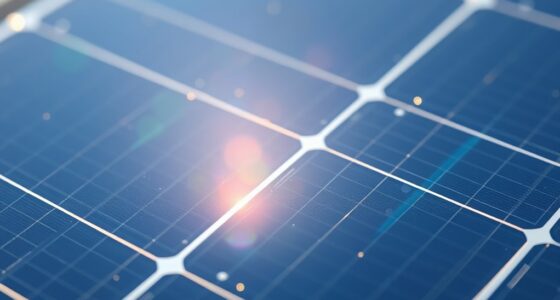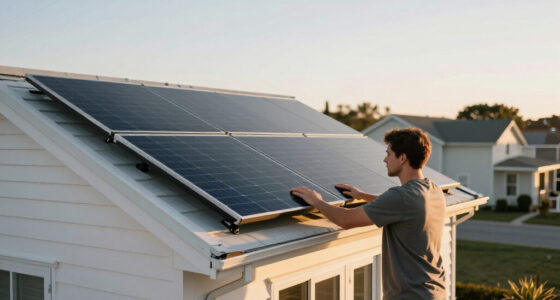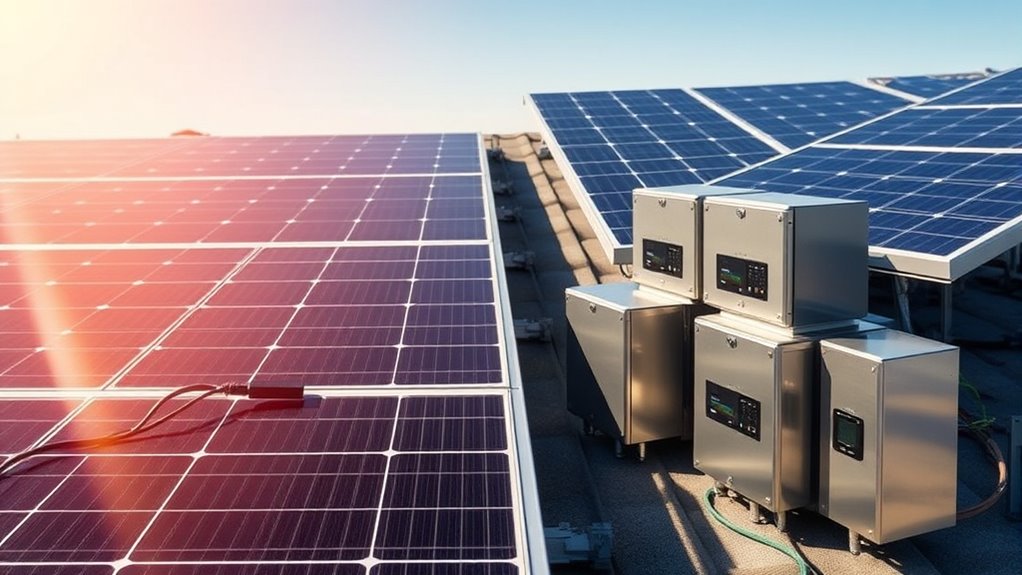

When choosing between solar output optimizers and microinverters, you should consider your budget, roof conditions, and energy goals. Optimizers are more affordable and easier to install, working with your existing inverter to improve performance amid shading or mismatch issues. Microinverters cost more upfront but offer higher efficiency, especially on complex roofs, and simplify system monitoring. To discover which option suits your needs best, explore the detailed differences and benefits that follow.

Get backup power and energy gear delivered free with Prime
- Fast, free delivery on millions of items
- Prime Video, Amazon Music and more included
- Member-only deals all year
Key Takeaways
- Optimizers are more cost-effective and easier to install, working alongside existing inverters.
- Microinverters convert DC to AC at each panel, often providing higher overall system efficiency.
- Microinverters simplify monitoring and maintenance, especially in complex or shaded roof setups.
- Optimizers improve performance by mitigating mismatch and shading effects at the panel level.
- Choice depends on site conditions, budget, and desired system complexity and efficiency.
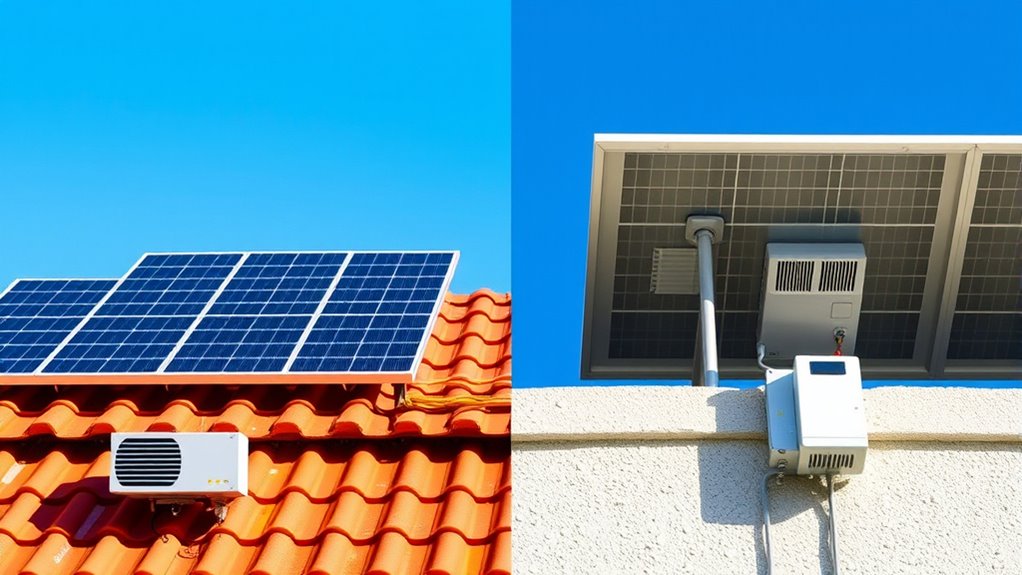
When choosing the best system to maximize your solar panel efficiency, understanding the differences between solar output optimizers and microinverters is essential. Both options aim to improve energy harvest, but they do so in distinct ways, which impacts cost efficiency and installation complexity. Solar output optimizers are devices attached to each panel, working to optimize the power output by adjusting for shading, dirt, or panel mismatch. They tend to be more cost-effective upfront because they don’t require replacing your existing inverter; instead, they complement your current setup. This makes them an attractive choice if you’re looking to enhance performance without a complete overhaul. Installation with optimizers is generally simpler because they are added directly to each panel, often requiring just a few connections. This means you can usually set them up more quickly and with less specialized knowledge, which can save you money on labor costs.
On the other hand, microinverters convert DC power to AC right at each panel, which can lead to higher overall system efficiency, especially if your roof faces multiple directions or has shading issues. While microinverters tend to be more expensive initially, they can offer better long-term cost efficiency by maximizing energy production in complex setups. The installation process for microinverters is somewhat more involved because each panel needs its own inverter, which can increase the complexity of wiring and setup. However, because microinverters handle the conversion at the panel level, they simplify system monitoring and troubleshooting, reducing maintenance costs over time. Additionally, best airless paint sprayers can serve as an analogy for understanding how different components optimize performance in a system.
The choice between the two depends on your specific needs and budget. If you prioritize lower initial costs and easier installation, solar output optimizers might be the better fit. They allow you to upgrade your system incrementally and are less invasive to set up. But if your roof’s shading or orientation issues are significant, investing in microinverters could deliver better long-term efficiency and energy yield, justifying the higher upfront expense. Remember, while install complexity and initial investment are key considerations, the ultimate goal is to maximize your solar power output, so weigh these factors carefully. Both options improve performance, but your specific site conditions and budget will guide you toward the most suitable choice.
As an affiliate, we earn on qualifying purchases.
Frequently Asked Questions
Which System Is More Cost-Effective Over Its Lifespan?
You’ll find that microinverters are more cost-effective over their lifespan because of their higher efficiency and easier scalability. In a cost comparison, they tend to have lower initial costs and reduce repair expenses, especially if one panel underperforms. A lifespan analysis shows microinverters often last longer and require less maintenance. Overall, they offer better value for your investment, making them the smarter choice financially over time.
How Do Weather Conditions Affect Each Technology’s Performance?
Weather conditions impact each technology’s performance differently. Microinverters typically offer better weather resilience because they operate independently at each panel, reducing the risk of system-wide issues during storms or shading. Solar output optimizers also provide climate adaptability, but their centralized components can be more vulnerable to extreme weather. Overall, microinverters tend to maintain consistent performance in harsh conditions, making them a more reliable choice for varying weather environments.
Can Both Systems Be Combined in One Installation?
Yes, you can combine solar output optimizers and microinverters in one installation. This hybrid compatibility allows you to maximize system efficiency and flexibility, especially in complex shading or diverse panel layouts. However, keep in mind that this setup increases installation complexity, requiring careful planning and professional expertise. You’ll benefit from optimized performance across different conditions, but make sure your installer is experienced with these combined systems for smooth integration.
What Are the Warranty Differences Between Optimizers and Microinverters?
You’ll find that warranty coverage for optimizers usually lasts around 25 years, often matching their lifespan, and repair costs tend to be lower since they’re easier to replace. Microinverters typically offer warranties between 10 to 25 years, but repair costs can be higher due to their complexity. Knowing these differences helps you plan for long-term maintenance and budget accordingly, ensuring your solar system stays efficient and cost-effective.
How Do Shading Issues Impact Each System’s Efficiency?
Shading impact can markedly reduce the efficiency of both systems, but microinverters handle shading better. You might think optimizers are enough, but shading causes efficiency reduction in optimizers because they still depend on the module’s performance. With microinverters, each panel operates independently, so shading on one panel doesn’t drag down the entire system. Don’t overlook this difference—your system’s overall energy output depends on it.
As an affiliate, we earn on qualifying purchases.
Conclusion
Ultimately, choosing between solar output optimizers and microinverters is like selecting the best tool for your craft—each has its strengths. Optimizers excel at maximizing individual panel performance, while microinverters shine in system flexibility and reliability. Consider your specific needs and budget to make the right call. Remember, the right choice can turn your solar setup into a well-orchestrated symphony, harmonizing efficiency and durability for years to come.
As an affiliate, we earn on qualifying purchases.
As an affiliate, we earn on qualifying purchases.
Fall Picks
fall essentials
As an affiliate, we earn on qualifying purchases.