By integrating solar panels into your greenhouse, you can lower energy costs and reduce reliance on grid power while supporting sustainable operations. Solar panels maximize efficiency through strategic placement, regular cleaning, and high-quality options. They power climate control systems like lighting, ventilation, and irrigation, ensuring stable conditions for your crops. Adding energy storage batteries ensures uninterrupted operation during low sunlight. To discover more about optimizing solar applications for your greenhouse, keep exploring these innovative solutions.

Get backup power and energy gear delivered free with Prime
- Fast, free delivery on millions of items
- Prime Video, Amazon Music and more included
- Member-only deals all year
Key Takeaways
- Solar panels reduce energy costs and reliance on grid electricity for greenhouse climate control and operations.
- Proper placement and maintenance maximize solar panel efficiency, ensuring optimal sunlight absorption and energy generation.
- Solar power supports lighting, ventilation, and irrigation systems, maintaining ideal growing conditions year-round.
- Integrating batteries stores excess energy for continuous greenhouse operation during low sunlight or nighttime.
- Using high-efficiency, durable panels decreases environmental impact and enhances sustainable greenhouse management.
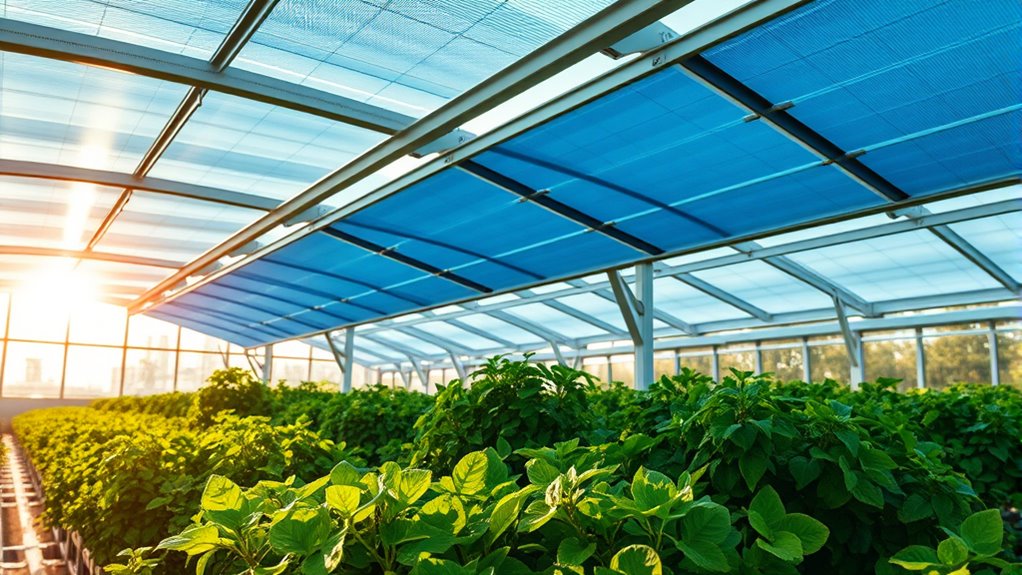
Integrating solar panels into greenhouse operations offers a sustainable way to reduce energy costs and improve environmental impact. When you install solar panels, you harness renewable energy to power your greenhouse, which can substantially lower your reliance on grid electricity. One of the key factors to consider is solar panel efficiency, as high-efficiency panels convert more sunlight into usable power, maximizing your energy output even in limited space. This means you can generate enough electricity to support various functions within your greenhouse, from lighting to ventilation and irrigation systems.
Harness renewable energy with efficient solar panels to power your greenhouse and reduce reliance on grid electricity.
With the right setup, solar panels can become a critical component of your greenhouse climate control system. By generating clean energy, you can operate climate control equipment more sustainably, reducing greenhouse gas emissions and your overall carbon footprint. Properly integrated solar power can help maintain ideal temperatures and humidity levels, ensuring your plants thrive regardless of outside weather conditions. This is especially valuable in regions with variable weather patterns, where consistent climate control is essential for crop health.
To improve solar panel efficiency, you should position your panels strategically, ideally facing south in the northern hemisphere, with minimal shading throughout the day. Regular cleaning and maintenance also guarantee your panels operate at peak performance, preventing dust, dirt, or debris from reducing their ability to absorb sunlight. Additionally, investing in high-quality panels with advanced technology can boost efficiency, allowing you to produce more energy from the same amount of sunlight. This becomes crucial when you’re trying to power essential climate control systems or supplement energy needs during cloudy days.
Another advantage of integrating solar panels is the potential for energy storage solutions, such as batteries, which enable you to store excess energy generated during sunny periods. This stored power can be used for nighttime operations or during periods of low sunlight, providing a steady and reliable energy supply. Consequently, your greenhouse climate control becomes more stable, ensuring your crops remain healthy and productive without interruption.
As an affiliate, we earn on qualifying purchases.
Frequently Asked Questions
How Do Solar Panels Impact Greenhouse Temperature Regulation?
Solar panels impact greenhouse temperature regulation by providing energy that supports ventilation control and humidity management. They help reduce heat buildup during hot days, preventing overheating, while also powering fans and vents that maintain ideal temperatures. This system ensures your plants stay in the perfect environment, reducing the need for external cooling or heating. By integrating solar panels, you create a sustainable, energy-efficient way to keep your greenhouse comfortable year-round.
Are Solar Panels Cost-Effective for Small-Scale Greenhouses?
A stitch in time saves nine, and investing in solar panels can be cost-effective for small greenhouses. You’ll want to do a thorough cost analysis, weighing installation costs against long-term savings on energy. The investment benefits include reduced electricity bills and a smaller carbon footprint. While initial expenses may seem high, the ongoing savings and environmental impact make solar panels a smart, sustainable choice for small-scale greenhouse owners.
What Maintenance Do Solar Panels Require in Greenhouse Environments?
You need to perform regular cleaning routines to keep your solar panels efficient in a greenhouse environment. Dust, dirt, and plant debris can accumulate and reduce energy output, so gentle washing with water and a soft brush is advised. Additionally, maintaining your panels helps guarantee panel longevity, preventing damage and maximizing lifespan. Check for shading or debris buildup periodically, and keep the panels clear to optimize their performance and extend their durability.
Can Solar Panels Be Integrated With Existing Greenhouse Systems?
Yes, you can integrate solar panels with your existing greenhouse systems through solar panel installation designed for greenhouse energy integration. This process involves installing panels on the roof or nearby structures, seamlessly connecting them to your current electrical setup. By doing so, you can harness renewable energy, reduce costs, and improve sustainability without disrupting your greenhouse operations, making it a smart upgrade for efficient energy management.
How Do Weather Conditions Affect Solar Panel Efficiency in Greenhouses?
Weather conditions directly impact your solar panel efficiency in greenhouses. Heavy rain, snow, or storms can reduce sunlight exposure, lowering energy production. However, if your panels have high solar panel durability and weather-resistant coatings, they withstand harsh conditions better, maintaining efficiency longer. Proper maintenance and choosing panels designed for your climate can optimize performance, ensuring your greenhouse stays powered even during challenging weather.
solar-powered greenhouse climate control system
As an affiliate, we earn on qualifying purchases.
As an affiliate, we earn on qualifying purchases.
Conclusion
So, as you harness the sun’s power to grow your plants, you might find yourself laughing at the irony. Here you are, using solar panels to create a perfect greenhouse environment, all while the very sunlight fueling your crops is free. It’s amusing how you pay for technology to trap sunlight—nature’s gift—yet in doing so, you’re helping the planet thrive. Sometimes, the best solutions are the ones that remind us how simple nature’s gifts truly are.
high-efficiency solar panels for greenhouses
As an affiliate, we earn on qualifying purchases.
As an affiliate, we earn on qualifying purchases.
solar battery storage for greenhouse
As an affiliate, we earn on qualifying purchases.
As an affiliate, we earn on qualifying purchases.
Fall Picks
fall essentials
As an affiliate, we earn on qualifying purchases.