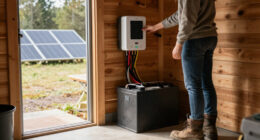

A solar panel kit with expandable capacity should let you add useful power without forcing a full system replacement. My best overall pick is the ECO-WORTHY 10KW kit with 5,310W of panels and 20.48kWh of battery storage, which pairs substantial generation with room for serious off-grid use. The ECO-WORTHY 7.168kWh RV system is a better fit for mobile power, while the DOKIO 300W foldable kits suit buyers who value portability over fixed-system growth. The main tradeoff is between a system that can scale into a home setup and a compact kit that is easier to move but more limited in expansion. Read on for the full comparison, including what to check before adding panels, batteries, or an inverter.

Get backup power and energy gear delivered free with Prime
- Fast, free delivery on millions of items
- Prime Video, Amazon Music and more included
- Member-only deals all year
Key Takeaways
The most complete growth path in this lineup is a large 48V ECO-WORTHY system: the 10KW kit with 5,310W of panels and 20.48kWh of storage starts with substantial generation and battery capacity, unlike the small starter kits.
Panel wattage alone does not tell you how expandable a kit is. The 100W and 200W options are approachable starting points, but a buyer still needs to check controller input limits, battery voltage, and compatible expansion components.
The DOKIO 300W foldable kits trade fixed-system growth for portability. They can suit temporary charging and mobile use, but they are not the same kind of expandable platform as a home system with a large inverter and battery bank.
Similar 10KW labels hide different system balances. The ECO-WORTHY home kits list different panel and storage configurations, so matching generation and battery capacity to actual daily loads matters more than choosing by headline inverter wattage.
RV buyers have a middle ground between a small starter kit and a home-scale installation. The ECO-WORTHY 7.168kWh, 800W system is aimed at RV off-grid use, while a 200W kit favors a lighter initial setup and slower energy replenishment.
| ECO-WORTHY 10KW Off Grid Solar System Complete Kit with 5310W Solar Panels and 20.48kWh Battery Storage |  | Best Overall for Expandable Home-Scale Capacity | Inverter output: 10,000W continuous; 20,000W peak | AC voltage: 120V/240V split-phase | Solar array: 5,310W across 9 panels | VIEW ON AMAZON | See Our Full Breakdown |
| ECO-WORTHY 200 Watt 12V Complete Solar Panel Starter Kit for RV Off Grid |  | Best Beginner Kit with Battery and Inverter Included | Panel capacity: 200W | Panel configuration: Two 100W panels | Output voltage: 12.8V | VIEW ON AMAZON | See Our Full Breakdown |
| ECO-WORTHY 200W 12V/24V Monocrystalline Solar Panel Kit with PWM Charge Controller for Off-Grid Applications |  | Best Budget-Friendly Foundation for a Small System | Panel capacity: 200W | Panel configuration: Two 100W panels | System voltage: 12V or 24V | VIEW ON AMAZON | See Our Full Breakdown |
| DOKIO 300W Portable Foldable Solar Panel Kit with Charge Controller |  | Best Portable Option for Flexible Charging | Maximum power: 300W | Output: 12V DC | Maximum voltage: 18V | VIEW ON AMAZON | See Our Full Breakdown |
| ECO-WORTHY 10KW Off-Grid Solar System Kit with 2340W Solar Panels, 10KW Inverter, and Lithium Batteries |  | Best High-Output Inverter with Room to Scale | Inverter power: 10kW | Inverter voltage: 120V/240V | Solar array: 2,340W across 12 panels | VIEW ON AMAZON | See Our Full Breakdown |
| DOKIO 300W Foldable Solar Panel Kit with PWM Controller and USB Ports |  | Best Portable High-Output Pick | Maximum power: 300W | Output voltage: 12V | Amperage capacity: 16.67A | VIEW ON AMAZON | See Our Full Breakdown |
| ECO WORTHY 10kW Off-Grid Solar Panel Kit for Home with 48V 314Ah Energy Storage and 10kW Inverter |  | Best Expandable Home Starter System | Solar panels: 5 × 590W | PV capacity: 2,950W | Battery capacity: 16.1kWh | VIEW ON AMAZON | See Our Full Breakdown |
| ECO-WORTHY 10,000W Off-Grid Solar Panel Kit for Home with 10kW Inverter and High Capacity Battery |  | Best for Maximum Expandable Capacity | Solar panels: 18 × 590W | PV capacity: 10,620W | Battery capacity: 32.2kWh (2 × 48V 314Ah) | VIEW ON AMAZON | See Our Full Breakdown |
| DOKIO 100W Portable Foldable Solar Panel Kit for 12V Battery Charging |  | Best Compact Starter Panel | Maximum power: 110W | Output voltage: 12V | Maximum voltage: 18V | VIEW ON AMAZON | See Our Full Breakdown |
| 100W Solar Panel Kit 12V Battery Maintainer |  | Best for Fixed 12V Battery Maintenance | Maximum power: 100W | Output voltage: 12V | Maximum voltage: 19.28V | VIEW ON AMAZON | See Our Full Breakdown |
| ECO-WORTHY 7.168KWH 800W Solar Panel Kit for RV Off Grid Complete System |  | Best for a Complete RV Power Setup | Maximum power: 780 watts | Panel configuration: Four 195W bifacial solar panels | Panel efficiency: 25.2% | VIEW ON AMAZON | See Our Full Breakdown |
| solar panel kit with expandable capacity | Amperage capacity |
|---|---|
| ECO-WORTHY 10KW Off Grid Solar | — |
| ECO-WORTHY 200 Watt 12V Comple | — |
| ECO-WORTHY 200W 12V/24V Monocr | 11A |
| DOKIO 300W Portable Foldable S | 16.67A |
| ECO-WORTHY 10KW Off-Grid Solar | — |
| DOKIO 300W Foldable Solar Pane | 16.67A |
| ECO WORTHY 10kW Off-Grid Solar | — |
| ECO-WORTHY 10,000W Off-Grid So | 100A |
| DOKIO 100W Portable Foldable S | 6.1A |
| 100W Solar Panel Kit 12V Batte | 5.19A |
| ECO-WORTHY 7.168KWH 800W Solar | — |
More Details on Our Top Picks
ECO-WORTHY 10KW Off Grid Solar System Complete Kit with 5310W Solar Panels and 20.48kWh Battery Storage
For buyers who want a substantial off-grid foundation rather than a small starter array, this ECO-WORTHY kit pairs a 10kW split-phase inverter with 5,310W of bifacial panels and 20.48kWh of battery storage. That combination gives it a broader household-use case than the 200W ECO-WORTHY starter kits, while its large battery can carry energy into periods without sun. The nine 590W panels are efficient, but their size and the system’s electrical scale make installation a serious project; professional setup is recommended. Compared with the ECO-WORTHY 10KW kit with 2,340W of panels, this version supplies more than twice the listed panel capacity and over twice the storage, reducing the gap between inverter capability and solar charging. The tradeoff is a heavier, more involved installation and less appeal for buyers who only need a compact RV setup.
Pros:- 10kW continuous inverter output with 120V/240V split-phase support
- 5,310W array of nine 590W bifacial monocrystalline panels
- 20.48kWh of integrated 48V battery storage
- Listed safety certifications include UL 1973, UL 9540A, and CEC
Cons:- Large, heavy panels call for careful handling and sturdy mounting
- Professional installation is recommended, adding planning and labor needs
- The system’s scale is excessive for small loads or portable applications
Best for: Homeowners or cabin owners planning a professionally installed off-grid system with substantial daily loads and room for a large panel array.
Not ideal for: RV owners, renters, and buyers seeking a simple incremental upgrade; the 10kW equipment, large panels, and installation complexity exceed their likely needs.
- Inverter output:10,000W continuous; 20,000W peak
- AC voltage:120V/240V split-phase
- Solar array:5,310W across 9 panels
- Battery storage:20.48kWh
- Battery voltage:48V
- Panel type:Monocrystalline bifacial, dual-glass
- Panel efficiency:23.23%
- Installation guidance:Professional installation recommended
Our verdict“Choose this kit for a large off-grid property where a high-output inverter, substantial solar input, and deep battery storage matter more than easy installation.”
ECO-WORTHY 200 Watt 12V Complete Solar Panel Starter Kit for RV Off Grid
This is the easiest entry point in the group for an RV owner who wants a working small system rather than panels alone: the package includes two 100W panels, a 100Ah lithium battery, an inverter, and a charge controller. That all-in-one approach cuts down on component matching compared with the ECO-WORTHY 200W kit that supplies a PWM controller and mounting accessories but no listed battery or inverter. The 1,100W inverter offers brief flexibility for compatible AC devices, but it does not change the limited 200W solar input: daily energy collection remains modest, especially in poor sunlight. This kit is a starting platform, not a high-capacity expandable system, and the supplied specs do not describe a clear panel-expansion path. Buyers planning larger loads should compare it with the much larger ECO-WORTHY 10kW systems instead.
Pros:- Includes panels, 100Ah lithium battery, inverter, and charge controller
- 200W panel capacity suits basic battery charging and light off-grid loads
- Listed 1,100W inverter provides AC output for compatible devices
- Designed as a complete starter package rather than a panel-only purchase
Cons:- Only 200W of solar input limits how quickly the battery can recharge
- No panel-expansion method or compatibility details are provided
- The 12V-scale setup is not a substitute for the lineup’s 10kW home systems
Best for: First-time RV or small-cabin users who want panels, lithium storage, a controller, and an inverter in one modest 12V-oriented package.
Not ideal for: Owners planning to run several high-draw appliances or build a clearly expandable household array; 200W of panel capacity limits energy production.
- Panel capacity:200W
- Panel configuration:Two 100W panels
- Output voltage:12.8V
- Battery:100Ah lithium
- Inverter:1,100W
- Panel dimensions:35.63 × 23.03 × 1.18 inches
- Listed item weight:11.5 lb
Our verdict“Pick this for a beginner RV setup with modest loads and included storage, but skip it if growing the array is a central requirement.”
ECO-WORTHY 200W 12V/24V Monocrystalline Solar Panel Kit with PWM Charge Controller for Off-Grid Applications
This ECO-WORTHY kit is a practical choice for buyers who want to assemble a small off-grid setup around their own battery and inverter. It includes two 100W monocrystalline panels, a 30A PWM controller, and mounting and connecting accessories, while support for 12V or 24V systems gives it more wiring flexibility than the 12.8V ECO-WORTHY starter bundle. That flexibility is useful when matching a small array to an existing battery setup, but it is not evidence of a specified expansion limit or an easy route to household-scale power. Unlike the all-in-one ECO-WORTHY 200W kit, this one does not list a battery or inverter, so buyers need to source compatible equipment. Its 200W total capacity is far below the DOKIO 300W portable kit, though this fixed-panel package is better suited to a mounted installation.
Pros:- Two 100W monocrystalline panels provide 200W of rated capacity
- 30A PWM controller and mounting and connecting accessories are included
- Supports 12V and 24V system configurations
- IP65-rated junction box and stated wind and snow load figures suit fixed outdoor mounting
Cons:- Battery and inverter are not listed as included components
- PWM controller and 200W array constrain the scale of a future system
- Installation requires some knowledge of wiring and component compatibility
Best for: DIY RV, boat, or shed owners with an existing battery or inverter who want a small fixed array and the option to wire for 12V or 24V.
Not ideal for: Buyers who want a complete ready-to-run system, portable folding panels, or enough solar input for large daily energy demands.
- Panel capacity:200W
- Panel configuration:Two 100W panels
- System voltage:12V or 24V
- Charge controller:30A PWM
- Panel efficiency:21.5% (as listed)
- Maximum voltage:27.4V
- Amperage capacity:11A
Our verdict“Choose this as a small fixed-array base if you already have storage and understand the wiring, not as a complete expandable power system.”
DOKIO 300W Portable Foldable Solar Panel Kit with Charge Controller
The DOKIO is the lineup’s portability pick: its 300W foldable panel packs into a 19.3 × 37.4-inch footprint and weighs 15.2 pounds, so it can be moved between a parked RV, campsite, or backup battery. That makes it a more useful travel companion than either fixed 200W ECO-WORTHY kit when repositioning panels matters. It also provides more rated panel capacity than those 200W options, though it remains far below the 5,310W array in the ECO-WORTHY 10kW system. The separate PWM controller, USB ports, and adapters support flexible small-device charging, but this package is not a home-scale expansion platform and no battery is listed. Its weather limitations also call for more care than a permanently mounted panel: avoid prolonged exposure to heavy rain or strong sun.
Pros:- 300W rated capacity exceeds the two ECO-WORTHY 200W panel kits
- Folds to a compact listed size and weighs 15.2 lb
- Separate PWM controller is included
- USB ports and adapters support several small-device charging connections
Cons:- No battery or power station is listed as included
- Weather resistance is limited, so prolonged harsh exposure is unsuitable
- Some power stations may restrict the panel’s usable output
Best for: Campers and RV travelers who need a movable panel for charging a compatible 12V battery or power station and value compact storage over permanent installation.
Not ideal for: Homeowners seeking a fixed expandable array or anyone needing unattended outdoor operation in harsh weather; the kit is portable and has stated exposure limitations.
- Maximum power:300W
- Output:12V DC
- Maximum voltage:18V
- Amperage capacity:16.67A
- Folded dimensions:19.3 × 37.4 × 1.1 inches
- Weight:15.2 lb
- Panel material:Monocrystalline silicon
- Controller:Separate PWM charge controller
Our verdict“Choose the DOKIO for portable, occasional charging, but select a fixed system if permanent capacity growth is your priority.”
ECO-WORTHY 10KW Off-Grid Solar System Kit with 2340W Solar Panels, 10KW Inverter, and Lithium Batteries
This system is built around a 10kW inverter, but its 2,340W array and 9.6kWh of listed battery storage make it a different proposition from the other ECO-WORTHY 10kW kit in this roundup. The inverter and parallel support provide a route to greater power capacity, while the included twelve 195W bifacial panels form a smaller solar base than the other kit’s 5,310W array. That gap matters: a large inverter can serve substantial loads, but the available panel capacity governs how quickly stored energy can be replenished. Compared with the 200W starter kits, this is a major step toward a home, cabin, or farm system; compared with the 5,310W ECO-WORTHY model, it starts with less than half the solar input and less storage. Bluetooth and Wi-Fi monitoring add visibility, but professional installation and sturdy panel mounting remain part of the plan.
Pros:- 10kW inverter with 120V/240V output
- Parallel support is listed up to 60kW
- Includes twelve bifacial 195W panels and two 48V 100Ah batteries
- Bluetooth and Wi-Fi battery monitoring are listed
Cons:- Included 2,340W panel array is much smaller than the other ECO-WORTHY 10kW kit’s 5,310W array
- Listed battery capacity is 9.6kWh, less than the 20.48kWh alternative
- Professional installation and a sturdy mounting structure may be needed
Best for: Cabin, farm, or home owners who want a 10kW inverter platform, app-based battery monitoring, and a system designed to support parallel expansion.
Not ideal for: Buyers who need the greatest included solar harvest and battery reserve from day one; the 2,340W array and 9.6kWh storage trail the other 10kW ECO-WORTHY kit.
- Inverter power:10kW
- Inverter voltage:120V/240V
- Solar array:2,340W across 12 panels
- Battery configuration:Two 48V 100Ah lithium batteries
- Calculated battery energy:9.6kWh
- Parallel support:Listed up to 60kW
- Panel dimensions:58.86 × 26.18 × 1.18 inches
- Certifications:UL 1741, UL 1973, UL 9540A
Our verdict“Choose this for an expandable 10kW inverter platform with connected monitoring, but favor the 5,310W ECO-WORTHY kit if larger included solar input and storage come first.”
DOKIO 300W Foldable Solar Panel Kit with PWM Controller and USB Ports
For buyers who want a portable array with more headroom than a compact 100W panel, this DOKIO provides 300W maximum output in a foldable format. Its monocrystalline cells, long cable, and adapters give you more placement flexibility at a campsite or beside an RV, while the dual USB ports can charge small devices without routing them through a separate power station. Compared with the DOKIO 100W Portable Foldable Solar Panel Kit, it offers a higher stated output but weighs more and still serves 12V systems only. Its PWM controller is suited to straightforward battery charging, not a path to household-scale expansion. Check your power station’s solar-input limit before buying: a panel’s rating does not mean every station can accept its full output.
Pros:- 300W maximum power offers more potential charging capacity than the 100W DOKIO option.
- Foldable 15.2-pound design is easier to move and store than a fixed panel array.
- Dual USB ports can charge small devices directly.
- Included adapters and long cable allow more flexible panel placement.
Cons:- Limited to 12V systems, restricting its use in higher-voltage setups.
- Some power stations may not accept the panel’s full stated output.
- PWM control is a basic fit for battery charging rather than a large expandable system.
Best for: Campers and RV owners with a compatible 12V battery or power station who want a portable panel with more charging headroom than a 100W kit.
Not ideal for: Buyers building a permanent home system, users who need higher-voltage compatibility, or anyone whose power station accepts less solar input than this panel can supply.
- Maximum power:300W
- Output voltage:12V
- Amperage capacity:16.67A
- Cell material:Monocrystalline silicon
- Controller:PWM controller with layered protection
- USB ports:Dual
- Dimensions:37.4 × 19.3 × 1.1 in
- Weight:15.2 lb
Our verdict“Choose this DOKIO if you need a portable 300W-class panel for a compatible 12V setup and have checked your controller or power station’s input limits.”
ECO WORTHY 10kW Off-Grid Solar Panel Kit for Home with 48V 314Ah Energy Storage and 10kW Inverter
This package makes sense for a household seeking a substantial off-grid foundation without starting with the larger panel and battery package in the ECO-WORTHY 10,000W Off-Grid Solar Panel Kit. It pairs five 590W panels with a 16.1kWh battery and a 10kW split-phase inverter, so it can serve larger household loads while leaving a stated route to add storage: the battery setup supports up to 15 units in parallel. That expansion path is the main reason it earns a place in a roundup focused on expandable capacity. The tradeoff is that its 2,950W of solar panels is much smaller than the 10,620W array in the 18-panel ECO-WORTHY system, so replenishing the battery depends more heavily on conditions and usage. Installation also calls for professional planning, space, and substantial handling.
Pros:- 16.1kWh lithium battery provides substantial included storage.
- Battery system supports expansion to as many as 15 batteries in parallel.
- 10kW continuous pure sine wave inverter supports split-phase 120V/240V output.
- Smart monitoring helps track system operation.
Cons:- Five panels provide just 2,950W of PV capacity, well below the 18-panel ECO-WORTHY kit.
- Professional installation is recommended for this large off-grid system.
- Large components need dedicated space and careful handling.
Best for: Homeowners planning an off-grid system in stages who want a 10kW inverter and the option to add battery storage as their needs grow.
Not ideal for: Households seeking a large solar array and substantial storage from the outset, or buyers unable to arrange professional installation and space for heavy equipment.
- Solar panels:5 × 590W
- PV capacity:2,950W
- Battery capacity:16.1kWh
- Battery voltage:48V
- Inverter output:10kW continuous, 20kW peak
- AC output:Split-phase 120V/240V
- Battery expansion:Supports up to 15 batteries in parallel
- Panel material:Monocrystalline silicon
Our verdict“Pick this kit as a staged off-grid home foundation if battery expansion matters more than having a large solar array included on day one.”
ECO-WORTHY 10,000W Off-Grid Solar Panel Kit for Home with 10kW Inverter and High Capacity Battery
Among these five products, this is the strongest choice for a buyer who wants substantial solar generation and a clear storage-growth path in one home system. Its 18 panels provide 10,620W of PV capacity, paired with a 10kW inverter and 32.2kWh of battery storage. That is a much larger starting point than the five-panel ECO WORTHY kit, whose 2,950W array and 16.1kWh battery suit a more staged build. This model also lists parallel system expansion up to 241kWh, giving storage-focused households room to grow. The scale brings real costs beyond the purchase itself: installation requires technical expertise, the equipment is bulky, and the sizable array needs suitable mounting area and conditions. I would favor it for sustained household energy needs, not a modest RV or starter setup.
Pros:- 18 × 590W panels deliver 10,620W of stated PV capacity.
- Two 48V 314Ah batteries provide 32.2kWh of included storage.
- Storage system supports parallel expansion up to 241kWh.
- 10kW continuous inverter supplies split-phase 120V/240V output.
Cons:- Large array and battery bank require significant space and careful delivery planning.
- System complexity calls for technical expertise and professional installation.
- Its capacity is excessive for buyers with small loads or portable-power needs.
Best for: Homeowners building a high-capacity off-grid system who need a large included solar array, substantial battery storage, and a stated path to expand storage.
Not ideal for: RV users, small cabins with modest loads, or homeowners without room for a large array and access to qualified system installation.
- Solar panels:18 × 590W
- PV capacity:10,620W
- Battery capacity:32.2kWh (2 × 48V 314Ah)
- Inverter output:10,000W continuous, 20,000W peak
- AC output:120V and 240V
- Maximum voltage:500V
- Amperage capacity:100A
- Listed storage expansion:Up to 241kWh in parallel
- Panel material:Monocrystalline silicon
Our verdict“Choose this ECO-WORTHY kit if you need a large off-grid home system now and want room to expand storage substantially later.”
DOKIO 100W Portable Foldable Solar Panel Kit for 12V Battery Charging
This DOKIO is the easiest fit here for buyers who value packability over fast charging or large-scale expansion. At 6 pounds folded to 19 × 26 inches, it is far easier to carry and store than the 300W DOKIO, though its lower output is better matched to maintaining a 12V battery or topping up small devices than serving heavy loads. The included PWM controller, USB ports, and 9.84-foot cable make a simple portable setup more practical. Its stated maximum power is 110W, but the listed amperage capacity is 6.1A, and some power stations limit panel input to 60W; check device compatibility before relying on the full rating. Compared with the fixed 100W Solar Panel Kit 12V Battery Maintainer, this one is much lighter and foldable, but it is less suited to permanent mounting.
Pros:- Six-pound weight and 19 × 26-inch folded size make it easy to transport.
- PWM controller supports 12V battery charging.
- USB ports allow direct charging of small devices.
- 9.84-foot cable offers flexibility when positioning the panel in sunlight.
Cons:- Low output is not suited to heavy loads or rapid battery replenishment.
- Some power stations limit input to 60W, restricting usable panel output.
- Limited to 12V systems and performance varies with sunlight.
Best for: Tent campers, van travelers, and emergency-kit owners who need a light foldable panel for a 12V battery and small-device charging.
Not ideal for: Buyers needing high daily energy production, expandable home capacity, or compatibility beyond 12V systems and power stations with restrictive solar-input limits.
- Maximum power:110W
- Output voltage:12V
- Maximum voltage:18V
- Amperage capacity:6.1A
- Folded size:19 × 26 in
- Weight:6 lb
- Controller:PWM
- Cable length:9.84 ft
- Warranty:30-day Amazon return guarantee; 1-year manufacturer warranty
Our verdict“Choose this compact DOKIO for portable 12V battery maintenance and small-device charging, not as a foundation for a high-capacity expandable system.”
100W Solar Panel Kit 12V Battery Maintainer
For a boat, RV, or remote 12V battery that needs a more permanent charging setup, this kit trades the portability of the DOKIO 100W foldable panel for a more installation-oriented package. Its smart charge controller with LCD, installation accessories, and weather-resistant aluminum-and-tempered-glass construction suit a mounted application better than a panel designed to be carried between campsites. The two-year warranty is also longer than the DOKIO portable kit’s listed manufacturer coverage. Its limit is the same basic system boundary: 100W and 12V are for maintaining or supporting modest battery needs, not expanding into a high-output household array. At 11 pounds, it is nearly twice the weight of the 6-pound DOKIO, so I would skip it if frequent packing and repositioning matter more than a fixed installation.
Pros:- Smart charge controller includes an LCD display and USB ports.
- Aluminum and tempered-glass construction is suited to a mounted outdoor installation.
- Installation accessories are included for setting up the kit.
- Two-year warranty exceeds the listed manufacturer warranty for the DOKIO 100W portable kit.
Cons:- At 11 pounds, it is less convenient to carry than the 6-pound DOKIO foldable panel.
- 100W output is limited for substantial energy use or fast battery charging.
- Designed for 12V systems rather than higher-voltage installations.
Best for: RV, boat, and remote-site owners who want a mounted 100W panel kit with a smart controller for maintaining a 12V battery.
Not ideal for: Campers who need a lightweight foldable panel, or buyers planning higher-voltage systems and significant capacity expansion.
- Maximum power:100W
- Output voltage:12V
- Maximum voltage:19.28V
- Amperage capacity:5.19A
- Efficiency:A++
- Controller:Smart charge controller with LCD display
- Materials:Aluminum, monocrystalline silicon, tempered glass
- Weight:11 lb
- Warranty:2 years
Our verdict“Pick this kit for a fixed 12V battery-maintenance setup where its controller and weather-oriented construction matter more than portability or future system scale.”
ECO-WORTHY 7.168KWH 800W Solar Panel Kit for RV Off Grid Complete System
This kit earns its place for RV owners who want more than panels alone: it bundles bifacial solar panels, lithium batteries, a controller, and a 3000W inverter charger into one off-grid system. That all-in-one approach can reduce the work of matching separate components, while the inverter gives you a way to run compatible RV appliances from stored battery power. Its listed maximum output is 780 watts, so it sits between small starter options such as the ECO-WORTHY 200 Watt 12V Complete Solar Panel Starter Kit and the much larger ECO-WORTHY 10KW home systems. The tradeoff is that this is a substantial, fixed-install setup rather than a portable panel kit, and installation still calls for careful configuration. It may also fall short for buyers who need the storage and generation capacity of a full home system.
Pros:- Includes panels, lithium batteries, controller, and inverter charger as a coordinated system
- Bifacial panels are listed at 25.2% efficiency
- 3000W inverter charger supports compatible RV appliance loads
- 780-watt maximum power offers more generation than the ECO-WORTHY 200-watt starter kit
Cons:- Installation and system setup may be difficult for buyers without electrical experience
- Solar generation depends on available sunlight
- Fixed-panel dimensions make it less suited to portable or temporary use
Best for: RV owners planning a permanent off-grid installation who want panels, battery storage, and inverter charging in a single package.
Not ideal for: First-time solar buyers seeking a simple plug-and-play setup, or households needing the greater generation and storage capacity of the ECO-WORTHY 10KW systems.
- Maximum power:780 watts
- Panel configuration:Four 195W bifacial solar panels
- Panel efficiency:25.2%
- Output voltage:12 volts
- Inverter charger:3000W
- System components:Solar panels, lithium batteries, inverter charger, and controller
- Panel dimensions:58.86 x 26.18 x 1.18 inches
- Panel material:Aluminum
Our verdict“Choose this kit for a substantial, integrated RV solar installation, but look to a larger ECO-WORTHY home system for higher household-scale capacity.”

How We Picked
I ranked these options by how clearly a buyer can grow from the included setup to a larger, useful system. I weighed the stated panel output, battery capacity when specified, inverter scale, and intended use, then looked at whether the kit’s components appear suited to a coordinated system rather than a one-purpose charger. Usability also mattered: portable foldable panels earn credit for easy deployment, while complete off-grid systems stand out for providing more of the equipment needed to supply larger loads.
The ranking favors kits that offer a credible path to added capacity and a sensible balance of panels, storage, and conversion equipment. Large ECO-WORTHY home systems lead for expansion potential, with the 5,310W-panel, 20.48kWh configuration ahead because its listed generation and storage are substantial together. RV and starter kits follow for more focused needs; portable DOKIO panels are ranked lower for expandable system building, not because portability is a flaw, but because their role is charging convenience. Product names do not confirm compatibility with future components, so I treat expandability as something buyers must verify against controller, inverter, battery, and wiring limits.
Factors to Consider When Choosing Solar Panel Kit With Expandable Capacity
Expandable capacity is a system property, not just a promise that more panels can be connected. Before choosing a kit, map your likely loads and the route from the included components to the setup you want later. These checks can prevent a low-cost starting point from becoming an expensive collection of incompatible parts.
Plan the expansion path, not just the first purchase
Write down what you may add over the next few years: more panels, a larger battery bank, or higher-power appliances. Then check whether the kit’s charge controller can accept the additional panel voltage and current, and whether its inverter supports your future loads. A panel can be electrically compatible but still exceed a controller’s input limit when combined with other modules. Ask whether expansion means adding identical components or replacing the controller and inverter as well. Starting with a small kit can be sensible if its voltage architecture matches your long-term plan; otherwise, it may function only as a temporary charger. For a home-scale goal, a coordinated 48V system can offer a more direct growth path than piecing together low-voltage components intended for small loads.
Size panels and batteries for different jobs
Panels produce energy, while batteries store it for later; one does not compensate for too little of the other. Estimate daily use in watt-hours, then account for cloudy days, seasonal sunlight, and the time of day you need power. A large battery paired with limited panel capacity may take a long time to recharge, while ample panels with little storage can leave evening loads uncovered. Avoid sizing only for an inverter’s peak wattage, which describes what it can supply at once rather than how long it can run equipment. For mobile use, space and weight can limit both panel area and battery size, so a smaller system may be a better practical fit than a larger one. Compare the kit’s listed storage and panel output as a pair rather than treating either figure as a complete measure of capability.
Check electrical compatibility before adding components
Expansion works only when panel voltage, controller limits, battery voltage, inverter input, and protection hardware fit together. Series wiring raises voltage, while parallel wiring raises current, and either change can cross component limits if the system was not designed for it. Confirm the permitted panel configuration in the controller documentation rather than assuming panels with similar wattage can be mixed. Battery chemistry and charging settings also need to match; mixing battery types or mismatched capacities can shorten service life or create unsafe operation. Include properly rated cables, fuses, breakers, and disconnects in your expansion plan, since these are not optional accessories for a larger array. If the specifications do not clearly state supported expansion, ask the seller or a qualified installer before buying extra modules.
Match portability to where the panels will live
Foldable panels make sense when you need to carry, store, or reposition them, but convenience does not automatically make them a strong foundation for a permanent array. Portable kits are useful for temporary charging and RV stops, where moving panels into direct sun can improve output. Fixed panels can offer a more stable setup, but mounting, roof space, wind exposure, and cable routing become part of the project. Think about how often you will set up and pack away the array; a panel that stays in storage because deployment is awkward will not meet its rated potential in daily use. Also check whether the controller is integrated into a portable kit and whether the design permits additional panels. Choose mobility when the location changes often, and a fixed-system approach when reliable daily production matters more.
Know what the kit leaves for you to source
The word “complete” can mean different things, so confirm exactly which panels, controller, inverter, batteries, cables, mounts, and safety components are included. Missing hardware can affect both the total project budget and how soon the system can be installed. A kit with a large inverter may still need battery-bank planning, while a panel starter kit may require you to choose a compatible battery and controller before it can serve your intended loads. Check installation requirements too: roof mounting, grounding, permits, and local electrical rules may add work beyond the equipment list. Paying more makes sense when it buys a balanced system, clearly supported expansion, and fewer compatibility gaps—not just a larger headline wattage. For uncertain future needs, prioritize documented limits and replaceable components over vague claims of expandability.
Frequently Asked Questions
Can I add panels to any solar kit later?
No. Additional panels must stay within the charge controller’s voltage and current limits, and their electrical characteristics must suit the existing array. The inverter and battery setup also need to match the expanded system’s voltage and expected loads. A kit that works well as a small charger may not have the controller or wiring capacity for a larger array. Before buying, check the manufacturer’s supported panel configurations and whether expansion requires replacing core equipment.
Should I expand my panels or battery first?
That depends on what is limiting your system. If the battery often runs low because there is not enough energy coming in during available sunlight, additional panel capacity may help, provided the controller can handle it. If the battery fills during the day but cannot cover evening or overnight use, more storage may be the better addition. Compare daily energy production with your actual load pattern rather than deciding from a single wattage figure. Also check that the battery bank and charging equipment support the planned change.
Is a 10KW inverter enough to run a whole home off-grid?
An inverter’s 10KW rating describes a limit on power supplied at one time; it does not show how much energy the system can provide across a day. Whole-home use depends on appliance demand, battery storage, panel production, sunlight, and surge requirements from equipment such as pumps or compressors. A system can have a large inverter and still run short on stored energy or solar generation. List the loads you expect to use together, then compare their running and startup needs with the inverter specifications. For a full-time home system, have the complete design checked against local conditions and electrical requirements.
Can I mix panels from another brand when expanding?
Sometimes, but brand alone does not determine compatibility. Compare the panels’ electrical specifications and planned wiring with the controller’s limits, and check whether the manufacturer permits mixed modules in the same array. Panels with different voltage or current characteristics can reduce array performance or create an unsafe configuration if connected incorrectly. Separate controller inputs can sometimes make mixed arrays easier to manage, but that depends on the equipment. When the kit documentation is unclear, get confirmation before connecting unfamiliar panels.
Is a foldable 300W kit a good base for an expandable RV system?
It can be a useful portable charging option, but it may not serve as the foundation for a larger fixed RV array. Check whether its controller supports additional panels, whether the battery voltage matches your RV setup, and whether the included components allow a safe wired expansion. Foldable panels also need setup and repositioning, which can be less convenient than roof-mounted modules for frequent travel. If you want daily charging capacity that grows over time, compare the portable kit’s expansion limits with a dedicated RV system’s controller and battery architecture. Choose the foldable route when portability matters more than a permanent installation.
Conclusion
For the strongest all-around expansion path in this lineup, I’d choose the ECO-WORTHY 10KW system with 5,310W of panels and 20.48kWh of storage; its listed generation and battery capacity make it the best overall fit for substantial off-grid needs. My best premium choice is the ECO-WORTHY home system with 48V, 314Ah storage and a 10kW inverter for buyers who want a large-scale configuration and can verify the full component plan. For best value, the ECO-WORTHY 200W starter kit offers a smaller step into off-grid solar, though buyers should confirm what additional equipment and expansion hardware they will need. Beginners who want a compact starting point can choose that 200W kit, while RV owners needing a more developed mobile system should look at the ECO-WORTHY 7.168kWh, 800W kit. Choose a DOKIO 300W foldable kit for portable charging, or the DOKIO 100W kit and 100W battery maintainer for modest, specific charging tasks; skip these smaller options if your goal is to scale into a home system. Before ordering any pick, verify controller limits, battery compatibility, and the exact components included.
Veterans Day Picks

Shark Matrix Plus 2-in-1 Robot Vacuum and Mop with 60-Day Self-Emptying Base
As an affiliate, we earn on qualifying purchases.