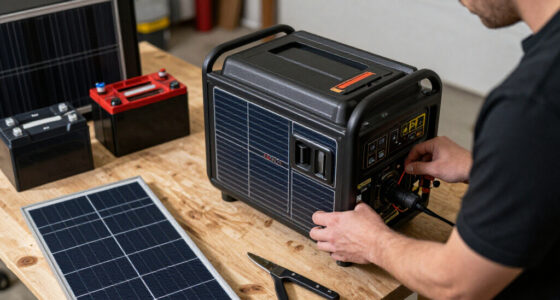
Solar attic fans can help move hot air out of an attic without drawing power from your home during sunny conditions. My best overall pick is the OmniPV 40W Hybrid Solar Attic Fan, which pairs a stated 2,100 CFM rating with an AC adapter and thermostat for more flexible operation. The HONGUAN 40W stands out for its MPPT controller and AC backup, while the 4SEASONS 400 CFM is a lower-output option for buyers with a smaller ventilation need. The main tradeoffs are airflow claims, solar-only operation versus hybrid backup, and roof-mount versus gable or compact designs. Read on for the full breakdown and guidance on matching a fan to your attic.

Get backup power and energy gear delivered free with Prime
- Fast, free delivery on millions of items
- Prime Video, Amazon Music and more included
- Member-only deals all year
Key Takeaways
- Hybrid power separates the most flexible picks. OmniPV, HONGUAN, and several other models pair solar operation with AC backup, which can keep ventilation available when sunlight is limited.
- Higher stated CFM does not settle the choice. The VEVOR 35W lists 2,400 CFM, while other 40W models list around 2,000–2,100 CFM; attic layout, duct-free airflow, and installation affect real results.
- Thermostats and power controls matter as much as panel wattage. Automatic switching and temperature control can reduce the need for manual operation, but buyers should check how each system behaves when solar output drops.
- Mounting style narrows the field quickly. Most options are roof-mount units, while the VEVOR gable model and Prozilon 8-inch kit suit different openings and installation constraints.
- Small fans fill a different role from high-airflow models. The 4SEASONS 400 CFM and Prozilon kit are not direct substitutes for the larger 1,150–2,400 CFM units; match capacity to the space rather than choosing by panel wattage alone.
| 4SEASONS Solar Attic Vent Fan, 400 CFM |  | Best for Small Attics | Airflow: 400 CFM | Coverage: Up to 500 sq. ft. | Solar panel power: 12 watts | VIEW LATEST PRICE | See Our Full Breakdown |
| VEVOR 35W Solar Attic Fan with Thermostat, 2400 CFM |  | Best for High Airflow | Airflow capacity: Up to 2400 CFM | Solar panel wattage: 35 watts | Motor: Brushless DC | VIEW LATEST PRICE | See Our Full Breakdown |
| DC HOUSE 32W Solar Attic Fan, 1600 CFM |  | Best for Versatile Installation | Maximum power: 32 watts | Airflow: 1600 CFM | Noise level: 43 dB | VIEW LATEST PRICE | See Our Full Breakdown |
| Remington Solar 30-Watt Roof-Mount Attic Fan |  | Best for Humidity and Heat Control | Power: 30 watts | Airflow capacity: 1550 CFM | Noise level: 0.08 sones | VIEW LATEST PRICE | See Our Full Breakdown |
| Remington Solar 20 Watt Roof Mount Solar Attic Fan – Round Series |  | Best Compact Remington Option | Power: 20 watts | Voltage: 17 V DC | Weight: 15 lbs | VIEW LATEST PRICE | See Our Full Breakdown |
| OmniPV Solar Hybrid Attic Fan, 40W 2100 CFM Roof Mount Exhaust Fan with AC Adapter and 75°F Thermostat |  | Best for High Airflow with Hybrid Backup | Solar panel wattage: 40 W | Airflow capacity: 2,100 CFM | Power options: Solar and AC adapter | VIEW LATEST PRICE | See Our Full Breakdown |
| Remington Solar Builder Series 30-Watt Solar Attic Fan with 110V Adapter |  | Best for Quiet, Weather-Ready Operation | Solar panel wattage: 30 W | Power adapter: 110V adapter included | Motor: Brushless | VIEW LATEST PRICE | See Our Full Breakdown |
| Hon&Guan 25W Solar Roof Vent Exhaust Fan with Thermostat and Dual Power Auto-Switch |  | Best for Adjustable Speeds and Flexible Installation | Solar panel wattage: 25 W | Listed coverage: Up to 1,300 sq ft | Thermostat range: 68°F–113°F | VIEW LATEST PRICE | See Our Full Breakdown |
| iLIVING Hybrid Ready Smart Thermostat Solar Roof Attic Exhaust Fan, 14-Inch, 40-Watt, 1150 CFM |  | Best for Large-Area Coverage and Thermostat Flexibility | Solar panel wattage: 40 W | Airflow capacity: 1,150 CFM | Listed coverage: Up to 2,900 sq ft | VIEW LATEST PRICE | See Our Full Breakdown |
| DuskSnug 40W Solar Attic Fan, 12-Inch, 2000 CFM |  | Best for Simple Daylight-Only Ventilation | Solar panel wattage: 40 W | Airflow capacity: 2,000 CFM | Fan size: 12 in | VIEW LATEST PRICE | See Our Full Breakdown |
| Remington Solar Builder Series 40 Watt Solar Attic Fan with 110V Adapter | | Best for Automatic Day-and-Night Ventilation | Power source: Solar powered | Wattage: 40 watts | Voltage: 38V | VIEW LATEST PRICE | See Our Full Breakdown |
| VEVOR 14-Inch Solar Power Gable Mount Attic Exhaust Fan |  | Best Gable-Mount Pick for Large Attics | Mounting: Wall mount | Airflow: 1300 CFM | Coverage: Up to 1850 square feet | VIEW LATEST PRICE | See Our Full Breakdown |
| Prozilon 8″ Solar Powered Exhaust Fan Kit with 25W Panel |  | Best for Sheds and Small Outbuildings | Panel wattage: 25W monocrystalline | Fan size: 8 inches | Airflow: 430 CFM | VIEW LATEST PRICE | See Our Full Breakdown |
| HONGUAN 40W Solar Attic Fan with AC Adapter, 2000 CFM Roof Exhaust Fan with MPPT Controller and Thermostat |  | Best for High Airflow with Adjustable Solar Panel | Power: 40W | Airflow: 2000 CFM | Coverage: Up to 2500 square feet | VIEW LATEST PRICE | See Our Full Breakdown |
| 40W Solar Attic Fan with Thermostat, 12″ Roof Vent, 2000 CFM, Dual Power Auto-Switch, MPPT Controller |  | Best for Multi-Speed, Dual-Power Control | Wattage: 40 watts | Airflow: 2000 CFM | Coverage: Up to 2500 square feet | VIEW LATEST PRICE | See Our Full Breakdown |
| solar attic fan | Weight | Motor |
|---|---|---|
| 4SEASONS Solar Attic Vent Fan | 5.6 lbs | — |
| VEVOR 35W Solar Attic Fan with | 22.5 lb | Brushless DC |
| DC HOUSE 32W Solar Attic Fan | — | Copper brushless motor, IP68 rated |
| Remington Solar 30-Watt Roof-M | 30 pounds | Brushless |
| Remington Solar 20 Watt Roof M | 15 lbs | — |
| OmniPV Solar Hybrid Attic Fan | 17.2 lb | Brushless DC |
| Remington Solar Builder Series | — | Brushless |
| Hon&Guan 25W Solar Roof Vent E | 14.3 lb | — |
| iLIVING Hybrid Ready Smart The | 32 lb | Brushless, IP68 waterproof |
| DuskSnug 40W Solar Attic Fan | 25.4 lb | Pure copper |
| Remington Solar Builder Series | 32.3 pounds | Brushless |
| VEVOR 14-Inch Solar Power Gabl | 16.8 pounds | Brushless |
| Prozilon 8" Solar Powered Exha | 4.6 pounds | — |
| HONGUAN 40W Solar Attic Fan wi | 29.9 pounds | — |
| 40W Solar Attic Fan with Therm | — | Brushless copper |
More Details on Our Top Picks
4SEASONS Solar Attic Vent Fan, 400 CFM
For a smaller attic on a standard sloped roof, the 4SEASONS 400 CFM is a lower-output, lighter-duty choice than the VEVOR 35W model, which is rated for up to 2400 CFM. Its 12W panel and stated coverage of up to 500 square feet suit buyers who want solar ventilation without adding household wiring or installing a much larger fan. The brushless motor and impact-resistant polycarbonate housing keep the design simple, while integrated flashing is intended for standard sloped-roof installation. The tradeoff is limited headroom: this is not the pick for a large, heat-prone attic or a roof outside its stated mounting fit. Like other solar-only options, including the DC HOUSE, its operation depends on sunlight rather than providing guaranteed nighttime ventilation.
Pros:- Rated to ventilate spaces up to 500 square feet
- Solar operation avoids household electrical wiring
- Brushless motor is designed for quiet, low-vibration operation
- Impact-resistant polycarbonate housing with integrated flashing
Cons:- 400 CFM is substantially lower than the VEVOR and DC HOUSE airflow ratings
- Fan operation depends on available sunlight
- Designed for standard sloped roofs, limiting installation fit
Best for: Homeowners with a modest attic of up to 500 square feet, a standard sloped roof, and a preference for a no-wiring solar installation.
Not ideal for: Owners of large attics, roofs that are not standard sloped roofs, or buyers who need ventilation to continue after sunlight fades.
- Airflow:400 CFM
- Coverage:Up to 500 sq. ft.
- Solar panel power:12 watts
- Maximum voltage:20 volts
- Output voltage:12 volts DC
- Dimensions:17 x 17 x 4.7 in
- Weight:5.6 lbs
- Material and motor:Polycarbonate housing; brushless motor
- Certification:TDI, CSA A93
Our verdict“Choose the 4SEASONS for a small, standard-roof attic where simple solar ventilation matters more than high airflow or nighttime operation.”
VEVOR 35W Solar Attic Fan with Thermostat, 2400 CFM
The VEVOR is the airflow leader among these five: its stated 2400 CFM rating exceeds the DC HOUSE at 1600 CFM and the Remington 30-Watt at 1550 CFM. That makes it the stronger match for buyers prioritizing high ventilation capacity, while the 35W solar panel and built-in thermostat add automatic operation without household electricity. The thermostat starts the fan above 79°F, so it can respond to attic heat without manual switching. Its weather-resistant design is listed as compatible with metal and masonry roofs, a broader stated fit than the 4SEASONS, which is designed for standard sloped roofs. The tradeoffs are a relatively large, heavy 22.5-pound roof-mounted unit and continued dependence on sunlight. There is no remote control, and the supplied details do not promise nighttime operation.
Pros:- Highest stated airflow among these five products at up to 2400 CFM
- Thermostat starts the fan above 79°F
- Solar operation does not require household electricity
- Weather-resistant design is listed for metal and masonry roofs
Cons:- Performance depends on sunlight, with no nighttime operation specified
- At 22.5 pounds, it is heavier than the 4SEASONS and DC HOUSE options
- No remote control
Best for: Owners of hot attics who want a high stated airflow rating, automatic temperature-based activation, and roof compatibility that includes metal or masonry.
Not ideal for: Buyers who need nighttime ventilation, remote operation, or a lightweight fan for a roof installation with tight space or load constraints.
- Airflow capacity:Up to 2400 CFM
- Solar panel wattage:35 watts
- Motor:Brushless DC
- Thermostat activation temperature:79°F (26°C)
- Mounting type:Roof mount
- Roof compatibility:Metal and masonry roofs
- Dimensions:22.2 × 22.2 × 9.6 in
- Weight:22.5 lb
- Model number:JBSF-320E
Our verdict“Pick the VEVOR if high stated airflow and thermostat control matter more than low weight or ventilation after dark.”
DC HOUSE 32W Solar Attic Fan, 1600 CFM
The DC HOUSE is the most adaptable pick here by stated use: it is described for attics, garages, RVs, greenhouses, and other spaces, rather than only a standard sloped-roof setup like the 4SEASONS. Its 1600 CFM airflow also gives it substantially more capacity than that compact 400 CFM option, while staying below the VEVOR’s 2400 CFM rating. A 32W monocrystalline panel powers a brushless motor, and the listed aluminum and tempered-glass construction is paired with specified wind and temperature tolerances. That breadth suits buyers comparing more than one possible installation location. The compromise is that automatic operation relies on sunlight, and the supplied details do not list a thermostat for temperature-based control. Its one-year warranty is also shorter than the limited-lifetime warranty listed for the Remington 30-Watt model.
Pros:- Described for use in attics, garages, RVs, greenhouses, and other spaces
- 1600 CFM rating exceeds the 4SEASONS while using a 32W panel
- IP68-rated copper brushless motor
- Specified tolerance of winds up to 130 mph and temperatures from -40°F to 150°F
Cons:- Operation depends on sunlight
- No built-in thermostat is listed in the supplied product details
- One-year warranty is shorter than the Remington 30-Watt model’s limited-lifetime warranty
Best for: Buyers seeking a solar exhaust fan for a garage, greenhouse, RV, or attic who value stated weather tolerance and do not need thermostat control.
Not ideal for: Homeowners who want a built-in thermostat, nighttime operation, or a longer stated warranty.
- Maximum power:32 watts
- Airflow:1600 CFM
- Noise level:43 dB
- Motor:Copper brushless motor, IP68 rated
- Materials:Aluminum, monocrystalline silicon, tempered glass
- Wind tolerance:Up to 130 mph
- Temperature tolerance:-40°F to 150°F
- Warranty:1 year
- Model number:SLAT-02
Our verdict“Choose the DC HOUSE when you want a weather-tolerant solar fan for varied spaces and can do without thermostat control.”
Remington Solar 30-Watt Roof-Mount Attic Fan
Unlike the DC HOUSE, which is described as a multi-setting solar fan but does not list automatic climate controls, the Remington 30-Watt combines a thermostat and humidistat to respond to both attic heat and moisture. Its 1550 CFM rating sits close to the DC HOUSE’s 1600 CFM, so the main reason to choose it is control and roof-installation detail, not a leap in stated airflow. The five-blade design, brushless motor, and large steel flashing make this a more substantial roof-mounted option than the lightweight 4SEASONS. It also carries Texas Windstorm Certification and a limited-lifetime warranty. The main limitation is that it runs on one speed, and nighttime operation requires a separately sold hybrid adapter. At 30 pounds, it calls for a more deliberate installation than lighter models.
Pros:- Built-in thermostat and humidistat address heat and moisture
- 1550 CFM airflow is close to the DC HOUSE’s 1600 CFM rating
- Large steel flashing and Texas Windstorm Certification
- Limited-lifetime warranty and brushless motor
Cons:- Nighttime operation requires a separately sold hybrid adapter
- Single-speed operation offers no listed airflow adjustment
- 30-pound weight may make installation more demanding than the lighter 4SEASONS
Best for: Homeowners managing both attic heat and moisture who want built-in thermostat and humidistat controls, steel flashing, and a roof-mounted design.
Not ideal for: Buyers seeking variable fan speeds, a lighter installation, or nighttime operation without purchasing a separate adapter.
- Power:30 watts
- Airflow capacity:1550 CFM
- Noise level:0.08 sones
- Motor:Brushless
- Controls:Built-in thermostat and humidistat
- Blades:Five blades
- Dimensions:22.5 x 22.5 x 11 in
- Weight:30 pounds
- Certification and warranty:Texas Windstorm Certified; limited lifetime
Our verdict“Choose the Remington 30-Watt if automatic response to both heat and humidity is more useful than variable speed or built-in nighttime power.”
Remington Solar 20 Watt Roof Mount Solar Attic Fan – Round Series
The Remington Round Series is the lower-wattage, lighter alternative to the Remington 30-Watt roof-mount fan. Its 20W panel and 15-pound listed weight may suit buyers who want a more modest roof installation, while the larger Remington adds a specified 1550 CFM capacity and Texas Windstorm Certification. Both models list automatic climate controls and steel flashing; this Round Series description names a built-in thermostat and humidistat, plus a 22.5-inch-square flashing size. Its brushless motor is intended for quiet operation, but no airflow figure is provided here, so I would not rank it alongside higher-CFM models on ventilation capacity. As with the larger Remington, nighttime running depends on buying a separate hybrid adapter. The listed model number is RS-XXX, which provides little help for product identification.
Pros:- 20W solar design for buyers who prefer a lower-wattage option than the Remington 30-Watt
- Built-in thermostat and humidistat
- Brushless motor designed for quiet operation
- Extra-large 22.5 x 22.5-inch steel flashing
Cons:- No airflow capacity is provided in the supplied specifications
- Nighttime operation requires a separately sold hybrid adapter
- Listed model number, RS-XXX, is nonspecific
Best for: Homeowners comparing Remington roof-mounted options who prefer a 20W model with a 15-pound listed weight and automatic heat-and-humidity controls.
Not ideal for: Buyers who need a confirmed CFM rating, built-in nighttime power, or a clearly identified model number before choosing.
- Power:20 watts
- Voltage:17 V DC
- Weight:15 lbs
- Material:Alloy steel
- Connector type:MC4
- Flashing size:22.5 x 22.5 in
- Controls:Built-in humidistat and thermostat
- Warranty:15-year limited
- Model number:RS-XXX
Our verdict“Choose this Round Series model if its lower wattage and listed 15-pound weight fit your installation, but skip it if you need a verified airflow rating.”
OmniPV Solar Hybrid Attic Fan, 40W 2100 CFM Roof Mount Exhaust Fan with AC Adapter and 75°F Thermostat
The OmniPV combines a 40W panel with a listed 2,100 CFM airflow capacity, giving it a stronger airflow claim than the iLIVING 14-inch fan’s 1,150 CFM. Its included AC adapter also offers an option when sunlight alone is not enough, while the 75°F thermostat automates startup rather than requiring manual switching. That makes it a practical fit for an attic or outbuilding where heat buildup is the main concern. The tradeoff is a single speed, so you cannot tailor airflow, and its 17.2-pound weight calls for a sound roof mounting surface. Compared with the DuskSnug, OmniPV offers thermostat control and AC backup; the DuskSnug is simpler but runs only with available sunlight and has no controller.
Pros:- Listed airflow capacity of 2,100 CFM
- Included AC adapter adds a non-solar operating option
- Built-in thermostat starts the fan above 75°F
- Aluminum-alloy body is designed for outdoor exposure
Cons:- One speed provides no way to adjust airflow
- At 17.2 pounds, it needs sturdy mounting support
- Plastic blades may be less appealing to buyers seeking all-metal fan construction
Best for: Homeowners seeking high listed airflow, automatic temperature activation, and an included AC option for a roof-mounted attic fan.
Not ideal for: Buyers who need variable fan speeds or have a roof structure that cannot comfortably support a 17.2-pound unit.
- Solar panel wattage:40 W
- Airflow capacity:2,100 CFM
- Power options:Solar and AC adapter
- Thermostat setting:75°F / 24°C
- Motor:Brushless DC
- Noise level:45 dB
- Mounting type:Roof mount
- Weight:17.2 lb
Our verdict“Choose the OmniPV if you want high listed airflow with thermostat control and an included AC backup option, and can accommodate its weight and fixed speed.”
Remington Solar Builder Series 30-Watt Solar Attic Fan with 110V Adapter
The Remington Solar Builder Series is the quiet-operation pick in this group, with a listed noise level of 0.08 sones and automatic temperature and humidity controls. That combination suits buyers who want ventilation to respond to attic conditions without choosing settings themselves. Its 110V adapter supports operation beyond direct solar availability, but the adapter has only a one-year warranty, and the manufacturer calls for a surge protector to protect its coverage. Unlike the OmniPV, the Remington listing does not provide a CFM figure, so it is harder to compare airflow directly against higher-capacity claims such as the OmniPV’s 2,100 CFM. Its Texas Windstorm certification and limited lifetime fan warranty add reassurance, though its single speed limits control.
Pros:- Listed noise level of 0.08 sones
- Thermostat and humidistat adjust operation automatically
- 110V adapter provides an option when solar power is unavailable
- Texas Windstorm certified with a limited lifetime fan warranty
Cons:- No airflow capacity is provided in the supplied product data
- Adapter warranty is limited to one year and requires surge protection
- Single speed does not allow manual airflow adjustment
Best for: Homeowners prioritizing quiet, automatic temperature-and-humidity ventilation and a weather-certified roof fan.
Not ideal for: Buyers comparing fans primarily by published CFM or those unwilling to use a surge protector with the AC adapter.
- Solar panel wattage:30 W
- Power adapter:110V adapter included
- Motor:Brushless
- Noise level:0.08 sones
- Controls:Built-in thermostat and humidistat
- Speeds:1
- Weather certification:Texas Windstorm certified
- Warranty:Limited lifetime fan warranty; 1-year adapter warranty
Our verdict“Pick the Remington Builder Series if quiet, automatic climate response and weather certification matter more to you than a published airflow figure or adjustable speeds.”
Hon&Guan 25W Solar Roof Vent Exhaust Fan with Thermostat and Dual Power Auto-Switch
The Hon&Guan 25W stands apart from the one-speed OmniPV and DuskSnug with four speed levels and a thermostat range of 68°F–113°F. That gives owners more control over ventilation behavior, while the AC/DC adapter offers a fallback when solar input is weak. Its 25W panel is smaller than the 40W panels on those two alternatives, and the supplied data does not state a CFM figure, so buyers cannot compare its airflow directly from the listing. The maker says it can cool areas up to 1,300 square feet, making it a more bounded choice than the iLIVING, which lists coverage up to 2,900 square feet. The kit includes mounting hardware and cables, but there is no battery for storing solar energy, and the warranty is one year.
Pros:- Four speed levels allow more airflow control than the single-speed alternatives
- Thermostat range spans 68°F–113°F
- AC/DC adapter provides a fallback when sunlight is insufficient
- Mounting hardware and cables are included
Cons:- No battery stores solar power for dark or heavily overcast periods
- No CFM airflow figure is provided in the supplied data
- One-year warranty is shorter than the listed iLIVING warranty
Best for: Owners of smaller attics, garages, or sheds who value multiple speed settings, thermostat control, and an AC/DC fallback.
Not ideal for: Buyers who need battery-backed operation, a longer warranty, or a clearly stated CFM rating for comparing airflow.
- Solar panel wattage:25 W
- Listed coverage:Up to 1,300 sq ft
- Thermostat range:68°F–113°F
- Speed settings:4
- Power options:Solar and AC/DC adapter
- Mounting type:Roof mount
- Weight:14.3 lb
- Warranty:1 year
Our verdict“Choose the Hon&Guan if you want adjustable speeds and flexible power for a smaller outbuilding, but not if you require stored power or a published CFM rating.”
iLIVING Hybrid Ready Smart Thermostat Solar Roof Attic Exhaust Fan, 14-Inch, 40-Watt, 1150 CFM
The iLIVING 14-inch is the clearest fit here for buyers matching a fan to a stated coverage area: it lists up to 2,900 square feet, plus a 50°F–122°F thermostat range with an enable/disable feature. Its 40W adjustable panel lets owners change panel angle, a useful distinction from the fixed solar setup described for the DuskSnug. The tradeoff is that its listed 1,150 CFM is well below the OmniPV’s 2,100 CFM, despite the larger stated coverage figure; those specifications measure different things, so I would not treat coverage alone as proof of stronger ventilation. It is also a heavy 32 pounds, and the AC/DC adapter for non-stop operation is sold separately. Compared with the OmniPV, iLIVING offers broader thermostat control, but less listed airflow and a heavier installation.
Pros:- Listed coverage up to 2,900 square feet
- Adjustable 40W solar panel allows angle changes
- Thermostat range of 50°F–122°F includes enable/disable control
- Brushless motor is listed as IP68 waterproof
Cons:- Listed airflow of 1,150 CFM is lower than the OmniPV’s 2,100 CFM
- At 32 pounds, it is the heaviest option in this batch
- AC/DC adapter for non-stop operation is sold separately
Best for: Homeowners who want a broad thermostat range, adjustable panel positioning, and a fan specified for larger attic coverage.
Not ideal for: Buyers needing a lighter roof installation, higher listed CFM, or included AC backup for continuous operation.
- Solar panel wattage:40 W
- Airflow capacity:1,150 CFM
- Listed coverage:Up to 2,900 sq ft
- Fan diameter:14 in
- Thermostat range:50°F–122°F
- Motor:Brushless, IP68 waterproof
- Weight:32 lb
- Warranty:15-year limited manufacturer warranty
Our verdict“Choose iLIVING for its large stated coverage and flexible thermostat, provided the 32-pound unit and separate adapter suit your installation plan.”
DuskSnug 40W Solar Attic Fan, 12-Inch, 2000 CFM
The DuskSnug 40W suits buyers who want a straightforward solar fan: it starts at sunrise, stops at dusk, and lists airflow up to 2,000 CFM. Pre-connected components are intended to simplify DIY installation, while the IP65 rating and metal housing address exposure to outdoor conditions. Its simpler setup is also its main limitation. Unlike the thermostat-equipped OmniPV, DuskSnug has no temperature control, so it runs according to daylight rather than attic heat. It also has no AC backup, and output depends on available sunlight. At 25.4 pounds, it is heavier than the OmniPV despite having a lower listed CFM, so roof support and handling deserve attention. The one-year warranty is limited compared with the iLIVING’s longer listed coverage.
Pros:- Listed airflow capacity of 2,000 CFM
- Automatic sunrise-to-dusk operation
- Pre-connected components are intended to simplify DIY installation
- IP65 weather resistance with metal housing and a copper motor
Cons:- Solar output depends on sunlight and there is no AC backup
- No thermostat or controller for heat-based operation
- At 25.4 pounds, it is heavier than the OmniPV and needs sturdy mounting
Best for: DIY buyers ventilating a sunny attic, garage, greenhouse, or shed who want a simple roof fan without thermostat controls.
Not ideal for: Owners who need night operation, heat-triggered control, adjustable settings, or a lighter fan for roof installation.
- Solar panel wattage:40 W
- Airflow capacity:2,000 CFM
- Fan size:12 in
- Power source:Solar
- Motor:Pure copper
- Weather resistance:IP65
- Weight:25.4 lb
- Warranty:1 year manufacturer
Our verdict“Pick the DuskSnug for simple, daylight-only ventilation and DIY setup, but choose the OmniPV instead if you want thermostat control and an AC option.”
Remington Solar Builder Series 40 Watt Solar Attic Fan with 110V Adapter
The Remington Builder Series is a strong fit for homeowners who want attic ventilation to respond to both heat and moisture, not just run when sunlight is available. Its built-in thermostat and humidistat adjust operation to attic conditions, while the included 110V adapter supports nighttime operation. That gives it a more complete automatic-control setup than the solar-only option in this group, the Prozilon 8-inch exhaust fan, which is aimed at smaller outbuildings. The brushless motor is specified at just 0.08 sones, and heavy steel flashing is included to help manage roof-leak risk. The tradeoff is the installation burden: at 32.3 pounds, it needs solid support, and the adapter requires a surge protector to protect the warranty. I’d choose it for a roof-mounted attic, but not for a simple lightweight shed setup.
Pros:- Thermostat and humidistat respond automatically to attic heat and moisture.
- Included 110V adapter supports operation beyond sunny daytime hours.
- Brushless motor has a very low stated noise level of 0.08 sones.
- Heavy steel flashing is included for the roof installation.
Cons:- At 32.3 pounds, the unit may need extra installation support.
- The 110V adapter requires a surge protector to avoid risking the warranty.
Best for: Homeowners who want roof-mounted attic ventilation with automatic temperature and humidity response plus adapter-powered nighttime operation.
Not ideal for: DIYers seeking a lightweight, solar-only fan or anyone unable to provide sturdy roof support and a surge protector for the AC adapter.
- Power source:Solar powered
- Wattage:40 watts
- Voltage:38V
- Motor:Brushless
- Noise level:0.08 sones
- Mounting:Roof mount
- Weight:32.3 pounds
- Dimensions:22.5 x 22.5 x 11 inches
Our verdict“Choose this Remington if automatic heat-and-humidity control and nighttime adapter operation matter more than a lighter, simpler installation.”
VEVOR 14-Inch Solar Power Gable Mount Attic Exhaust Fan
For an attic with an existing gable vent, the VEVOR’s wall-mounted 14-inch design can avoid the roof opening required by roof-mount models such as the Remington Builder Series. Its stated 1300 CFM airflow and coverage of up to 1850 square feet suit larger spaces, while the adjustable thermostat can control operation without constant manual switching. A steel housing, aluminum-alloy blades, and protective mesh give this option a sturdier, more enclosed setup than the compact Prozilon fan, which is better suited to sheds and coops. This is not a silent fan: the listed noise level is 45 dB, and the 16.8-pound assembly still needs a stable mounting surface. Solar output also depends on available sunlight, so buyers should verify the power arrangement and site conditions before counting on consistent ventilation.
Pros:- Gable mounting can avoid cutting a new roof opening.
- Stated 1300 CFM airflow and coverage up to 1850 square feet suit larger spaces.
- Adjustable thermostat automates operation based on temperature.
- Steel housing, aluminum blades, and protective mesh add physical protection.
Cons:- The stated 45 dB noise level may be noticeable near occupied spaces.
- Solar performance varies with sunlight and site exposure.
- At 16.8 pounds, it still requires a sturdy wall or mounting surface.
Best for: Homeowners with a suitable gable opening who need thermostat-controlled ventilation for a large attic, garage, or workshop.
Not ideal for: Buyers who need a roof-mounted unit, very quiet operation, or dependable airflow regardless of sunlight conditions.
- Mounting:Wall mount
- Airflow:1300 CFM
- Coverage:Up to 1850 square feet
- Wattage:45 watts
- Speed:1600 rpm
- Noise level:45 dB
- Motor:Brushless
- Weight:16.8 pounds
Our verdict“Pick the VEVOR when you have a gable opening and want substantial airflow without adding a roof-mounted fan.”
Prozilon 8″ Solar Powered Exhaust Fan Kit with 25W Panel
The Prozilon is the most purpose-built small-space option in this set: its 8-inch fan and 25W panel are aimed at sheds, greenhouses, and coops rather than a whole-house attic. The stated 430 CFM airflow gives it more capacity than a minimal utility vent, while its compact 4.6-pound weight is easier to handle than the 29.9-pound HONGUAN roof fan. An anti-backflow valve and weather-resistant component ratings add useful protection for outdoor installations, and the included AC adapter offers an alternative to solar operation. That flexibility does not make it a direct substitute for the HONGUAN or the 2000 CFM roof fan: its airflow and intended scale are much smaller. Sun exposure still affects solar performance, and installation requires drilling a 7-inch hole, so it suits buyers comfortable making a fixed opening.
Pros:- Compact 8-inch format is suited to smaller outbuildings.
- Stated airflow is 430 CFM, with a brushless motor operating at no more than 36 dB.
- Anti-backflow valve and weather-resistant component ratings suit outdoor use.
- Solar and AC adapter power options provide installation flexibility.
Cons:- Its airflow is far below the 1300 CFM VEVOR and 2000 CFM roof-fan options.
- Solar performance depends on sunlight conditions.
- Installation requires drilling a 7-inch hole.
Best for: Owners of sheds, greenhouses, or coops who need compact ventilation and can provide a suitable opening and panel exposure.
Not ideal for: Homeowners ventilating a large attic, or anyone unwilling to drill a 7-inch opening or accept airflow that varies with sunlight.
- Panel wattage:25W monocrystalline
- Fan size:8 inches
- Airflow:430 CFM
- Power options:Solar or AC adapter
- Voltage:12V
- Noise level:≤36 dB
- Weight:4.6 pounds
- Dimensions:11 x 5.8 x 11.5 inches
Our verdict“Choose the Prozilon for a shed, greenhouse, or coop; look to a larger roof or gable model for a full attic.”
HONGUAN 40W Solar Attic Fan with AC Adapter, 2000 CFM Roof Exhaust Fan with MPPT Controller and Thermostat
The HONGUAN combines 2000 CFM stated airflow with a solar panel that adjusts from 0° to 70°, giving buyers more scope to aim the panel toward available sun than a fixed-panel design. Its MPPT controller and AC adapter support a hybrid setup, while the adjustable thermostat covers a broad 68°F to 113°F range. Compared with the VEVOR gable fan, this is the higher-airflow roof-mount choice for a large space; compared with the Remington Builder Series, it adds panel-angle adjustment but is described with a narrower control feature set, listing a thermostat rather than a humidistat. The unit weighs 29.9 pounds, so roof support and careful installation matter. The stated 2000 CFM and 2500-square-foot coverage are product specifications, not a guarantee of performance in every attic layout.
Pros:- Stated 2000 CFM airflow and coverage up to 2500 square feet target large spaces.
- Panel adjustment from 0° to 70° helps accommodate different sun angles.
- MPPT controller and AC adapter support hybrid operation.
- Adjustable thermostat spans 68°F to 113°F.
Cons:- At 29.9 pounds, it needs sturdy roof support and careful handling.
- Performance Mode requires the AC/DC adapter.
- The listed controls include a thermostat but do not specify a humidistat.
Best for: Owners of large attics, garages, or sheds who want high stated airflow, thermostat control, and a panel angle adjustable to the site.
Not ideal for: Buyers who need a lightweight roof installation or humidity sensing, or who cannot use the adapter for the listed Performance Mode.
- Power:40W
- Airflow:2000 CFM
- Coverage:Up to 2500 square feet
- Mounting:Roof mount
- Thermostat range:68°F–113°F
- Panel adjustment:0°–70°
- Weight:29.9 pounds
- Dimensions:19.29 x 19.39 x 10.63 inches
Our verdict“Choose the HONGUAN when high stated airflow and flexible panel positioning are priorities and your roof can support the heavier unit.”
40W Solar Attic Fan with Thermostat, 12″ Roof Vent, 2000 CFM, Dual Power Auto-Switch, MPPT Controller
This 12-inch roof fan is the most control-focused of the two listed 2000 CFM models. It offers four speed levels, an MPPT controller, a temperature probe, and automatic switching between solar and mains power. That makes it a closer fit for buyers who want to tune airflow or keep ventilation running when solar input falls, while the HONGUAN also offers a 0°–70° adjustable panel and thermostat control but does not list multiple speeds. The unit is rated for up to 2500 square feet, and its brushless copper motor and metal housing are specified for indoor or outdoor settings. There is no battery backup, however, and Performance Mode requires the AC/DC adapter. I’d favor it for users who can supply mains power and want adjustable operation, not for off-grid installations seeking night-time airflow without an adapter.
Pros:- Automatic solar-to-mains switching supports operation when solar input is insufficient.
- Four speed levels provide more airflow control than a single-setting design.
- Stated 2000 CFM airflow and coverage up to 2500 square feet suit large spaces.
- Includes a temperature probe, controller, adapter, and mounting accessories.
Cons:- No battery backup is specified, so nighttime operation depends on mains power.
- Performance Mode requires the AC/DC adapter.
- Installation calls for checking the included accessories and operation before mounting.
Best for: Homeowners with mains power available who want a large-space roof fan with multiple speed settings and automatic solar-to-AC switching.
Not ideal for: Off-grid buyers who need battery-backed nighttime ventilation, or anyone seeking a solar-only system without adapter-dependent performance modes.
- Wattage:40 watts
- Airflow:2000 CFM
- Coverage:Up to 2500 square feet
- Fan size:12 inches
- Motor:Brushless copper
- Speed settings:4 levels
- Thermostat range:68°F–113°F
- Mounting:Wall or roof mount
Our verdict“Choose this model over the HONGUAN if four speeds and automatic power switching matter more than adapter-free operation.”
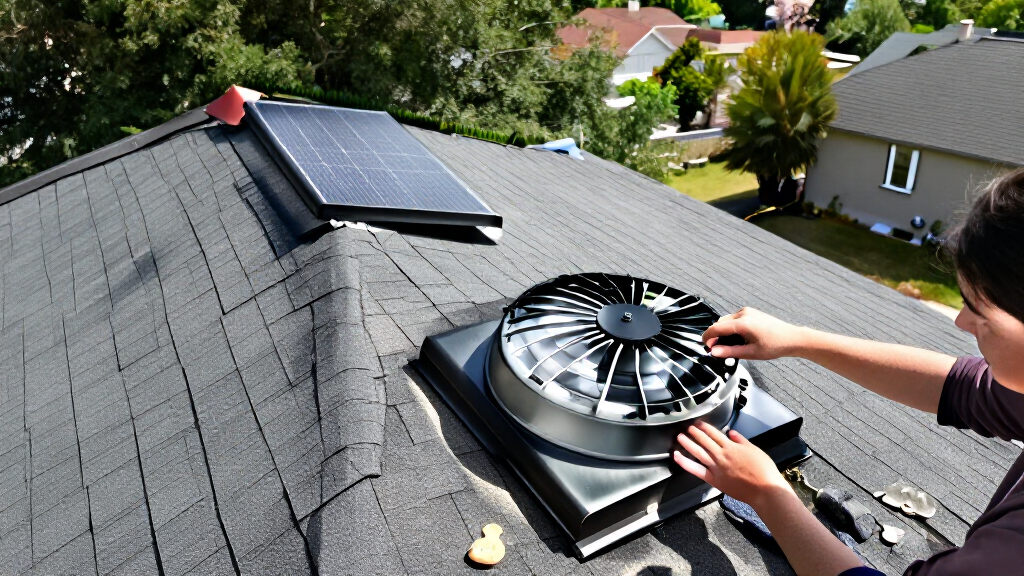
How We Picked
I compared these 15 solar attic fans by their stated airflow, panel wattage, power flexibility, controls, and mounting format. I gave more weight to features that solve common use problems: AC backup for cloudy periods, thermostats or automatic switching for hands-off operation, and clear distinctions between roof, gable, and compact exhaust setups. I also treated listed CFM as a comparison point rather than a promise of installed performance, since attic size, vent balance, and obstructions can change how much air a fan actually moves.
The ranking favors products that combine useful airflow with practical controls and power options, then separates specialized picks by their best-fit installation or capacity. That puts the OmniPV hybrid model first for its stated airflow and backup flexibility, while the VEVOR 35W earns attention for its high listed CFM and the HONGUAN 40W for its MPPT controller and AC adapter. Compact and lower-output products rank for narrower needs, not because they match the capacity of full-size roof fans. I also accounted for tradeoffs: more features can mean a more involved installation, and a solar panel alone cannot provide consistent operation after dark.
| solar attic fan | Motor |
|---|---|
| 4SEASONS Solar Attic Vent Fan | — |
| VEVOR 35W Solar Attic Fan with | Brushless DC |
| DC HOUSE 32W Solar Attic Fan | Copper brushless motor, IP68 rated |
| Remington Solar 30-Watt Roof-M | Brushless |
| Remington Solar 20 Watt Roof M | — |
| OmniPV Solar Hybrid Attic Fan | Brushless DC |
| Remington Solar Builder Series | Brushless |
| Hon&Guan 25W Solar Roof Vent E | — |
| iLIVING Hybrid Ready Smart The | Brushless, IP68 waterproof |
| DuskSnug 40W Solar Attic Fan | Pure copper |
| Remington Solar Builder Series | Brushless |
| VEVOR 14-Inch Solar Power Gabl | Brushless |
| Prozilon 8" Solar Powered Exha | — |
| HONGUAN 40W Solar Attic Fan wi | — |
| 40W Solar Attic Fan with Therm | Brushless copper |
Factors to Consider When Choosing Solar Attic Fans
Choosing among solar attic fans starts with the attic and the ventilation system, not the highest number on a box. These broader checks can help prevent a mismatch between fan capacity, available venting, and how you want the unit powered.
Match Airflow to the Attic, Not Just the Listing
Use attic area, roof shape, insulation, climate, and existing ventilation to decide what capacity makes sense. A high CFM claim may look attractive, but a fan cannot deliver useful exhaust if the attic lacks adequate intake vents to replace the air it removes. Too little intake can restrict airflow and may pull conditioned air through ceiling gaps instead. Check the manufacturer’s sizing guidance and compare it with your home’s layout before selecting a model. If your attic has separated sections or obstructions, one large fan may not ventilate them evenly. A lower-output fan can be a better match for a small space than an oversized unit installed without a ventilation plan.
Decide Whether Solar-Only Operation Fits Your Schedule
A solar-only fan usually runs when its panel receives enough sunlight, so its operating schedule may not match the hottest hours in every climate or season. Hybrid models with an AC adapter offer a way to power the fan when solar output is inadequate, but buyers should confirm whether the adapter is included and how the unit switches between sources. Think about whether evening operation matters for your attic or whether daytime ventilation is your main goal. A larger panel does not by itself provide stored energy after sunset. Avoid assuming that a solar fan will run continuously just because its airflow rating is high. Choose backup power only when its added wiring and installation work solve a real need.
Check Roof, Gable, and Panel Placement Before Ordering
Mounting style affects both installation difficulty and how well the panel can receive sun. Roof-mount units need a suitable roof location and a weather-conscious installation, while a gable fan uses an existing wall opening and may avoid roof penetration. A separate or adjustable panel can help when the fan’s mounting position is shaded, but it can add cable routing and placement decisions. Inspect attic access, framing, roof pitch, and nearby obstructions before choosing a format. Do not assume that a fan described as a kit includes every flashing, fastener, or electrical item required for your particular roof. If the installation involves roofing or household wiring, plan for qualified help rather than relying on the product name alone.
Understand Thermostats, Switching, and MPPT Claims
Controls affect when a fan runs, not just how it is installed. A thermostat can keep a fan from operating below its set temperature, while dual-power switching can change the source as solar output varies. An MPPT controller is intended to manage panel output, but it does not replace a battery or guarantee nighttime operation. Check the control’s temperature range, placement, and power-switching behavior in the product documentation. A built-in thermostat may be convenient, yet a poorly matched setting can leave a hot attic ventilating less than expected. Favor controls that address your actual operating pattern over a longer feature list.
Treat CFM and Wattage as Separate Clues
Panel wattage describes the solar input rating, while CFM describes the maker’s stated airflow; neither number alone captures the whole system. Two fans with similar wattage can list different airflow, and conditions such as sun exposure, resistance, and installation can affect actual performance. Compare both figures, then check whether the manufacturer explains the conditions behind its airflow claim. Be cautious about selecting a unit solely because it has the largest CFM number in this lineup. A well-matched fan with a workable power arrangement may serve an attic better than a higher-rated model in a shaded or poorly vented location. Consider noise and operating controls as well if the fan sits near living space.
Plan for Maintenance and Long-Term Access
Solar panels need a clear path to sunlight, and dust, leaves, or other debris can reduce the light reaching them. Before buying, consider whether you can safely reach the panel and fan for inspection and cleaning. Roof-mounted equipment may be harder to access than a gable installation, particularly on a steep or tall roof. Ask how the unit is serviced and whether the controller, motor, and panel are replaceable parts. A compact kit can simplify a small installation but may have less capacity than a full-size roof fan. Favor a model whose upkeep and access suit your home, not just its initial installation plan.
Frequently Asked Questions
Will a solar attic fan run when the sun goes down?
A solar-only fan generally depends on available sunlight and does not store power for nighttime operation. Models with an AC adapter can run from household power when configured and connected for that use, but the exact switching behavior varies. Check whether the adapter is included, whether it needs separate wiring, and what triggers the change from solar to AC. If after-dark ventilation is a priority, a hybrid model is a more suitable starting point than a solar-only unit. A battery is a separate feature and should not be assumed from a solar panel or MPPT controller.
Can I install a solar attic fan without adding more intake vents?
Sometimes an attic already has enough intake ventilation, but a fan cannot pull air freely if replacement air has no clear path. Restricted intake can reduce airflow and may draw conditioned air from the house through ceiling gaps. Check the existing soffit or other intake vents and compare their capacity with the planned exhaust. Do not block passive vents to make room for a fan unless a ventilation plan calls for it. If the intake and exhaust balance is unclear, ask a qualified roofing or ventilation professional to assess the attic before installation.
Is a roof-mount fan better than a gable-mount model?
Neither mounting style is automatically better; the right choice depends on the openings and roof layout you already have. A gable model can use an existing gable opening and avoid cutting into the roof, while a roof-mount fan may suit an attic without a practical gable location. Panel exposure also matters: a shaded gable or roof section can limit solar operation. Check framing, clearances, weatherproofing requirements, and access for future service before choosing. If a new opening is needed, include that work in the installation plan rather than comparing fan specifications alone.
Should I choose the fan with the highest CFM rating?
Not by itself. The highest listed CFM in this group belongs to the VEVOR 35W model, but a rating does not account for your attic’s size, intake ventilation, obstructions, or real-world sun exposure. An oversized exhaust fan can be a poor match if the attic cannot supply replacement air. Compare manufacturer sizing guidance with your attic area and ventilation layout, then consider controls and power backup. Treat CFM as one useful comparison figure, not a guarantee of cooling or a substitute for proper attic ventilation.
When is paying for a hybrid solar-and-AC model worthwhile?
A hybrid model makes sense when you want the option to operate during low sunlight or at times when solar power alone may not be available. It can be especially useful if the attic stays hot beyond peak daylight hours, though household power access and installation requirements add work. Confirm whether the AC adapter comes with the fan and how the unit prioritizes or switches between power sources. If daytime-only ventilation meets your goal and the panel gets strong sun, a solar-only model may be simpler. Do not pay for backup capability unless its operating flexibility matters to your home.
Conclusion
For the broadest mix of stated airflow and operating flexibility, I would start with the OmniPV 40W Hybrid Solar Attic Fan as the best overall pick. The VEVOR 35W, 2,400 CFM is the best value-style choice for buyers focused on a high listed airflow figure, provided its installation and power setup fit the attic. For a premium-feature direction, the HONGUAN 40W stands out for its MPPT controller and AC adapter; compare those controls with the OmniPV before choosing. Beginners should first look at the Remington Solar 20-Watt Round Series if their needs suit a simpler, lower-output roof-mount option, while checking installation details carefully. For a gable opening, consider the VEVOR 14-Inch Gable Mount; for a compact exhaust need, the Prozilon 8-inch kit is the more specialized fit. Match the fan to your attic’s size, intake ventilation, and sunlight before deciding.
Halloween Picks
halloween
As an affiliate, we earn on qualifying purchases.