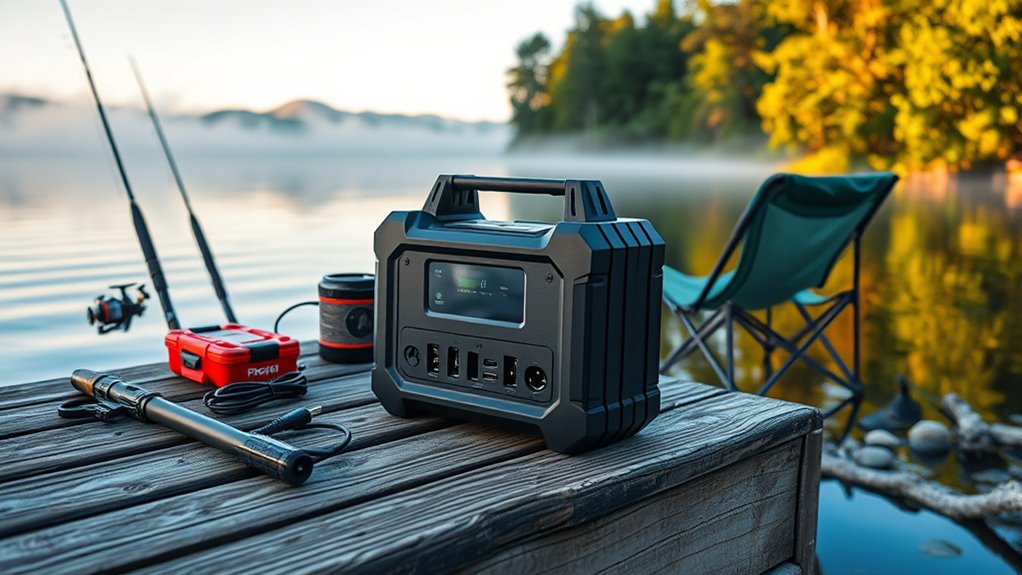
The best power station bundle for fishing depends on what you need to run and how long you’ll be away from shore power. My best overall pick is the UDPOWER S2400, whose 2083Wh capacity and 2400W output suit extended trips and higher-draw gear. For a smaller setup, the Jackery Explorer 300 is easier to pack, while the OUPES Mega 1 offers a 1024Wh middle ground with substantial output. The main tradeoff is portability versus runtime: compact stations are easier to carry but have less stored energy, while large units add weight and cost in exchange for more capacity. Read on for the full breakdown, buying advice, and picks for different fishing setups.

Get backup power and energy gear delivered free with Prime
- Fast, free delivery on millions of items
- Prime Video, Amazon Music and more included
- Member-only deals all year
Complete the kit


Key Takeaways
- The UDPOWER S2400 leads on capacity and output. Its 2083Wh battery and 2400W rating make it the strongest fit here for longer trips or equipment with greater power demands, but its size is a poor match for anglers prioritizing easy carry.
- The OUPES Mega 1 models fill the mid-capacity gap. Both offer 1024Wh and 2000W, giving anglers more headroom than the compact 288–299Wh class without stepping up to the UDPOWER’s capacity.
- Compact stations suit electronics-first trips. The Jackery Explorer 300, EcoFlow TRAIL 300 DC, and other sub-300Wh options favor portability, but buyers should check whether the available outlets match their gear.
- Output and capacity answer different questions. Watt-hours indicate stored energy and potential runtime; watts indicate what the station can run at once. A high surge rating does not mean a small battery will power equipment for long.
- Fishing bundles vary in what they actually include. Some listings mention solar compatibility or a panel option rather than a panel in the box, so check the included components before treating a station as a ready-to-use solar bundle.




| power station bundle for fishing | Weight | Capacity | Dimensions |
|---|---|---|---|
| Portable Power Station 200W | 4.07 lbs | — | 8.2 x 4.3 x 6.2 inches |
| MARBERO Portable Power Station | 1.04kg | 88Wh (24,000mAh) | 6.5 x 4.6 x 3.1 inches |
| Portable Power Box Component K | — | — | — |
| UDPOWER S2400 Portable Power S | 41 lbs | — | — |
| EF ECOFLOW Portable Power Bank | — | 288Wh | — |
| Portable Power Station 192Wh S | 5.5 lbs | 192Wh | 8.66 x 5.1 x 7.2 inches |
| Portable Power Station 600W | 6.8 lbs | 299Wh | 9.4 x 6.5 x 7.1 inches |
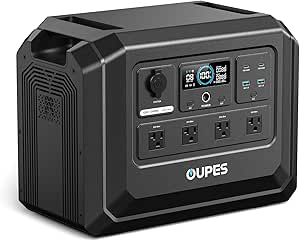
| OUPES Mega 1 Lite Portable Pow | 26.7 lbs | 1024Wh | — |
| EBL Portable Power Station 500 | 18 lbs | 519.48Wh | 11.45 x 7.95 x 7.95 inches |
| OUPES Mega 1 Portable Power St | — | 1024Wh | — |
| EBL Portable Power Station 288 | 7.94 lbs | 288.6Wh | 9.61 × 6.73 × 6.97 inches |
| Jackery Explorer 300 Portable | 7.5 lbs | 292Wh | 15.43 × 9.92 × 11.89 inches |
| MARBERO Portable Power Station | 5.7 lbs | 296Wh | 8.26 × 3.5 × 7.48 inches |
| 1000W Portable Power Station 1 | 27.73 lbs | 1024Wh | 18 × 12 × 16 inches |
More Details on Our Top Picks
Portable Power Station 200W – Flashfish 40800mAh Backup Battery with AC, DC, and USB Outlets
For anglers who need to keep a phone, headlamp, or modest fish finder charged without hauling a heavy unit, the Flashfish 151Wh station offers a useful balance of portability and output variety. At 4.07 pounds, it is easier to carry from the car to a shore-fishing spot than the 41-pound UDPOWER S2400, though its smaller battery cannot support a long trip or several power-hungry devices. The AC outlet adds flexibility for compatible small electronics, while its two DC ports and three USB ports let you charge several personal devices. An LCD helps track remaining power during the day. The tradeoff is the 200W output ceiling and modest capacity; I would choose the EcoFlow TRAIL 300 DC for greater capacity and stronger USB-C charging, but that model lacks AC output.
Pros:- Light 4.07-pound body is practical to carry between parking and fishing spots.
- AC, DC, and USB outputs accommodate a mix of small fishing and personal electronics.
- LCD display makes it easier to monitor remaining power.
- Supports AC, car, and separately purchased solar charging.
Cons:- 151Wh capacity may run short during extended trips or multi-device use.
- 200W output rules out many higher-draw appliances.
- Solar panel is sold separately.
Best for: Shore anglers and day-trip fishers who want a light, easy-to-carry source for phones, lights, and low-draw electronics.
Not ideal for: Anglers running multiple devices overnight or powering high-draw gear, since 151Wh and 200W limit runtime and appliance choices.
- Battery capacity:151Wh (40800mAh)
- Output power:200W
- AC outlet:1 (110V)
- DC ports:2
- USB ports:3, including QC3.0
- Weight:4.07 lbs
- Dimensions:8.2 x 4.3 x 6.2 inches
- Recharge time:4–4.5 hours via AC; 5 hours via car; 5–6 hours via solar
Our verdict“Choose the Flashfish for portable, mixed-port charging on short fishing outings, not for overnight power needs.”
MARBERO Portable Power Station 88Wh, 120W Surge, Solar Generator 24,000mAh
The MARBERO is the smallest-capacity choice here, which makes it a fit for anglers who mainly need a phone top-up, compact light, or other low-draw essentials. Its 88Wh battery and 1.04kg weight make it less burdensome to pack than the Flashfish, but they also leave less reserve for running a fish finder through a full day. The listed 80W output and 120W surge call for checking device requirements before relying on the AC outlet. Multiple output ports and a built-in flashlight with SOS mode give this small unit practical campsite utility; the light can help in a pinch, but it does not make up for limited capacity. Compared with the EcoFlow TRAIL 300 DC, MARBERO is lighter and includes AC output, while EcoFlow offers substantially more stored energy and higher-powered USB-C.
Pros:- Compact 1.04kg design is easy to stow in a fishing bag.
- Multiple output ports support charging different small devices.
- Built-in LED flashlight includes an SOS mode.
- Can recharge from an AC adapter or a compatible solar panel.
Cons:- 88Wh capacity offers little reserve for long sessions or several devices.
- 80W listed output limits which AC-powered electronics it can run.
- Solar panel is not included in the supplied product details.
Best for: Mobile anglers packing light for brief outings who need to top up a phone and run a few low-power accessories.
Not ideal for: Anglers who need a fish finder or several devices powered for hours, or whose equipment exceeds the listed 80W output.
- Capacity:88Wh (24,000mAh)
- Listed output:80W
- Maximum surge:120W
- Weight:1.04kg
- Dimensions:6.5 x 4.6 x 3.1 inches
- Number of outlets:8
- Charging options:AC adapter or solar panel
- Other feature:Built-in LED flashlight with SOS mode
Our verdict“Pick MARBERO when minimal weight matters more than long runtime or broad device compatibility.”
Portable Power Box Component Kit for Camping, Hunting, Fishing, and Outdoor Use
This Dakota Portable Power kit takes a different route from ready-to-use stations such as the Flashfish: it supplies components for a custom 12V power box, not a complete battery system. That can suit anglers who want a dedicated setup for a fish finder and value control over the battery and enclosure they choose. The kit includes rocker switches, LED indicators, and a voltmeter, giving the builder a way to manage and monitor the finished assembly. But the battery and box are not included, so the final cost, capacity, weather protection, and portability depend on parts the buyer sources separately. Assembly is also required. Unlike the EcoFlow TRAIL 300 DC, this kit is not an all-in-one charging station with a specified capacity; I would shortlist it only if building and wiring a custom 12V rig is part of the plan.
Pros:- Lets the buyer customize a fishing power box around selected 12V equipment.
- Includes rocker switches and LED indicators for control and status checks.
- Voltmeter supports monitoring the completed setup.
- Lightweight components are easy to transport before installation.
Cons:- Battery and enclosure must be purchased separately.
- Assembly and wiring may be challenging for buyers without DIY experience.
- Designed for 12V use rather than higher-power AC appliances.
Best for: Anglers comfortable with basic assembly who want to build a dedicated 12V box for a fish finder and related gear.
Not ideal for: Buyers seeking a ready-to-use station, AC power, a supplied battery, or a clearly specified capacity and runtime.
- Brand:Dakota Portable Power
- Part number:12v_PowerBox
- Intended system:12V
- Included components:Eagle Eye LED Eye Lights and rocker switches
- Item weight:0.25kg
- Package dimensions:7.55 x 4.6 x 2 inches
- Material:Plastic
- Color:Black
Our verdict“Choose this kit only if you want to assemble a custom 12V fishing power box rather than buy a complete station.”
UDPOWER S2400 Portable Power Station with Solar Panel Option, 2083Wh LiFePO4, 2400W (Surge 3000W), UPS, 6 AC Outlets, for RVs, Camping, Emergency, Home Backup Bundle
For anglers setting up an RV or fixed fishing base camp, the UDPOWER S2400 brings a level of capacity that the smaller Flashfish and MARBERO cannot match. Its 2083Wh LiFePO4 battery and 2400W output can support a broader mix of electronics and appliances, while six AC outlets reduce the need to rotate plugs between devices. USB-C, USB-A, DC, and car outputs add options for phones and 12V gear. The tradeoff is physical: at 41 pounds, this is a station to place at camp, not carry down a shoreline. Its listed 1.3-hour AC recharge is useful between outings, and solar input supports off-grid replenishment, though panels are not specified as included. Compared with the EcoFlow TRAIL 300 DC, it offers far more capacity and AC power at the cost of portability.
Pros:- 2083Wh LiFePO4 capacity provides far more stored energy than the compact options in this group.
- 2400W output and six AC outlets support a wider range of camp equipment.
- USB-C, USB-A, DC5521, and car-port connections accommodate varied devices.
- Supports AC and solar recharging, with a listed 1.3-hour AC recharge time.
Cons:- At 41 pounds, it is poorly suited to mobile or walk-in fishing spots.
- Its size and capacity may be excessive for anglers powering only a phone and fish finder.
- The product details do not specify whether a solar panel is included.
Best for: RV anglers and groups at a vehicle-accessible camp who need to run several devices or larger appliances over longer stays.
Not ideal for: Shore anglers, kayak fishers, and anyone who must carry the station far from a vehicle; 41 pounds is a substantial load.
- Battery capacity:2083Wh
- Battery type:LiFePO4
- Output power:2400W
- Peak power:3000W
- AC outlets:6
- USB ports:2 USB-C and 4 USB-A
- Other ports:2 DC5521 ports and 1 car port
- Weight:41 lbs
- Solar input:Supports up to 440W
Our verdict“Choose the S2400 for high-demand, vehicle-based fishing camps and skip it if portability is your priority.”
EF ECOFLOW Portable Power Bank Station TRAIL 300 DC, 288Wh, 300W DC
The EcoFlow TRAIL 300 DC is a strong match for anglers whose gear runs from DC and USB ports, rather than AC appliances. Its 288Wh capacity gives it more stored energy than the Flashfish or MARBERO, while its 300W DC output and pair of 140W PD3.1 USB-C ports suit compatible electronics that need faster charging. A 12V car port adds another practical connection for fishing accessories. The all-DC design is the key compromise: unlike the Flashfish, it has no listed AC outlet, so check every device before choosing it. Its compact, lightweight build is easier to bring along than the 41-pound UDPOWER S2400, but 288Wh still falls well short of that station for long stays or larger loads. Charging cables and solar panels are sold separately.
Pros:- 288Wh capacity exceeds the Flashfish and MARBERO options.
- Two USB-C PD3.1 ports support charging up to 140W each for compatible devices.
- 300W DC output and a 12V car port suit DC-powered accessories.
- Compact, lightweight design is more practical to transport than the UDPOWER S2400.
Cons:- No AC outlet is listed, limiting use with mains-powered equipment.
- 288Wh may not last through extended trips or higher-demand loads.
- Charging cable and solar panels are sold separately.
Best for: Anglers carrying USB-C and 12V gear who want more battery capacity than a pocket-sized station without hauling a large base-camp unit.
Not ideal for: Buyers who need AC outlets, a supplied solar panel, or enough capacity for extended high-demand use.
- Capacity:288Wh
- Output:300W DC
- USB-A ports:2
- USB-C ports:2, PD3.1 up to 140W
- 12V car port:1, 10A
- Recharging options:Solar, car, and USB-C
- Charging cable:Not included
- Solar panels:Sold separately
Our verdict“Choose the TRAIL 300 DC for portable, higher-capacity DC and USB-C charging, but skip it if your fishing setup needs AC power.”
Portable Power Station 192Wh Solar Generator with AC Outlets 600W Surge
For fishing trips where a light tackle bag matters as much as a charged phone, this 5.5-pound LiFePO4 unit is the easiest of these five to carry to a bank or small boat. Its 192Wh capacity can cover phone charging and modest accessories, while the 300W pure sine wave output supports small AC devices rather than power-hungry gear. Compared with the 6.8-pound, 299Wh model, it gives up capacity and output for a smaller footprint and lower carry weight; the EBL 519.48Wh station offers longer runtimes but weighs 18 pounds. The tradeoff is clear: this is a personal-device station, not a way to run substantial fishing equipment. Solar panels are sold separately, and solar charging may take about six hours.
Pros:- 5.5-pound weight and compact dimensions make it easy to pack for a fishing outing.
- LiFePO4 battery is specified for more than 3,500 charge cycles.
- Two AC outlets and USB, USB-C, and DC outputs accommodate several small devices.
- Supports AC, car, and solar input charging.
Cons:- The 192Wh capacity is modest for extended trips or multiple power-hungry devices.
- 300W continuous output rules out many higher-draw appliances and tools.
- Solar panels are not included, and solar charging can take about six hours.
Best for: Shore anglers and kayak fishers who mainly need phone, camera, and small accessory charging without carrying a heavy station.
Not ideal for: Anglers running high-draw equipment or planning long trips without another charging source; its 192Wh capacity and 300W continuous output limit runtime and device choice.
- Capacity:192Wh
- Battery type:LiFePO4
- AC output:2 outlets; 300W continuous
- Surge power:600W
- USB outputs:1 USB-C (45W), 2 USB-A (18W)
- Weight:5.5 lbs
- Dimensions:8.66 x 5.1 x 7.2 inches
- Charging inputs:AC wall, car, and solar; solar panels not included
Our verdict“Choose this compact station for light fishing trips centered on charging personal electronics, not for running demanding gear.”
Portable Power Station 600W (1200W Surge), 299Wh, Lightweight 6.8 lbs, 140W USB-C
This model suits anglers who want more output headroom than a pocket-size station without carrying a much heavier unit. Its 600W continuous output is twice the 300W rating of the 192Wh compact pick, making a wider range of small AC devices feasible, while its 140W USB-C port is a strong fit for compatible laptops and fast-charging electronics. At 6.8 pounds, it remains manageable to carry from a vehicle to a fishing spot. The compromise is its 299Wh capacity: it provides more stored energy than the 192Wh model, but still falls well short of the EBL’s 519.48Wh for longer sessions. Solar panels are separate, and the listed two-hour charge time does not resolve how long solar recharging will take.
Pros:- 600W continuous output offers more device flexibility than the 300W compact option.
- 140W USB-C supports fast charging for compatible equipment.
- 6.8-pound weight is relatively easy to transport to a fishing spot.
- Provides AC, USB, 12V car, and DC outputs, with solar charging support.
Cons:- 299Wh capacity is limited for long outings or sustained use of multiple devices.
- Solar panels must be purchased separately for solar charging.
- No built-in wheels, so carrying the station is required.
Best for: Anglers who carry a USB-C laptop, camera, or other compatible electronics and need moderate AC output in a portable package.
Not ideal for: Fishers planning multi-day trips or extended power use without recharging; 299Wh can run short, and solar panels are not included.
- Capacity:299Wh
- Continuous output:600W
- Surge power:1200W
- USB-C output:140W
- Ports:2 AC, 2 USB-A, 1 USB-C, 1 12V car port, 1 DC port
- Weight:6.8 lbs
- Dimensions:9.4 x 6.5 x 7.1 inches
- Charge time:2 hours
Our verdict“Pick this for portable, higher-output charging and a powerful USB-C port, but choose the EBL if longer runtime matters more.”
OUPES Mega 1 Lite Portable Power Station 1024Wh 2000W
When a fishing camp needs to run more than personal electronics, the Mega 1 Lite brings a different level of capacity and output: 1024Wh and 2000W continuous power. That makes it a stronger candidate than the EBL 519.48Wh station for higher-demand equipment, while the EBL remains easier to justify when lower weight and simpler needs matter more. This OUPES weighs 26.7 pounds, so its handle helps with carrying, but it is not a casual walk-in choice for anglers hauling gear far from a vehicle. Its 800W solar input and 46-minute AC charge time can support quicker replenishment when compatible charging is available. Even so, 1024Wh has limits for prolonged heavy loads, and the solar panels are not included.
Pros:- 1024Wh capacity provides substantially more stored energy than the 299Wh and 519.48Wh options.
- 2000W continuous output and 4500W surge support higher-demand devices.
- AC charging is listed at 46 minutes from empty to full.
- 800W solar input and nine output ports support flexible camp charging.
Cons:- At 26.7 pounds, it is much less convenient to carry than the compact options.
- 1024Wh may not cover prolonged use of high-draw equipment.
- Solar panels are not included for solar recharging.
Best for: Car campers and anglers at a base camp who need to power several devices or higher-draw equipment and can transport a 26.7-pound station.
Not ideal for: Kayak, bank, and hike-in anglers prioritizing a light load, or anyone expecting unlimited runtime from high-draw equipment.
- Capacity:1024Wh
- Continuous output:2000W
- Surge power:4500W
- Battery type:LiFePO4
- Solar input:800W
- AC charge time:46 minutes
- Weight:26.7 lbs
- Output ports:9
- UPS switch time:Less than 20ms
Our verdict“Choose the Mega 1 Lite for a vehicle-supported fishing camp with demanding power needs, rather than a lightweight walk-in trip.”
EBL Portable Power Station 500W (Peak 1000W), 519.48Wh Solar Generator for Camping and Outdoor Use
The EBL is the middle ground for anglers who want more stored energy than the 299Wh lightweight station without stepping up to a 1024Wh unit. Its 519.48Wh capacity can support a longer day of charging and modest device use, and its AC, USB, DC, and wireless charging options suit mixed electronics at a campsite. Compared with the compact 192Wh model, it offers far more capacity; compared with either OUPES Mega 1, it is less capable for high-draw gear but also avoids carrying a 26.7-pound station. At 18 pounds, though, it is not especially convenient for a long walk to the water. Its 500W continuous limit also makes this a poor match for demanding appliances, and solar panels are sold separately.
Pros:- 519.48Wh capacity offers more runtime potential than the 192Wh and 299Wh options.
- AC, USB, DC, and wireless charging cover several kinds of personal electronics.
- Can recharge from a wall outlet, car, or compatible solar panel.
- Built-in safety protections are specified for the battery and connected devices.
Cons:- 18-pound weight makes it a burden for walk-in fishing trips.
- 500W continuous output is insufficient for many high-draw appliances.
- Solar panel is not included for solar recharging.
Best for: Car-based anglers who want a mid-capacity station for phones, cameras, and modest campsite devices without moving up to a 1024Wh model.
Not ideal for: Anglers who hike far to their fishing spot or need to run high-wattage equipment; its 18-pound weight and 500W limit work against those needs.
- Capacity:519.48Wh
- Continuous output:500W
- Peak output:1000W
- Weight:18 lbs
- Dimensions:11.45 x 7.95 x 7.95 inches
- Voltage:120V
- Total power outlets:2
- Charging options:Solar, car, and wall outlet; solar panel sold separately
Our verdict“The EBL makes sense for car-access fishing trips where extra capacity matters more than low carry weight or high appliance output.”
OUPES Mega 1 Portable Power Station 1024Wh 2000W (4500W Surge)
The Mega 1 is the strongest fit here for anglers building a larger, repeatable base-camp setup rather than seeking a light station for occasional phone charging. It matches the Mega 1 Lite’s 1024Wh capacity and 2000W output, but adds expandability up to 5120Wh, app control, and bypass charging. That capacity path gives it an advantage for longer stays over the fixed-capacity EBL, though it also adds bulk and is a poor choice for carrying any distance. The listed 0–80% charge time of 36 minutes can help between outings when AC power is available; solar panels are not specified in the supplied product details. Buyers should also weigh the limited warranty information against the more clearly described core power specs. For anglers who only charge small electronics, this is more station than they need.
Pros:- 2000W running output and 4500W starting power support a broad range of equipment.
- Capacity can expand from 1024Wh to 5120Wh with additional batteries.
- Fast AC charging is specified at 0–80% in 36 minutes.
- Smart app control, bypass charging, and a UPS switch time under 20ms add useful management features.
Cons:- Relatively heavy and bulky for fishing trips that involve carrying gear away from a vehicle.
- Expansion requires additional batteries, and solar-panel details are not provided.
- Warranty coverage details are limited in the supplied product information.
Best for: Frequent car-camping anglers who want high output now and the option to expand stored power for longer trips or a larger camp setup.
Not ideal for: Shore anglers carrying gear on foot, or buyers who only need phone and camera charging; its size, weight, and expandable capacity are unnecessary for light use.
- Capacity:1024Wh
- Continuous output:2000W
- Surge power:4500W
- Expandable capacity:Up to 5120Wh
- Battery material:Lithium iron phosphate
- AC charging:0–80% in 36 minutes
- UPS switch time:Less than 20ms
- Control and charging features:Smart app control; bypass charging
- Voltage:120V
Our verdict“Pick the Mega 1 if you want a powerful fishing-camp station that can grow with future energy needs, and skip it for lightweight outings.”
EBL Portable Power Station 288.6Wh 330W Solar Generator for Camping and Home
For anglers carrying gear on foot to a bank or remote fishing spot, the 7.94-pound EBL is a practical middle ground: it offers nearly 289Wh of capacity and a 330W pure sine wave AC outlet without the bulk of the 1024Wh model. Its USB-C PD port, car outlet, and wireless charging let you top up phones, lights, and compatible small electronics together, while AC, car, and solar charging give you options between trips. Compared with the Jackery Explorer 300, EBL lists a higher AC output and adds wireless charging; Jackery, by contrast, specifies LiFePO4 chemistry and over 4,000 charge cycles. The EBL’s main compromise is limited energy for long trips or power-hungry gear, and the supplied data gives no cycle-life figure. Its solar input also depends on available sun, so it suits modest fishing loads better than all-day appliance use.
Pros:- 7.94-pound weight is manageable for carrying to a fishing spot
- 330W pure sine wave AC output supports compatible small AC devices
- Can recharge from a wall outlet, car outlet, or compatible solar panel
- Wireless charging and several port types help serve multiple small devices
Cons:- 288.6Wh capacity is limited for multi-day trips or sustained appliance use
- Solar recharge depends on sunlight and compatible panel availability
- Battery cycle life is not specified in the supplied product data
Best for: Shore anglers who want a carryable station for phones, LED lights, and other small electronics, with several ways to recharge.
Not ideal for: Anglers planning extended trips with electric cooking gear or other high-draw equipment, since its 288.6Wh capacity and 330W output limit runtime and appliance choice.
- Capacity:288.6Wh
- AC output:330W pure sine wave
- Peak surge power:600W
- Weight:7.94 lbs
- Dimensions:9.61 × 6.73 × 6.97 inches
- Ports:2 × DC 5521, 1 × 12V cigarette lighter, USB-A QC3.0/18W, USB-C PD 60W, 1 × 330W AC outlet, 5W wireless charging
- Recharging methods:AC wall adapter, 12V car cigarette lighter, solar panels (DC 12–26V)
- Operating temperature:0–40°C
Our verdict“Choose the EBL for a portable shore-fishing station with flexible charging and small-device support, not for extended high-power use.”
Jackery Explorer 300 Portable Power Station, 292Wh
The Jackery Explorer 300 suits anglers who favor a stated battery-life specification over a slightly higher output rating. Its LiFePO4 battery is specified for over 4,000 charge cycles, a meaningful detail for people who fish often and recharge between outings. At 7.5 pounds, it stays easy to carry, and its two AC outlets plus USB and car ports can handle a mix of small electronics. Compared with the EBL 288.6Wh, Jackery gives up 30W of maximum output and wireless charging, but offers a documented cycle-life figure; the EBL includes more charging flexibility in its feature list. This is still a compact 292Wh unit, not a solution for running high-draw equipment or powering a camp for several days. The solar panel is not included, and its 300W limit calls for checking device requirements before packing.
Pros:- LiFePO4 battery is specified for over 4,000 charge cycles
- 7.5-pound weight is convenient for transport to campsites and fishing areas
- Two AC outlets plus USB-C, USB-A, and car ports support varied small devices
- Listed charge time is four hours
Cons:- 300W maximum output excludes many high-power appliances
- Solar panel is not included
- 292Wh capacity may fall short on extended trips with multiple devices
Best for: Frequent anglers who want a lightweight station for phones, fish-finder accessories, and small electronics, and value a specified long-cycle-life battery.
Not ideal for: Anglers needing a bundled solar setup, high-wattage appliance support, or enough stored energy for prolonged off-grid use.
- Capacity:292Wh
- Battery chemistry:LiFePO4
- Maximum power:300W
- Weight:7.5 lbs
- Outlets:2 AC outlets, 1 USB-C PD port, 2 USB-A ports, 1 car port
- Charge time:4 hours
- Dimensions:15.43 × 9.92 × 11.89 inches
- Battery cycle life:Over 4,000 charge cycles
Our verdict“Pick the Jackery if frequent use and its specified LiFePO4 cycle life matter more than wireless charging or a higher output rating.”
MARBERO Portable Power Station 350W Peak Camping Solar Generator, 296Wh Power Bank with AC Outlet, 110V, Multi-Output, LED Flashlights for Emergency & Camping
At 5.7 pounds, this MARBERO is the easiest of these three compact stations to carry from a parked car to a fishing spot. Its 296Wh capacity is close to the Jackery Explorer 300 and EBL 288.6Wh, while its built-in LED flashlight adds a useful light source without requiring another item in the kit. Multiple USB and DC outputs cover phones and compatible low-draw accessories. The tradeoff is its 300W continuous AC output and a stated limitation to appliances under 100W, which make it a poor fit for more demanding equipment. Its listed 7–8-hour recharging time is also slower than the Jackery’s stated four hours, and solar panels are not included. I’d favor it when lower carry weight and an integrated flashlight matter more than faster replenishment or broader AC capability.
Pros:- 5.7-pound weight is the lightest among these three compact options
- 296Wh capacity is comparable to the Jackery Explorer 300 and EBL unit
- Built-in LED flashlight can reduce the need to pack a separate light
- USB, USB-C, DC, and AC outputs support a range of compatible small devices
Cons:- Appliance use is limited to devices under 100W according to the supplied product data
- Listed recharging time of 7–8 hours is slower than the Jackery’s stated four hours
- Solar panel is not included, and Li-ion capacity is specified to fall to 90% after 1,000 cycles
Best for: Mobile anglers who walk to fishing spots and mainly need to charge phones, small electronics, and low-draw accessories.
Not ideal for: Buyers who need faster recharging, included solar equipment, or power for appliances above the stated 100W limit.
- Capacity:296Wh
- Weight:5.7 lbs
- Dimensions:8.26 × 3.5 × 7.48 inches
- AC output:110V, 300W continuous, 350W peak
- USB ports:2 USB-A, 1 QC3.0, 1 USB-C
- DC ports:2 ports, 12V–16.6V/10A
- Recharging time:7–8 hours via AC, solar, or car outlet
- Battery type and cycle life:Li-ion; 90% capacity after 1,000 cycles
Our verdict“Choose this MARBERO when the lowest carry weight and built-in flashlight matter more than faster charging or higher-power appliance support.”
1000W Portable Power Station 1024Wh LiFePO4 for Outdoor & Home
When a fishing camp needs more than phone charging and lights, this 1024Wh LiFePO4 station is the capacity-first choice in this group. Its 1000W continuous output opens the door to compatible small appliances that the EBL 288.6Wh, Jackery Explorer 300, and MARBERO compact unit cannot support at the same scale. The larger reserve also gives anglers more room to run several modest loads across a trip, although actual runtime depends on what is connected. The cost of that capability is physical: at 27.73 pounds and 18 × 12 × 16 inches, it is better carried from a vehicle to camp than hauled along a long shoreline. Product data also reports only about two minutes of runtime at full load, underscoring that the 1000W rating is not a promise of sustained heavy use. Solar compatibility is listed, but charging time is unspecified.
Pros:- 1024Wh capacity is substantially larger than the three compact stations
- 1000W continuous output supports compatible loads beyond small-device charging
- LiFePO4 battery chemistry is specified
- Solar compatibility and multiple fast-charging ports offer off-grid charging options
Cons:- At 27.73 pounds, it is less practical to carry over long distances
- Supplied data lists approximately two minutes of runtime at full load
- Solar charging time is unspecified and depends on sunlight conditions
Best for: Car-camping anglers who need substantially more stored energy for lights, devices, and compatible small appliances at camp.
Not ideal for: Anglers hiking gear to remote banks, or anyone expecting to run a 1000W load for an extended period.
- Capacity:1024Wh
- Continuous output:1000W
- Battery type:LiFePO4
- Output voltage:110V
- Weight:27.73 lbs
- Dimensions:18 × 12 × 16 inches
- Power source:Electric, solar
- Safety feature:6-layer safety protection
Our verdict“Choose this model for vehicle-based fishing trips that need greater capacity and compatible appliance support, not for lightweight shoreline carry or sustained full-load use.”
How We Picked
I compared the 14 listed products for the needs that shape a fishing setup: usable capacity, continuous and surge output, portability, outlet mix, and solar details. A station earns a higher place when its stated capacity and output make it useful across more fishing scenarios, while still offering a sensible balance for transport. I also distinguished products that are explicitly described as bundles or kits from stations that are solar-compatible or have a panel option; those are not automatically the same package.
The ranking favors versatility for a range of fishing trips over one standout number. That puts the UDPOWER S2400 first for broad power needs, with the OUPES Mega 1 models next for a more manageable 1024Wh class. Compact options rank well for anglers who mainly need charging and light-duty power, but lower capacity limits their usefulness on longer trips. Where the supplied product details do not specify runtime, included solar panels, charging time, or weight, I avoid assuming those advantages and recommend checking the exact listing.
Factors to Consider When Choosing Power Station Bundle For Fishing
Before choosing a station, start with the gear you plan to power and the conditions around your fishing trips. A larger battery is not automatically the better fishing choice: carrying weight, charging opportunities, and outlet compatibility can matter just as much as capacity. These checks help narrow the options beyond comparing headline numbers.
Match Capacity to Trip Length and Gear
Write down each device, its wattage, and how many hours you expect to use it; that gives a more useful estimate than choosing by battery size alone. Add a margin because conversion losses and changing conditions can reduce the energy available at the outlets. Phones, lights, and small electronics often fit a compact station, while extended trips or several devices at once call for more stored energy. Avoid assuming that a station’s listed capacity equals runtime in hours. For a fishing setup, check whether your likely use is occasional charging or continuous operation before moving up to a heavier model.
Separate Running Watts From Surge Watts
Continuous output determines what a station can power during normal use; surge output covers a brief starting demand from some equipment. A large surge figure cannot make up for a continuous rating that falls below your device’s needs. Check the power label on each item and compare it with the station’s sustained AC or DC output, depending on how you plan to connect it. Some fishing electronics may be more practical on DC, while other gear needs an AC outlet. If the listing does not make those output limits clear, verify them before buying rather than relying on the headline wattage.
Choose Around Carrying Distance, Not Just Vehicle Space
A station that fits in a vehicle may still be awkward to carry from the parking area to a bank, dock, or campsite. Think about how often you will move it, whether you can leave it near your setup, and whether one person needs to lift it. Compact models trade runtime for easier handling; larger-capacity units trade convenience for longer use and more output. Do not judge portability from capacity alone, since listed weight and physical dimensions are useful checks when available. If the station stays at a fixed base camp, capacity may matter more than carry comfort.
Check What the Bundle Actually Contains
The word “bundle” can describe a complete kit, a station with optional solar compatibility, or a component box that still needs other parts. Confirm whether a solar panel, cables, adapters, and any required connectors are included, and check that they match the station. A panel option is not proof that a panel comes in the package. For fishing trips, also think through where a panel could be placed safely and whether there will be enough daylight to make solar charging useful. Compare the ready-to-use contents, not just the product title, to avoid arriving with a station that cannot be recharged as planned.
Prioritize Ports That Match Your Actual Devices
Count the devices you expect to charge at the same time and identify which ones use AC, USB, USB-C, or DC. Having several outlet types can reduce adapter clutter, while extra ports do not help if they cannot supply the needed power. USB-C output can be convenient for compatible electronics, and DC ports may help avoid running an AC inverter for devices that accept DC. Check whether port limits apply when several outputs are used together. Choosing around your real cable and device setup can be more useful than buying the model with the longest outlet list.
Decide Whether Solar Recharging Fits Your Fishing Routine
Solar input is most useful when trips last long enough to benefit from daytime recharging and you have a place to set a panel in good light. It is less valuable for short outings or shaded fishing spots, where the panel may add bulk without replacing much of the energy used. Check the station’s supported solar input, compatible connectors, and whether the panel is included; a compatible panel may be sold separately. A larger battery can hold more energy, but it also takes more solar input to refill. Treat solar as a recharge plan with specific conditions, not as a guarantee of unlimited power.
Frequently Asked Questions
How much capacity do I need for a weekend fishing trip?
There is no single capacity that fits every weekend because trip length matters less than the devices you run and how often you use them. Add the expected energy use of your electronics, lights, and other equipment, then leave room for conversion losses and changing conditions. A compact 288–299Wh station may work for limited charging, while 1024Wh models offer more headroom for several devices or longer use. The 2083Wh UDPOWER is aimed at heavier or extended needs, but its extra capacity may be unnecessary for a phone-and-light setup. Check device labels and planned hours before choosing.
Can these power stations run a trolling motor?
Do not assume a station can run a trolling motor from its wattage headline alone. You need to check the motor’s voltage, continuous draw, startup demand, and whether the station provides a compatible output. Many portable stations are designed around AC outlets, USB, or lower-power DC ports rather than direct connection to a marine motor. Even if output is compatible, battery capacity determines how long it can run, and motor use can drain a station quickly. Confirm the exact electrical requirements and manufacturer guidance before connecting one.
Does a solar-compatible station include a solar panel?
Not necessarily. Product names in this lineup include solar generators, solar options, and solar compatibility, but those descriptions do not all confirm a panel is in the box. Check the package contents for the panel, charging cable, connector type, and any needed adapter. Also verify the station’s supported solar input so the panel can charge it safely and effectively. If a panel is sold separately, include its size and transport needs in your comparison rather than treating it as a complete bundle.
Is a 1024Wh station a better fishing choice than a compact 300Wh model?
A 1024Wh station stores substantially more energy, which can help on longer trips or when several devices need power. It also tends to be a less convenient choice when you must carry everything a long distance, and its extra capacity is wasted if your needs are limited to occasional phone charging. Compact models in the roughly 288–299Wh range favor easier transport but leave less room for extended use. Compare your device load and access to recharging with the station’s actual weight and dimensions. The better fit is the one that covers your planned use without making transport a burden.
Should I choose a higher surge rating if my fishing gear has a motor?
Surge rating alone is not enough to choose a station for motor-driven gear. You must confirm that the station’s continuous output can handle the motor’s normal draw and that its output voltage and connection type match the equipment. Surge capacity only covers a brief spike, and it does not add battery energy or extend runtime. Check the motor’s startup requirements and the station’s stated limits, including any restrictions when multiple outlets are used. If those specifications are unclear, contact the manufacturer before relying on the station in the field.
Conclusion
For the broadest range of fishing power needs, my best overall pick is the UDPOWER S2400, thanks to its 2083Wh capacity and 2400W output; it suits anglers who can accommodate a larger station. The best value in capability is the OUPES Mega 1 Lite, which offers 1024Wh and 2000W without stepping up to the UDPOWER’s capacity, while the standard OUPES Mega 1 shares those headline figures and lists a 4500W surge rating. For a best premium-style capacity pick, I would choose the UDPOWER when longer trips or higher loads justify its size. For beginners with modest charging needs, the Jackery Explorer 300 is a straightforward compact option; anglers focused on DC gear can compare it with the EcoFlow TRAIL 300 DC. If you need a specific setup, check the Portable Power Box Component Kit for a kit-oriented approach, and verify exactly which parts are included. Pick by gear load, trip length, and carrying distance—not by capacity or surge rating alone.