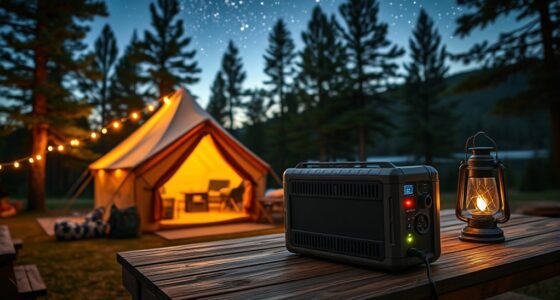
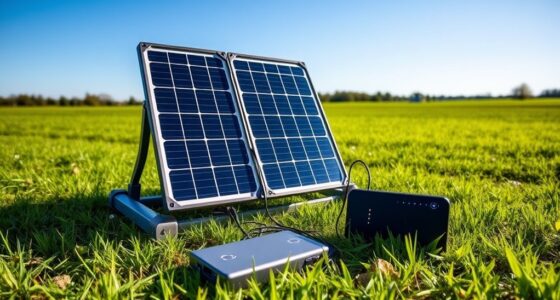
When you’re shopping for portable power stations for camping, the main decision comes down to battery chemistry, capacity, and how much weight you’re willing to carry to a campsite. For most campers, the Jackery Explorer 1000 v2 stands out as the best overall pick — its 1070Wh capacity and 1500W output run everything from portable fridges to coffee makers across a full weekend. If you only need to charge phones, headlamps, and a small fan, the Anker SOLIX C300 offers a better weight-to-capacity ratio, while the VTOMAN FlashSpeed 300 pairs LiFePO4 durability with fast recharging at a mid-tier price. The big tradeoff in this category: smaller units are easy to pack but won’t run AC appliances for long, while bigger units cover everything but add serious bulk. Keep reading for the full breakdown of all 15 models and which one matches your camping style.

Get backup power and energy gear delivered free — and shop member deals
- Fast, free delivery on millions of items
- Access to Prime Big Deal Days deals on October 6–7
- Prime Video, Amazon Music and more included
Complete the kit


Key Takeaways
- LiFePO4 battery chemistry (ALLWEI, BLUETTI, VTOMAN, DaranEner, and the 192Wh generic unit) lasts 3–5x more charge cycles than the lithium-ion packs in the Jackery Explorer 300 and Westinghouse iGen400s, which matters more for frequent campers than raw capacity.
- The Jackery Explorer 1000 v2 is the only unit in this lineup that can realistically run a 12V portable fridge or an electric kettle — every other option tops out at 300–400W and is limited to small appliances and device charging.
- The ZeroKor 300W is the only bundle that includes a solar panel, which offsets its smaller battery by letting you recharge during the day — a better fit for base-camp trips than drive-in weekend camping.
- The MARBERO 88Wh and HOWEASY 120W are the only genuinely backpack-friendly options here; everything else crosses the line where you’ll want a car or cart to move it from the trailhead.
- Two 288Wh Anker models (C300 and C300 DC) differ mainly in AC output — the DC version skips the inverter entirely, trading appliance support for efficiency on DC-only loads like CPAP machines and 12V coolers.
| HOWEASY Portable Power Station 260W (500W Peak) Solar Generator with 65W PD |  | Best Ultralight Pick | Output Power: 260W (500W peak) | Ports: 9 total: 2 AC, 1 USB-C (65W PD), 3 USB-A, 3 DC | Weight: 5 lbs | VIEW LATEST PRICE | See Our Full Breakdown |
| ALLWEI Portable Power Station 300W, 256Wh LiFePO4 Solar Generator |  | Best Value | Capacity: 256Wh | Continuous Power: 300W (600W surge) | Battery Type: LiFePO4 (LFP), 3000 charge cycles | VIEW LATEST PRICE | See Our Full Breakdown |
| Anker SOLIX C300 Portable Power Station, 288Wh Solar Generator for Camping |  | Best Overall | Capacity: 288Wh | Output Power: 300W (600W surge) | Ports: 3x AC, 1x car socket (120W), 2x USB-C (140W each), 1x USB-C (15W), 1x USB-A (12W) | VIEW LATEST PRICE | See Our Full Breakdown |
| Jackery Explorer 300 Portable Power Station, 292Wh |  | Best for Beginners | Capacity: 292Wh | Battery Type: LiFePO4, 4,000+ cycles to 70% capacity | Output Power: 300W (600W surge) | VIEW LATEST PRICE | See Our Full Breakdown |
| GRECELL Portable Power Station 330W, 230.88Wh Solar Generator |  | Best for Sensitive Electronics | Capacity: 230.88Wh | Output: 330W (600W surge) pure sine wave | Ports: 1 AC, 1 car port, 2 USB-C (60W + 18W PD), 2 USB-A QC 3.0 18W | VIEW LATEST PRICE | See Our Full Breakdown |
| BLUETTI Elite 30 V2 Portable Power Station, 288Wh 600W LFP Solar Generator |  | Best for Fast Recharging and CPAP Users | Capacity: 288Wh | Continuous Output: 600W | Surge Output: 1500W (Power Lifting Mode) | VIEW LATEST PRICE | See Our Full Breakdown |
| ZeroKor 300W Portable Power Station with 60W Foldable Solar Panel | 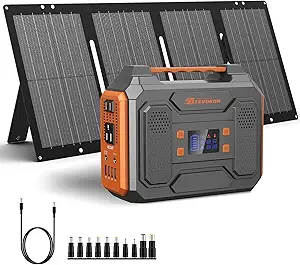 | Best Complete Solar Starter Kit | Output Power: 300W Max | AC Outlets: 2 x 300W Max | USB Ports: 3 x 5V/3A, 1 x Quick Charge | VIEW LATEST PRICE | See Our Full Breakdown |
| Portable Power Station 192Wh LiFePO4 Outdoor Generator with 100W AC Outlet |  | Best Ultra-Compact Backup | Capacity: 192Wh | Battery Type: LiFePO4 | Battery Cycles: Over 3,000 charging cycles | VIEW LATEST PRICE | See Our Full Breakdown |
| VTOMAN FlashSpeed 300 Portable Power Station, 300W 230Wh LiFePO4 Battery |  | Best Balanced All-Rounder for Weekend Trips | Output Wattage: 300W (600W peak) | Capacity: 230Wh | Battery Type: LiFePO4 | VIEW LATEST PRICE | See Our Full Breakdown |
| HOWEASY Portable Power Station, 120W (240W Peak) Solar Generator |  | Best Ultralight Emergency Companion | Capacity: 88Wh | Output Wattage: 120W (240W peak) | Total Ports: 8 | VIEW LATEST PRICE | See Our Full Breakdown |
| MARBERO Portable Power Station 88Wh, 120W Surge, Solar Generator 24,000mAh |  | Best Ultralight Pick | Capacity: 88Wh (24,000mAh) | Running Wattage: 80W (120W surge) | Output Ports: 8 | VIEW LATEST PRICE | See Our Full Breakdown |
| Anker SOLIX C300 DC Portable Power Station, 288Wh, 300W |  | Best for Laptop-Heavy Trips | Capacity: 288Wh (90,000mAh) | Output Wattage: 300W | Battery Type: LiFePO4 | VIEW LATEST PRICE | See Our Full Breakdown |
| Westinghouse iGen400s 400W 183Wh Portable Power Station and Solar Generator |  | Best Port Variety | Battery Capacity: 183Wh | Peak / Running Power: 400W peak / 200W running | Outlets: 9 (2x AC, 3x USB-C 30W, 1x USB-C 100W, 2x USB-A, 1x 12V DC) | VIEW LATEST PRICE | See Our Full Breakdown |
| Jackery Explorer 1000 v2 Portable Power Station, 1070Wh, 1500W |  | Best for Full Base Camps | Capacity: 1070Wh | AC Output: 1500W (3000W surge) | Battery Type: LFP, 4,000 cycles to 70%+ capacity | VIEW LATEST PRICE | See Our Full Breakdown |
| DaranEner 300W Portable Power Station, 192Wh LiFePO4 Solar Generator |  | Best Value LiFePO4 | Capacity: 192Wh | Output: 300W (600W surge), pure sine wave | Battery Chemistry: LiFePO4, 3,500+ cycles | VIEW LATEST PRICE | See Our Full Breakdown |
| portable power stations for camping | Capacity | Weight | Battery Type | Ports |
|---|---|---|---|---|
| HOWEASY Portable Power Station | — | 5 lbs | — | 9 total: 2 AC, 1 USB-C (65W PD), 3 USB-A, 3 DC |
| ALLWEI Portable Power Station | 256Wh | 6.4 lbs | LiFePO4 (LFP), 3000 charge cycles | 1 AC, 2 DC5521, 1 car socket, 1 USB-A 18W, 1 USB-C PD 60W |
| Anker SOLIX C300 Portable Powe | 288Wh | — | LiFePO4, 3,000 cycles (~10 years) | 3x AC, 1x car socket (120W), 2x USB-C (140W each), 1x USB-C (15W), 1x USB-A (12W) |
| Jackery Explorer 300 Portable | 292Wh | 7.1 lbs | LiFePO4, 4,000+ cycles to 70% capacity | — |
| GRECELL Portable Power Station | 230.88Wh | — | Lithium | 1 AC, 1 car port, 2 USB-C (60W + 18W PD), 2 USB-A QC 3.0 18W |
| BLUETTI Elite 30 V2 Portable P | 288Wh | 9.4 lbs | LFP (LiFePO4) | — |
| ZeroKor 300W Portable Power St | — | — | — | — |
| Portable Power Station 192Wh L | 192Wh | 3.9 lbs | LiFePO4 | 1 AC, 2 USB-C, 2 USB-A, 2 DC |
| VTOMAN FlashSpeed 300 Portable | 230Wh | 7.4 lbs | LiFePO4 | — |
| HOWEASY Portable Power Station | 88Wh | 2.3 lbs | — | — |
| MARBERO Portable Power Station | 88Wh (24,000mAh) | 3.2 lbs | — | — |
| Anker SOLIX C300 DC Portable P | 288Wh (90,000mAh) | — | LiFePO4 | 7 (2x USB-C 140W, 1x USB-C 100W, 1x USB-C 15W, 2x USB-A, 1x car socket) |
| Westinghouse iGen400s 400W 183 | — | — | — | — |
| Jackery Explorer 1000 v2 Porta | 1070Wh | 23.8 lbs | LFP, 4,000 cycles to 70%+ capacity | 3x AC, 2x USB-C, 1x USB-A, 1x DC car port |
| DaranEner 300W Portable Power | 192Wh | 5.73 lbs | — | 2x AC, 1x USB-C PD 60W, 2x USB-A 18W, 1x DC 120W |
More Details on Our Top Picks
HOWEASY Portable Power Station 260W (500W Peak) Solar Generator with 65W PD
At just 5 pounds, this HOWEASY is the lightest option in this lineup, and that alone earns it a spot for campers who count every ounce in their pack. Compared with the Anker SOLIX C300, it trades battery pedigree for portability, but it counters with nine output ports, including two AC outlets, which is more outlet variety than the pricier ALLWEI 300W offers. The 65W USB-C PD charging keeps a laptop topped up without a bulky adapter, and three recharge methods (solar, wall, car) cover most camping scenarios.
The tradeoffs are real, though. A 260W output ceiling means no electric kettles or hair dryers, and the unspecified watt-hour capacity makes it hard to compare true runtime against the ALLWEI’s 256Wh or the GRECELL’s 230Wh. The lifetime warranty softens the risk for budget-minded buyers.
Pros:- Lightest in the roundup at 5 lbs with a hidden carry handle
- Nine output ports, including two AC outlets and 65W USB-C fast charging
- Three recharge methods including solar, wall, and car charging
- Built-in multi-mode LED flashlight with SOS for emergencies
Cons:- 260W continuous output can’t handle high-wattage appliances like kettles or heaters
- Battery capacity in watt-hours isn’t specified, making runtime comparisons difficult
Best for: Backpackers and motorcycle campers who prioritize minimum weight and port variety over raw capacity
Not ideal for: Anyone planning to run appliances above 260W or who needs a clearly stated Wh capacity to calculate runtime
- Output Power:260W (500W peak)
- Ports:9 total: 2 AC, 1 USB-C (65W PD), 3 USB-A, 3 DC
- Weight:5 lbs
- Dimensions:8.19 x 4.72 x 5.43 inches
- Charging Methods:Solar panel (18-24V), AC wall adapter, car charger
- Flashlight:LED with low/high/SOS modes
- Safety Features:Short circuit, overcurrent, overvoltage, overload, overheating protection
- Warranty:Lifetime warranty with 24/7 customer service
Our verdict“This pick makes the most sense for weight-conscious campers who need lots of ports in a tiny package, not for anyone expecting to power anything beyond phones, lights, and a laptop.”
ALLWEI Portable Power Station 300W, 256Wh LiFePO4 Solar Generator
The ALLWEI hits a sweet spot the pricier options can’t match: a LiFePO4 battery rated for 3,000 cycles, a clearly stated 256Wh capacity, and four recharge methods including dual AC-plus-solar charging that cuts refill time to roughly two hours. Compared with the Jackery Explorer 300, the ALLWEI matches the chemistry and capacity story at a friendlier position on the price spectrum, while its pure sine wave output makes it genuinely safe for CPAP machines, a claim the lithium-based HOWEASY can’t make explicitly.
What you give up is polish and pace. The single AC outlet is stingy next to the Anker SOLIX C300’s three, and there’s no fast-recharge trickery — 3.5 hours on wall power is ordinary. The built-in MPPT controller is a nice inclusion at this tier, though you’ll need to buy a panel separately.
Pros:- LiFePO4 battery rated for 3,000 cycles, roughly a decade of regular use
- Pure sine wave AC output safe for sensitive electronics and CPAP machines
- Four recharge methods, including dual AC + solar fast charging in 2-2.5 hours
- Built-in MPPT solar controller for efficient off-grid recharging
Cons:- Only one AC outlet, limiting simultaneous device use
- Solar panel sold separately, adding to the true cost of off-grid setup
- 300W output won’t run higher-wattage appliances like blenders or heaters
Best for: Value-focused campers and CPAP users who want long-life battery chemistry and sine wave power without paying a premium brand price
Not ideal for: Campers running multiple AC devices at once — a single outlet and 300W cap means juggling plugs
- Capacity:256Wh
- Continuous Power:300W (600W surge)
- Battery Type:LiFePO4 (LFP), 3000 charge cycles
- Ports:1 AC, 2 DC5521, 1 car socket, 1 USB-A 18W, 1 USB-C PD 60W
- Recharge Methods:AC wall, 12V car, solar, dual AC + solar
- AC Charge Time:3.5-4 hours
- Solar Charge Time:4-5 hours with 100W panel
- Weight:6.4 lbs
- Warranty:5 years
Our verdict“This model is better suited to buyers who want durable battery chemistry and clean power on a budget than those chasing premium speed or multiple AC outlets.”
Anker SOLIX C300 Portable Power Station, 288Wh Solar Generator for Camping
If I had to point one camper toward a single pick, it would be this one. The SOLIX C300 combines three AC outlets (more than the ALLWEI and GRECELL combined at this size), 140W USB-C charging that outpaces every rival here, and a 50-minute recharge to 80% that makes the 3.5-hour ALLWEI look glacial. Add a LiFePO4 battery rated for 3,000 cycles and near-silent 25dB operation, and it’s the most complete weekend-camping package in the lineup.
It isn’t flawless. The shoulder strap costs extra, and Anker’s solar panel compatibility list is picky — the PS30, PS200, and PS400 won’t work, so check before buying panels. Like every 300W-class unit here, it won’t touch a kettle or induction burner; for that, the Jackery Explorer 1000 v2 elsewhere in this roundup is the answer.
Pros:- Fastest recharge in this batch: 80% in 50 minutes via wall outlet
- Three AC outlets plus 140W USB-C, the most versatile port spread here
- LiFePO4 battery rated for 3,000 cycles (~10 years)
- Whisper-quiet 25dB operation, ideal for tent-adjacent use
Cons:- Shoulder strap sold separately despite the compact size
- Incompatible with several existing Anker solar panels (PS30, PS200, PS400)
- 300W AC ceiling rules out high-power cooking appliances
Best for: Weekend car campers who want fast recharging, multiple AC outlets, and quiet operation around the campsite
Not ideal for: Owners of Anker PS30, PS200, or PS400 solar panels, and anyone needing more than 300W of AC output
- Capacity:288Wh
- Output Power:300W (600W surge)
- Ports:3x AC, 1x car socket (120W), 2x USB-C (140W each), 1x USB-C (15W), 1x USB-A (12W)
- Recharge Time:80% in 50 minutes (wall outlet)
- Battery Type:LiFePO4, 3,000 cycles (~10 years)
- Noise Level:25dB at 3.3 ft
- Solar Compatibility:Anker 100W or 60W panels (not PS30, PS200, PS400)
- Warranty:5 years
Our verdict“This pick makes the most sense for campers willing to pay a little more for speed, port variety, and quiet — as long as their appliance needs stay modest.”
Jackery Explorer 300 Portable Power Station, 292Wh
Jackery’s reputation for dead-simple operation is what lands the Explorer 300 here as the beginner’s choice — plug in, power on, no app, no learning curve. Its 4,000+ charge cycles actually beat the ALLWEI and Anker C300’s 3,000-cycle ratings, and its solar recharge to 80% in roughly 2.8 hours with a 100W panel is quick for this class. With six ports covering AC, USB-C PD at 100W, and a car socket, a first-time camper can power a phone, lantern, camera, and fan simultaneously.
Compared with the Anker SOLIX C300, it gives up two AC outlets and the blazing 50-minute recharge, and at 7.1 lbs it’s the heaviest of the compact picks here. The eco-system approach is convenient but locks you into Jackery-branded solar panels, sold separately — a cost newcomers often overlook.
Pros:- Simple, beginner-friendly operation with a well-supported brand ecosystem
- LiFePO4 battery rated for 4,000+ cycles, the longest lifespan in this batch
- Six ports run up to six devices, including laptops and CPAP machines
- Fast solar charging: 80% in about 2.8 hours with a 100W panel
Cons:- Heavier than comparable picks at 7.1 lbs
- Solar panel sold separately and effectively tied to Jackery’s ecosystem
- Only 2 AC outlets and slower wall recharge than the Anker C300
Best for: First-time power station buyers who want a trusted, foolproof brand and a straightforward ecosystem
Not ideal for: Campers wanting maximum ports or fastest recharge per dollar — the Anker C300 beats it on both counts
- Capacity:292Wh
- Battery Type:LiFePO4, 4,000+ cycles to 70% capacity
- Output Power:300W (600W surge)
- Outlets:2 AC, 1 USB-C PD (100W), 2 USB-A, 1 car port (120W)
- AC Charge Time:4 hours
- Solar Charging:80% in ~2.8 hours with 100W panel
- Weight:7.1 lbs
- Dimensions:9.1 x 5.2 x 7.8 inches
Our verdict“This option stands out for newcomers who value simplicity and battery longevity over port count and recharge speed.”
GRECELL Portable Power Station 330W, 230.88Wh Solar Generator
The GRECELL’s claim to relevance is its 330W pure sine wave output — the highest continuous rating in this batch — paired with clean power that keeps laptops and CPAP machines happy. Where the ALLWEI 300W also offers sine wave output, the GRECELL one-ups it on dual USB-C ports (60W and 18W PD) and adds two Quick Charge 3.0 USB-A ports, making it the better pick for a group charging multiple phones and cameras at once. The built-in MPPT keeps solar recharging efficient without extra gear.
The catch is capacity: at 230.88Wh, it’s the smallest battery here, behind the Jackery’s 292Wh and Anker’s 288Wh, so that extra 30W of headroom comes at the cost of runtime. Compared with the Anker SOLIX C300, it also lacks the fast wall recharge, so topping up between trips takes patience. The dual cooling fans run silent but add moving parts.
Pros:- Highest continuous output in this batch at 330W with 600W surge
- Pure sine wave output safe for CPAP machines and sensitive laptops
- Dual USB-C (60W PD) plus two QC 3.0 USB-A ports for fast multi-device charging
- Built-in MPPT controller for efficient solar recharging
Cons:- Smallest battery capacity in this batch at 230.88Wh, limiting off-grid runtime
- Slower wall recharging than fast-charge rivals like the Anker C300
- Dual cooling fans add potential points of failure over time
Best for: CPAP users and multi-device groups who need clean sine wave power and quick-charging ports on short trips
Not ideal for: Extended off-grid campers — the lowest capacity in this batch means recharging every night or two
- Capacity:230.88Wh
- Output:330W (600W surge) pure sine wave
- Ports:1 AC, 1 car port, 2 USB-C (60W + 18W PD), 2 USB-A QC 3.0 18W
- Recharge Methods:AC outlet, solar panel (MPPT), car outlet
- Battery Type:Lithium
- Safety:BMS with overload, overcharge, short-circuit protection; dual silent cooling fans
Our verdict“This model is better suited to short trips where device safety and charging speed matter more than total battery reserves.”
BLUETTI Elite 30 V2 Portable Power Station, 288Wh 600W LFP Solar Generator
Among the sub-300Wh options in this lineup, the BLUETTI Elite 30 V2 stands out for one thing most rivals can’t match: recharging speed. Where the VTOMAN FlashSpeed 300 needs roughly two hours to hit 80% via USB-C PD, the Elite 30 V2 gets there in about 45 minutes over its 380W wall input — a real advantage at a campsite with limited generator or outlet time, or when a storm is approaching and you need a topped-off battery fast. The 10ms UPS switchover also makes it a safer bet for CPAP machines and medical devices than the HOWEASY 88Wh, which offers no such protection. Its 600W continuous output comfortably beats the 300W caps on the ZeroKor and VTOMAN, meaning small kettles or heated blankets are realistic. The tradeoff: 288Wh drains quickly under sustained loads, and the solar panel costs extra.
Pros:- 380W fast wall charging reaches 80% in about 45 minutes
- 600W continuous output with 1500W Power Lifting Mode handles higher-draw devices
- 10ms UPS switchover protects CPAP machines and laptops during outages
- Lightweight 9.4 lbs build with a durable LFP battery
Cons:- 288Wh capacity is entry-level and limits runtime under heavy loads
- Solar panel sold separately, adding to the total cost
Best for: Campers who run a CPAP overnight or need quick turnaround between charges, and who want to occasionally power 500-600W devices
Not ideal for: Off-grid travelers planning multi-day stays without wall power access — 288Wh runs dry fast and the solar panel is a separate purchase
- Capacity:288Wh
- Continuous Output:600W
- Surge Output:1500W (Power Lifting Mode)
- Battery Type:LFP (LiFePO4)
- Weight:9.4 lbs
- Charge Time:0-80% in 45 mins; 0-100% in 70 mins
- UPS Switch Time:10ms
- Charging Modes:8 (AC, solar, car, etc.)
Our verdict“This pick makes the most sense for campers who prioritize fast recharging and UPS-grade reliability for sensitive devices over raw capacity.”
ZeroKor 300W Portable Power Station with 60W Foldable Solar Panel
Most power stations in this roundup ship without a solar panel, quietly pushing the real cost higher. The ZeroKor 300W breaks that pattern by bundling a 60W foldable monocrystalline panel with 20.5% conversion efficiency, making it one of the few true plug-and-play solar kits here. Compared with the BLUETTI Elite 30 V2, you sacrifice the fast wall charging and UPS function, but you gain a self-contained charging loop right out of the box — appealing for car campers who want to drip-feed the battery during the day and charge phones, cameras, and lights overnight. The port selection is generous for the class, and the built-in MPPT controller squeezes more from the panel than a basic input would. Just don’t expect miracles: 300W won’t touch a coffee maker, and the panel’s junction box isn’t waterproof, so it needs to come inside in bad weather.
Pros:- 60W foldable solar panel included with efficient 20.5% monocrystalline cells
- Built-in MPPT controller maximizes solar charging speed
- Three recharge options: wall outlet, solar, and 12V carport
- BMS safety protections covering short circuit, overload, and overheating
Cons:- 300W ceiling rules out coffee makers, hair dryers, and pumps
- Solar panel junction box is not waterproof
Best for: First-time solar buyers and car campers who want a working panel-and-battery kit in one purchase without researching compatibility
Not ideal for: Anyone running appliances above 300W, or campers who leave gear idle for months — long storage can trigger the battery’s protection state
- Output Power:300W Max
- AC Outlets:2 x 300W Max
- USB Ports:3 x 5V/3A, 1 x Quick Charge
- Solar Panel:60W monocrystalline, 20.5% efficiency
- Recharge Methods:AC outlet, solar (MPPT), 12V carport
- Safety:BMS with overload, over-voltage, and overheating protection
- Included:Power station, 60W solar panel kit, AC and car adapters
Our verdict“This is the pick for buyers who want the full solar-camping experience from a single box rather than assembling a system piecemeal.”
Portable Power Station 192Wh LiFePO4 Outdoor Generator with 100W AC Outlet
At 3.9 lbs and roughly DSLR-camera sized, this 192Wh unit is the middle ground between the tiny HOWEASY 88Wh and the heftier VTOMAN and BLUETTI options — small enough for a backpack’s side pocket, big enough to keep a phone, headlamps, and a tablet alive across a weekend. Its strongest claim is the LiFePO4 chemistry rated for 3,000+ cycles, which the HOWEASY’s smaller battery can’t match, meaning this will still hold useful capacity after years of seasonal trips. Seven ports, including dual USB-C, cover more simultaneous devices than its size suggests. The honest limitation is power: a 100W AC ceiling means laptops and small electronics only — no kettles, no heated blankets. The plastic shell also feels less rugged than it’s marketed to be, so it’s better tucked in a pack than tossed in a truck bed.
Pros:- Exceptionally compact at 3.9 lbs and DSLR-sized
- LiFePO4 battery rated for over 3,000 charge cycles
- 7 output ports including dual USB-C and an AC outlet
- UPS function and SOS LED mode add emergency value
Cons:- 100W rated output limits use to small electronics
- Plastic case is less rugged than aluminum alternatives
Best for: Backpackers and minimalist campers who need weekend-scale charging for phones, cameras, and laptops in a packable form
Not ideal for: Anyone expecting to run AC appliances beyond 100W — the output ceiling and plastic build rule out rough handling and high-draw gear
- Capacity:192Wh
- Battery Type:LiFePO4
- Battery Cycles:Over 3,000 charging cycles
- Weight:3.9 lbs
- Ports:1 AC, 2 USB-C, 2 USB-A, 2 DC
- Special Features:UPS function, LED light with SOS mode, smart temperature control
- Warranty:1 year
Our verdict“This model suits weight-conscious campers who value cycle life and portability over raw wattage.”
VTOMAN FlashSpeed 300 Portable Power Station, 300W 230Wh LiFePO4 Battery
The VTOMAN FlashSpeed 300 lands in the sweet spot of this lineup: more capacity than the 192Wh compact unit, more power than the HOWEASY, and a more modern battery than older lithium-ion units like the Jackery Explorer 300. Its 100W PD USB-C input means one cable and a laptop charger can refill it to 80% in about two hours — genuinely useful for campers who also carry a power bank or USB-C car charger. Seven outlets let a small group charge phones, cameras, and a laptop simultaneously without juggling. Its LFP chemistry is rated for 3,000+ cycles, so it should outlast cheaper single-season units. The compromises are straightforward: 230Wh is a weekend battery, not a week-long one, and the 300W ceiling means the camp coffee ritual stays on the stove. Solar input works, but the panel is your responsibility to source.
Pros:- LiFePO4 battery rated for 3000+ cycles
- 100W PD recharge reaches 80% in about 2 hours
- 7 outlets for charging multiple devices at once
- 4 recharge options including solar and car outlet
Cons:- 300W output won’t run high-power appliances
- 230Wh capacity is modest for extended off-grid use
Best for: Small groups or couples on 2-3 day car camping trips who charge mostly USB devices plus the occasional laptop
Not ideal for: Extended off-grid trips or anyone running appliances above 300W — capacity and output both cap out early
- Output Wattage:300W (600W peak)
- Capacity:230Wh
- Battery Type:LiFePO4
- Battery Life Cycles:3000+
- Weight:7.4 lbs
- Outlets:7 (2 AC, 100W PD USB-C, 3 USB-A, 1 DC)
- Recharge Methods:Wall socket, solar panel, car outlet, USB-C PD
Our verdict“This is the sensible default pick for typical weekend campers who want balanced capacity, longevity, and charging flexibility without overspending on size they won’t use.”
HOWEASY Portable Power Station, 120W (240W Peak) Solar Generator
Sometimes the best power station is the one you actually carry. At 2.3 lbs with a hidden carry handle, the HOWEASY 88Wh is the featherweight of this roundup — under a third the weight of the VTOMAN FlashSpeed 300 and small enough to live permanently in a daypack or glovebox. Its 8-port array is surprisingly complete for the size, with two AC sockets, QC 3.0 USB, and dual 12V DC ports covering lights, drones, fans, and phones. Think of it as emergency and convenience power rather than a camp’s main supply: it will run LED string lights all weekend or top up devices repeatedly, but the 120W ceiling and 88Wh tank put kettles, laptops under heavy load, and multi-day group charging out of reach. The two-year warranty is a strong gesture at this size, and the SOS-capable LED adds genuine value for glovebox duty. Solar input is supported but requires buying a panel separately.
Pros:- Featherweight 2.3 lbs with a space-saving hidden handle
- 8 ports covering AC, USB-C, QC 3.0, and DC devices
- Three recharge options: AC, solar, and car socket
- Two-year warranty and built-in SOS LED light
Cons:- 120W power limit makes it unsuitable for most appliances
- Solar panel not included; 88Wh capacity limits runtime for longer trips
Best for: Hikers, kayakers, and drivers who want grab-and-go backup power for lights, phones, and small devices without noticing the weight
Not ideal for: Base-camp campers or anyone charging laptops and appliances — 88Wh and 120W simply run out of headroom too fast
- Capacity:88Wh
- Output Wattage:120W (240W peak)
- Total Ports:8
- Weight:2.3 lbs
- Dimensions:6.6 x 4 x 3 inches
- Cycle Life:>1500 cycles
- Recharge Methods:AC outlet, solar panel (15V-24V, not included), car socket
- Warranty:24 months
Our verdict“This one earns its place for weight-obsessed travelers and emergency-kit builders who need pocketable power, not a campsite generator.”
MARBERO Portable Power Station 88Wh, 120W Surge, Solar Generator 24,000mAh
At just 3.2 lbs, the MARBERO M82 is the lightest option in this lineup, and that alone defines who it’s for. Compared with the DaranEner 192Wh or the Anker SOLIX C300 DC, it gives up serious capacity, but it fits in a daypack without a second thought. The eight output ports, including two AC outlets, are generous for this size class, and pass-through charging means it can top up overnight while still running a light. The built-in LED with SOS mode is a genuine camping feature, not a gimmick, with runtime stretching up to 68 hours on its lowest setting. The tradeoff is unavoidable: 88Wh is phone-and-headlamp territory. Anyone hoping to run a laptop all weekend or a CPAP overnight should look at the Jackery Explorer 1000 v2 instead.
Pros:- Featherlight at 3.2 lbs with a built-in carry handle
- 8 simultaneous output ports including dual AC outlets
- LED flashlight with SOS mode and up to 68 hours of runtime
- Pass-through charging lets it power devices while recharging
Cons:- 88Wh capacity is among the smallest in this lineup
- Solar charging only works with separately sold MARBERO panels
Best for: Backpackers, hikers, and minimalist car campers who need phone charges, camera batteries, and lighting without adding pack weight
Not ideal for: Anyone running laptops, CPAP machines, or 12V fridges — the 80W running wattage and small capacity won’t keep up
- Capacity:88Wh (24,000mAh)
- Running Wattage:80W (120W surge)
- Output Ports:8
- Weight:3.2 lbs
- Charging Time:0–80% in 2 hours
- LED Runtime:Up to 68 hours (level 1)
- Safety Features:UL-certified BMS with overload and over-charge protection
Our verdict“Buy it if weight is your top constraint; skip it if you need anything beyond small-device power.”
Anker SOLIX C300 DC Portable Power Station, 288Wh, 300W
The SOLIX C300 DC takes a different approach from every AC-focused model here: it’s built around USB-C first, with two 140W two-way ports that can fast-charge a full-size laptop or recharge the station itself at remarkable speed. Reaching 80% in about an hour puts it ahead of the Westinghouse iGen400s (2 hours) and the DaranEner (2 hours full), which matters when you’re back at the car between campsites. The LiFePO4 chemistry with a 3-year guarantee also outclasses the MARBERO’s smaller battery for long-term durability. The catch: there’s no AC outlet at all, and it omits the wall charger from the box while locking out certain Anker solar panels. For photographers, remote workers, and drone pilots, those tradeoffs are acceptable. For anyone with AC-only gear, they’re dealbreakers.
Pros:- Recharges to 80% in roughly one hour via dual PD 3.1 USB-C ports
- Durable LiFePO4 battery backed by a 3-year guarantee
- Compact footprint, about 30% smaller than comparable stations
- 7 ports including two 140W two-way USB-C connections
Cons:- No AC outlets, limiting it to DC-powered devices
- Wall charger not included and requires an 18W+ USB-C charger for first activation
- Incompatible with certain Anker solar panels (PS30, PS200, PS400)
Best for: Remote workers and photographers whose gear charges over USB-C and who value rapid top-ups between stops
Not ideal for: Campers with AC-only devices like small fans, camp lights with wall plugs, or CPAP machines — there is no AC outlet
- Capacity:288Wh (90,000mAh)
- Output Wattage:300W
- Battery Type:LiFePO4
- Ports:7 (2x USB-C 140W, 1x USB-C 100W, 1x USB-C 15W, 2x USB-A, 1x car socket)
- Charge Time:80% in ~1 hour; full in 1.5 hours
- Power Sources:Battery, solar, car
- Warranty:3-year limited guarantee
Our verdict“The clear choice for USB-C-centric campers; everyone else should pick an AC-equipped model like the Westinghouse.”
Westinghouse iGen400s 400W 183Wh Portable Power Station and Solar Generator
Nine outlets is the headline here, and no other sub-300Wh model in this roundup matches it — the Anker SOLIX C300 DC has seven and the MARBERO has eight, but Westinghouse pairs its count with a genuinely useful mix: two AC outlets, four USB-C ports, and a 12V socket. That makes it the better fit for groups or families juggling phones, tablets, a fan, and a lantern simultaneously. The weather-resistant shell and top handle suggest real outdoor intent, and quiet, fume-free operation means it can live inside the tent. The compromises are real, though: 200W running power is modest for the port count, and the missing AC adapter means you’ll supply your own wall charger out of the box. Compared with the DaranEner’s cleaner 300W sine wave output, high-draw devices will trip this one sooner.
Pros:- 9 outlets let the whole campsite charge simultaneously
- Weather-resistant shell with a sturdy top carry handle
- Quiet, fume-free operation safe for tent use
- Reaches 80% charge in 2 hours and is solar-panel ready
Cons:- AC power adapter not included in the box
- 200W running power is low relative to the number of outlets
- Solar panel sold separately
Best for: Families and group campers charging many small devices at once from one shared station
Not ideal for: Owners of power-hungry gear — the 200W running limit rules out kettles, heated blankets, and most cooking appliances
- Battery Capacity:183Wh
- Peak / Running Power:400W peak / 200W running
- Outlets:9 (2x AC, 3x USB-C 30W, 1x USB-C 100W, 2x USB-A, 1x 12V DC)
- Charge Time:80% in 2 hours via 120V outlet
- Safety Features:Overcharge, overload, overheat, and low voltage protection
- Warranty:2-year limited
- Includes:Car charger adapter, USB-C cable, tri-mode flashlight
Our verdict“Pick this when outlet count matters more than raw wattage; pick the DaranEner when running power does.”
Jackery Explorer 1000 v2 Portable Power Station, 1070Wh, 1500W
Everything else in this roundup plays in the sub-300Wh league; the Explorer 1000 v2 is in a different weight class entirely. With 1,070Wh of capacity and 1,500W of output, it runs portable air conditioners, fridges, and electric kettles that would trip the Westinghouse or DaranEner instantly. The LFP battery rated for 4,000 cycles means this is a decade-scale purchase, not a two-season gadget. Despite the capacity, it weighs a manageable 23.8 lbs with a foldable handle. The one-hour full recharge in emergency mode is the fastest in the lineup by a wide margin, though you have to enable it manually in the app every single time, which gets old. Also plan on budgeting for Jackery-only solar panels, since third-party panels aren’t supported and none are included.
Pros:- 1,070Wh capacity runs appliances no other pick here can handle
- Full recharge in 1 hour with emergency charging mode
- LFP battery rated for 4,000 cycles and 10+ years of use
- Quiet 30 dB charging mode won’t disturb the campsite
Cons:- Solar panels not included and only Jackery panels are compatible
- 1-hour fast charging must be re-enabled in the app every time
Best for: Base-camp campers and overlanders who want to run a fridge, fan, or coffee maker off-grid for a full weekend
Not ideal for: Solo travelers and ultralight campers — nearly 24 lbs and far more capacity than a phone-and-laptop trip justifies
- Capacity:1070Wh
- AC Output:1500W (3000W surge)
- Battery Type:LFP, 4,000 cycles to 70%+ capacity
- Charge Time:1 hour (emergency mode) / 1.7 hours (default)
- Ports:3x AC, 2x USB-C, 1x USB-A, 1x DC car port
- USB-C Fast Charging:PD 100W
- Weight:23.8 lbs
- Charging Noise:30 dB in quiet mode
Our verdict“If your camping trip includes a fridge or an AC unit, this is the only pick in this batch that makes sense.”
DaranEner 300W Portable Power Station, 192Wh LiFePO4 Solar Generator
The DaranEner lands in a sweet spot the budget end of this roundup often misses: LiFePO4 chemistry with 3,500+ cycles at a price point where cheaper stations like the HOWEASY or ZeroKor typically use shorter-lived cells. That longevity is the core pitch — buy it once, camp with it for years. Its 2-hour full AC recharge beats the Westinghouse iGen400s to a usable charge, and the pure sine wave output is gentler on sensitive electronics like CPAP machines than modified sine alternatives. At 5.73 lbs it splits the difference between the featherweight MARBERO and the full-size Jackery. Be honest about limits, though: 192Wh delivers only 2–4 hours of CPAP backup, and the 300W ceiling rules out hair dryers and mini-fridges. It’s a well-built weekend workhorse, not a whole-trip power plant.
Pros:- LiFePO4 battery rated for 3,500+ charge cycles
- Full AC recharge in just 2 hours
- Pure sine wave output safe for sensitive electronics
- Powers up to 6 devices at once across 6 output ports
Cons:- 300W ceiling can’t run hair dryers, kettles, or mini-fridges
- 192Wh capacity supports only 2–4 hours of CPAP use
Best for: Budget-conscious campers who want durable LiFePO4 chemistry and clean sine wave power for electronics without paying premium prices
Not ideal for: All-night CPAP users or anyone with high-wattage appliances — capacity and wattage both run out quickly
- Capacity:192Wh
- Output:300W (600W surge), pure sine wave
- Battery Chemistry:LiFePO4, 3,500+ cycles
- AC Recharge Time:2 hours (100W wall outlet)
- Solar Recharge Time:3.5 hours (60W panel)
- Ports:2x AC, 1x USB-C PD 60W, 2x USB-A 18W, 1x DC 120W
- Weight:5.73 lbs
- Operating Noise:Under 50 dB
Our verdict“The smart buy if you want long-life battery chemistry at a small-station price — just size your expectations to 192Wh.”
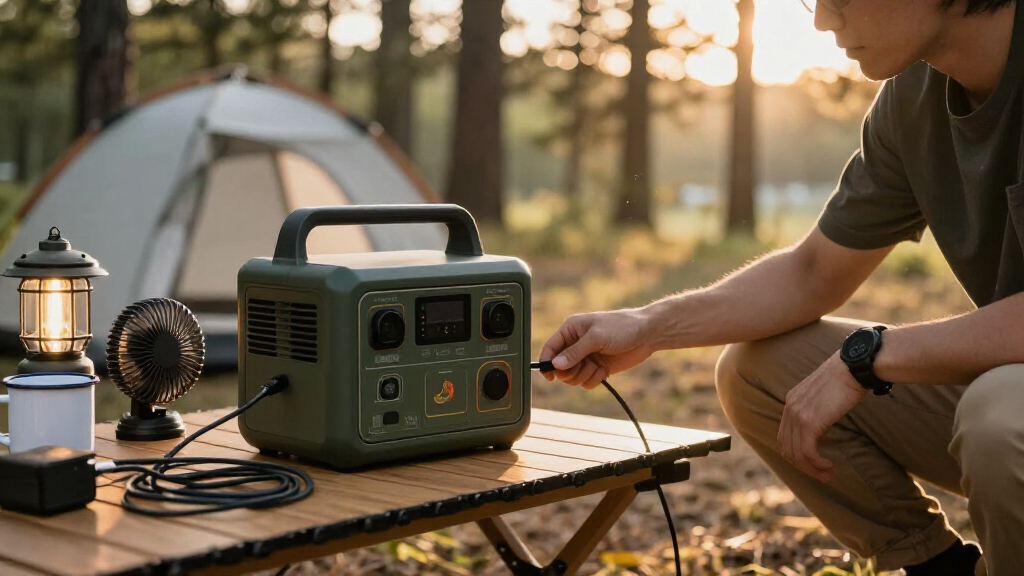
How We Picked
My ranking logic starts with one question: what does each station actually power at a campsite? I grouped the 15 units by capacity tier — ultralight (under 150Wh), weekend (180–300Wh), and expedition (1000Wh+) — and judged each against the realistic demands of that tier. A 90Wh unit isn’t penalized for failing to run a fridge, but it is penalized for weighing as much as a 300Wh competitor. From there, I compared battery chemistry, since LiFePO4 cells with 2,000+ cycle lifespans justify a higher price for anyone camping more than a few times a year.
Beyond raw specs, I weighted recharge speed, port selection (a built-in PD wall charger, as on the Anker C300, removes one more cable from your pack), and weight-to-capacity ratio. Included accessories like the ZeroKor’s foldable solar panel earned credit only when the panel’s wattage made a meaningful difference in recharge time. Finally, I factored in warranty support and brand track record — Jackery, Anker, BLUETTI, and Westinghouse have established service networks, while lesser-known brands trade that safety net for lower cost. The ranking favors the stations that deliver the fewest compromises for their intended camper, not the highest numbers on paper.
Factors to Consider When Choosing Portable Power Stations For Camping
Before settling on one of the 15 picks above, it helps to understand the bigger picture — capacity math, battery chemistry, and solar realities — because the most common camping power mistakes happen before you ever reach the trailhead. These are the factors I’d weigh first.Calculate Watt-Hours Before You Shop
The single most common mistake campers make is buying capacity they don’t need — or underbuying and running dry on night one. To size correctly, add up the wattage of every device you’ll actually run and multiply by the hours of use: a phone charge costs roughly 12Wh, a CPAP machine 30–60Wh per night, a 12V cooler 300–600Wh per day, and an electric kettle a startling 150Wh for a single boil. A 288Wh station comfortably covers phones, headlamps, cameras, and a fan for two people across a weekend. Once a portable fridge enters the picture, you’re looking at 600Wh minimum, which is why the Jackery Explorer 1000 v2 exists in a different category than everything else here. My advice: list your devices, do the arithmetic honestly, then buy about 30% more capacity than the math suggests, because batteries lose usable output in cold nights and as they age. Capacity you never use is just weight you carried for nothing, so don’t overbuy for a one-device weekend either.
Battery Chemistry: The Spec Most Buyers Skip
Every station in this roundup uses either lithium-ion (NMC) or LiFePO4 chemistry, and the difference plays out over years, not days. NMC packs — like those in the Jackery Explorer 300, MARBERO, and Westinghouse units — are lighter per watt-hour and often cheaper, but typically degrade after 500–800 full cycles. LiFePO4 packs in the ALLWEI, BLUETTI, VTOMAN, and DaranEner are rated for 2,000–3,000 cycles, meaning a frequent camper could use one for a decade before noticing capacity loss. They’re also more thermally stable, which matters if your station lives in a hot car trunk between trips. The tradeoff is weight and upfront cost: LiFePO4 stations tend to run heavier for the same capacity. If you camp twice a year, chemistry barely matters — buy on price and features. If you’re out monthly, the chemistry choice will outlast any other spec on the box.
Solar Charging Reality Check
Solar generator marketing creates expectations the sun rarely meets. A 60–100W panel under real-world conditions — partial shade, a campsite angled away from noon sun, clouds rolling over the ridge — delivers maybe 50–70% of its rated output, and only during peak hours. That means recharging a fully depleted 288Wh station can take a full sunny day, not the optimistic morning-charge figures in product listings. Panel placement matters more than panel wattage: repositioning the panel every couple of hours to face the sun can double your daily harvest compared to leaving it propped against a tree. The ZeroKor bundle in this roundup makes sense specifically because its included panel roughly matches its battery’s recharge needs. If solar is central to your plan — say, a multi-day base camp — budget for a panel rated at least a third of your battery capacity, and treat any recharge time under 6 hours as best-case math.
Inverter Output and the Appliance Trap
An AC outlet is not a promise that your station runs AC devices. The wattage rating tells you the ceiling: 120–150W stations (HOWEASY, MARBERO) run laptops and small lights only, 300W stations handle a fan or small blender but trip instantly on a hair dryer or kettle, and only the 600W BLUETTI and 1500W Jackery 1000 v2 in this lineup can start power-hungry appliances. Surge ratings matter for anything with a motor — a compressor fridge can draw double its running wattage at startup. Also check whether the unit uses a pure sine wave inverter (all the name brands here do), because modified sine wave output can damage sensitive electronics and make fans buzz. The honest question to ask: if you’re dreaming of coffee makers and hot plates at camp, you don’t need a bigger battery so much as a bigger inverter — or a camping stove, which does the same job for zero watts.
Weight, Portability, and Honest Packing
Weight specs on product pages hide how a station behaves in practice. A 7-pound unit with a sturdy carry handle feels effortless; a 7-pound unit with a cheap strap or no handle becomes the thing you leave in the car. Anything over 10 pounds — most 300Wh stations, and definitely the 24-pound Jackery 1000 v2 — moves from backpack territory to car-camping territory, so match the weight to how you actually travel. For paddlers and overlanders, water resistance and rugged casings matter more than for drive-in campgrounds, where a light drizzle to the picnic table is the worst case. Consider pass-through charging too: stations that let you charge the battery and run devices simultaneously effectively work as a portable UPS for overnight CPAP users. The best pack strategy is often two small stations split between packs rather than one heavy unit that one person regrets carrying by mile three.
When to Pay More (and When Not To)
Premium brands like Jackery, Anker, and BLUETTI charge more for the same headline specs as budget brands, and the premium buys three things: customer support that answers the phone, a battery management system that’s been refined over millions of units, and resale value if you upgrade later. For a station that keeps your phone alive on weekend trips, a budget unit is a defensible gamble. For anything mission-critical — CPAP overnight, powering navigation equipment on a remote trip — brand reliability is worth every dollar, because a failure isn’t an inconvenience, it’s a safety issue. The middle path is where the value lives: established brands’ smaller models, or well-reviewed newer brands like VTOMAN and DaranEner that use the same LiFePO4 cells at lower prices. One more spending rule: avoid paying for capacity tiers you can’t fill. A half-used 1000Wh station costs more and weighs more than a fully-used 300Wh one that covers the same actual needs.
Frequently Asked Questions
Will a 300Wh power station run a portable fridge for a full weekend?
Usually not on battery alone, and this is the most common overestimate campers make. A typical 12V compressor fridge draws 40–60W while running, but cycles on and off — figure 500–700Wh consumed over 48 hours in warm weather, which exceeds a fully charged 288–300Wh station. You also need to check the inverter rating, since the compressor’s startup surge can exceed 300W and trip the outlet entirely; the 600W BLUETTI Elite 30 V2 or 1500W Jackery Explorer 1000 v2 handle this far better. Pairing a 300Wh station with a 100W solar panel changes the math, letting the fridge run indefinitely in good sun. Without solar, treat a small station as a fridge extender for one night, not a weekend solution.
Is it safe to use a power station inside a tent?
Yes, and this is actually one of their biggest advantages over fuel generators — there’s no exhaust, so there’s no carbon monoxide risk. LiFePO4 models in particular are thermally stable and widely used indoors for CPAP machines and medical devices. That said, follow a few precautions: keep the station off the tent floor away from condensation, don’t block its cooling vents with sleeping bags or clothing, and avoid charging it inside a sealed, hot tent where heat builds up. The small fan noise some units make under heavy load is normal, though light sleepers may prefer keeping it just outside the tent door with cords run through the gap. Never leave a station charging unattended overnight inside a tent if you can avoid it — the same caution you’d apply to any lithium battery.
What size power station do I need for a CPAP machine while camping?
Most CPAP machines draw 30–60W without a heated humidifier, translating to roughly 30–60Wh for an 8-hour night — meaning even a 200Wh station covers 3–4 nights, and a 288Wh unit like the Anker SOLIX C300 covers a long weekend comfortably. Two details matter more than capacity: turn off the heated humidifier and heated tube, which can double or triple consumption, and check whether the machine can run on DC power directly. The Anker SOLIX C300 DC is an interesting pick here because skipping the DC-to-AC inverter conversion saves 10–15% of battery. Also confirm the station supports pass-through charging so you can top it up from a solar panel during the day while it powers the machine at night. With those adjustments, CPAP camping is genuinely routine with almost any 200Wh-plus station in this lineup.
Are power station bundles with solar panels worth the extra cost?
It depends entirely on trip length and where you camp. For a one- or two-night car camping trip, solar is often dead weight — you leave with a full battery and return with most of it, and the panel never leaves the trunk. For trips of three days or more, especially at a base camp, a panel is what turns a battery into a renewable system, and the ZeroKor bundle in this roundup is built exactly for that scenario. The bundled panels are usually modest (40–100W), so treat them as maintenance charging rather than rapid recharging — expect a 300Wh battery to take most of a sunny day to refill. If you might upgrade to a bigger station later, buying the panel separately in the 100–200W range gives you flexibility a bundle can’t. My rule: bundles pay off for off-grid trips, standalone stations pay off for drive-in campgrounds with a full charge at home.
How long can a power station sit in storage before it loses charge?
Most modern stations hold charge for 3–6 months thanks to low self-discharge rates, but the bigger risk is storing them fully depleted or fully charged, both of which stress lithium cells. The standard guidance is to store at around 50–80% charge in a cool, dry place — a closet indoors, not a garage that swings from freezing to sweltering. Jackery, Anker, and BLUETTI units include auto-shutoff that minimizes idle drain, but budget brands can lose charge faster, so check the level before each trip rather than assuming it’s ready. Cold weather camping deserves a mention too: below freezing, you can safely discharge the battery but shouldn’t charge it, and capacity can temporarily drop 10–20% on a freezing night. Build a simple habit of topping up to storage level every few months and any station in this roundup will be ready the morning you pack the car.
Conclusion
After comparing all 15 stations, the right pick depends less on specs and more on how you actually camp. For the best overall performance, the Jackery Explorer 1000 v2 is in a class of its own — it’s the only station here that runs fridges, kettles, and real appliances across a multi-day trip, and its 1500W inverter means no frustrating device limits. For the best value, the VTOMAN FlashSpeed 300 and ALLWEI 300W pair durable LiFePO4 chemistry with fast recharging at a price that undercuts the big brands without giving up much.
For beginners, I’d point to the Anker SOLIX C300 — its built-in PD charger, intuitive app, and refined interface make it the easiest station to own, with zero cables to lose and predictable behavior. For backpackers and minimalists, the MARBERO 88Wh is the only genuinely trail-ready option, light enough that you’ll actually bring it. For off-grid and solar-first campers, the ZeroKor bundle with its included 60W panel keeps a smaller battery alive indefinitely, and the Anker SOLIX C300 DC is the niche pick for CPAP and 12V-only setups where inverter losses matter. Whatever you choose, size for the devices you really bring, favor LiFePO4 if you camp often, and don’t pay for capacity you’ll never fill.
Fall Picks
fall essentials
As an affiliate, we earn on qualifying purchases.