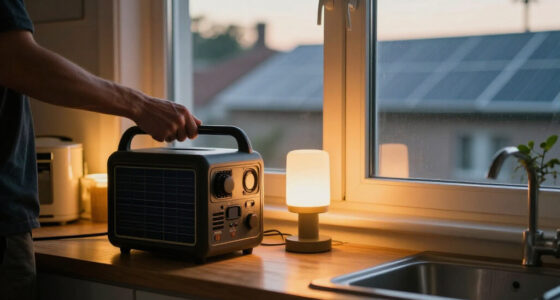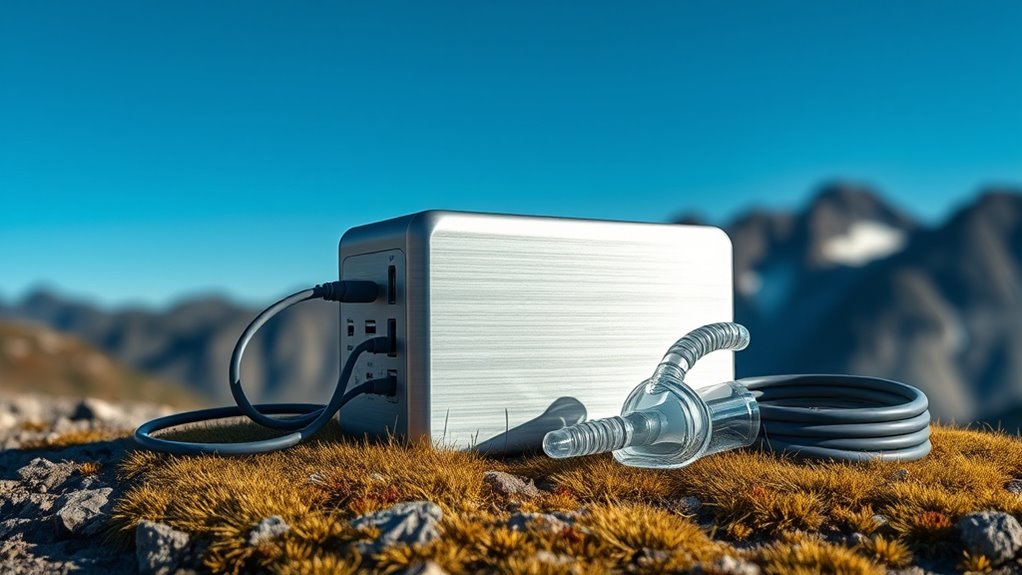

The BLUETTI Elite 30 V2 is my best overall pick for a CPAP setup, pairing 288Wh of capacity with 600W output and an LFP battery. For longer backup needs, the Jackery Explorer 1000 v2 offers a much larger 1070Wh reserve, while the EASYLONGER ES270 is a compact, CPAP-focused option with a 99.9Wh battery. The main tradeoff is between overnight capacity, carry weight, and whether a dedicated CPAP battery or general-purpose power station fits your routine. Actual runtime can vary widely with your machine, pressure settings, and humidifier use. Read on for the full comparison and advice on matching a station to your sleep equipment.

Get backup power and energy gear delivered free with Prime
- Fast, free delivery on millions of items
- Prime Video, Amazon Music and more included
- Member-only deals all year
Complete the kit


Key Takeaways
- The BLUETTI Elite 30 V2 leads on balance: its 288Wh LFP battery and 600W output offer a useful mix of capacity and headroom for a CPAP-focused setup.
- Capacity changes the use case: the Jackery Explorer 1000 v2 has 1070Wh, far more stored energy than the sub-300Wh options, but its larger format is less suited to carrying light.
- Dedicated CPAP batteries address a different need: the EASYLONGER ES270 and ES400 AIR prioritize CPAP use and compact capacity, while general power stations can also run other devices.
- LFP chemistry appears across several mid-size contenders: DARAN, BLUETTI Elite 30 V2, and ALLWEI list LiFePO4 batteries, making chemistry one useful comparison point alongside capacity and output.
- There is no single best capacity for every sleeper: travel weight, humidifier use, DC connection options, and the number of backup nights can matter more than a high wattage figure.


| portable power station for cpap | Weight | Capacity |
|---|---|---|
| DARAN Portable Power Station 1 | 8.86 lbs | — |
| MARBERO 200W Portable Power St | 3.3 lbs | — |
| HOWEASY Portable Power Station | 5.5 lbs | — |
| Portable Power Station 300W MA | 4.6 lbs | — |
| Jackery Explorer 300 Portable | 7.5 lbs | — |
| BLUETTI Elite 30 V2 Portable P | 9.4 lbs | 288Wh |
| EASYLONGER ES270 CPAP Battery | 1.3 lbs | 99.9Wh |
| ALLWEI Portable Power Station | 6.4 lbs | 256Wh |
| BLUETTI Elite 10 Mini Portable | 4 lbs | 128Wh |
| EnginStar Portable Power Stati | 6.5 lbs | 296Wh |
| EASYLONGER CPAP Battery Backup | Approximately 6.6 lbs | 297.6Wh |
| Jackery Explorer 1000 v2 Porta | 23.8 lbs | 1070Wh |
| EASYLONGER CPAP Battery Backup | 2.05 pounds | 148Wh |
| Anker SOLIX C1000 Gen 2 Portab | Approximately 25 lbs | 1024Wh |
More Details on Our Top Picks
DARAN Portable Power Station 1200W Surge, 288Wh LiFePO4 Solar Generator (Solar Optional) with 100W PD & AC Outlets, Fast Charging Battery Supply for Camping, RV, Emergency, CPAP
This model stands out for its high power output of 600W pure sine wave, capable of running CPAP machines for over 8 hours, making it ideal for those who need reliable, safe backup power. Compared to the Jackery Explorer 300, it offers a higher wattage capacity, supporting larger devices and multiple simultaneous charges. Its LiFePO4 battery ensures longer lifespan and safer operation, especially important for medical devices like CPAPs. However, its 288Wh capacity is lower than the Jackery Explorer 300’s 292Wh, meaning slightly less runtime for high-demand devices. The inclusion of multiple outlets—AC, Type-C, USB-A, and car socket—provides flexible charging options, perfect for group camping or emergency scenarios. Its lightweight design at under 9 lbs makes it portable, but the absence of solar panel and charging cables can be a drawback for off-grid use. Overall, this pick suits users seeking a balanced combination of power, safety, and portability for varied outdoor and emergency needs.
Pros:- Supports stable 600W pure sine wave power for sensitive devices
- LiFePO4 battery offers longer lifespan and safer operation
- Multiple charging outputs including AC, Type-C, USB-A, and car socket
- Lightweight at 8.86 lbs with shock-resistant casing
Cons:- 288Wh capacity limits runtime for high-power devices over extended periods
- Solar panel and cables not included, requiring additional purchase
- Relatively compact size may limit heavy-duty use
Best for: Individuals needing a reliable, safe power source for CPAP and multiple devices during camping or emergencies.
Not ideal for: Users wanting high-capacity, long-duration power for extended off-grid adventures or large appliances, as capacity is modest.
- Battery Capacity:288Wh
- Surge Power:1200W
- Output Power:600W
- Weight:8.86 lbs
- Dimensions:10.0 x 6.6 x 8.2 inches
- Charging Methods:AC, car socket, solar (not included)
Our verdict“Ideal for users who prioritize safety, portability, and versatile device support in emergency or outdoor settings.”
MARBERO 200W Portable Power Station 148Wh Camping Solar Generator Laptop Power Bank with AC Outlet 110V, DC, USB QC3.0, LED Flashlights for CPAP Home Outdoor Trip Emergency Backup
This model makes the most sense for users seeking a lightweight, affordable power solution that can support CPAP devices and small electronics during camping or outages. Compared with the Jackery Explorer 300, it offers a significantly smaller capacity at 148Wh, providing shorter runtimes but ample for quick short-term use. Its 200W continuous power supports most small appliances, though not larger or high-demand devices. The built-in LED flashlight with multiple modes adds an emergency feature, while the folding handle enhances portability. The multiple USB ports and AC outlet make it versatile for charging phones, tablets, and CPAPs, but the limited capacity means it will need frequent recharges for prolonged use. Its affordability and compact size appeal to beginners or those with minimal power needs, but it isn’t suited for extended off-grid stays or high-power devices.
Pros:- Extremely lightweight at just 3.3 lbs, very portable
- Supports multiple devices with USB QC3.0, AC, and DC outlets
- Built-in LED flashlight for emergency use
- Affordable and compact for quick deployment
Cons:- Limited 148Wh capacity restricts runtime for CPAP and electronics
- Not suitable for high-demand appliances or long-term use
- No solar panel included, additional purchase needed
Best for: Beginners or occasional users needing portable, lightweight backup power for CPAP and small devices during outdoor trips or short emergencies.
Not ideal for: People requiring long-lasting power for extended blackout situations or larger appliances, as capacity and runtime are limited.
- Battery Capacity:148Wh
- Power Output:200W
- Weight:3.3 lbs
- Dimensions:7.5 x 5.3 x 3.6 inches
- Charging Methods:AC, car, solar (not included)
Our verdict“Best suited for lightweight, short-term backup power needs for CPAP and small electronics on outdoor trips.”
HOWEASY Portable Power Station 300W,Solar Generator 222Wh
This pick offers a compact 222Wh capacity, making it an excellent choice for travelers needing a lightweight power source for CPAP and small devices. Compared to the MARBERO 148Wh, it provides longer runtime while maintaining a very portable form factor at just 5.5 pounds. Its 300W surge and 222Wh capacity support multiple small devices, and the built-in LED flashlight adds emergency utility. The multiple charging options, including solar, AC, and car, make it flexible for various outdoor scenarios. The device’s high-quality BMS protects against overload and temperature issues, enhancing safety for sensitive electronics. However, the capacity still limits long-term use, and the lack of included solar panels means additional purchases are necessary for off-grid recharging. It makes the most sense for travelers who prioritize portability and safety without requiring extended power capacity.
Pros:- Very lightweight at 5.5 lbs, easy to carry
- Supports multiple small devices with AC, USB-C, USB-A, and DC ports
- Built-in LED flashlight with multiple modes
- Supports solar, AC, and car charging
Cons:- Capacity of 222Wh limits long-term use
- Requires separate solar panel purchase for solar recharging
- Limited to small devices and short durations
Best for: Travelers and outdoor enthusiasts needing a lightweight, safe power source for CPAP and small electronics during trips.
Not ideal for: Users with high power demands or long blackout scenarios, as runtime is limited to moderate durations.
- Battery Capacity:222Wh
- Power Output:300W
- Weight:5.5 lbs
- Dimensions:8.25 x 4.7 x 5.8 inches
- Charging Methods:AC, car, solar (not included)
Our verdict“Excellent for travel or outdoor activities where portability and safety are priorities for CPAP and electronics.”
Portable Power Station 300W MARBERO 237Wh Camping Solar Generator Backup Lithium Battery with Pure Sine Wave 110V AC Outlet, USB C, USB A, DC for Outdoors Camping CPAP Home Blackout Emergency
This model provides a solid 237Wh capacity supporting multiple devices, including CPAP, with a pure sine wave inverter for sensitive electronics. Compared to the Jackery Explorer 300, it offers similar wattage but slightly more capacity, making it suitable for longer use or slightly larger devices. Its multiple output options—AC, USB-C, USB-A, and DC—plus LED flashlight, make it versatile for outdoor, camping, or emergency use. The 300W continuous power supports CPAP operation and small appliances, while the 375W peak supports brief surges. Its compact size and 4.6 lbs weight enhance portability, yet the capacity still limits extended use for high-power devices. It’s an excellent choice for those seeking a balanced mix of capacity, safety, and portability for varied outdoor activities and backup needs.
Pros:- Supports multiple devices with AC, USB-C, USB-A, and DC outputs
- Pure sine wave inverter for safe operation of sensitive electronics
- Lightweight at 4.6 lbs, portable for outdoor use
- Supports recharging via AC, car, and solar (solar panel not included)
Cons:- Limited 237Wh capacity for long-term use
- No solar panel included, additional purchase needed
- Not suitable for high-power appliances
Best for: Outdoor enthusiasts and emergency users looking for a balanced, portable power source for CPAP and multiple small devices.
Not ideal for: People requiring very long runtimes or high-demand appliances, as capacity is moderate and limited for extended use.
- Battery Capacity:237Wh
- Power Output:300W
- Weight:4.6 lbs
- Dimensions:8.15 x 3.9 x 5.83 inches
- Charging Methods:AC, car, solar (not included)
Our verdict“A well-rounded, portable power solution for outdoor trips and emergency backup for CPAP and small electronics.”
Jackery Explorer 300 Portable Power Station,292Wh
This model makes a compelling case for durability, offering over 4,000 charge cycles and a 292Wh capacity, making it one of the most long-lasting options in this lineup. Compared to the MARBERO 237Wh or HOWEASY 222Wh, it provides slightly more capacity and a more established brand reputation. Its compact form factor at 7.5 lbs and integrated handle make it highly portable, ideal for hiking, camping, or emergency backup. The support for a 600W surge power allows operation of CPAPs and small appliances, especially when paired with compatible solar panels, which can recharge it to 80% in under 3 hours. Its LiFePO4 chemistry ensures safety and longevity, but the price might be higher than smaller, less durable models. This pick makes the most sense for users seeking a durable, long-term power source for CPAP and other electronics in off-grid settings.
Pros:- Over 4,000 charge cycles for long-term durability
- Supports up to 600W surge power for CPAP and small appliances
- Lightweight at 7.5 lbs with a sturdy handle
- Supports solar recharging, compatible with panels
Cons:- Slightly higher price point than smaller models
- Limited capacity compared to larger units like Explorer 1000
- Requires compatible solar panels for off-grid recharging
Best for: Active outdoor users and those seeking long-lasting, durable power for CPAP and electronics over many years.
Not ideal for: Casual users or those with minimal power needs, given the higher investment for longevity and durability.
- Battery Capacity:292Wh
- Surge Power:600W
- Runtime:Over 4,000 cycles
- Weight:7.5 lbs
- Dimensions:9.1 x 5.2 x 7.8 inches
- Charging Methods:AC, solar (compatible panels)
Our verdict“Perfect for users prioritizing long-term durability and off-grid reliability for CPAP and electronics.”
BLUETTI Elite 30 V2 Portable Power Station 288Wh 600W LFP Solar Generator
This model stands out for its combination of high power output, multiple charging modes, and impressive portability at only 9.4 lbs. Compared to the Jackery Explorer 300, the BLUETTI Elite 30 V2 offers a larger capacity (288Wh vs. 292Wh) and a higher continuous power rating of 600W, making it more suitable for CPAPs and small appliances during outages or outdoor trips. Its ability to activate Power Lifting Mode for 1500W power makes it more adaptable for devices with higher startup loads. The smart cooling system and ultraCell tech significantly reduce power consumption, extending runtime. However, the 288Wh capacity limits long-term use without recharging, and it’s bulkier than ultra-compact options like the BLUETTI Elite 10 Mini. The fast wall charging (70 mins to full) and UPS feature add to its reliability in emergencies. It makes the most sense for users who need a portable, high-capacity power source that can handle critical devices like CPAPs during storms or outdoor adventures.
Pros:- High 600W continuous output with 1500W surge for demanding devices
- Multiple charging options including fast wall charging and solar compatibility
- UltraPortability at just 9.4 lbs for such capacity
- Reliable UPS switching ensures device protection during blackouts
Cons:- Limited 288Wh capacity may require frequent recharging for extended use
- Relatively bulkier compared to smaller portable units like the Elite 10 Mini
Best for: Outdoor enthusiasts, emergency prepper households, and storm-prone residents needing reliable CPAP backup.
Not ideal for: Travelers requiring ultra-lightweight gear or those with minimal power needs due to its slightly larger size and weight.
- Capacity:288Wh
- Continuous Power:600W
- Surge Power:1500W
- Weight:9.4 lbs
- Charging Time:70 mins to full
- Charging Modes:AC wall, solar, car
Our verdict“Ideal for users who need a versatile, high-capacity power station capable of supporting CPAP and other essentials during outages or outdoor trips.”
EASYLONGER ES270 CPAP Battery for Air-Travel, 99.9Wh CPAP Power Bank
This compact pick excels for air travelers needing a TSA & FAA-approved backup that fits easily into backpacks, measuring just 5.1×2.9×1.9 inches and weighing only 1.3 pounds. It’s specifically designed for low-power CPAP machines like ResMed AirMini, providing up to 8 hours of operation, which surpasses the duration of smaller units like the Jackery Explorer 100. Its 99.9Wh capacity is within airline limits, making it perfect for travel. The pass-through charging feature allows continuous device operation during recharging, and the included multiple cables support various CPAP models. The smart display, wireless charging, and rapid 2-hour recharge add to convenience. However, it’s not suited for high-power CPAPs or devices requiring more than 100W, and its limited capacity restricts use to one night of sleep. This makes it most suitable for frequent travelers or those who need a reliable, lightweight CPAP backup on the go.
Pros:- Airline-approved size under 160Wh for travel convenience
- Supports multiple CPAP models with included cables
- Fast 2-hour recharge and wireless charging capability
- Reliable pass-through function for continuous use during charging
Cons:- Limited capacity restricts it to a single night’s use
- Not suitable for high-power or heated CPAP machines
Best for: Air travelers and light CPAP users needing compact, portable backup power for one night’s sleep.
Not ideal for: Home users or those with high-power CPAPs requiring longer runtime or higher wattage support.
- Capacity:99.9Wh
- Output Power:Up to 100W
- Weight:1.3 lbs
- Recharge Time:2 hours
- Compatibility:ResMed AirMini, Luna TravelPAP
Our verdict“Perfect for air travelers seeking a lightweight, reliable CPAP backup that complies with airline regulations.”
ALLWEI Portable Power Station 300W, 256Wh Solar Generator LiFePO4 Battery
This model offers a solid balance of capacity and durability, with 256Wh and a 300W continuous output, built on a LiFePO4 battery that supports nearly a decade of use with 3000+ charge cycles. Compared to the EnginStar 300W, the ALLWEI provides slightly less capacity but benefits from a more extensive port selection—up to 6 devices simultaneously—making it suited for camping, emergency backup, or off-grid living. Its multiple recharge options, including AC, solar, and car, add flexibility. The pure sine wave inverter protects sensitive devices, which is a step up from basic inverter units. The main tradeoff is the heavier weight at 6.4 lbs versus more compact options like the BLUETTI Elite 10 Mini. Its robust build and long cycle life make it ideal for long-term outdoor use, although the capacity might require more frequent recharging during extended trips.
Pros:- Long-lasting LiFePO4 battery with 3000+ cycles
- Multiple charging options including solar and car
- Pure sine wave inverter for device safety
- Supports up to 6 devices at once
Cons:- Weight of 6.4 lbs makes it less portable than smaller units
- Capacity may require frequent recharging on extended trips
Best for: Campers, outdoor enthusiasts, and emergency preppers needing a durable and long-lasting power source.
Not ideal for: Travelers seeking ultra-lightweight units or those with minimal power needs for short trips.
- Capacity:256Wh
- Continuous Power:300W
- Cycle Life:3000+ cycles
- Weight:6.4 lbs
- Charging Modes:AC, solar, car
- Ports:6 including AC, USB, DC
Our verdict“Suitable for users who prioritize long-term durability and multiple device support over ultra-lightweight portability.”
BLUETTI Elite 10 Mini Portable Power Station, 128Wh 200W Solar Generator
This ultra-portable model excels at providing reliable power in a tiny form factor, weighing only 4 pounds with dimensions of 7.8 x 5.7 x 4.3 inches. It’s ideal for travel, with a 128Wh capacity and 200W AC output, suitable for charging small devices, laptops, cameras, and drones during camping or power outages. Its 10ms UPS backup provides instant power during outages, comparable to the larger Elite 30 V2 but with a focus on portability. The fast 70-minute recharge via AC, along with multiple ports including USB-C PD 60W, makes it versatile for everyday backup. Compared to the Jackery Explorer 1000, it offers much less capacity but is easier to carry on flights. Its main tradeoffs are limited runtime and power support, making it best suited for light devices or short-term backup during travel.
Pros:- Lightweight and airline-compatible size
- Built-in 10ms UPS for instant backup
- Fast recharge in under 1.5 hours
- Versatile ports including USB-C PD 60W
Cons:- Limited capacity restricts it to small devices and short durations
- Not suitable for high-wattage or heating devices like CPAPs with humidifiers
Best for: Travelers and outdoor lovers needing a lightweight, quick-charging backup for small electronics.
Not ideal for: People with high-power devices or seeking long-term backup for home appliances.
- Capacity:128Wh
- Output Power:200W
- Weight:4 lbs
- Recharge Time:70 mins
- Ports:USB-C PD, USB-A, DC
Our verdict“Best for travelers who need a compact, portable power station for small electronics and quick recharging.”
EnginStar Portable Power Station 300W 296Wh Solar Generator
This model offers a compelling blend of capacity and ruggedness, with 296Wh and 300W continuous power, suitable for powering CPAPs, phones, and small appliances during outages or outdoor adventures. Its 8 output ports support multiple devices simultaneously, similar to the ALLWEI but with slightly more capacity, making it ideal for camping or emergency backup. The pure sine wave inverter ensures safe operation of sensitive electronics, and the advanced BMS provides comprehensive safety protections. Weighing only 6.5 pounds and measuring 9 x 5.5 x 7.5 inches, it balances portability with durability. Compared to the ALLWEI, it offers slightly more capacity but at the cost of a marginally larger size. Its rugged build and multi-recharge options make it well-suited for prolonged outdoor use, though heavier than the ultra-lightweight units like the Elite 10 Mini.
Pros:- High 296Wh capacity with 300W continuous output
- Pure sine wave inverter protects sensitive devices
- Multiple recharge options including solar and AC
- Supports several devices simultaneously
Cons:- Slightly heavier at 6.5 lbs compared to smaller units
- Larger size may reduce portability for some users
Best for: Outdoor enthusiasts and emergency preppers needing a durable, high-capacity power supply.
Not ideal for: Travelers seeking ultra-light or ultra-compact units for short trips.
- Capacity:296Wh
- Continuous Power:300W
- Charge Cycles:1000+
- Weight:6.5 lbs
- Charging Modes:AC, solar, car
- Ports:8 including AC, USB, DC
Our verdict“Best suited for users who need a rugged, high-capacity power source for camping or emergencies, not ultra-light travel.”
EASYLONGER CPAP Battery Backup ES960, 297.6Wh LiFePO4 Battery Pack
This model stands out for its high-capacity 297.6Wh LiFePO4 battery, supporting over two nights of CPAP therapy, making it ideal for extended trips or emergency use. Compared with the EASYLONGER ES270, it offers more runtime but at a larger size and weight. Its multi-device ports add versatility, powering laptops and small electronics alongside your CPAP. However, its exceeds TSA 160Wh limit, so it’s not suitable for air travel, which could be a drawback for frequent travelers. The fast recharge options and durable battery chemistry provide reliable, long-term performance, but the size and weight may be less ideal for ultra-light backpacking. Overall, this pick makes the most sense for users needing dependable, multi-night power without frequent recharges, especially during extended outdoor stays or power outages.
Pros:- Supports 2+ nights of CPAP use without humidifier or heated tube
- Long lifespan with 3000+ cycles ensures durability
- Multiple output ports for powering various devices
Cons:- Exceeds TSA 160Wh limit, so not air travel compatible
- Relatively heavy and bulky for lightweight travel
Best for: Frequent travelers and campers who need multi-night, reliable CPAP backup without airline restrictions.
Not ideal for: Solo travelers with minimal gear or those prioritizing ultra-light portability, due to its bulk and weight.
- Capacity:297.6Wh
- Battery Type:LiFePO4
- Output Ports:6
- Fast Recharge:6-8 hours via 60W USB-C PD or 72W AC
- Cycle Lifespan:3000+
- Weight:Approximately 6.6 lbs
Our verdict“Ideal for users who prioritize long-term, reliable power over ultra-light portability, especially during extended trips.”
Jackery Explorer 1000 v2 Portable Power Station,1070Wh,1500W
This option makes the most sense for users needing large capacity and high output in a portable form, with 1070Wh supporting multiple devices and appliances during power outages or outdoor adventures. Its 1500W AC output can run small to medium appliances, and the lightweight 23.8 lbs design with a foldable handle simplifies transport. Compared to the EASYLONGER ES960, it offers a significantly larger capacity but at a higher weight and size. The one-hour fast charging feature, combined with a 10-year lifespan, ensures long-term reliability, but it’s heavier than smaller models like the EASYLONGER ES400. Its app control for switching modes and monitoring adds convenience, but the higher price and size may be less appealing for minimalist users. This makes it a strong choice for those who need dependable, high-capacity power in a portable package for emergencies or camping.
Pros:- Large 1070Wh capacity supports multiple devices and appliances
- Fast 1-hour charging from 0% to 100%
- 10-year lifespan with durable battery technology
Cons:- Heavier than smaller power stations, around 23.8 lbs
- Price may be higher for budget-conscious users
Best for: Outdoor enthusiasts, campers, and emergency prepper households seeking high-capacity, multi-device power support.
Not ideal for: Travelers on strict weight limits or those seeking ultra-compact solutions for minimal equipment.
- Capacity:1070Wh
- Output Power:1500W continuous
- Surge Power:3000W
- Weight:23.8 lbs
- Recharge Time:1 hour with fast charging
- Ports:9
Our verdict“Best suited for those needing high-capacity, versatile power for extended outdoor or emergency use without sacrificing portability too much.”
EASYLONGER CPAP Battery Backup ES400 AIR, 148Wh Lithium-Ion Battery Pack
This model is ideal for users needing a small, lightweight backup, supporting a full night of CPAP without the bulk of larger units like the Jackery Explorer 1000. It’s a notable upgrade over the EASYLONGER ES270, offering more capacity in a similar portable form, making it perfect for short trips or everyday backup. Its pass-through charging allows use while recharging, and the included cables ensure compatibility with major CPAP brands. Compared to the larger ES960, it’s limited in runtime, especially with humidifiers or heated tubes, but its compact size makes it extremely portable. The main tradeoff involves shorter runtime and limited device power, which may not suit users with high power demands or extended trips. Overall, this pick makes sense for travelers who prioritize ease of carry and quick recharges for minimal CPAP needs.
Pros:- Lightweight and highly portable at just over 2 lbs
- Supports a full night of CPAP therapy without humidifier
- Includes 4 compatible cables for broad device compatibility
Cons:- Limited runtime with humidifier or heated tube attached
- Not TSA-approved for air travel due to capacity
Best for: Travelers and light sleepers who need a portable, easy-to-carry backup for single-night CPAP use.
Not ideal for: Heavy users or those needing multi-night support with humidifiers, due to limited capacity.
- Capacity:148Wh
- Weight:2.05 pounds
- Cables Included:4
- Compatibility:ResMed, Philips, Luna G3, and others
- Pass-Through Charging:Yes
- Recharge Time:4-5 hours via AC
Our verdict“Perfect for casual travelers and minimal users who want a reliable, compact CPAP backup for short trips or daily use.”
Anker SOLIX C1000 Gen 2 Portable Power Station
This model is best suited for users who need rapid recharging and high power output, with 2000W peak and 1024Wh capacity supporting larger appliances and multiple devices. Unlike the Jackery Explorer 1000, it offers faster recharge in just 49 minutes thanks to HyperFlash tech, making it ideal for emergency scenarios or frequent off-grid trips. Its compact size and lighter weight (around 11.3 kg) make it more portable for its capacity, but still substantial compared to smaller CPAP-specific units. The 10-year lifespan with over 4,000 cycles ensures durability, but the higher capacity and power might be overkill for simple CPAP backup, especially if portability is a primary concern. This pick is best for those who need power versatility and rapid recharge for both emergency and outdoor applications.
Pros:- Ultra-fast recharge in under 50 minutes
- High 2000W continuous output supports multiple devices
- Compact and lighter than similar models with comparable capacity
Cons:- Higher capacity and power may be unnecessary for simple CPAP use
- Price point might be higher for casual travelers
Best for: Preppers, remote workers, and off-grid users needing quick recharge and high wattage support for multiple devices or larger appliances.
Not ideal for: Minimalist travelers or those seeking ultra-light CPAP backups, due to its larger size and higher capacity.
- Capacity:1024Wh
- Output Power:2000W continuous
- Peak Surge:3000W
- Recharge Time:49 minutes
- Weight:Approximately 25 lbs
- Ports:10
Our verdict“Ideal for users who need rapid, high-capacity power with fast recharging for versatile off-grid and emergency applications.”

How We Picked
I compared the 14 listed models against the needs of CPAP users: stored energy for overnight use, AC output capacity, battery chemistry where stated, portability, and whether the product is purpose-built for CPAP or designed for broader backup use. Capacity and wattage matter, but they do not predict runtime by themselves; a CPAP’s settings and accessories can change energy demand substantially. I also treated travel claims carefully, since airline rules and device-specific compatibility need to be checked with the carrier and CPAP maker.
The order favors a practical balance for overnight backup rather than the highest output number. The BLUETTI Elite 30 V2 ranks ahead of similarly sized general stations because its listed 288Wh capacity, 600W output, and LFP chemistry combine useful headroom with a compact-capacity format. Larger stations such as the Jackery Explorer 1000 v2 rank better for extended backup, while smaller or CPAP-specific batteries suit portability and dedicated use. I do not treat listed specs as a guarantee of runtime or medical-device compatibility.
Factors to Consider When Choosing Portable Power Station For Cpap
Choosing a portable power station for CPAP starts with your sleep setup, not the biggest number on a product page. These factors help narrow the field before you compare the models.
Estimate Runtime From Your Actual CPAP Setup
Use your CPAP maker’s power guidance and the battery’s usable capacity as a starting point, then leave a margin for losses during power conversion. A watt-hour figure alone cannot promise a set number of nights because pressure, heated tubing, and humidification affect demand. If you need humidification, measure or verify the full setup rather than calculating from the machine alone. A common mistake is buying for a best-case night and finding the reserve too small when accessories are connected. If backup is for an outage, plan around the longest outage you reasonably need to cover, not only a single night.
Choose AC or DC Power With Compatibility in Mind
Many general power stations supply AC power, which can work with a CPAP’s standard adapter if the device maker permits it. A compatible DC cable may reduce conversion losses, but the connector, voltage, and polarity must match the specific machine. Do not assume that a USB port can power a CPAP simply because it can charge a phone. Check whether your CPAP supports battery operation and whether its maker recommends a particular cable or power method. Before relying on a station overnight, confirm the full arrangement with the machine documentation.
Treat Humidifiers and Heated Tubes as Major Load Changes
Heated humidification and heated tubing can use substantially more energy than the CPAP blower alone. Turning those features off may extend runtime, but dry air or discomfort can make that unsuitable for some users. Check whether your machine allows separate control of humidification and tube heat, then estimate power needs using the settings you actually expect to use. Avoid planning around an unheated setup if you know you will need heat to sleep comfortably. A larger station can be the better fit when maintaining your usual settings matters more than minimizing carried weight.
Balance Capacity Against Weight and Backup Duration
For a bedside outage kit, a heavier unit may be acceptable if it supplies more reserve or supports other household devices. For camping or travel, carrying a large battery can outweigh the benefit of extra capacity, especially when the goal is one night’s backup. Compare watt-hours alongside the unit’s physical size and the amount of backup you need. A small CPAP-specific battery can make sense for portability, while a general station may serve as both sleep backup and a source for phones or lights. Do not pay for capacity you cannot comfortably transport or realistically use.
Check Airline Rules and Battery Documentation Before Travel
A battery listed at 99.9Wh may be a more travel-oriented size, but that number alone does not guarantee permission to fly. Airline policies, approval steps, battery labeling, and carry-on rules can vary, so confirm the requirements for every carrier on your itinerary. Keep the battery’s capacity information accessible and contact the airline if its rules are unclear. Also verify that your CPAP can run from that battery and that any required cable is allowed and packed. Never plan to check a power station in luggage unless the airline explicitly permits it.
Frequently Asked Questions
How many nights can a 288Wh power station run my CPAP?
There is no fixed night count for a 288Wh battery because CPAP power draw depends on the machine, pressure, and use of humidification or heated tubing. AC operation can also use more stored energy than a compatible DC connection because of conversion losses. Check your machine’s power guidance and estimate from the setup you use while sleeping, not from the blower alone. For a dependable backup plan, leave a reserve rather than targeting the battery’s full listed capacity.
Should I use my CPAP with the humidifier turned on during an outage?
That depends on your comfort, health needs, and the battery capacity available. Humidifiers and heated tubes can draw much more power than the CPAP blower, so leaving them on may shorten runtime. Check whether your device supports separate control of those functions and talk with your clinician if changing your routine could affect your care. Test the setup at home before an outage so you know how it works with your preferred settings.
Is a dedicated CPAP battery better than a general portable power station?
A dedicated CPAP battery can be easier to match to a sleep device and may suit users who prioritize portability. A general power station can offer broader outlet choices and run other equipment, which may be more useful for home backup or camping. Neither type is automatically compatible with every CPAP; check voltage, connection, and the device maker’s guidance. Choose based on the gear you need to power and how much battery weight you are willing to carry.
Can I take a 99.9Wh CPAP battery on an airplane?
A capacity below 100Wh can fit common airline battery limits, but it does not guarantee acceptance on every flight. Rules can vary by airline and may include requirements for carry-on storage, documentation, or advance approval. Confirm the current policy with each carrier before travel and keep the battery’s capacity label readable. Also check that the battery and connection method are suitable for your CPAP rather than relying on the capacity figure alone.
Is a 1000Wh station excessive if I only need overnight CPAP backup?
It may be more capacity and weight than a one-night backup requires, but it can make sense for longer outages or powering other essentials. A smaller station is easier to carry and may be a better match for a single CPAP setup when its runtime meets your needs. Compare the complete system’s expected consumption, including heated accessories, before stepping up to a larger unit. The right choice depends on whether extended reserve is worth the added size for your use.
Conclusion
For a balanced bedside or camping setup, I would start with the BLUETTI Elite 30 V2 as best overall, based on its 288Wh capacity, 600W output, and LFP battery. The ALLWEI 300W, 256Wh is my best value-style pick among the listed mid-size LFP options, while the Jackery Explorer 1000 v2 is the best premium choice for buyers who want a much larger reserve and can accept a bigger unit. For beginners who want a general-purpose station in a familiar mid-capacity format, I would compare the Jackery Explorer 300 with the CPAP-specific options and verify cable compatibility before buying. For air travel or a compact CPAP-focused setup, the EASYLONGER ES270 is the specific-needs pick, subject to airline approval. Match your choice to real runtime needs and your CPAP maker’s power guidance.
Fall Picks
fall essentials
As an affiliate, we earn on qualifying purchases.