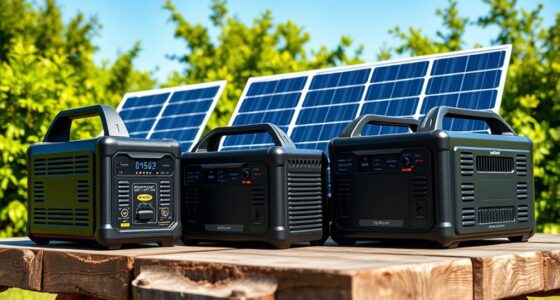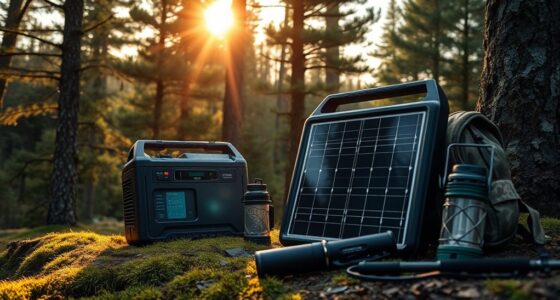
Choosing the right solar panel kit with fast charging requires balancing raw power output against portability and device compatibility. I have evaluated five distinct options to help you navigate this crowded market. The Jackery Solar Generator 300 stands out for those needing a complete, plug-and-play ecosystem, while the GEYOTO 45W Portable Solar Panel offers superior efficiency for direct device charging. For larger setups, the ZOUPW 100W provides the wattage needed to refill power stations quickly. My analysis focuses on how these kits perform under real-world conditions, highlighting where they excel and where they fall short.

Get backup power and energy gear delivered free with Prime
- Fast, free delivery on millions of items
- Prime Video, Amazon Music and more included
- Member-only deals all year
Complete the kit


Key Takeaways
- The Jackery 300 is the best all-in-one choice for beginners who want a complete system without separate components.
- For direct device charging, the GEYOTO 45W offers the highest conversion efficiency at 26%, making it ideal for phones and tablets.
- The ZOUPW 100W is the best standalone panel for refilling larger power stations due to its high amperage and universal connectors.
- The SOLUPUP 30W is the most compact option for hikers, but its lower wattage means it cannot charge laptops quickly.
- The Generic 300W Generator is a budget-friendly all-in-one, but its non-waterproof junction box limits its outdoor durability.
| Jackery Solar Generator 300 with 40W Solar Panel |  | Best All-in-One Starter Kit | Battery Capacity: 292Wh | AC Output: 300W (600W Peak) | Solar Panel Wattage: 40W | VIEW ON AMAZON | See Our Full Breakdown |
| GEYOTO 45W Portable Solar Panel Charger |  | Best for Direct Device Charging | Power Output: 45W | Conversion Efficiency: 26% | Fast Charging: 25W PD USB-C | VIEW ON AMAZON | See Our Full Breakdown |
| ZOUPW 100W Portable Monocrystalline Foldable Solar Panel |  | Best High-Wattage Standalone Panel | Max Power: 100W | Efficiency: 23.5% | Amperage: 4.96 A | VIEW ON AMAZON | See Our Full Breakdown |
| SOLUPUP 30W Portable Foldable Solar Charger |  | Best Compact Budget Option | Max Power: 30W | Weight: 2.4 lbs | Output Voltage: 5V | VIEW ON AMAZON | See Our Full Breakdown |
| Portable Solar Generator 300W with 60W Solar Panel | 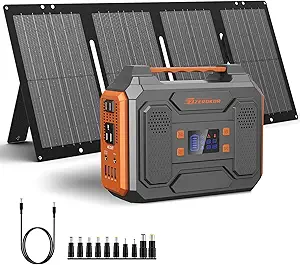 | Best Budget All-in-One | Power Output: 300W | Solar Panel: 60W Monocrystalline | Efficiency: 20.5% | VIEW ON AMAZON | See Our Full Breakdown |
| solar panel kit with fast charging | Weight | Ports |
|---|---|---|
| Jackery Solar Generator 300 wi | 12.9 lbs | AC, USB-C, USB-A, Car Port |
| GEYOTO 45W Portable Solar Pane | 1.65 lbs | 2x USB-C, 1x USB-A |
| ZOUPW 100W Portable Monocrysta | 9.5 lbs | — |
| SOLUPUP 30W Portable Foldable | 2.4 lbs | USB-A, USB-C |
| Portable Solar Generator 300W | Not Specified | — |
More Details on Our Top Picks
Jackery Solar Generator 300 with 40W Solar Panel
This kit is the most cohesive solution for users who want zero friction. Unlike the standalone panels in this list, the Jackery Solar Generator 300 comes with a compatible panel and power station, eliminating the guesswork of matching voltage and amperage. The LiFePO4 battery chemistry is a significant upgrade over older lithium-ion models, offering over 4,000 charge cycles. While the 40W panel is modest, it is perfectly matched to the 292Wh capacity, allowing for a full recharge in roughly 10-12 hours of direct sun. Compared to the GEYOTO 45W, this system is heavier and less portable, but it provides AC outlets for standard household plugs, which the GEYOTO lacks.
Pros:- Complete ecosystem with matched panel and generator.
- Long-lasting LiFePO4 battery chemistry.
- Includes AC outlets for standard plugs.
Cons:- Heavier than standalone panels.
- 40W panel charges slowly in cloudy weather.
- Limited to 300W continuous output.
Best for: Campers and homeowners who need a complete, ready-to-use backup power system without technical setup.
Not ideal for: Ultralight hikers or those who need to charge multiple high-draw devices simultaneously.
- Battery Capacity:292Wh
- AC Output:300W (600W Peak)
- Solar Panel Wattage:40W
- Weight:12.9 lbs
- Battery Type:LiFePO4
- Charge Cycles:4,000+
- Warranty:3+2 Years
- Ports:AC, USB-C, USB-A, Car Port
Our verdict“The Jackery 300 is the most reliable entry point into solar power for non-technical users.”
GEYOTO 45W Portable Solar Panel Charger
If you skip the power station and want to charge your phone or tablet directly from the sun, the GEYOTO 45W is the standout performer. Its 26% conversion efficiency is among the highest in its class, meaning it captures more energy in shorter bursts of sunlight compared to the SOLUPUP 30W. The dedicated 25W PD USB-C port ensures fast charging for modern smartphones, a feature often missing in cheaper panels. It folds down to the size of an iPad, making it incredibly easy to strap to a backpack. However, unlike the Jackery 300, it cannot power high-wattage appliances like coffee makers or mini-fridges.
Pros:- High 26% conversion efficiency.
- Ultra-portable and lightweight (1.65 lbs).
- Dedicated 25W PD USB-C port for fast charging.
Cons:- Cannot power high-wattage devices.
- Performance drops significantly in low light.
- Ports must stay dry to maintain IP68 rating.
Best for: Hikers and travelers who need to keep phones, tablets, and power banks charged on the go.
Not ideal for: Users needing to charge laptops quickly or power AC appliances.
- Power Output:45W
- Conversion Efficiency:26%
- Fast Charging:25W PD USB-C
- Weight:1.65 lbs
- Folded Size:8.44 x 12.52 x 1.26 inches
- Ports:2x USB-C, 1x USB-A
- Material:Monocrystalline Silicon
Our verdict“The GEYOTO 45W is the most efficient panel for direct charging of small electronics.”
ZOUPW 100W Portable Monocrystalline Foldable Solar Panel
The ZOUPW 100W is designed for users who already own a compatible power station and need to refill it quickly. With a 23.5% efficiency rating and high amperage capacity, it pushes energy into larger batteries faster than the GEYOTO 45W. The inclusion of adjustable kickstands allows for precise angle adjustments, maximizing sun exposure throughout the day. It is significantly larger and heavier (9.5 lbs) than the portable options, so it is not meant for backpacking. Compared to the Jackery 300, this panel offers more raw power but requires you to buy a separate generator to store that energy.
Pros:- High 100W power output for fast station refills.
- Universal connectors fit most major brands.
- Adjustable kickstands for optimal sun angle.
Cons:- Bulky and heavy for hiking.
- Requires a compatible power station.
- Setup takes longer than folding panels.
Best for: RV owners and campers with existing power stations who need rapid recharging.
Not ideal for: Backpackers or those without a compatible power station to store the energy.
- Max Power:100W
- Efficiency:23.5%
- Amperage:4.96 A
- Voltage:24.3V
- Weight:9.5 lbs
- Folded Size:24.13 x 21.06 x 1.77 inches
- Connectors:5 Universal Connectors
Our verdict“The ZOUPW 100W is the best choice for maximizing charging speed for large battery banks.”
SOLUPUP 30W Portable Foldable Solar Charger
The SOLUPUP 30W prioritizes portability over raw speed. At just 2.4 lbs, it is lighter than the ZOUPW 100W and easier to pack than the Jackery 300. It uses monocrystalline silicon to maintain decent efficiency despite its small size. The IPX5 waterproof rating handles light rain, though it is less robust than the GEYOTO’s IP68 rating. This panel is ideal for keeping a phone alive during a weekend trip, but it lacks the wattage to charge a laptop quickly or refill a large power station in a reasonable time.
Pros:- Lightweight and highly portable.
- Includes carabiners and adjustable stand.
- Affordable entry point into solar power.
Cons:- Low 30W output limits device compatibility.
- Slow charging for larger batteries.
- Lower waterproof rating than competitors.
Best for: Day hikers and minimalist travelers who need basic phone charging.
Not ideal for: Users needing to charge laptops or power stations quickly.
- Max Power:30W
- Weight:2.4 lbs
- Output Voltage:5V
- Dimensions:5.6 x 2.9 x 0.84 inches (Folded)
- Material:Monocrystalline Silicon
- Ports:USB-A, USB-C
- Accessories:Carabiners, Stand
Our verdict“The SOLUPUP 30W is a solid, low-cost option for basic mobile charging needs.”
Portable Solar Generator 300W with 60W Solar Panel
This generic 300W Solar Generator offers a similar power profile to the Jackery 300 but at a lower cost. It includes a 60W monocrystalline panel, which is more powerful than Jackery’s 40W panel, potentially allowing for faster recharging under ideal conditions. However, the build quality reflects the price point; the junction box is not waterproof, requiring careful placement during outdoor use. While it provides multiple outlets and a built-in flashlight, it lacks the long-term durability and cycle count of the LiFePO4 batteries found in the Jackery or ZOUPW systems.
Pros:- Includes a 60W panel for better charging speed.
- Multiple AC and USB outlets.
- Built-in flashlight and safety features.
Cons:- Non-waterproof junction box.
- Lower battery lifespan than LiFePO4 models.
- Bulky design for its capacity.
Best for: Budget-conscious buyers who need a basic backup system for occasional use.
Not ideal for: Users who need rugged, all-weather durability or long-term battery longevity.
- Power Output:300W
- Solar Panel:60W Monocrystalline
- Efficiency:20.5%
- Outlets:2 AC, 1 DC, 3 USB
- Charging Methods:AC, Solar, Car
- Accessories:Flashlight, Cables
- Safety:BMS Protection
- Weight:Not Specified
Our verdict“This generator is a functional budget option, but it lacks the durability of premium kits.”

How We Picked
I selected these five products based on their ability to deliver fast charging speeds relative to their size and weight. I prioritized kits with high conversion efficiency ratings (above 20%) and robust safety features. I also considered the versatility of connectivity, ensuring each pick supports modern USB-C Power Delivery or high-amperage DC inputs. This lineup represents a spectrum of use cases, from ultralight backpacking to stationary emergency backup.
Factors to Consider When Choosing Solar Panel Kit With Fast Charging
Selecting the right solar kit depends on whether you need to store energy or just top off devices. Here is how to match your needs to the right technology.Power Station vs. Standalone Panel
A power station kit like the Jackery 300 includes a battery and an inverter. This allows you to store solar energy and use it at night or indoors. A standalone panel like the GEYOTO 45W connects directly to your device. It is lighter and cheaper but requires sunlight to work. If you camp in remote areas with no shade, a standalone panel is efficient. If you need power at night, you must choose a kit with a battery.
Understanding Fast Charging Standards
Not all USB ports are equal. Look for Power Delivery (PD) or Quick Charge certifications. The GEYOTO 45W’s 25W PD port can charge a modern smartphone to 50% in under 30 minutes. Older 5V ports, like those on some budget panels, charge much slower. If your device supports fast charging, ensure the solar panel’s output matches that standard to avoid bottlenecks.
Durability and Weather Ratings
Outdoor gear faces rain, dust, and drops. Check the IP rating. IP68 (GEYOTO) means it is dust-tight and can withstand submersion. IP67 (ZOUPW) is dust-tight and handles temporary immersion. IPX5 (SOLUPUP) only protects against low-pressure water jets. For serious storms, choose higher IP ratings. The generic 300W generator’s non-waterproof junction box is a significant risk in wet conditions.
Frequently Asked Questions
Can a solar panel charge a laptop directly?
Most small portable panels, like the GEYOTO 45W or SOLUPUP 30W, struggle to charge laptops directly because laptops often require higher wattage (60W+) and stable voltage. While some panels with USB-C PD ports can trickle charge a laptop, it is often slower than the laptop consumes power. For reliable laptop charging, it is better to charge a power station like the Jackery 300 first, then plug the laptop into the station’s AC or USB-C output.
How much sunlight do I need for fast charging?
“Fast charging” in solar terms is relative to direct, unobstructed sunlight. A 45W panel like the GEYOTO will rarely output 45W unless it is angled perfectly toward the sun at noon on a clear day. In realistic camping scenarios, expect 50-70% of the rated wattage. Cloudy days can reduce output to 10-20%. To maximize speed, use the adjustable kickstands found on models like the ZOUPW 100W to track the sun’s movement.
Is LiFePO4 battery chemistry worth the extra cost?
Yes, for most users. The Jackery 300 uses LiFePO4 chemistry, which lasts for over 4,000 charge cycles. Traditional lithium-ion batteries found in cheaper generators may only last 500-1,000 cycles. If you plan to use your solar kit regularly over several years, LiFePO4 offers better long-term value and safety, as it is less prone to thermal runaway. Budget options like the generic 300W generator often use older chemistry to keep costs down.
Can I chain multiple solar panels together?
Some panels, like the ZOUPW 100W, support daisy-chaining via specific connectors. This allows you to double your input voltage or amperage to charge a power station faster. However, you must check your power station’s maximum input limit. Overloading the input can damage the battery management system. Standalone panels like the GEYOTO 45W typically do not support chaining and are designed for single-device use.
Do solar panels work indoors?
No, standard solar panels require direct sunlight to generate significant power. Artificial light from windows or lamps is too diffuse and lacks the intensity for fast charging. While you might see a tiny trickle charge, it is not practical for powering devices. If you need indoor backup, rely on AC charging to fill the battery before an outage, or use the panel outdoors during the day to store energy for indoor use at night.
Conclusion
Choosing the right solar panel kit with fast charging comes down to your specific power needs. If you want a hassle-free, all-in-one solution for camping and emergencies, the Jackery Solar Generator 300 is the most reliable choice. For hikers who need to keep phones charged without carrying heavy batteries, the GEYOTO 45W offers the best efficiency and portability. If you already own a power station and need to refill it quickly, the ZOUPW 100W is the superior standalone panel. Avoid the generic 300W generator if you need durability, and skip the SOLUPUP 30W if you need to charge laptops. Match the kit to your primary use case, and you will have reliable power in any situation.