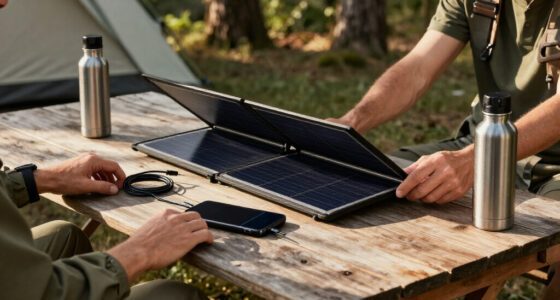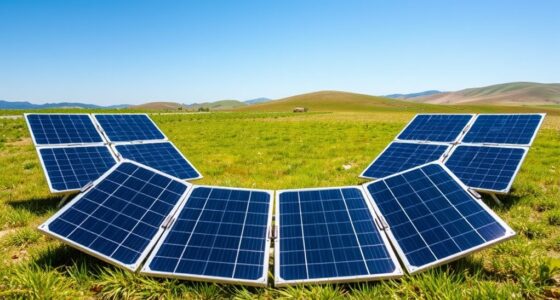
The best solar generator for hunting depends on whether you need to recharge a phone and headlamp or run several devices at camp. My best overall pick is the Jackery Solar Generator 1000 V2, whose 1,070Wh capacity and 1,500W AC output suit longer stays and larger loads better than the compact options. For lighter trips, the Anker SOLIX C300 pairs a 288Wh station with a 60W panel, while the MARBERO 237Wh kit offers a smaller, lower-output alternative. The main tradeoff is straightforward: more capacity and output mean a larger station to transport, while the smallest models call for stricter power budgeting. Read on for the full breakdown and advice on matching a station to your hunting setup.

Get backup power and energy gear delivered free with Prime
- Fast, free delivery on millions of items
- Prime Video, Amazon Music and more included
- Member-only deals all year
Complete the kit


Key Takeaways
- Capacity separates the long-stay option: the Jackery Solar Generator 1000 V2 lists 1,070Wh, far above the roughly 237–300Wh cluster of compact stations in this lineup.
- Panel wattage varies even among small kits: the Anker SOLIX C300 bundle includes a 60W panel, while the Marbero 155Wh kit pairs its smaller station with a 30W panel.
- AC output matters as much as battery size: the Jackery 1000 V2 is rated at 1,500W AC, while several compact picks are described around 300W or lower.
- Some listings provide clearer specifications than others: models with stated capacity, output, and panel wattage are easier to compare than broadly named 200W or 300W generator kits with limited detail in their titles.
- A generator kit is not automatically a complete solar setup: panel wattage, included accessories, device requirements, and the space needed to carry the equipment all affect whether it will serve a remote camp well.
| Marbero 155Wh Solar Generator with 30W Solar Panel Kit |  | Best All-in-One Compact Kit | Battery capacity: 155Wh (42,000mAh) | Solar panel: 30W, IP65-rated | AC output: 2 × 100W outlets | VIEW ON AMAZON | See Our Full Breakdown |
| Anker SOLIX C300 DC Portable Power Station and 60W Solar Panel, 288Wh, 300W |  | Best for USB-C Field Charging | Battery capacity: 288Wh LiFePO4 | Maximum output: 300W | Solar panel: 60W | VIEW ON AMAZON | See Our Full Breakdown |
| Portable Solar Generator 300W Power Station with 60W Foldable Solar Panel |  | Best for a Simple 300W Setup | Battery capacity: 296Wh | Maximum output: 300W | Solar panel: 60W foldable panel listed; package details conflict | VIEW ON AMAZON | See Our Full Breakdown |
| Solar Powered Generator 100W with 40W Solar Panels – Portable Power Station |  | Best for Ultralight Basic Charging | Battery capacity: 146Wh (39,600mAh) | Output wattage: 100W | Solar panel: 40W | VIEW ON AMAZON | See Our Full Breakdown |
| MARBERO 237Wh Solar Generator with Foldable 60W Solar Panel – 300W Pure Sine Wave Portable Power Station |  | Best for AC-Powered Camp Gear | Battery capacity: 237Wh (64,000mAh) | Continuous AC output: 300W, pure sine wave | Solar panel: 60W foldable | VIEW ON AMAZON | See Our Full Breakdown |
| Portable Power Station with Solar Panel 40W, 300W Solar Generator with Panels |  | Best Ready-to-Go Bundle | Maximum output: 300W | AC outlets: 2 × 110V, 300W maximum, pure sine wave | USB ports: 3 × 5V/3A USB; 1 × QC3.0 USB | VIEW ON AMAZON | See Our Full Breakdown |
| Jackery Solar Generator 1000 V2 with 200W Solar Panel, 1070Wh, 1500W AC |  | Best for Extended Base Camps | Capacity: 1070Wh | AC output: 1500W | Surge peak: 3000W | VIEW ON AMAZON | See Our Full Breakdown |
| Anker SOLIX C300 Portable Power Station, 288Wh Solar Generator for Camping |  | Best for Frequent Recharging | Capacity: 288Wh | Continuous output: 300W | Surge output: 600W | VIEW ON AMAZON | See Our Full Breakdown |
| 200W Solar Powered Generator with 40W Solar Panel – Portable Power Station |  | Best Lightweight Pick | Battery capacity: 146Wh / 39,600mAh | Output wattage: 200W | AC outlets: 2 × 110V pure sine wave | VIEW ON AMAZON | See Our Full Breakdown |
| DaranEner 300W Portable Power Station with 30W Solar Panel |  | Best Compact LiFePO4 Option | Capacity: 192Wh | Maximum AC output: 300W | AC outlets: 2 × 110V pure sine wave; 600W surge | VIEW ON AMAZON | See Our Full Breakdown |
| Jackery Explorer 300 Portable Power Station, 292Wh |  | Best for Longer-Term Ownership | Capacity: 292Wh | Weight: 7.5 lbs | Dimensions: 9.1 x 5.2 x 7.8 inches | VIEW ON AMAZON | See Our Full Breakdown |
| Portable Solar Generator with 300W Power Station and 40W Solar Panel |  | Best Lightweight Complete Kit | Battery capacity: 220Wh | Peak output: 600W | Weight: 5 lbs | VIEW ON AMAZON | See Our Full Breakdown |
| Portable Solar Generator 300W with 60W Solar Panel | 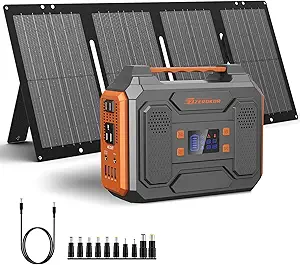 | Best for Solar Recharging at Camp | Included solar panel: 60W monocrystalline | Solar conversion efficiency: 20.5% | AC outlets: 2 x 300W | VIEW ON AMAZON | See Our Full Breakdown |
| HOWEASY Portable Power Station, 120W (240W Peak) Solar Generator |  | Best Ultralight Backup | Continuous output: 120W | Peak output: 240W | Weight: 2.3 lbs | VIEW ON AMAZON | See Our Full Breakdown |
| solar generator for hunting | Weight | Dimensions | Battery capacity |
|---|---|---|---|
| Marbero 155Wh Solar Generator | 3.7 lb | 8.14 × 3.77 × 7.08 in | 155Wh (42,000mAh) |
| Anker SOLIX C300 DC Portable P | 2.8kg | — | 288Wh LiFePO4 |
| Portable Solar Generator 300W | 6.5 lb | 9 × 5.5 × 7.5 in | 296Wh |
| Solar Powered Generator 100W w | 3.3 lb | 7.5 × 3.7 × 6.1 in | 146Wh (39,600mAh) |
| MARBERO 237Wh Solar Generator | — | — | 237Wh (64,000mAh) |
| Portable Power Station with So | — | — | — |
| Jackery Solar Generator 1000 V | 23.8 lb | — | — |
| Anker SOLIX C300 Portable Powe | — | — | — |
| 200W Solar Powered Generator w | 3.0 lb | 10 × 4.98 × 5 in | 146Wh / 39,600mAh |
| DaranEner 300W Portable Power | 5.84 lb | 8.4 × 5.3 × 7.4 in | — |
| Jackery Explorer 300 Portable | 7.5 lbs | 9.1 x 5.2 x 7.8 inches | — |
| Portable Solar Generator with | 5 lbs | 8.5 x 6.7 x 4.1 inches | 220Wh |
| Portable Solar Generator 300W | — | — | — |
| HOWEASY Portable Power Station | 2.3 lbs | 6.6 x 3 x 4 inches | — |
More Details on Our Top Picks
Marbero 155Wh Solar Generator with 30W Solar Panel Kit
The Marbero is a sensible choice for hunters who want a ready-to-pack starter kit for phones, headlamps, a GPS unit, or other small electronics. Its 155Wh battery and 100W AC limit put it below the Anker SOLIX C300 DC in both stored energy and output, but the included 30W panel and 6.5-foot cable make it a straightforward package for topping up small devices at camp. At 3.7 pounds, it is also lighter than the C300 DC, which matters when gear has to travel away from a vehicle. The tradeoff is limited reserve: this is not a good fit for running demanding equipment or powering several devices for days without sun. I’d choose it for basic field charging, not as a camp’s main power source.
Pros:- Includes the power station, 30W solar panel, and converter as a ready-to-use kit.
- At 3.7 pounds, it is lighter than the Anker SOLIX C300 DC.
- Offers USB-C, USB-A, DC, car, and AC connections for a mix of small devices.
- Built-in flashlight includes steady, SOS, and strobe modes.
Cons:- The 100W AC output rules out many higher-draw appliances.
- The 155Wh battery provides less reserve than the Anker SOLIX C300 DC and MARBERO 237Wh model.
- Solar charging is listed at 6–7 hours, so replenishing it can take much of a daylight window.
Best for: Hunters on short trips who want a lightweight, bundled station for phones, GPS devices, headlamps, and occasional small AC loads.
Not ideal for: Hunters running higher-draw gear or planning multi-day trips with limited sunlight; its 155Wh capacity and 100W AC ceiling leave little headroom.
- Battery capacity:155Wh (42,000mAh)
- Solar panel:30W, IP65-rated
- AC output:2 × 100W outlets
- USB outputs:1 QC3.0 USB-A, 2 standard USB-A, 1 USB-C
- Other outputs:3 DC ports and 1 12V car outlet
- Solar charging time:6–7 hours
- Weight:3.7 lb
- Dimensions:8.14 × 3.77 × 7.08 in
Our verdict“Choose the Marbero for lightweight, basic device charging with a panel included, but skip it if your hunting camp needs more than small loads.”
Anker SOLIX C300 DC Portable Power Station and 60W Solar Panel, 288Wh, 300W
The C300 DC suits hunters whose camp electronics lean heavily on USB-C: its 288Wh LiFePO4 battery pairs with two 140W two-way USB-C ports, making it more capable for compatible laptops and fast-charging devices than the Marbero 155Wh kit. Its included 60W solar panel also gives it a stronger solar input than that smaller Marbero package, while the listed 2.8kg weight keeps it manageable for vehicle-based camps. This is a DC-focused station, though, so it lacks the AC outlets found on the MARBERO 237Wh model. That limits what you can run, and the shoulder strap is sold separately. I’d pick it for charging a cluster of modern electronics, but not for hunters who specifically need AC power at camp.
Pros:- Two 140W two-way USB-C ports support fast charging for compatible devices.
- The 288Wh LiFePO4 battery stores more energy than the Marbero 155Wh kit.
- Includes a 60W solar panel, stronger than the 30W panel bundled with the Marbero.
- Provides a mix of USB-C, USB-A, and 120W car-socket outputs.
Cons:- No AC outlets, unlike the MARBERO 237Wh model.
- The shoulder strap is sold separately.
- The included panel is not compatible with the listed Anker PS30, PS200, or PS400 panels.
Best for: Vehicle-based hunters carrying USB-C laptops, phones, cameras, and other compatible electronics who value fast device charging over AC outlets.
Not ideal for: Hunters who need AC power for their equipment or want a station they can comfortably carry long distances without adding a separately sold strap.
- Battery capacity:288Wh LiFePO4
- Maximum output:300W
- Solar panel:60W
- USB-C outputs:2 × 140W, 1 × 100W, 1 × 15W
- Other outputs:2 USB-A ports and 1 120W car socket
- Solar charging time:About 4 hours
- Wall charging:Reaches 80% in about 50 minutes
- Weight:2.8kg
Our verdict“Pick the C300 DC when USB-C charging and a larger battery matter more than AC outlets or a carry strap in the box.”
Portable Solar Generator 300W Power Station with 60W Foldable Solar Panel
This station offers a straightforward step up from the Marbero 155Wh for hunters who want a little more battery capacity and a 60W foldable panel in the kit. Its 296Wh battery is close to the Anker SOLIX C300 DC’s 288Wh, and both list 300W output; the Anker, however, provides a more detailed port selection and fast USB-C charging. The listed port set here—two AC, two USB-A, one USB-C, and one DC—covers common camp electronics without the Anker’s USB-C emphasis. At 6.5 pounds, it is portable for a vehicle-to-camp setup, though heavier than the Marbero. The product data has an inconsistency: the description says the panel is included, while the pros say it is not. I’d verify the package contents before relying on solar charging in the field.
Pros:- 296Wh capacity is close to the Anker SOLIX C300 DC’s 288Wh.
- 300W output and two AC ports support a range of small camp electronics.
- The listed 6.5-pound weight is manageable for vehicle-based hunting trips.
- Product data lists solar, AC, and car charging options.
Cons:- The panel-inclusion details conflict: the description says it is included, while the pros say it is not.
- The 300W output is not suited to high-draw appliances.
- Charging time is listed as 3 hours without specifying the charging method.
Best for: Hunters who want a mid-capacity station with 300W output and a simple mix of AC, USB, and DC ports for a vehicle-accessible camp.
Not ideal for: Buyers who need confirmed solar-panel contents or fast, high-wattage USB-C charging; the package details conflict and the USB-C output is unspecified.
- Battery capacity:296Wh
- Maximum output:300W
- Solar panel:60W foldable panel listed; package details conflict
- Output ports:2 AC, 2 USB-A, 1 USB-C, 1 DC
- Listed charging time:3 hours; charging method unspecified
- Input voltage:12–25V
- Weight:6.5 lb
- Dimensions:9 × 5.5 × 7.5 in
Our verdict“Consider this for a basic 300W camp setup only after confirming whether the 60W solar panel is actually included.”
Solar Powered Generator 100W with 40W Solar Panels – Portable Power Station
At 3.3 pounds, this is the lightest option in this group and makes the most sense when a hunting pack or small vehicle kit leaves little room for power gear. The included 40W panel is a useful pairing for topping up phones and other small electronics, and the built-in flashlight adds a practical backup light at camp. Compared with the Marbero 155Wh, though, it has slightly less stored energy and the same 100W output ceiling; compared with the Anker SOLIX C300 DC, it gives up substantial capacity and output in exchange for a smaller, lighter package. Its 146Wh battery is better suited to short outings than a long stay away from charging. I’d keep expectations to communication and navigation devices, rather than trying to power a broader camp setup.
Pros:- At 3.3 pounds, it is lighter than the Marbero 155Wh kit.
- Includes a 40W solar panel for field recharging.
- Seven listed outlets support a range of small devices.
- Built-in LED flashlight adds emergency lighting without another item to pack.
Cons:- The 146Wh battery is smaller than the Marbero 155Wh and Anker SOLIX C300 DC batteries.
- The 100W output limit excludes many higher-draw devices.
- Its short capacity makes it a poor match for extended trips without dependable sunlight.
Best for: Hunters prioritizing low carry weight for short trips and needing backup energy for phones, cameras, or navigation devices.
Not ideal for: Hunters who need longer runtimes, 300W-class output, or enough stored energy to support several devices through multiple days.
- Battery capacity:146Wh (39,600mAh)
- Output wattage:100W
- Solar panel:40W
- Total outlets:7
- Frequency:60Hz
- Weight:3.3 lb
- Dimensions:7.5 × 3.7 × 6.1 in
- Materials:Aluminum, monocrystalline silicon, and tempered glass
Our verdict“Choose this for a light, short-trip charging kit, but carry a larger station if your camp needs more sustained power.”
MARBERO 237Wh Solar Generator with Foldable 60W Solar Panel – 300W Pure Sine Wave Portable Power Station
The MARBERO M823 is the strongest fit here for hunters who need AC power at camp but still want a compact station and a panel in the package. Its 237Wh battery is larger than the Marbero 155Wh and the 146Wh Solar Powered Generator, while its 300W pure sine wave output offers more headroom than either 100W model for compatible small AC devices. The Anker SOLIX C300 DC stores more energy and delivers more USB-C charging options, but it has no AC outlets; the M823 makes the opposite choice. Its 60W panel and multiple USB ports support mixed-device charging, yet 237Wh still calls for careful power budgeting on multi-day hunts. I’d select it for small AC loads and electronics, not heating or other high-wattage equipment.
Pros:- 300W pure sine wave AC output offers more headroom than the 100W Marbero 155Wh.
- Includes a 60W foldable panel with stated conversion efficiency of 21.5–23.5%.
- Two AC outlets and a broad USB selection support varied small-device charging.
- Flashlight includes flashlight, strobe, and SOS modes.
Cons:- The 237Wh battery holds less energy than the Anker SOLIX C300 DC’s 288Wh.
- A 300W continuous limit excludes high-draw camp appliances.
- The listed battery capacity may require frequent solar or other recharging on multi-day trips.
Best for: Hunters at vehicle-accessible camps who need pure sine wave AC for compatible small devices alongside USB and DC charging.
Not ideal for: Hunters seeking maximum battery reserve, high-wattage appliance support, or enough capacity to run multiple devices for several days without recharging.
- Battery capacity:237Wh (64,000mAh)
- Continuous AC output:300W, pure sine wave
- Solar panel:60W foldable
- Solar conversion efficiency:21.5–23.5%
- AC outlets:2
- USB outputs:2 QC3.0 USB-A, 2 USB-A, 1 USB-C PD
- DC output:12–16.8V/10A, 14A maximum
- Flashlight modes:Flashlight, strobe, SOS
Our verdict“Pick the M823 when AC compatibility matters more than maximum capacity, and keep loads within its 300W limit.”
Portable Power Station with Solar Panel 40W, 300W Solar Generator with Panels
This ZeroKor bundle suits hunters who want a small power setup in one package: the station, a 40W solar panel, and a carrying bag are included. Its 300W ceiling is enough for phones, a laptop, and other modest camp electronics, while the two pure-sine-wave AC outlets offer more flexibility than the USB-only charging many small devices need. Compared with the DaranEner 300W, it includes a higher-rated panel, but the DaranEner lists a longer-life LiFePO4 battery and more detailed output information. The ZeroKor’s main limitation is the missing battery-capacity figure, which makes it hard to estimate how many nights of charging it can support. The included panel also recharges small electronics directly; its station input is limited to 40W, so solar replenishment may take time.
Pros:- Includes a 40W solar panel and carrying bag
- Two 110V pure-sine-wave AC outlets rated up to 300W
- Several USB outputs, including QC3.0
- Built-in flashlight includes reading and SOS modes
Cons:- Battery capacity is not specified, making runtime planning difficult
- The 300W output rules out higher-draw appliances and equipment
- The included 40W panel may recharge the station slowly
Best for: Hunters who want a bundled panel and bag for charging phones, a laptop, and small camp electronics at a base camp
Not ideal for: Hunters who need dependable multi-day power estimates, high-wattage equipment, or a clearly specified battery capacity
- Maximum output:300W
- AC outlets:2 × 110V, 300W maximum, pure sine wave
- USB ports:3 × 5V/3A USB; 1 × QC3.0 USB
- DC output:9–12.6V, 10A maximum
- Included solar panel:40W
- Panel DC output:15–18V, 40W maximum
- Lighting:Flashlight with reading and SOS modes
Our verdict“Choose this bundle for straightforward camp charging with a panel included, but skip it if you need a known capacity or faster solar replenishment.”
Jackery Solar Generator 1000 V2 with 200W Solar Panel, 1070Wh, 1500W AC
For a hunting camp that needs more than occasional phone charging, the Jackery 1000 V2’s 1070Wh capacity gives it a different role from the compact 146Wh model in this lineup. Its 1500W AC output can handle a broader range of gear, and the listed 3000W surge gives some headroom for devices with a brief startup draw. That reserve is useful at a fixed camp, but it adds weight: at 23.8 lb, this is better carried from a vehicle than deep into a backcountry site. The included 200W panel also gives it a stronger solar setup than the smaller-panel bundles, though the listed solar recharge time is six hours and depends on conditions. Fast one-hour charging requires enabling the feature through the app, adding a setup step the simpler stations avoid.
Pros:- 1070Wh capacity offers substantially more stored energy than the compact stations in this group
- 1500W AC output supports a wider range of camp devices
- Includes a 200W solar panel
- LFP battery and listed lifespan of over 10 years
Cons:- At 23.8 lb, it is burdensome for extended carry on foot
- Fast emergency charging requires enabling a setting in the app
- Listed solar recharge time is six hours and varies with sunlight
Best for: Vehicle-based hunters or groups who need to recharge multiple devices and run higher-draw camp equipment over a longer stay
Not ideal for: Solo hunters hiking far from a vehicle who prioritize low carry weight or want a station that does not rely on an app for its fastest charging mode
- Capacity:1070Wh
- AC output:1500W
- Surge peak:3000W
- Weight:23.8 lb
- Battery type:LFP
- Ports:3 AC, 2 USB-C, 1 USB-A, 1 DC car port
- Included solar panel:200W
- Charging time:1 hour with fast charging; 3 hours with charger; 6 hours by solar
Our verdict“Pick the Jackery for a vehicle-supported hunting camp that needs meaningful capacity and stronger AC output, not for a lightweight pack-in setup.”
Anker SOLIX C300 Portable Power Station, 288Wh Solar Generator for Camping
The Anker SOLIX C300 is a good fit for hunters who return to a vehicle or wall outlet between trips and value quick turnaround over a large energy reserve. Its 288Wh capacity is far below the Jackery 1000 V2’s 1070Wh, so it is better suited to topping up phones, headlamps, cameras, and a laptop than sustaining a group camp. The C300’s listed 80% recharge in 50 minutes can help when time at home or a powered cabin is limited, while LiFePO4 cells rated for 3,000 cycles favor repeat seasonal use. Its 300W output matches the DaranEner’s stated maximum, but the DaranEner includes a 30W panel and lists its weight; the C300’s weight is not provided, and solar-panel compatibility needs checking before purchase. A shoulder strap is sold separately.
Pros:- 288Wh capacity suits personal electronics and modest camp loads
- Listed 80% recharge time is 50 minutes
- LiFePO4 battery is rated for 3,000 cycles
- Multiple AC, USB-C, USB-A, and car-socket outputs
Cons:- Capacity is limited for prolonged off-grid use or group power needs
- Weight is not specified, which complicates pack and vehicle planning
- Shoulder strap is sold separately and solar-panel compatibility is limited
Best for: Hunters who make regular vehicle-based trips and want a compact station for personal electronics with quick recharging between outings
Not ideal for: Hunters planning several days off-grid without a reliable recharge opportunity or those who need a known carry weight and included panel
- Capacity:288Wh
- Continuous output:300W
- Surge output:600W
- Battery type:LiFePO4
- Cycle life:3,000 cycles
- Ports:3 AC outlets, 1 car socket, 2 USB-C, 1 additional 15W USB-C, 1 USB-A
- Recharging time:80% in 50 minutes
- Noise level:25dB
Our verdict“Choose the C300 for repeat short trips where fast recharging matters more than long-run capacity, and confirm panel compatibility before relying on solar.”
200W Solar Powered Generator with 40W Solar Panel – Portable Power Station
At 3.0 lb, this 146Wh station is the easiest option here to carry beyond the truck, making it a practical choice for hunters who only need to keep small electronics topped up. It has two pure-sine-wave AC outlets and four USB outlets, but the 200W output limit keeps it firmly in phone, camera, and similar-device territory rather than powering substantial camp equipment. Compared with the ZeroKor 300W bundle, it offers a clearly stated weight and battery capacity, which helps with pack planning; the ZeroKor, by contrast, lists a higher 300W output. The 40W panel is included, but solar charging depends on available sunlight, and the modest battery reserve may need frequent replenishment during a longer trip. Its seven outlets are useful for sharing, though the total capacity still limits how long several devices can run.
Pros:- Light 3.0 lb build is easier to carry into camp
- Includes a foldable 40W solar panel
- Two 110V pure-sine-wave AC outlets
- Supports wall, car, and solar charging
Cons:- 146Wh capacity limits runtime and multi-day use
- 200W output cannot support higher-draw equipment
- Solar recharge speed depends on sunlight conditions
Best for: Solo hunters who hike in and need a light station for phones, a camera, and other low-draw electronics
Not ideal for: Hunters who need to run higher-wattage gear, support several people for multiple days, or rely on solar in poor sunlight
- Battery capacity:146Wh / 39,600mAh
- Output wattage:200W
- AC outlets:2 × 110V pure sine wave
- Other outlets:4 USB, 1 DC 12V/8A
- Weight:3.0 lb
- Dimensions:10 × 4.98 × 5 in
- Included solar panel:40W
- Charging time:5–6 hours by wall; car and solar times vary
Our verdict“Take this model on a short solo hunt when low carry weight matters most and your power needs stay limited to small electronics.”
DaranEner 300W Portable Power Station with 30W Solar Panel
The DaranEner stands out for hunters who want a compact station with LiFePO4 chemistry and a clearly stated carry weight. At 5.84 lb and 192Wh, it offers more capacity than the 146Wh lightweight pick, while staying far easier to move than the 23.8 lb Jackery 1000 V2. Its 300W pure-sine-wave AC output covers modest electronics and selected small appliances, but it cannot match the Jackery’s 1500W headroom or long-duration reserve. The port selection is a strong fit for mixed camp gear, including a 60W USB-C PD port and a car socket. It also has a listed 3,500-plus-cycle rating and an included 30W panel with MPPT control. That panel is modest, though, so solar recovery can be slow when the station is used heavily.
Pros:- 5.84 lb weight and compact dimensions ease transport and storage
- LiFePO4 cells are rated for 3,500-plus cycles to 80% capacity
- 60W USB-C PD port supports faster charging for compatible devices
- Includes a 30W solar panel and built-in MPPT controller
Cons:- 192Wh capacity is limited for extended off-grid stays
- 30W panel may take time to replace substantial energy use
- 300W output rules out many higher-draw camp appliances
Best for: Hunters who want a sub-6 lb station for a vehicle-supported or short hike-in camp, with long-life battery chemistry and several output types
Not ideal for: Hunters who need high-wattage equipment, multi-day group power, or rapid solar recovery from a small panel
- Capacity:192Wh
- Maximum AC output:300W
- AC outlets:2 × 110V pure sine wave; 600W surge
- Weight:5.84 lb
- Dimensions:8.4 × 5.3 × 7.4 in
- Battery type and cycle life:LiFePO4; 3,500-plus cycles to 80% capacity
- Ports:1 × 60W USB-C PD, 1 × 30W USB-C, 1 × 18W USB-A, 1 × 12V/60W car socket, 2 × DC5521
- Charging inputs:AC up to 90W; car up to 60W; included 30W solar panel with MPPT
Our verdict“Choose the DaranEner for a portable, long-cycle station with useful modern ports, but look to the Jackery 1000 V2 for longer stays or larger loads.”
Jackery Explorer 300 Portable Power Station, 292Wh
For hunters who want a compact station to carry between camp and a blind, the 7.5-pound Explorer 300 balances portability with more stored energy than the 220Wh option in the included-panel 300W kit. Its 292Wh capacity can support phones, headlamps, and other small electronics across a trip, while several outlet types make it easier to charge different gear without extra adapters. The stated 4,000-plus charge cycles suit buyers who expect to use the unit season after season. The tradeoff is that the solar panel is not included, so the lightweight package does not arrive ready for solar recharging. Its 300W output also rules out high-demand appliances. Compared with the HOWEASY, this Jackery carries more weight but offers substantially greater capacity and output.
Pros:- 292Wh capacity exceeds the 220Wh unit in the included-panel 300W kit.
- At 7.5 pounds, it remains manageable to carry to camp.
- AC, USB-C, USB-A, and car-port connections support a range of small electronics.
- Stated battery life of over 4,000 charge cycles suits frequent seasonal use.
Cons:- Solar panel is not included, adding another item to source and carry.
- 300W rated output cannot run high-power appliances.
- Heavier than the 5-pound included-panel 300W option.
Best for: Hunters who want a portable station for repeated trips and need to charge several small devices over a weekend.
Not ideal for: Hunters who need a complete solar kit in one purchase or plan to power high-wattage cooking or heating equipment.
- Capacity:292Wh
- Weight:7.5 lbs
- Dimensions:9.1 x 5.2 x 7.8 inches
- Peak surge power:600W
- Outlets:2 AC, 1 USB-C, 2 USB-A, 1 car port
- Charge time:4 hours
- Battery chemistry:LiFePO4, as stated in the product description
Our verdict“Choose the Explorer 300 if you value extra capacity and stated cycle life over an included solar panel and the lightest carry weight.”
Portable Solar Generator with 300W Power Station and 40W Solar Panel
This kit makes a practical choice for hunters who want a panel included without hauling a heavier setup: the station weighs 5 pounds and comes with a 40W solar panel. Its 220Wh battery is smaller than the Jackery Explorer 300’s 292Wh, so it suits shorter trips or modest charging needs better than extended stays away from reliable sun. The broad selection of ports, including two USB-C PD connections, helps a group recharge phones and other small devices at camp. A large-area LED floodlight is a useful extra after dark, though it does not replace a dedicated camp lantern. Like the other 300W choices here, it cannot run high-power gear; cloudy weather also limits what its included panel can replenish.
Pros:- Light 5-pound station is easier to transport than the Jackery Explorer 300.
- Includes a 40W solar panel for a ready-to-use solar setup.
- Two USB-C PD ports and multiple other connections support several devices.
- Built-in floodlight adds convenient illumination at camp.
Cons:- 220Wh capacity is lower than the Jackery Explorer 300’s 292Wh.
- The 300W output is insufficient for high-power appliances.
- Solar charging depends on available sunlight, limiting replenishment in poor conditions.
Best for: Hunters prioritizing low carry weight and an included panel for charging phones, headlamps, and small electronics at camp.
Not ideal for: Hunters on longer trips without dependable sunlight or anyone needing more stored energy than 220Wh provides.
- Battery capacity:220Wh
- Peak output:600W
- Weight:5 lbs
- Dimensions:8.5 x 6.7 x 4.1 inches
- Included solar panel:40W
- Ports:2 AC, 2 USB-C PD, 3 USB-A, 1 DC car port
- Battery capacity equivalent:60,000mAh
Our verdict“Pick this kit for a lightweight station with a panel included, provided its 220Wh capacity matches your trip length and device needs.”
Portable Solar Generator 300W with 60W Solar Panel
Hunters expecting to spend daylight hours at a base camp may prefer this model’s included 60W foldable panel to the 40W panel in the other bundled kit. Its stated 20.5% solar conversion efficiency and several charging methods give buyers flexibility to recharge from the panel, a wall outlet, or a car. Built-in safeguards for issues such as overload and overheating add reassurance when charging several small devices. However, the listing does not state battery capacity, making it harder to estimate how long it will keep gear running between charges. The junction box is also not waterproof, a real concern around wet ground or changing weather. Compared with the Jackery Explorer 300, this option bundles solar equipment but offers less clarity about stored energy.
Pros:- Includes a 60W monocrystalline panel, rated higher than the 40W panel in the other bundled kit.
- Can recharge through AC, solar, or a car port.
- Lists protections for short circuits, over-current, over-voltage, overload, and overheating.
- 20.5% stated solar conversion efficiency provides a useful reference for panel performance.
Cons:- Product data does not specify battery capacity, making trip planning difficult.
- Junction box is not waterproof.
- 300W output limits use to lower-power devices.
Best for: Hunters camping where they can set out a panel during the day and want multiple ways to recharge a compact power station.
Not ideal for: Hunters who need a clearly specified battery capacity, dependable use in wet conditions, or power for appliances above 300W.
- Included solar panel:60W monocrystalline
- Solar conversion efficiency:20.5%
- AC outlets:2 x 300W
- USB ports:3 x 5V/3A, 1 quick-charge USB
- DC port:9V–12.6V, 10A maximum
- Charging methods:AC outlet, solar panel, car port
- Listed protection features:Short circuit, over-current, over-voltage, overload, overheating
Our verdict“Choose this panel-focused kit if camp-based solar recharging matters more than having a clearly stated battery capacity.”
HOWEASY Portable Power Station, 120W (240W Peak) Solar Generator
At just 2.3 pounds, the HOWEASY is the easiest station here to stash in a hunting pack or keep close as backup power for a phone, headlamp, or other modest load. Its small footprint and built-in LED lighting favor simple camp tasks rather than running a collection of gear. Compared with the Jackery Explorer 300, it is far lighter, but its 120W continuous output and stated four-hour runtime at full load make it a limited-power choice, not a substitute for a larger station. It offers solar, AC, and car-socket recharging, yet the solar panel is not included. The listing mentions eight outlets but does not detail their types, so buyers should check that the connections suit their devices before heading out.
Pros:- At 2.3 pounds, it is much easier to carry than the Jackery Explorer 300.
- Compact dimensions suit a pack or a small camp kit.
- Built-in LED lighting adds a useful function after dark.
- Supports solar, AC, and car-socket recharging.
Cons:- 120W continuous output is lower than the 300W stations in this roundup.
- Listed runtime is about four hours at full load.
- Solar panel is not included, and outlet types are not specified in the provided data.
Best for: Hunters who need an ultralight backup for a few low-power electronics and value built-in lighting.
Not ideal for: Hunters who need to recharge many devices, run equipment above 120W, or rely on solar without buying a panel separately.
- Continuous output:120W
- Peak output:240W
- Weight:2.3 lbs
- Dimensions:6.6 x 3 x 4 inches
- Voltage:110V
- Number of outlets:8
- Listed runtime:Approximately 4 hours
- Recharging methods:Solar, AC, car socket
Our verdict“Choose the HOWEASY for minimal-weight backup and lighting, not as the main power source for a multi-device hunting camp.”

How We Picked
I ranked these 14 options for hunting use, not for general home backup. My main criteria were stated battery capacity and AC output, included panel wattage, portability cues, and how clearly each listing describes its intended setup. Those details help indicate whether a station is better suited to keeping phones, GPS units, and lights charged or supporting a broader camp load. I also weighed the value of a bundled panel against the practical limit that a modest panel may recharge slowly, especially when weather or available sunlight is poor.
The Jackery Solar Generator 1000 V2 ranks first because its stated 1,070Wh capacity and 1,500W AC output give it the broadest listed capability for a longer hunting trip. The Anker SOLIX C300 and the 237Wh MARBERO kit follow as more portable, lower-capacity choices with bundled panels. The remaining compact and less specifically described listings rank lower because their names alone offer less information for matching them confidently to a load. These rankings reflect the supplied product details; buyers should confirm exact specifications, included components, and device compatibility on the current listing before choosing.
Factors to Consider When Choosing Solar Generator For Hunting
Before choosing a station, I would start with the devices you actually plan to power and the number of days between chances to recharge. A hunting setup can range from a phone and headlamp to a communications device, camera, or small AC appliance, and those needs point to different capacities and output limits. These checks help avoid paying for a bulky unit you will not use—or carrying a small one that cannot handle your camp routine.
Estimate Your Daily Energy Use
List each device, its battery capacity or wattage, and how often you expect to use it each day. A phone or GPS may need intermittent charging, while a camera, heated accessory, or other high-draw device can use energy much faster. Add a reserve rather than planning to drain the station completely, since cold conditions and conversion losses can reduce usable energy. Avoid choosing by the generator’s wattage label alone: watts describe how much power it can deliver at once, not how long it can run. If your needs are limited to small electronics, a compact 237–300Wh class unit may be easier to carry than the 1,070Wh Jackery. For multi-day use or more demanding loads, capacity becomes more important than a small difference in portability.
Check Running and Starting Power
Compare the station’s continuous output with the wattage of every AC device you might connect. Some equipment draws extra power briefly when it starts, so check starting or surge requirements as well as its normal running demand. A unit described as 300W is not a safe match for a device that needs more than that continuously, even if the battery has ample capacity. Many hunting essentials charge through USB, which can avoid running an AC inverter and wasting energy. Confirm the type and number of ports, plus their individual output limits, before relying on one station for several devices. If your plan depends on AC equipment, prioritize verified output specifications over a large-sounding product title.
Treat Solar Recharging as Weather-Dependent
A panel’s rated wattage is a best-case figure, not a promise of steady charging in the field. Cloud cover, shade, panel angle, season, and short winter days can all cut energy collection. A 30W or 40W panel may be convenient to carry, but it will generally take longer to replenish a station than a larger panel under similar conditions. Check the station’s supported solar input and connector requirements before buying a separate panel or relying on the included one. If you cannot leave a panel in a safe, sunny location during the day, plan to arrive with a charged battery and limit energy use. Treat solar as a way to extend runtime, not as a guaranteed daily refill.
Balance Capacity Against Packability
Battery capacity often brings more weight and bulk, which can matter if you carry gear far from a vehicle or need to keep a pack discreet. A larger station such as the Jackery 1000 V2 offers substantially more listed energy than the compact models, but it may be an awkward choice for a foot-access camp where every pound counts. For a vehicle-based base camp, size may matter less than the ability to recharge several devices over multiple days. Check product dimensions and weight rather than assuming that “portable” means suitable for a hunting pack. Also account for the panel and its cable, not just the power station. Match the whole kit to how you travel, set up camp, and store gear.
Plan for Cold, Storage, and Safe Charging
Cold weather can affect battery performance, so check the manufacturer’s operating and charging temperature guidance before a winter trip. Keep the station protected from rain, snow, and mud unless its stated protection rating supports exposure; do not assume a camping-oriented product is weatherproof. Store the unit according to its instructions and check its charge before departure, especially after a long period in storage. Set the solar panel where it gets useful sun without leaving the power station exposed or unattended. Use compatible cables and avoid improvised connections that could damage the station or a device. A modest preparation routine can matter more than extra capacity if the generator is not ready when you reach camp.
Verify What the Kit Actually Includes
Product names can make a station-and-panel bundle sound more complete than it is, so inspect the current listing for the exact contents. Confirm whether the panel, charging cable, wall adapter, car cable, and any storage case are included. Check whether the panel can connect directly to the station or needs an adapter, and whether its output falls within the station’s accepted input range. Do not assume similarly named products share the same battery capacity or port layout; several listings in this roundup use broad descriptions such as “300W” without that phrase alone clarifying stored energy. When specifications are sparse, contact the seller or manufacturer before treating the unit as a fit for a critical device. Clear documentation is especially useful when you need dependable charging away from other power sources.
Frequently Asked Questions
Is a 300Wh solar generator enough for a weekend hunting trip?
It can be enough if your main loads are a phone, GPS, headlamp, and other small electronics, and you charge them sparingly. The 288Wh Anker SOLIX C300 and 292Wh Jackery Explorer 300 sit near that capacity range, but actual runtime depends on device use and conversion losses. Make a daily charging plan and leave reserve for navigation or emergency communication. A 30W or 40W panel may add some energy in good sun, but should not be treated as a guaranteed refill. If you expect to run AC appliances or support several people, look beyond this compact capacity class.
Should I choose the Jackery 1000 V2 or a compact 300Wh station?
Choose the Jackery 1000 V2 if your trip is longer, your camp has several devices, or you need its stated 1,500W AC output for compatible equipment. A compact 300Wh-class station makes more sense when you mainly charge small electronics and want a less demanding load to transport. The larger battery does not make it a better choice for every hunt: weight, storage space, and the extra time needed to recharge matter too. Compare your actual device wattage and trip length before paying for capacity you may not use. For remote or cold trips, keep a reserve instead of planning around the station’s full rated capacity.
Can the included 30W, 40W, or 60W panel keep a hunting station charged?
It may help extend runtime, but whether it can keep pace depends on sunlight, season, panel placement, and how much power you use. The 60W panels bundled with the Anker SOLIX C300 and the 237Wh MARBERO kit have higher rated output than the 30W panel in the Marbero 155Wh kit, but real-world harvest will vary. Shade and cloudy weather can reduce charging sharply, and limited daylight can leave little time for recovery. Check the station’s solar input limits and the panel’s connector before relying on a bundle. For trips where charging is essential, arrive with a full battery and a lower-power backup plan.
Can these generators run a heater or other high-draw hunting gear?
Do not assume that a solar generator can run a heater just because it has an AC outlet. Check both the device’s continuous wattage and any startup draw against the station’s output rating, then estimate how quickly it would use the battery. Many compact units in this roundup are described around 300W or less, which rules out many high-draw appliances. Even a station with substantial output may run a power-hungry device for a limited time if its stored energy is modest. For essential warmth, use equipment designed for that purpose and follow its safety instructions rather than relying on a portable battery alone.
What should I verify before taking a solar generator into cold or wet conditions?
Read the manufacturer’s temperature limits for both operation and charging, since cold can affect battery performance and may restrict charging. Confirm whether the station and panel have any stated water or dust protection instead of assuming they can sit in rain or snow. Keep the power station sheltered, and place the panel where it can collect sun without exposing cables or connectors to avoidable moisture. Check the battery level, charging method, and cable compatibility before leaving home. If the weather could make solar unreliable, budget power conservatively and carry a backup charging option when practical.
Conclusion
For the best overall fit, I’d choose the Jackery Solar Generator 1000 V2 when a longer trip or larger camp load justifies its 1,070Wh capacity and 1,500W AC output. For a compact value-minded setup, the Anker SOLIX C300 bundle is a useful middle ground, with a 288Wh station and 60W panel; the MARBERO 237Wh kit is another small-kit option for lighter needs. For beginners, I’d start with a clearly specified compact station and a short list of USB-powered devices, rather than buying more capacity than the trip requires. For specific needs, match the station to the load: choose a higher-capacity model for extended vehicle-based camp use, and keep a lighter compact unit for phones, navigation, and lights on short outings. Before ordering any model, verify its actual capacity, output limits, included panel, and cold-weather guidance against your gear and hunting conditions.