The EcoFlow DELTA 3 takes my top spot among the best portable power stations because it nails the balance most buyers actually need: a 1024Wh capacity, an 1800W inverter that runs nearly any household appliance, and fast recharging in a package that is still movable by one person. If budget matters more than capacity, the BLUETTI Elite 30 V2 delivers surprising capability at 288Wh, while the Jackery HomePower 3600 Plus is the pick for serious home backup at 3584Wh. The core tradeoff in this category is simple: the more watt-hours you buy, the heavier and pricier the unit gets, so the real decision is matching capacity to how you will actually use it. Battery chemistry matters too — LiFePO4 models like the BLUETTI AC180 outlast standard lithium-ion by years. Read on for the full breakdown of all 14 models.

Get backup power and energy gear delivered free — and shop member deals
- Fast, free delivery on millions of items
- Access to Prime Big Deal Days deals on October 6–7
- Prime Video, Amazon Music and more included
Complete the kit


Key Takeaways
- The EcoFlow DELTA 3 wins overall because its 1024Wh/1800W combination covers both camping and meaningful home backup without the weight penalty of the 3000Wh-plus units.
- The sub-300Wh category is the most crowded part of the lineup, and the differentiators are inverter output and battery chemistry — the 600W BLUETTI Elite 30 V2 and LiFePO4 ALLWEI 300W outclass similarly sized rivals on those points.
- Two identically named Jackery Explorer 300 listings reveal a real trap: one includes a 40W solar panel, so bundle contents matter as much as the model name when comparing.
- Buyers who need whole-home refrigeration during outages should skip everything under 1000Wh; only the DELTA 3, AC180, SOLIX S2000, C2000 Gen 2, HomePower 3600 Plus, and BLUETTI Elite 300 can realistically run a fridge overnight.
- Anker‘s Gen 2 refresh models (C1000 and C2000) close the gap with EcoFlow on output — the C2000 Gen 2’s 2400W inverter actually beats the larger SOLIX S2000, showing that capacity and wattage rankings don’t always match.
| EnginStar Portable Power Station, 300W, 296Wh |  | Best Lightweight Pick | Capacity: 296Wh | AC output: 300W | AC outlets: 2 pure sine wave, 110V | VIEW LATEST PRICE | See Our Full Breakdown |
| BLUETTI AC180 Portable Power Station, 1152Wh LiFePO4 Battery |  | Best for Home Backup | Battery capacity: 1,152Wh | Battery type: LiFePO4 | AC output: 1,800W | VIEW LATEST PRICE | See Our Full Breakdown |
| Jackery Explorer 300 Portable Power Station, 292Wh |  | Best Compact Long-Life Pick | Capacity: 292Wh | Peak output: 600W | Battery type: LiFePO4 | VIEW LATEST PRICE | See Our Full Breakdown |
| BLUETTI Elite 30 V2 Portable Power Station, 288Wh, 600W |  | Best Fast-Recharging Compact Pick | Capacity: 288Wh | Continuous output: 600W | Power Lifting Mode: Up to 1,500W | VIEW LATEST PRICE | See Our Full Breakdown |
| EcoFlow DELTA 3 Portable Power Station, 1024Wh, 1800W |  | Best Expandable Mid-Size Pick | Battery capacity: 1,024Wh | Output power: 1,800W | Maximum AC input: 1,500W | VIEW LATEST PRICE | See Our Full Breakdown |
| BLUETTI Elite 300 Portable Power Station for RV & Home Backup, 3014.4Wh |  | Best Compact High-Capacity Pick | Capacity: 3,014.4Wh | AC output: 2,400W (4,800W surge) | Battery: LiFePO4, rated for 6,000+ cycles | VIEW LATEST PRICE | See Our Full Breakdown |
| Jackery HomePower 3600 Plus Portable Power Station, 3584Wh, 3600W |  | Best for Expandable Home Backup | Capacity: 3,584Wh | AC output: 3,600W | Parallel output: 7,200W | VIEW LATEST PRICE | See Our Full Breakdown |
| Jackery Explorer 1000 v2 Portable Power Station |  | Best Portable Mid-Size Pick | Battery capacity: 1,070Wh | AC output: 1,500W (3,000W surge) | Battery type: LFP | VIEW LATEST PRICE | See Our Full Breakdown |
| ALLWEI Portable Power Station 300W, 256Wh LiFePO4 Solar Generator |  | Best Compact CPAP Companion | Capacity: 256Wh | Continuous output: 300W (600W peak) | Battery: LiFePO4, rated for 3,000 cycles | VIEW LATEST PRICE | See Our Full Breakdown |
| Anker SOLIX C300 Portable Power Station, 288Wh |  | Best Fast-Recharging Compact Pick | Capacity: 288Wh | AC output: 300W total (600W surge) | AC outlets: 3 | VIEW LATEST PRICE | See Our Full Breakdown |
| Anker SOLIX S2000 Portable Power Station, 2,010Wh, 1,500W |  | Best for Flexible Recharging | Capacity: 2,010Wh | Battery type: LFP | Continuous output: 1,500W | VIEW LATEST PRICE | See Our Full Breakdown |
| Jackery Explorer 300 Portable Power Station with 40W Solar Panel |  | Best Small Solar Starter Kit | Battery capacity: 292Wh | Peak surge: 600W | Battery chemistry: LiFePO4 | VIEW LATEST PRICE | See Our Full Breakdown |
| Anker SOLIX C1000 Gen 2 Portable Power Station |  | Best for Fast Recharging | Capacity: 1,024Wh | Output: 2,000W (3,000W peak) | AC recharge time: 49 minutes | VIEW LATEST PRICE | See Our Full Breakdown |
| Anker SOLIX C2000 Gen 2 Portable Power Station, 2,048Wh, 2,400W |  | Best for High-Draw Appliances | Capacity: 2,048Wh; expandable to 4kWh | Peak output: 4,000W | Battery type: LiFePO4 | VIEW LATEST PRICE | See Our Full Breakdown |
| portable power station | Capacity | Weight |
|---|---|---|
| EnginStar Portable Power Stati | 296Wh | 6.5 lb |
| BLUETTI AC180 Portable Power S | — | — |
| Jackery Explorer 300 Portable | 292Wh | 7.1 lb |
| BLUETTI Elite 30 V2 Portable P | 288Wh | 9.4 lb |
| EcoFlow DELTA 3 Portable Power | — | — |
| BLUETTI Elite 300 Portable Pow | 3,014.4Wh | 58 lb |
| Jackery HomePower 3600 Plus Po | 3,584Wh | — |
| Jackery Explorer 1000 v2 Porta | — | 23.8 lb |
| ALLWEI Portable Power Station | 256Wh | 6.4 lb |
| Anker SOLIX C300 Portable Powe | 288Wh | — |
| Anker SOLIX S2000 Portable Pow | 2,010Wh | 35.7 lbs |
| Jackery Explorer 300 Portable | — | 7.5 lbs |
| Anker SOLIX C1000 Gen 2 Portab | 1,024Wh | 11.3 kg |
| Anker SOLIX C2000 Gen 2 Portab | 2,048Wh; expandable to 4kWh | 41.7 lbs (18.9 kg) |
More Details on Our Top Picks
EnginStar Portable Power Station, 300W, 296Wh
The EnginStar 300W is a straightforward choice for campers and travelers who want a small battery for phones, cameras, and laptops without carrying a larger backup unit. At 6.5 pounds, it is lighter than the Jackery Explorer 300, though both offer roughly 300Wh of capacity and 300W of AC output. Its two pure sine wave outlets and mix of USB and DC ports let you power several small devices at once. Wall, car, and compatible solar charging add flexibility, but the 65W maximum charging speed makes replenishing it a slower process than the larger BLUETTI AC180. The solar panel is sold separately, and 300W rules out many heat-producing appliances. I’d choose it for portable low-wattage essentials, not extended backup or demanding loads.
Pros:- Lightweight 6.5-pound design
- Two pure sine wave AC outlets for compatible sensitive electronics
- Multiple USB and DC outputs for charging several device types
- Can recharge from a wall outlet, car socket, or compatible solar panel
Cons:- 300W AC output limits the appliances it can run
- 65W maximum charging speed can make recharging slow
- Compatible solar panel is not included
Best for: Campers and travelers who prioritize a light carry and need to charge phones, cameras, and laptops
Not ideal for: Buyers who need to run high-wattage appliances or recharge quickly between outings
- Capacity:296Wh
- AC output:300W
- AC outlets:2 pure sine wave, 110V
- USB-C output:18W
- Maximum charging speed:65W
- Weight:6.5 lb
- Dimensions:9.1 x 5 x 7 in
- Battery cycle life:More than 1,000 charge cycles
Our verdict“Choose the EnginStar for a light, compact station to keep small electronics powered on short trips.”
BLUETTI AC180 Portable Power Station, 1152Wh LiFePO4 Battery
The BLUETTI AC180 earns its place for buyers who want meaningful home backup capacity in a portable unit. Its 1,152Wh LiFePO4 battery and 1,800W output are a major step up from compact options such as the Jackery Explorer 300, making it better suited to essential appliances and multiple devices during an outage. Eight outlets and a stated 20ms UPS response add practical flexibility for a home setup. The AC180 also recharges from AC in about an hour, while solar charging takes a stated 2.8–3.3 hours with a suitable setup. That capacity and output bring more bulk than the small stations in this roundup, and the 2,700W boost requires app activation. I’d favor it over a compact model for backup at home, but not for ultralight camping.
Pros:- 1,152Wh LiFePO4 battery offers substantially more capacity than compact stations
- 1,800W AC output supports a broader range of appliances
- Eight outlets accommodate several devices at once
- About one-hour AC recharge and 20ms UPS response are useful for backup
Cons:- Larger capacity makes it less suited to lightweight travel
- 2,700W output boost requires activation through the app
- Solar recharge takes a stated 2.8–3.3 hours
Best for: Households seeking portable backup for essential devices and appliances during short outages
Not ideal for: Backpackers and travelers who need a light station for basic phone and laptop charging
- Battery capacity:1,152Wh
- Battery type:LiFePO4
- AC output:1,800W
- Peak output:2,700W
- Outlets:8
- Solar input:500W
- UPS response time:20ms
- AC charging time:About 1 hour
- Warranty:5 years
Our verdict“Pick the AC180 when home backup capacity and appliance support matter more than carrying a compact station.”
Jackery Explorer 300 Portable Power Station, 292Wh
The Jackery Explorer 300 fits buyers who want a small station but place extra weight on battery longevity. Its LiFePO4 cells are rated for over 4,000 cycles to 70% capacity, a longer stated cycle life than the EnginStar’s more than 1,000 cycles. Both deliver around 300Wh and 300W of rated output, so neither is meant for large appliances; the Jackery’s 7.1-pound weight is also slightly higher than the EnginStar’s. Its 100W USB-C port gives compatible laptops and devices a faster direct charging option than the EnginStar’s 18W USB-C output. Solar charging is supported with compatible Jackery panels, but the panel is separate, and a full battery charge takes a stated four hours. I’d choose it for repeated compact trips where cycle life and USB-C charging matter more than shaving off a little weight.
Pros:- LiFePO4 battery rated for over 4,000 cycles to 70% capacity
- 100W USB-C PD port can serve compatible laptops and devices
- AC, USB, and car-port outputs support up to six devices
- Compact 7.1-pound form
Cons:- 300W rated output limits appliance choice
- Compatible solar panel is sold separately
- Stated battery charge time is four hours
Best for: Frequent campers and mobile workers who want a compact station with a long stated battery cycle life and 100W USB-C
Not ideal for: Buyers who need to run appliances above 300W or want a solar panel included
- Capacity:292Wh
- Peak output:600W
- Battery type:LiFePO4
- Charge cycles:Over 4,000 cycles to 70% capacity
- USB-C:1 port, 100W PD
- Weight:7.1 lb
- Battery charge time:4 hours
Our verdict“Choose the Explorer 300 for compact trips when battery cycle life and a high-output USB-C port are priorities.”
BLUETTI Elite 30 V2 Portable Power Station, 288Wh, 600W
The BLUETTI Elite 30 V2 stands out among compact stations for its 600W continuous output and stated fast AC recharge: 0–80% in 45 minutes and 0–100% in 70 minutes. That gives it more headroom for compatible loads than the 300W EnginStar or Jackery Explorer 300, while keeping capacity in the same roughly 300Wh class. The tradeoff is weight: at 9.4 pounds, it is heavier than either of those smaller-output options, and its battery will still limit runtime for demanding appliances. Power Lifting Mode can support loads up to a stated 1,500W, but it is needed above 600W, so buyers should check appliance requirements rather than assume that output is continuous. A 10ms UPS switch is useful for backup devices. I’d pick it when recharge speed and extra output matter more than minimizing carry weight.
Pros:- 600W continuous output exceeds the 300W ratings of the EnginStar and Jackery Explorer 300
- Stated AC recharge reaches 80% in 45 minutes
- Supports AC, solar, and car charging
- 10ms UPS switching can support backup use
Cons:- 288Wh capacity can limit runtime for higher-power devices
- 9.4-pound weight is higher than the EnginStar and Jackery Explorer 300
- Loads above 600W require Power Lifting Mode
Best for: Campers and mobile workers who need more output headroom and quick AC recharging in a compact-capacity station
Not ideal for: Buyers who prioritize the lightest possible carry or need long runtimes for high-power appliances
- Capacity:288Wh
- Continuous output:600W
- Power Lifting Mode:Up to 1,500W
- Weight:9.4 lb
- AC recharge time:0–80% in 45 minutes; 0–100% in 70 minutes
- UPS switch time:10ms
- AC charging input:380W/200W adjustable
- Standby power:4.5W
Our verdict“Choose the Elite 30 V2 if you want faster recharging and more output than a typical compact station can provide.”
EcoFlow DELTA 3 Portable Power Station, 1024Wh, 1800W
The EcoFlow DELTA 3 is the middle ground for buyers who need more than a compact camping battery but do not want to start with the larger capacities represented by the BLUETTI AC180. Its 1,024Wh capacity and 1,800W output can support a broader set of household and travel loads than the 288–296Wh compact stations, while its stated 56-minute full AC charge helps shorten time at an outlet. The LiFePO4 battery is rated for 4,000 cycles to 80% capacity, and compatible EcoFlow batteries can expand the system to 5kWh for longer backup needs. That expansion requires buying compatible packs, so the base unit does not provide that runtime on its own. Solar input is rated at 500W, and the stated rapid charge times depend on the described conditions. I’d choose it for flexible home backup that can grow with demand.
Pros:- 1,024Wh capacity and 1,800W output cover more demanding uses than compact stations
- Stated full AC charge time is 56 minutes under specified conditions
- LiFePO4 battery rated for 4,000 cycles to 80% capacity
- Compatible expansion batteries can raise capacity to 5kWh
Cons:- Reaching 5kWh requires compatible EcoFlow battery packs
- Larger capacity is less convenient for lightweight trips
- IP65 rating applies to the battery pack
Best for: Homeowners and RV users who want substantial portable power now with the option to add capacity later
Not ideal for: Lightweight campers or buyers who want a complete high-capacity setup without buying expansion batteries
- Battery capacity:1,024Wh
- Output power:1,800W
- Maximum AC input:1,500W
- Solar input:500W
- Full charge time:56 minutes under stated conditions
- Battery chemistry:LiFePO4
- Battery cycles:4,000 cycles to 80% capacity
- Expandable capacity:Up to 5kWh with compatible batteries
- Warranty:5 years
Our verdict“Pick the DELTA 3 if you want a capable mid-size station with a path to longer backup runtime through expansion.”
BLUETTI Elite 300 Portable Power Station for RV & Home Backup, 3014.4Wh
The BLUETTI Elite 300 packs 3,014.4Wh into a case sized for buyers who want substantial backup capacity without the footprint of a typical 3kWh unit. Its TT-30 outlet and 12V/30A output give it a more direct role at an RV than the Jackery Explorer 1000 v2, which is easier to lift but has far less stored energy. A 10ms UPS switchover also suits a desktop or network setup that needs power continuity during an outage. The tradeoff is portability in practice: at 58 pounds, its compact shape does not make it light to carry. It also has only two power outlets, so users connecting several AC devices may need to plan around that limit.
Pros:- 3,014.4Wh capacity in a compact form for its class
- TT-30 and 12V/30A outputs suit RV power needs
- 10ms UPS switchover supports sensitive electronics
- LiFePO4 battery rated for 6,000+ cycles
Cons:- 58-pound weight makes frequent carrying difficult
- Only two power outlets limit simultaneous AC connections
- One-hour-plus charging claim applies to reaching 80%, not a full recharge
Best for: RV owners and home users who need around 3kWh of backup capacity in a space-conscious unit with an RV-ready outlet.
Not ideal for: Solo campers who need to carry a station any distance, or buyers who need several AC outlets without adding a power strip.
- Capacity:3,014.4Wh
- AC output:2,400W (4,800W surge)
- Battery:LiFePO4, rated for 6,000+ cycles
- UPS switchover:10ms
- Recharge:0–80% in as fast as 78 minutes
- Weight:58 lb
- Dimensions:14.4 × 12 × 11.7 in
- Power outlets:2
Our verdict“Choose the Elite 300 if you want substantial RV or home backup in a compact case and can accommodate its weight and limited outlet count.”
Jackery HomePower 3600 Plus Portable Power Station, 3584Wh, 3600W
With 3,584Wh capacity and 3,600W output, the Jackery HomePower 3600 Plus is aimed at backup plans that may grow beyond a single portable unit. Its expansion options reach up to 21kWh per unit or 43kWh across multiple units, giving it more headroom than the BLUETTI Elite 300 for longer outages or a larger household setup. Wheels and a telescopic handle help move this substantial station across a floor, while hybrid charging can refill it in a stated two hours. The tradeoff is that home integration takes extra equipment: plug-and-play backup requires an MTS, and 240V output requires parallel operation. Compared with the Explorer 1000 v2, this is much less suited to casual car camping and far better positioned as a wheeled home backup system.
Pros:- 3,584Wh capacity and 3,600W AC output
- Expandable to 21kWh per unit or 43kWh with multiple units
- AC, solar, generator, and hybrid charging options
- Wheels and telescopic handle ease floor-level movement
Cons:- 240V output requires parallel operation
- Home backup setup requires a separate MTS
- Large capacity and wheeled design are less practical for small outings
Best for: Homeowners building expandable outage backup who want high output, multiple charging methods, and a wheeled unit.
Not ideal for: Campers or apartment dwellers who need a compact station they can lift easily or use without planning a home transfer setup.
- Capacity:3,584Wh
- AC output:3,600W
- Parallel output:7,200W
- Expandable capacity:Up to 21kWh per unit or 43kWh with multiple units
- Charging options:Hybrid AC+DC, AC, solar, or gas generator
- Hybrid recharge time:2 hours
- Battery cycle life:Up to 6,000 cycles
- Transport:Wheels and telescopic handle
Our verdict“Pick the HomePower 3600 Plus for expandable household backup, provided you are prepared for the additional equipment needed for home integration.”
Jackery Explorer 1000 v2 Portable Power Station
The Jackery Explorer 1000 v2 balances useful appliance output with a 23.8-pound carry weight, making it a more realistic grab-and-go choice than the 58-pound BLUETTI Elite 300. Its 1,070Wh LFP battery and 1,500W AC output can handle a range of campsite and outage essentials, while three AC outlets plus USB and DC ports let several devices connect at once. Emergency mode can bring charging time down to one hour, though the default is 1.7 hours and the faster setting must be enabled in the app. That capacity is a clear step below the Jackery HomePower 3600 Plus, so it is not the choice for extended whole-home backup. Solar panels are also sold separately, and compatibility is limited to Jackery panels.
Pros:- 1,070Wh capacity with 1,500W AC output
- 23.8-pound weight and foldable handle aid transport
- Three pure sine wave AC outlets plus USB and DC ports
- LFP battery rated to retain over 70% capacity after 4,000 cycles
Cons:- One-hour recharge requires emergency mode in the app
- Solar panel is not included and compatibility is limited to Jackery panels
- Capacity is far below the HomePower 3600 Plus for long outages
Best for: Campers and outage planners who want a carryable station for several electronics and moderate-power appliances.
Not ideal for: Households seeking multi-day high-capacity backup, or solar buyers who want broad panel compatibility out of the box.
- Battery capacity:1,070Wh
- AC output:1,500W (3,000W surge)
- Battery type:LFP
- Weight:23.8 lb
- AC ports:3 pure sine wave outlets
- USB ports:2 USB-C and 1 USB-A
- Charging time:1 hour with emergency charging enabled; 1.7 hours by default
- Battery lifespan:Over 70% capacity after 4,000 charge cycles
Our verdict“Choose the Explorer 1000 v2 for portable, mid-size power when its capacity is enough and you value easier carrying over long-duration backup.”
ALLWEI Portable Power Station 300W, 256Wh LiFePO4 Solar Generator
The ALLWEI 300W favors low weight and useful connections over running large appliances. At 6.4 pounds, it is far easier to pack than the Anker SOLIX C300, while its 256Wh battery and 300W output suit phones, laptops, lights, and compatible CPAP equipment. The pure sine wave AC outlet is a useful fit for sensitive electronics, and the six-port mix lets a small group charge different devices at once. AC and solar dual charging can shorten a refill to a stated 2–2.5 hours, but the solar panel is separate. This station cannot match the Jackery Explorer 1000 v2 for appliance headroom or stored energy; its 600W peak does not change the 300W continuous limit. Buyers should check their device’s draw before relying on it overnight.
Pros:- Light 6.4-pound design with a compact footprint
- Pure sine wave AC output for compatible sensitive electronics
- Six output connections, including 60W USB-C PD
- LiFePO4 battery rated for 3,000 cycles
Cons:- 300W continuous output rules out many larger appliances
- Solar panel is sold separately
- 256Wh capacity is limited for prolonged use
Best for: Solo campers and CPAP users who need a light station for low-wattage devices and value multiple charging inputs.
Not ideal for: Buyers who want to run appliances above 300W or need enough stored energy for extended high-draw use.
- Capacity:256Wh
- Continuous output:300W (600W peak)
- Battery:LiFePO4, rated for 3,000 cycles
- AC waveform:Pure sine wave
- Ports:1 AC, 2 DC5521, 1 car socket, 1 USB-A, 1 USB-C PD
- Weight:6.4 lb
- AC recharge time:3.5–4 hours
- Solar recharge time:4–5 hours with a 100W panel
Our verdict“The ALLWEI is a practical compact companion for low-wattage camping and compatible CPAP needs, but it is not a substitute for a larger appliance-capable station.”
Anker SOLIX C300 Portable Power Station, 288Wh
The Anker SOLIX C300 distinguishes itself among small stations with three AC outlets and a fast stated wall recharge: it reaches 80% in 50 minutes. That gives it an edge over the ALLWEI 300W for users who can recharge between short outings and need several AC connections, though the ALLWEI is slightly lighter and provides a built-in emergency light. The C300’s 288Wh capacity and 300W total AC output still place it firmly in the phone, camera, laptop, and small-device category. Its two 140W USB-C ports are useful for compatible high-draw devices, but 300W total output limits what can run from AC. The optional shoulder strap and solar panel add separate purchases, and solar compatibility excludes several Anker panels, so check the exact panel model before planning solar use.
Pros:- Three AC outlets in a compact 288Wh station
- Two 140W USB-C ports support compatible devices
- Reaches 80% charge in a stated 50 minutes from a wall outlet
- LiFePO4 battery rated for 3,000 cycles
Cons:- 300W total AC output limits appliance choices
- Shoulder strap and solar panel are sold separately
- Not compatible with several Anker panels, including PS30, PS200, and PS400
Best for: Travelers and creators who need a compact station with several AC and USB connections and value quick wall recharging.
Not ideal for: Buyers who need to power high-wattage appliances, want an included carrying strap, or already own an incompatible Anker solar panel.
- Capacity:288Wh
- AC output:300W total (600W surge)
- AC outlets:3
- USB-C ports:2 at 140W each and 1 at 15W
- USB-A port:1 at 12W
- Wall recharge:80% in 50 minutes
- Battery:LiFePO4, rated for 3,000 cycles
- Noise level:25dB at 3.3 ft
Our verdict“Choose the C300 for fast-recharging, multiport power for small devices, and skip it if your plans require higher AC output or broad solar compatibility.”
Anker SOLIX S2000 Portable Power Station, 2,010Wh, 1,500W
The Anker SOLIX S2000 pairs a 2,010Wh LFP battery with six charging methods, giving campers and backup planners more ways to refill than the Anker SOLIX C1000 Gen 2. Its 400W solar input and options for generator, alternator, and car charging can help when a wall outlet is out of reach. Eight outlets and a sub-10 ms UPS switchover also suit a home setup that needs several connections and a quick handoff for sensitive equipment.
The tradeoff is its 1,500W continuous output, which is lower than the C1000 Gen 2’s 2,000W and the C2000 Gen 2’s 2,400W. At 35.7 lbs, it is portable for a car trip but not a light carry, and it lacks a 12V DC port. Treat the claimed refrigerator runtime as a variable estimate, since appliance use and conditions affect it.
Pros:- 2,010Wh LFP battery rated for up to 10,000 charge cycles
- Six charging methods, including up to 400W solar input
- Eight outlets and UPS switchover under 10 ms
- 3,000W peak output for brief startup surges
Cons:- 1,500W continuous output trails the C1000 Gen 2 and C2000 Gen 2
- No 12V DC port
- At 35.7 lbs, it is cumbersome for long-distance carrying
Best for: Car campers and household backup planners who want a large battery, multiple charging routes, and several AC outlets.
Not ideal for: Buyers who need a 12V DC connection, higher continuous output for demanding appliances, or a light station for hikes.
- Capacity:2,010Wh
- Battery type:LFP
- Continuous output:1,500W
- Peak output:3,000W
- Maximum solar input:400W
- Outlets:8
- Charging methods:AC, solar, wall outlet, generator, alternator charger, or car outlet
- Weight:35.7 lbs
- UPS switchover:Under 10 ms
Our verdict“Choose the S2000 if multiple recharge options and a large LFP battery matter more than higher continuous output or a 12V DC port.”
Jackery Explorer 300 Portable Power Station with 40W Solar Panel
The Jackery Explorer 300 with 40W Solar Panel is the easiest fit here for a light weekend kit: the station weighs 7.5 lbs, has a carry handle, and comes with a panel. Its 292Wh capacity and 300W rated output suit phones, lights, and other modest loads, while the 100W USB-C port can charge a compatible laptop. Compared with the similarly sized BLUETTI Elite 30 V2, this bundle puts the included solar panel front and center for buyers who want to start charging away from a wall outlet.
That convenience comes with a slow refill: the included 40W panel takes about 7.5 hours to reach 80% under the stated conditions. The 300W output also limits appliance choices, so it is a poor substitute for the higher-capacity Anker SOLIX C1000 Gen 2 during an outage. The station and panel may ship separately, which can delay having the complete kit on hand.
Pros:- Light 7.5 lb station with integrated carry handle
- Includes a 40W solar panel
- 100W USB-C port plus USB-A and car charging ports
- LiFePO4 battery rated for over 4,000 cycles before reaching 70% capacity
Cons:- The included panel takes about 7.5 hours to charge the station to 80%
- 300W rated output rules out many larger appliances
- The station and panel may ship separately
Best for: Car campers and day-trippers who want a light station with an included panel for charging small devices.
Not ideal for: Buyers planning to run larger appliances, power devices above 300W, or recharge quickly from the included panel.
- Battery capacity:292Wh
- Peak surge:600W
- Battery chemistry:LiFePO4
- Weight:7.5 lbs
- AC outlets:2
- USB-C:100W Power Delivery
- Included solar panel:40W
- Solar charging time:About 7.5 hours to 80% with the included panel
Our verdict“Pick this bundle for lightweight device charging on short trips if slow solar recharging and modest output fit your plans.”
Anker SOLIX C1000 Gen 2 Portable Power Station
The Anker SOLIX C1000 Gen 2 stands out for buyers who want substantial capacity without stepping up to a roughly 2,000Wh station. Its 1,024Wh battery and 2,000W output offer more appliance headroom than the 292Wh Jackery Explorer 300, while its 11.3 kg weight keeps it easier to move than the larger Anker SOLIX C2000 Gen 2. A stated 49-minute AC recharge is useful when an outage or departure leaves little time to refill; solar charging is listed at 1.8 hours with a compatible 600W input.
The C1000 Gen 2 also includes UPS switching under 10 ms, adding backup utility for compatible equipment. Its fast-charge features come with a setup requirement: HyperFlash charging and TOU mode need the Anker app. Solar speed depends on having a compatible 600W input, so the headline recharge time may not fit buyers with a smaller panel. Outlet counts also vary across the supplied product details, which list nine in specifications and up to ten powered devices in the description.
Pros:- 1,024Wh capacity with 2,000W output and 3,000W peak
- Stated 49-minute AC recharge
- UPS switchover under 10 ms
- At least 80% capacity after 4,000 cycles
Cons:- HyperFlash charging and TOU mode require the Anker app
- The stated 1.8-hour solar recharge requires compatible 600W solar input
- Supplied details differ on whether it has nine outlets or powers up to ten devices
Best for: Campers and home backup buyers who need around 1kWh of capacity, strong AC output, and quick recharging.
Not ideal for: Buyers who want app-free control of fast charging or who need longer runtime for multiple high-draw appliances.
- Capacity:1,024Wh
- Output:2,000W (3,000W peak)
- AC recharge time:49 minutes
- Solar recharge time:1.8 hours via 600W solar input
- Battery life:At least 80% capacity after 4,000 cycles
- UPS switchover:Under 10 ms
- Weight:11.3 kg
- Dimensions:15.1 x 8.2 x 9.6 in
- Outlets:9 listed in specifications
Our verdict“Choose the C1000 Gen 2 for a portable 1kWh-class station with high output and fast AC recharging, provided app-based controls suit you.”
Anker SOLIX C2000 Gen 2 Portable Power Station, 2,048Wh, 2,400W
The Anker SOLIX C2000 Gen 2 combines a 2,048Wh LiFePO4 battery with 2,400W rated output, making it a stronger fit for running several appliances or supporting compatible window and RV air conditioners than the S2000, which delivers 1,500W continuously. Its 4,000W peak can handle brief startup surges, and the stated 58-minute full recharge by AC or solar can help when turnaround time matters. For trips or backup plans that need more storage later, its capacity can expand to 4kWh with an additional battery.
That output and capacity carry a 41.7 lb weight: manageable from a vehicle, but awkward to carry far. Expansion also requires a separately purchased battery, so the base unit remains a 2,048Wh station. The 800W alternator charging option adds a useful vehicle refill route, though the supplied claim of a three-hour full charge depends on the charging setup and conditions.
Pros:- 2,400W rated output and 4,000W peak
- Expandable from 2,048Wh to 4kWh with an additional battery
- Stated full recharge in 58 minutes via AC or solar
- 800W alternator charging option for vehicle-based recharging
Cons:- Weighs 41.7 lbs, making long-distance carrying difficult
- Expansion battery is sold separately
- Standby power draw is listed at 9W
Best for: RV owners and household backup planners who need high output for multiple appliances and may want expandable capacity.
Not ideal for: Hikers and buyers who need a light carry, or those who expect 4kWh capacity from the base unit alone.
- Capacity:2,048Wh; expandable to 4kWh
- Peak output:4,000W
- Battery type:LiFePO4
- Full recharge time:58 minutes via AC or solar
- Alternator charging:800W; listed as 100% in 3 hours
- Standby power draw:9W
- Weight:41.7 lbs (18.9 kg)
- Dimensions:18.1 x 9.8 x 10.1 in
Our verdict“Choose the C2000 Gen 2 if high appliance output and optional capacity expansion matter more than carrying weight.”
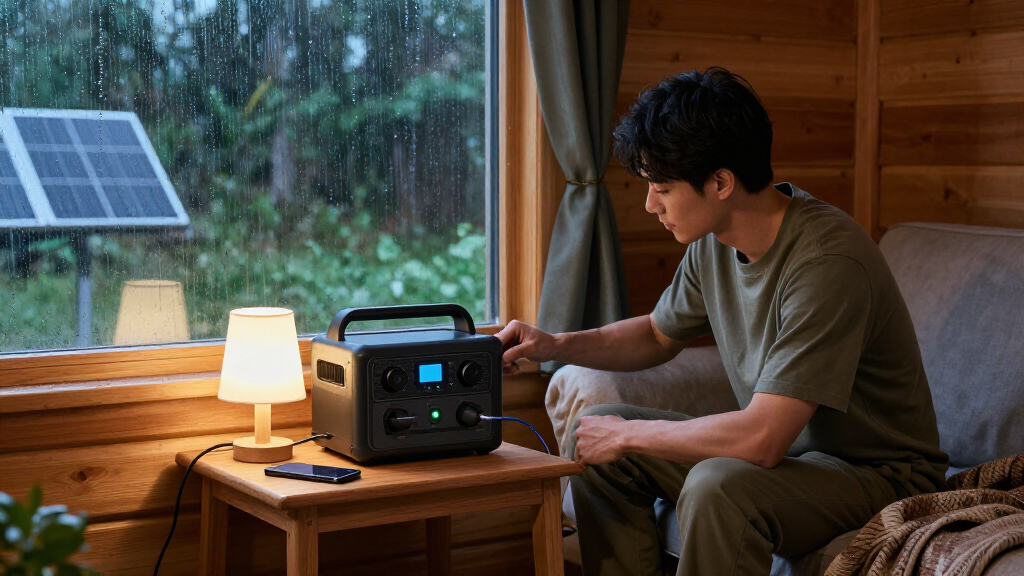
How We Picked
I evaluated each power station against four buyer-relevant criteria. Capacity versus weight came first: a unit only earns its keep if you can actually move it to where it is needed, which is why 2000Wh-plus models were judged more harshly on weight and handles. Inverter output came second, because wattage determines what you can run — a 300W station cannot start a microwave, no matter how healthy its battery is. Battery chemistry and cycle life separated long-term winners from short-lived bargains; LiFePO4 units rated for thousands of cycles rank above standard lithium-ion at equal capacity.
Finally, I weighed versatility and recharge flexibility, including solar input, AC recharge speed, and port selection. The ranking logic is capacity-tier based: small units are compared against each other for portability and value, mid-size units for all-around usefulness, and large units for backup capability. A brilliant small station never outranks a mid-size one for home backup, and a giant unit never wins for campers — each pick earns its position within the job it is meant to do.
Factors to Consider When Choosing Best Portable Power Stations
Choosing a portable power station comes down to honestly matching the spec sheet to your real usage. Below are the factors that most often make or break a purchase.Calculate Your Real Watt-Hour Needs Before Shopping
The most common mistake in this category is buying capacity you do not need, or worse, buying far too little. Start by listing the devices you will actually run and their wattage: a phone is negligible, a laptop might draw 60W, a portable fridge 60–100W, and a microwave 1000W or more. Multiply each device’s draw by the hours you need it, and you have your minimum watt-hour target — then add 20 percent for inverter inefficiency. A 300Wh unit like the ALLWEI or Jackery Explorer 300 covers a weekend of phone and laptop charging, while overnight refrigeration during an outage realistically demands 1000Wh or more. Buyers who skip this math end up either lugging a 60-pound unit to campsites unnecessarily or watching a fridge die at midnight. Also remember that rated capacity is not usable capacity — every station holds back a margin to protect the battery.
Inverter Wattage Matters as Much as Battery Size
Watt-hours tell you how long a station runs; inverter watts tell you whether it runs your device at all. A 296Wh station with a 300W inverter, like the EnginStar, simply cannot power a hair dryer, kettle, or power tool regardless of its battery health. Surge ratings matter too, because motor-driven appliances — refrigerators, pumps, air compressors — draw two to three times their running wattage at startup. The gap between the BLUETTI Elite 30 V2 (600W) and the similarly sized Jackery Explorer 300 is a perfect example: same tier of capacity, very different appliance coverage. If you plan to run anything with a motor or heating element, treat 1000W continuous output as your floor. Paying for a big battery behind a small inverter is one of the most frustrating ways to waste money in this category.
Battery Chemistry Determines How Many Years You Own It
Almost every quality modern station uses LiFePO4 chemistry, rated for 2,500 to 4,000 charge cycles before capacity drops to about 80 percent — roughly a decade of typical use. Older or budget models using NMC lithium-ion may only be rated for 500–800 cycles, which means noticeably degraded capacity within a few years of regular use. Since the battery is the majority of the product’s cost, chemistry is effectively a durability purchase, not a spec-sheet footnote. The tradeoff is weight and price: LiFePO4 cells are heavier per watt-hour, which is why some ultra-portable models still use NMC. If you use your station a few times a year, the chemistry difference matters less; if it cycles weekly for RV or worksite duty, it is the single biggest long-term value factor. Check the cycle-life rating before comparing anything else on the box.
Weight and Handles Decide Whether You Actually Carry It
‘Portable’ is a relative term in this category — anything over 40 pounds stops being something you carry to a campsite and becomes something you wheel or leave in place. A 3000Wh unit like the BLUETTI Elite 300 or the Jackery HomePower 3600 Plus is really a home backup battery with a handle, not a travel companion. Before buying, think through the actual path the unit will travel: car trunk to tent site, closet to living room, or garage to worksite. Two-handed carry handles, grippy surfaces, and balanced weight distribution make a genuine difference at the 20-pound mark and beyond. Many buyers end up owning two stations for exactly this reason — a small one for mobility and a large one parked at home. Choosing one do-everything unit often produces a compromise that does neither job well.
Solar Input and Recharge Speed Shape Off-Grid Usefulness
AC recharge speed varies enormously, from all-day trickle charging on budget units to 80 percent in under an hour on models like the EcoFlow DELTA 3. That difference determines whether a station is a daily-use tool or an emergency reserve you top up once a month. Solar input ratings matter even more for camping and RV buyers: a station that accepts 400W of panel input recovers a full charge in good sun, while one limited to 60W may never catch up to your consumption. Check whether the unit includes a solar charge controller compatible with third-party panels or locks you into a proprietary ecosystem, as some brands do. Also look at pass-through charging, which lets you run devices while the station recharges — handy for worksite and home-backup scenarios alike. Bundle deals, like the Jackery Explorer 300 with a 40W panel, can be a gentle entry into solar, though a 40W panel is a maintenance trickle rather than a real power source.
Port Selection and UPS Features Are Quietly Decisive
Port layout determines what the station replaces in your bag: USB-C Power Delivery at 100W can run a modern laptop without any adapter brick, and multiple AC outlets let you skip a power strip. For home backup buyers, the feature to look for is EPS or UPS-style switchover, which transfers to battery power within milliseconds of an outage — enough to keep a computer or CPAP machine running uninterrupted. Without it, connected devices reboot during the transfer, which is a minor annoyance for lamps but a real problem for sensitive equipment. Also check whether AC outlets are pure sine wave, which motors and electronics prefer, rather than modified sine wave found on some budget models. These details rarely appear in marketing copy but consistently separate satisfying units from frustrating ones after a few months of ownership.
Frequently Asked Questions
Is a 300Wh power station enough for camping?
For most car campers, yes — 300Wh covers a weekend of phone charges, camera batteries, LED lighting, and a few laptop top-ups. Where it falls short is anything with a heating element or motor, since 300W-class inverters cannot run kettles, hair dryers, or blenders. A 12V car fridge will draw 60–100W, meaning roughly 24 to 40 hours of runtime on a full 300Wh battery in warm weather. If your camping style involves espresso or electric cooking, step up to a 1000Wh-class unit like the EcoFlow DELTA 3 or Anker SOLIX C1000. Pair a small station with a 100W panel and it becomes an indefinite power source for light-duty needs.
Can a portable power station run a refrigerator during a power outage?
A modern Energy Star refrigerator draws roughly 100–200W while compressing and cycles on and off, consuming around 1–1.5kWh per day. That means a 1024Wh unit like the EcoFlow DELTA 3 or BLUETTI AC180 can keep a fridge running for close to a full day, while a 2000Wh station such as the Anker SOLIX C2000 Gen 2 stretches that to nearly two days. The catch is surge wattage: refrigerators can spike to 800–1200W at compressor startup, so the inverter must handle it — all of the 1500W-plus models in this lineup qualify. For multi-day outages, combine a large station with solar panels or plan to recharge via a generator. Anything under 500Wh is only a short-term bridge for refrigeration, not a real solution.
Is LiFePO4 really worth choosing over standard lithium-ion?
For most buyers, yes, and the reason is cycle life rather than daily performance. LiFePO4 cells are typically rated for 2,500–4,000 cycles before fading to 80 percent capacity, versus 500–800 cycles for older NMC chemistry — that is the difference between a station that lasts a decade and one that noticeably degrades in two or three years of regular use. LiFePO4 is also more thermally stable, which reduces the (already small) fire risk and makes the units safer to store fully charged in a hot garage. The tradeoffs are weight and upfront cost, which is why some ultra-compact 300Wh models still ship with NMC. If your station sits idle most of the year, chemistry matters less; if it cycles weekly, it should be your first filter.
Why do two products in this roundup share the Jackery Explorer 300 name?
They are the same core 292Wh station sold in different bundles — one standalone and one packaged with a 40W solar panel. The bundled version makes sense if you were planning to buy a panel anyway, since buying them together is usually cheaper than separately. That said, a 40W panel is a maintenance charger in practice: it adds roughly 150–250Wh on a good sunny day, enough to extend a weekend trip but not to fully recharge the station off-grid. The standalone unit is the better pick if you already own panels or plan to upgrade to a 100W unit later. Always read bundle contents carefully in this category, since identical model names frequently hide different accessories.
What size power station do I need for home backup versus camping?
These are two different purchases pretending to be one product category. Camping rewards a 250–300Wh unit like the Anker SOLIX C300 or BLUETTI Elite 30 V2, because weight dominates and your loads are small. Home backup rewards 1000Wh at minimum, and realistically 2000Wh-plus — the Anker SOLIX C2000 Gen 2, SOLIX S2000, or Jackery HomePower 3600 Plus — because refrigeration, medical devices, and routers consume real energy over hours and days. A 1000Wh unit like the EcoFlow DELTA 3 is the genuine crossover, handling both jobs acceptably. If your budget allows only one station and home outages are the concern, size for the fridge first and accept the extra weight. Many households eventually buy one of each rather than forcing a compromise.
Conclusion
The right choice here depends entirely on the job. For the best overall pick, the EcoFlow DELTA 3 earns it with a 1024Wh/1800W combination that handles camping and genuine home backup without becoming immovable. The best value goes to the BLUETTI AC180, which pairs big LiFePO4 capacity with a mid-size price tier and undercuts the larger Anker options on cost per watt-hour. For beginners, the BLUETTI Elite 30 V2 is the easiest entry point — a 600W inverter in a small, affordable package that teaches you your own usage before you spend big. The best premium pick is the Jackery HomePower 3600 Plus, whose 3584Wh and 3600W output make it the closest thing here to a whole-home solution, with the BLUETTI Elite 300 as its direct rival. For specific needs: campers should grab the Anker SOLIX C300 or the Jackery Explorer 300 bundle with solar, budget-conscious buyers get real capability from the ALLWEI 300W, and the Anker SOLIX C2000 Gen 2 suits buyers who want maximum inverter wattage in a mid-large footprint. Whatever you choose, size for the fridge, check the chemistry, and buy for the outage you actually expect — not the one you imagine.
Fall Picks
fall essentials
As an affiliate, we earn on qualifying purchases.