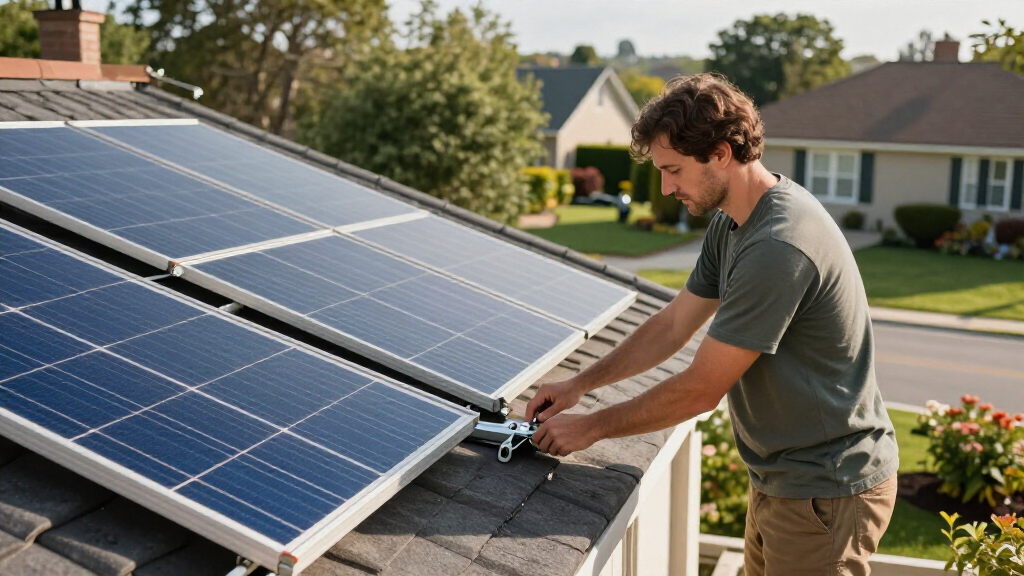
Solar panel kits for homes range from small 12V setups to large off-grid systems with substantial battery storage, so the right choice depends on what you need to power and for how long. I’d put the ECO-WORTHY 10,000W kit with 10.62kW of panels and 32.2kWh of storage in the best-overall conversation for households seeking substantial off-grid capacity, while the Jackery HomePower 3600 Plus suits buyers who value a portable, simpler-to-deploy backup option. The Renogy 400W kit is a more approachable choice for modest 12V applications, not whole-home backup. The main tradeoffs are system scale, battery runtime, installation complexity, and portability. Read on for the full breakdown of all 11 options and the factors that should shape your choice.

Get backup power and energy gear delivered free with Prime
- Fast, free delivery on millions of items
- Prime Video, Amazon Music and more included
- Member-only deals all year
Key Takeaways
- Capacity varies dramatically: the lineup spans Renogy’s 400W 12V kit and compact Jackery units through systems with 10kW-class inverters and battery banks as large as 32.2kWh.
- Panel wattage alone does not tell the whole story: usable household backup also depends on battery storage, inverter output, sunlight, and how much power your appliances draw.
- The largest ECO-WORTHY kit pairs the most listed storage with substantial panel capacity: its 10.62kW array and 32.2kWh battery make it a different scale of purchase from the 10kW kits with smaller battery banks.
- Portable Jackery options trade home-system scale for convenience: they are more suited to flexible backup and smaller loads than to running an entire home off-grid.
- Several kits are explicitly off-grid systems: buyers seeking utility-bill savings or grid-tied solar should verify compatibility, permitting, and interconnection needs rather than assume these kits connect to the grid.
| 3000W Off-Grid Solar Power System Kit with 1440W Panels, 5.12kWh LiFePO4 Battery, MPPT Controller and 6000W Peak Inverter |  | Best All-in-One Kit for Essential Home Backup | Solar panel output: 1,440W (12 × 120W) | Battery capacity: 5.12kWh | Battery type and configuration: LiFePO4; 4 × 12.8V, 100Ah batteries | VIEW LATEST PRICE | See Our Full Breakdown |
| ECO-WORTHY 5 kW Off-Grid Solar System Kit with 2,340 W Panels |  | Best Value for a Mid-Size Off-Grid Setup | Solar panel count and output: 12 panels; 195W each, 2,340W total | Panel dimensions and weight: 58.86 × 26.18 × 1.18 in; 21.9 lb each | Panel efficiency: 25% | VIEW LATEST PRICE | See Our Full Breakdown |
| ECO-WORTHY 10 kW Off-Grid Solar System Kit with 2,340 W Panels, 10 kW Inverter, and 10.24 kWh Batteries |  | Best for 120V/240V Off-Grid Loads | Solar panels: 12 bifacial panels; 195W each, 2,340W total | Panel dimensions and weight: 58.86 × 26.18 × 1.18 in; 21.9 lb each | Panel efficiency: Up to 25% | VIEW LATEST PRICE | See Our Full Breakdown |
| ECO-WORTHY 48V Off-Grid Solar System Kit with 1600W Panels, 100Ah LiFePO4 Battery, and 3500W Inverter |  | Best for Compact 48V Off-Grid Builds | Solar panels: 8 bifacial panels at 195W each; 1,600W maximum system power | Daily energy output: Up to 6.24kWh under 4 hours of full sunlight | Battery: 48V, 100Ah LiFePO4 | VIEW LATEST PRICE | See Our Full Breakdown |
| ECO-WORTHY 10,000W Off-Grid Solar Panel Kit with 10.62kW Panels and 32.2kWh Battery Storage |  | Best Premium Pick for High-Capacity Home Backup | Solar panel count and capacity: 18 monocrystalline panels; 10,620W total | Panel dimensions: 89.68 × 44.65 × 1.18 in | Maximum reported daily generation: 39.36kWh under optimal conditions | VIEW LATEST PRICE | See Our Full Breakdown |
| ECO-WORTHY 10 kW Off-Grid Solar Panel Kit with 16.1 kWh Battery |  | Best for Split-Phase Backup | Solar panel capacity: 2,950W total (5 × 590W panels) | Maximum daily solar generation: Up to 11.8 kWh under optimal conditions | Inverter continuous output: 10,000W | VIEW LATEST PRICE | See Our Full Breakdown |
| Jackery HomePower 3600 Plus Portable Power Station with Four 200W Solar Panels |  | Best Portable Home Backup | Battery capacity: 3,584Wh | Output wattage: 3,600W | Expandable capacity: Up to 21kWh per unit | VIEW LATEST PRICE | See Our Full Breakdown |
| Jackery Solar Generator 1000 V2 with 200W Solar Panel |  | Best Compact Emergency Backup | Battery capacity: 1,070Wh | AC output: 1,500W | Surge peak: 3,000W | VIEW LATEST PRICE | See Our Full Breakdown |
| ECO-WORTHY 1200W 48V Solar Power Kit with 6 Bifacial Panels, 50Ah LiFePO4 Battery, and 3500W Inverter |  | Best Entry-Level Complete Off-Grid Kit | Maximum solar power: 1,200W | Solar panels: 6 × 195W N-type bifacial panels | Panel conversion efficiency: 25% | VIEW LATEST PRICE | See Our Full Breakdown |
| ECO-WORTHY 10kW Off-Grid Solar System Kit with Split-Phase Inverter, Batteries, and Solar Panels |  | Best for High-Capacity Off-Grid Homes | Inverter continuous output: 10,000W | Inverter peak output: 20,000W | Output voltage: 120V/240V split phase | VIEW LATEST PRICE | See Our Full Breakdown |
| Renogy 400W 12V Monocrystalline Solar Kit with 40A MPPT Charge Controller |  | Best for a Small 12V Solar Setup | Total power: 400W | Panel configuration: 4 × 100W | System voltage: 12V | VIEW LATEST PRICE | See Our Full Breakdown |
More Details on Our Top Picks
3000W Off-Grid Solar Power System Kit with 1440W Panels, 5.12kWh LiFePO4 Battery, MPPT Controller and 6000W Peak Inverter
I’d shortlist this kit for a home that needs a coordinated set of parts for essential backup rather than the largest possible array. Its 1,440W of panels, 5.12kWh LiFePO4 battery bank, 60A MPPT controller, and 3,000W pure sine wave inverter arrive as one system, so buyers don’t have to match those core components themselves. Compared with the ECO-WORTHY 48V kit, it has less panel capacity and a lower rated inverter, but its four-battery, 24V configuration may appeal to buyers planning a smaller off-grid setup. The 6,000W peak rating is brief—one second—so I wouldn’t treat it as capacity for sustained high-startup loads. It also calls for careful wiring and installation knowledge, and actual solar harvest will vary with sunlight and site conditions.
Pros:- Includes panels, battery bank, inverter, MPPT controller, combiner box, and cables
- 5.12kWh LiFePO4 storage includes a built-in battery management system
- Pure sine wave 120V AC output suits many household appliances and electronics
- 60A MPPT controller has an LCD display and stated tracking efficiency above 99%
Cons:- The 3,000W inverter rating limits the sustained load the system can serve
- The 6,000W peak rating lasts only one second and is not a sustained surge allowance
- Installation and wiring may require technical knowledge, while solar output varies with site conditions
Best for: Homeowners or cabin owners building an off-grid system for essential appliances, electronics, and moderate backup loads who want panels, storage, and power conversion in one package.
Not ideal for: Buyers who need sustained high-power household loads, 120V/240V split-phase support, or a larger solar array; the 3,000W inverter and 1,440W panel capacity are more limited than the larger ECO-WORTHY systems here.
- Solar panel output:1,440W (12 × 120W)
- Battery capacity:5.12kWh
- Battery type and configuration:LiFePO4; 4 × 12.8V, 100Ah batteries
- Charge controller:60A MPPT; stated tracking efficiency above 99%
- Inverter output:3,000W pure sine wave; 6,000W peak for 1 second
- Inverter input and AC output:24V DC input; 120V AC output
- Included combiner box:4-to-1 PV combiner box
- Included cables:Battery and solar extension cables
Our verdict“Choose this kit for a bundled, moderate-capacity off-grid setup, but look to the larger ECO-WORTHY systems for heavier household loads.”
ECO-WORTHY 5 kW Off-Grid Solar System Kit with 2,340 W Panels
I’d put this kit on the list for buyers who want more panel and inverter capacity than a small backup system without stepping up to the 10kW ECO-WORTHY kits. It pairs 2,340W of panels with a 5,000W, 48V inverter and a 51.2V, 100Ah LiFePO4 battery, with cables and mounting brackets included. Compared with the 3,000W 24V system in this roundup, its higher inverter rating and 48V design are better aligned with a broader range of off-grid loads. But the supplied battery is still 100Ah, so buyers should match their expected runtime to the available storage rather than assume the inverter rating means long backup duration. The panels are also nearly 59 inches long and weigh 21.9 pounds apiece, making roof access and mounting a real planning factor.
Pros:- Combines 2,340W of panels with a 5,000W inverter
- 48V system uses a 51.2V, 100Ah LiFePO4 battery
- Includes cables and mounting brackets alongside the main power components
- MC4 connectors and stated 25% panel efficiency provide clear panel-system specifications
Cons:- The 100Ah battery may limit runtime for sustained household loads
- Panels measure 58.86 × 26.18 inches and weigh 21.9 pounds each, complicating handling and mounting
- DIY installation may require electrical and solar-system expertise
Best for: Cabin owners and technically confident homeowners who want a 48V off-grid system with a 5,000W inverter and a complete panel, battery, cable, and bracket package.
Not ideal for: Buyers who need extensive overnight storage or a straightforward, lightweight installation; its 100Ah battery may not provide long runtime, and each panel is large and heavy to handle.
- Solar panel count and output:12 panels; 195W each, 2,340W total
- Panel dimensions and weight:58.86 × 26.18 × 1.18 in; 21.9 lb each
- Panel efficiency:25%
- Inverter:5,000W, 48V
- Battery:LiFePO4, 51.2V, 100Ah
- Output voltage:120V
- Panel connector:MC4
- Included accessories:Cables and mounting brackets
Our verdict“Pick this for a mid-size 48V off-grid build with a stronger inverter than the 3,000W kit, provided its battery capacity fits your runtime needs.”
ECO-WORTHY 10 kW Off-Grid Solar System Kit with 2,340 W Panels, 10 kW Inverter, and 10.24 kWh Batteries
This kit’s defining advantage is its 10,000W inverter with 120V/240V output, which gives it a broader load profile than the 5,000W ECO-WORTHY system or the 3,500W 48V kit. That makes it a better candidate for a home with equipment that needs split-voltage service, while its two 48V, 100Ah lithium batteries provide 10.24kWh of storage. The unusual balance is the solar array: it has the same 2,340W total panel rating as the smaller ECO-WORTHY kit, despite the higher inverter rating and larger battery bank. Buyers should not mistake inverter capacity for solar replenishment speed. App-based battery monitoring, parallel connections, and multiple charging modes add flexibility, but the stated recommendation for professional installation makes this less suitable for a casual DIY project.
Pros:- 10,000W maximum continuous inverter output with 120V/240V AC
- Two 48V, 100Ah lithium batteries provide 10.24kWh total capacity
- Battery monitoring supports CAN/RS485, Bluetooth, and Wi-Fi
- Panels are specified as bifacial, with up to 25% conversion efficiency
Cons:- The 2,340W array is the same total panel capacity as the smaller 5,000W ECO-WORTHY kit
- Professional installation is recommended
- Daily solar output depends on available full-sun hours and site conditions
Best for: Homeowners or cabin owners needing 120V and 240V off-grid power, substantial inverter capacity, and app-visible battery status, with access to professional installation.
Not ideal for: DIY beginners or buyers who want a high-capacity solar array to refill a large battery bank quickly; the 2,340W panel total is modest beside the 10,000W inverter and 10.24kWh storage.
- Solar panels:12 bifacial panels; 195W each, 2,340W total
- Panel dimensions and weight:58.86 × 26.18 × 1.18 in; 21.9 lb each
- Panel efficiency:Up to 25%
- Inverter output:10,000W maximum continuous
- AC output voltage:120V / 240V
- Battery storage:2 × 48V, 100Ah batteries; 10.24kWh total
- Battery monitoring:CAN/RS485, Bluetooth, and Wi-Fi
- Certifications:Inverter: UL 1741; batteries: UL 1973 and UL 9540A
Our verdict“Choose this when 120V/240V output and a 10kW inverter matter more than having a large panel array relative to the storage.”
ECO-WORTHY 48V Off-Grid Solar System Kit with 1600W Panels, 100Ah LiFePO4 Battery, and 3500W Inverter
I’d choose this system for a buyer who wants a 48V setup with a little more panel capacity than the 1,440W kit, but doesn’t need a 5,000W or 10,000W inverter. Its 1,600W bifacial array, 48V 100Ah LiFePO4 battery, and 3,500W inverter keep the system more modest than ECO-WORTHY’s 5kW and 10kW options. That can make sense for a cabin or a limited set of household loads, especially with touchscreen and remote monitoring. The 7,000W peak figure should not be confused with sustained output: continuous inverter power is 3,500W. It also has only 100Ah of battery capacity, so heavier evening use may call for more storage. The stated daily generation assumes four hours of full sunlight, which is a condition, not a guaranteed daily yield.
Pros:- 1,600W array pairs eight 195W bifacial panels with a 48V system
- 80A MPPT controller and 3,500W inverter are included
- Touchscreen, Bluetooth, and Wi-Fi provide local and remote monitoring
- Battery is specified to support charging down to -4°F
Cons:- 3,500W is the rated inverter output; 7,000W is peak power, not continuous capacity
- The 100Ah battery may not support long runtime under heavier loads
- The stated 6.24kWh daily output assumes four hours of full sunlight
Best for: Cabin owners and homeowners running a defined set of off-grid loads who want 48V components, remote monitoring, and a smaller inverter than the larger ECO-WORTHY systems.
Not ideal for: Households with sustained high-power demands or long backup requirements; the 3,500W continuous inverter and 100Ah battery are more limited than the 5kW and 10kW alternatives.
- Solar panels:8 bifacial panels at 195W each; 1,600W maximum system power
- Daily energy output:Up to 6.24kWh under 4 hours of full sunlight
- Battery:48V, 100Ah LiFePO4
- Inverter:3,500W rated; 7,000W peak
- Solar charge controller:80A MPPT
- Output:48V DC; 110/120V AC
- Monitoring:4.3-inch touchscreen, Bluetooth, and Wi-Fi
- Low-temperature charging:Down to -4°F
Our verdict“This is a sensible smaller 48V off-grid choice when monitoring and low-temperature charging matter more than high inverter capacity or extended storage.”
ECO-WORTHY 10,000W Off-Grid Solar Panel Kit with 10.62kW Panels and 32.2kWh Battery Storage
For buyers planning a substantial off-grid home system, this is the most fully scaled option in this group: 10.62kW of panels, a 10,000W split-phase inverter, and 32.2kWh of LiFePO4 storage. That battery capacity is a major step up from the 10.24kWh ECO-WORTHY kit, while the 120V/240V output supports a wider range of household circuits than the smaller systems. Dual MPPT controllers and Wi-Fi monitoring add useful system oversight, and the batteries have wheels and handles for moving them on-site. The tradeoff is practical as well as technical: the 89.68-inch panels and palletized truck delivery call for room, access, and careful installation planning. Professional installation is recommended, so this is a poor fit for buyers seeking a simple plug-in or small backup solution.
Pros:- 10.62kW of panels paired with a 10,000W continuous inverter
- 32.2kWh total LiFePO4 storage exceeds the 10.24kWh ECO-WORTHY kit
- 120V/240V split-phase output and 20,000W inverter peak rating
- Dual MPPT controllers, Wi-Fi monitoring, and battery display with connectivity options
Cons:- Professional installation is recommended
- Panels are large at 89.68 × 44.65 inches, and delivery is by truck on a pallet
- Its size and capacity may be excessive for buyers needing only essential-load backup
Best for: Homeowners planning a professionally installed, high-capacity off-grid system with split-phase household power and substantial stored energy for longer backup periods.
Not ideal for: Apartment residents, DIY beginners, or households with limited delivery and installation space; the large panels, pallet shipment, and installation requirements exceed the needs of a small backup setup.
- Solar panel count and capacity:18 monocrystalline panels; 10,620W total
- Panel dimensions:89.68 × 44.65 × 1.18 in
- Maximum reported daily generation:39.36kWh under optimal conditions
- Inverter output:10,000W continuous; 20,000W peak
- AC output:120V/240V split phase
- Battery storage:2 × 48V, 314Ah LiFePO4 batteries; 32.2kWh total
- Battery management system:PACE 200A BMS
- Expansion capacity:Up to 15 parallel batteries; up to 241kWh stated storage
- Installation and delivery:Professional installation recommended; truck delivery on a pallet
Our verdict“Choose this premium-scale system for a professionally installed off-grid home that needs far more storage and panel capacity than the other kits here.”
ECO-WORTHY 10 kW Off-Grid Solar Panel Kit with 16.1 kWh Battery
I’d shortlist this kit for a home that needs 120/240V split-phase power and substantial overnight storage without stepping up to the larger nine-panel system. Its 16.076 kWh LiFePO₄ battery is a meaningful advantage over the ECO-WORTHY 10 kW kit with 10.24 kWh of storage, though this model has less solar capacity at 2,950W, so replenishing that battery may take longer. The 10,000W inverter can serve a broad mix of household loads, and its 20,000W peak rating offers headroom for startup surges. I’d treat the stated daily generation of up to 11.8 kWh as an optimal-condition figure, not a dependable year-round output. Professional installation and truck delivery of palletized equipment add planning work, and this is an off-grid system rather than a simple grid-tied rooftop kit.
Pros:- 16.076 kWh LiFePO₄ battery provides substantial stored energy for use after solar production drops.
- 120V or 120/240V split-phase output suits a wider range of household circuits than a 120V-only portable station.
- 10,000W continuous inverter output with a 20,000W peak rating supports sizable loads and startup surges.
- Battery and inverter offer monitoring and connectivity, with expansion available through parallel batteries and inverters.
Cons:- The 2,950W panel array is smaller than the 5,310W array in ECO-WORTHY’s other 10 kW kit, limiting solar replenishment potential.
- Professional installation is recommended, adding coordination beyond a plug-in backup setup.
- Palletized truck delivery requires suitable access and delivery planning.
Best for: Homeowners planning an off-grid or backup-power setup who need split-phase output and more stored energy than the 10.24 kWh ECO-WORTHY kit provides.
Not ideal for: Buyers who want a straightforward grid-connected rooftop installation, limited battery storage, or equipment that can be delivered without truck and pallet access.
- Solar panel capacity:2,950W total (5 × 590W panels)
- Maximum daily solar generation:Up to 11.8 kWh under optimal conditions
- Inverter continuous output:10,000W
- Inverter peak output:20,000W
- Output voltage:120V or 120/240V split phase
- Battery:48V, 314Ah LiFePO₄
- Battery energy capacity:16.076 kWh
- Battery management system:PACE 200A BMS
Our verdict“Choose this kit when split-phase household power and 16.1 kWh of storage matter more than having the larger solar array in ECO-WORTHY’s 5,310W system.”
Jackery HomePower 3600 Plus Portable Power Station with Four 200W Solar Panels
I’d pick this Jackery when portability and flexible recharging matter more than building a fixed whole-home solar system. The 3,584Wh LFP battery and 3,600W output can cover selected household loads, while the four included 200W panels provide a ready-made solar charging option. Unlike the ECO-WORTHY 10 kW kits, it does not arrive as a high-capacity split-phase home power system; 240V operation requires parallel use, and its base capacity is much smaller. Its strengths are mobility and charging choice: wheels and a telescopic handle help move a 77.2-pound unit, and it can recharge from solar, AC, a gas generator, or hybrid AC and DC. Expansion up to 21kWh per unit adds flexibility, but buyers should plan around the weight and possible separate-package deliveries.
Pros:- Includes four 200W solar panels, giving buyers a substantial portable solar charging set in the bundle.
- 3,600W output can support multiple selected household devices and appliances.
- Expandable capacity up to 21kWh per unit offers a path to longer backup runtime.
- Solar, AC, gas-generator, and hybrid charging options provide flexibility when sunlight is limited.
Cons:- At 77.2 pounds, the power station is heavy to lift even with its wheels and telescopic handle.
- The base 3,584Wh capacity is far below the storage in the ECO-WORTHY 10 kW systems.
- The station and solar panels may arrive in separate packages, complicating setup timing.
Best for: Households that want movable backup for selected appliances, with included solar panels and several ways to recharge during outages.
Not ideal for: Homeowners seeking a fixed, high-capacity off-grid installation with standard split-phase output and a large solar array included as one integrated system.
- Battery capacity:3,584Wh
- Output wattage:3,600W
- Expandable capacity:Up to 21kWh per unit
- Battery type:LFP
- Voltage:120V; 240V in parallel
- Included solar panels:Four 200W panels
- Charging options:Hybrid AC+DC, AC, solar, and gas generator
- Weight:77.2 lbs
Our verdict“Choose the HomePower 3600 Plus for movable, expandable backup with included panels, not as a substitute for a fixed high-capacity home solar system.”
Jackery Solar Generator 1000 V2 with 200W Solar Panel
This bundle makes more sense as a compact backup for essentials than as a home-wide solar kit. Its 1,070Wh battery and 1,500W AC output can support smaller loads, while the 200W panel offers a way to recharge when grid power is unavailable. Compared with the Jackery HomePower 3600 Plus, it is much lighter at 23.8 pounds and easier to store or move, but its battery and output are substantially lower. Three AC outlets plus USB and DC connections let it handle several devices at once; the tradeoff is that it cannot match the larger ECO-WORTHY systems’ split-phase output, panel capacity, or household storage. The LFP battery’s cycle rating and app-controlled charging modes add useful flexibility, though fast emergency charging requires enabling that mode in the app.
Pros:- At 23.8 pounds, it is easier to store and carry than the HomePower 3600 Plus.
- Includes a 200W solar panel for recharging away from the grid.
- Three AC outlets and USB and DC ports support simultaneous charging of varied devices.
- LFP battery is rated for over 4,000 charge cycles, and the app provides multiple charging modes.
Cons:- Its 1,070Wh capacity is modest beside the multi-kilowatt-hour batteries in the ECO-WORTHY home kits.
- The 200W panel and 1,500W AC output limit its role to smaller loads rather than broad household backup.
- One-hour charging requires emergency charging to be enabled in the app, and the panel and station ship separately.
Best for: Apartment residents, homeowners with limited storage space, or anyone seeking portable solar backup for phones, networking gear, lights, and other smaller loads.
Not ideal for: Households that need to run large appliances for extended periods or want a fixed 120/240V system with high solar production and substantial battery storage.
- Battery capacity:1,070Wh
- AC output:1,500W
- Surge peak:3,000W
- Battery type:LFP
- Solar panel:200W
- Weight:23.8 lbs
- AC outlets:3
- USB-C output:100W
Our verdict“Choose this Jackery for portable backup of smaller essentials, but look to a larger system for sustained household loads.”
ECO-WORTHY 1200W 48V Solar Power Kit with 6 Bifacial Panels, 50Ah LiFePO4 Battery, and 3500W Inverter
For buyers who want a coordinated off-grid setup without jumping to a 10 kW inverter system, this ECO-WORTHY kit pairs 1,200W of bifacial panels with a 48V battery and a 3,500W inverter. The included inverter, battery, panels, and accessories make it more complete than choosing separate components, while Wi-Fi monitoring and 20ms UPS switching add useful oversight and backup behavior. Its stated daily generation of about 4.68 kWh assumes four hours of full sunlight, so location, season, and shading will shape actual production. Compared with the 10 kW ECO-WORTHY kits, this system is smaller in both solar capacity and storage: its 2,560Wh usable battery is better suited to selected loads than whole-home demand. That lower scale can fit a modest off-grid cabin or targeted home backup, but leaves less reserve for cloudy stretches.
Pros:- Panels, battery, inverter, and accessories are included, reducing component-matching work.
- 48V 50Ah LiFePO₄ battery is rated for more than 4,000 cycles.
- 80A MPPT controller and Wi-Fi monitoring provide charging management and system visibility.
- 20ms UPS switching and support for parallel inverters add useful backup and expansion options.
Cons:- The 2,560Wh usable battery is much smaller than storage in the ECO-WORTHY 10 kW systems.
- The stated 4.68 kWh daily generation depends on four hours of full sunlight, which varies by site and season.
- A complete kit may arrive in multiple packages, delaying assembly if shipments are separated.
Best for: Buyers setting up a modest off-grid cabin or targeted home backup who want panels, battery, inverter, and accessories in one kit.
Not ideal for: Households aiming to cover large daily loads, run multiple high-demand appliances, or store enough energy for extended low-sun periods.
- Maximum solar power:1,200W
- Solar panels:6 × 195W N-type bifacial panels
- Panel conversion efficiency:25%
- Battery:48V 50Ah LiFePO₄
- Battery usable energy:2,560Wh
- Inverter output:3,500W
- Surge power:7,000W
- Charge controller:80A MPPT
- Daily energy generation:About 4.68 kWh under 4 hours of full sunlight
Our verdict“Choose this kit for a modest, component-complete off-grid setup, but step up to a larger ECO-WORTHY system for heavier household use.”
ECO-WORTHY 10kW Off-Grid Solar System Kit with Split-Phase Inverter, Batteries, and Solar Panels
This is the strongest fit in this group for buyers building a high-capacity off-grid home system: it combines a 10,000W split-phase inverter, 20.48kWh of battery storage, and 5,310W of solar panels. Compared with the ECO-WORTHY 10 kW kit that includes 16.1 kWh of storage and only 2,950W of panels, this package offers both more battery capacity and a larger array, which can support more consumption and better replenishment potential. Its bifacial panels may gain output from reflected light, though the stated boost depends on installation conditions rather than being guaranteed. Dual MPPT, Wi-Fi monitoring, and parallel expansion add flexibility, but the long, heavy panels need pallet delivery and careful siting. This is a substantial system, not a casual DIY bundle; professional installation is recommended.
Pros:- 20.48kWh of LiFePO₄ storage exceeds the 16.1kWh ECO-WORTHY kit in this roundup.
- 5,310W of PV capacity provides a larger array than the other listed ECO-WORTHY 10 kW kit.
- 120V/240V split-phase output and 10,000W continuous inverter rating support substantial household loads.
- Dual MPPT, Wi-Fi monitoring, and support for parallel connection of up to six units provide system flexibility.
Cons:- Nine large panels require significant installation space and pallet delivery access.
- Professional installation is recommended, making setup more involved than a portable power station.
- Bifacial output gains depend on site conditions and should not be treated as guaranteed production.
Best for: Homeowners planning a substantial off-grid installation who need 120/240V output, significant battery reserve, and more than 5kW of solar panel capacity.
Not ideal for: Buyers with limited roof or ground space, constrained delivery access, modest power needs, or no plan for professional installation.
- Inverter continuous output:10,000W
- Inverter peak output:20,000W
- Output voltage:120V/240V split phase
- Battery configuration:4 × 48V 100Ah LiFePO₄
- Total battery storage:20.48kWh
- Solar panels:9 × 590W
- Total PV capacity:5,310W
- Panel efficiency:23.23%
- Inverter features:Dual MPPT, Wi-Fi monitoring, parallel connection up to 6 units
Our verdict“Choose this system when you need the largest combination of solar capacity and battery storage among these five picks and can accommodate a professional off-grid installation.”
Renogy 400W 12V Monocrystalline Solar Kit with 40A MPPT Charge Controller
I’d choose this Renogy kit for a modest 12V installation where a buyer wants panels and core charging hardware together, rather than a complete household backup system. Its four 100W monocrystalline panels, 40A MPPT controller, Bluetooth monitor, and included mounting and wiring parts make it a more integrated starting point than a panel-only purchase. The phone monitoring is useful for checking system activity, but the kit does not list an inverter or battery, so those remain separate decisions.
Compared with the 3000W Off-Grid Solar Power System Kit, this is a much smaller, simpler setup—not a match for powering a broad range of home loads. I’d also pause over the product data: it gives a 400W total while listing maximum power as 100W, and its voltage details appear inconsistent. Confirm compatibility with Renogy before buying. Its 12V configuration can suit a small system, but it limits the scale of the installation.
Pros:- Includes four 100W monocrystalline panels and a 40A MPPT charge controller
- Bluetooth module supports phone-based system monitoring
- Z-brackets, cables, and an adaptor kit are included
- 12V configuration suits smaller systems built around compatible equipment
Cons:- No battery or inverter is listed, so the kit alone is not a complete home power system
- Product data conflicts on maximum power and voltage, so compatibility needs verification
- A 400W array is limited compared with the larger off-grid kits in this roundup
Best for: Buyers building a small 12V solar setup who want panels, an MPPT controller, mounting brackets, cables, and phone monitoring in one kit.
Not ideal for: Homeowners seeking a complete backup system for household appliances, or buyers who need clearly verified electrical specifications before choosing system components.
- Total power:400W
- Panel configuration:4 × 100W
- System voltage:12V
- Charge controller:40A MPPT
- Panel material:Monocrystalline silicon
- Panel dimensions:41.8 × 20.9 × 1.38 inches
- Panel weight:56.4 pounds
- Connector type:MC4
- Included components and warranty:Bluetooth module, Z-brackets, cables, adaptor kit; 5-year panel warranty
Our verdict“Choose this Renogy kit for a small, expandable 12V setup, but verify the conflicting electrical specifications and plan to supply a battery and inverter separately.”
How We Picked
I compared the 11 kits by how well their stated components fit common household needs: panel capacity, battery storage, inverter output, system voltage, portability, and the likely complexity of planning and installation. I gave more weight to complete system balance than to a single large wattage figure; a high-output inverter cannot extend runtime without sufficient storage, and a large battery needs enough panel capacity to recharge under real conditions. I also separated small-load and portable options from systems presented for off-grid household use, since they solve different problems.
The order prioritizes versatility for home-scale use, then distinguishes value-oriented smaller systems, high-capacity setups, beginner-friendly portable power, and specialized or limited-scope kits. The 10.62kW-panel, 32.2kWh-storage ECO-WORTHY system leads for its stated combination of generation and storage, while the other 10kW-class ECO-WORTHY kits offer different balances of inverter and battery capacity. Portable Jackery models and the Renogy 400W kit rank lower for whole-home coverage, but can be better matches for smaller loads and simpler use. Product names and listed specifications alone do not establish installation compatibility, code compliance, or actual energy yield, so I treat those as buyer checks rather than assumed benefits.
Factors to Consider When Choosing Solar Panel Kits For Homes
Before choosing a kit, I’d start with the job it needs to do—not the largest number on the product name. The factors below help distinguish a backup system from a genuine off-grid household setup and flag mismatches that can lead to disappointing runtime or difficult installation.
Match the System to Your Loads
List the appliances you expect to run and separate essential loads from occasional ones. A refrigerator, lighting, router, and medical device create a different demand profile from electric cooking, water heating, or central air conditioning. Check both running watts and startup surges, since motors can briefly draw far more power than their normal rating. Add up expected daily energy use in watt-hours as well as the highest simultaneous load. A kit’s inverter rating addresses the latter, while panel and battery capacity shape how long the system can serve those loads. If you cannot estimate usage, collecting a week of meter or appliance data can prevent buying a system sized around guesses.
Read Battery Capacity as Runtime, Not a Guarantee
Battery capacity indicates stored energy, but the amount available to appliances can be lower after conversion losses and limits on usable discharge. Estimate runtime by dividing usable battery energy by the loads you plan to run, then allow for inverter consumption and changing demand. A large battery can help through evenings or cloudy periods, but it does not generate energy; the panels must replenish it. Conversely, a powerful panel array may produce more than a small battery can store during sunny hours. Check battery chemistry, expansion options, and the manufacturer’s guidance on temperature and charging. Comparing storage and generation together is more useful than choosing by either figure alone.
Check Inverter Output, Voltage, and Household Wiring
Do not assume a kit can power every circuit just because its inverter has a large headline wattage. Confirm continuous output, surge capability, output voltage, and whether the system supports the split-phase service used by many North American homes. A 12V kit and a 48V system also call for different wiring practices and components, especially as power levels rise. If you plan to feed a home electrical panel, ask a qualified electrician how the equipment will connect and what transfer equipment is required. Never improvise a connection through a wall outlet. Compatibility with household wiring and local electrical rules can matter as much as the panel count.
Choose Between Portable Backup and Fixed Off-Grid Power
Portable power stations suit buyers who want a movable source for selected appliances, travel, or temporary outages. Fixed off-grid kits can support larger, ongoing loads, but usually call for careful site planning, mounting, wiring, and system configuration. Decide whether you need backup during outages, power at a remote property, or reduced dependence on utility service; these goals lead to different equipment choices. A portable unit is not automatically a whole-home system, and a large off-grid kit is not automatically a grid-tied solar solution. Ask whether the panels, battery, inverter, mounting hardware, and required protection equipment are all included. If a component is missing, account for the added design and installation work before choosing.
Size the Array for Your Location and Season
Panel wattage describes rated output under test conditions, not the energy you will receive every day. Roof direction, shading, latitude, weather, season, panel angle, and local site conditions all affect production. A system sized around summer sunlight may fall short during shorter winter days, especially if the home has high evening demand. Review local solar-resource data and ask an installer to model the proposed array against your actual usage. Check roof condition, available area, and any shading from trees or nearby buildings before buying a large panel kit. More panels can help with charging, but they cannot make an unsuitable roof or heavily shaded site productive.
Plan for Installation, Permits, and Future Expansion
A kit’s included components do not remove the need to check building permits, electrical permits, inspections, or utility rules. Requirements differ by location and by whether the system is standalone or connected to the grid. Ask who will install it, whether the equipment documentation supports local approval, and what additional breakers, wiring, mounts, or disconnects may be needed. For an expanding system, verify that the inverter and charge controller can accept more panels or batteries, and check compatibility across voltage and battery specifications. Buying for future growth can make sense, but oversized equipment that cannot be expanded as planned offers little benefit. Get the complete system design reviewed before committing to a high-capacity installation.
Frequently Asked Questions
Can an off-grid solar kit connect to my utility-powered home?
Not automatically. Off-grid equipment may lack the grid-interactive features and approvals required for a utility connection, even if its inverter can power household circuits. A grid-connected installation may need certified equipment, utility approval, a permitted design, and an approved interconnection process. Ask the manufacturer and a licensed local electrician to confirm the exact model’s intended use before purchase. If your goal is to lower utility bills, compare grid-tied systems rather than assuming an off-grid kit can serve that role.
How much battery storage do I need to keep essential appliances running overnight?
Start by adding the watt-hours your essential appliances use during the hours they will run, including cycling loads such as refrigerators. Then allow for conversion losses and the battery’s recommended usable capacity, which is often less than its advertised total. A larger battery provides more overnight reserve, but it still needs enough panel production to recharge during the day. Include cloudy-day needs if backup reliability matters, and decide how long you want to manage without sun. A load estimate is a better starting point than choosing storage based only on the number of batteries in a kit.
Is a portable solar generator enough for whole-home backup?
Usually, a portable power station is best for selected loads rather than an entire home. It can be useful for essentials such as a router, lights, or some small appliances, but whole-home use depends on inverter output, battery capacity, connection options, and the home’s simultaneous demand. Large heating and cooling equipment can exceed what a portable unit supports or drain its battery quickly. Check whether the model can connect safely to a transfer switch and whether its solar input matches the included panels. For broad household coverage, compare it with a fixed system designed for the circuits you want to back up.
Should I choose a larger inverter or a larger battery first?
Choose based on the limitation you need to solve: inverter output handles how much power can run at once, while battery capacity affects how long stored power lasts. If several appliances must operate together or have high startup surges, inverter capacity may be the constraint. If the loads are modest but need to run for many hours, storage is usually the more relevant factor. Panel capacity also matters because it determines how quickly the battery can recharge in suitable sunlight. Map the loads and runtime together before upgrading either component, and confirm that all parts are electrically compatible.
What should I verify before ordering a large off-grid kit for my house?
Confirm that the panels, inverter, batteries, charge controller, mounting parts, cables, and safety equipment match the system design and are included where expected. Check inverter voltage and split-phase support, battery chemistry and capacity, panel input limits, and expansion compatibility. Have a qualified installer review roof space, shading, wiring, local permits, and electrical-panel connection plans. Ask how the system performs under your local seasonal sunlight rather than relying on rated panel output alone. A complete design review can reveal missing hardware or an unsuitable configuration before delivery and installation.
Conclusion
For a household seeking substantial off-grid generation and storage, I’d start with the ECO-WORTHY 10,000W kit with 10.62kW of panels and 32.2kWh of batteries as the best overall fit in this lineup. The best value depends on the loads you need to cover; among the smaller options, the ECO-WORTHY 48V kit with 1,600W of panels, a 100Ah battery, and a 3,500W inverter offers a more contained system than the large 10kW-class packages. For a best premium, high-capacity choice, compare the large ECO-WORTHY kits by battery storage and inverter configuration, with the 32.2kWh model suited to buyers prioritizing a larger reserve. Beginners seeking portable backup should look first at the Jackery HomePower 3600 Plus, while buyers with modest 12V needs may prefer the Renogy 400W kit. For compact portable power, the Jackery Solar Generator 1000 V2 fits smaller loads; before choosing any fixed system, verify installation, permits, and household compatibility.
Halloween Picks
halloween
As an affiliate, we earn on qualifying purchases.