TL;DR

Get backup power and energy gear delivered free with Prime
- Fast, free delivery on millions of items
- Prime Video, Amazon Music and more included
- Member-only deals all year
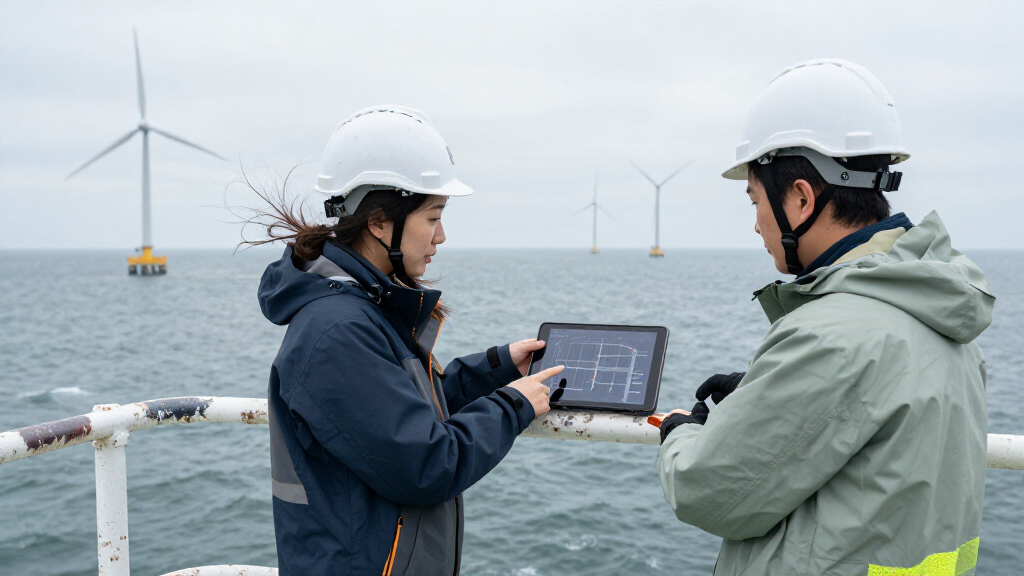
Floating wind developers and researchers are continuing international partnerships despite high costs, technical hurdles and a more uncertain U.S. policy environment. The source report describes ongoing work between Europe and North America, while the pace and scale of future projects remain uncertain.
Floating wind research and industry partnerships are continuing between Europe and North America despite high project costs, technical obstacles and political uncertainty in the United States, according to a report by Canary Media. The cross-border work matters because floating turbines could open deeper-water sites to offshore wind, but commercial deployment depends on technologies and infrastructure that remain expensive and, in some cases, unresolved.
The report traces U.S. federal support to the Floating WindShot, launched in 2022 under the Biden administration with a goal of reducing the technology’s electricity costs by 70%. The program supported research, stakeholder meetings and infrastructure, including ports. Research awards went to the University of Maine’s Advanced Structures and Composites Center and subsidiaries of European floating-platform companies. Former Bureau of Ocean Energy Management Director Liz Klein said international learning and partnerships were important to the effort.
Commercial development still faces substantial barriers. Canary Media cites estimates placing floating wind’s levelized electricity cost at roughly twice that of fixed-bottom offshore wind when the initiative was announced, and as much as three times the cost of a combined-cycle gas plant. BloombergNEF analyst Harrison Sholler pointed to unresolved technical challenges, including dynamic power cables and offshore substations. Ports, supply chains and transmission links also require major investment; studies under the program estimated that new or upgraded ports could cost more than $1 billion each.
The report says collaboration continues despite setbacks to U.S. projects and research funding. Canada is emerging as a North American development center: Nova Scotia launched a solicitation for 5 gigawatts of offshore wind, including areas suitable for floating turbines. Maine’s research center has reduced or reassigned some wind staff but continues to take contracts for component testing. Its private-sector spinoff, DeepCWind, is pursuing European project contracts, according to center leaders cited by the report.
Partnerships Keep Projects Moving
Floating wind can serve offshore areas too deep for conventional fixed-bottom foundations, potentially widening the locations available for wind generation. But that potential depends on more than turbine design: developers need cables and substations that work in demanding conditions, port facilities suited to large floating structures, dependable supply chains and connections to the grid.
International research can spread costs and technical learning across markets, and give companies opportunities to work on projects where policy support remains available. The U.S. policy shift described by Canary Media has also made the market less predictable. Sholler said financiers and developers now view the country as politically risky for offshore wind. That is an attributed assessment, not a measure of how much investment has moved or whether it will return.
As an affiliate, we earn on qualifying purchases.
From Federal Target to Market Setbacks
The Biden administration’s 2022 cost-reduction target was part of a broader group of federal “Energy Earthshots.” By the end of that administration, BOEM had auctioned commercial-scale floating wind lease sites off the Gulf of Maine and California. Those lease sales did not remove the need for permits, construction financing or supporting infrastructure.
Since then, the sector has faced cost pressures and policy changes. The report says the Trump administration sought to halt five fixed-bottom offshore wind projects under construction, citing national security concerns; courts rejected those actions, while developers incurred delay costs. It also describes federal lease buybacks and cancellations of grants for wind-port construction. States including California and Maine have sued over lease agreements. Those fixed-bottom project disputes are separate from floating wind, but they contribute to uncertainty about the broader U.S. offshore wind market.
“Under President Trump, companies are shifting investment back toward dependable, secure energy infrastructure that can power our economy and lower utility costs.”
— Doug Burgum, U.S. interior secretary, as quoted after a lease-related deal
As an affiliate, we earn on qualifying purchases.
Costs, Policy and Timelines Remain Open
The report does not establish when floating wind will reach commercial scale in the United States, how quickly costs may fall, or whether developers and financiers will return to the market. It also does not provide a current, comparable cost estimate across projects. The cited cost figures reflect conditions around the 2022 launch of the Floating WindShot, not a confirmed present-day cost for every proposed project.
Technical readiness is another open question. Sholler identified dynamic cables and offshore substations as challenges, while the report gives no dates for when those issues will be resolved. The scope and outcome of the state lawsuits over federal lease agreements also remain unsettled in the material provided.
As an affiliate, we earn on qualifying purchases.
Watch Canada and European Contracts
Near-term indicators include the progress of Nova Scotia’s offshore wind solicitation, the award of contracts for planned European floating projects, and further work by Maine’s research center and DeepCWind. Those developments could show whether cross-border collaboration is translating into component testing, supply agreements and project activity.
In the United States, the status of lease-related litigation and future federal policy will affect whether offshore wind developers can plan around stable sites and infrastructure support. The source report does not identify a firm timetable for renewed U.S. leasing or for the next commercial-scale floating projects.
As an affiliate, we earn on qualifying purchases.
Key Questions
What is the main development in floating wind?
International collaboration is continuing between Europe and North America despite cost, technical and policy obstacles, according to Canary Media.
What is the Floating WindShot?
It was a U.S. federal effort announced in 2022 with a goal of cutting floating wind electricity costs by 70%. It supported research, stakeholder work and infrastructure such as ports.
What is holding back floating wind projects?
The report points to high costs, unresolved issues involving dynamic power cables and offshore substations, and the expense of ports, supply chains and transmission infrastructure.
What role is Canada playing?
Nova Scotia launched a solicitation for 5 gigawatts of offshore wind, including sites suitable for floating wind, positioning Canada as a significant North American development market in the report.
Is the U.S. floating wind market finished?
The report does not establish that. It describes policy actions that have increased uncertainty, alongside continuing research and international business activity. The scale and timing of any U.S. return to development remain unclear.
Source: rss
Halloween Picks
halloween
As an affiliate, we earn on qualifying purchases.