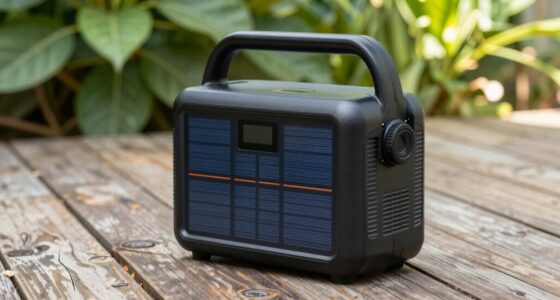
Winter outages quickly reveal weaknesses in your solar backup plan, especially during prolonged storms. Small batteries often can’t sustain your household for days, and snow, ice, or clouds reduce solar output, making backup systems less effective. If your setup lacks sufficient resilience, you risk losing power when it’s needed most. To guarantee you’re better prepared, understanding how to upgrade your system is essential. Keep exploring to discover how to improve your winter backup strategy.

Get backup power and energy gear delivered free with Prime
- Fast, free delivery on millions of items
- Prime Video, Amazon Music and more included
- Member-only deals all year
Key Takeaways
- Current solar backup systems often lack sufficient energy storage for extended winter outages.
- Snow and ice accumulation on panels significantly reduce solar efficiency during storms.
- Limited grid resilience increases vulnerability to prolonged power disruptions in severe weather.
- Upgrading to larger, expandable energy storage enhances backup reliability during winter outages.
- Incorporating redundancy and smart management improves system resilience and preparedness for severe storms.
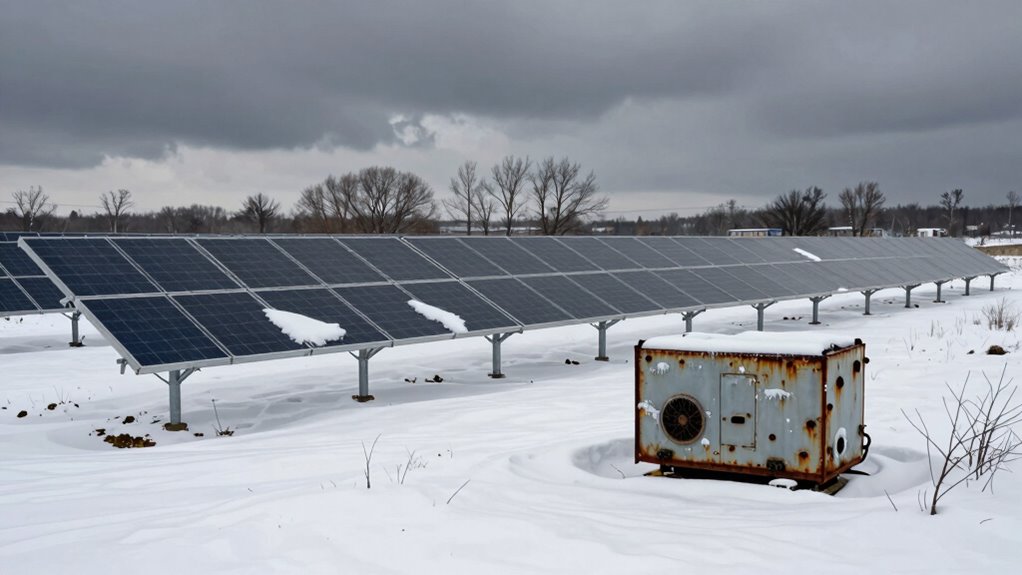
As winter storms sweep across regions, they reveal just how unprepared many solar backup systems are for extended outages. When the power grid becomes overwhelmed or damaged, your reliance on solar energy and energy storage becomes critical. Unfortunately, many systems aren’t designed with enough resilience to handle prolonged storms, leaving you vulnerable during the coldest, darkest days. This exposes a significant gap in grid resilience, which is the ability of the entire energy infrastructure to withstand disruptions. If your backup system isn’t robust enough, you won’t have reliable power when you need it most.
Winter storms reveal how unprepared many solar backup systems are for extended outages and severe weather.
Energy storage plays a central role in maintaining your power supply during outages, but it’s often underestimated or improperly configured. Many solar setups only include small batteries that can’t sustain your household through extended storms. When grid resilience is weak, and energy storage is limited, your backup power becomes a short-term solution rather than a dependable refuge. This results in power interruptions that can last days, forcing you to find alternative ways to stay warm and safe. Without sufficient storage capacity or advanced energy management, you’re left scrambling as your solar system’s output diminishes with the sun’s angle and cloudy skies. Additionally, understanding the importance of system scalability can help you plan for future capacity needs.
The vulnerability of your system becomes painfully clear during winter storms, especially when snow and ice build up on panels, reducing their efficiency. If your energy storage isn’t enough to bridge these periods, your household might face blackout conditions. To improve your preparedness, you need to focus on enhancing grid resilience by investing in larger, more sophisticated energy storage solutions that can hold enough power to sustain your home during extended outages. It’s not just about having solar panels; it’s about ensuring your entire backup infrastructure is capable of handling severe weather events. Recognizing the importance of grid resilience can help you develop a more comprehensive emergency plan.
Upgrading your energy storage and understanding the importance of grid resilience isn’t just smart—it’s essential. You should consider systems that can be expanded or paired with backup generators to provide additional reliability. Also, integrating smart energy management systems allows you to prioritize critical loads and optimize stored energy use during outages. When winter storms hit, these upgrades can make the difference between being comfortably warm and enduring days of discomfort or hardship. Recognizing the weaknesses in your current setup now can help you better prepare for future storms, ensuring your solar backup isn’t just a token gesture but a dependable lifeline when the grid fails. Furthermore, being aware of energy storage capacity is crucial for making informed upgrades that truly meet your needs.
In addition, paying attention to system redundancy can further enhance your backup power’s reliability during severe weather events.
large capacity solar battery backup system
As an affiliate, we earn on qualifying purchases.
As an affiliate, we earn on qualifying purchases.
Frequently Asked Questions
How Can Homeowners Improve Solar Backup Resilience During Winter?
To improve your solar backup resilience during winter, you should consider upgrading your system with better batteries and ensuring your panels are ideally angled for winter sun. Protect your panels from snow and ice, and regularly clear any buildup to maintain solar efficiency. Additionally, invest in a robust backup plan that accounts for shorter daylight hours and winter weather, so your system remains reliable even during harsh conditions.
What Are the Cost Implications of Upgrading Solar Backup Systems?
Upgrading your solar backup system involves considering the cost analysis of upgrade costs. While initial expenses might seem high, investing in a more robust system can save you money in the long run by reducing outage risks and increasing energy independence. You’ll need to weigh the upfront upgrade costs against potential savings and benefits, but a well-planned upgrade enhances resilience and can provide significant financial and energy security benefits over time.
How Long Do Solar Batteries Typically Last in Harsh Winter Conditions?
In harsh winter conditions, solar batteries typically last 5 to 15 years, but cold temperatures can accelerate battery degradation, reducing their lifespan. Cold temperature affects the chemical processes inside the battery, making them less efficient and more prone to capacity loss over time. To maximize lifespan, you should guarantee proper insulation and temperature regulation, especially during winter, so your solar backup system remains reliable when you need it most.
Are There Government Incentives for Enhancing Solar Backup Systems?
Yes, there are government incentives available to help you enhance your solar backup systems. Policy incentives often include tax credits, rebates, and grants, making upgrades more affordable. Funding programs are designed to support renewable energy projects and improve grid resilience. By taking advantage of these incentives, you can invest in more reliable solar backup solutions, ensuring your system performs well during outages and harsh winter conditions.
What Are the Most Common Failures in Solar Backup Systems During Outages?
You’ll often see failures like battery degradation and inverter failures during outages. Battery degradation reduces the backup capacity over time, making your system less reliable when you need it most. Inverter failures can interrupt power conversion, leaving you in the dark. Regular maintenance and choosing high-quality components can help prevent these issues, ensuring your solar backup system works effectively when winter outages strike.
solar panel snow and ice removal tools
As an affiliate, we earn on qualifying purchases.
As an affiliate, we earn on qualifying purchases.
Conclusion
So, as winter’s chill exposes the cracks in your solar backup plans, it’s clear you can’t rely on sunshine alone. The irony? You’ve invested in solar to stay resilient, yet the cold proves it’s not enough. Now, you face the true test: will you strengthen your backup systems or keep trusting a fragile hope? Winter’s lesson is simple—weather’s unpredictable, and your preparedness shouldn’t be. Don’t wait until the next outage to act.
expandable energy storage for solar systems
As an affiliate, we earn on qualifying purchases.
As an affiliate, we earn on qualifying purchases.
solar generator for winter outages
As an affiliate, we earn on qualifying purchases.
As an affiliate, we earn on qualifying purchases.
Halloween Picks
halloween
As an affiliate, we earn on qualifying purchases.