A portable power station can be a game-changer for your home office, offering reliable backup during outages and flexibility for remote work. Look for a unit with enough capacity to run your essential devices like laptops, monitors, and routers without frequent recharging. Consider models with multiple charging options, including solar, for added convenience. Choosing the right one balances capacity with portability, ensuring your workspace stays powered. Continue exploring to find tips on selecting the best fit for your needs.

Get backup power and energy gear delivered free with Prime
- Fast, free delivery on millions of items
- Prime Video, Amazon Music and more included
- Member-only deals all year
Key Takeaways
- Select a power station with sufficient watt-hour (Wh) capacity to support your daily office devices.
- Ensure it offers multiple charging options, including AC outlets, USB ports, and solar compatibility for flexibility.
- Consider portability features like lightweight design and handle convenience for easy movement around your home office.
- Balance capacity with size and weight to maintain productivity without sacrificing ease of use.
- Check if the power station can handle your device loads and allows future expansion for additional equipment.
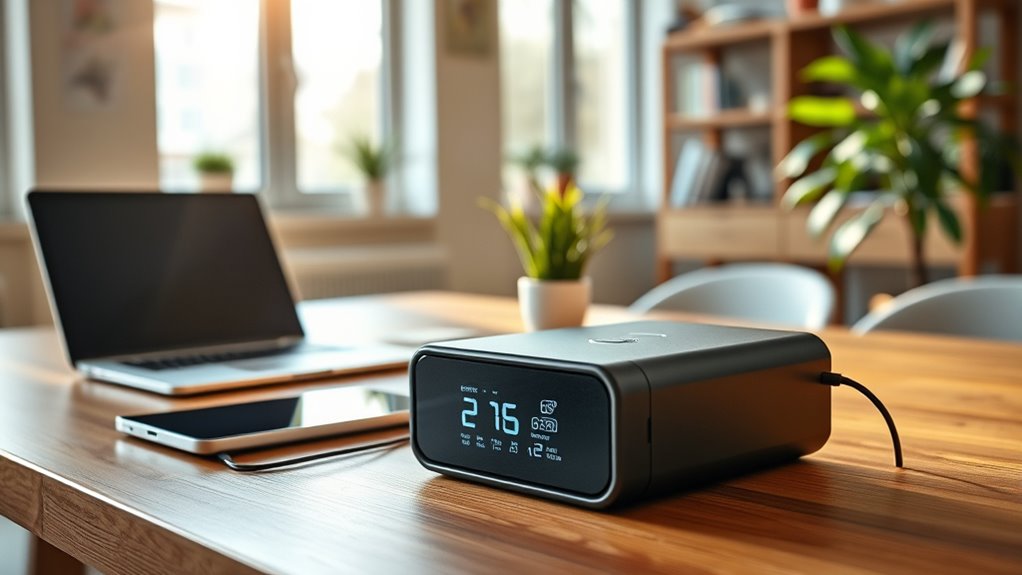
In today’s increasingly remote work environment, having a reliable power source is more important than ever. Whether you’re running a home office, managing multiple devices, or simply want peace of mind during outages, a portable power station offers a practical solution. The key factors to consider are battery capacity and charging options. Your choice depends on how much power you need and how flexible you want your setup to be.
Battery capacity is essential because it determines how long your devices can run without being plugged into a wall outlet. If you work with a laptop, monitor, and some peripherals, you’ll want a power station with enough capacity to keep everything running smoothly through your workday. Larger capacities mean longer run times but also tend to increase the size and weight of the unit. Think about your daily usage and select a station with sufficient watt-hours (Wh) to meet those needs. If you frequently experience power outages or work in areas with unstable grids, opting for a model with higher capacity becomes even more significant. This way, you can guarantee your work isn’t interrupted unexpectedly.
Choose a power station with sufficient watt-hours to keep your devices running during outages or remote work.
Charging options are just as important as capacity because they influence how easily you can replenish your power station’s battery. Many modern units offer multiple charging methods, such as AC wall outlets, car adapters, and even solar panels. If you often work outdoors or want a greener option, a station that supports solar charging could be a game-changer. This flexibility allows you to recharge your power station in a variety of situations—whether you’re at home, on the road, or off-grid. Some models also include fast-charging features, so you spend less time waiting for your device to recharge and more time being productive.
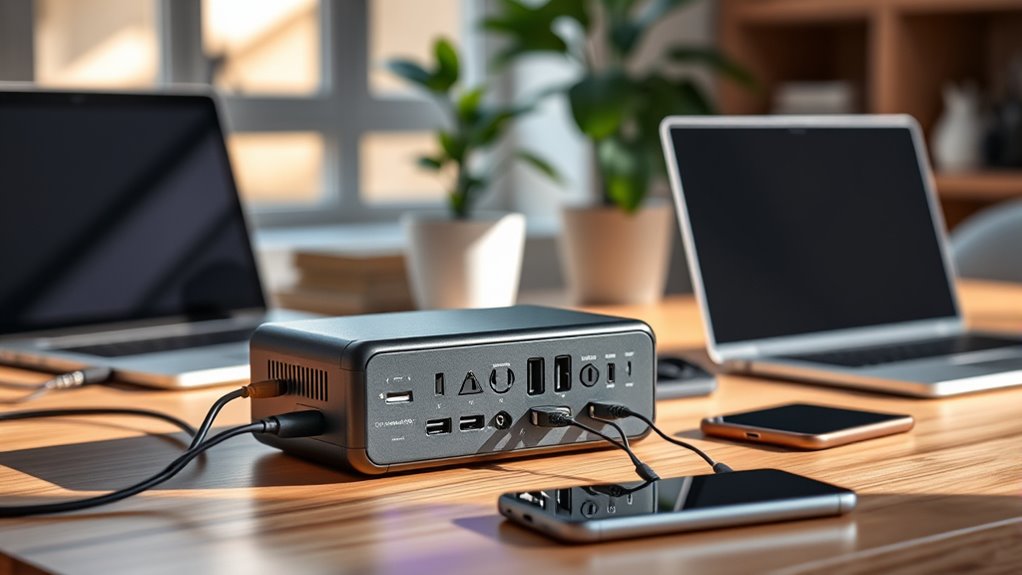
The number and types of ports on a portable power station also matter. Look for units that offer a combination of AC outlets, USB ports, and even DC carports. This variety ensures you can power all your essential devices simultaneously, without hassle. Additionally, consider the station’s overall design—compact and lightweight models are easier to move around, but check if they compromise on capacity or charging versatility.
Ultimately, choosing the right portable power station for your home office hinges on understanding your power needs and preferred charging methods. Prioritize units that balance battery capacity with versatile charging options, so you’re prepared for any situation. This way, you can keep working seamlessly, even when the grid goes down or when you’re working remotely in less accessible locations. For added peace of mind, it’s helpful to understand whole-home backup power and how portable options compare to standby generators in terms of safety and reliability.
Frequently Asked Questions
How Long Do Portable Power Stations Typically Last per Charge?
You can typically expect a portable power station to last between 3 to 8 hours per charge, depending on your device’s power consumption. The battery life depends on the station’s capacity and the number of charge cycles it can handle—usually around 300 to 500 cycles before performance declines. To extend its lifespan, avoid deep discharges and recharge it regularly, ensuring reliable power for your home office needs.
Can Portable Power Stations Power High-Wattage Equipment Like Printers?
About 70% of portable power stations can handle high-wattage equipment like printers, depending on their power output. You’ll want to verify the device compatibility and confirm the station’s wattage rating surpasses your printer’s requirements. Most stations providing at least 300W can power small to medium printers. For larger, high-wattage printers, look for models with higher power output to avoid interruptions during work.
Are Portable Power Stations Safe to Use Indoors?
Yes, portable power stations are generally safe to use indoors if you follow proper indoor safety guidelines. You should ensure proper ventilation to prevent fire hazards and avoid overloading the device. Always read the manufacturer’s instructions, keep the station away from flammable materials, and don’t use damaged units. When used correctly, they provide a reliable, safe power source for your home office without considerably increasing fire risks.
What Is the Best Way to Maintain and Store Them?
To maintain and store your portable power station, you should regularly check the battery for signs of wear and perform battery maintenance by charging it to around 50-70% if not in use for a while. Store it in a cool, dry place away from direct sunlight and extreme temperatures. Follow the manufacturer’s storage tips, such as avoiding full discharges, to prolong its lifespan and guarantee it’s ready when needed.
Do They Support Solar Charging Options?
Yes, many portable power stations support solar charging options, turning your device into a beacon of renewable energy integration. By embracing solar panel compatibility, you can harness the sun’s power, making your home office more sustainable. Think of it as planting a seed for energy independence—solar charging not only keeps your station powered but also helps reduce your carbon footprint, fueling your eco-friendly lifestyle every day.
Conclusion
With over 60% of remote workers relying on portable power stations, it’s clear they’re essential for a reliable home office. These devices keep your workspace powered during outages and outdoor work, ensuring productivity never stalls. Investing in a portable power station means peace of mind, even when the grid goes down. Don’t wait for an emergency—prepare now and enjoy seamless work hours, no matter what surprises come your way.
Halloween Picks
halloween
As an affiliate, we earn on qualifying purchases.