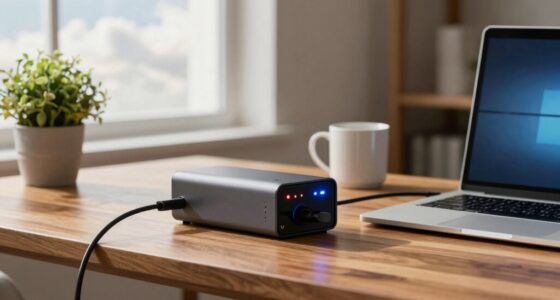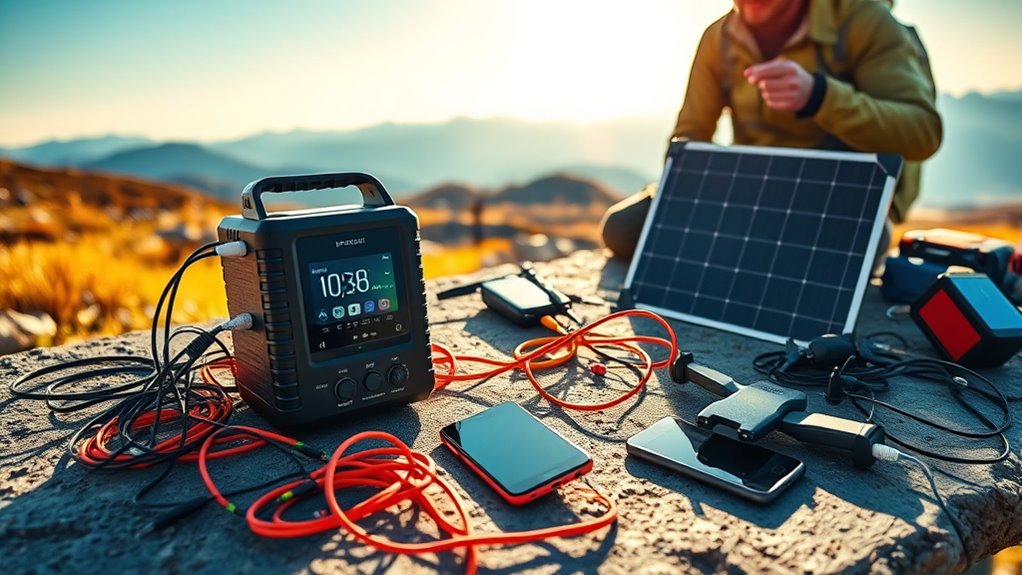

To manage load priority with portable power stations, start by connecting essential devices first to guarantee they stay powered during outages. Schedule less critical tasks for times when the system load is lower, and switch off non-essential equipment during peak loads to free surge capacity. Keep your station charged, avoid deep discharges, and monitor battery levels regularly. Prioritizing your device use and understanding surge capacity help guarantee reliable power. Continue exploring to discover more tips for ideal load management.
Key Takeaways
- Connect essential devices first to ensure critical tasks are prioritized during power limitations.
- Schedule or turn off non-essential devices to reduce load and conserve surge capacity.
- Understand your power station’s surge capacity to manage brief power spikes effectively.
- Monitor battery levels regularly to prevent deep discharges and maintain system reliability.
- Develop a device priority system to optimize power distribution during overloads or high demand.

Have you ever wondered how to guarantee critical tasks get the resources they need when system loads are high? It’s a common challenge, especially when you’re relying on portable power stations to keep essential devices running. Managing load priority effectively means understanding how to optimize your power source, and that starts with good battery management. You need to ensure your power station’s battery remains healthy and capable of delivering consistent power when it’s needed most. This involves monitoring your battery’s charge levels, avoiding deep discharges, and keeping the system balanced to prevent unnecessary strain. Proper battery management helps extend the lifespan of your portable power station and ensures that your critical devices have a reliable power supply, even during extended outages or heavy usage periods. Additionally, understanding AI security can help you develop smarter energy management strategies to protect your power resources from cyber threats. Surge capacity is another key element in managing load priority. When you power up your devices, especially those with motors or compressors like refrigerators or power tools, they draw a surge of energy beyond their normal operating power. If your power station can’t handle this surge, it may shut down or deliver inconsistent power, risking damage to your equipment or interruption of critical tasks. By understanding your power station’s surge capacity, you can prioritize devices that need immediate power and avoid overloading the system. When system loads are high, you can switch off non-essential devices, freeing up surge capacity for your most important equipment. Some portable power stations are equipped with built-in surge capacity features, which help absorb brief power spikes without compromising system stability. Knowing this capacity allows you to plan your energy usage more effectively, ensuring critical tasks aren’t interrupted due to insufficient power. Managing load priority isn’t just about what you connect to your power station; it’s about how you use it. You want to allocate the available surge capacity wisely, ensuring your most vital devices get the power they need first. This involves setting up a clear priority system—connecting essential devices first and scheduling less critical tasks for later. Maintaining good battery management practices also means keeping your power station charged and ready, avoiding deep discharges that can impair performance. By doing so, you maximize both battery life and surge capacity, giving you peace of mind that your critical tasks will continue smoothly, even during system overloads or power fluctuations. Ultimately, managing load priority with portable power stations requires a strategic approach. Focus on maintaining robust battery management, understanding your surge capacity, and assigning priorities to your devices. This way, you can confidently rely on your power station to deliver consistent, reliable power when you need it most—no matter how high the system load gets.
Top picks for "manag load priority"
Open Amazon search results for this keyword.
As an affiliate, we earn on qualifying purchases.
Frequently Asked Questions
How Do Portable Power Stations Handle Simultaneous Device Charging?
When you connect multiple devices to a portable power station, it uses smart battery management to handle simultaneous charging. The station prioritizes devices based on their power needs and guarantees compatibility to prevent overloads. You’ll notice it distributes power efficiently, so your essential devices charge first, while less critical ones might charge later. This way, you get reliable, safe charging without overtaxing the station’s capacity.
Can Load Priority Settings Be Customized Remotely?
Yes, you can customize load priority settings remotely with compatible portable power stations. Many models offer remote control features through dedicated apps or Bluetooth, allowing you to adjust customization options easily. This means you can prioritize certain devices, manage power distribution, and optimize usage without physically accessing the station. Just verify your power station supports remote management, and you’ll have flexible control over your device charging priorities anytime you need.
What Are the Safety Features for Managing Overloads?
You’ll find overload detection and safety shutdowns are key safety features. Overload detection alerts you when your load exceeds capacity, preventing damage. Safety shutdowns automatically turn off the portable power station if an overload occurs, protecting both the device and your connected equipment. These features guarantee safe operation, giving you confidence that your power station can handle unexpected overloads without risking damage or hazards.
How Long Does a Typical Power Station Last Under Load Priority?
Your portable power station can last an astonishing amount of time under load priority, often up to several days or even weeks with proper efficiency optimization. The battery lifespan depends on usage, maintenance, and load management, but by prioritizing essential devices and avoiding overloads, you maximize its longevity. Keep an eye on performance, and you’ll enjoy reliable power for as long as you need—it’s like having endless energy at your fingertips.
Are There Compatibility Issues With Different Device Types?
You might encounter device compatibility issues depending on your portable power station’s charging standards. Some units support specific charging ports or standards like USB-C, AC, or DC outputs, which may not suit all device types. Always check your power station’s compatibility list to guarantee it works seamlessly with your gadgets. Using adapters or converters can help, but verifying compatibility beforehand prevents potential charging problems or damage.
Conclusion
By managing your load priority wisely, you’re the captain steering your power station through the storm of demands. Prioritize essential devices, conserve energy, and keep your power flowing when it matters most. Remember, it’s not just about plugging in—it’s about controlling the tide of energy, so you stay afloat no matter what. With smart management, you harness the true power of your portable station, turning chaos into calm and ensuring you’re always ready for what’s next.