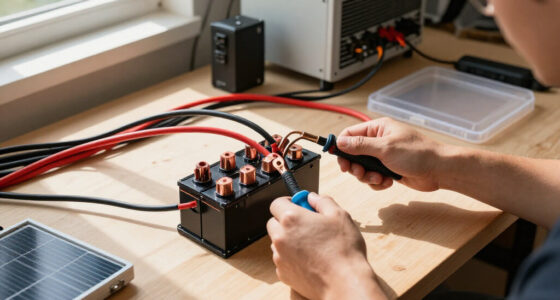
Understanding your solar input voltage window is key to ensuring your system runs efficiently and safely. It defines the voltage range your inverter can handle, preventing shutdowns or damage from voltage fluctuations caused by weather or sunlight. Higher efficiency panels can push the voltage higher, so matching your inverter’s range is essential. Proper knowledge helps maximize energy output, protect your investment, and improve system longevity. Keep exploring to learn how to tailor your setup for peak performance.

Get backup power and energy gear delivered free with Prime
- Fast, free delivery on millions of items
- Prime Video, Amazon Music and more included
- Member-only deals all year
Key Takeaways
- The input voltage window defines the safe and efficient range for inverter operation, preventing damage and ensuring optimal performance.
- Proper matching of panel voltage and inverter input range maximizes energy harvest and system efficiency.
- Environmental factors like temperature fluctuations can cause voltage variations, requiring a broader or suitable input window.
- Cooler weather increases panel voltage, so inverters must handle voltage spikes during peak sunlight conditions.
- Understanding the voltage window helps prevent system shutdowns, reduces maintenance costs, and prolongs equipment lifespan.

Have you ever wondered how solar inverters determine the range of voltages they can handle? It’s a pivotal aspect because the input voltage window directly impacts your entire solar setup’s performance. When selecting a solar inverter, understanding its input voltage window helps guarantee that your system operates efficiently and safely. The voltage window isn’t just a technical specification; it’s the range within which your inverter can reliably convert the DC power from your solar panels into usable AC power for your home or business. If the voltage falls outside this range, the inverter might shut down, reducing your system’s efficiency or, worse, risking damage to your equipment.
Your solar panel efficiency plays a significant role in this process. Higher-efficiency panels typically produce a higher voltage at a given solar irradiance, which means your inverter needs a compatible input voltage range to accommodate these higher voltages. If your panels are highly efficient and generate voltages near the upper limit of the inverter’s input window, you might encounter issues with inverter compatibility. Conversely, if the inverter’s voltage window is too narrow or doesn’t extend to the voltages produced by your panels, your system won’t perform at its best. This mismatch can lead to underperformance, where your panels aren’t operating at their full potential, or to frequent inverter shutdowns, which reduce overall energy harvest.
Higher-efficiency panels produce higher voltages, requiring compatible inverter input ranges for optimal performance.
Inverter compatibility isn’t just about matching voltage ranges; it also involves guaranteeing that the inverter can handle the maximum voltage your solar array might produce during peak sunlight and temperature conditions. Solar panels tend to generate higher voltages when they’re cooler, so your inverter’s input voltage window should accommodate these fluctuations. If it’s too narrow, you might need to oversize your inverter or add equipment to mitigate voltage spikes. On the flip side, if the window is too broad, your inverter might be less efficient or more expensive without providing additional benefit. Additionally, understanding the input voltage window helps you anticipate how environmental factors like temperature fluctuations impact system performance.
Understanding the temperature effects on solar panel voltage output ensures that your system remains optimized under varying conditions. Considering these effects allows you to select an inverter that can adapt to the voltage fluctuations caused by environmental changes. Proper matching ensures maximum inverter performance, minimizes downtime, and increases your energy yield. Moreover, being aware of voltage tolerances enables you to design a system that can withstand unexpected conditions without damage or significant loss. Recognizing the importance of voltage regulation can further optimize your system’s resilience and efficiency, especially in fluctuating weather. By paying close attention to this specification, you can make smarter choices, avoid costly repairs, and guarantee your solar investment delivers the performance you expect over its lifespan.
Products Worth Considering

eufy Security eufyCam C37 4-Camera Kit with 360° Pan and Tilt, Auto Tracking, 2K Color Night Vision, and Solar Panels

Roborock F25 GT Neo Wet/Dry Vacuum Mop, Cordless Vacuum Cleaner, 180° Flat

Shark AV2501AE AI Robot Vacuum with XL HEPA Self-Empty Base
As an affiliate, we earn on qualifying purchases.
Frequently Asked Questions
How Do Input Voltage Windows Affect Solar Panel Efficiency?
Your solar input voltage window directly impacts efficiency by ensuring proper voltage regulation. If the voltage exceeds the panel’s limit, the system may reduce power output or become inefficient. Conversely, staying within the recommended voltage range optimizes efficiency by preventing energy loss and protecting components. Understanding and maintaining appropriate input voltage windows allow you to maximize your solar system’s performance and efficiency, ensuring you get the most out of your investment.
Can Input Voltage Windows Be Adjusted After Installation?
Yes, you can adjust input voltage windows after installation, but it depends on your inverter’s capabilities. Voltage regulation features in inverters allow you to modify the acceptable input range, guaranteeing compatibility with your solar panels. Before making adjustments, check your inverter’s manual and verify it supports voltage window changes. Proper adjustments can optimize performance and maintain inverter compatibility, improving overall system efficiency.
What Are the Risks of Exceeding the Voltage Window?
Exceeding the voltage window is like pushing a delicate piece of glass beyond its limits; it risks shattering your system’s stability. You might face voltage instability, leading to inconsistent power output, or experience dangerous power fluctuations. These risks can damage your solar components, reduce efficiency, and shorten system lifespan. To keep your solar setup safe and reliable, stick within the recommended voltage range, ensuring consistent power and long-term performance.
Are Input Voltage Windows Compatible With All Solar Inverter Models?
Input voltage windows are generally compatible with most solar inverter models, but you should check voltage stability and compatibility considerations. Not all inverters support the same voltage ranges, so verifying that your inverter’s input voltage window aligns with your solar panel output is essential. Always consult the inverter’s specifications to guarantee proper compatibility, preventing potential issues like reduced efficiency or damage caused by voltage mismatches.
How Do Temperature Variations Influence Input Voltage Windows?
Temperature effects can substantially impact your input voltage windows, causing voltage fluctuations that challenge stability. As temperatures rise, voltage levels may increase, risking inverter damage or shutdowns. Conversely, colder temperatures can lower voltage, reducing efficiency. To guarantee voltage stability, you should monitor temperature conditions regularly, select inverters with wide voltage windows, and consider temperature compensation features. Proper management helps maintain consistent solar system performance despite temperature variations.
Conclusion
Understanding your solar input voltage window is like tuning a musical instrument—you need the right range to produce harmony. Too low, and your system struggles to power your devices; too high, and you risk damage or inefficiency. Picture a delicate balance, much like a tightrope walker maintaining perfect poise. By staying within the ideal voltage window, you guarantee your solar setup performs smoothly, just like a well-played melody, giving you reliable, clean energy day after day.