
Many buyers miss how much solar input impacts their portable power station’s performance off-grid. It’s not just about battery size; the right solar setup can dramatically extend usage and guarantee reliable power during outdoor trips or emergencies. Factors like panel angle, shading, and compatibility matter more than you might think. A high-quality solar input means better efficiency and longer-lasting power. Keep exploring, and you’ll discover more ways to optimize your setup for ultimate independence.

Get backup power and energy gear delivered free with Prime
- Fast, free delivery on millions of items
- Prime Video, Amazon Music and more included
- Member-only deals all year
Key Takeaways
- Many buyers overlook the importance of proper solar panel compatibility and setup for optimal efficiency.
- Buyers often focus on battery capacity, neglecting the significance of solar input quality and wattage.
- Shading, angle, and positioning significantly impact solar input performance, which is frequently underestimated.
- The overall recharge speed and frequency are critical, but often not emphasized in initial purchases.
- High-quality solar input extends power station usability, yet many consumers underestimate its role in off-grid reliability.

Have you ever wondered how to keep your portable power station charged when you’re off the grid? It’s a common concern, especially if you rely on it for camping trips, outdoor adventures, or emergency backup. Many buyers focus on the battery capacity—how much power the station can store—understanding that a larger capacity means longer usage. But what often gets overlooked is the importance of solar input as a charging option. Solar input isn’t just about adding another way to power your station; it’s about enhancing versatility and independence. When you understand how solar input works with your station’s battery capacity, you realize it’s a game-changer for maintaining power without relying solely on traditional outlets or generators.
Solar input boosts your power station’s independence, ensuring reliable energy off-grid with renewable, efficient charging.
Many people assume that once they buy a portable power station, they’re set, especially if it has a decent battery capacity. However, what they miss is how essential solar input becomes in real-world scenarios. A powerful battery is only as good as its ability to stay charged. Without enough sunlight or proper solar input, your station’s battery can drain quickly, limiting your ability to operate devices when needed most. That’s why understanding the charging options available is critical. Solar input provides a renewable, silent, and cost-effective way to replenish your power station’s battery, especially during extended trips where access to electrical outlets isn’t feasible. Additionally, the efficiency of your solar input can be significantly affected by factors such as the angle of the panels and shading, making proper setup crucial. Knowing about solar panel efficiency can help you optimize your setup for better performance.
What buyers often overlook is that not all solar inputs are created equal. The efficiency of solar panels, their compatibility with your power station, and the overall wattage greatly impact how fast and effectively your battery charges. High-quality solar input can dramatically extend your station’s usability, allowing you to harness the sun’s energy during the day and store it for nighttime use. This means you’re not just relying on a single charge cycle but building an ongoing, sustainable power source. It’s a smart way to maximize your investment in a portable power station, ensuring you don’t run out of power when you need it most. Additionally, understanding the solar input technology can help you select the best setup for your needs. This knowledge can also assist in choosing compatible solar panels to optimize your setup.
Ultimately, many buyers underestimate the importance of integrating solar input with their station’s battery capacity and charging options. They focus on the size of the battery but forget that the ability to recharge it with sunlight can make all the difference in independence and reliability. By understanding how solar input complements your station’s charging options, you gain a flexible, eco-friendly solution that keeps your devices running no matter where you are. It’s about seeing beyond the initial purchase and appreciating how solar input can revolutionize your portable power experience. Recognizing the significance of solar input efficiency can help you get the most out of your investment and ensure consistent power availability.
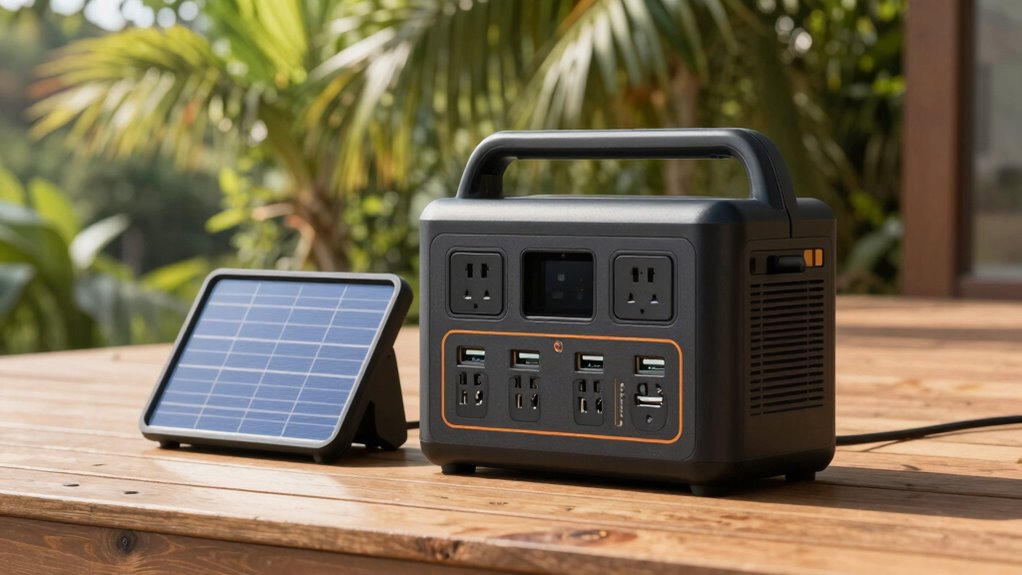
portable power station with high wattage solar input
As an affiliate, we earn on qualifying purchases.
As an affiliate, we earn on qualifying purchases.
Frequently Asked Questions
Can I Use Multiple Solar Panels Simultaneously for Faster Charging?
Yes, you can use multiple solar panels simultaneously to boost charging speed, but make sure your portable power station supports parallel or series connections. Check the input voltage and current limits to match your panels’ output for maximum battery capacity and faster charging. Using multiple panels effectively increases the charging speed, but avoid exceeding the station’s maximum input to prevent damage and guarantee safe, efficient power replenishment.
What Are the Best Solar Panel Types Compatible With Portable Power Stations?
You should choose monocrystalline or polycrystalline solar panels for compatibility with portable power stations, as they offer high efficiency and are widely compatible. Look for panels with durable construction that withstand weather conditions, ensuring longevity. These panels are generally compatible with most devices, providing reliable power. Their durability and compatibility make them ideal for portable stations, helping you charge efficiently and safely during outdoor adventures or emergencies.
How Does Temperature Affect Solar Input Efficiency?
You might notice a coincidence: as temperatures rise, solar input efficiency can drop due to the temperature impact on panels. Conversely, cooler weather often boosts efficiency variation, helping your solar panels generate more power. Extreme heat can cause panels to overheat, reducing output, while ideal temperatures enhance performance. Keep your panels shaded or well-ventilated to maintain efficiency, especially during hot days, ensuring you get the most from your portable power station.
Is There a Maximum Solar Input Wattage the Station Can Handle?
Your portable power station typically has a maximum solar input wattage, often around 100-200W, to protect battery longevity and guarantee safe operation. Exceeding this limit can reduce battery life or cause overheating. Keep portability considerations in mind—higher wattage panels might be less convenient to carry. Always check your station’s specifications to avoid overloading, and use compatible solar panels to maximize efficiency without compromising durability.
Can I Charge the Power Station via Both AC and Solar at the Same Time?
Yes, you can charge the power station via both AC and solar simultaneously. This enhances power management and helps extend battery longevity by maintaining ideal charging conditions. Using dual inputs ensures you’re efficiently replenishing your station’s power, especially during prolonged use or emergencies. Just make sure your station supports simultaneous charging, and monitor the inputs to prevent overloading, which could impact the device’s overall performance and lifespan.
solar panel compatible with portable power station
As an affiliate, we earn on qualifying purchases.
As an affiliate, we earn on qualifying purchases.
Conclusion
Don’t overlook the solar input on your portable power station; it’s the sun’s secret handshake, revealing endless energy on your adventures. Think of it as your trusty sidekick, always ready to recharge your power needs with a gentle kiss from the sun. By understanding its true potential, you turn your portable station into a relentless energy river, flowing endlessly and effortlessly, ensuring your gadgets stay alive and your journey never hits a dead end.
adjustable solar panel for outdoor power station
As an affiliate, we earn on qualifying purchases.
As an affiliate, we earn on qualifying purchases.
solar input extension cable for power station
As an affiliate, we earn on qualifying purchases.
As an affiliate, we earn on qualifying purchases.
Fall Picks
fall essentials
As an affiliate, we earn on qualifying purchases.