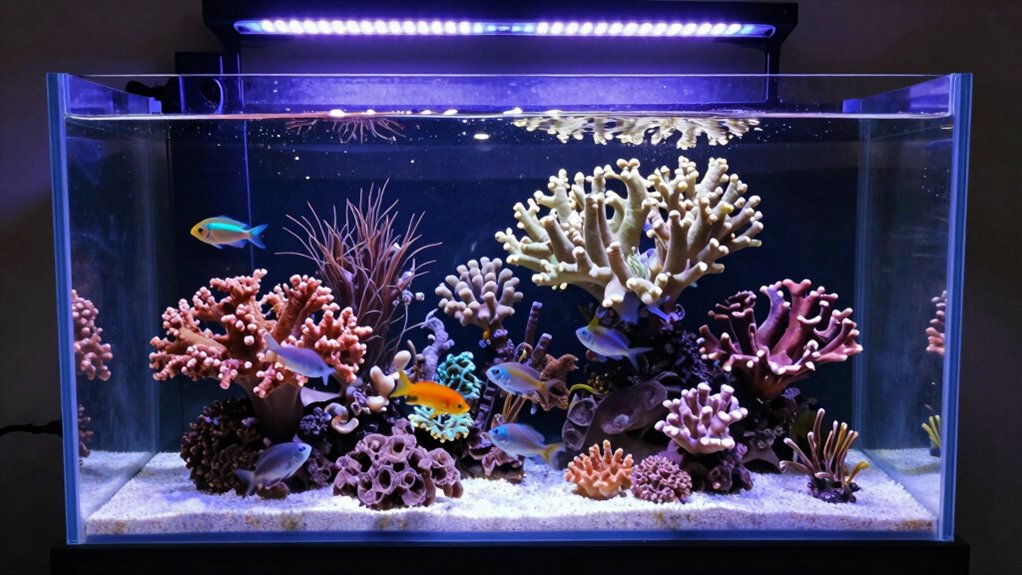

Don’t wait until your aquarium lights go out to address lighting issues. Neglecting proper lighting can lead to algae overgrowth, coral bleaching, and health problems for your aquatic life. Regular maintenance and adjustments are essential to prevent these issues and keep your tank balanced. By acting early, you support healthy photosynthesis, reduce stress, and maintain a thriving environment. Stay ahead of problems, and you’ll guarantee a vibrant, healthy aquarium—more tips on how to do this ahead.

Get backup power and energy gear delivered free with Prime
- Fast, free delivery on millions of items
- Prime Video, Amazon Music and more included
- Member-only deals all year
Key Takeaways
- Regular lighting maintenance prevents algae overgrowth and coral bleaching, ensuring a healthy aquatic environment.
- Waiting until lights fail can cause sudden stress and health issues for tank inhabitants.
- Proactive checks help identify and fix lighting problems before they impact water quality and ecosystem balance.
- Consistent light schedules promote stable photosynthesis and growth for corals and plants.
- Addressing lighting concerns early reduces costly repairs and prevents long-term damage to the tank.

Many aquarium owners wait until their lights fail or their tanks become visibly unhealthy before taking action, but this reactive approach can harm your aquatic life. Proper lighting is essential not just for visibility but for maintaining a healthy ecosystem inside your tank. When lights are neglected or left too dim, your corals and other photosynthetic creatures suffer. Coral bleaching becomes a real threat when lighting conditions are inconsistent or inadequate, causing corals to expel the symbiotic algae they rely on for energy. Once this happens, the corals turn white and become highly vulnerable to disease and death. Ignoring your lighting needs can set off a cascade of problems, including algae overgrowth, which rapidly takes over a tank when conditions favor its proliferation. Algae thrive under improper lighting—either too intense or too weak—and can quickly outcompete corals and beneficial plants for nutrients and space. Overgrowth not only ruins the aesthetic of your tank but also disrupts the delicate balance of your aquatic ecosystem.
Your lights should be carefully calibrated to match the specific needs of the species you keep. If you notice algae starting to overrun your tank, it’s a sign your lighting schedule or intensity might be off. Adjusting your lighting can help control algae growth and prevent coral bleaching. Regularly checking and maintaining your lights guarantees your corals get enough light for photosynthesis, which is indispensable for their health and growth. Proper lighting management is crucial to prevent issues before they arise. Maintaining consistent lighting schedules ensures your tank’s inhabitants receive stable and appropriate lighting conditions, reducing stress and promoting healthy growth. Investing in quality lighting systems and understanding their proper use is imperative to avoiding these issues altogether. When you prioritize your tank’s lighting health, you’re promoting a balanced environment where corals and plants thrive, and algae struggles to take hold. Remember, your aquarium’s health depends on your vigilance. Regularly inspect your lights, clean fixtures as needed, and ensure your lighting schedule aligns with your tank’s inhabitants. By staying ahead of potential problems like coral bleaching and algae overgrowth, you safeguard your aquatic ecosystem and reduce the need for costly and stressful interventions later. Taking a proactive stance on lighting is not just about aesthetics; it’s about guaranteeing the longevity and vitality of everything living inside your tank.
As an affiliate, we earn on qualifying purchases.
Frequently Asked Questions
How Often Should Aquarium Lights Be Replaced?
You should replace your aquarium lights every 6 to 12 months to maintain ideal water temperature and support healthy fish behavior. Old or failing lights can cause temperature fluctuations, stressing your fish and disrupting their activity. Regularly updating your lights ensures consistent illumination, promotes natural behaviors, and prevents algae overgrowth. Don’t wait until lights flicker or dim—timely replacements keep your aquarium environment stable and your aquatic life thriving.
Can Improper Lighting Harm Fish Health?
Improper lighting can harm your fish health, causing their behavior to become erratic like a ship caught in a storm. Too much or too little lighting disrupts their natural rhythms, affecting sleep and feeding patterns. Incorrect lighting duration stresses your fish, weakening their immune systems and making them more susceptible to disease. Ensuring the right lighting helps maintain healthy fish behavior and keeps your aquarium a thriving, vibrant ecosystem.
What Are the Signs of Lighting System Failure?
When your lighting system fails, you’ll notice changes in your aquarium maintenance routine and fish behavior. Fish may become more hiding or lethargic, indicating stress, while algae might overgrow due to inconsistent lighting. You might also see flickering lights or complete darkness during scheduled lighting times. Address these signs promptly to prevent health issues, ensuring your fish stay healthy and your aquarium stays balanced. Regular checks help catch failures early.
How Does Lighting Affect Algae Growth?
Lighting directly impacts algae growth in your aquarium; too much light encourages excessive algae, which can outcompete coral and plants. When algae thrive, it can lead to issues like coral bleaching and hinder plant growth. By maintaining proper lighting, you prevent overgrowth, supporting healthy coral and plant development. Regularly check your system to guarantee ideal light levels, helping your aquarium stay balanced and vibrant instead of overwhelmed by unwanted algae.
Are There Energy-Efficient Lighting Options for Aquariums?
You can definitely find energy-efficient lighting options for your aquarium. LED technology offers a fantastic solution, providing bright, long-lasting light while using minimal power. Plus, many LED lights feature daylight simulation, creating a natural environment that enhances your aquatic display. Imagine the difference it makes when your tank mimics natural sunlight, all while saving energy and reducing costs. Don’t wait—upgrade now and enjoy a vibrant, eco-friendly aquatic habitat.
As an affiliate, we earn on qualifying purchases.
Conclusion
Don’t wait until the lights go out to care for your aquarium; proactive maintenance keeps your aquatic world thriving. Regular checks and proper care prevent crises before they happen, saving you time and stress. Remember, an ounce of prevention is worth a pound of cure—invest in your tank now, so you won’t be left in the dark later. Staying attentive today guarantees a vibrant, healthy aquarium for years to come.
As an affiliate, we earn on qualifying purchases.
As an affiliate, we earn on qualifying purchases.
Halloween Picks
halloween
As an affiliate, we earn on qualifying purchases.