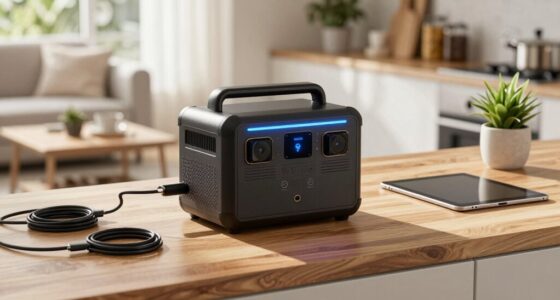
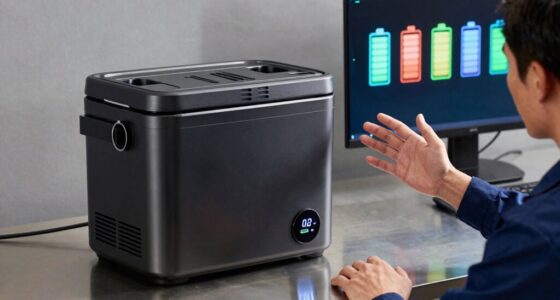
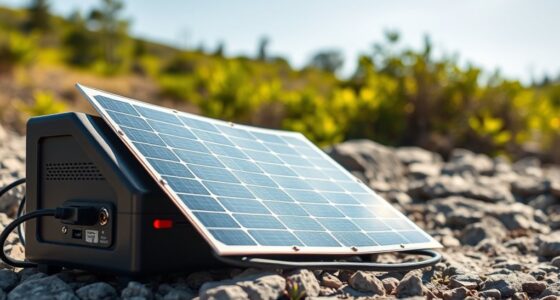
When choosing a portable power station, it’s crucial to understand its cooling system. Effective cooling prevents overheating, helping your device run smoothly and last longer. Look for models with good heat dissipation, like fans or heat sinks, and consider noise levels—passive options are quieter. Proper cooling keeps batteries efficient and safe from damage. To guarantee maximum performance and durability, pay attention to how the cooling system works—more details are just ahead.

Get backup power and energy gear delivered free with Prime
- Fast, free delivery on millions of items
- Prime Video, Amazon Music and more included
- Member-only deals all year
Key Takeaways
- Effective cooling prevents overheating, protecting battery lifespan and ensuring safe, reliable operation of the power station.
- Both active (fans) and passive (heat sinks, vents) cooling methods are used, each with advantages and noise considerations.
- Proper cooling maintains optimal battery temperature, enhancing efficiency and preventing thermal runaway or damage.
- Noise reduction is important; manufacturers often design quieter fans or use passive cooling for quiet environments.
- Selecting a model with a well-designed cooling system balances performance, safety, durability, and comfort.
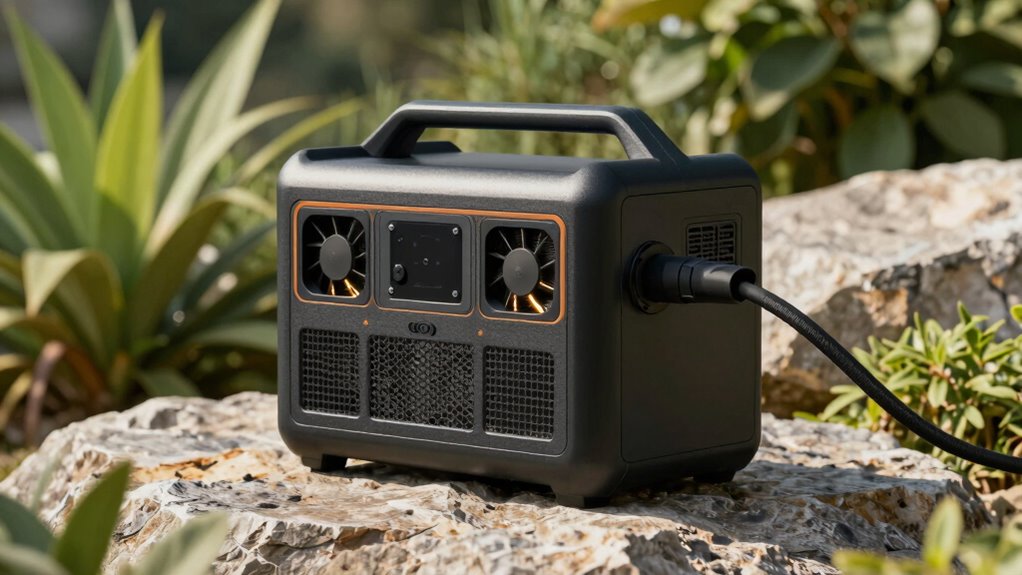
When you’re relying on a portable power station, keeping it cool is essential to guarantee peak performance and safety. Overheating can reduce battery efficiency, making your device less effective and potentially damaging its internal components. Proper cooling systems help maintain optimal temperatures, ensuring your power station operates smoothly and prolongs its lifespan. Many models incorporate active cooling methods, such as fans, or passive solutions like heat sinks and vents, to dissipate heat effectively. By managing heat, these systems enable your power station to deliver consistent power, especially during extended use or high-demand situations. Additionally, understanding nail biology/hygiene can serve as a useful analogy for heat management, emphasizing the importance of proper care and maintenance to prevent damage and ensure longevity. It’s also important to consider how thermal regulation impacts overall device performance and safety. Noise reduction is another crucial aspect when it comes to cooling systems in portable power stations. Fans are common in active cooling setups, but they can generate unwanted noise that might disturb your environment, especially in quiet settings like campsites or during overnight use. Manufacturers are increasingly designing quieter fans or employing advanced noise-dampening materials to minimize disturbance. Passive cooling methods, such as aluminum heat sinks or strategically placed vents, offer silent alternatives that still provide efficient heat dissipation. Choosing a power station with a well-designed cooling system means you won’t have to compromise on noise levels while ensuring your device stays cool. Proper cooling not only prevents overheating but also plays a critical role in maintaining the battery life and overall reliability of your device. Battery efficiency is directly impacted by how well a power station manages heat. When batteries heat up excessively, their ability to hold a charge and deliver power diminishes, leading to faster depletion and reduced runtime. Effective cooling systems keep the battery at a stable temperature, allowing it to perform at its best and maintain high efficiency. This also helps prevent thermal runaway, which can be dangerous and cause permanent damage. Additionally, a well-cooled battery is safer, as overheating can sometimes lead to thermal runaway or other hazards. Proper cooling isn’t just about avoiding overheating; it’s about optimizing performance, extending lifespan, and creating a quieter, more reliable power source. Understanding how cooling technology influences battery efficiency and noise levels can help you make more informed choices when selecting a portable power station. By understanding how cooling systems influence battery efficiency and noise levels, you can select a model that meets your needs for safety, longevity, and comfort.
Products Worth Considering

Bose SoundLink Max Portable Bluetooth Speaker, IP67 Waterproof, Black

Roborock Q10 S5+ Robot Vacuum and Mop with Self-Emptying Station, 10,000 Pa Suction

Blueair Blue Pure 211i Max Smart Air Purifier for Large Rooms
As an affiliate, we earn on qualifying purchases.
Frequently Asked Questions
How Often Should I Clean the Cooling Vents on My Power Station?
You should clean the vents on your power station every three to six months, depending on usage and environment. Regular vent cleaning is essential for proper airflow and cooling. Follow a maintenance schedule that includes inspecting and removing dust or debris from the vents. If you notice overheating or reduced performance, increase the frequency of vent cleaning. Proper maintenance guarantees your power station stays efficient and prolongs its lifespan.
Are There Noise Concerns With Different Cooling System Types?
Yes, noise levels vary with different cooling system types. Fans tend to produce more sound, especially at higher speeds, which might bother you in quiet environments. Passive cooling systems are quieter but may be less efficient at dissipating heat during intensive use. Consider your noise preferences and cooling efficiency needs when choosing a system, balancing quieter operation with adequate heat management for ideal power station performance.
Can I Upgrade the Cooling System of My Portable Power Station?
You can upgrade the cooling system of your portable power station, but it’s not always straightforward. About 60% of users find that improved cooling technology boosts battery efficiency. Upgrading may involve installing better fans or cooling pads, but verify compatibility to prevent damage. Check your device’s warranty and consult the manufacturer, as some power stations are designed with proprietary cooling systems that aren’t user-upgradable, guaranteeing peak performance and safety.
What Is the Average Lifespan of a Cooling System in These Devices?
The average lifespan of a cooling system in portable power stations is typically around 3 to 5 years, depending on usage and maintenance. Regular cooling system maintenance helps extend its life, ensuring compatibility with your device’s specifications. Keep an eye on signs of wear and replace components as needed. Proper care and choosing compatible cooling systems can considerably improve performance and longevity, saving you money in the long run.
How Do Temperature Fluctuations Affect Cooling System Performance?
Temperature fluctuations can considerably impact your cooling system’s performance. When temperatures rise, your cooling system works harder to maintain proper temperature regulation, which may reduce cooling efficiency and cause overheating. Conversely, cooler conditions help the system operate smoothly, maintaining ideal performance. To guarantee consistent cooling efficiency, avoid exposing your portable power station to extreme temperature changes, and consider using protective measures like ventilation or insulation to stabilize the internal environment.
Conclusion
As you rely on your portable power station, imagine it as a steadfast companion guarding your energy needs, quietly working behind the scenes. Its cooling system acts like a gentle breeze, preventing overheating and keeping it ready for any adventure. With proper care, your station remains a reliable beacon of power, ready to light up your journey. Embrace these cooling secrets, and let your outdoor experiences be fueled by confidence and peace of mind.