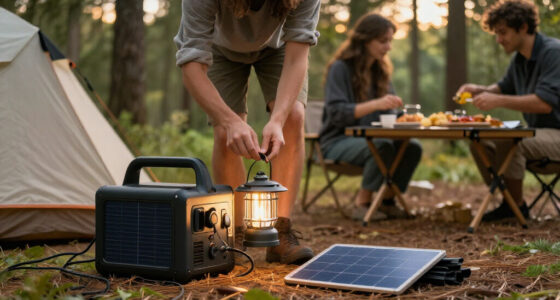
For a solar-powered refrigerator backup, I’d start with the BLUETTI FridgePower 2016Wh as the best overall fit in this lineup: its large LFP battery and expansion option suit longer outages better than the compact units. The Jackery Fridge Guard 1024Wh is a more focused refrigerator setup, while the SolarPlay 2304Wh pairs substantial capacity with a bundled 200W panel. The main tradeoff is between runtime and portability: larger batteries can support a fridge longer, but they are heavier and still need adequate solar input for sustained use. Small stations are easier to move, yet may not cover a full-size refrigerator through an extended outage. Read on for the full comparison and guidance on matching capacity, solar charging, and fridge demands.

Get backup power and energy gear delivered free with Prime
- Fast, free delivery on millions of items
- Prime Video, Amazon Music and more included
- Member-only deals all year
Complete the kit


Key Takeaways
- The BLUETTI FridgePower 2016Wh stands out for buyers who want a refrigerator-focused setup with room to expand; it offers a stronger long-outage starting point than the 1024Wh-class options.
- SolarPlay’s 2304Wh station and included 200W panel make a more self-contained pairing than a large battery sold without a panel, though panel output and weather still limit recharge speed.
- The Jackery Fridge Guard 1024Wh takes a more appliance-specific approach, while general-purpose stations such as the Anker SOLIX C1000 Gen 2 offer broader use around the home.
- Portable units below roughly 300Wh, including the Jackery Explorer 300 and BougeRV 266Wh, are better suited to small 12V fridges or brief backup than typical household refrigerators.
- Built-in solar panels on the BROWEY S1600 and BLAVOR 1600W add convenience, but their modest panel ratings make them a supplement rather than a replacement for suitably sized external panels.
| Portable Solar Generator 300W Power Station with 60W Solar Panel |  | Best for Small Loads and Solar Beginners | AC output voltage: 110 V | Battery type: Lithium-ion | Included solar panel: 60 W monocrystalline | VIEW LATEST PRICE | See Our Full Breakdown |
| Jackery Fridge Guard 1024Wh Backup Power Station with Mount |  | Best for Automatic Refrigerator Backup | Battery capacity: 1024 Wh | Expandable capacity: Up to 2048 Wh | Maximum output: 800 W | VIEW LATEST PRICE | See Our Full Breakdown |
| BLUETTI FridgePower 2016Wh Expandable LFP Power Station |  | Best for Long-Duration, Expandable Backup | Battery capacity: 2016 Wh | Expandable capacity: Up to 8064 Wh with expansion packs | Battery type: LFP | VIEW LATEST PRICE | See Our Full Breakdown |
| SolarPlay 2500W Portable Power Station, 2304Wh, with 200W Solar Panel |  | Best for High-Draw Appliances and Broad Backup Loads | Battery capacity: 2304 Wh | Battery type: LiFePO₄ | Running and peak output: 2500 W running; 4800 W peak | VIEW LATEST PRICE | See Our Full Breakdown |
| Anker SOLIX C1000 Gen 2 Portable Power Station with 200W Solar Panel |  | Best Portable Balance of Solar Charging and Fast Backup | Battery capacity: 1024 Wh | Battery type: LiFePO₄ | Output and peak output: 2000 W output; 3000 W peak | VIEW LATEST PRICE | See Our Full Breakdown |
| BROWEY S1600 1600W Portable Power Station with Built-In Solar Panel |  | Best Built-In Solar Convenience | Battery capacity: 1024Wh | Battery chemistry: LiFePO4; rated for 3000+ cycles to 80% capacity | AC output: 1600W (3200W peak) | VIEW LATEST PRICE | See Our Full Breakdown |
| BLAVOR 1600W Portable Power Station with Built-In 40W Solar Panel, 1024Wh LiFePO4 Battery |  | Best for Frequent Carrying Between Outages | Battery capacity: 1024Wh | Battery type: LiFePO4; rated for more than 3500 charge cycles | Peak output: 3200W | VIEW LATEST PRICE | See Our Full Breakdown |
| Jackery Explorer 300 Portable Power Station, 292Wh |  | Best Lightweight Backup for Short Outages | Battery capacity: 292Wh | Battery chemistry: LiFePO4 | Peak surge output: 600W | VIEW LATEST PRICE | See Our Full Breakdown |
| BougeRV 266Wh Portable Power Station, Solar Generator for 12V Refrigerator |  | Best Compact Match for a 12V Refrigerator | Battery capacity: 266Wh | Dimensions: 7.2 × 2.9 × 3.3 in | Weight: 3.8 lb | VIEW LATEST PRICE | See Our Full Breakdown |
| EF ECOFLOW DELTA 2 Max Portable Power Station, 2048Wh LiFePO4 Battery |  | Best High-Capacity Expandable Backup | Battery capacity: 2048Wh | Battery chemistry: LiFePO4 (LFP) | Battery life: 3000 cycles to 80% capacity | VIEW LATEST PRICE | See Our Full Breakdown |
| solar powered refrigerator backup | Battery capacity | Weight | Battery type |
|---|---|---|---|
| Portable Solar Generator 300W | — | — | Lithium-ion |
| Jackery Fridge Guard 1024Wh Ba | 1024 Wh | 23.2 lb | — |
| BLUETTI FridgePower 2016Wh Exp | 2016 Wh | 44 lb | LFP |
| SolarPlay 2500W Portable Power | 2304 Wh | — | LiFePO₄ |
| Anker SOLIX C1000 Gen 2 Portab | 1024 Wh | 24.9 lb | LiFePO₄ |
| BROWEY S1600 1600W Portable Po | 1024Wh | 26 lb | — |
| BLAVOR 1600W Portable Power St | 1024Wh | 26 lb | LiFePO4; rated for more than 3500 charge cycles |
| Jackery Explorer 300 Portable | 292Wh | 7.5 lb | — |
| BougeRV 266Wh Portable Power S | 266Wh | 3.8 lb | — |
| EF ECOFLOW DELTA 2 Max Portabl | 2048Wh | — | — |
More Details on Our Top Picks
Portable Solar Generator 300W Power Station with 60W Solar Panel
The ZeroKor is the light-duty pick here: its included 60W monocrystalline panel can recharge the station when sunlight is available, while its mix of AC, DC, and USB ports handles phones, lights, and small electronics. That can support a refrigerator backup plan indirectly, but the 300W output is the limiting factor: many household refrigerators draw more when starting, so I would not treat this as dependable fridge backup without checking the appliance’s running and surge requirements. Compared with the Jackery Fridge Guard, it lacks a stated fridge runtime, fast UPS switching, and expandable capacity. Its advantage is the included panel and simpler portable setup. The panel’s junction box must stay dry, and the battery needs periodic charge and discharge rather than long-term storage untouched.
Pros:- Includes a foldable 60W monocrystalline solar panel for off-grid recharging.
- AC, DC, USB-A, and USB-C outputs cover several small devices at once.
- Built-in battery management and cooling-fan protections address common electrical and heat risks.
Cons:- 300W output may not handle refrigerator startup surges or higher-draw appliances.
- The panel junction box is not waterproof and needs protection from moisture.
- Battery storage requires periodic charge and discharge; extended idle periods can trigger protection mode.
Best for: Campers or apartment residents who want solar charging for phones, lights, and other low-wattage essentials alongside a carefully verified small refrigerator load.
Not ideal for: Households seeking automatic, overnight refrigerator backup or anyone whose fridge startup demand exceeds the station’s 300W limit.
- AC output voltage:110 V
- Battery type:Lithium-ion
- Included solar panel:60 W monocrystalline
- Solar input:13–23 V with MPPT
- AC outlets:2
- Other output ports:1 DC port, 3 USB-A ports, 1 Quick-Charge USB-C port
- Protection:Short-circuit, over-current, over-voltage, overload, and overheating protection
Our verdict“Choose the ZeroKor for solar-charged small electronics and only a refrigerator load verified to stay within its modest output limits.”
Jackery Fridge Guard 1024Wh Backup Power Station with Mount
The Jackery Fridge Guard is the most refrigerator-specific choice in this group. Its 10ms switchover is designed to keep a connected fridge powered through an outage, while the slim form and included mounting hardware suit a dedicated spot beside or behind the appliance. Jackery states up to 15 hours of fridge runtime, extendable to 30 hours with added capacity; actual time still depends on the refrigerator’s consumption and cycling. Compared with the portable Anker SOLIX C1000 Gen 2, the Fridge Guard offers a fridge-focused mounting setup and expandable runtime, but its 800W output is lower and its solar input tops out at 500W. At 23.2 pounds, it is not effortless to mount, and buyers should confirm the location and refrigerator load before relying on it.
Pros:- 10ms battery switchover supports refrigerator continuity during an outage.
- Expandable capacity can extend the stated fridge runtime from up to 15 to up to 30 hours.
- Slim profile, mounting bracket, and floor stand offer flexible placement near a refrigerator.
- LiFePO₄ cells are rated for 6,000 full charge cycles.
Cons:- 800W maximum output may rule out higher-demand appliances.
- At 23.2 pounds, mounting or relocating it can take effort.
- Actual refrigerator runtime varies with appliance power use and cycling.
Best for: Homeowners who want a slim, semi-permanent backup beside a refrigerator, with automatic switchover and the option to extend runtime.
Not ideal for: Buyers who need a lightweight station for frequent travel, high-wattage appliances, or solar input above 500W.
- Battery capacity:1024 Wh
- Expandable capacity:Up to 2048 Wh
- Maximum output:800 W
- Peak output:1600 W
- Stated refrigerator runtime:Up to 15 hours; up to 30 hours with expanded capacity
- UPS switching time:10 ms
- Maximum solar charging:500 W
- Battery chemistry and cycle life:LiFePO₄; 6,000 full charge cycles
- Weight:23.2 lb
Our verdict“Pick the Fridge Guard for a dedicated refrigerator backup setup where fast switchover and expandable runtime matter more than portability or high output.”
BLUETTI FridgePower 2016Wh Expandable LFP Power Station
For a household that wants more reserve than a 1kWh-class station, BLUETTI FridgePower starts with 2016Wh and can expand to 8064Wh with separate expansion packs. Its 1800W output also gives it more headroom for a refrigerator and other essential loads than the 800W Jackery Fridge Guard. Both list 10ms transfer times, but FridgePower’s stated 4W standby draw is a useful detail for a station left ready around the clock. App alerts and smart-home compatibility add monitoring options; they do not replace checking load and runtime against the fridge’s actual consumption. The tradeoff is its 44-pound weight and extra cost in space and setup effort, especially if expansion is needed. The product data also lists a four-hour runtime without specifying the load, so I would not treat that figure as a fridge-runtime guarantee.
Pros:- 2016Wh starting capacity provides more stored energy than the 1024Wh Jackery and Anker options.
- Expansion support reaches up to 8064Wh for buyers planning longer backup periods.
- 1800W output and 3600W surge provide more appliance headroom than the Jackery Fridge Guard.
- 10ms transfer time, 4W standby draw, app alerts, and voice-assistant compatibility support a connected backup setup.
Cons:- At 44 pounds, it is cumbersome to move or install.
- Reaching the maximum 8064Wh capacity requires separately purchased expansion packs.
- The listed four-hour runtime does not specify a load, so refrigerator endurance cannot be inferred from it.
Best for: Homeowners who want substantial refrigerator backup capacity, potential expansion for longer outages, and app-based status alerts.
Not ideal for: People who need a lightweight grab-and-go station or buyers who want a clearly stated refrigerator runtime without calculating their own load.
- Battery capacity:2016 Wh
- Expandable capacity:Up to 8064 Wh with expansion packs
- Battery type:LFP
- Output and surge:1800 W output; 3600 W surge
- Standby draw:4 W
- UPS transfer time:10 ms
- AC charge time:3 hours
- Output voltage and current:120 V AC; 15 A
- Weight:44 lb
Our verdict“Choose FridgePower if expandable capacity and stronger output outweigh its heavy build and the need to calculate fridge runtime yourself.”
SolarPlay 2500W Portable Power Station, 2304Wh, with 200W Solar Panel
SolarPlay suits buyers who want one station to cover a refrigerator plus other high-draw essentials. Its 2304Wh LiFePO₄ battery and 2500W running output exceed the capacity and output of the Jackery Fridge Guard, giving it more room for appliances beyond the fridge. Four AC outlets and 14 total ports also make shared backup simpler. This is the only option in this batch whose description specifies a 0.2-second UPS switch, rather than the 10ms figure listed for the Jackery, BLUETTI, and Anker units; a refrigerator may tolerate that interruption, but I would check the appliance and backup requirements before treating it as seamless. Solar charging is supported, though the listed maximum is 500W, and the stated 1.5-hour full charge depends on both 1100W AC and 500W solar input being available.
Pros:- 2304Wh capacity and 2500W running output support larger combined loads than the 1024Wh Jackery Fridge Guard.
- LiFePO₄ battery is rated for more than 3500 cycles.
- Four AC outlets and 14 total ports allow several devices to connect at once.
- Supports AC, solar, and car charging, with adjustable AC input power.
Cons:- UPS switchover is listed at 0.2 seconds, slower than the 10ms figures for the Jackery, BLUETTI, and Anker models.
- The 1.5-hour full charge claim depends on high combined AC and solar input.
- The 200W included panel is below the station’s listed 500W maximum solar input.
Best for: Households that want to run a refrigerator alongside other substantial appliances and can accommodate a larger portable station.
Not ideal for: Buyers who prioritize a refrigerator-specific mounting design, the fastest listed UPS switchover, or a compact station for frequent carrying.
- Battery capacity:2304 Wh
- Battery type:LiFePO₄
- Running and peak output:2500 W running; 4800 W peak
- Battery cycle life:3500+ cycles
- AC outlets:4
- Total ports:14
- Maximum charging input:1100 W AC + 500 W solar
- UPS switching time:0.2 seconds
- Included solar panel:200 W
Our verdict“Pick SolarPlay for high output and multi-appliance backup, but choose a faster-switching refrigerator-focused unit if interruption tolerance is your priority.”
Anker SOLIX C1000 Gen 2 Portable Power Station with 200W Solar Panel
The Anker SOLIX C1000 Gen 2 balances useful refrigerator output with a more manageable portable format. Its 1024Wh LiFePO₄ battery, 2000W output, and 3000W peak rating give it considerably more appliance headroom than the 300W ZeroKor, while its under-10ms UPS switchover is suited to backup duty. The included 200W bifacial panel offers a practical solar starting point, and the station can accept up to 600W solar input for buyers who add more panel capacity. Compared with the larger SolarPlay 2500W, the Anker is easier to carry at 24.9 pounds but stores less energy, so refrigerator runtime may be shorter. The panel and power station ship separately, and the listed 1.8-hour solar recharge time should be read alongside the maximum input and available sunlight.
Pros:- 2000W output and 3000W peak rating offer far more appliance headroom than the 300W ZeroKor.
- Under-10ms UPS switchover supports quick backup for connected equipment.
- Included 200W bifacial panel provides a solar-charging starting point, with support for up to 600W solar input.
- 24.9-pound weight is easier to manage than the 44-pound BLUETTI FridgePower.
Cons:- 1024Wh capacity is lower than the 2016Wh BLUETTI FridgePower and 2304Wh SolarPlay, limiting stored energy for extended outages.
- The station and included solar panel ship separately.
- The included 200W panel does not use the station’s full 600W solar input capacity.
Best for: Campers and homeowners who need a portable station with fast backup switching, useful refrigerator output, and included solar charging.
Not ideal for: Households planning long outages with a power-hungry refrigerator, or buyers who need a solar panel and station delivered together.
- Battery capacity:1024 Wh
- Battery type:LiFePO₄
- Output and peak output:2000 W output; 3000 W peak
- Number of ports:9
- Included solar panel:200 W bifacial
- Maximum solar input:600 W; 60 V maximum
- Solar recharge time:1.8 hours
- UPS switchover:Under 10 ms
- Weight:24.9 lb
Our verdict“Choose the Anker for portable refrigerator backup with fast switching and solar included, but look to a larger-capacity unit for longer outage coverage.”
BROWEY S1600 1600W Portable Power Station with Built-In Solar Panel
The BROWEY S1600 pairs a 1024Wh LiFePO4 battery with a 1600W output, giving it more refrigerator-backup headroom than the compact Jackery Explorer 300. Its fold-out 40W solar panel travels with the unit, which is handy for topping up outdoors without packing a separate panel. That convenience has limits: 40W is a modest solar input, and faster solar charging calls for a compatible external panel, up to 200W. For a refrigerator outage, that means the built-in panel is better treated as supplementary charging than a quick refill plan. The 26-pound body is also much heavier than the Jackery. I’d choose the BROWEY for buyers who want a single package with substantial stored energy and varied ports, but skip it if low carry weight or rapid solar replenishment matters most.
Pros:- 1024Wh LiFePO4 capacity offers far more stored energy than compact 292Wh-class stations.
- Fold-out 40W panel is built into the unit, so a small solar source is always on hand.
- Supports AC, car, and solar charging, including up to 200W solar input with a compatible external panel.
- Eight ports include 100W USB-C PD for charging compatible devices.
Cons:- The built-in 40W panel is a slow charging source for replenishing a 1024Wh battery.
- A compatible external solar panel is needed to reach the stated 200W maximum solar input.
- At 26 pounds, it is less convenient to move than the 7.5-pound Jackery Explorer 300.
Best for: Households seeking a ready-to-carry 1kWh-class backup with a built-in panel for modest solar top-ups and several device ports.
Not ideal for: Buyers who need fast solar recovery without purchasing an external panel, or who want a lightweight unit to carry frequently.
- Battery capacity:1024Wh
- Battery chemistry:LiFePO4; rated for 3000+ cycles to 80% capacity
- AC output:1600W (3200W peak)
- Built-in solar panel:40W fold-out
- Maximum solar input:200W with compatible external panel
- Ports:8 AC, DC, and USB-C ports
- USB-C PD output:100W
- Weight:26 lb
- Charging methods:AC, car outlet, and solar
Our verdict“Choose the BROWEY if you want substantial refrigerator-backup capacity with a panel built into the package and can accept slow onboard solar charging.”
BLAVOR 1600W Portable Power Station with Built-In 40W Solar Panel, 1024Wh LiFePO4 Battery
The BLAVOR 1600W offers the same core backup profile as the BROWEY S1600: a 1024Wh LiFePO4 battery, 1600W output, and a built-in 40W solar panel. Its stated battery life of more than 3,500 cycles gives it a small longevity advantage over the BROWEY’s listed 3000-plus cycles, though neither figure changes the limited solar contribution from a 40W panel. A 100W bidirectional USB-C port and eight outputs make it useful beyond refrigerator duty, while the included carrying case helps keep its accessories together. At 26 pounds, though, the case does not make it genuinely light, and the built-in panel is still a slow replenishment option. I’d favor this over the BROWEY when the cycle-life claim and accessory case matter; buyers prioritizing quicker solar charging should budget for an external panel.
Pros:- 1024Wh LiFePO4 battery provides substantially more reserve than the Jackery Explorer 300.
- Built-in 40W panel allows small solar top-ups without packing a separate panel.
- Eight output ports include a 100W bidirectional USB-C port.
- Package includes a carrying case and adapters for organizing the unit’s accessories.
Cons:- The 40W built-in panel is limited for recharging a 1024Wh battery during an outage.
- Faster solar charging requires a compatible external panel, which is not included in the listed components.
- The 26-pound unit remains heavy for regular carrying despite the supplied case.
Best for: Buyers who want a 1024Wh backup with an included carrying case, multiple charging routes, and a stated cycle life above 3,500 cycles.
Not ideal for: Anyone expecting the built-in 40W panel to rapidly recharge the station, or needing a genuinely lightweight backup to move often.
- Battery capacity:1024Wh
- Battery type:LiFePO4; rated for more than 3500 charge cycles
- Peak output:3200W
- Built-in solar panel:40W
- Maximum solar input:200W with compatible external panel
- Output ports:8
- USB-C:100W bidirectional
- Weight:26 lb
Our verdict“Pick the BLAVOR over the similar BROWEY if its longer stated cycle life and included case suit your needs, but plan on external solar for faster recovery.”
Jackery Explorer 300 Portable Power Station, 292Wh
The Jackery Explorer 300 takes the opposite approach from the 1024Wh BROWEY and BLAVOR: it keeps weight down to 7.5 pounds, but offers only 292Wh of storage and 300W rated output. That makes it easier to carry and better suited to a short interruption or a small refrigerator’s modest, measured draw than to extended household backup. Its two AC outlets, USB-C PD, USB-A ports, and car port cover a useful range of smaller loads. Solar charging is supported, but the panel is sold separately; the listed 80% charging estimates are about 2.8 hours with a 100W panel and 7.5 hours with a 40W panel. Compared with the BougeRV 266Wh unit, the Jackery is heavier but offers two AC outlets. I would not treat either compact station as a long-duration refrigerator solution without checking the appliance’s actual consumption.
Pros:- At 7.5 pounds, it is much easier to carry than the 26-pound BROWEY and BLAVOR stations.
- Two AC outlets plus USB-C, USB-A, and a car port support several small devices.
- LiFePO4 cells are rated for over 4000 cycles before reaching 70% capacity.
- Solar charging supports a 100W panel, with a listed estimate of about 2.8 hours to 80%.
Cons:- The 292Wh capacity is far below the 1024Wh BROWEY and BLAVOR, limiting backup duration.
- The 300W rated output may not suit refrigerators with high startup demand or other larger loads.
- A solar panel is not included, adding a separate item to source and carry.
Best for: Campers or apartment dwellers who need a portable, short-duration backup for a low-draw refrigerator and small electronics.
Not ideal for: Households seeking overnight or extended refrigerator backup, or anyone who needs to power loads above 300W rated output.
- Battery capacity:292Wh
- Battery chemistry:LiFePO4
- Peak surge output:600W
- Weight:7.5 lb
- Ports:6
- USB-C:100W PD input/output
- Solar charging:80% in about 2.8 hours with a 100W panel; about 7.5 hours with a 40W panel
- Solar panel:Not included
Our verdict“Choose the Jackery for easy carrying and brief support of a suitable low-draw refrigerator, not as a substitute for a larger outage battery.”
BougeRV 266Wh Portable Power Station, Solar Generator for 12V Refrigerator
The BougeRV 266Wh is the most refrigerator-specific compact choice here: its small form factor is designed to fit inside compatible CRPRO refrigerator compartments, and the stated up to 17 hours in ECO mode speaks directly to portable 12V fridge use. That runtime is a manufacturer figure, not a promise for every refrigerator or temperature setting, so I’d check the fridge’s draw before relying on it. At 3.8 pounds, it is lighter than the Jackery Explorer 300 and particularly easy to pack, while its solar input reaches 100W. The tradeoff is limited capacity and no listed AC outlet, making it less flexible for household refrigerators than the Jackery or the much larger BROWEY. USB-C fast charging also needs a separate 100W charger and cable. I’d choose it for a compatible 12V fridge, not broad home backup.
Pros:- Compact dimensions are designed to fit inside compatible CRPRO refrigerator compartments.
- At 3.8 pounds, it is lighter than the Jackery Explorer 300 and easy to pack with a portable fridge.
- Supports up to 100W solar input for recharging with a compatible source.
- Provides DC cigarette-lighter, USB-A, and USB-C outputs.
Cons:- The 266Wh capacity is modest for extended refrigerator backup and far below the 1024Wh BROWEY.
- No AC output is listed, limiting use with standard household appliances.
- USB-C fast charging requires a separate 100W charger and compatible cable.
Best for: Owners of compatible CRPRO 12V refrigerators who want a very light, compartment-fitting battery for portable use and short backup periods.
Not ideal for: Households needing AC outlets or extended backup for a full-size refrigerator, since capacity is limited and AC output is not listed.
- Battery capacity:266Wh
- Dimensions:7.2 × 2.9 × 3.3 in
- Weight:3.8 lb
- Solar input:Up to 100W
- Stated runtime:Up to 17 hours in ECO mode
- Input ports:XT60 and USB-C
- Output ports:DC cigarette lighter, USB-A, and USB-C
- USB-C fast charging:Requires a 100W charger and cable
Our verdict“Pick the BougeRV for a compatible 12V refrigerator where compact fit and low weight matter more than household AC power or long runtime.”
EF ECOFLOW DELTA 2 Max Portable Power Station, 2048Wh LiFePO4 Battery
For longer refrigerator outages, the EF ECOFLOW DELTA 2 Max starts with 2048Wh of LiFePO4 storage and 2400W AC output—twice the listed capacity of the BROWEY S1600 and BLAVOR 1600W. That larger reserve and higher output give it more room for refrigerator operation and other household loads, though actual runtime depends on appliance consumption and startup demand. It can expand to 6kWh with additional batteries, a more useful path for extended backup than the fixed-capacity Jackery Explorer 300 or BougeRV. Its fast combined AC-and-solar charging is listed at 80% in 43 minutes, but solar panels are optional and the maximum capacity requires extra batteries. I’d rank it for buyers who can build a larger backup setup; those wanting an all-in-one solar package should compare it with products that include panels.
Pros:- 2048Wh starting capacity is twice the listed storage of the BROWEY and BLAVOR stations.
- 2400W AC output and 4800W starting wattage provide more headroom for larger loads than compact stations.
- Expandable to 6kWh with additional batteries for longer backup needs.
- Supports AC, solar, and car charging, with listed 80% charging in 43 minutes using combined AC and solar input.
Cons:- Solar panels are optional and are not listed among the included components.
- Reaching the maximum 6kWh capacity requires purchasing additional batteries.
- Its larger capacity and expandable design are less suited to buyers prioritizing a compact, simple-to-carry unit.
Best for: Households planning multi-hour or longer refrigerator backup who want high starting capacity, strong AC output, and the option to add batteries.
Not ideal for: Buyers seeking a compact, low-weight station or a package that includes solar panels and expansion batteries.
- Battery capacity:2048Wh
- Battery chemistry:LiFePO4 (LFP)
- Battery life:3000 cycles to 80% capacity
- AC output:2400W
- Starting wattage:4800W
- Maximum expandable capacity:6kWh with additional batteries
- Charging methods:AC, solar, and car charging
- Combined AC and solar charging:80% in 43 minutes
- Noise level:As low as 30dB
Our verdict“Choose the DELTA 2 Max if refrigerator backup duration and future capacity expansion matter more than a low-weight, panel-included setup.”
How We Picked
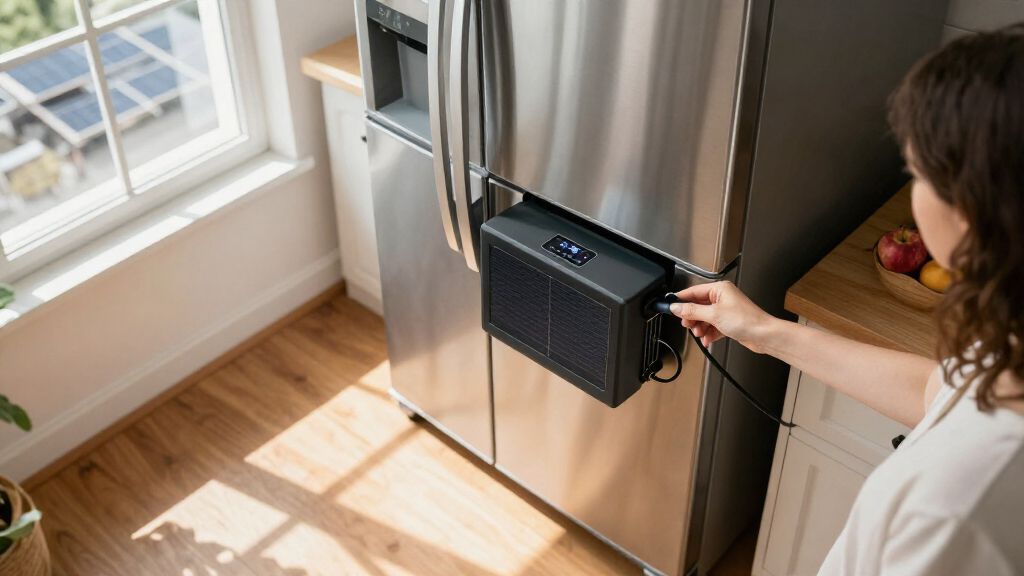
I compared these options through the specific job of keeping a refrigerator running during an outage: usable battery capacity, inverter output, solar charging potential, and practical fit. Capacity matters for runtime, while inverter power and surge handling affect whether a unit can start a fridge compressor. I also weighed whether a solar panel is included, how expandable the battery system is, and whether the product’s form factor fits a home backup plan or a portable 12V fridge.
The ranking favors systems with a more convincing balance of stored energy and solar replenishment, rather than high wattage alone. That puts larger, expandable models ahead for extended household backup, while smaller stations rank lower because their limited capacity narrows their use. Bundled panels and refrigerator-specific design earn credit for usability, but neither removes the need to match the system to the refrigerator’s actual draw and local sunlight. I treat built-in panels as a convenience feature, not proof of fast recharging.
| solar powered refrigerator backup | Battery type |
|---|---|
| Portable Solar Generator 300W | Lithium-ion |
| Jackery Fridge Guard 1024Wh Ba | — |
| BLUETTI FridgePower 2016Wh Exp | LFP |
| SolarPlay 2500W Portable Power | LiFePO₄ |
| Anker SOLIX C1000 Gen 2 Portab | LiFePO₄ |
| BROWEY S1600 1600W Portable Po | — |
| BLAVOR 1600W Portable Power St | LiFePO4; rated for more than 3500 charge cycles |
| Jackery Explorer 300 Portable | — |
| BougeRV 266Wh Portable Power S | — |
| EF ECOFLOW DELTA 2 Max Portabl | — |
Factors to Consider When Choosing Solar Powered Refrigerator Backup
Choosing refrigerator backup is less about picking the biggest power station and more about matching runtime, startup power, and recharge opportunities to your outage plan. I’d check the appliance label and your likely outage length before comparing headline wattage.
Estimate Runtime From Energy Use, Not Battery Capacity Alone
A station’s watt-hour figure describes stored energy, not the exact time a fridge will run. Refrigerators cycle on and off, so their average draw can be much lower than the compressor’s running wattage, but room temperature, door openings, and food load change that pattern. Check the refrigerator’s energy label or measure its consumption with a plug-in meter over a typical day. Then allow a margin for inverter losses and unusually warm conditions. A common mistake is dividing battery capacity by the refrigerator’s peak wattage and treating the result as a guaranteed runtime. For a multi-day outage, plan around daily energy use and how often solar can replenish the battery.
Check Compressor Startup and Continuous Output
A refrigerator may need a brief surge of power when its compressor starts, even if its normal running draw is modest. Compare the station’s continuous AC output and surge rating with the refrigerator’s requirements; a large battery does not automatically mean it can start every appliance. If you have several loads on the same station, add their likely simultaneous draw rather than relying on each device’s individual rating. Inverter headroom can help avoid overloads, but running near the limit may leave little capacity for lights or a freezer. Buyers with a 12V portable fridge should check whether a direct DC connection is available and suitable. That can avoid conversion losses, though compatibility and connector details still matter.
Size Solar Input for the Recharging Job
A panel’s rated wattage is measured under favorable conditions; real-world output drops with clouds, shade, heat, and poor panel angle. The station’s maximum solar input also sets a ceiling, so a powerful array may not charge faster if the power station cannot accept it. Check connector type, voltage limits, and whether the panel is included before planning a system. A bundled panel can simplify setup, but a small panel may only replace part of a refrigerator’s daily energy use. For longer outages, estimate how many useful sun-hours your location gets and keep a grid or vehicle charging option in mind. Avoid assuming that any solar panel will work with any power station.
Choose Capacity for Your Outage Plan and Storage Space
Size the battery around the length of outage you need to cover, then decide whether expansion is worth the added weight and setup. A compact unit can be easier to carry and store, but its limited capacity may suit a 12V cooler better than a household refrigerator. A larger station reduces the need for immediate recharging, yet it takes more room and may be less convenient to move during an emergency. Expandable systems can let you start with one battery and add capacity later, but check that extra batteries are compatible and available for the model. Consider where the unit will sit, how it will be ventilated, and whether cables can reach the fridge safely. The right capacity is the one your household can store, recharge, and operate reliably.
Account for Battery Chemistry, Care, and Backup Safety
Battery chemistry affects expected service life, weight, and how the system is managed, but it does not replace checking the manufacturer’s storage and charging guidance. LFP batteries are common in larger modern stations and are often chosen for cycle life, while the complete unit’s warranty and operating limits still matter. Store the station within its stated temperature range and periodically check its charge rather than leaving it forgotten for years. Keep the power station dry, allow airflow around it, and avoid using damaged cables or overloaded outlets. A portable power station is not a permanent home electrical installation, so do not backfeed it into household wiring. If you need a whole-home connection, use equipment and installation methods approved for that purpose.
Decide Which Loads Must Stay On
Backup planning gets more manageable when you separate essential loads from convenient ones. A refrigerator may be the priority, while lights, phones, or a medical device could share the system only if the capacity and output allow it. Write down the appliances that must run at the same time and estimate their energy use across a full day. This prevents a frequent planning error: choosing a station based on refrigerator needs, then adding several other loads without recalculating runtime. You can also reduce demand by keeping the fridge closed and moving nonessential food storage to a cooler. Prioritizing loads can make a mid-sized station more useful than buying a much larger unit you cannot recharge adequately.
Frequently Asked Questions
Can a 300Wh power station keep a household refrigerator running overnight?
It may run some efficient refrigerators for part of a night, but 300Wh is a limited reserve once inverter losses and compressor cycling are included. A fridge’s startup surge can also exceed what a small station can supply, even when its average energy use looks manageable. Check both the station’s surge output and your refrigerator’s measured daily consumption before relying on it. This capacity is generally a better match for a small 12V fridge or short backup than an extended household outage. If overnight refrigeration is a firm requirement, consider a larger battery and a tested runtime estimate.
Is a bundled solar panel enough to recharge a refrigerator backup during an outage?
Not necessarily; the answer depends on the fridge’s daily energy use, the panel’s actual output, and available sunlight. A panel rated at 200W will rarely deliver that figure continuously, and shading or clouds can sharply reduce production. Compare expected daily solar harvest with the refrigerator’s daily consumption, then allow extra capacity to recover energy lost to conversion and poor weather. A bundled panel is convenient, but it may be better viewed as one part of a charging plan that includes grid or vehicle charging when available. For several cloudy days, battery capacity alone cannot replace an undersized solar array.
Should I choose a refrigerator-specific power station or a general-purpose model?
A refrigerator-focused model can make setup and appliance compatibility more straightforward, especially if it includes a mount or purpose-built connections. A general-purpose station may be a better household choice if you also need to power lights, communications, or other devices. Compare capacity, inverter output, solar input, and expandability rather than relying on the product label alone. The Jackery Fridge Guard is the more specialized option in this roundup, while the Anker SOLIX C1000 Gen 2 fits a broader backup role. Choose the specialized design only if its practical features match your refrigerator and installation needs.
Does a built-in solar panel remove the need for separate panels?
Usually not for refrigerator backup over an extended outage. The built-in panels on the BROWEY S1600 and BLAVOR 1600W add a convenient way to collect some solar energy, but their stated panel ratings are modest relative to the energy a refrigerator can consume each day. They may help top up a battery in favorable sun or reduce dependence on other charging sources. For sustained operation, check whether the station accepts external panels and what its input limits are. Treat the built-in panel as a useful supplement unless your measured energy needs and sunlight support a stronger claim.
How do I know whether the power station can start my refrigerator?
Find the refrigerator’s starting or locked-rotor requirement if the manufacturer provides it, then compare that figure with the station’s surge rating. The station’s continuous output must also support the fridge while it runs, plus any other devices connected at the same time. If the label is unclear, a qualified electrician or an appliance technician can help identify the load, or you can use a suitable meter to observe operation. Avoid assuming that a high watt-hour capacity guarantees adequate inverter power. Leaving headroom reduces the chance that a compressor start will trigger an overload shutdown.
Conclusion
For the broadest balance of refrigerator capacity and future flexibility, I’d choose the BLUETTI FridgePower 2016Wh as best overall. The SolarPlay 2304Wh with its included 200W panel is my best value-style pick for shoppers who want a large battery and a panel in one package, while the EF ECOFLOW DELTA 2 Max is the best premium choice for buyers prioritizing a substantial LFP battery in a general-purpose system. Beginners should look at the Jackery Fridge Guard 1024Wh for its refrigerator-oriented setup, after confirming its capacity fits their expected outage. For a small 12V fridge or lighter portable use, the BougeRV 266Wh is a more fitting compact choice; I would not select it as the sole backup for a typical household refrigerator. Before deciding, verify compressor startup needs, expected daily energy use, and a realistic way to recharge the station.