
When traveling with portable power stations, you need to follow airline and airport rules regarding battery capacity, packaging, and safety. Lithium-ion batteries up to 100 Wh are generally permitted in carry-on luggage, while those between 100 Wh and 160 Wh may need airline approval. Batteries over 160 Wh are usually prohibited unless special arrangements are made. Always keep your devices protected and check specific policies to guarantee a smooth journey. Keep going to discover more detailed guidelines for a hassle-free travel experience.

Get backup power and energy gear delivered free with Prime
- Fast, free delivery on millions of items
- Prime Video, Amazon Music and more included
- Member-only deals all year
Key Takeaways
- Lithium-ion batteries up to 100 Wh are generally permitted in carry-on luggage without approval.
- Batteries between 100 Wh and 160 Wh often require airline approval before travel.
- Batteries over 160 Wh are typically prohibited unless special arrangements are made.
- Carry power stations in protective cases, and remove batteries near capacity limits for separate transport.
- Always verify airline-specific policies and airport rules regarding portable power station handling and charging.
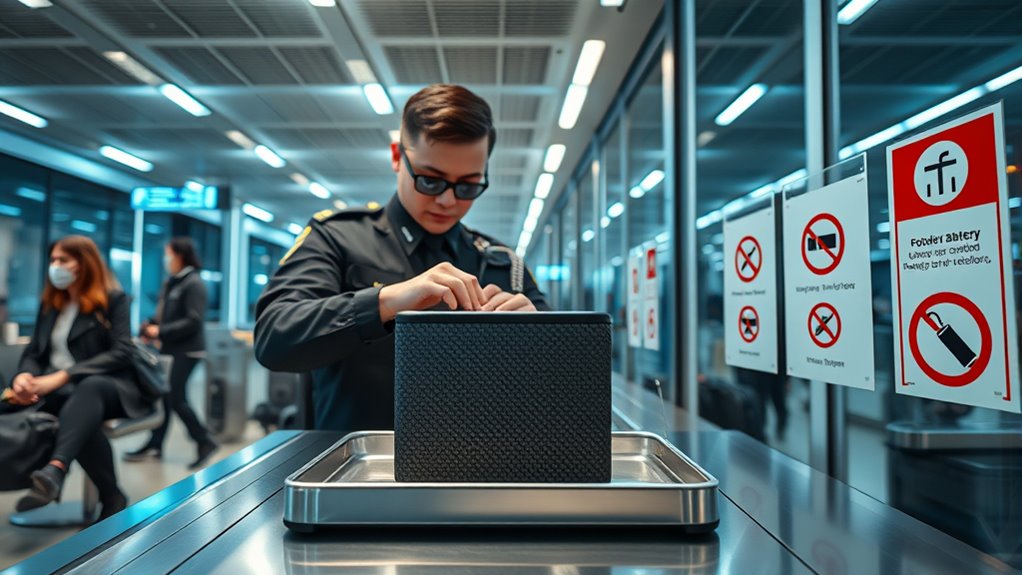
Traveling with portable power stations can be straightforward if you understand the regulations set by airports and airlines. The key factors to keep in mind are charging safety and battery restrictions, which are designed to prevent accidents and ensure a smooth journey. When you pack your power station, it’s important to remember that airlines and airport security have specific rules about how these devices are transported and used.
Charging safety is a top priority for airlines and airports. You should never attempt to charge your portable power station during the flight, as charging onboard can pose safety risks. Most airlines prohibit charging devices in-flight unless explicitly allowed, so it’s best to fully charge your power station beforehand. Also, ensure that the device is in good condition, with no visible damage or swelling, since damaged batteries increase the risk of thermal runaway or fire. When handling your power station at the airport, keep it in your carry-on luggage rather than checked baggage. This allows security personnel to inspect it if needed and ensures you can monitor its condition. Remember, some airports might have designated areas for charging, but always confirm that it’s safe and permitted to do so. Additionally, understanding battery capacity limits can help you stay compliant with airline policies and avoid last-minute issues.
Battery restrictions are another critical aspect of traveling with portable power stations. Airlines typically follow the International Air Transport Association (IATA) guidelines, which limit the capacity of lithium-ion batteries you can carry on board. Usually, batteries up to 100 Wh are permitted without airline approval, whereas those between 100 Wh and 160 Wh often require airline approval. Batteries exceeding 160 Wh are generally not allowed on passenger aircraft unless special arrangements are made. Check your device’s specifications before traveling to ensure it complies with these restrictions. Additionally, it’s wise to carry your power station in a protective case or bag to prevent accidental activation or damage during transit. If your portable power station has removable batteries, consider removing them and carrying them separately, especially if they’re near the upper limit of allowed capacity. Always read the airline’s specific policies beforehand, as they can vary.
Products Worth Considering

Bose SoundLink Plus Portable Bluetooth Speaker, Black

Dyson V8 Cyclone Cordless Vacuum

Ring Alarm 14-Piece Kit
As an affiliate, we earn on qualifying purchases.
Frequently Asked Questions
Can I Use My Portable Power Station on International Flights?
You can bring your portable power station on international flights, but you need to verify airline policies first. Make sure it complies with safety standards, especially regarding lithium batteries. Pack it in your carry-on luggage, as many airlines restrict such devices in checked bags. Always inform security personnel and follow their instructions. Planning ahead ensures you won’t face issues when traveling with your portable power station on international flights.
Are There Size Restrictions for Portable Power Stations on Planes?
Think of your portable power station as a ship steering strict harbor rules. Airlines set size restrictions and weight limitations to keep everyone safe. Usually, if your device fits within these limits, it’s allowed onboard. Larger or heavier units may be denied, so always check specific airline policies before flying. Staying within size and weight constraints ensures your power station sails smoothly through security and onto your journey.
Do Airlines Require Special Documentation for Carrying Power Stations?
Yes, airlines often require you to carry special documentation for portable power stations, especially if your device has a high battery capacity or lithium content. You should verify with your airline beforehand, as they might request a safety data sheet or proof of compliance. Always declare your power station during check-in, and make certain it meets the airline’s specific rules to avoid issues during your flight.
How Do I Ensure My Power Station Complies With TSA Regulations?
Ensuring your power station complies with TSA regulations is like fitting a puzzle piece perfectly. First, check the battery certification, making sure it meets safety standards like UN 38.3. Review airline policies, as they may have specific rules on watt-hour limits or packaging. Always carry the device in your carry-on, and pack it with protective measures. Doing these steps guarantees a smooth security process and peace of mind during your trip.
Are There Specific Brands That Are More Accepted by Airlines?
Some brands are more accepted by airlines because of their strong reputation and safety certifications. Look for portable power stations from trusted brands like Jackery, Goal Zero, or Anker, which are known for quality and safety standards. These brands typically meet airline requirements more easily. Always verify their safety certifications, such as UL or CE, to ensure your power station aligns with airline expectations and regulations.
Conclusion
Managing airport and airline rules for portable power stations is like sailing through a busy sea—stick to the charts, and you’ll avoid storms. Always check regulations before packing, and keep your station within airline limits. Think of your power station as a tiny lightning bolt, powerful but needing careful handling. Follow the guidelines, stay informed, and your journey will be smooth sailing, leaving you energized and ready to power up your adventures without a hitch.