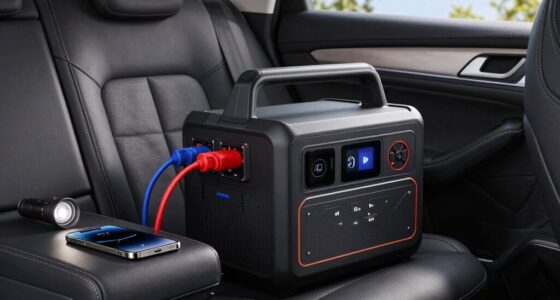
Portable power stations help developing communities access reliable, clean electricity where the grid is limited. They harness solar energy, store excess power, and run essential devices like lights, phones, and medical equipment. These stations are affordable, lightweight, and easy to transport, supporting local businesses and community projects. Plus, they’re eco-friendly and require minimal maintenance. To discover how these innovative solutions are transforming lives and economies, continue exploring the possibilities.

Get backup power and energy gear delivered free with Prime
- Fast, free delivery on millions of items
- Prime Video, Amazon Music and more included
- Member-only deals all year
Key Takeaways
- Enable reliable, off-grid electricity access, supporting homes, businesses, and healthcare in underserved communities.
- Utilize solar-powered, portable stations for clean energy with minimal maintenance and environmental impact.
- Enhance economic growth by powering small businesses, educational centers, and community facilities longer and more reliably.
- Improve resilience during emergencies by providing essential power during outages or natural disasters.
- Increase energy independence and affordability through advanced, lightweight batteries and renewable solar energy.

Have you ever been stranded without power during a camping trip or a blackout? It’s a frustrating experience, especially when you realize how much you rely on electricity for basic needs. Portable power stations are changing that reality, particularly in developing communities where access to reliable electricity remains a challenge. These devices harness solar energy, providing a clean and sustainable source of power that can be critical in areas lacking grid infrastructure. Solar energy is abundant and free, making it an ideal resource for powering homes, clinics, and small businesses. When paired with advanced battery technology, portable power stations become even more effective, storing excess energy generated during the day for use at night or during cloudy days. This combination offers a level of independence from traditional power grids, empowering communities to meet their daily needs more reliably. Modern batteries, especially lithium-ion types, are lightweight, durable, and capable of holding large amounts of energy. These features mean that a portable station can store enough power to run essential devices like lights, mobile phones, medical equipment, and small appliances for hours or even days. The improved energy density of newer batteries also means that these stations are more compact and easier to transport, which is essential in remote or hard-to-reach areas. This mobility allows community members to take power with them wherever they go, whether it’s to a market, a school, or a community center. The rapid advancements in battery technology have reduced costs, making portable power stations more accessible to low-income populations, who benefit most from affordable, reliable energy sources. Additionally, earbuds for small ears are designed with smaller ear tips for comfort, ensuring that users can wear the stations or accessories comfortably for extended periods. Using solar energy with battery technology doesn’t just provide power; it also fosters sustainability and environmental consciousness. Unlike traditional generators, solar-powered stations produce no emissions, helping communities reduce their carbon footprint. They also require less maintenance and have quieter operation, which is especially important in densely populated or sensitive environments. Installing these stations can spark local economic growth by enabling small businesses to operate longer hours or expand their services. Additionally, they can support emergency response efforts during natural disasters or crises, providing essential power when the grid fails. Overall, portable power stations equipped with solar energy and advanced batteries are transforming lives in developing communities, making energy access more equitable, sustainable, and resilient.
Products Worth Considering

LG StanbyME 2 Max 32-Inch 4K Portable Smart Touchscreen TV

Bose TV Speaker (2nd Gen) Compact Soundbar with Bluetooth and HDMI Connectivity, Black

Bose TV Speaker Compact Soundbar with Bluetooth and HDMI-ARC, Black
As an affiliate, we earn on qualifying purchases.
Frequently Asked Questions
How Long Do Portable Power Stations Typically Last Before Needing Replacements?
A portable power station typically lasts about 3 to 5 years before needing replacements, depending on how often you use and charge it. The battery lifespan influences the replacement frequency, with high usage accelerating wear. To extend its life, avoid deep discharges and store it properly. Regular maintenance and proper charging habits help maximize its performance, so you get the most value out of your investment.
Are Portable Power Stations Suitable for Medical Equipment in Developing Areas?
Yes, portable power stations are suitable for medical equipment in developing areas if they guarantee medical device compatibility and power station safety. You should verify that the power station can handle the specific voltage and current needs of your devices. Always choose models with built-in safety features like overload protection and surge control. Properly maintained, they provide reliable, portable energy for essential medical equipment, supporting healthcare services effectively.
What Maintenance Is Required to Ensure Optimal Performance?
You need to keep your portable power station happy and healthy. Regularly check the battery lifecycle and avoid letting it sit completely drained. Follow simple cleaning procedures—gently wipe down the vents and connectors to prevent dust buildup. Think of it as giving your station a spa day, ensuring it’s ready to power your medical equipment when you need it most. Proper maintenance keeps your station reliable and prolongs its lifespan.
How Do Weather Conditions Affect the Functionality of Portable Power Stations?
Weather conditions can substantially impact your portable power station’s functionality. Solar flare disruptions may interfere with solar charging, reducing efficiency, while high humidity impacts internal components, risking damage or short circuits. Extreme temperatures can also affect battery performance and lifespan. To guarantee ideal operation, keep your station sheltered from direct sunlight, moisture, and temperature extremes, and stay informed about solar activity that could cause flare disruptions.
Can Portable Power Stations Be Used Simultaneously With Solar Panels?
Like Icarus reaching for the sun, you can definitely use portable power stations with solar panels simultaneously. They’re designed for solar panel compatibility and charging station integration, allowing you to harness renewable energy efficiently. You simply connect your solar panels to the power station, which charges its batteries during daylight. This setup guarantees a continuous power supply, making it ideal for remote or developing communities where reliable energy is vital.
Conclusion
Imagine a future where your community’s nights are no longer silent, where power flows freely to light up homes and empower lives. Portable power stations hold that promise, quietly waiting to transform everyday struggles into opportunities. As they become more accessible, you can almost see the shift — brighter mornings, safer evenings, and endless potential just within reach. Are you ready to be part of this change? The power to ignite tomorrow is in your hands.