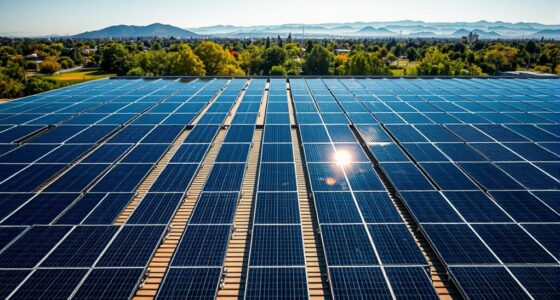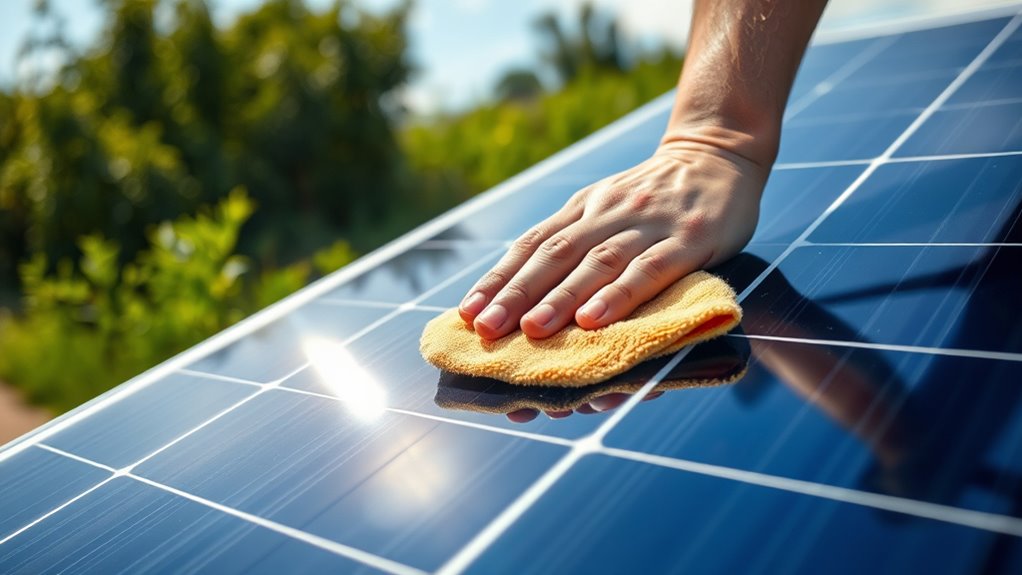

To keep your solar panels efficient, regularly clean them with a soft brush or squeegee and filtered water, ideally on cloudy days or early mornings. Turn off the system before cleaning and avoid harsh chemicals or abrasives to protect the coatings. Monitor for damage or loose connections, and consider using mild soap if needed. Proper maintenance not only boosts performance but also prolongs lifespan—continue exploring effective tips to make sure your panels stay working at their best.
Key Takeaways
- Turn off the solar system before cleaning to ensure safety and prevent electrical hazards.
- Use clean, filtered water and gentle tools like soft brushes or microfiber cloths to avoid damaging coatings.
- Regularly inspect panels for dirt, debris, or damage, and clean them during cloudy days or early mornings.
- Avoid harsh chemicals; opt for mild soap solutions to effectively remove grime without harming coatings.
- Maintain a routine cleaning schedule and monitor system performance to maximize efficiency and lifespan.
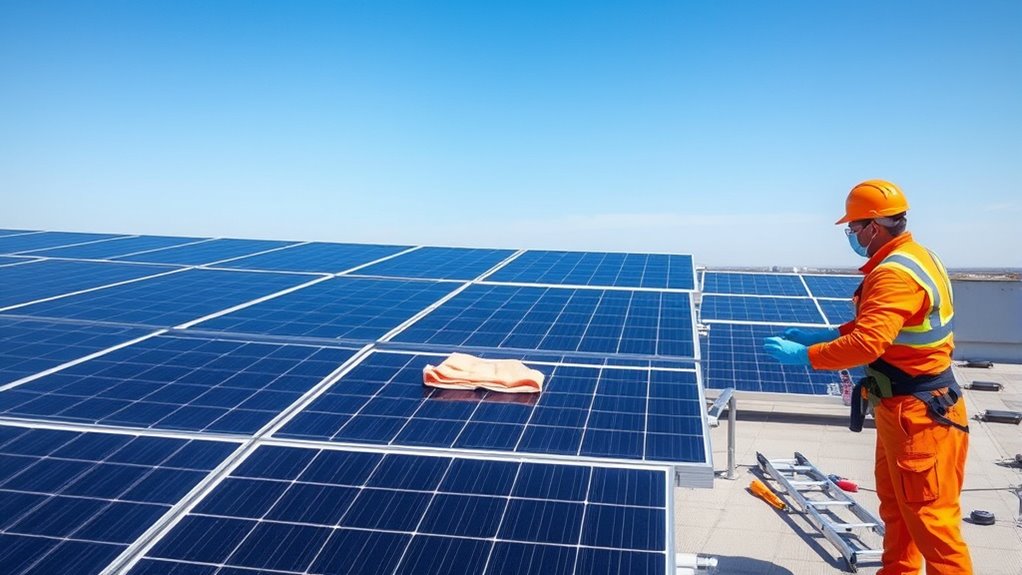
Keeping your solar panels in top condition is vital to maximize their energy output and lifespan. One of the key factors in maintaining their efficiency is ensuring the panels stay clean and free from debris. Over time, dirt, dust, bird droppings, and other residues can accumulate on the surface, blocking sunlight and reducing energy production. To combat this, understanding the role of solar panel coatings becomes important. Many panels are treated with special coatings designed to repel water and prevent stubborn grime from sticking. These coatings make cleaning easier and help keep your panels clearer longer. However, even with these coatings, routine cleaning remains necessary to guarantee optimal performance.
Regular cleaning and understanding solar panel coatings ensure maximum efficiency and longevity.
When it comes to cleaning, choosing the right tools is vital. You don’t need fancy or expensive equipment—simple, effective cleaning tools can do the job well without risking damage. A soft-bristled brush or a squeegee with a rubber blade works best for removing stubborn dirt without scratching the surface. Microfiber cloths are also excellent for gentle wiping and polishing. Avoid abrasive scrubbers or steel wool, which can scratch the glass and compromise your panels’ integrity. If you’re dealing with larger areas, a long-handled cleaning tool allows you to reach all parts of the panel comfortably and safely, especially if your panels are installed on a roof.
Water quality matters, too. Use clean, preferably filtered water to prevent mineral deposits that can leave streaks or spots. For stubborn grime, a mild soap solution can be effective, but avoid harsh chemicals or ammonia-based cleaners, which could damage the solar panel coatings. When cleaning, always turn off your system and follow safety protocols, especially if your panels are on a roof. It’s best to clean on cloudy days or during early morning or late afternoon hours to prevent water spots caused by quick evaporation in direct sunlight. Additionally, selecting a high-quality coating can significantly enhance the resistance of your panels to dirt and environmental factors, making maintenance easier.
Regular maintenance not only preserves your panels’ appearance but also guarantees they operate at peak efficiency. Keep an eye out for any damage or loose connections and address issues promptly. By combining proper cleaning tools with an understanding of your solar panel coatings, you make maintaining your system straightforward and effective. This proactive approach guarantees your panels continue to generate maximum power, saving you money and preserving your investment for years to come.

Briliantwerk Solar Panel Cleaning Brush with 20 ft Extension Pole – Water Fed Pole Brush with Soap Dispenser for Solar Panels, Windows & Siding – Heavy Duty, Streak-Free Solar Cleaning Kit
SOLAR PANEL CLEANING BRUSH: Solar panel cleaning brush removes dirt and debris. Works as solar panel cleaner, solar…
As an affiliate, we earn on qualifying purchases.
As an affiliate, we earn on qualifying purchases.
Frequently Asked Questions
How Often Should Solar Panels Be Professionally Inspected?
You should schedule a professional inspection for your solar panels at least once every one to two years. Regular inspections help make certain your panels stay in top condition, protecting your solar panel warranties. By maintaining this inspection frequency, you catch potential issues early, optimize energy output, and extend the lifespan of your system. Don’t wait too long; staying proactive keeps your solar investment secure and efficient.
Can Cleaning Solar Panels Damage Their Surface?
Cleaning your solar panels won’t turn them into a scratched mess or cause chemical damage if you’re gentle and use proper methods. Aggressive scrubbing or harsh chemicals can cause surface scratching or chemical damage, reducing efficiency. Think of it like a delicate dance—use soft brushes, gentle cleaning solutions, and avoid abrasive tools. Regular, careful cleaning keeps your panels sleek and efficient, preventing long-term damage and ensuring they soak up sunlight like a sponge.
Are There Eco-Friendly Cleaning Options for Solar Panels?
Yes, there are eco-friendly solutions for cleaning solar panels. You can use biodegradable cleaners that break down naturally, minimizing environmental impact. Additionally, plain water and a soft brush or cloth are effective and eco-friendly options. Avoid harsh chemicals or abrasive tools that could damage the panel surface. These methods protect the environment while keeping your panels clean and functioning efficiently.
What Is the Best Time of Day to Clean Solar Panels?
They say, “A stitch in time saves nine,” so choosing the right moment matters. The best time of day to clean your solar panels is early morning when the panels are cool, and dew helps loosen dirt. Ideal timing ensures you avoid harsh sunlight and heat, making cleaning safer and more effective. Early morning cleaning minimizes streaks and keeps your panels running at peak efficiency all day long.
How Do Weather Conditions Affect Solar Panel Maintenance?
Weather impact and seasonal variations considerably affect your solar panel maintenance. Rain naturally cleans panels, reducing your need for manual cleaning, but heavy storms can cause debris buildup or damage. Cold weather may lead to snow accumulation, blocking sunlight, while hot, dry conditions can cause dust buildup. You should regularly inspect your panels after extreme weather events and adapt your cleaning schedule to seasonal changes for ideal efficiency.

Solar Panel All-Purpose Microfiber Cleaning Towels (4-Pack) Wet or Waterless Wash – Highly Absorbent, Lint-Free, Excellent for Your Car, RV, Motorcycle, Kitchens, Bathrooms and More
As an affiliate, we earn on qualifying purchases.
As an affiliate, we earn on qualifying purchases.
Conclusion
By regularly maintaining and cleaning your solar panels, you protect your investment and keep your system efficient. Think of it as tending a garden—without proper care, weeds and debris take over, but with attention, vibrant growth flourishes. Just like a well-kept garden, clean panels harness the sun’s energy at their best, saving you money and reducing your carbon footprint. So, stay proactive; a little effort today guarantees bright, sustainable energy tomorrow.

Eazer 89'' Squeegee Window Cleaner 2 in 1 Rotatable Window Cleaning Tool Kit with Extension Pole, Window Washing Equipment with Bendable Head for Indoor/Outdoor Window and Car Glass
2 in 1 Professional Window Cleaning Tool + Streak Free Squeegee: The window washer + squeegee with flexible…
As an affiliate, we earn on qualifying purchases.
As an affiliate, we earn on qualifying purchases.

5-24 ft Water Fed Pole Window Cleaning System // Professional Telescopic Solar Panel Cleaning Equipment // Water Fed Brush with Upper Rinse Bar, 10" Squeegee, Water Filter, Soap Dispenser & Water Hose
ALL IN ONE CLEANING SYSTEM » This 11-Piece water fed pole cleaning kit gives you up to 30…
As an affiliate, we earn on qualifying purchases.
As an affiliate, we earn on qualifying purchases.