A solar-powered water pumping system is an eco-friendly way to keep your garden lush using renewable sunlight. It reduces reliance on grid electricity, cuts your energy costs, and minimizes environmental impact. These systems are easy to install and maintain, with high-efficiency panels ensuring reliable operation even on cloudy days. Plus, smart controllers help conserve water by preventing overwatering. Want to discover how you can make gardening greener and more efficient? Keep exploring to find out more.

Get backup power and energy gear delivered free with Prime
- Fast, free delivery on millions of items
- Prime Video, Amazon Music and more included
- Member-only deals all year
Key Takeaways
- Solar-powered water pumps reduce electricity costs and environmental impact by utilizing renewable solar energy.
- High-efficiency solar panels ensure reliable operation even on cloudy days, optimizing water use.
- Integrated smart controllers help conserve water through soil moisture and weather-based watering schedules.
- Easy installation and low maintenance make solar pumping systems suitable for various garden sizes.
- These systems promote sustainable gardening by providing eco-friendly, reliable water supply year-round.
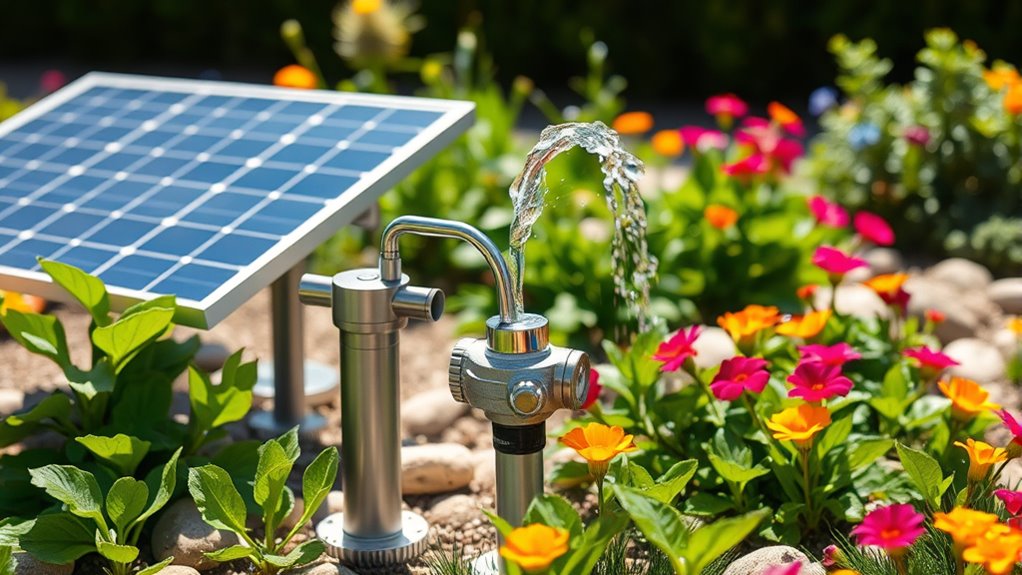
Are you looking for an environmentally friendly way to water your garden? Solar-powered water pumping systems could be just what you need. These systems harness the sun’s energy to operate, making them a sustainable choice that reduces reliance on grid electricity and minimizes your carbon footprint. One of the key factors in choosing such a system is solar panel efficiency. High-efficiency panels capture more sunlight and convert it into usable energy, ensuring your pump runs smoothly even on less sunny days. This means your garden stays well-watered, and you get the most out of your investment. Plus, improved solar panel efficiency contributes to water conservation by optimizing energy use, so less power goes to waste. When a system operates effectively, it requires less frequent maintenance and can run longer during the day, providing a consistent water supply for your plants.
Water conservation is a significant advantage of installing a solar-powered water pump. Unlike traditional systems that often rely on timers or manual operation, these pumps can be integrated with smart controllers that monitor soil moisture levels or weather conditions. This prevents overwatering, reducing water waste and conserving this precious resource. With precise control over watering schedules, you can ensure your garden receives adequate hydration without excess runoff or evaporation. Additionally, because the system is powered by renewable energy, you don’t have to worry about fluctuating electricity prices or outages disrupting your watering routine. This reliability helps maintain healthy plants and promotes sustainable gardening practices.
Another benefit is that solar water pumping systems are typically easier to install and maintain than conventional pumps. They often come with straightforward wiring and minimal moving parts, which means fewer breakdowns and lower maintenance costs over time. Plus, as solar technology advances, the cost of panels continues to drop, making these systems more accessible for homeowners. You can even expand your setup by adding more panels or integrating with rainwater harvesting systems, further enhancing water conservation efforts. Furthermore, selecting top-rated solar panels can significantly improve system performance and durability, ensuring long-term reliability. In terms of environmental impact, using solar energy reduces greenhouse gas emissions and helps you contribute to a healthier planet. It’s a simple, effective way to align your gardening practices with eco-conscious values.
As an affiliate, we earn on qualifying purchases.
Frequently Asked Questions
How Long Do Solar Water Pumps Typically Last?
Solar water pumps typically last between 5 to 15 years, depending on various durability factors. You can extend their pump lifespan by regularly maintaining the system, protecting it from harsh weather, and using quality components. Proper installation also plays a crucial role in durability. Keep an eye on performance issues, and with good care, your solar pump can serve you reliably for many years.
Are Solar-Powered Systems Effective in Cloudy Weather?
You might wonder if cloudy days will ruin your solar-powered system’s effectiveness. The truth is, solar panel efficiency drops in low light, making weather adaptation essential. While cloudy weather reduces output, modern systems often include batteries or backup power, keeping your garden watered. So, yes, they still work, just not at full capacity. You stay in control, ensuring your garden thrives, regardless of the weather’s mood swings.
What Maintenance Is Required for Solar Water Pumps?
You should regularly check your solar water pump’s pump efficiency to guarantee it’s operating at its best. Follow a maintenance schedule that includes cleaning the solar panels to remove dirt and debris, inspecting the pump for leaks or wear, and lubricating moving parts if needed. By staying proactive, you keep your system running smoothly, extend its lifespan, and maximize water flow, especially during cloudy days when efficiency can fluctuate.
Can Solar Pumps Be Integrated With Existing Irrigation Systems?
Yes, solar pumps can be integrated with your existing irrigation systems. Confirm the solar pump’s durability matches your garden’s demands, especially if you’re in a harsher climate. Compatibility depends on matching the pump’s flow rate and pressure with your irrigation setup. You might need adapters or controllers for seamless integration. Proper planning guarantees your solar pump works efficiently alongside your current system, saving water and energy.
What Is the Initial Cost Comparison With Traditional Pumps?
When comparing costs, solar pumps typically have a higher upfront investment than traditional pumps, but the cost analysis shows long-term savings. You’ll spend more initially on equipment and installation, but you’ll save on energy bills over time. Plus, solar pumps require less maintenance and have lower operating costs, making them more economical in the long run. So, consider your budget and long-term benefits before making a decision.
high efficiency solar water pump system
As an affiliate, we earn on qualifying purchases.
As an affiliate, we earn on qualifying purchases.
Conclusion
Harnessing solar power for garden water pumping blends sustainability with efficiency. You enjoy a greener, cost-effective solution, while nature benefits from reduced emissions. It’s a simple switch that brings harmony—your garden thrives, and the planet breathes easier. By choosing solar, you embrace innovation and responsibility, turning everyday gardening into an act of environmental care. In this balance of technology and nature, you create a beautiful, sustainable oasis—where progress and preservation walk hand in hand.
smart garden watering controller
As an affiliate, we earn on qualifying purchases.
As an affiliate, we earn on qualifying purchases.
solar irrigation pump for garden
As an affiliate, we earn on qualifying purchases.
As an affiliate, we earn on qualifying purchases.
Fall Picks
fall essentials
As an affiliate, we earn on qualifying purchases.