To make your solar gear last longer, develop good habits like regularly cleaning your panels to keep dirt and debris off, and trimming trees to prevent shading. Always monitor system performance and troubleshoot issues early to avoid damage. Properly align and position your panels for maximum sun exposure, and use a quality charge controller to protect batteries. Keeping everything well-maintained and understanding how to optimize usage can considerably extend your system’s life—if you want to learn more, keep exploring these tips.
Key Takeaways
- Regularly clean solar panels to prevent dirt buildup and maximize sunlight absorption.
- Monitor system performance and address issues promptly to prevent damage.
- Avoid deep discharges in batteries by maintaining proper charge cycles and using quality components.
- Ensure proper panel placement and alignment with the sun to reduce system strain.
- Conduct routine inspections and maintenance to identify and fix small issues early.
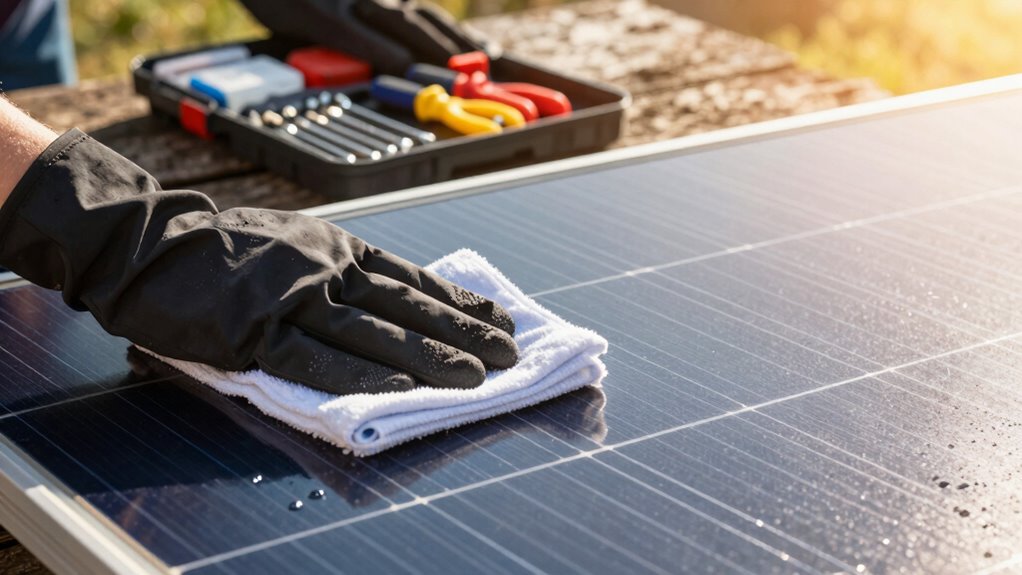
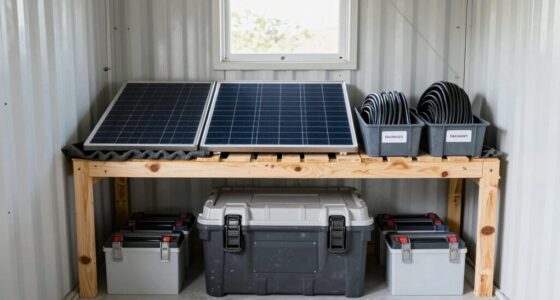
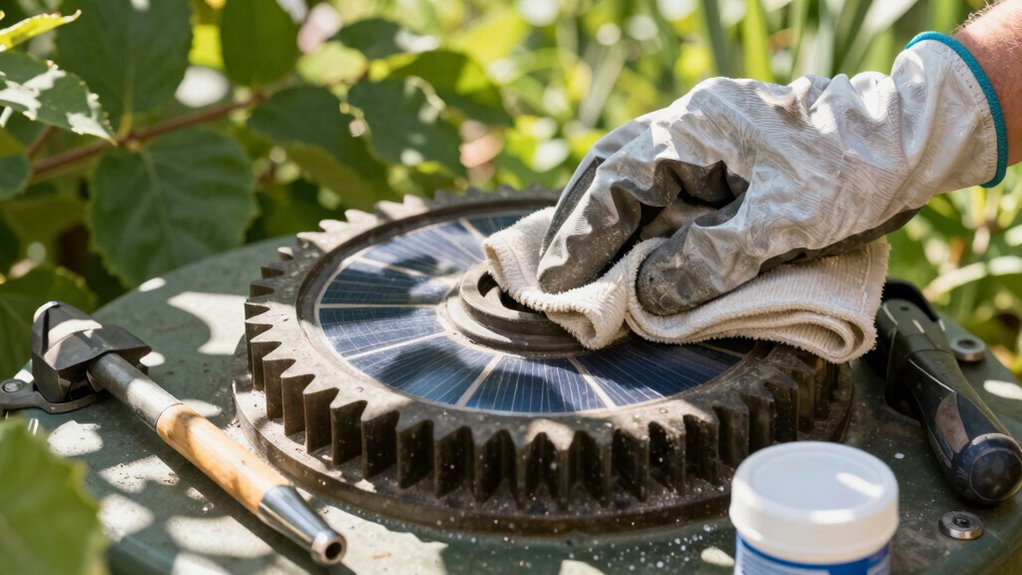
Are you wondering how to get the most out of your solar gear and extend its lifespan? It all starts with good habits that maximize solar panel efficiency and protect your batteries. When your solar panels operate at their best, they convert sunlight into electricity more effectively, which means you get more power for your energy needs. To achieve this, regularly clean your panels to remove dirt, dust, and debris that can block sunlight. Keep an eye out for shading from trees or nearby structures, as even partial shading can drastically reduce efficiency. Positioning your panels correctly and trimming back overgrown vegetation ensures they get full sun exposure throughout the day.
Your daily habits also play a role in prolonging your gear’s life. Avoid letting batteries discharge completely before recharging; shallow, frequent cycles are gentler on battery lifespan. Using a proper charge controller helps regulate voltage and current, preventing overcharging or deep discharges that can damage batteries over time. Make sure your battery system is well-ventilated and kept at recommended temperatures, since excessive heat or cold can shorten their lifespan. Investing in quality batteries and maintaining them properly saves you money in the long run by reducing replacements and maintenance needs. Proper solar system design can also contribute to longer-lasting gear by optimizing energy flow and minimizing strain on components.
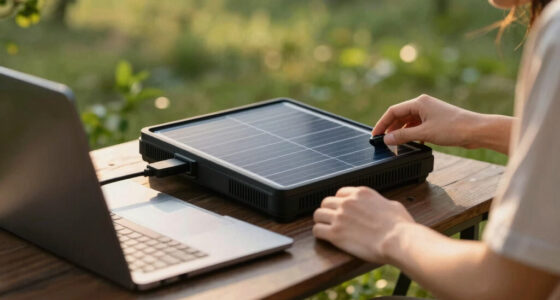
Monitoring your system regularly is essential. Many solar setups come with apps or displays that provide real-time data on performance, efficiency, and battery status. Use this information to catch issues early—like declining efficiency or irregular voltage—and address them promptly. Keeping your system in peak condition not only ensures consistent energy output but also prevents small problems from becoming major, costly repairs down the road. Additionally, avoid unnecessary power drain by scheduling heavy energy use during peak sunlight hours, when your panels are most efficient. Regularly inspecting your system and understanding how performance metrics relate to your system’s health can help you identify potential issues before they escalate. Implementing proper maintenance routines also ensures your system remains in optimal condition over time.
A good understanding of solar panel orientation and placement can also significantly impact your system’s longevity and efficiency. Ensuring your panels are properly aligned with the sun’s path can reduce strain on system components and improve overall durability. Implementing these habits doesn’t require a lot of effort but can greatly enhance your solar gear’s longevity. It’s about being proactive—cleaning panels routinely, managing your batteries wisely, and staying vigilant about your system’s health. When you treat your solar setup with care, you’re making sure it performs at its best for years to come. This means you’ll get more reliable power, fewer maintenance issues, and better overall solar panel efficiency. Plus, extending your battery lifespan reduces the need for frequent replacements, saving you money and reducing waste. By adopting these simple yet effective habits, you’re maximizing your investment and ensuring your solar system remains a dependable source of clean energy for a long time.

Buyplus 30FT Reach Solar Panel Cleaning Brush Kit with 5-24FT Telescoping Pole, Water Fed Window Cleaner Tool with 20" Brush, Soap Dispenser, Cobweb Duster, Squeegee for Roof, RV, Gutter, Deck,Orange
- Wide 20" Cleaning Brush: Large coverage for solar panels
- High-Density Nylon Bristles: Protects photovoltaic panels during cleaning
- Four High-Flow Nozzles: Extensive water coverage for deep cleaning
As an affiliate, we earn on qualifying purchases.
As an affiliate, we earn on qualifying purchases.
Frequently Asked Questions
How Often Should I Inspect My Solar Gear for Damage?
You should inspect your solar gear at least once every three to six months. Use proper inspection tools like a flashlight, mirror, and cleaning supplies to spot damage or dirt. Regular maintenance schedules help identify issues early, preventing costly repairs. During inspections, look for cracks, corrosion, or loose connections. Keeping a routine guarantees your solar gear remains efficient and lasts longer, saving you money and energy.
Can I Upgrade Parts to Extend Solar Gear Lifespan?
Upgrading parts can definitely extend your solar gear’s lifespan. For example, replacing an older battery with a high-quality, maintenance-free battery improves durability. Focus on battery maintenance and consider component upgrades like more efficient inverters or protective casing. These upgrades reduce wear and tear, ensuring your solar system performs at its best for longer periods. Regularly evaluating and upgrading key components helps you maximize your gear’s longevity and overall efficiency.
What Cleaning Products Are Safest for Solar Panels?
You should use cleaning solutions that are safe detergents specifically designed for solar panels. Avoid harsh chemicals or abrasive cleaners, as they can damage the surface. Mild soap mixed with water or specialized solar panel cleaning products work best. Gently wipe the panels with a soft cloth or sponge, and rinse thoroughly. This approach helps maintain efficiency without risking harm, ensuring your solar gear lasts longer and performs well.
Is It Necessary to Cover Solar Gear During Storms?
Did you know that storms can cause up to 80% of solar panel damage? Covering strategies and storm protection are essential, especially during severe weather. You don’t always need to cover your solar gear, but in cases of hail, heavy storms, or high winds, it’s wise to protect your panels with a cover or tarp. This helps prevent damage and keeps your system running smoothly long-term.
How Do Temperature Fluctuations Affect Solar Gear Durability?
Temperature fluctuations can impact your solar gear by causing thermal expansion, which stresses materials, and leading to material fatigue over time. These repeated cycles weaken components, reducing durability and efficiency. To protect your gear, avoid rapid temperature changes when possible, and consider using protective coverings or insulation. Regular inspections help identify early signs of damage, ensuring you maintain *best* performance and extend the lifespan of your solar equipment.

Victron Energy SmartSolar MPPT Solar Charge Controller 100V, 50A, 12/24V
- Smart Solar Charging: Optimizes sunlight conversion and battery life
- Maximize Power Output: Fast MPPT tracking for maximum energy
- Synchronized Charging: Multiple controllers coordinate for efficiency
As an affiliate, we earn on qualifying purchases.
As an affiliate, we earn on qualifying purchases.
Conclusion
By adopting these simple habits, you can make your solar gear last longer and get the most out of your investment. Regular maintenance, mindful usage, and proper storage are your best allies in this effort. Remember, a stitch in time saves nine—taking small steps now can prevent bigger problems later. Keep your solar equipment in top shape, and you’ll enjoy clean energy for years to come, proving that good habits truly pay off.
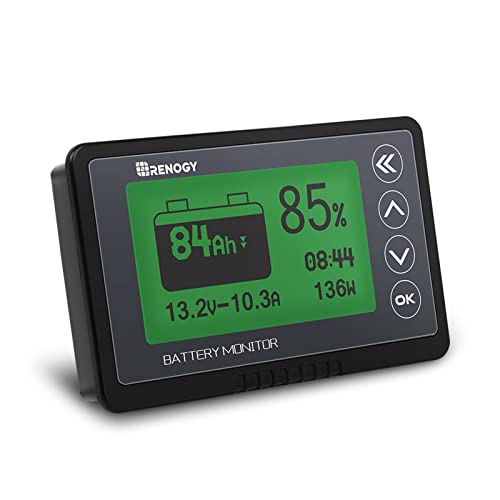
Renogy Battery Shunt 300, Smart Remote Battery Monitoring Via APP
- High Accuracy Measurement: 1% real-time voltage and current accuracy
- Battery Protection Alarms: High/low capacity alarms with flashing backlight
- Universal Battery Compatibility: Works with lead acid, lithium, and hybrid batteries
As an affiliate, we earn on qualifying purchases.
As an affiliate, we earn on qualifying purchases.

Solar Angle Guide for Solar Panel – Keopuals Solar Panel Accessories Find The Optimal Angle for Solar Panels Tools
- Find Optimal Solar Panel Angle: Maximize energy output and efficiency
- Easy Adjustment Method: Align shadow of black dot to center
- Universal Compatibility: Fits fixed, adjustable, and portable panels
As an affiliate, we earn on qualifying purchases.
As an affiliate, we earn on qualifying purchases.