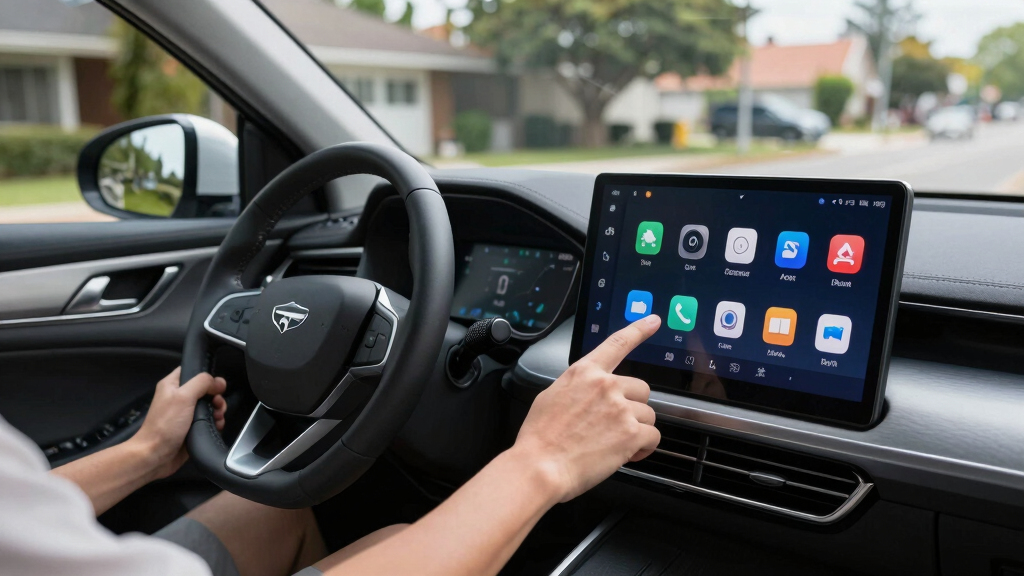

TL;DR
CarPlay is increasingly being integrated as an additive feature in vehicles, expanding its role beyond basic infotainment. This development is confirmed by industry sources and signifies a shift in automotive connectivity strategies.
Automakers are confirming that Apple CarPlay is being added as an additive feature to new vehicle models, rather than replacing existing infotainment systems. This shift indicates a broader adoption of CarPlay as a supplementary technology designed to enhance in-car connectivity and user experience, making it a key consideration for consumers and industry watchers alike.
According to recent statements from several major automakers, CarPlay is now being integrated as an additive component in new vehicles, rather than as a replacement for built-in infotainment systems. This means that CarPlay can be used alongside or in addition to existing displays and controls, providing drivers with familiar Apple interface options without displacing native systems. Industry sources indicate that this approach allows automakers to offer more flexible, customizable options for consumers, catering to preferences for both native and smartphone-based interfaces. Automakers such as Ford, GM, and Stellantis have publicly announced plans to include CarPlay as an optional or supplementary feature in upcoming models. This trend aligns with Apple’s recent push to expand CarPlay’s capabilities, including the introduction of wireless connectivity, digital key features, and deeper integration with vehicle controls. Experts note that this additive approach may also facilitate easier software updates and feature enhancements over time, as CarPlay can be upgraded independently of the vehicle’s native systems.Why CarPlay’s Additive Approach Reshapes Vehicle Connectivity
This development signals a significant shift in how automakers approach vehicle infotainment. By integrating CarPlay as an additive feature, manufacturers are giving consumers more choice, flexibility, and familiarity in their in-car technology. It reflects a broader trend toward smartphone integration as a central element of modern vehicles, potentially influencing future design and user interface strategies. For consumers, this means easier access to Apple’s ecosystem, including navigation, messaging, and media, without sacrificing native controls or displays. For the industry, it suggests a move toward more modular, software-driven vehicle features that can be updated over time, reducing the need for costly hardware overhauls.
However, the approach also raises questions about the balance between native and smartphone-based systems, and how automakers will prioritize or integrate these options in future models. Overall, the move to make CarPlay additive underscores its growing importance in the automotive landscape and highlights the shift toward more flexible, connected vehicle environments.

Jemluse Wireless CarPlay Adapter for Apple iPhone – Multi-User Seamless Connection for Convert Wired to Wireless Car Play Adapter – No Latency from iOS 10+ to Screen w/USB C (Gray)
The Ultimate Smarter Copilot: Stay on Top of Your Driving- The 3A magic link CarPlay box control everything…
As an affiliate, we earn on qualifying purchases.
As an affiliate, we earn on qualifying purchases.
Automakers’ Transition Toward Modular Infotainment Systems
Historically, automakers have either integrated proprietary infotainment systems or offered CarPlay as an optional upgrade. Over recent years, Apple has expanded CarPlay’s capabilities, including wireless connectivity and deeper vehicle integration. In late 2023, several manufacturers announced plans to incorporate CarPlay as an additive feature rather than a replacement, reflecting a strategic shift. This approach aligns with broader industry trends emphasizing software flexibility, user customization, and seamless connectivity, driven by consumer demand for smartphone-like experiences inside vehicles.
Prior to this, some automakers faced criticism for removing native systems in favor of CarPlay, which limited user choice. The new additive model aims to balance native controls with the familiarity and app ecosystem of Apple’s platform, potentially offering a more adaptable and future-proof solution.

SJoyBring 7" QLED Double Din Car Stereo Compatible with Wireless Apple CarPlay & Android Auto, 240W 4.2CH Dual Subwoofer Out, Dash Cam & Backup Camera Included, Bluetooth, Mirrorlink, FM/AM Car Radio
Wireless Connection for Apple CarPlay & Android Auto: Experience the convenience of seamless smartphone integration. Our 7-inch double…
As an affiliate, we earn on qualifying purchases.
As an affiliate, we earn on qualifying purchases.
Unclear Long-Term Impact on Native Vehicle Systems
It is not yet clear how automakers will balance native infotainment controls with the increasing reliance on CarPlay as an additive feature. Questions remain about whether native systems will be phased out or maintained as primary interfaces in future models, and how software updates will be managed across different platforms. The long-term implications for vehicle hardware design and user experience are still evolving, and industry experts caution that the full impact will become clearer over the next few years.
![8 Core [4+64G] Wireless Carplay AI Box Android Auto Adapter, Qualcomm Android 13 Plug & Play, Compatible with 98% Vehicle Models, GPS Navigation/Voice Control/Bluetooth/Mirror Link](https://m.media-amazon.com/images/I/41u-dENBlqL._SL500_.jpg)
8 Core [4+64G] Wireless Carplay AI Box Android Auto Adapter, Qualcomm Android 13 Plug & Play, Compatible with 98% Vehicle Models, GPS Navigation/Voice Control/Bluetooth/Mirror Link
The Original Vehicle Operation is More Convenient: USB plug and play, quick connection. Supports original vehicle control without…
As an affiliate, we earn on qualifying purchases.
As an affiliate, we earn on qualifying purchases.
Upcoming Vehicle Models and Industry Adoption Trends
Automakers are expected to continue integrating CarPlay as an additive feature in upcoming vehicle models throughout 2024 and beyond. Industry observers anticipate further announcements from major brands, with some potentially expanding CarPlay’s role to include more vehicle control functions. Consumer adoption and feedback will influence how manufacturers refine this approach, and regulatory or safety standards may also shape future implementations. The industry will closely monitor how this additive model impacts driver experience, vehicle design, and software updates.
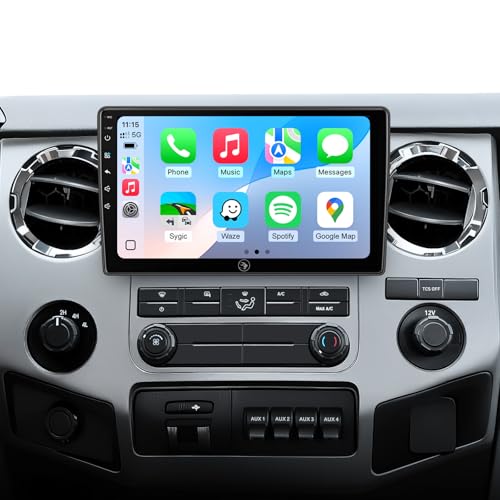
AINAVITO 10 Inch for Ford F150 Radio 2004-2008, F250/F350/450/550 2008-2016 Radio Upgrade Wireless CarPlay Android Auto, Plug and Play, 5G Wi-Fi, Bluetooth 5.0 QLED Touch Screen Car Stereo
【Broad for Ford Truck Compatibility】 Custom-engineered to modernize your classic Ford. Perfectly fits Ford F150 (2004-2008), F250/F350/F450/F550 Super…
As an affiliate, we earn on qualifying purchases.
As an affiliate, we earn on qualifying purchases.
Key Questions
What does it mean that CarPlay is now ‘additive’?
It means CarPlay is being integrated as a supplementary feature that works alongside existing native infotainment systems, rather than replacing them entirely.
Will native vehicle controls be replaced by CarPlay?
Currently, most automakers plan to keep native controls, using CarPlay as an additional option rather than a replacement, but this could change in future models.
Does this change affect wireless connectivity for CarPlay?
Yes, recent announcements indicate that wireless CarPlay functionality is being expanded and will be compatible with the additive approach.
Is this shift driven by consumer demand?
Industry sources suggest that consumer preference for seamless smartphone integration and familiarity with Apple’s ecosystem is a key driver behind this trend.
What are the implications for vehicle hardware design?
The move toward additive features may lead to more modular, software-driven vehicle systems that can be updated over time, reducing the need for hardware changes.
Source: hn