
When selecting extension cables for your solar panels, consider both length and gauge to maintain efficiency and safety. Longer runs can cause voltage drops, so choose thicker wires (lower gauge numbers) for extended distances. Proper sizing prevents energy loss and reduces risks of overheating or damage. Weatherproofing is also essential for outdoor use. If you’re unsure how to balance these factors, exploring additional tips will help you choose the best setup for your solar system.

Get backup power and energy gear delivered free with Prime
- Fast, free delivery on millions of items
- Prime Video, Amazon Music and more included
- Member-only deals all year
Key Takeaways
- Longer cables increase voltage drop; choose thicker gauge wires to maintain efficiency over distance.
- Match cable length to your system layout to prevent unnecessary energy loss and performance issues.
- Use appropriately rated weatherproof cables for outdoor installation to ensure durability and safety.
- Follow standards and specifications to select cables that safely handle the system’s current and voltage.
- Properly size extension cables based on run length to optimize system performance and prevent electrical hazards.
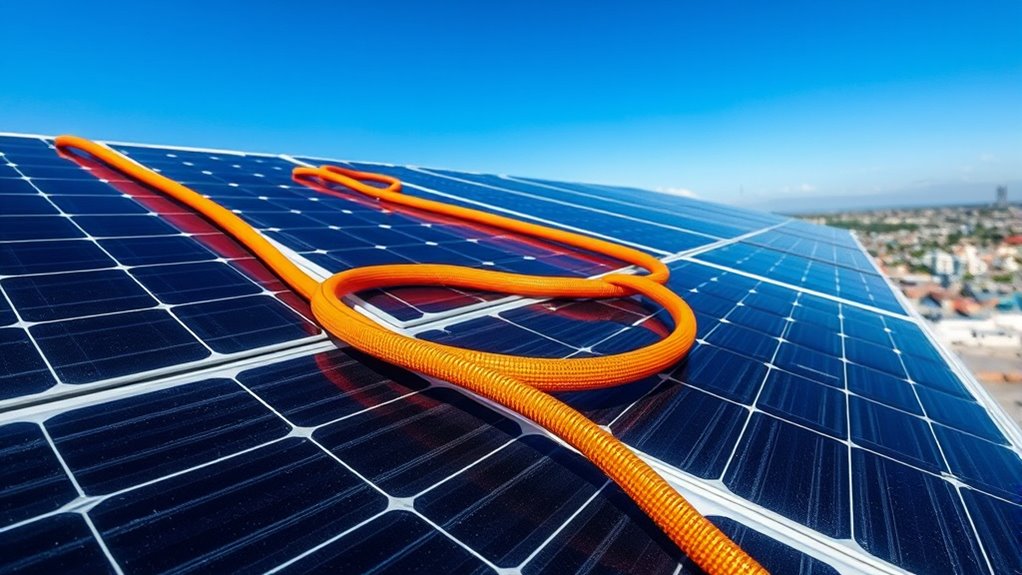
Extension cables for solar panels are essential tools that help you connect your panels to inverters or batteries when they are installed farther apart. Choosing the right cable length guarantees your system functions efficiently without unnecessary power loss. When selecting extension cables, one of the most critical factors to consider is wire gauge. The wire gauge determines how much current the cable can safely carry. Thicker wires, indicated by a lower gauge number, reduce resistance and voltage drop over longer distances, maintaining the efficiency of your solar setup. For example, if your panels are a considerable distance from your inverter, opting for a thicker gauge will prevent energy loss and ensure your system performs at its best.
Choosing the right wire gauge is crucial to prevent energy loss over longer distances in solar extension cables.
Beyond wire gauge, weatherproofing is equally crucial. Solar installations are exposed to various environmental conditions, including rain, snow, and humidity. If your extension cables aren’t weatherproofed, they could deteriorate quickly, leading to safety hazards and potential system failures. Look for cables with durable, weather-resistant insulation designed to withstand harsh outdoor conditions. Proper weatherproofing also protects against UV rays, corrosion, and physical damage, extending the lifespan of your cables. Investing in weatherproof extension cords may cost a bit more upfront, but it pays off over time by reducing maintenance and replacement needs.
Additionally, understanding the security standards** that cables meet can help prevent electrical hazards and ensure compliance with safety regulations. Length is another aspect you can’t overlook. While longer cables might seem convenient, they can introduce voltage drops, especially if the wire gauge isn’t sufficiently thick. Always match the length of your extension cable to your installation layout, but avoid excessively long runs that could compromise system performance. If you need a longer connection, choose a heavier gauge wire to compensate for the additional distance. Remember, the goal is to maintain a balance between length and wire thickness to maximize power transfer** without sacrificing safety or efficiency.
When you’re shopping for extension cables, double-check their specifications to ensure they meet the necessary standards for solar power systems. Properly rated cables with appropriate gauge and weatherproofing are essential for safe, reliable operation. Keep in mind that poor-quality cables or inadequate weatherproofing can lead to issues such as short circuits, power loss, or even electrical fires. By paying attention to wire gauge, weatherproofing, and length, you’ll set up a resilient system that delivers consistent energy while surviving the outdoor elements. Ultimately, selecting the right extension cables is about understanding your system’s needs and choosing components that safeguard your investment and energy production.
solar panel extension cable 25ft weatherproof
As an affiliate, we earn on qualifying purchases.
As an affiliate, we earn on qualifying purchases.
Frequently Asked Questions
How Do Extension Cable Lengths Affect Solar Panel Efficiency?
You might wonder how extension cable lengths affect solar panel efficiency. Longer cables can cause voltage drops, reducing power output. To minimize this, choose cables with good flexibility for easy installation and proper insulation. Also, use color coding to ensure correct connections, preventing energy loss. Keep cable lengths as short as possible, balancing flexibility and safety, to maintain ideal efficiency and performance of your solar power system.
What Safety Precautions Are Necessary When Installing Long Extension Cables?
When installing long extension cables, you need to prioritize safety by following proper grounding practices to prevent electrical hazards. Make sure the cables have high-quality insulation to withstand outdoor conditions and reduce the risk of short circuits. Always inspect connections for secure fitting, avoid damage to the insulation, and keep cables away from moisture and sharp objects. These steps guarantee safe, efficient operation of your solar panel system.
Can Extension Cables Cause Voltage Drops in Solar Systems?
Imagine a knight’s sword getting dull; extension cables can cause voltage drops in your solar system. As resistance increases over longer cables, you experience power loss, reducing efficiency. This means your panels won’t deliver maximum energy. To prevent this, choose appropriately rated cables, keep lengths minimal, and guarantee proper connections. This way, your system maintains steady voltage, and you get the most out of your solar power.
Are There Specific Brands Recommended for High-Quality Solar Extension Cables?
When choosing solar extension cables, you want to focus on brand reputation and cable certifications to guarantee quality and safety. Reputable brands often meet industry standards and have tested products that resist weather and UV damage. Look for cables with certifications like UL or IEC, which confirm compliance with safety regulations. Investing in trusted brands helps avoid voltage drops and ensures your solar system performs efficiently over time.
How Do Environmental Factors Influence the Durability of Extension Cables?
While durability might seem straightforward, environmental factors like UV resistance and corrosion protection complicate it. You need cables that resist UV rays to prevent cracking and deterioration from sunlight, and corrosion protection to withstand moisture and salty air. These factors directly impact your cables’ lifespan, ensuring they stay functional and safe over time. Choosing cables with strong UV resistance and corrosion protection safeguards your investment against harsh environmental conditions.
solar panel extension wire gauge 10 AWG
As an affiliate, we earn on qualifying purchases.
As an affiliate, we earn on qualifying purchases.
Conclusion
Choosing the right extension cable is like finding the perfect fit for your solar setup. When you select the right length and gauge, you guarantee your panels perform at their best, just like a well-tuned instrument. Don’t overlook this small detail—it’s the bridge between your solar panels and energy storage. By paying attention to length and quality, you’ll keep your system running smoothly, shining brighter and longer, just like the sun itself.
outdoor solar panel extension cord 50ft
As an affiliate, we earn on qualifying purchases.
As an affiliate, we earn on qualifying purchases.
solar extension cable with weatherproof insulation
As an affiliate, we earn on qualifying purchases.
As an affiliate, we earn on qualifying purchases.
Fall Picks
fall essentials
As an affiliate, we earn on qualifying purchases.