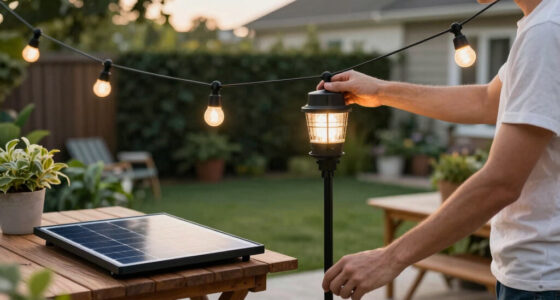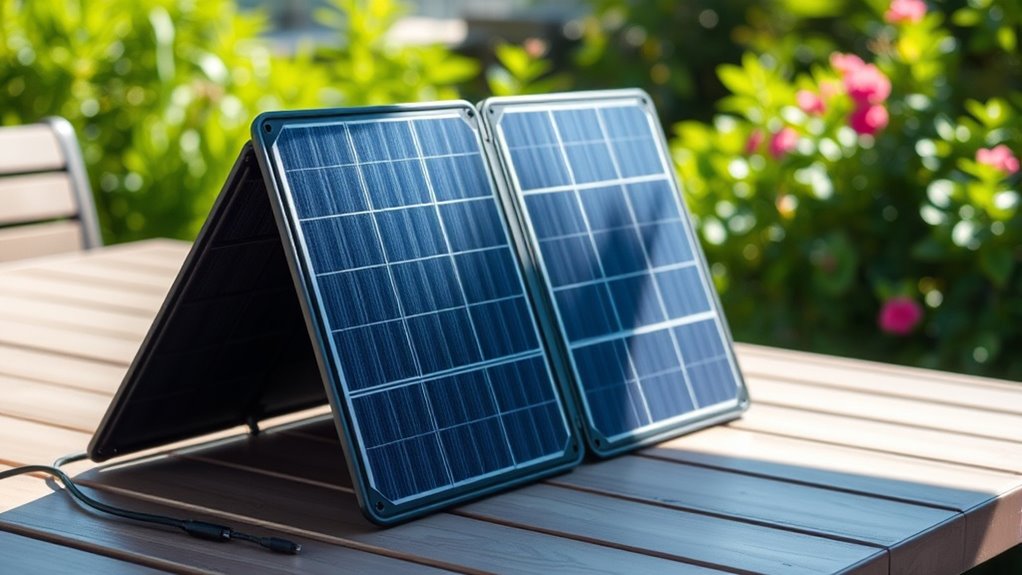

The best folding solar panel for fast charging in this roundup is the 2026 Upgrade 40W Foldable Solar Panel Charger, which stands out for its USB-C, USB-A, and 12V DC outputs. For a larger power-station setup, the FlexSolar 100W offers more rated output, while the BLAVOR 30W is a more portable choice for charging smaller devices. The main tradeoff is between compact size and the higher wattage, ports, and panel area that can support faster charging in strong sun. Actual charging speed varies with sunlight, device limits, and whether other devices are connected. Read on for the full breakdown of which option suits your gear and outdoor plans.

Get backup power and energy gear delivered free with Prime
- Fast, free delivery on millions of items
- Prime Video, Amazon Music and more included
- Member-only deals all year
Key Takeaways
- The 2026 Upgrade 40W earns the overall lead on versatility: its USB-C, USB-A, and 12V DC outputs cover more charging needs than a phone-focused panel.
- The 100W FlexSolar is the high-output choice: its larger rated capacity is a better match for power stations than the roundup’s 30W panels, but it is less suited to buyers prioritizing a compact carry.
- Thirty-watt models split by design and connections: BLAVOR, PWS33, BigBlue, Raddy, and SOLUPUP target portable charging, but features such as USB-C, DC output, and waterproofing vary.
- Fast-charging labels do not guarantee fast charging: output depends on direct sunlight, compatible device protocols, cable quality, and whether the panel can sustain its rated power.
- The SOLUPUP 10000mAh combines a battery with a foldable panel: that adds stored energy for later use, while a panel-only model sends available solar power directly to connected gear.


| folding solar panel with fast charging | Maximum power | Weight | Cell efficiency |
|---|---|---|---|
| BLAVOR 30W Foldable Solar Pane | 30 W | 1.35 kg | Up to 24% |
| 30W Portable Solar Panel PWS33 | 33 W | 3 lb | — |
| 45W Solar Panel Charger with F | 45 W | 1.7 lb | 26% |
| 40W Foldable Solar Panel with | 40 W | — | — |
| FlexSolar 100W Foldable Portab | 100 W | 1.85 kg (4.1 lb) | 23%+ |
| 2026 Upgrade 40W Foldable Sola | 40W | 1.65 pounds | 25% |
| SOLUPUP 30W Portable Foldable | 30W | 2.4 pounds | — |
| BigBlue 30W Fast Charging Sola | 30W | 1.85 pounds | Up to 24.7% |
| Raddy SP30 30W Foldable Solar | 30W | 1.8 pounds | 22% |
| FlexSolar 40W Portable Solar P | 40W | 1.7 pounds | 24% |
| SOLUPUP 10000mAh Solar Charger | — | 2.3 lbs | — |
More Details on Our Top Picks
BLAVOR 30W Foldable Solar Panel Outdoor Charger, USB-A QC3.0, USB-C, IPX4 Waterproof
The BLAVOR makes the most sense when easy carry matters more than maximum charging output. Its 30W rating, USB-A QC3.0 and USB-C ports suit phones and smaller devices, while its 1.35 kg weight is lighter than the 3-pound PWS33. The stated 24% cell efficiency is a useful strength, but it cannot remove the basic limit of a 30W panel: output depends on direct sun, and larger devices will charge slowly. Its IPX4 rating offers some protection from splashes, not the all-weather confidence claimed for the FlexSolar 100W’s IP67 build. I’d choose this BLAVOR for a compact hiking or camping setup with modest charging needs; buyers planning to replenish a power station quickly should step up to a higher-wattage option.
Pros:- 30W output with USB-A QC3.0 and USB-C charging options
- 24% stated conversion efficiency
- 1.35 kg weight supports portable outdoor use
- IPX4 water resistance provides some splash protection
Cons:- 30W maximum output limits charging speed for larger devices and power stations
- IPX4 is not full waterproofing
- Performance depends on direct sunlight and panel placement
Best for: Hikers and day campers who want a relatively light panel for topping up phones and other small USB devices in direct sun.
Not ideal for: Power-station users or campers who need higher output, or anyone who expects full waterproof protection in sustained rain.
- Maximum power:30 W
- Cell efficiency:Up to 24%
- Maximum voltage:18 V
- Material:Monocrystalline silicon
- Water resistance:IPX4
- Connectors:USB-A QC3.0, USB-C, DC
- Dimensions:1.85 × 14.17 × 7.67 in
- Weight:1.35 kg
Our verdict“Choose the BLAVOR for lightweight trips and small-device charging, but pick the FlexSolar 100W if faster power-station charging is the priority.”
30W Portable Solar Panel PWS33 Foldable ETFE Portable Charger with 18V USB-C Fast Charging, Compatible with Power Stations for Off-Grid Living Camping, RV, Emergency & Backpacking
The PWS33 earns its place for buyers who want a 33W panel with USB-C PD and power-station compatibility without carrying a larger panel. Its 20W USB-C PD output and USB-A port give phones and small electronics a direct charging option, while the soft construction is described as able to handle drops and rough handling. Compared with the BLAVOR, it offers a slightly higher stated maximum wattage and an explicit power-station use case, but it weighs 3 pounds and its listed unfolded dimensions are large, which complicates packing. That modest wattage still makes this a support charger rather than a quick way to refill a substantial station. I’d pick it for occasional off-grid top-ups; the FlexSolar 100W is a better fit when output speed matters more than pack size.
Pros:- 33W maximum output is slightly above the BLAVOR’s 30W rating
- USB-C PD up to 20W plus USB-A for device charging
- Designed for compatibility with power stations
- Soft construction is described as resistant to drops and rough handling
Cons:- Three-pound weight is relatively substantial for backpacking
- Large listed unfolded dimensions can be awkward in confined spaces
- 33W output remains limited for replenishing larger power stations
Best for: Campers or RV travelers who want a portable starter panel for small power stations and USB devices, and can accept slow solar replenishment.
Not ideal for: Backpackers who prioritize low carry weight or power-station owners who need substantially faster recharging.
- Maximum power:33 W
- Output voltage:18 V
- USB-C output:PD up to 20 W
- Ports:USB-C and USB-A
- Cell material:Monocrystalline silicon
- Panel material:ETFE
- Listed dimensions:13 × 47 × 48 in
- Weight:3 lb
Our verdict“Choose the PWS33 for modest power-station and USB charging on camping trips, but carry the FlexSolar 100W when quicker replenishment is needed.”
45W Solar Panel Charger with Fast Charging for Phone PD 25W USB-C/USB-A
This GEYOTO is the standout for buyers who want rugged protection and faster direct phone charging in a compact panel. Its 25W USB-C PD port and 26% stated cell efficiency give it a stronger device-charging brief than the BLAVOR, whose USB-C output is not specified here. The listed IP68 protection also makes the GEYOTO a more convincing choice for dusty or wet outings than the PWS33, which has no water-resistance rating in the supplied details. There are limits: the panel is USB-only, has no AC outlet, and its 45W maximum does not translate into steady output when clouds or poor positioning reduce sunlight. I’d choose it for phones and tablets in exposed outdoor settings, but power-station owners should compare its connection needs with the FlexSolar 100W’s DC output and adapters.
Pros:- 45W maximum output exceeds the BLAVOR and PWS33 ratings
- 25W PD USB-C supports fast charging for compatible devices
- IP68 water and dust protection is suited to tougher outdoor conditions
- 26% stated conversion efficiency and 1.7-pound weight
Cons:- USB-only charging with no AC outlet
- Output still varies with sunlight and panel positioning
- Supplied details do not specify a dedicated power-station DC output
Best for: Outdoor users who need a compact panel for USB devices and value stated IP68 water and dust protection.
Not ideal for: Travelers who need AC power, want a panel specifically equipped for power-station DC connections, or expect reliable output in cloudy conditions.
- Maximum power:45 W
- Cell efficiency:26%
- Maximum voltage:12 V
- Amperage capacity:3 A
- Ports:2 USB-C, 1 USB-A
- USB-C fast charging:25 W PD
- Water and dust protection:IP68
- Weight:1.7 lb
Our verdict“Choose the GEYOTO for protected, fast USB charging outdoors, but select the FlexSolar 100W if power-station charging is your main goal.”
40W Foldable Solar Panel with Fast Charge Portable Charger
The appeal here is output flexibility: this 40W foldable panel is described with both 12V and 5V output, plus USB-A and USB-C, making it a better match than the BLAVOR for a kit that mixes USB devices with 12V equipment. A built-in voltage regulator is intended to provide stable charging, which can help protect compatible electronics from inconsistent output. Its 40W rating sits between the smaller BLAVOR and the 45W GEYOTO, but the product details don’t give a specific USB-C charging rate or a water-resistance rating. That makes fast charging less clearly defined than the GEYOTO’s 25W PD port, and less reassuring in wet conditions than the FlexSolar 100W’s IP67 claim. I’d shortlist it when 12V support matters; skip it if verified weather protection or a specified PD rate is essential.
Pros:- 40W maximum output is higher than the BLAVOR’s 30W rating
- Described with both 12V and 5V outputs
- USB-A and USB-C ports support common devices
- Built-in voltage regulator is intended to provide stable output
Cons:- No specific USB-C fast-charging rate is provided
- No water or weather-resistance rating is stated
- 40W remains limited for fast charging larger power stations
Best for: Campers with compatible 12V equipment and USB devices who want one foldable panel for mixed charging needs.
Not ideal for: Buyers who need a stated USB-C PD wattage, documented water resistance, or high output for larger power stations.
- Maximum power:40 W
- Output voltage:12 V and 5 V
- USB ports:2
- Connector types:USB-A and USB-C
- Form factor:Foldable
- Power source:Solar
- Voltage regulation:Built-in regulator
Our verdict“Choose this panel if you need both 12V and USB charging, but favor the GEYOTO for a clearly specified USB-C PD rate or the FlexSolar 100W for more output.”
FlexSolar 100W Foldable Portable Solar Panel Charger IP67 Waterproof
The FlexSolar is the clear choice here when higher solar output matters more than carrying the smallest panel. Its 100W rating is well above the GEYOTO’s 45W and the other panels in this batch, and the 100W DC output with included adapter cable supports a wider range of portable power stations. For phones and tablets, PD 3.0 USB-C up to 45W and USB-A up to 18W offer more defined fast-charging options than the BLAVOR’s unspecified USB-C rate. At 4.1 pounds, it weighs more than those smaller panels, though its folded footprint and included carry bag help with transport. Its IP67 rating and 23%+ stated efficiency add outdoor versatility, but sunlight and angle still govern real-world output. I’d pick it for camp bases and emergency kits, not minimal-weight hikes.
Pros:- 100W maximum output is the highest in this batch
- 100W DC output and included adapter cable support multiple power-station connections
- USB-C PD 3.0 up to 45W and USB-A up to 18W
- IP67 water and dust protection with 23%+ stated efficiency
Cons:- At 4.1 lb, it is heavier than the smaller panels in this batch
- Large unfolded area needs room and good sun exposure
- Actual charging output remains dependent on sunlight and panel placement
Best for: Campers, RV travelers, and emergency-preparedness buyers who need higher output for a portable power station plus fast USB charging.
Not ideal for: Ultralight backpackers or buyers who only need to top up a phone and would rather carry a smaller, lower-output panel.
- Maximum power:100 W
- Cell efficiency:23%+
- USB-C output:PD 3.0 up to 45 W
- USB-A output:Up to 18 W
- DC output:Up to 100 W
- Water and dust protection:IP67
- Folded dimensions:12.99 × 10.43 × 2.17 in
- Weight:1.85 kg (4.1 lb)
- Materials:Monocrystalline silicon, aluminum, ETFE
Our verdict“Choose the FlexSolar 100W for power-station charging and multiple device outputs, but opt for the BLAVOR or GEYOTO if low carry weight matters more.”
2026 Upgrade 40W Foldable Solar Panel Charger, Waterproof Portable N-Type Cell, USB-C/USB-A/DC12V MPPT Fast Charging for Outdoor Travel
With 40W output and N-type cells rated at 25% conversion efficiency, this is the strongest choice here for buyers who want more charging headroom than the 30W Raddy SP30 or BigBlue 30W. USB-C, USB-A, and DC12V outputs give it flexibility for phones and compatible gear, while built-in electrical protections add a layer of reassurance when charging outdoors. At 1.65 pounds, it remains easy to pack for its power class. The tradeoff is that the panel generates power only when conditions allow; it has no battery storage to keep charging after sunlight fades. Its panel is described as IP67, but the junction box is not fully waterproof, so heavy rain calls for care. I’d choose it for portable output, not unattended wet-weather use.
Pros:- 40W maximum output provides more headroom than the 30W options in this group.
- 25% stated conversion efficiency in N-type monocrystalline cells.
- USB-C, USB-A, and DC12V connections support a range of compatible devices.
- Lightweight 1.65-pound format with overcurrent, overvoltage, overheating, and short-circuit protection.
Cons:- No built-in battery, so charging depends on available sunlight.
- The junction box is not fully waterproof despite the panel’s IP67 protection claim.
- Actual output can fall in cloud, shade, or other weak-light conditions.
Best for: Campers and emergency-kit owners who want a lightweight 40W panel with USB and DC outputs for compatible devices.
Not ideal for: People who need stored power after sunset or plan to leave the entire assembly exposed to heavy rain.
- Maximum power:40W
- Cell efficiency:25%
- Ports:USB-C, USB-A, DC12V
- Weight:1.65 pounds
- Dimensions:7.8 × 10.9 inches
- Protection:Overcurrent, overvoltage, overheating, and short circuit
- Water and dust protection:IP67 panel; junction box not fully waterproof
Our verdict“Choose this 40W panel if you want efficient, multi-port solar charging in a light package and can protect its junction box from heavy rain.”
SOLUPUP 30W Portable Foldable Solar Panel Charger with USB-A and USB-C, IPX5 Waterproof for Camping & Outdoor
The SOLUPUP pairs a modest 30W ceiling with a setup-friendly stand and included carabiners, making it a straightforward option for campers who want to position a panel toward the sun without extra accessories. Its USB-A and USB-C ports cover common small-device charging, while the IPX5 rating offers some protection from water exposure. Compared with the 40W FlexSolar, though, it gives up output headroom, so it is a better match for phones and smaller electronics than power-hungry gear. There is also a notable weight tradeoff: at 2.4 pounds, it weighs more than the 1.7-pound FlexSolar despite producing less power. I’d favor it when easy setup matters more than pack weight or charging larger devices.
Pros:- Adjustable stand and included carabiners make it easier to position or attach outdoors.
- USB-A and USB-C provide two familiar charging options.
- IPX5 water protection suits exposure to splashes and light weather.
- Monocrystalline cells are designed for efficient solar conversion.
Cons:- 30W maximum output offers less headroom than the 40W FlexSolar and 2026 Upgrade panels.
- At 2.4 pounds, it is the heaviest option among these five products.
- Charging performance depends on direct sunlight and can vary with weather.
Best for: Car campers and casual outdoor users who want an adjustable, easy-to-position panel for phones and small electronics.
Not ideal for: Backpackers focused on minimizing weight or buyers who need more than 30W for higher-demand devices.
- Maximum power:30W
- Output voltage:5V
- Ports:USB-A, USB-C
- Water protection:IPX5
- Weight:2.4 pounds
- Dimensions:5.6 × 2.9 × 0.84 inches
- Included setup accessories:Carabiners and adjustable stand
Our verdict“Pick the SOLUPUP if a built-in stand and simple campsite setup matter more to you than low carry weight or 40W output.”
BigBlue 30W Fast Charging Solar Charger with USB-A, USB-C, and DC Outputs
BigBlue stands out for its stated IP68 waterproof level, giving it an advantage on panel protection over the IPX5 SOLUPUP and the Raddy SP30, whose ports and cables are not waterproof. It also combines USB-A fast charging, USB-C PD 18W, and a DC output, so it can serve phones and compatible small power stations from one foldable panel. At 30W, however, it has less maximum output than the 40W FlexSolar, which may better suit buyers seeking extra charging capacity. One limitation deserves attention: the product data says the junction box is not waterproof, so the IP68 claim does not mean every connection can be left exposed. Like the other panels here, it stores no energy and needs sunlight to generate power.
Pros:- IP68 stated waterproof level is higher than the SOLUPUP’s IPX5 rating.
- USB-C PD 18W and USB-A fast-charging outputs support common devices.
- DC output offers a connection option for compatible small power stations.
- Foldable design weighs 1.85 pounds and uses cells rated up to 24.7% efficiency.
Cons:- 30W maximum output is lower than the 40W FlexSolar and 2026 Upgrade panels.
- The junction box is not waterproof, limiting protection at the connections.
- No energy storage; output varies with sunlight and environmental conditions.
Best for: Campers who prioritize a high stated waterproof rating for the panel and need USB-C PD plus DC output options.
Not ideal for: Buyers who need built-in power storage, fully waterproof connections, or the extra output headroom of a 40W panel.
- Maximum power:30W
- USB-C output:PD 18W
- Other outputs:USB-A fast charging; DC 17.4V/1.73A maximum
- Cell efficiency:Up to 24.7%
- Water protection:IP68 stated; junction box is not waterproof
- Folded dimensions:7.95 × 12.12 × 1.46 inches
- Weight:1.85 pounds
Our verdict“Choose BigBlue if panel water protection and flexible USB/DC outputs matter more than 40W capacity or built-in storage.”
Raddy SP30 30W Foldable Solar Panel Charger, Portable Power
At 1.8 pounds, the Raddy SP30 is lighter than the SOLUPUP and includes USB-A, USB-C, and a DC power jack, giving it useful connection variety in a 30W panel. Its ETFE face and monocrystalline cells make it a practical foldable option for hiking, camping, or emergency kits where modest device charging is the goal. Compared with BigBlue, it offers a similar broad mix of outputs but a lower stated efficiency of 22% versus BigBlue’s up-to-24.7%. The more significant compromise is weather protection: the panel is water- and dust-resistant, but its ports and cables are not waterproof. I’d pick it over the heavier SOLUPUP for carrying, while avoiding exposed connections in wet conditions.
Pros:- 1.8-pound weight makes it lighter than the SOLUPUP 30W.
- USB-A, USB-C, and DC power jack support a range of compatible devices.
- ETFE-faced monocrystalline construction is suited to portable outdoor use.
- Folded dimensions keep the panel compact for storage.
Cons:- Ports and cables are not waterproof, even though the panel is water- and dust-resistant.
- 30W output and 22% stated efficiency trail the 40W options and BigBlue’s efficiency claim.
- Charging speed depends on direct sunlight and conditions.
Best for: Hikers and campers seeking a relatively light 30W panel with USB and DC connections for compatible devices.
Not ideal for: Users who need waterproof charging connections, higher-than-30W output, or a panel for reliably charging larger devices quickly.
- Maximum power:30W
- Cell efficiency:22%
- Output voltage:18V
- Connector types:USB-A, USB-C, DC power jack
- Weight:1.8 pounds
- Folded dimensions:25 × 31.5 × 2 cm
- Panel material:ETFE face, monocrystalline silicon
Our verdict“Choose the Raddy SP30 for a light, multi-connection 30W panel, but skip it if exposed ports need to withstand wet weather.”
FlexSolar 40W Portable Solar Panel Charger
The FlexSolar earns its place with 40W maximum output, a 19V DC connection, and USB-C PD and USB-A QC outputs, making it a more capable match for compatible small power stations than the 30W Raddy SP30. Its 1.7-pound weight keeps it close to the lightest panel in this group, while the stated 24% cell efficiency and IP67 rating suit outdoor charging. There is an important port-use limitation: the product data says using all three ports activates DC only, so buyers should not assume they can draw from every output at once. It also has no built-in battery, and the junction box is not waterproof. I’d choose it for its power-station connection and 40W capacity, with care around wet connections.
Pros:- 40W maximum output provides more capacity than the 30W Raddy SP30.
- 19V DC output adds compatibility with supported small power stations.
- USB-C PD and USB-A QC cover common fast-charging connections.
- Lightweight 1.7-pound design with 24% stated cell efficiency and IP67 protection.
Cons:- Using all three ports activates DC only, limiting simultaneous output use.
- The junction box is not waterproof despite the IP67 panel rating.
- No battery storage, so power generation stops when suitable sunlight is unavailable.
Best for: Campers and emergency-preparedness buyers with a compatible small power station who want 40W output and USB charging in one foldable panel.
Not ideal for: People who need simultaneous use of all ports, stored energy, or waterproof protection for the junction box.
- Maximum power:40W
- Cell efficiency:24%
- Output voltage:19V
- Connector types:DC, USB Type-A, USB Type-C
- Weight:1.7 pounds
- Dimensions:8.98 × 9.8 × 1.5 inches
- Water protection:IP67; junction box is not waterproof
- Warranty:1 year manufacturer
Our verdict“Pick the FlexSolar for a light 40W panel with a DC connection for compatible power stations, provided its port-use limits fit your setup.”
SOLUPUP 10000mAh Solar Charger Power Bank with Foldable 30W Solar Panel, Fast Charging, Waterproof, for Outdoor Use
The SOLUPUP 10000mAh pairs a foldable 30W panel with an internal battery, so it can store power for charging after the sun drops—a useful distinction from panel-only options such as the BLAVOR 30W Foldable Solar Panel Outdoor Charger. Its three USB ports support charging multiple devices, while the built-in flashlight adds a practical emergency feature for camp setups. The tradeoff is that solar replenishment is slow: the listed full-charge estimate is 12–15 hours in sunlight, and output can vary with weather and panel angle. At 2.3 pounds and 10.6 x 7.75 x 1.4 inches folded, it also takes more pack space than a simple compact panel. I’d choose it for a small group wanting battery storage and several phone-charging ports, not for rapid solar recovery or minimalist backpacking.
Pros:- Integrated 10,000mAh battery stores energy for use when sunlight is unavailable.
- Three USB ports allow multiple devices to charge at once.
- IPX5 water resistance suits exposure to outdoor splashes.
- Foldable 30W panel and built-in LED flashlight add utility for camp and emergency use.
Cons:- Full solar charging is listed at 12–15 hours, so the panel is a slow way to replenish the battery.
- At 2.3 pounds and 10.6 x 7.75 x 1.4 inches folded, it takes noticeable pack space.
- Solar performance depends on sunlight strength, weather, and panel angle.
Best for: Campers and day hikers who want an integrated 10,000mAh reserve, a flashlight, and the ability to charge several USB devices.
Not ideal for: Minimalist backpackers or buyers who need dependable, rapid solar recharging; its folded size and slow stated solar-charge time work against those needs.
- Battery capacity:10,000mAh
- Solar panel wattage:30W
- Input:5V / 3A
- Output:5V / 3A
- USB ports:3
- Water resistance:IPX5
- Folded dimensions:10.6 x 7.75 x 1.4 inches
- Weight:2.3 lbs
Our verdict“Choose this SOLUPUP if an integrated battery, multiple charging ports, and a flashlight matter more than light packing or quick solar replenishment.”

How We Picked
I ranked these panels by how well their stated output and charging connections match real buyer needs: charging a phone, keeping several small devices going, or feeding a power station. I gave more weight to useful port variety and clearly stated output than to wattage alone, since a panel can only fast-charge a device when its output and the device’s charging standard are compatible. Waterproof ratings and portability also mattered for outdoor use.
The ranking favors the 2026 Upgrade 40W for its broad mix of ports, then separates higher-output options from compact phone-charging panels. The 100W FlexSolar earns a place for buyers who need more rated capacity, while the 30W options are ordered by their stated connections and intended use rather than treated as interchangeable. Where product details do not specify charging protocols or sustained output, I avoid assuming that a fast-charging claim guarantees a particular speed.
Factors to Consider When Choosing Folding Solar Panel With Fast Charging
Choose a panel around the device you need to charge and the conditions where you will use it. The headline wattage matters, but ports, sunlight, stored power, and carrying limits can change which model makes sense.
Match Rated Wattage to Your Device
Start with the device or power station’s input limit, not the largest wattage printed on a panel. A phone may draw much less than a 30W panel can supply, while a power station may benefit from a larger panel if its solar input accepts that output. Higher rated wattage also usually means more panel area to carry and position. A 100W model is not automatically a faster phone charger than a 30W model if the phone is the limiting factor. Check the input specifications for both devices before choosing, and treat rated output as a best-condition figure rather than a constant.
Check Charging Protocols and Port Combinations
USB-C describes a connector, not a guaranteed charging speed. For fast charging, the panel’s output protocol must match what the phone or other device accepts; a high-wattage label alone does not establish compatibility. Read the listed USB-C and USB-A output details, and check whether connecting two devices shares or reduces available power. DC outputs can be useful for compatible equipment, but buyers should confirm voltage, polarity, and connector fit before plugging in gear. If you mainly charge one phone, simple USB output may be enough; a mixed device kit benefits from a wider selection of ports.
Plan for Sunlight, Shade, and Changing Conditions
Solar output changes with cloud cover, shade, panel angle, heat, and the time of day. Even a small shadow across part of a panel can reduce useful output, so the ability to reposition a foldable panel may matter more than a small difference in advertised wattage. Charging directly from a panel can also pause when sunlight drops, which may be a problem for devices that expect steady power. Use a compatible power bank or power station as a buffer when you need energy after sunset or during passing clouds. Buyers often underestimate how frequently they will need to adjust a panel for better sun.
Decide Whether You Need Stored Power
A panel-only charger and a solar power bank solve different problems. A panel-only unit can be lighter and simpler, but it generally provides power only when conditions allow. A built-in battery, as on the SOLUPUP 10000mAh, can store charge for later, though the battery adds weight and its capacity is finite. Do not assume the panel will quickly refill that battery in weak or intermittent sun; solar charging can take much longer than charging from a wall outlet. Pick stored power when dependable access to energy later matters more than keeping the kit as light as possible.
Balance Weather Protection With Care
Water-resistance ratings differ, and they do not make every panel safe to leave outdoors in heavy rain or submerged. Check the exact rating and protect exposed cables and connected devices, which may have less weather protection than the panel. Foldable panels also have moving sections, seams, and connectors that call for careful handling and dry storage after wet use. A higher protection rating can suit rougher trips, but it does not replace basic care or confirm durability under every outdoor condition. If your trips are mostly fair-weather camping, carrying and output may matter more than the highest listed rating.
Account for the Whole Carrying Setup
Compare the folded size and carrying weight of the complete setup, including cables, a battery, and any stand or mounting method you need. A larger panel can make sense for a car camp or RV, where it can stay deployed, but may be awkward for a backpacking trip. Also think about where you will place it while charging: a panel that cannot be aimed toward the sun may deliver less practical power than a smaller, easier-to-position model. Check whether your existing cables reach from the panel to your device without creating a trip hazard or pulling on a port. The right choice is the panel you can position safely and use consistently, not just the one with the biggest output figure.
Frequently Asked Questions
Can a folding solar panel fast-charge my phone directly?
It can, if the panel provides a charging protocol and output that your phone supports and sunlight is strong enough. USB-C by itself does not confirm fast charging, so check the listed output details and your phone’s charging requirements. Moving clouds, shade, and poor panel angle can cause charging to slow or stop. If your phone needs steady power, charge a compatible power bank first and use that as a buffer. A direct panel connection is simplest when you can keep the panel in consistent sun.
Should I choose a 30W panel or a 100W panel for camping?
Choose based on what you plan to power and how you will carry it. A 30W panel is a more practical fit for phones and other small devices when portability matters, while a 100W panel can make more sense for a compatible power station or a larger daily energy need. The power station’s solar input limit must support the panel’s output for the extra capacity to be useful. A bigger panel also needs more space and careful positioning. For a phone-only trip, the larger model may add bulk without improving charging speed much.
Is a built-in battery better than a panel-only charger?
A built-in battery helps when you need to charge after the sun goes down or when sunlight is intermittent. It also adds weight and creates another capacity limit, so it is not automatically the better choice for long trips or power-hungry gear. A panel-only charger keeps the setup focused on collecting solar energy, but connected devices may lose power as conditions change. Consider whether you need stored energy at a particular time, rather than choosing a battery model just because it includes more features. For larger devices, a separate compatible power station may offer more flexibility.
Will a waterproof rating let me leave a solar panel out in the rain?
No rating should be treated as permission to leave the entire charging setup exposed in every storm. The panel’s protection rating may not apply to cables, connected devices, or every connector, and water resistance is different from being waterproof under all conditions. Rain can also reduce the sunlight available for charging. Follow the manufacturer’s care instructions and move the panel to shelter when weather worsens. If wet-weather use is likely, check the exact rating and protect the rest of your gear separately.
Can I charge a phone and a power station from the same panel at once?
Only if the panel’s outputs and instructions support simultaneous use, and the connected devices accept the available power. When multiple ports are in use, the panel may share its output, which can slow charging for both devices. A power station may also have its own input limit that affects how much power it can receive. Check the product’s port specifications and whether output is shared before relying on a dual-device setup. If dependable charging matters more than convenience, charge the power station first and use it to recharge smaller devices later.
Conclusion
For most buyers, I recommend the 2026 Upgrade 40W as the best overall pick because its mix of USB-C, USB-A, and 12V DC outputs suits more kinds of gear than a phone-focused panel. The BLAVOR 30W is a sensible value-oriented choice for portable charging, while the FlexSolar 100W is the premium high-output option for buyers with a compatible power station and room to carry a larger panel. Beginners who mainly want to charge phones can start with a straightforward 30W model, such as the SOLUPUP 30W, and check its output compatibility against their devices. For a built-in battery, the SOLUPUP 10000mAh is the specialized choice; for higher-output needs, consider the 100W FlexSolar. Match the panel to your gear and charging conditions, not just its fast-charging label.