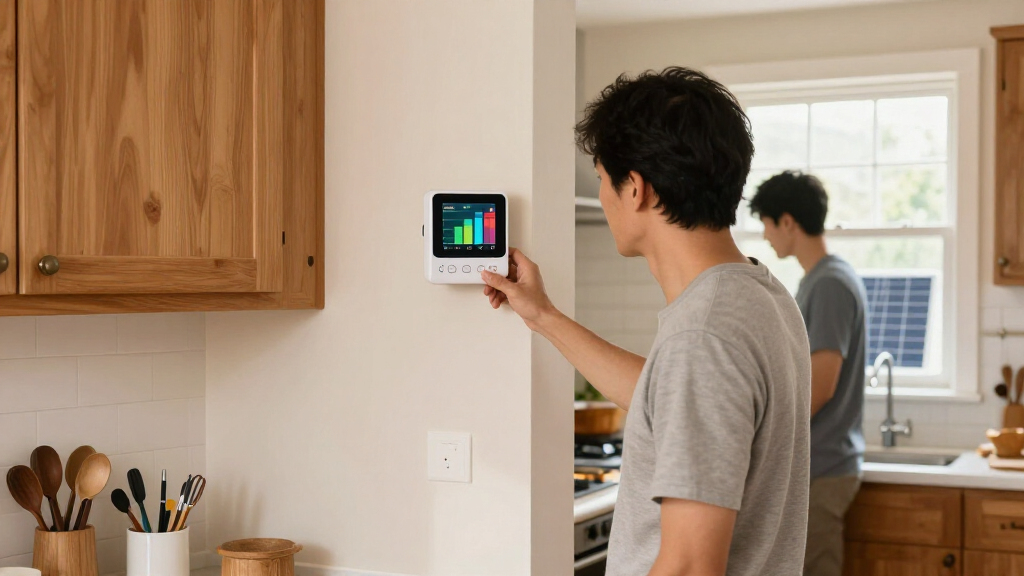

The best home energy monitors balance useful circuit-level insight, clear setup, and smart-home features that match the way you use electricity. I rank the Emporia Vue 3 with 16 circuit sensors as my best overall pick for its broad circuit coverage, while the Refoss EM16P stands out for open API and Home Assistant users, and the Renogy ONE Core serves off-grid setups rather than a typical household panel. The main tradeoffs are how many circuits you can track, whether you want cloud services or local control, and whether your home has a standard grid-connected electrical panel. Read on for the full breakdown and help matching a monitor to your home.

Get backup power and energy gear delivered free with Prime
- Fast, free delivery on millions of items
- Prime Video, Amazon Music and more included
- Member-only deals all year
Key Takeaways
- Broad circuit coverage leads this comparison: the 16-sensor Emporia Vue 3 is my best overall choice, while its 8-sensor version fits smaller monitoring plans but leaves less room for expansion.
- Smart-home openness separates the Refoss EM16P: its open API and Home Assistant positioning suit hands-on users who want more control over data and integrations.
- Local control and cloud convenience are different priorities: Refoss’s 16-sensor local-control model is a stronger match for buyers who want less reliance on cloud access.
- Off-grid monitoring calls for a different device: Renogy ONE Core focuses on batteries and systems in vans, cabins, boats, and tiny homes, rather than broad household circuit monitoring.
- Similar sensor counts do not make models interchangeable: compare compatibility, installation requirements, solar features, and the monitoring ecosystem before choosing among the Emporia, Meross, and Refoss options.
| Refoss EM16P Smart Home Energy Monitor with Open API and Home Assistant |  | Best for Local Home Assistant Control | Main circuit sensors: 2 sensors, 2–200A each | Branch circuit sensors: 16 sensors, 1–60A each | Accuracy: ±1%; ±2% at low current | VIEW LATEST PRICE | See Our Full Breakdown |
| Siemens Inhab Smart Home Energy Monitor with Circuit-Level Sensors |  | Best for App-Led Energy Management | Model: INHEM1216 | Main sensors: 2 x 200A CTs | Circuit sensors: 16 x 50A CTs | VIEW LATEST PRICE | See Our Full Breakdown |
| Emporia Vue 3 Home Energy Monitor – Smart Home Automation Module and Real-Time Electricity Usage Monitor |  | Best for Flexible System Compatibility | Model: EMV3A-2P-WH | Supported systems: Single phase, single-split phase, 2-wire, 3-wire, 3-phase, 4-wire Wye | Connectivity: Wi-Fi 2.4 GHz | VIEW LATEST PRICE | See Our Full Breakdown |
| Smart Home Energy Monitor with 16 50A Circuit Sensors, Real-Time Power Usage & Cost Tracking, Compatible with Home Assistant |  | Best for Shared Homes and Local Cost Tracking | Sensor count: 16 | Sensor current: 50A | Supported voltages: 120VAC, 240VAC, 415Y/240VAC | VIEW LATEST PRICE | See Our Full Breakdown |
| Renogy ONE Core: All-in-one Off-Grid Energy Monitoring Panel, Battery Monitoring for Van, Cabin, Boat, and Tiny Homes, Wi-Fi Version, Black |  | Best for Off-Grid DC Systems | Power source: Battery powered | Minimum operating voltage: 8 volts DC | Measurement type: Voltmeter, ammeter | VIEW LATEST PRICE | See Our Full Breakdown |
| Refoss Smart Home Energy Monitor with 16 60A Circuit Sensors and Local Control |  | Best for Local Control | Sensor count: 16 | Circuit capacity: 60A per sensor | Supported systems: Single-phase, split-phase, 3-phase 4-wire Wye | VIEW LATEST PRICE | See Our Full Breakdown |
| Emporia Vue 3 Home Energy Monitor with 16 Circuit Sensors |  | Best for Broad Circuit Coverage | Model: EMV3A-2P-16 | Branch sensors: 16, 50A | Sensor accuracy: ±2% | VIEW LATEST PRICE | See Our Full Breakdown |
| Meross Smart Home Energy Monitor with 16 Circuit Sensors |  | Best for Measurement Detail | Model: EM16 | Main circuit capacity: 2 circuits, 200A | Branch circuit capacity: Up to 16 circuits, 60A | VIEW LATEST PRICE | See Our Full Breakdown |
| Emporia Vue 3 Home Energy Monitor with 8 Circuit Sensors |  | Best for Smaller Monitoring Setups | Model: EMV3A-2P-8 | Circuit sensors: 8 | Accuracy: ±2% | VIEW LATEST PRICE | See Our Full Breakdown |
| Meross Smart Home Energy Monitor with 18 Circuit Monitoring, Home Assistant Support, Real-Time Energy Usage Tracking, Solar Surplus Detection, Smart Alerts, No Subscriptions, 2-Year Warranty | | Best for Solar and Home Assistant Automation | Model: EM16 | Number of circuits: 18, as listed in the product title | Monitoring capacity: Main circuits 200A; branch circuits 60A | VIEW LATEST PRICE | See Our Full Breakdown |
| home energy monitor | Warranty | Connectivity | Model | Supported systems |
|---|---|---|---|---|
| Refoss EM16P Smart Home Energy | 2 years | — | — | — |
| Siemens Inhab Smart Home Energ | — | Wi-Fi | INHEM1216 | — |
| Emporia Vue 3 Home Energy Moni | 1 year | Wi-Fi 2.4 GHz | EMV3A-2P-WH | Single phase, single-split phase, 2-wire, 3-wire, 3-phase, 4-wire Wye |
| Smart Home Energy Monitor with | 1 year | Wi-Fi 2.4GHz, MQTT | — | — |
| Renogy ONE Core: All-in-one Of | 2-year material and workmanship | Bluetooth and Wi-Fi | — | — |
| Refoss Smart Home Energy Monit | 2 years | Wi-Fi, Open API, MQTT, WebSocket | — | Single-phase, split-phase, 3-phase 4-wire Wye |
| Emporia Vue 3 Home Energy Moni | 1 year | 2.4 GHz Wi-Fi and internet connection required | EMV3A-2P-16 | Single-phase, single-split phase, and 2-wire; some 3-wire and 3-phase systems with an additional sensor |
| Meross Smart Home Energy Monit | 2 years | — | EM16 | — |
| Emporia Vue 3 Home Energy Moni | 1 year | 2.4 GHz Wi-Fi and internet connection required | EMV3A-2P-8 | Single-phase, single-split phase, and 2-wire; some 3-wire and 3-phase systems with an additional sensor |
| Meross Smart Home Energy Monit | 2 years | — | EM16 | Single-phase 2-wire, single-split phase 3-wire, 3-phase 4-wire with earthed neutral |
More Details on Our Top Picks
Refoss EM16P Smart Home Energy Monitor with Open API and Home Assistant
The Refoss EM16P is my pick for homeowners who want detailed circuit data without routing it through a cloud service. It measures two main circuits and up to 16 branches, while its built-in web UI, Open API, MQTT, and native Home Assistant integration give technically confident users several ways to build local dashboards and automations. Compared with the Siemens Inhab, the EM16P puts more emphasis on open, locally managed integrations; Siemens offers a more conventional app-led energy-management approach. The Refoss also retains up to five years of data, useful for comparing seasonal patterns. Its tradeoff is the panel work: installation requires access to the electrical panel, and accuracy falls to ±2% at low current. I’d choose it for flexibility, not for a completely hands-off setup.
Pros:- Local web UI, Open API, MQTT, and native Home Assistant integration
- Monitors two main circuits and up to 16 branch circuits
- Stores up to five years of data
- Supports solar automation and circuit-level alerts
Cons:- Installation requires access to the home’s electrical panel
- Accuracy is ±2% at low current rather than ±1%
- Its open integrations may require more setup than an app-centered monitor
Best for: Homeowners with a compatible electrical panel who already use Home Assistant or MQTT and want long-term, locally stored circuit data.
Not ideal for: People who want a simple app-only setup, cannot arrange electrical-panel installation, or need the stated ±1% accuracy to hold at low current.
- Main circuit sensors:2 sensors, 2–200A each
- Branch circuit sensors:16 sensors, 1–60A each
- Accuracy:±1%; ±2% at low current
- Data storage:Up to 5 years
- Connectivity and integrations:Wi-Fi, built-in web UI, Open API, MQTT, Home Assistant
- Certification:ETL certified; compliant with UL 61010
- Warranty:2 years
- Dimensions and weight:4.5 x 3.5 x 1.1 inches; 4.24 pounds
Our verdict“Choose the EM16P if local control, Home Assistant support, and long-term data matter more to you than a minimal setup.”
Siemens Inhab Smart Home Energy Monitor with Circuit-Level Sensors
The Siemens Inhab suits households that want whole-home and circuit-level readings paired with an app for alerts and energy-management features. Its two 200A main sensors and 16 50A circuit sensors track both energy use and production, while time-of-use and excess-solar management can help users act on when and where electricity flows. Compared with the Refoss EM16P, Siemens is the more conventional choice for buyers who prefer an app-oriented system over open APIs and local Home Assistant control. Its UL listing in the United States and Canada is a practical distinction, though its stated availability is limited to those two countries. The main compromise is shared with panel-based monitors: installation requires working in the electrical panel, and the supplied Wi-Fi connection makes this less appealing to anyone seeking a fully local, open-integration setup.
Pros:- Tracks the main supply and up to 16 individual circuits
- Monitors energy use and production with real-time and historical data
- App supports custom alerts, time-of-use, and excess-solar management
- UL Listed in the United States and Canada
Cons:- Available only in the United States and Canada
- Requires installation in an electrical panel
- Uses Wi-Fi and does not list the EM16P’s Open API or MQTT integration options
Best for: US or Canadian homeowners who want app-based alerts, circuit-level monitoring, and energy-management features for household use and solar production.
Not ideal for: Buyers outside the United States and Canada, or Home Assistant users seeking the open API and MQTT options offered by the Refoss EM16P.
- Model:INHEM1216
- Main sensors:2 x 200A CTs
- Circuit sensors:16 x 50A CTs
- Connectivity:Wi-Fi
- Certifications:CE marked and UL Listed in the US and Canada
- Availability:United States and Canada
- Dimensions and weight:1.1 x 5.71 x 2.76 inches; 4.8 pounds
Our verdict“Pick the Siemens Inhab if you are in the US or Canada and prefer app-led energy management over open local integrations.”
Emporia Vue 3 Home Energy Monitor – Smart Home Automation Module and Real-Time Electricity Usage Monitor
The Emporia Vue 3 earns its place for homeowners whose electrical setup or solar arrangement calls for broad system compatibility. It supports single-phase, split-phase, and several three-phase configurations, and its solar and net-metering support adds context beyond household consumption alone. Compared with the Siemens Inhab, which lists 16 circuit sensors in its package, this Vue 3 product data highlights add-on sensors rather than a fixed circuit-sensor count; that lets buyers build appliance-level monitoring to suit their needs, but the extra sensors are sold separately. The monitor is UL certified and supplies real-time readings over 2.4 GHz Wi-Fi. There are data limits to weigh: one-minute readings are retained for seven days, while hourly data is kept indefinitely, and one-second updates are available only while the app is open. Its one-year warranty is also shorter than the Refoss EM16P’s two years.
Pros:- Supports single-phase, split-phase, and several three-phase system configurations
- UL-certified and supports solar and net metering
- Allows additional sensors for appliance-specific monitoring
- Keeps hourly data indefinitely
Cons:- Additional sensors are sold separately
- One-minute data is retained for only seven days
- One-second updates are available only while the app is open
Best for: Homeowners with solar or a less common supported electrical configuration who want to add appliance-level sensors as needed.
Not ideal for: Buyers who want many circuit sensors included from the outset, need long-term one-minute data, or prefer monitoring that does not depend on Wi-Fi and app access.
- Model:EMV3A-2P-WH
- Supported systems:Single phase, single-split phase, 2-wire, 3-wire, 3-phase, 4-wire Wye
- Connectivity:Wi-Fi 2.4 GHz
- Data retention:7 days for 1-minute data; hourly data retained indefinitely
- Certification:CE, UL
- Warranty:1 year
- Dimensions and weight:10 x 5 x 5 inches; 1.92 pounds
Our verdict“Choose the Emporia Vue 3 if system compatibility and expandable appliance monitoring outweigh bundled sensor count and longer-term granular data.”
Smart Home Energy Monitor with 16 50A Circuit Sensors, Real-Time Power Usage & Cost Tracking, Compatible with Home Assistant
This 16-sensor monitor is aimed at households that need to see both circuit use and how electricity costs are divided, such as rentals or shared living spaces. Its stated support for customizable billing gives that use case a clearer focus than the Refoss EM16P, which stands out more for long-term data storage and broad open integrations. Here, local MQTT operation and Home Assistant compatibility appeal to privacy-conscious users who are comfortable configuring a network and building their own workflow. The 16 sensors are rated for 50A each, and supported voltages include 120VAC, 240VAC, and 415Y/240VAC. The tradeoff is sparse software detail: the product information does not explain app usability, while MQTT setup may be demanding for a first-time user. Wi-Fi is listed at 2.4 GHz only, and the one-year warranty is shorter than the Refoss EM16P’s two years.
Pros:- Includes 16 circuit sensors rated for 50A each
- Supports real-time power and electricity-cost tracking
- Operates locally via MQTT and is compatible with Home Assistant
- Lists support for 120VAC, 240VAC, and 415Y/240VAC
Cons:- MQTT and local network configuration may be challenging for less technical users
- Product information provides little detail about app usability
- Lists 2.4 GHz Wi-Fi only and a one-year warranty
Best for: Landlords, housemates, or technically confident homeowners who want local circuit monitoring and customizable electricity-cost allocation.
Not ideal for: Beginners who want a polished, clearly documented app experience, or buyers who need stated 5 GHz Wi-Fi support or a longer warranty.
- Sensor count:16
- Sensor current:50A
- Supported voltages:120VAC, 240VAC, 415Y/240VAC
- Connectivity:Wi-Fi 2.4GHz, MQTT
- Compatibility:Home Assistant
- Warranty:1 year
- Dimensions and weight:3.1 x 1.2 x 4.18 inches; 4.05 pounds
Our verdict“Pick this monitor for local circuit-level cost allocation in a shared home if you are prepared to configure MQTT yourself.”
Renogy ONE Core: All-in-one Off-Grid Energy Monitoring Panel, Battery Monitoring for Van, Cabin, Boat, and Tiny Homes, Wi-Fi Version, Black
The Renogy ONE Core serves a different kind of energy-monitoring need from the panel-based Refoss EM16P and Siemens Inhab: it is built for off-grid DC systems in vans, cabins, boats, and tiny homes, rather than household AC circuits. It monitors voltage and current, connects with Renogy energy devices and compatible Bluetooth batteries, and supports remote access through its app and portal when connected. That makes it a better fit for managing a small mobile or cabin power setup than either whole-home monitor. The boundary is just as important as the feature set: the listed minimum operating voltage is 8V DC and the product data specifies 12V and 24V systems, so it is not a substitute for tracking a home’s main supply and branch circuits. Its built-in 10,000mAh battery and wireless connections also make it a self-contained option, but full features depend on Bluetooth or Wi-Fi.
Pros:- Designed for off-grid monitoring in vans, cabins, boats, and tiny homes
- Supports remote monitoring through Renogy apps and portal
- Works with compatible Renogy energy devices, accessories, and Bluetooth batteries
- Includes a 10,000mAh lithium-ion polymer battery
Cons:- Limited to 12V and 24V DC systems rather than household AC circuit monitoring
- Full features require Bluetooth or Wi-Fi connectivity
- Its focus on Renogy-compatible devices may limit its usefulness in mixed-brand setups
Best for: Van, boat, cabin, or tiny-home owners using compatible Renogy batteries and accessories in a 12V or 24V DC setup.
Not ideal for: Homeowners who need AC whole-house consumption data, main-panel and branch-circuit monitoring, or a monitor designed for standard household circuits.
- Power source:Battery powered
- Minimum operating voltage:8 volts DC
- Measurement type:Voltmeter, ammeter
- Compatible devices:Renogy energy devices, smart accessories, Bluetooth batteries, DC Home App, Renogy ONE Portal
- Connectivity:Bluetooth and Wi-Fi
- Battery capacity:10,000mAh lithium-ion polymer
- Warranty:2-year material and workmanship
- Weight and color:0.41 kg; black
Our verdict“Choose the Renogy ONE Core for compatible off-grid DC power systems, not for monitoring a conventional home’s electrical panel.”
Refoss Smart Home Energy Monitor with 16 60A Circuit Sensors and Local Control
The Refoss stands out for buyers who want circuit-level visibility without making cloud access central to their setup. Its 16 sensors rated for 60A cover a broad set of household circuits, while local control, Open API, MQTT, and WebSocket support give automation-minded owners more ways to use the data. Compared with the Emporia Vue 3 with 16 sensors, Refoss puts stronger emphasis on local access and lists five years of data storage, though Emporia specifies app features and UL and CE listings more clearly. The Refoss also supports single-phase, split-phase, and 3-phase 4-wire Wye systems, but buyers should verify their panel configuration before ordering. Installation may call for electrical expertise, so its flexibility is most useful to technically confident owners.
Pros:- Sixteen 60A sensors cover many individual circuits
- Local control and multiple integration interfaces support privacy-focused automations
- Five years of data storage supports long-term usage analysis
- Supports single-phase, split-phase, and 3-phase 4-wire Wye systems
Cons:- Installation may require technical knowledge or an electrician
- Compatibility is limited to specified electrical system types
- The supplied details do not specify sensor accuracy
Best for: Home automation owners who want multi-circuit monitoring, local data access, and support for compatible three-phase systems.
Not ideal for: First-time monitor buyers who want a clearly guided app-first setup or anyone unsure whether their electrical system is supported.
- Sensor count:16
- Circuit capacity:60A per sensor
- Supported systems:Single-phase, split-phase, 3-phase 4-wire Wye
- Connectivity:Wi-Fi, Open API, MQTT, WebSocket
- Data storage:5 years
- Warranty:2 years
- Dimensions:4.5 x 3.5 x 1.1 inches
Our verdict“Choose Refoss if local control and broad circuit coverage matter more than a beginner-oriented installation experience.”
Emporia Vue 3 Home Energy Monitor with 16 Circuit Sensors
The 16-sensor Vue 3 is a practical choice for households that want to track many branch circuits alongside whole-home use, solar, and net metering. Its Emporia app adds live data, notifications, and energy-management automations, making it a more guided, app-centered option than the local-control-focused Refoss Smart Home Energy Monitor. Emporia also states ±2% accuracy and UL and CE listings, details that help buyers compare its measurement and certification claims. The tradeoff is connectivity: it requires 2.4 GHz Wi-Fi and an internet connection, so it is less suited to buyers seeking cloud-independent monitoring. Its 50A branch sensors are also rated below the 60A sensors supplied with the Refoss and Meross monitors. Some wiring configurations need an additional sensor, and the warranty is one year.
Pros:- Tracks whole-home and individual circuit use, including solar and net metering
- Includes 16 branch sensors rated at 50A
- App offers live data, notifications, and energy-management automations
- UL- and CE-listed, with stated ±2% sensor accuracy
Cons:- Requires 2.4 GHz Wi-Fi and an internet connection
- Some supported configurations require an additional sensor
- One-year warranty is shorter than the two-year coverage on the Refoss and Meross options
Best for: Homeowners who want app-based whole-home, solar, and up to 16-circuit monitoring with notifications and automation features.
Not ideal for: Privacy-first buyers who require local-only access, or owners whose wiring configuration needs an extra sensor they do not want to add.
- Model:EMV3A-2P-16
- Branch sensors:16, 50A
- Sensor accuracy:±2%
- Connectivity:2.4 GHz Wi-Fi and internet connection required
- Supported systems:Single-phase, single-split phase, and 2-wire; some 3-wire and 3-phase systems with an additional sensor
- Certifications:UL and CE Listed
- Warranty:1 year
Our verdict“Pick this Vue 3 when broad circuit coverage and app-led solar tracking matter more than local-only access or a longer warranty.”
Meross Smart Home Energy Monitor with 16 Circuit Sensors
Meross earns this spot by reporting more than consumption: it tracks power, voltage, current, and power factor, with stated ±1% accuracy. That level of measurement detail can help technically inclined owners investigate how loads behave, while five years of stored data supports comparisons over time. Its Home Assistant compatibility and local data storage also make it a strong alternative to the internet-dependent Emporia Vue 3, which leans more on its own app and requires a connection. The Meross includes two 200A main-circuit transformers and up to 16 branch sensors rated at 60A. The tradeoff is fit: it does not support Delta systems, and buyers need to confirm wiring compatibility before installation. It also calls for careful panel work, rather than offering a plug-in setup.
Pros:- Tracks power, voltage, current, and power factor with stated ±1% accuracy
- Supports Home Assistant and local data storage
- Includes two 200A main transformers and 16 branch sensors rated at 60A
- Five years of data storage, customizable alerts, and no subscription fees
Cons:- Not compatible with Delta electrical systems
- Supported wiring configuration should be checked before purchase
- Panel installation may require electrical expertise
Best for: Home Assistant users and technically curious homeowners who want detailed electrical measurements, local records, and broad branch-circuit coverage.
Not ideal for: Owners with Delta electrical systems or buyers who cannot confirm their panel wiring and installation requirements.
- Model:EM16
- Main circuit capacity:2 circuits, 200A
- Branch circuit capacity:Up to 16 circuits, 60A
- Accuracy:±1%
- Data storage:Up to 5 years
- Compatibility:Home Assistant; single-phase 2-wire, split-phase 3-wire, and 3-phase 4-wire Wye
- Certifications:ETL-certified; compliant with UL 61010 testing standard
- Warranty:2 years
Our verdict“Choose this Meross if measurement detail and Home Assistant integration are priorities and your wiring matches its supported systems.”
Emporia Vue 3 Home Energy Monitor with 8 Circuit Sensors
This eight-sensor Vue 3 suits buyers who want to monitor selected high-use circuits rather than map a large share of the panel. It offers whole-home, circuit, solar, and net-metering monitoring through Emporia’s app, with real-time data and energy-management features. Compared with the 16-sensor Emporia Vue 3, the main compromise is straightforward: fewer included sensors mean less circuit coverage out of the box. That can be a sensible fit when a homeowner only needs visibility into a handful of major loads, but it limits detailed household comparisons. Like its 16-sensor sibling, it needs 2.4 GHz Wi-Fi and an internet connection, and some system configurations require an extra sensor. The listing also says one-second data is retained for only three hours, which may frustrate buyers who want to review fine-grained history later.
Pros:- Tracks whole-home and individual circuit electricity use
- Supports solar and net-metering monitoring
- Provides real-time data and energy-management features
- UL- and CE-listed
Cons:- Includes eight sensors, half the count of the 16-sensor Vue 3
- Requires 2.4 GHz Wi-Fi and an internet connection
- One-second data is retained for only three hours, and some systems need an additional sensor
Best for: Homeowners who want app-based monitoring of a few priority circuits plus whole-home and solar use, without outfitting many branches.
Not ideal for: Buyers who want to monitor most household circuits from the start or need extended access to one-second data.
- Model:EMV3A-2P-8
- Circuit sensors:8
- Accuracy:±2%
- Connectivity:2.4 GHz Wi-Fi and internet connection required
- Supported systems:Single-phase, single-split phase, and 2-wire; some 3-wire and 3-phase systems with an additional sensor
- Certifications:UL and CE listed
- Dimensions:10 x 5 x 5 inches
- Warranty:1 year
Our verdict“Choose the eight-sensor Vue 3 for selected-circuit monitoring, but get the 16-sensor version if you want wider panel coverage.”
Meross Smart Home Energy Monitor with 18 Circuit Monitoring, Home Assistant Support, Real-Time Energy Usage Tracking, Solar Surplus Detection, Smart Alerts, No Subscriptions, 2-Year Warranty
This Meross is aimed at owners who want energy data to trigger smarter household decisions, especially around solar production. Its listed 18-circuit monitoring capacity, solar-surplus detection, smart alerts, and Home Assistant support make it a compelling automation-focused alternative to the Emporia Vue 3, which provides solar and net-metering monitoring through its app but requires internet access. Meross also lists local data storage, Open API, Web Control, and up to five years of records. One point needs checking: the product title says 18 circuits, while the specs describe main circuits rated at 200A and branch circuits at 60A without clarifying how the total is counted. The system is limited to listed wiring types, needs knowledgeable installation, and has no built-in display, so readings depend on an app or web interface.
Pros:- Supports solar-surplus detection and smart alerts
- Works with Home Assistant, Open API, and Web Control
- Lists local data storage for up to five years
- Two-year warranty and no subscription fees
Cons:- Installation calls for familiarity with electrical panels
- Limited to the stated US wiring configurations
- No built-in display, and the 18-circuit description is not fully clarified in the supplied specs
Best for: Solar-equipped households using Home Assistant that want circuit-level data, surplus detection, and local monitoring options.
Not ideal for: Buyers who need an on-device display, have wiring outside the listed US configurations, or want clearly itemized sensor inclusions before purchase.
- Model:EM16
- Number of circuits:18, as listed in the product title
- Monitoring capacity:Main circuits 200A; branch circuits 60A
- Supported systems:Single-phase 2-wire, single-split phase 3-wire, 3-phase 4-wire with earthed neutral
- Compatibility:Home Assistant, Open API, Web Control
- Data storage:Up to 5 years
- Warranty:2 years
Our verdict“Choose this Meross for solar-linked Home Assistant automations if its wiring support and circuit count fit your panel.”
How We Picked
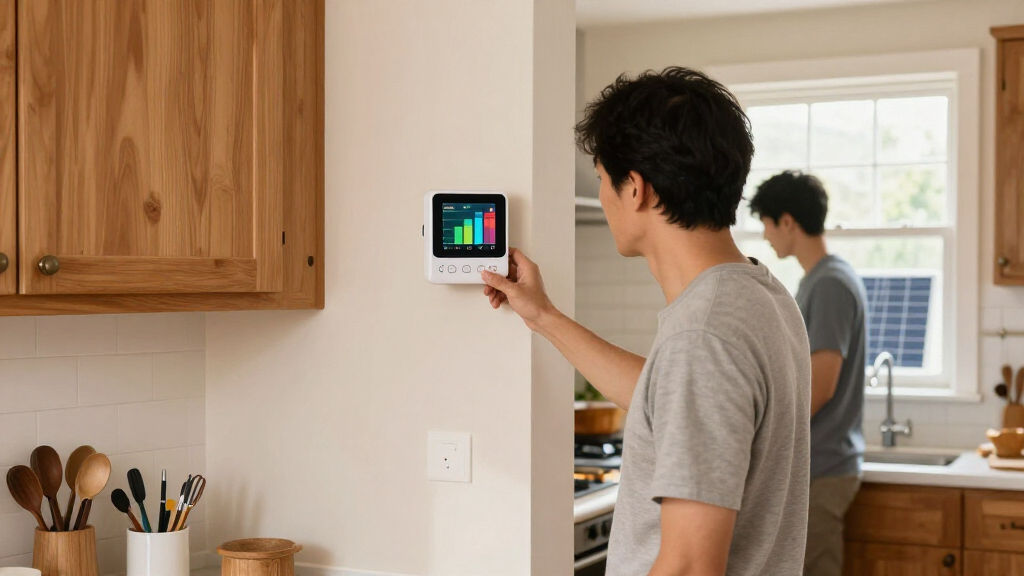
I ranked these monitors by how well their stated capabilities answer common buyer needs: whole-home visibility, circuit-level coverage, real-time tracking, smart-home integration, and suitability for grid-connected or off-grid systems. I also weighed practical fit, including sensor count, whether local control or open integrations are emphasized, and how clearly a product’s intended use differs from the others. A larger sensor count can reveal more branch circuits, but it is only useful if the panel and installation plan support those sensors.
The ranking favors options with a clear use case and a useful balance of monitoring scope and flexibility. The Emporia Vue 3 with 16 sensors leads as a broadly capable household pick; the Refoss EM16P earns a distinct place for open API and Home Assistant users; and Renogy ONE Core ranks for off-grid monitoring despite being a less direct fit for a conventional home panel. Versions with fewer sensors, specialized integrations, or overlapping features rank according to the buyers they serve best, not by feature count alone. I did not treat similar product names as proof of identical specifications, so buyers should verify exact model compatibility and included sensors before purchase.
| home energy monitor | Model | Supported systems |
|---|---|---|
| Refoss EM16P Smart Home Energy | — | — |
| Siemens Inhab Smart Home Energ | INHEM1216 | — |
| Emporia Vue 3 Home Energy Moni | EMV3A-2P-WH | Single phase, single-split phase, 2-wire, 3-wire, 3-phase, 4-wire Wye |
| Smart Home Energy Monitor with | — | — |
| Renogy ONE Core: All-in-one Of | — | — |
| Refoss Smart Home Energy Monit | — | Single-phase, split-phase, 3-phase 4-wire Wye |
| Emporia Vue 3 Home Energy Moni | EMV3A-2P-16 | Single-phase, single-split phase, and 2-wire; some 3-wire and 3-phase systems with an additional sensor |
| Meross Smart Home Energy Monit | EM16 | — |
| Emporia Vue 3 Home Energy Moni | EMV3A-2P-8 | Single-phase, single-split phase, and 2-wire; some 3-wire and 3-phase systems with an additional sensor |
| Meross Smart Home Energy Monit | EM16 | Single-phase 2-wire, single-split phase 3-wire, 3-phase 4-wire with earthed neutral |
Factors to Consider When Choosing Best Home Energy Monitors
Choosing a monitor starts with your electrical setup and what you want to learn, not with the longest feature list. These broader checks can help prevent buying a device that cannot cover your panel, does not fit your smart-home preferences, or reports more detail than you can use.
Match Sensor Count to Your Panel and Goals
Count the circuits you actually want to watch before choosing an 8-, 16-, or higher-coverage model. Some buyers only need to identify major loads such as heating, cooling, a water heater, or an electric vehicle charger; others want a fuller picture of individual circuits. A higher sensor count can support more detailed tracking, but it does not guarantee that every circuit can be monitored in every panel layout. Check the monitor’s sensor specifications and installation instructions against your panel before ordering. Also think ahead about whether you may add appliances or electrical circuits, since spare capacity can reduce the need to replace a monitor later.
Check Panel Compatibility and Installation Requirements
Home energy monitors that use current sensors are installed at the electrical panel, so the panel’s layout and available space matter. Do not assume two panels with the same nominal electrical service will have the same compatible arrangement. Review manufacturer guidance for the panel type, wiring, sensor placement, and any limits on the circuits that can be measured. Installation involves electrical equipment, and many homeowners should use a qualified electrician rather than treating setup as a routine smart-home task. Confirming installation needs early can prevent a feature-rich model from becoming a poor fit.
Decide How Much Smart-Home Control You Want
Monitoring and automation are related but separate jobs: a monitor can show energy use without giving you the integrations you want for automations. If you use Home Assistant or prefer custom integrations, check whether the exact model supports your setup and whether that support depends on an API, a local connection, or a cloud account. Local control may suit buyers who want fewer cloud dependencies, while app-centered monitoring may be simpler for people who want ready-made views. A common mistake is choosing by the phrase “smart home” without confirming which platforms and functions are supported. Verify the current compatibility details before making the monitor part of an automation plan.
Separate Grid-Connected Monitoring From Off-Grid Needs
A household panel monitor and an off-grid energy system monitor do not answer exactly the same questions. Grid-connected buyers often want to find which home circuits drive consumption; van, cabin, boat, and tiny-home owners may need battery and system status as a first priority. Solar generation, battery monitoring, and household circuit readings should not be treated as interchangeable capabilities. Make a list of the energy sources and storage components you need to track, then match that list to the product’s stated purpose. If your setup combines grid power, solar, and batteries, verify which flows the monitor can measure together rather than assuming one device covers the full system.
Choose Useful Detail Over More Data
Real-time readings can help reveal when large loads switch on, but frequent data is most useful when the app makes patterns understandable. Before buying, ask what decision you want the monitor to support: finding a costly appliance, checking a schedule, spotting an unusual load, or comparing energy use over time. Alerts and cost tracking can help, but their usefulness depends on configuration and accurate utility-rate information. Avoid expecting a circuit monitor to identify every appliance automatically; circuits may power more than one device. Start with a few high-impact questions, then choose the level of detail that helps answer them without adding needless setup.
Plan for Growth, Support, and Data Access
Think about what could change after installation: added circuits, solar equipment, a battery, or a move to another smart-home platform. A model with broader coverage or more flexible integrations may be worth choosing if those changes are realistic, but unused capacity is not automatically a benefit. Check how the manufacturer describes app access, data export, firmware support, warranty coverage, and any subscription requirements for the functions you care about. These details can affect the monitor’s usefulness long after installation. Keep a record of your panel layout and setup choices so troubleshooting or future changes are easier.
Frequently Asked Questions
Can I install a home energy monitor myself?
Most circuit-level monitors connect inside or at the electrical panel, so installation is not comparable to plugging in a smart outlet. The panel can contain dangerous electrical hazards even when a homeowner is careful, and product instructions may call for a qualified installer. Check the manufacturer’s installation requirements and local rules before buying. If you are not trained to work with electrical panels, hire a licensed electrician. Ask the installer to confirm sensor placement and circuit labeling so the readings are useful after setup.
Should I choose an 8-sensor or 16-sensor model?
Choose based on how many circuits you need to distinguish, not simply the number included. An 8-sensor version may be enough if you want to track a few major loads, while 16 sensors can provide more room for circuit-level investigation. The actual coverage also depends on your panel design and the monitor’s supported sensor configuration. Before deciding, list the loads you want to isolate and check whether they each have a dedicated circuit. If you expect to add equipment or want to investigate more loads over time, extra sensor capacity may be useful.
Do I need Home Assistant or local control?
No, not if your main goal is viewing household energy use in a manufacturer’s app. Home Assistant support and local control matter more when you want custom automations, data access, or reduced dependence on cloud services. Those capabilities can require more setup and technical upkeep than a basic monitoring workflow. Confirm whether the exact model supports the integrations and data functions you intend to use; product names alone are not enough. If you do not plan to build automations or use local data, prioritize straightforward monitoring and panel compatibility instead.
Will a home energy monitor identify which appliance is using power?
A circuit-level monitor reports activity on monitored circuits, but a circuit can serve multiple appliances, so readings do not always identify one device by name. Dedicated circuits for equipment such as an oven or water heater can make the source easier to interpret. For shared circuits, you may need to compare readings while switching appliances on and off, taking care not to interfere with essential equipment. A monitor can help narrow down patterns, but buyers should not assume every product offers automatic appliance recognition. Check the model’s app and measurement features if appliance-level identification is a main goal.
Is Renogy ONE Core suitable for a standard home electrical panel?
Renogy ONE Core is positioned for off-grid settings such as vans, cabins, boats, and tiny homes, with a focus that includes battery monitoring. That makes it a different kind of choice from the circuit-sensor monitors aimed at tracking household branch circuits. A standard home buyer should first confirm that the device measures the panel circuits and energy flows they want to see. If your setup includes batteries or off-grid equipment, its specialized role may be a better match. For a conventional home energy audit, compare it with the household-focused circuit monitors in this roundup.
Conclusion
For most grid-connected households, I recommend the Emporia Vue 3 with 16 circuit sensors as the best overall balance of circuit coverage and everyday monitoring. The best value for a smaller monitoring plan is the Emporia Vue 3 with 8 sensors, provided its coverage suits your panel and goals. Beginners should favor the model whose app, installation guidance, and support best match their comfort level; they should not pay for automation features they will not use. For a more specialized premium-style choice, consider the Siemens Inhab if its circuit-level approach and panel compatibility fit your home, and compare its exact requirements with the broader-purpose picks. Home Assistant users should look at the Refoss EM16P, buyers seeking local control at the Refoss 16-sensor model, and off-grid owners at Renogy ONE Core. Match the device to your panel, circuits, and desired data access before choosing.
Evergreen bestsellers Picks

Bose QuietComfort Ultra Headphones Gen 1, Lunar Blue

De'Longhi Classic Signature Espresso Machine with Adjustable Milk Frother

Roborock Q10 S5+ Robot Vacuum and Mop with Self-Emptying Station
As an affiliate, we earn on qualifying purchases.