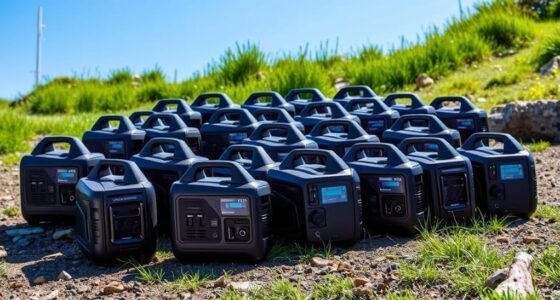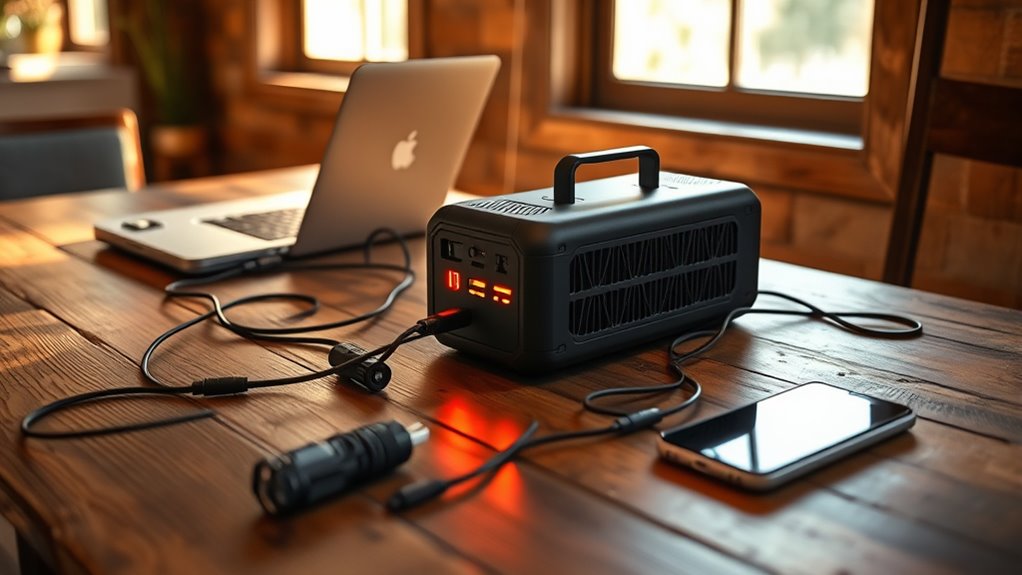

For a power station bundle for home backup, I would start with the BLUETTI Solar Generator Elite 400 for its substantial 3840Wh capacity and two included 200W panels. The Jackery Solar Generator 1000 v2 is a more manageable choice for essential appliances, while the UDPOWER S2400 bundle offers another higher-capacity setup with a solar panel included. The central tradeoff is between stored energy for longer outages and a smaller, easier-to-place unit that costs less to store and move. Solar panels can extend runtime, but their output depends on sunlight and setup conditions. Read on for the full breakdown by capacity, included charging gear, and backup use.

Get backup power and energy gear delivered free — and shop member deals
- Fast, free delivery on millions of items
- Access to Prime Big Deal Days deals on October 6–7
- Prime Video, Amazon Music and more included
Complete the kit


Key Takeaways
- The Elite 400 bundle has the largest stated battery capacity in this lineup at 3840Wh and includes two 200W panels, making it the clearest fit for buyers who put outage runtime ahead of portability.
- About 1kWh is the lineup’s practical middle ground: the Jackery 1000 v2, OUPES Mega 1, and two 1024Wh listings offer more reserve than compact units without moving into the Elite 400’s much larger capacity class.
- Included panels vary widely in usefulness. Bundles range from a 40W Jackery panel and a 120W UDPOWER panel to two 200W BLUETTI panels, so the word “bundle” alone does not tell you how quickly solar charging may replenish a battery.
- Power output and energy capacity solve different problems. A high wattage rating can help run a demanding device, but it does not mean the battery can power it for long; check both the load and the Wh capacity.
- Compact models are best for targeted backup, not whole-home coverage. The 192Wh DaranEner and 288Wh BLUETTI Elite 30 V2 suit smaller loads, while longer outages call for more stored energy and a plan to manage what stays plugged in.


| power station bundle for home backup | Weight | Capacity | Dimensions | Battery type |
|---|---|---|---|---|
| BLUETTI Solar Generator Elite | 86 lb | — | — | — |
| UDPOWER S2400 Portable Power S | 41 lb | — | — | — |
| BLUETTI Elite 30 V2 Portable P | 9.4 lb | — | 9.8 × 7 × 6.6 in | — |
| UDPOWER S1200 Portable Power S | 25.8 lb | — | — | — |
| UDPOWER S1200 1190Wh Solar Gen | 25.8 lb | — | — | — |
| Portable Power Station 500W | 18 lb | 519Wh | 11.57 × 7.95 × 7.95 in | Lithium |
| DaranEner Portable Power Stati | 5.73 lb | 192Wh | — | LiFePO4 |
| 1000W Portable Power Station 1 | 27.73 lb | 1024Wh | 18 × 12 × 16 in | LiFePO4 |
| 1000W Portable Power Station 1 | 27.73 lb | 1024Wh | 18 × 12 × 16 in | LiFePO4 |
| Jackery Solar Generator 300 wi | 12.9 lb | 292Wh | 15.43 × 9.92 × 11.89 in | LiFePO4 |
| OUPES Mega 1 Portable Power St | — | 1,024Wh | — | — |
| EBL 2400W Portable Power Stati | 55 pounds | 1,843.2Wh | 16.9 x 11.8 x 11 inches | LiFePO4 |
| LIBRIDS Portable Power Station | — | 640Wh | — | LiFePO4 |
| Jackery Solar Generator 1000 v | 23.8 pounds | 1,070Wh | 12.87 x 8.82 x 9.72 inches | — |
More Details on Our Top Picks
BLUETTI Solar Generator Elite 400 with 2x200W Solar Panels, 3840Wh
The BLUETTI Elite 400 bundle leads this group for buyers who need more than a short bridge through a blackout. Its 3840Wh capacity is substantially larger than the UDPOWER S2400’s 2083Wh, giving a household more room to run several lower-draw essentials or a higher-draw appliance for a limited stretch. The two included 200W panels also provide a ready-made solar option, while the ≤15ms UPS switchover helps keep connected equipment supplied when grid power drops. Its 2600W continuous output and 3900W lifting power add flexibility, but do not make it a whole-home generator; runtime still depends on what is connected. At 86 pounds, it is much less convenient to lift than the S2400, though the rolling trolley helps with repositioning. I’d choose it for capacity and bundled solar, not frequent carrying.
Pros:- 3840Wh capacity provides the most stored energy among these five picks.
- Two included 200W solar panels make solar recharging possible without sourcing a panel separately.
- 2600W continuous output and 3900W lifting power suit a wider range of loads than the smaller Elite 30 V2.
- ≤15ms UPS backup supports quick switchover for connected electronics.
Cons:- At 86 pounds, it is difficult to lift and move without using its trolley.
- A full charge may take up to 19 hours under the stated charging conditions.
- Its high capacity and output still cannot promise extended runtime for power-hungry appliances.
Best for: Households seeking a high-capacity, solar-ready backup for essential appliances and electronics during longer outages.
Not ideal for: Buyers who need a light unit for stairs, frequent transport, or backup for an entire home’s large appliances.
- Battery capacity:3840Wh
- Continuous output:2600W
- Lifting power:3900W
- Battery chemistry:LiFePO4
- Solar panels included:2 × 200W
- UPS switchover:≤15ms
- Outlets:9
- Weight:86 lb
Our verdict“Choose the Elite 400 bundle if stored energy and included solar panels matter more than a light, easy-to-carry design.”
UDPOWER S2400 Portable Power Station Bundle with 210W Solar Panel
The UDPOWER S2400 bundle is the practical pick when quick recovery between outages matters as much as stored energy. Its 2083Wh LiFePO4 battery is smaller than the BLUETTI Elite 400’s 3840Wh reserve, but the stated 1.3-hour AC recharge can get the S2400 back into service quickly when grid power returns. That makes it a better fit for repeated, shorter interruptions than for long stretches without charging. The sub-0.01-second UPS switch is also the fastest stated transfer in this group, useful for electronics that should not lose power during a changeover. Six AC outlets and multiple USB ports support several devices at once. The included 210W panel is convenient, though solar input tops out at 440W and actual charging depends on sunlight. At 41 pounds, it is far easier to move than the Elite 400, but still not a lightweight carry.
Pros:- Stated 1.3-hour AC recharge helps restore backup readiness quickly when grid power is available.
- 2083Wh capacity and 2400W rated output support a range of household and RV loads.
- Sub-0.01-second UPS switchover is suited to sensitive connected electronics.
- Includes a 210W solar panel and accepts up to 440W solar input.
Cons:- Its capacity is substantially lower than the BLUETTI Elite 400’s, limiting extended outage runtime.
- The 41-pound unit is cumbersome for frequent carrying.
- Solar recharge speed depends on sunlight, and the included panel is below the unit’s maximum solar input.
Best for: Home users who can recharge from AC between outages and want a fast-recharging unit with UPS support and a starter solar panel.
Not ideal for: Households needing the longest possible off-grid runtime or buyers who expect the included 210W panel to recharge the battery quickly in all conditions.
- Battery capacity:2083Wh
- Surge output:3000W
- Battery chemistry:LiFePO4
- AC outlets:6
- Solar input:Up to 440W
- Included solar panel:210W
- Weight:41 lb
Our verdict“Pick the S2400 bundle if fast AC recharging and quick UPS transfer matter more than the longest reserve.”
BLUETTI Elite 30 V2 Portable Power Station 288Wh 600W LFP Solar Generator
The BLUETTI Elite 30 V2 earns its place as the compact option, not as a substitute for a large home-backup battery. At 288Wh and 9.4 pounds, it is much easier to store or carry than the UDPOWER S1200, but its reserve is a small fraction of that model’s 1190Wh. That tradeoff suits buyers who mainly want to keep phones, a laptop, lights, or other modest loads running through a brief interruption. The 600W continuous output and 1500W surge rating add some flexibility, while ≤10ms UPS backup can help protect connected electronics during a power cut. It supports several charging modes and 140W PD charging, but solar charging requires a compatible panel that is not included here. I would skip it as the household’s only outage source if you need appliance runtime.
Pros:- At 9.4 pounds, it is far easier to store and carry than the UDPOWER S1200.
- ≤10ms UPS backup supports connected electronics during a grid interruption.
- 600W continuous output with 1500W surge gives it more headroom than many tiny device-only banks.
- 140W PD charging and multiple charging modes support flexible device recharging.
Cons:- The 288Wh capacity is too limited for extended home backup or sustained appliance use.
- A compatible solar panel is required for solar charging and is not included in the listed bundle.
- Its compact capacity is a clear step down from the S1200 and S2400 for outage duration.
Best for: Apartment dwellers, remote workers, and travelers who need a small backup for communications and low-draw electronics.
Not ideal for: Families seeking extended outage coverage, solar-ready bundle buyers, or anyone expecting to run larger appliances for long.
- Battery capacity:288Wh
- Continuous output:600W
- Surge power:1500W
- Battery technology:LFP
- Weight:9.4 lb
- Dimensions:9.8 × 7 × 6.6 in
- Fast wall charge:380W
- UPS backup:≤10ms
Our verdict“Choose the Elite 30 V2 for portable backup of electronics, but not as your main source for household outage power.”
UDPOWER S1200 Portable Power Station 1200W (Surge 1800W), Max 400W Solar Input, UPS, UL2743, for Home RV Emergency, Pure Sine Wave
The UDPOWER S1200 standalone makes more sense for buyers who already own compatible solar panels or plan to charge mainly from AC. It pairs a 1200W pure sine wave output with a 400W maximum solar input, giving it useful flexibility for electronics and some household loads without the bulk of the BLUETTI Elite 400. Compared with the bundle version of the UDPOWER S1200, this listing does not include a solar panel, so buyers should account for that when planning off-grid recharging. Its 25.8-pound weight is manageable for occasional repositioning, but heavier than the Elite 30 V2 by a wide margin. The stated 1800W surge rating may help with brief startup demands, though it does not turn this into a high-capacity backup system. I’d choose it for a moderate load and an existing charging setup, not for long outages.
Pros:- 1200W pure sine wave output suits a range of household electronics and moderate loads.
- Up to 400W solar input allows panel expansion beyond the bundled 120W panel in the other S1200 listing.
- LiFePO4 battery is specified for more than 4,000 cycles.
- Five AC outlets and two USB-C PD ports support multiple connected devices.
Cons:- No solar panel is listed as included, unlike the UDPOWER S1200 1190Wh kit.
- The 25.8-pound weight is less convenient for frequent transport than the Elite 30 V2.
- Its 1200W output and unspecified capacity in the supplied data limit how confidently buyers can estimate appliance runtime.
Best for: RV owners or homeowners with compatible panels who want a mid-range output station without buying another solar panel.
Not ideal for: First-time solar buyers who want a complete panel-and-station kit, or households needing the longer reserve of the Elite 400.
- Continuous output:1200W
- Surge output:1800W
- Solar input:Up to 400W
- Battery chemistry:LiFePO4
- AC outlets:5
- USB-C PD ports:2
- Weight:25.8 lb
- Warranty:5 years
Our verdict“Buy this S1200 if you have a charging plan already and need moderate output rather than a ready-to-use solar bundle.”
UDPOWER S1200 1190Wh Solar Generator Kit with 120W Panel, 1200W Power Station for Home Backup RV Outdoor Emergency Power
The UDPOWER S1200 solar kit is the more convenient S1200 choice for buyers who want a panel in the box. Its 1190Wh LiFePO4 battery gives it far more stored energy than the BLUETTI Elite 30 V2, making it a more credible option for several household essentials during a short outage. The 120W foldable panel adds an off-grid charging route, but it is a modest panel for this battery size; recharging can take time and depends on usable sunlight. Compared with the standalone UDPOWER S1200, this kit trades the stated 400W maximum solar input for a clearly included panel and a specified capacity. Its 1200W continuous output can handle moderate loads, not every high-draw appliance or whole-home demand. The panel ships separately, so setup may not be immediate. I’d favor it when a bundled solar entry point matters more than fast solar recovery.
Pros:- 1190Wh capacity offers substantially more reserve than the compact BLUETTI Elite 30 V2.
- Includes a 120W foldable solar panel for an off-grid charging option.
- LiFePO4 battery and five-year station warranty support long-term backup use.
- Five AC outlets plus USB and car-port options can serve several device types.
Cons:- The 120W panel is modest for replenishing a 1190Wh battery quickly.
- The solar panel ships separately, delaying a complete setup.
- 1200W continuous output is not suited to every high-demand appliance.
Best for: First-time backup buyers who want a defined 1190Wh battery capacity and an included foldable panel for occasional solar charging.
Not ideal for: Households that need fast solar replenishment, high-wattage appliance support, or a kit ready to set up on arrival.
- Battery capacity:1190Wh
- Continuous output:1200W
- Starting output:1800W
- Battery chemistry:LiFePO4
- Included solar panel:120W foldable panel
- AC outlets:5
- Weight:25.8 lb
- Solar panel warranty:1 year
Our verdict“Choose this S1200 kit if you want a useful mid-capacity station with a panel included and can accept slower solar charging.”
Portable Power Station 500W, 519Wh Solar Generator Backup
I’d place this 519Wh model between the very small DaranEner 192Wh and the much larger 1024Wh units: it offers more stored energy for household essentials without moving into the 27.73-pound class. Its 500W output and AC, USB, DC, car, and wireless charging options suit phones, a router, lights, and other modest loads during a short outage. Recharging from a wall outlet, car, or compatible solar panel gives it more flexibility than a kit that depends on one input method.
The tradeoff is that 500W limits appliance choices, and the stated 6–9-hour recharge time is not especially quick. At 18 pounds, it is also less convenient to carry than the DaranEner. I’d choose it for a small set of backup devices, not as a substitute for a larger home-backup station; the solar panel is sold separately.
Pros:- 519Wh capacity offers more stored energy than the DaranEner 192Wh for a modest home-backup setup.
- Several connection types, including USB-C PD and wireless charging, support a mix of devices.
- Can recharge from a wall outlet, car, or solar source.
- Built-in battery management system is intended to protect the battery and connected devices.
Cons:- 500W rated output rules out many high-power appliances.
- At 18 pounds, it is heavier than the DaranEner compact option.
- Solar panel is not included, and wall recharge takes a stated 6–9 hours.
Best for: Households that want to keep phones, a router, lights, and other sub-500W essentials running from a mid-size battery.
Not ideal for: Buyers who need to run high-wattage appliances, want a solar panel included, or need a lightweight station for frequent carrying.
- Capacity:519Wh
- Battery type:Lithium
- Output ports:2 AC, 3 USB-A QC3.0, 1 USB-C PD, 2 DC, 1 car, wireless charger
- Recharge time:6–9 hours
- Weight:18 lb
- Dimensions:11.57 × 7.95 × 7.95 in
- AC voltage and frequency:110V, 60Hz
Our verdict“Choose this station for a flexible, mid-size backup supply for low-wattage essentials, but skip it if your outage plan depends on larger appliances.”
DaranEner Portable Power Station, 192Wh LiFePO4 Battery Backup Solar Generator
For a short outage plan built around communication devices and small electronics, I’d pick the DaranEner over the 519Wh Portable Power Station when easy carrying matters more than runtime. At 5.73 pounds, it is the most compact option in this group, while its LiFePO4 battery is rated for 3500+ cycles. Two 300W AC outlets, 60W USB-C PD, and QC3.0 USB-A ports let it handle several everyday devices, and the four-mode light adds practical emergency illumination.
Its modest 192Wh capacity means it is a small-device backup, not a way to keep household appliances running for long. The 300W AC limit also trails the 500W model and the 1000W stations. Solar input tops out at 60W, and the panel and car-charging cable are not included, so I’d treat solar replenishment as a slow supplement rather than a robust home-backup plan.
Pros:- 5.73-pound weight makes it easier to move or store than the larger stations.
- LiFePO4 battery is rated for more than 3500 cycles.
- 60W USB-C PD and multiple AC and USB-A outputs support several device types.
- Built-in four-mode LED flashlight adds emergency utility.
Cons:- 192Wh capacity provides much less stored energy than the 519Wh and 1024Wh alternatives.
- 300W AC output cannot run appliances that need more power.
- Solar input is limited to 60W, and solar panel and car-charging cables are not included.
Best for: Apartment residents or campers who want a lightweight reserve for phones, a laptop, lights, and other low-power devices.
Not ideal for: Households seeking extended outage coverage or power for appliances above 300W; its capacity and solar input are limited.
- Capacity:192Wh
- AC output:2 × 300W, 600W peak
- Battery type:LiFePO4
- Cycle life:3500+ cycles
- USB-C PD:60W
- USB-A:2 × 18W QC3.0
- Charging input:Up to 100W AC, up to 60W solar, car charger
- Weight:5.73 lb
- Built-in light:LED flashlight with 4 modes
Our verdict“Choose the DaranEner when low weight and long battery cycle life matter more than running time or appliance capacity.”
1000W Portable Power Station 1024Wh LiFePO4 for Outdoor & Home
This 1024Wh station is the stronger fit than the 519Wh Portable Power Station when a home-backup setup needs more stored energy and a higher output ceiling. Its 1000W continuous output and 2000W peak rating provide more headroom for compatible devices, while the LiFePO4 battery is suited to repeated use. Solar input up to 300W also gives buyers a more capable replenishment route than the DaranEner’s 60W limit.
That extra capacity comes with a real size and planning tradeoff: at 27.73 pounds, it is harder to move around, and a solar panel is not listed as included. The stated two-minute runtime at full load is a warning against treating peak output as sustained appliance power. I’d use it for a broader set of moderate loads, while buyers who need a ready-made solar bundle should compare it with the Jackery Solar Generator 300, which includes a 40W panel but has far less capacity.
Pros:- 1024Wh capacity is nearly double that of the 519Wh station in this batch.
- 1000W continuous and 2000W peak output offer more headroom than the compact options.
- LiFePO4 battery chemistry is designed for repeated charging and use.
- Solar input supports up to 300W, more than the DaranEner’s stated 60W limit.
Cons:- At 27.73 pounds, it is substantially less portable than the smaller stations.
- The listed full-load runtime is only two minutes, so maximum output is not a sustained-use target.
- Solar panel is not listed as included, limiting bundle readiness for off-grid recharging.
Best for: Households seeking a higher-capacity station for several moderate-power devices and willing to source a compatible solar panel separately.
Not ideal for: Buyers who need a lightweight carry-in unit, an included solar panel, or sustained operation at the full 1000W load.
- Capacity:1024Wh
- Continuous output:1000W
- Peak power:2000W
- Battery type:LiFePO4
- Solar input:Up to 300W
- Solar charging time:6–8 hours with a 200W solar panel
- Full-load runtime:2 minutes
- Weight:27.73 lb
- Dimensions:18 × 12 × 16 in
Our verdict“Choose this model for more battery capacity and output than compact stations provide, but plan around its weight and the need to source solar panels separately.”
1000W Portable Power Station 1024Wh LiFePO4 for Outdoor & Home
This second 1024Wh listing shares the same stated capacity, 1000W output, 27.73-pound weight, and two-minute full-load runtime as the other 1000W Portable Power Station in this batch. I’d separate it by its explicit maximum 300W solar input and stated uses for camping, RV, and home backup—helpful details for buyers planning a solar-supported outage kit. Against the Jackery Solar Generator 300, it offers much more battery capacity and output, but the Jackery bundle includes a 40W panel and is easier to carry.
The major caveat is that no solar panel is listed as included, and the supplied data does not identify detailed port counts or recharge times. Its weight also makes it better suited to a fixed backup spot than frequent relocation. Like its near-identical sibling, the two-minute full-load figure makes clear that 1000W should not be read as an extended runtime promise; I’d size expectations around moderate loads and confirm included accessories before buying.
Pros:- 1024Wh capacity provides substantially more stored energy than the DaranEner 192Wh.
- 1000W output and 2000W peak power give it more output headroom than the 500W model.
- LiFePO4 chemistry is specified for the battery.
- Maximum 300W solar input supports a higher-input solar setup than the DaranEner.
Cons:- At 27.73 pounds, it is less convenient to carry than the Jackery Solar Generator 300.
- The stated runtime at full load is only two minutes.
- Solar panel inclusion and detailed output-port specifications are not provided.
Best for: RV and home-backup buyers who prioritize a 1024Wh battery and plan to pair the station with a separately sourced solar panel.
Not ideal for: Shoppers who want a complete solar bundle, detailed port information, or sustained full-output operation without checking further product details.
- Capacity:1024Wh
- Output power:1000W
- Peak power:2000W
- Battery type:LiFePO4
- Maximum solar input:300W
- Full-load runtime:2 minutes
- Weight:27.73 lb
- Dimensions:18 × 12 × 16 in
- Recommended uses:Camping, emergency, RV, home backup
Our verdict“Choose this listing if you want a 1024Wh station for moderate home or RV loads and can confirm accessories and port details before purchase.”
Jackery Solar Generator 300 with 40W Solar Panel, 292Wh, 300W AC
The Jackery earns a distinct place here because it pairs a 292Wh station with a 40W solar panel, giving buyers a more complete small-scale bundle than the 519Wh model, whose panel is sold separately. Its 300W AC output and multiple connection types suit phones, lights, and other modest devices during a short outage, while its stated 12.9-pound weight is easier to manage than either 1024Wh station. The listed LiFePO4 chemistry and 4,000-plus-cycle claim also support repeated use.
That convenience comes at the cost of capacity and output: the DaranEner is lighter and lists 192Wh, while the two 1024Wh options offer far more stored energy and power headroom. The included 40W panel is a modest charging source, not a fast way to refill the station for demanding backup use. I’d choose this bundle for basic device charging and solar access out of the box, not for running larger appliances or covering a long outage.
Pros:- Includes a 40W solar panel, unlike the standalone stations in this batch.
- 292Wh capacity and 300W output suit small devices and basic backup needs.
- 12.9-pound weight is easier to handle than the 1024Wh alternatives.
- Product description specifies LiFePO4 chemistry and more than 4,000 charge cycles.
Cons:- Capacity is much lower than either 1024Wh station.
- 300W rated output limits the appliances it can support.
- The included 40W panel is a modest solar input for replenishing the battery.
Best for: Buyers who want a compact emergency kit with a solar panel included for phones, lights, and other low-wattage devices.
Not ideal for: Households that need extended runtime, appliances above 300W, or faster solar replenishment than a 40W panel can provide.
- Capacity:292Wh
- AC output:300W
- Starting wattage:600W
- Battery type:LiFePO4
- Included solar panel:40W
- Weight:12.9 lb
- Dimensions:15.43 × 9.92 × 11.89 in
- Voltage:120V
- Warranty:3+2 years
Our verdict“Choose the Jackery bundle for a portable, solar-ready supply for small devices, but select a larger station for longer outages or higher-wattage loads.”
OUPES Mega 1 Portable Power Station 1024Wh 2000W (4500W Surge)
I’d choose the OUPES Mega 1 for a home backup setup where quick recharge and future capacity matter more than low weight. Its 1,024Wh battery can expand to 5,120Wh, giving it a growth path the fixed-capacity LIBRIDS 640Wh does not offer. A 2,000W continuous output and 4,500W surge rating provide more headroom for demanding appliances than the Jackery Solar Generator 1000 v2’s 1,500W output. The stated 0–80% recharge time of 36 minutes and under-20ms UPS response can help keep essential electronics running during an outage. The tradeoff is a heavy, bulky unit with limited runtime if you draw heavily from its base capacity; expansion also adds to the system footprint. I’d favor it for planned home backup, not frequent carry-around use.
Pros:- Expandable capacity up to 5,120Wh can support longer backup needs as the system grows.
- 2,000W continuous output and 4,500W surge rating offer more appliance headroom than the Jackery Solar Generator 1000 v2.
- Stated 0–80% recharge time of 36 minutes helps restore charge quickly between outages.
- Under-20ms UPS function and app control suit monitoring and backup for home electronics.
Cons:- Heavy, bulky construction makes it less convenient to move around or store in a tight space.
- The 1,024Wh base capacity can run down quickly under sustained high loads.
- Its advanced features and expansion path may be unnecessary for buyers with modest backup needs.
Best for: Households that want UPS-style backup for electronics now and the option to add capacity for longer outages later.
Not ideal for: Buyers who need a lightweight station for frequent carrying or a simple, low-cost setup that will power only small devices.
- Capacity:1,024Wh
- Continuous output:2,000W
- Surge output:4,500W
- Expandable capacity:Up to 5,120Wh
- Battery chemistry:Lithium iron phosphate (LiFePO4)
- UPS response:Under 20ms
- Recharge detail:0–80% in 36 minutes
- AC outlets:4
Our verdict“Choose the OUPES Mega 1 if rapid recharge, UPS backup, and expandable capacity matter more than portability.”
EBL 2400W Portable Power Station LiFePO4 Battery for Home Use
The EBL Acc2400 stands out here for combining 1,843.2Wh of capacity with 2,400W output, making it a stronger fit for running several household devices than the smaller OUPES Mega 1 at its base capacity. Its four AC outlets and mix of USB-C, USB-A, DC, car, and wireless charging connections make it easier to serve different devices from one station. The LiFePO4 battery rated for over 3,500 cycles is a practical match for a unit expected to see repeated use. Compared with the Jackery Solar Generator 1000 v2, the EBL offers more stored energy and AC output, but it weighs 55 pounds and lacks a solar panel in the listed bundle details. I’d pick it for a stationary backup corner, not for a setup that needs to move often.
Pros:- 1,843.2Wh capacity provides more stored energy than the OUPES Mega 1’s 1,024Wh base battery.
- 2,400W output and four AC outlets support multiple connected devices.
- Broad port selection includes 100W USB-C PD, wireless charging, DC, and car outputs.
- LiFePO4 battery is rated for over 3,500 charging cycles.
Cons:- At 55 pounds, it is cumbersome to move between rooms or take on the go.
- Its dimensions require dedicated storage space.
- The provided product details do not specify an included solar panel or a solar recharge rate.
Best for: Households wanting a high-capacity station with many connection types to support several devices during outages.
Not ideal for: People who need to carry their power station regularly, or buyers specifically seeking a clearly specified included solar panel.
- Capacity:1,843.2Wh
- Power output:2,400W
- Battery type:LiFePO4
- Charging cycles:Over 3,500
- Weight:55 pounds
- Dimensions:16.9 x 11.8 x 11 inches
- AC outlets:4
- Other ports and charging:2 USB-A, 2 USB-C, 1 car, 2 DC, wireless charging
Our verdict“Pick the EBL Acc2400 if you want substantial built-in capacity and many ports in a backup unit that can stay put.”
LIBRIDS Portable Power Station 640Wh, 1200W Surge, Solar Generator with 4 AC Outlets
I’d place the LIBRIDS in the compact essentials category: its 640Wh capacity is better suited to phones, routers, lights, and other modest loads than to keeping multiple large appliances running. That smaller reserve is a clear step down from the EBL Acc2400’s 1,843.2Wh, but it can make sense when the goal is a less imposing backup unit rather than extended household coverage. The listed four AC outlets and pure sine wave inverter give users flexibility for sensitive electronics, while its stated 1.5-hour charge time can help shorten readiness gaps. The listing gives a 1,200W surge figure but no continuous output rating, so I wouldn’t choose it for a load that needs a known sustained wattage. Weight is also unspecified, and the product is described as indoor use only.
Pros:- 640Wh capacity suits essential electronics and modest backup loads without aiming to replace a larger household system.
- Four AC outlets allow several devices to connect at once.
- Pure sine wave inverter is suitable for sensitive electronics.
- LiFePO4 battery is rated for over 4,000 cycles, and the listed warranty is five years.
Cons:- 640Wh is substantially less stored energy than the EBL Acc2400’s 1,843.2Wh.
- The provided specs give surge power but no continuous output rating, limiting load comparisons.
- Listed for indoor use only, with weight and portability details not specified.
Best for: Apartment dwellers or households backing up essential electronics and lights who prefer a smaller-capacity option over a large, heavy station.
Not ideal for: Buyers who need extended runtime for major appliances, outdoor wet-weather use, or a clearly stated continuous power rating.
- Capacity:640Wh
- Surge power:1,200W
- Battery type:LiFePO4
- Battery cycles:Over 4,000
- Recharge time:1.5 hours
- AC outlets:4
- Inverter type:Pure sine wave
- Warranty:5 years
Our verdict“Choose the LIBRIDS for modest indoor backup of electronics and lights, not for long outages or high-draw appliances.”
Jackery Solar Generator 1000 v2 with 200W Solar Panel, 1070Wh, 1500W AC
The Jackery Solar Generator 1000 v2 is the most carry-friendly choice in this group: at 23.8 pounds, it is far easier to move than the 55-pound EBL Acc2400. Its 1,070Wh capacity and 1,500W AC output suit essential devices and moderate loads, while the included 200W solar panel gives the bundle a defined path to recharge when grid power is unavailable. That panel makes it a more ready-made solar package than the OUPES Mega 1, whose listed strengths center on fast charging and expandable battery capacity. The tradeoff is less output headroom than either the OUPES or EBL, plus just three power outlets. The one-hour charging claim requires emergency mode, and the listed roughly two-hour runtime applies at full load, not every use case.
Pros:- At 23.8 pounds, it is much easier to move than the EBL Acc2400.
- The 1,070Wh battery provides useful capacity for essential devices and moderate loads.
- Included 200W solar panel creates a bundled solar-recharging option.
- 1,500W AC output and 3,000W starting wattage support loads with short startup surges.
Cons:- Its 1,500W output is lower than the EBL Acc2400’s 2,400W and the OUPES Mega 1’s 2,000W.
- Only three power outlets are listed, fewer than the four AC outlets on the EBL and LIBRIDS.
- The one-hour fast-charge figure requires emergency mode, and the listed two-hour runtime is at full load.
Best for: Buyers who want a comparatively light station bundled with a solar panel for essential home backup and portable use.
Not ideal for: Households needing high-wattage appliance support, long runtime at full load, or capacity expansion for extended outages.
- Capacity:1,070Wh
- AC output:1,500W
- Starting wattage:3,000W
- Solar panel:200W included
- Weight:23.8 pounds
- Dimensions:12.87 x 8.82 x 9.72 inches
- Power outlets:3
- Listed runtime:Approximately 2 hours
Our verdict“Choose the Jackery bundle if portability and an included solar panel matter more than high output or expandable capacity.”
How We Picked
I compared these options as backup bundles, not just portable batteries. The main criteria were stated battery capacity and AC output, whether solar panels are included and how much panel capacity is specified, and features that affect outage use, such as UPS support where listed. I also weighed ease of use, portability cues, battery chemistry where provided, and how clearly each listing describes its limits. Because specs and bundle contents differ, I treated unlisted details as unknown rather than assuming they were included.
The ranking favors products that pair useful stored energy with a credible path to recharge, then distinguishes them by who can make practical use of that combination. The 3840Wh BLUETTI bundle leads for larger backup needs; around-1kWh options rank well for more limited essential-load coverage; compact units rank lower for home backup because their smaller reserves run down sooner. A high output rating alone does not lift a product to the top, and an included small panel is not treated as equivalent to a larger solar array.
| power station bundle for home backup | Battery type |
|---|---|
| BLUETTI Solar Generator Elite | — |
| UDPOWER S2400 Portable Power S | — |
| BLUETTI Elite 30 V2 Portable P | — |
| UDPOWER S1200 Portable Power S | — |
| UDPOWER S1200 1190Wh Solar Gen | — |
| Portable Power Station 500W | Lithium |
| DaranEner Portable Power Stati | LiFePO4 |
| 1000W Portable Power Station 1 | LiFePO4 |
| 1000W Portable Power Station 1 | LiFePO4 |
| Jackery Solar Generator 300 wi | LiFePO4 |
| OUPES Mega 1 Portable Power St | — |
| EBL 2400W Portable Power Stati | LiFePO4 |
| LIBRIDS Portable Power Station | LiFePO4 |
| Jackery Solar Generator 1000 v | — |
Factors to Consider When Choosing Power Station Bundle For Home Backup
Before choosing, I would size the system around the outage you want to manage, not the biggest number on a product page. These broader checks can help prevent buying a unit that has plenty of output but too little stored energy, or a bundle whose panel adds little practical recharge capacity.
Size the Battery Around Runtime, Not Just Appliance Wattage
Make a short list of the devices you would keep running during an outage and estimate their watt-hours over your intended backup period. A refrigerator cycles, while a router may run continuously, so multiplying every device’s rated watts by the full outage duration can overstate some loads and understate others. A power station’s stated Wh capacity is not identical to usable energy at the outlet, since conversion losses and operating conditions reduce what reaches your devices. Leave a reserve rather than planning to drain the battery completely. The common mistake is to choose by AC watts alone: output tells you what a unit may support at once, not how long it will last. If you need multiple days of backup, favor greater capacity or a dependable recharge plan over a compact unit with a strong headline output.
Check Startup Loads and the Devices You Can Run Together
Some appliances draw more power briefly when their motors start than they use once running. Compare the station’s continuous AC output and surge rating with the appliance requirements, and check whether the surge figure is specified for a brief interval. Add the loads you expect to run at the same time; a station may support each device separately but not the combined demand. Heating appliances such as kettles and space heaters can consume a large share of available energy quickly, even when the station can power them. For home backup, I would prioritize communications, lighting, and essential low-draw equipment before trying to replicate normal household use. Avoid relying on an extension of the product’s maximum output rating unless the devices’ startup and running needs fit within it.
Treat Solar Panels as a Recharge Plan, Not a Runtime Guarantee
Included panel wattage gives a useful comparison point, but it does not promise that a battery will recharge at that rate. Sun angle, cloud cover, shade, panel placement, temperature, and the station’s solar input limit all affect real charging. Check the maximum solar input and supported panel configuration before planning to add more panels later. A small included panel may be handy for gradual replenishment but may not keep pace with household loads during a prolonged outage. A larger panel bundle can shorten charging time in favorable conditions, though it takes more space and needs sun exposure. If dependable backup matters more than off-grid recharging, plan how you will recharge from an available AC source as well.
Choose the Capacity Class That Matches Your Backup Plan
Compact stations are easier to store and move, but their limited energy is better suited to phones, lights, and brief support for a router than extended appliance use. Mid-capacity units around 1kWh can cover a more useful set of essential loads, though they still require careful load management during a long outage. Larger systems offer more stored energy, but their weight, footprint, charging needs, and storage location deserve attention before purchase. Think through where the station will sit and whether you can move it safely to a window or outdoor charging spot. A common buying error is paying for capacity that cannot be conveniently stored or recharged. Match the unit to the most likely outage length and the actual devices you plan to run.
Read the Bundle and Safety Details Before You Buy
Bundle names can obscure exactly what arrives, so confirm the panel model and wattage, cables, adapters, and any required accessories in the listing. Check whether the battery chemistry is stated, what warranty and service terms apply, and whether the product carries relevant safety certifications for your market. UPS support can matter if a device needs an automatic handoff during a power interruption, but confirm the transfer behavior and compatibility for that equipment. A portable power station is not a substitute for a permanently installed home battery or a transfer switch, and it should not be connected to household wiring through an improvised setup. Consider ventilation, indoor-use instructions, and a dry, accessible storage location. Clear documentation and usable support can matter more during an outage than an extra feature you may never use.
Frequently Asked Questions
Can a power station bundle run my refrigerator during an outage?
It may, but the answer depends on the refrigerator’s running draw, startup surge, duty cycle, and the station’s usable energy. Compare the refrigerator’s specifications with both the station’s continuous and surge output, then estimate energy use over the number of hours you need. A larger battery can support longer operation, but repeated door opening and a warm room can raise consumption. Test the setup before an outage if the manufacturer allows it, and keep other loads disconnected while the refrigerator is running. Do not assume a 1kWh station will provide a full day of refrigeration without checking the appliance’s actual consumption.
Is a bundle with an included solar panel enough for a multi-day outage?
Not necessarily. The panel’s rated wattage is only a starting point; available sun, shading, panel angle, and the station’s solar input limit determine how much energy it can harvest. You also need to account for energy used while the panel is charging the battery, especially if appliances run at the same time. A small panel can help extend backup, but it may replenish a battery slowly after substantial use. For several days without grid power, compare panel capacity with your expected daily consumption and consider how you will recharge in poor weather.
Should I choose a 1024Wh station or the 3840Wh BLUETTI bundle?
Choose around 1024Wh if your plan is to power selected essentials for a shorter period and you value a more moderate size. The BLUETTI bundle’s 3840Wh capacity is a stronger match for longer backup needs or a broader set of loads, and its two included 200W panels offer more specified solar capacity than the smaller-panel bundles listed here. That larger reserve does not remove the need to check output limits or manage consumption. It also means more storage space and a larger system to handle. Decide by estimating the energy your household needs during the outage window, rather than buying solely by capacity.
Does a power station with UPS support replace a home standby generator?
No. UPS support can help maintain power to compatible devices during an interruption, but a portable station has finite stored energy and output limits. A standby generator or installed home battery may support a different range of loads and operate through a household electrical setup designed for that purpose. Verify UPS transfer behavior, connection method, and compatibility with the equipment you want to protect. Do not connect a portable station to home wiring unless the manufacturer and a qualified electrician specify a safe, approved method. For medical equipment or other critical loads, consult the device maker and plan a backup with enough runtime.
Which features matter most if I have never owned a power station?
Start with clear capacity and output specifications, simple charging options, and a bundle that states exactly which panels and cables are included. A beginner may get more practical value from a manageable mid-capacity unit than from a large system whose setup and storage are awkward. Check that the devices you intend to power fit the station’s continuous output and that the battery has enough energy for the expected runtime. Practice charging it and connecting priority devices before an outage, and learn any limits in the manual. If you need automatic backup for a sensitive device, confirm UPS behavior rather than relying on the label alone.
Conclusion
For the broadest home-backup capacity in this group, I recommend the BLUETTI Solar Generator Elite 400 bundle as best overall, especially for buyers who can accommodate its larger setup and want 3840Wh plus two 200W panels. The UDPOWER S2400 bundle is a strong alternative for shoppers seeking a higher-capacity station with a panel included, while the Jackery Solar Generator 1000 v2 is a sensible mid-capacity choice for essential loads and a more contained setup. For best value, I would compare the two 1024Wh options and the UDPOWER S1200 kit by their confirmed bundle contents, output needs, and charging plan rather than assuming one is cheaper or better from its name. Beginners with modest needs can start with the Jackery Solar Generator 300 or BLUETTI Elite 30 V2, knowing their smaller batteries suit targeted backup rather than long outages. For specific needs, choose the OUPES Mega 1 when its stated 2000W output fits your load, the Elite 400 for more stored energy, or a compact model when portability matters more than runtime.
Halloween Picks
halloween
As an affiliate, we earn on qualifying purchases.