A solar generator with USB-C can charge phones and compatible laptops directly, but port output, battery capacity, and solar charging speed vary widely. My best overall pick is the EcoFlow Delta 3 Classic for its 1024Wh capacity and included 220W panel, while the Jackery Explorer 300 suits lighter trips and the Jackery HomePower 3600 Plus is the larger-capacity choice for home backup. The main tradeoff is portability versus runtime: compact units are easier to carry but have less stored energy, while bigger models are heavier and need more time or panel area to recharge. USB-C wattage also matters, since a port that charges a phone well may not meet a laptop’s needs. Read on for the full breakdown and a guide to choosing the right fit.

Get backup power and energy gear delivered free with Prime
- Fast, free delivery on millions of items
- Prime Video, Amazon Music and more included
- Member-only deals all year
Complete the kit


Key Takeaways
- The EcoFlow Delta 3 Classic pairs 1024Wh of storage with a 220W panel, making it a balanced option for buyers who want meaningful capacity and included solar charging.
- The compact Jackery Explorer 300 and GRECELL 330W prioritize portability; they suit small-device charging better than long runtimes for power-hungry equipment.
- Two entries each repeat the 1000W 1024Wh power station and BROWEY 1600W model, so the lineup offers fewer distinct configurations than its 12 entries suggest.
- Solar panels bundled with a generator differ substantially in rated output, from small 30W and 40W panels to 200W panels, affecting how quickly buyers can replenish stored energy in good sunlight.
- Capacity and AC output do not tell the whole USB-C story; buyers still need to confirm USB-C wattage and whether the port supports the charging needs of their specific devices.
| GRECELL Portable Power Station 330W, 230.88Wh Solar Generator |  | Best Compact USB-C Pick | Capacity: 230.88Wh | AC output: 330W continuous, 600W surge | USB-C: 60W PD | VIEW ON AMAZON | See Our Full Breakdown |
| 1000W Portable Power Station 1024Wh LiFePO4 for Outdoor & Home |  | Best Capacity for USB-C-First Backup | Capacity: 1024Wh | Continuous output: 1000W | Battery type: LiFePO4 | VIEW ON AMAZON | See Our Full Breakdown |
| DaranEner 300W Portable Power Station with 30W Solar Panel |  | Best Lightweight USB-C Companion | Capacity: 192Wh | AC output: 300W, 600W surge | Battery type: LiFePO4 | VIEW ON AMAZON | See Our Full Breakdown |
| 1000W Portable Power Station 1024Wh LiFePO4 for Outdoor & Home |  | Best Clearly Specified USB-C for Home Backup | Capacity: 1024Wh | AC output: 1000W | Battery type: LiFePO4 | VIEW ON AMAZON | See Our Full Breakdown |
| Jackery HomePower 3600 Plus Portable Power Station with 2x200W Solar Panels |  | Best Premium High-Capacity System | Capacity: 3584Wh | AC output: 3600W; 7200W in parallel | Solar panels: 2 × 200W | VIEW ON AMAZON | See Our Full Breakdown |
| BROWEY 1600W Portable Power Station with Built-in Solar Panel |  | Best for Off-Grid Capacity | Power output: 1600W continuous; 3200W peak | Capacity: 1024Wh | Battery type: LiFePO4 | VIEW ON AMAZON | See Our Full Breakdown |
| Jackery Explorer 300 Portable Power Station, 292Wh |  | Best Compact USB-C Pick | Capacity: 292Wh | Weight: 7.5 lb | Outlets: 2 AC, 1 USB-C PD, 2 USB-A, 1 car port | VIEW ON AMAZON | See Our Full Breakdown |
| Jackery Solar Generator 300 with 40W Solar Panel |  | Best Small Solar Bundle | Capacity: 292Wh | Weight: 7.5 lb | USB-C PD: 100W | VIEW ON AMAZON | See Our Full Breakdown |
| Portable Solar Generator 300W with 60W Solar Panel | 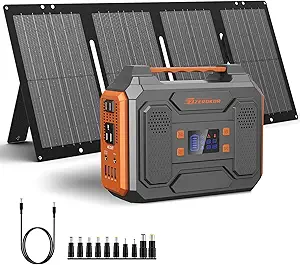 | Best Included-Panel Value | Power output: 300W | Solar panel: 60W monocrystalline | USB ports: 3 x 5V/3A; 1 x quick-charge USB, 5V/3A or 9V/2A | VIEW ON AMAZON | See Our Full Breakdown |
| BROWEY 1600W Portable Power Station with Built-in Solar Panel |  | Best High-Output USB-C Option | Capacity: 1024Wh | Power output: 1600W continuous; 3200W peak | Battery type: LiFePO4 | VIEW ON AMAZON | See Our Full Breakdown |
| EcoFlow Delta 3 Classic Solar Generator with 220W Solar Panel, 1024Wh |  | Best for Backup Power | Battery capacity: 1024Wh | Battery type: LiFePO4 | Continuous output: 1800W | VIEW ON AMAZON | See Our Full Breakdown |
| Jackery Solar Generator 1000 v2 with 200W Solar Panel, 1070Wh, 1500W AC |  | Best for Portable USB-C Power | Battery capacity: 1070Wh | Continuous AC output: 1500W | Starting wattage: 3000W | VIEW ON AMAZON | See Our Full Breakdown |
| solar generator with usbc | Capacity | Battery type | Weight |
|---|---|---|---|
| GRECELL Portable Power Station | 230.88Wh | — | — |
| 1000W Portable Power Station 1 | 1024Wh | LiFePO4 | 27.73 lbs |
| DaranEner 300W Portable Power | 192Wh | LiFePO4 | 5.84 lbs |
| 1000W Portable Power Station 1 | 1024Wh | LiFePO4 | 27.73 lbs |
| Jackery HomePower 3600 Plus Po | 3584Wh | LFP (LiFePO4) | — |
| BROWEY 1600W Portable Power St | 1024Wh | LiFePO4 | — |
| Jackery Explorer 300 Portable | 292Wh | — | 7.5 lb |
| Jackery Solar Generator 300 wi | 292Wh | — | 7.5 lb |
| Portable Solar Generator 300W | — | — | — |
| BROWEY 1600W Portable Power St | 1024Wh | LiFePO4 | — |
| EcoFlow Delta 3 Classic Solar | — | LiFePO4 | — |
| Jackery Solar Generator 1000 v | — | — | 23.8 pounds |
More Details on Our Top Picks
GRECELL Portable Power Station 330W, 230.88Wh Solar Generator
The GRECELL 330W is a sensible choice when USB-C laptop and phone charging matter more than running appliances. Its 60W USB-C PD output gives compatible devices a direct charging option, while the 230.88Wh battery and compact build suit day trips or short camps. Compared with the lighter DaranEner 300W, it offers more listed capacity and USB-C power, but DaranEner specifies a LiFePO4 battery and lower weight. GRECELL’s MPPT solar input and AC, car, and solar recharging give it useful flexibility, though the supplied data does not state a solar input limit or recharge time. Its 330W output is the hard boundary: skip it for high-draw appliances or multi-day backup without a way to recharge.
Pros:- 60W USB-C PD supports compatible laptops as well as phones and tablets.
- 230.88Wh capacity is more than the listed 192Wh DaranEner 300W.
- AC, car, and solar recharging offer several ways to replenish the battery.
- Built-in MPPT and upgraded protection features support solar use and battery safeguards.
Cons:- 330W continuous output rules out many high-power appliances.
- 230.88Wh may not cover extended trips or prolonged outages.
- Solar charging depends on available sunlight, and the provided data gives no solar input wattage.
Best for: Campers and mobile workers who need to top up a USB-C laptop, phone, and small accessories on short trips.
Not ideal for: Households seeking overnight appliance backup or power for devices rated above 330W; its capacity and output are limited for those jobs.
- Capacity:230.88Wh
- AC output:330W continuous, 600W surge
- USB-C:60W PD
- USB-A:18W QC
- Ports:AC outlet, USB-C PD, USB-A QC, car port
- Recharging:AC outlet, solar panel, car outlet
- Solar control:Built-in MPPT
- Battery protection:Overload, overcharge, and short-circuit protection
Our verdict“Choose the GRECELL for compact trips where 60W USB-C charging is the priority, not for sustained home backup.”
1000W Portable Power Station 1024Wh LiFePO4 for Outdoor & Home
This 1024Wh station is the capacity-led option here: it can support lights, a router, or a mini fridge longer than compact choices such as the GRECELL 330W. Its 1000W output also gives buyers more room for moderate loads, while the LiFePO4 battery is listed for 3,000+ cycles. That makes it a better fit for repeat outage use than a small weekend power bank. The USB-C details are not specified in the supplied product data, however, so I would verify the port type and wattage before choosing it specifically for laptop charging; the DaranEner 300W, by contrast, explicitly lists USB-C PD. At 27.73 pounds, this unit is portable between locations, but not an effortless carry. Solar input tops out at 300W, which constrains off-grid replenishment.
Pros:- 1024Wh capacity offers substantially more runtime than the GRECELL 230.88Wh.
- 1000W output supports a broader range of loads than compact 300–330W models.
- LiFePO4 battery is specified for 3000+ cycles.
- Solar compatible with up to 300W input.
Cons:- The supplied specifications do not state USB-C port type or charging wattage.
- At 27.73 pounds, it is less convenient to carry than the 5.84-pound DaranEner.
- Solar input is capped at 300W, limiting recharge speed with larger panel arrays.
Best for: Buyers who need a roughly 1kWh battery for routers, lights, and modest appliances, and can confirm the USB-C port meets their device needs.
Not ideal for: USB-C laptop users who need a clearly documented PD wattage, or shoppers wanting a light packable station for frequent carrying.
- Capacity:1024Wh
- Continuous output:1000W
- Battery type:LiFePO4
- Weight:27.73 lbs
- Solar input:Up to 300W
- Cycle life:3000+ cycles
- Color options:Gray, Blue, Yellow
Our verdict“Pick this model for capacity and moderate-load backup, but confirm its USB-C output before buying it as a laptop-charging station.”
DaranEner 300W Portable Power Station with 30W Solar Panel
At 5.84 pounds, the DaranEner is the easiest model in this group to carry regularly, and its listed outlets make it practical for a phone, tablet, and small electronics at camp. It has a LiFePO4 battery rated for 3,500+ charge cycles, a useful longevity distinction from the GRECELL 330W, which lists an upgraded BMS but no cycle-life figure. Its 192Wh capacity is smaller than GRECELL’s 230.88Wh, so this pick favors portability and battery chemistry over extra stored energy. The data lists a USB-C PD port but does not give its wattage, so buyers with a specific laptop should check compatibility. The included 30W solar panel offers a way to recharge away from outlets, though low sunlight can make replenishment slow.
Pros:- At 5.84 pounds, it is easier to carry than either 27.73-pound 1024Wh station.
- LiFePO4 battery is rated for 3500+ charge cycles.
- Multiple AC, USB-C, USB-A, car, and DC outlets allow several device types to connect.
- Includes a 30W solar panel and also supports AC and car input.
Cons:- 192Wh capacity is limited for extended trips or household backup.
- USB-C PD wattage is not specified in the supplied details.
- The 30W solar input can recharge slowly, particularly in weak sunlight.
Best for: Walk-in campers and emergency-kit owners who want a light LiFePO4 station for phones, small electronics, and occasional laptop charging.
Not ideal for: People who need long runtimes, strong solar replenishment, or a confirmed high-wattage USB-C output for demanding laptops.
- Capacity:192Wh
- AC output:300W, 600W surge
- Battery type:LiFePO4
- Weight:5.84 lbs
- USB-C ports:1 USB-C PD, 1 USB-C
- Other outlets:2 AC, 1 USB-A, 12V car socket, 2 DC5521
- Input power:Up to 90W AC, 60W car, 30W solar
- Charge cycles:3500+
Our verdict“Choose the DaranEner when low carry weight and a documented LiFePO4 cycle life matter more than capacity or fast solar charging.”
1000W Portable Power Station 1024Wh LiFePO4 for Outdoor & Home
This version of the 1024Wh station earns a distinct place because its port details explicitly list a 60W PD USB-C connection. That gives laptop and phone buyers more certainty than the near-identical B0GVJ6DVL9, whose supplied data does not specify USB-C output. Its 1000W output and LiFePO4 battery suit modest home backup or longer camping stays, while two 110V AC ports let separate appliances connect without an adapter. The tradeoff is bulk: at 27.73 pounds, it is far less packable than the DaranEner, even with a non-slip handle. Solar input is limited to 300W, so the large battery may take time to replenish off-grid. This is the more USB-C-transparent choice of the two similar-capacity models, not a lightweight travel pick.
Pros:- 60W PD USB-C output is explicitly specified for compatible laptops and devices.
- 1024Wh capacity and 1000W output suit longer use than compact stations such as the GRECELL.
- Two 110V AC ports support simultaneous appliance connections.
- LiFePO4 battery is listed with over 3000 cycles.
Cons:- 27.73-pound weight makes it cumbersome for frequent carrying.
- Solar input is limited to 300W, restricting off-grid recharge speed.
- The supplied data does not state a recharge time or USB-C port count beyond one.
Best for: Remote workers and households who want a 60W USB-C laptop port alongside a 1kWh-class battery for outages or campsite use.
Not ideal for: Backpackers, frequent stair carriers, or users who need faster-than-300W solar input to refill a large battery.
- Capacity:1024Wh
- AC output:1000W
- Battery type:LiFePO4
- USB-C:1 × 60W PD
- AC ports:2 × 110V
- USB-A ports:2
- Solar compatibility:Up to 300W
- Weight:27.73 lbs
Our verdict“Choose this model over the similar B0GVJ6DVL9 when a documented 60W USB-C port is a deciding requirement.”
Jackery HomePower 3600 Plus Portable Power Station with 2x200W Solar Panels
The Jackery HomePower 3600 Plus is in a different class from the smaller USB-C-focused stations: 3584Wh capacity and 3600W AC output are aimed at home essentials and substantial loads, not just charging a laptop at camp. Its two 200W solar panels are included, and the LFP battery is rated for 6,000 cycles; capacity can also expand for buyers building a larger backup setup. Compared with the 1024Wh stations, it offers far more stored energy and output, but it is a larger, more involved system rather than an easy grab-and-go option. The supplied specifications do not state USB-C port type or wattage, so this roundup’s defining USB-C need is not fully documented. Buyers focused on USB-C charging should verify the port details before choosing it over the explicitly specified 60W option.
Pros:- 3584Wh capacity and 3600W AC output support far larger loads than the 1024Wh stations.
- Includes two 200W solar panels for solar charging.
- LFP battery is rated for 6000 cycles and a 10-year lifespan.
- Expandable capacity and wheeled transport design suit a larger home-backup setup.
Cons:- USB-C port type and wattage are not specified in the supplied product data.
- Its size and system scale are excessive for buyers seeking a portable USB-C charger.
- Solar panels ship separately from the power station, which can complicate delivery.
Best for: Homeowners who need high-output backup for appliances and want an included solar array, with USB-C details verified separately.
Not ideal for: USB-C-first shoppers wanting a compact station or those who only need to charge personal electronics; its scale and output exceed that use.
- Capacity:3584Wh
- AC output:3600W; 7200W in parallel
- Solar panels:2 × 200W
- Battery type:LFP (LiFePO4)
- Cycle life:6000 cycles
- Lifespan:10 years
- Recharge time:2 hours AC+DC; 2.5 hours AC; 4 hours solar
- Expandability:Up to 21kWh per unit; 43kWh with multiple units
Our verdict“Choose the Jackery for substantial home backup and solar expansion, but confirm USB-C specifications if that feature is central to your purchase.”
BROWEY 1600W Portable Power Station with Built-in Solar Panel
For buyers who need USB-C alongside power for larger equipment, the BROWEY 1600W pairs a 100W USB-C PD port with a 1024Wh LiFePO4 battery and 1600W continuous output. That capacity and output make it a different class of option from the Jackery Explorer 300, which is much easier to carry but is limited to small devices and short runtimes. BROWEY’s built-in solar panels and MPPT controller reduce the need to pack a separate panel, while the stated three-hour charge to 80% offers a useful AC-charging benchmark. The tradeoff is size: this is better suited to a camp, RV, or backup spot than frequent hand-carrying. I’d also weigh the strong output against the lack of listed weight and dimensions, which makes portability harder to judge.
Pros:- 100W USB-C PD can serve compatible laptops and other higher-draw devices.
- 1024Wh capacity and 1600W continuous output support more than small electronics.
- Built-in solar panels with an MPPT controller avoid relying on a separately packed panel.
- LiFePO4 battery chemistry is suited to long-term use.
Cons:- The listed information does not provide weight or dimensions, making transport planning difficult.
- Its capacity and output suggest a bulkier choice than compact 300W-class stations.
- Solar charging speed and built-in panel wattage are not specified.
Best for: RV travelers and off-grid users who want a 100W USB-C port plus enough capacity to run larger gear.
Not ideal for: Backpackers and frequent movers who need a lightweight station with clearly specified dimensions and weight.
- Power output:1600W continuous; 3200W peak
- Capacity:1024Wh
- Battery type:LiFePO4
- USB-C:USB-C PD, 100W
- Ports:8 total; AC, DC, and USB-C PD
- Solar charging:Built-in solar panels with MPPT controller
- Charging time:3 hours to 80%
Our verdict“Choose the BROWEY if you want substantial off-grid capacity and 100W USB-C, and can accept a less portable form factor.”
Jackery Explorer 300 Portable Power Station, 292Wh
The Jackery Explorer 300 suits buyers who put portability ahead of long runtimes: at 7.5 lb, it is far easier to carry to a campsite than either BROWEY 1600W model. Its USB-C port and 292Wh capacity cover typical laptop, camera, and phone charging, while two AC outlets add flexibility for small plug-in gear. The compromise is output and solar setup. Its 300W rated limit rules out many appliances, and the listed package does not include a solar panel, unlike the Jackery Solar Generator 300 bundle with a 40W panel. The product information names LiFePO4 cells and more than 4,000 charge cycles, but USB-C wattage is not specified here, so buyers with a laptop that needs high-wattage charging should confirm compatibility before choosing it.
Pros:- 7.5 lb weight is practical for carrying between car, campsite, and work area.
- USB-C, USB-A, AC, and car outlets support a mix of small devices.
- 292Wh capacity fits short trips and device charging without the bulk of a large station.
- LiFePO4 chemistry is listed with over 4,000 charge cycles.
Cons:- 300W rated output is unsuitable for many appliances and higher-draw equipment.
- No solar panel is included in the supplied product details.
- USB-C PD wattage is not specified, leaving laptop compatibility less certain.
Best for: Campers and photographers who need a light station for phones, cameras, and modest laptop charging.
Not ideal for: Buyers running high-draw appliances or seeking an included solar panel and a confirmed high-wattage USB-C output.
- Capacity:292Wh
- Weight:7.5 lb
- Outlets:2 AC, 1 USB-C PD, 2 USB-A, 1 car port
- Peak surge:600W
- Charge cycles:Over 4,000
- Dimensions:9.1 x 5.2 x 7.8 in
- Battery cell type:LiFePO4
- Charge time:4 hours
Our verdict“Pick this Jackery for lightweight device charging, but choose the bundled Jackery Solar Generator 300 if you want a panel included.”
Jackery Solar Generator 300 with 40W Solar Panel
This bundle makes more sense than the standalone Jackery Explorer 300 for buyers who want a panel in the kit from the start. The station keeps the same 292Wh capacity and 7.5 lb weight, while its specified 100W USB-C PD port gives laptop users a clearer charging target than the other Explorer 300 listing, whose USB-C wattage is unstated. The included 40W panel offers a way to recharge away from an outlet, but the supplied data estimates 7.5 hours to reach 80% with that panel; the faster 2.8-hour figure applies to a 100W panel, not the included one. That modest solar input and 300W output make this a small-device travel kit, not a solution for appliances or extended cloudy trips.
Pros:- 100W USB-C PD is suitable for compatible laptops and other USB-C devices.
- 40W solar panel is included in the bundle description.
- Light 7.5 lb station is easy to move between a vehicle and campsite.
- LiFePO4 battery is listed with over 4,000 charge cycles.
Cons:- The included 40W panel is listed at 7.5 hours to charge the station to 80%.
- 300W output limits use to small electronics and low-draw equipment.
- Solar charging time depends on panel wattage and available sunlight.
Best for: Car campers and day-trip travelers who want a compact station, a stated 100W USB-C port, and a solar panel in the bundle.
Not ideal for: People who need fast solar replenishment from the included panel or enough output for larger appliances.
- Capacity:292Wh
- Weight:7.5 lb
- USB-C PD:100W
- AC outlets:2
- USB-A ports:2
- Car port:120W
- Solar panel:40W
- Solar charging time:80% in 7.5 hours with the 40W panel; 2.8 hours with a 100W panel
- Charge cycles:Over 4,000
Our verdict“Choose this bundle over the standalone Explorer 300 if you want a supplied panel and specified 100W USB-C, and can work within its modest solar speed and output.”
Portable Solar Generator 300W with 60W Solar Panel
For a buyer focused on getting a solar panel and basic charging connections together, this 300W station with a 60W panel is a simpler kit than buying the standalone Jackery Explorer 300 and sourcing a panel separately. Its listed package includes the panel, AC adapter, and car-charging accessories, plus three standard USB ports and one quick-charge USB port. But the USB details matter for this roundup: the supplied specs do not list USB-C, so I would not choose it when USB-C laptop charging is a requirement. Compared with the Jackery Solar Generator 300 bundle, it offers a higher-wattage included panel on paper, while giving less clarity about battery capacity and cell chemistry. The 300W ceiling and a junction box that is not waterproof also call for modest loads and dry storage.
Pros:- Includes a 60W monocrystalline solar panel and several charging accessories.
- AC, solar, and car charging provide multiple ways to replenish the station.
- Three standard USB ports and a quick-charge USB port cover common small-device needs.
- Listed battery protections include short-circuit, over-current, and overheating safeguards.
Cons:- No USB-C port is listed, limiting its fit for USB-C-first buyers.
- Battery capacity and chemistry are not supplied, making runtime and lifespan comparisons difficult.
- The junction box is not waterproof, and 300W output excludes higher-draw appliances.
Best for: Budget-conscious car campers who want a basic station and included 60W solar panel for small devices with USB-A charging.
Not ideal for: USB-C-dependent laptop users, buyers needing capacity figures, or anyone who may leave the panel connection exposed to wet weather.
- Power output:300W
- Solar panel:60W monocrystalline
- USB ports:3 x 5V/3A; 1 x quick-charge USB, 5V/3A or 9V/2A
- AC outlets:2, 300W max
- DC port:9V–12.6V, 10A max
- Conversion efficiency:20.5%
- Battery management:System included
- Included accessories:Solar panel, AC adapter, cigarette lighter adapter, car charging cable, user manual
Our verdict“Choose this kit for an included panel and basic USB-A charging, but skip it if USB-C or clearly stated battery capacity is non-negotiable.”
BROWEY 1600W Portable Power Station with Built-in Solar Panel
This BROWEY listing targets buyers who need 1600W continuous output without giving up a 100W USB-C PD connection. Its 1024Wh battery and built-in solar panels put it well beyond the compact Jackery Explorer 300 for running larger gear or supporting longer off-grid stays; the Jackery, by contrast, is easier to carry and better matched to phones, cameras, and short laptop sessions. The listed three-hour charge to 80% and multiple AC, car, and solar charging methods add flexibility, while LiFePO4 chemistry is specified at over 3,000 cycles. This model shares much of its stated specification set with the other BROWEY 1600W pick in this batch, so the provided information offers little basis to separate their real-world fit. Weight, dimensions, and built-in panel wattage are absent, which makes portability and solar expectations harder to plan.
Pros:- 100W USB-C PD supports compatible laptops and other higher-draw USB-C devices.
- 1024Wh capacity and 1600W output serve larger loads than compact 300W-class stations.
- Built-in solar panels and MPPT controller reduce reliance on a separate panel.
- LiFePO4 battery is listed with over 3,000 charge cycles.
Cons:- Weight and dimensions are not provided, so carrying and storage needs are unclear.
- Built-in solar panel wattage and solar recharge time are not specified.
- Its high capacity and output make it less suited to lightweight trips than the Jackery Explorer 300.
Best for: Off-grid users and RV owners who want high AC output, a 100W USB-C port, and built-in solar charging.
Not ideal for: Buyers who need a lightweight station, detailed portability measurements, or a compact USB-C-only travel power source.
- Capacity:1024Wh
- Power output:1600W continuous; 3200W peak
- Battery type:LiFePO4
- USB-C:USB-C PD, 100W
- Ports:8 total; AC, DC, and USB-C PD
- Solar charging:Built-in solar panels with MPPT controller
- Charging time:3 hours to 80%
- Charge cycles:Over 3,000
Our verdict“Pick this BROWEY for high-output off-grid use with 100W USB-C, but compare its missing size and solar details against your transport and recharge needs.”
EcoFlow Delta 3 Classic Solar Generator with 220W Solar Panel, 1024Wh
The EcoFlow Delta 3 Classic suits buyers who want USB-C charging alongside substantial backup capacity, though the supplied specs do not state the USB-C port’s output. Its 1024Wh battery and 1800W continuous AC output give it more headroom for larger appliances than the Jackery Solar Generator 1000 v2, which is rated at 1500W. Fast AC charging—0 to 80% in 45 minutes—and a 10ms UPS make the EcoFlow the stronger fit for quick replenishment and sensitive electronics during outages. The included 220W panel supports off-grid recharging, but the generator and panel ship separately, and the unit is relatively bulky. Compared with the Jackery’s lighter 23.8-pound build, this is a better match for a home backup spot or vehicle-based trips than frequent carrying.
Pros:- 1024Wh capacity supports longer power needs than compact stations.
- 1800W continuous output offers more AC appliance headroom than the Jackery Solar Generator 1000 v2.
- AC charging reaches 80% in 45 minutes.
- 10ms UPS support can help keep sensitive electronics powered through brief outages.
Cons:- Relatively heavy and bulky for frequent carrying.
- Generator and solar panel ship separately, which can complicate delivery and setup.
- USB-C output details are not provided, making it harder to match the port to high-draw devices.
Best for: Homeowners or vehicle campers who want a high-capacity backup battery, quick AC recharge, and UPS support for sensitive electronics.
Not ideal for: Backpackers and buyers who need a lightweight, easy-to-carry station; its listed dimensions and bulky design favor more stationary use.
- Battery capacity:1024Wh
- Battery type:LiFePO4
- Continuous output:1800W
- Surge power:3600W
- Expandable output:Up to 2600W with X-Boost
- AC charging:0–80% in 45 minutes
- Included solar panel:220W
- Dimensions:7.9 x 11.1 x 15.7 inches
- Warranty:5 years
Our verdict“Choose the EcoFlow if you value fast recharging, UPS support, and higher AC output over easy portability.”
Jackery Solar Generator 1000 v2 with 200W Solar Panel, 1070Wh, 1500W AC
The Jackery Solar Generator 1000 v2 is the more carry-friendly pick here, with a listed weight of 23.8 pounds and a 1070Wh battery for camping, road trips, or outage kits. Its USB-C port is identified among the available connections, although the supplied product details do not specify its wattage, so I would check port output against a laptop’s requirements before buying. Compared with the EcoFlow Delta 3 Classic, the Jackery gives up 300W of continuous AC output but has slightly more battery capacity and a smaller listed footprint. Its 1500W AC output and 3000W starting wattage suit many everyday loads; the EcoFlow is the stronger choice for higher-power appliances and UPS-backed electronics. The one-hour fast-charge claim requires emergency charging mode, and separate shipments for the station and panel can delay setup.
Pros:- 1070Wh capacity slightly exceeds the EcoFlow Delta 3 Classic’s 1024Wh.
- Listed weight of 23.8 pounds is suited to car camping and road trips.
- Includes a 200W solar panel and USB-C, USB-A, and AC connections.
- Fast charging can reach a one-hour recharge when emergency charging mode is enabled.
Cons:- 1500W continuous AC output is lower than the EcoFlow Delta 3 Classic’s 1800W.
- One-hour fast charging requires enabling emergency charging mode.
- Generator and solar panel ship separately, which may complicate setup.
Best for: Car campers and road-trip travelers who want a roughly 1kWh station with USB-C, a bundled 200W solar panel, and manageable carrying weight.
Not ideal for: Buyers powering higher-wattage appliances or needing a specified high-output USB-C connection; its AC rating is lower than the EcoFlow Delta 3 Classic, and USB-C wattage is not listed.
- Battery capacity:1070Wh
- Continuous AC output:1500W
- Starting wattage:3000W
- Included solar panel:200W
- Weight:23.8 pounds
- Dimensions:12.87 x 8.82 x 9.72 inches
- Outlets:3 total power outlets
- Fast charging:One-hour recharge in emergency charging mode
- Battery lifespan:LiFePO4 battery described as designed for over 10 years of use
Our verdict“Pick the Jackery for car camping and road trips when a lighter 1070Wh station matters more than the EcoFlow’s higher AC output.”

How We Picked
I ranked these options around the needs behind the search for a solar generator with USB-C: useful stored energy, device compatibility, practical solar charging, and a form factor that matches the job. Capacity and AC output help distinguish a small travel unit from a larger backup system, while included panel wattage shows how much solar capability comes in the package. I also weighed portability and flexibility, since a compact station can be more useful on a day trip even when a larger model stores more energy.
The order favors well-rounded capability over a single large number. The EcoFlow Delta 3 Classic leads for pairing 1024Wh with a 220W panel; compact Jackery and GRECELL models rank higher for light-duty portability than for extended backup. Larger Jackery and BROWEY options serve buyers with heavier loads, but their size and less portable form make them narrower picks. Product names and supplied specifications do not state USB-C port wattage for every model, so I treat USB-C performance as a detail buyers should verify rather than assume.
| solar generator with usbc | Battery type |
|---|---|
| GRECELL Portable Power Station | — |
| 1000W Portable Power Station 1 | LiFePO4 |
| DaranEner 300W Portable Power | LiFePO4 |
| 1000W Portable Power Station 1 | LiFePO4 |
| Jackery HomePower 3600 Plus Po | LFP (LiFePO4) |
| BROWEY 1600W Portable Power St | LiFePO4 |
| Jackery Explorer 300 Portable | — |
| Jackery Solar Generator 300 wi | — |
| Portable Solar Generator 300W | — |
| BROWEY 1600W Portable Power St | LiFePO4 |
| EcoFlow Delta 3 Classic Solar | LiFePO4 |
| Jackery Solar Generator 1000 v | — |
Factors to Consider When Choosing Solar Generator With Usbc
Choosing a solar generator with USB-C is less about finding the biggest capacity number and more about matching the ports, runtime, and recharging method to your equipment. These checks can help you avoid buying a compact unit for a long outage or paying for a large station when your main need is phone and laptop charging.
Check USB-C Output, Not Just the Port Label
USB-C describes a connector, not a guaranteed charging speed or feature set. Check the manufacturer’s listed USB-C output in watts and compare it with the input requirements for your laptop, tablet, or other device. Some computers charge slowly or may not charge at all from a low-output port, even if the cable fits. Also check whether the station supports USB Power Delivery and whether its listed output applies to one port or changes when several ports run at once. A USB-C cable’s rating matters too, so a suitable power station can still charge poorly with an inadequate cable. If the specifications do not clearly state output, treat that as a point to confirm before buying rather than relying on the product title.
Estimate Runtime From Your Actual Loads
Battery capacity in watt-hours gives a useful starting point, but it does not equal the energy every device will receive. Inverter losses and device charging behavior reduce the usable amount, especially when you power equipment through AC instead of a direct USB-C connection. List the devices you expect to run, their wattage, and how many hours you need them to operate. A phone-focused weekend may call for a compact station, while a laptop, lights, and small appliances used overnight point toward a much larger battery. Avoid sizing only for your usual day if the generator is also meant for outages. Leave headroom for cold weather, battery aging, and unexpected loads.
Treat Panel Wattage as a Recharge Clue, Not a Promise
A bundled panel makes solar charging easier to start, but its rated wattage is a laboratory figure rather than a guaranteed daily harvest. Sun angle, shade, cloud cover, panel temperature, and the generator’s solar input limit all affect charging. The roundup includes bundles with panels from 30W and 40W up to 200W, so the included panels are not interchangeable in practical recharge expectations. Check the station’s supported solar input and connector requirements before adding another panel; an incompatible connector or a panel beyond the input limit can waste capacity. If you rely on solar away from home, plan around several hours of good exposure and consider whether the panel is easy to position and carry. A larger battery paired with a small panel can take longer to refill than the capacity figure alone suggests.
Match AC Output to Appliances and USB-C to Electronics
High battery capacity and high output are separate specifications. A station may store enough energy for a long period but still lack the AC output to start a particular appliance. Motors and compressors can draw a brief surge above their normal running wattage, so check both continuous and surge output where available. For phones and laptops, direct USB-C charging usually avoids running the inverter and can reduce wasted energy. For household equipment, confirm the appliance’s startup demand and the station’s output limits before counting on it during an outage. Do not assume a model described for home use can power every home appliance.
Choose Portability for the Trips You Actually Take
A compact generator is easier to carry between a vehicle, campsite, and charging spot, but its smaller battery limits how many devices it can support for long. Larger stations are better suited to staying in one place, such as a home backup area or base camp, and may be awkward to move often. Think about the full setup: generator, panel, cables, and any accessories all need storage and transport. Built-in panels can reduce separate gear, but they may not provide the same positioning flexibility as a standalone panel. If you expect frequent travel, compare the weight and handles as carefully as the power rating. If the station will mostly stay put, capacity and expansion options may matter more.
Look Beyond the First Purchase to Lifespan and Support
Battery chemistry, cycle-life claims, warranty terms, and replacement or service options shape how useful a generator remains over time. LiFePO4 models often appeal to buyers who expect frequent cycling, though the exact lifespan depends on the manufacturer’s conditions and usage. Check whether the warranty covers the battery and accessories, and whether solar cables or adapters are included or need to be purchased separately. A bundled panel can simplify setup, but only if its connector and input range match the station. Also consider storage guidance and whether the battery management system has protections suited to regular use. Paying more makes sense when the added capacity, charging flexibility, or documented support addresses a real need rather than a rarely used feature.
Frequently Asked Questions
Can I assume every generator in this list can charge a laptop through USB-C?
No. A USB-C connector alone does not confirm that a station can supply enough power for a laptop or support USB Power Delivery. Check the output wattage for the specific USB-C port and compare it with your laptop’s charger requirements. If the listing does not give a clear figure, ask the manufacturer before buying. You can still use the AC outlet with your laptop’s original adapter, but that may use more stored energy than direct USB-C charging.
Is a 300W-class generator enough for a weekend away?
It can be enough for phones, cameras, and some small electronics if you use them sparingly and can recharge during the trip. It is less suited to multiple laptops, frequent AC use, or devices with high power draw over several days. Estimate the watt-hours your gear needs each day, then allow extra capacity for conversion losses and changing conditions. A compact station’s included small panel may help extend use in strong sunlight, but it should not be treated as a guaranteed full recharge each day.
Should I choose a larger battery or a higher-wattage solar panel?
Choose more battery capacity when you need to run devices through the night, handle cloudy periods, or store energy for later. Choose more panel capacity when you have reliable sun and need to replenish the station faster during the day. These parts need to work together: a large battery with a small panel can be slow to refill, while a powerful panel cannot make a small battery run longer between charges. Check the generator’s maximum solar input before choosing a panel, and size the battery around the longest period you expect to go without charging.
Can a solar generator run a refrigerator during a power outage?
Possibly, but you need to check both the refrigerator’s starting surge and its ongoing energy use. The generator’s continuous AC output must handle normal operation, and its surge rating must cover the brief startup demand. Battery capacity then determines how long it can run before recharging, with actual runtime affected by the fridge’s cycling and ambient temperature. A large-capacity model may be a better starting point than a compact travel unit, but confirm the appliance and generator specifications together before relying on the setup.
Do I need to buy a panel bundle, or can I add solar later?
A bundle can simplify compatibility and provide a ready-to-use starting setup, which helps buyers who do not already own panels or cables. Buying separately can make sense if you need a larger panel or want to choose one that suits your travel and storage needs. Before adding a panel later, confirm the generator’s input range, connector type, and supported voltage and current. Do not assume that any panel with a higher wattage will charge faster; the station’s input limit and real sunlight set the practical ceiling.
Conclusion
For the broadest balance of battery size and included solar charging, I recommend the EcoFlow Delta 3 Classic as best overall. The 1000W 1024Wh LiFePO4 power station is a value-oriented option for buyers prioritizing substantial storage, while the Jackery HomePower 3600 Plus is the best premium fit for those who need a much larger home-backup setup and can accommodate its size. Beginners with modest device loads can start with the Jackery Explorer 300; the GRECELL 330W is another compact alternative, while the DaranEner bundle includes a 30W panel. For a built-in-panel setup, compare the BROWEY 1600W against your portability needs; for a 1000Wh-class Jackery package, consider the Solar Generator 1000 v2. Before deciding, confirm each model’s USB-C output against your devices, since that specification is not supplied consistently across these listings.