
TL;DR

Get backup power and energy gear delivered free with Prime
- Fast, free delivery on millions of items
- Prime Video, Amazon Music and more included
- Member-only deals all year
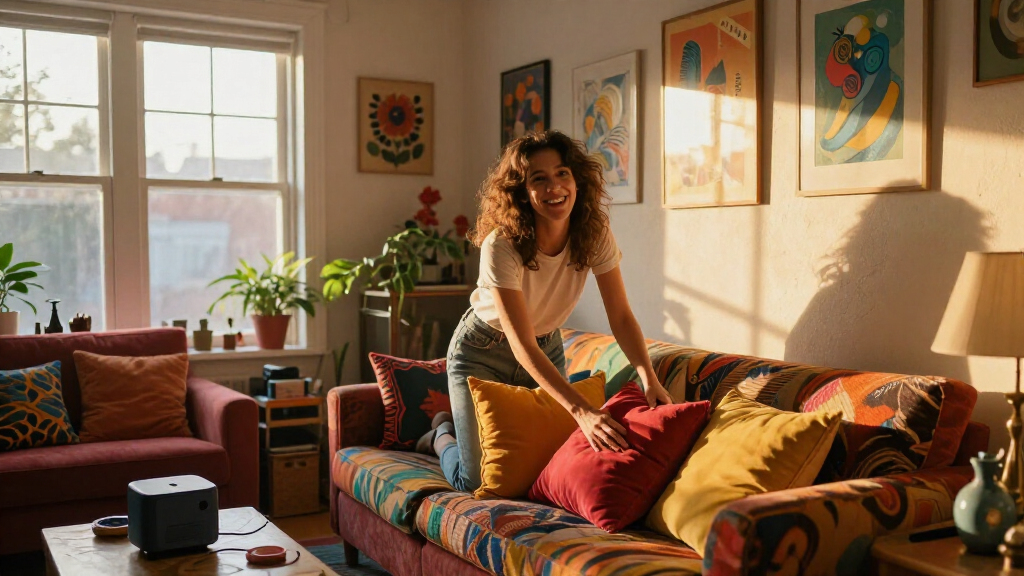
A woman who previously avoided color in her home decor has completely revamped her space into a lively, maximalist environment. This change reflects her personal growth and desire for a more expressive living space.
A woman who spent years avoiding color in her home has recently transformed her space into a vibrant, maximalist environment that significantly boosts her mood. The change marks a personal breakthrough after decades of preferring neutral tones, and it highlights a broader shift towards expressive interior design.
Jane Doe, a 45-year-old resident of Chicago, revealed that she was afraid of using color in her home decor for most of her adult life. Her previous spaces were dominated by whites, beiges, and muted tones, reflecting her desire for simplicity and fear of overwhelming her senses. In recent months, she decided to overhaul her living environment, incorporating bold colors, layered patterns, and an eclectic mix of decor items. The result is a maximalist aesthetic that she describes as a mood-booster and a reflection of her personality.
The transformation was driven by her desire to create a space that feels lively, inspiring, and uniquely hers. She collaborated with local artists and decorators to select vibrant paint hues, vintage furniture, and quirky accessories. Jane reports feeling more energized and creatively fulfilled since making these changes, and her home now serves as a sanctuary of self-expression.
Experts note that her shift aligns with broader trends in interior design, where maximalism and bold color palettes are gaining popularity among those seeking more personalized and emotionally resonant spaces. Jane’s story also highlights the importance of mental health and personal growth through environment.
Transforming Fear into Personal Expression
Jane’s story exemplifies how changing interior design can serve as a form of self-empowerment and emotional healing. Her willingness to embrace bold colors after years of avoidance underscores the potential for personal growth through environmental shifts. For readers, her experience demonstrates that it’s possible to redefine one’s space—and oneself—regardless of past fears or preferences. This case also reflects a larger cultural movement toward celebrating individuality and rejecting overly sanitized aesthetics in favor of authentic, lively environments.
vibrant paint colors for living room
As an affiliate, we earn on qualifying purchases.
As an affiliate, we earn on qualifying purchases.
Historical Trends in Interior Design and Personal Growth
Historically, interior design has oscillated between minimalism and maximalism, with the latter gaining renewed attention in recent years. The minimalist trend, characterized by neutral palettes and clutter-free spaces, was dominant for decades but has recently been challenged by a desire for more expressive environments. Personal stories like Jane’s illustrate a shift where individuals seek spaces that tell their stories through color, pattern, and eclectic decor. Psychologists also note that environments rich in color and texture can positively impact mood and mental health, contributing to the popularity of maximalist styles among younger generations.
Jane’s transformation reflects this broader cultural evolution, moving from a fear of color rooted in personal insecurity to embracing a maximalist aesthetic that celebrates vibrancy and individuality.
As an affiliate, we earn on qualifying purchases.
Remaining Questions About Long-Term Impact
It is not yet clear whether Jane’s maximalist approach will remain her preferred style long-term or if she plans further changes. Additionally, it’s uncertain how her transformation will influence others with similar fears or preferences, as personal reactions to such changes vary widely. Experts suggest that while her story is inspiring, individual comfort levels with bold design elements differ, and not everyone may find maximalism equally mood-boosting.
As an affiliate, we earn on qualifying purchases.
Future Plans for Personal and Home Development
Jane plans to continue experimenting with her decor, possibly adding more art and textures to her space. She also intends to share her journey through social media to inspire others hesitant about using color. Meanwhile, interior designers anticipate that her story will encourage more people to explore expressive interior styles, especially those seeking emotional benefits from their environments.
As an affiliate, we earn on qualifying purchases.
Key Questions
Why was Jane afraid of using color in her home?
Jane believed that color might be overwhelming or chaotic, reflecting her desire for simplicity and her fear of losing control over her environment.
What inspired her to change her home decor?
She wanted her living space to better reflect her personality and to create a more energizing environment, leading her to embrace maximalist design.
How has her mood changed since the transformation?
Jane reports feeling more energized, creative, and personally fulfilled since incorporating bold colors and eclectic decor into her home.
Is maximalism suitable for everyone?
Not necessarily; comfort with bold colors and clutter varies by individual. While some find it mood-boosting, others prefer calmer, minimalist spaces.
What advice does Jane have for others considering a similar change?
She recommends starting small, experimenting with different colors and accessories, and allowing oneself to grow into a more expressive style gradually.
Source: rss
Halloween Picks
halloween
As an affiliate, we earn on qualifying purchases.