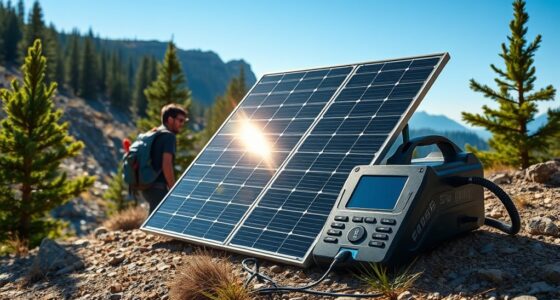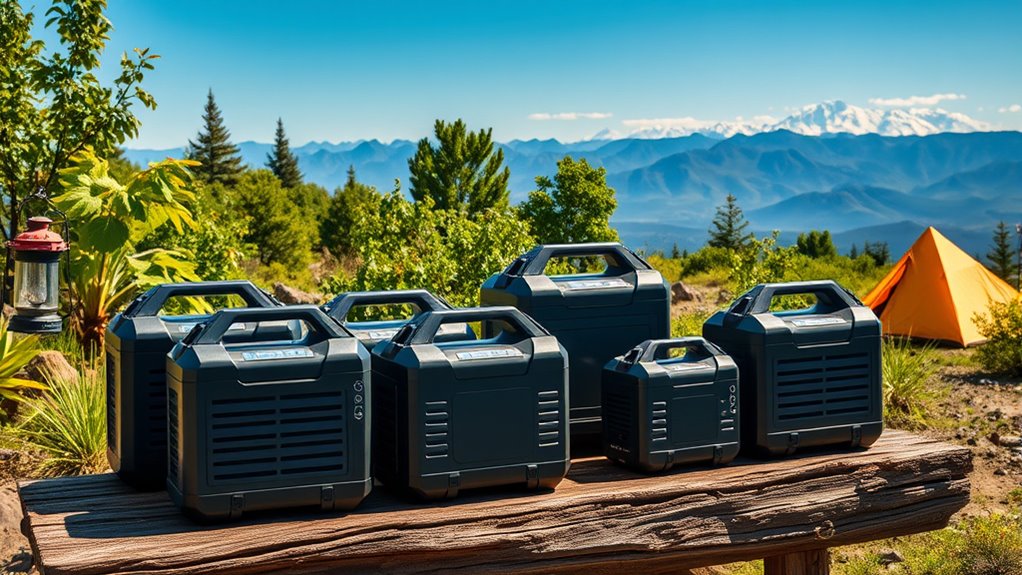
A solar generator with expandable capacity lets you add stored energy as your backup needs grow, but the systems here vary in base capacity, output, and what comes in the box. My best overall pick is the Jackery HomePower 3600 Plus with an extra battery and solar panels, since that bundle pairs a substantial starting capacity with an included expansion path. The Jackery Solar Generator 5000 Plus stands out for buyers who need higher output, while the Anker SOLIX C2000 Gen 2 is a more compact choice for camping and lighter loads. The main tradeoff is between buying a larger, more expandable home setup and choosing a smaller system that is easier to move. Read on for the full comparison, buying advice, and recommendations by use.

Get backup power and energy gear delivered free — and shop member deals
- Fast, free delivery on millions of items
- Access to Prime Big Deal Days deals on October 6–7
- Prime Video, Amazon Music and more included
Complete the kit


Key Takeaways
- Expansion is not the same as included capacity: the Jackery HomePower 3600 Plus bundle with an extra battery arrives with more storage than the station-only listing, so compare the complete kits rather than the model name alone.
- More AC output and more stored energy solve different problems: the Jackery Solar Generator 5000 Plus is the standout for higher-output demands, while 3,584Wh and 3,840Wh options focus on substantial energy reserves.
- Solar-panel bundles vary widely: listings include one, two, three, or four 200W panels—or no panels—so the package changes how quickly a buyer can begin recharging from sunlight.
- There is a clear portability tradeoff: the Anker SOLIX C2000 Gen 2’s 2,048Wh capacity suits lighter-duty and mobile use better than the larger 3,584–5,040Wh options, which favor longer backup.
- Several listings share a platform but differ in configuration: the Jackery HomePower 3600 Plus appears as a station-only unit and in multiple solar or extra-battery bundles, making the included accessories a key ranking factor.
| ABOK Ark3600 Portable Power Station with 3×200W Solar Panels |  | Best Overall for Expandable Home Backup | Starting capacity: 3,840Wh | Expandable capacity: Up to 11,520Wh | Peak power: Up to 7,200W | VIEW ON AMAZON | See Our Full Breakdown |
| Jackery Solar Generator 5000 Plus with 2x200W Panels, 5040Wh, 7200W AC Output |  | Best for Maximum Expansion | Starting capacity: 5,040Wh | Expandable capacity: Up to 60kWh | Continuous output: 7,200W | VIEW ON AMAZON | See Our Full Breakdown |
| Jackery HomePower 3600 Plus with 4x200W Solar Panels & Connectors, 3584Wh |  | Best Solar-Ready Bundle | Capacity: 3,584Wh | Output: 3,600W | Included solar panels: 4 × 200W | VIEW ON AMAZON | See Our Full Breakdown |
| Jackery HomePower 3600 Plus Power Station, 3584Wh, 3600W AC Output |  | Best for Building a Modular Backup System | Capacity: 3,584Wh | Expandable capacity: 21kWh or more | AC output: 3,600W | VIEW ON AMAZON | See Our Full Breakdown |
| Anker SOLIX C2000 Gen 2 Portable Power Station – 2,048 Wh, 2,400 W (Camping) |  | Best Compact Expandable Pick | Capacity: 2,048Wh | Expandable capacity: Up to 4kWh | Output: 2,400W | VIEW ON AMAZON | See Our Full Breakdown |
| Jackery HomePower 2000 Plus v2 with 2x200W Solar Panels, 2048Wh, 2400W Output |  | Best Compact Expandable Pick | Starting capacity: 2048Wh | Expandable capacity: Up to 12kWh | Output wattage: 2200W | VIEW ON AMAZON | See Our Full Breakdown |
| Jackery HomePower 3600 Plus Portable Power Station with Extra Battery & 2x200W Solar Panels |  | Best Ready-to-Expand Bundle | Starting capacity: 3584Wh | Expandable capacity: Up to 21kWh | Output: 3600W | VIEW ON AMAZON | See Our Full Breakdown |
| 3600W Portable Power Station PowerMax 3600 PE with 200W Solar Panel |  | Best for Fast Recharging and Many Connections | Battery capacity: 2016Wh | Peak output: 7200W | Maximum solar input: 1600W | VIEW ON AMAZON | See Our Full Breakdown |
| Jackery HomePower 3600 Plus with 2x200W Solar Panels, 3584Wh, 3600W AC Output |  | Best Solar-Ready Home Backup | Capacity: 3584Wh | Expandable capacity: Up to 21kWh | AC output: 3600W | VIEW ON AMAZON | See Our Full Breakdown |
| ABOK Ark3600 Portable Power Station 3600W with 3840Wh LiFePO4 Battery and 200W Solar Panel |  | Best for Maximum Starting Capacity | Battery capacity: 3840Wh | Expandable capacity: Up to 11520Wh | Peak power: 4500W | VIEW ON AMAZON | See Our Full Breakdown |
| ABOK Ark3600 Portable Power Station 3600W, 3840Wh LiFePO4 Battery |  | Best for Fast Recharging | Base capacity: 3,840Wh | Expandable capacity: Up to 11,520Wh | Peak power: 4,500W | VIEW ON AMAZON | See Our Full Breakdown |
| EcoFlow Portable Power Station 3600Wh DELTA Pro, 120V 3600W AC Output | 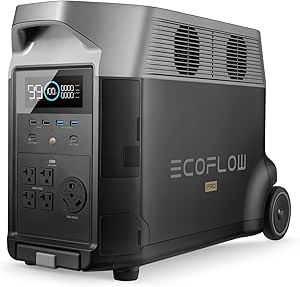 | Best for Maximum Expandability | Base capacity: 3,600Wh | Expandable capacity: Up to 25kWh with additional batteries or generators | AC output: 3,600W at 120V | VIEW ON AMAZON | See Our Full Breakdown |
| solar generator with expandable capacity | Weight | Expandable capacity | Included solar panels |
|---|---|---|---|
| ABOK Ark3600 Portable Power St | 92 lb | Up to 11,520Wh | 3 × 200W |
| Jackery Solar Generator 5000 P | 134.5 lb | Up to 60kWh | 2 × 200W |
| Jackery HomePower 3600 Plus wi | 77.2 lb | — | 4 × 200W |
| Jackery HomePower 3600 Plus Po | 77.2 lb | 21kWh or more | — |
| Anker SOLIX C2000 Gen 2 Portab | 41.7 lb | Up to 4kWh | — |
| Jackery HomePower 2000 Plus v2 | 40.6 pounds | Up to 12kWh | 2 × 200W |
| Jackery HomePower 3600 Plus Po | 77.2 pounds | Up to 21kWh | 2 × 200W |
| 3600W Portable Power Station P | 52 pounds | — | — |
| Jackery HomePower 3600 Plus wi | 77.2 pounds | Up to 21kWh | 2 × 200W |
| ABOK Ark3600 Portable Power St | 92 pounds | Up to 11520Wh | — |
| ABOK Ark3600 Portable Power St | 92 lb | Up to 11,520Wh | — |
| EcoFlow Portable Power Station | 99 lb | Up to 25kWh with additional batteries or generators | — |
More Details on Our Top Picks
ABOK Ark3600 Portable Power Station with 3×200W Solar Panels
The Ark3600 balances a substantial starting battery with a clear expansion path: its 3,840Wh capacity can grow to 11,520Wh, while 3,600W rated output covers many household essentials. That makes it a more manageable home-backup step than the Jackery Solar Generator 5000 Plus, which offers much greater expansion but weighs 134.5 pounds and targets larger installations. The Ark includes three 200W panels, giving buyers a ready-to-use solar starting point, and its 15 output ports add flexibility for RV gear, phones, and appliances.
The tradeoff is scale: 11,520Wh is well below the Jackery’s stated 60kWh ceiling, and the Ark itself weighs 92 pounds, so it is not an easy carry for frequent campsite moves. I’d choose it for buyers who want serious backup capacity without committing to a whole-home-sized system.
Pros:- Expandable from 3,840Wh to 11,520Wh for longer backup runtime.
- Three included 200W solar panels provide a substantial starting solar array.
- 3,600W rated output and 15 varied ports serve appliances and smaller devices.
- App monitoring and scheduled charging support remote oversight and off-peak use.
Cons:- At 92 pounds, the station is cumbersome to move without help.
- Its 11,520Wh maximum is far below the Jackery Solar Generator 5000 Plus expansion ceiling.
- The listed combined 3,500W input depends on suitable charging sources and conditions.
Best for: Homeowners or RV users who want a 3,840Wh starting system, included solar panels, and room to expand for longer outages.
Not ideal for: Buyers planning multi-day whole-home backup at very high loads, or campers who need a power station they can lift and move often.
- Starting capacity:3,840Wh
- Expandable capacity:Up to 11,520Wh
- Peak power:Up to 7,200W
- Battery chemistry:LiFePO4
- Included solar panels:3 × 200W
- Output ports:15
- Weight:92 lb
- Warranty:5 years
Our verdict“Choose the Ark3600 if you want a high-output home-backup base with included panels and meaningful, though not whole-home-scale, expansion.”
Jackery Solar Generator 5000 Plus with 2x200W Panels, 5040Wh, 7200W AC Output
The 5,040Wh starting capacity and expansion to 60kWh put the Jackery Solar Generator 5000 Plus in a different class from the smaller systems here. Its 7,200W continuous output and 14,400W surge rating are suited to demanding backup plans, while support for 240V broadens the range of home equipment it can serve. Compared with the ABOK Ark3600, this Jackery starts with more stored energy and offers a far higher stated expansion ceiling; it is the stronger fit when backup duration matters more than portability.
The catch is substantial physical scale: at 134.5 pounds, it is difficult to reposition, and the two included 200W panels are modest beside its stated 4,000W solar-input capability. I’d treat this as a stationary backup system, not a casual camping unit, and confirm the expansion and installation requirements before building around it.
Pros:- Expandable capacity reaches a stated 60kWh for extended backup planning.
- 7,200W continuous and 14,400W surge ratings suit demanding loads.
- Supports 120V and 240V output configurations.
- LiFePO4 battery and stated 4,000W solar-input capability support repeated use and faster solar charging.
Cons:- At 134.5 pounds, moving the station is a major practical challenge.
- Two included 200W panels provide only a small fraction of its 4,000W maximum solar input.
- Its scale and expansion potential may be excessive for camping or modest emergency needs.
Best for: Homeowners planning extended outage coverage who need high output, 240V support, and a path to very large battery storage.
Not ideal for: Campers, renters, or anyone who needs to carry the station regularly; its weight and whole-home orientation work against frequent transport.
- Starting capacity:5,040Wh
- Expandable capacity:Up to 60kWh
- Continuous output:7,200W
- Surge output:14,400W
- Battery chemistry:LiFePO4
- Solar input capability:Up to 4,000W
- Included solar panels:2 × 200W
- Output voltage:120V; supports 240V
- Weight:134.5 lb
Our verdict“Pick the 5000 Plus when very large expandable home backup outweighs the need for a portable, easy-to-position power station.”
Jackery HomePower 3600 Plus with 4x200W Solar Panels & Connectors, 3584Wh
This HomePower 3600 Plus bundle is the most ready-to-charge choice for buyers who want panels in the same package: it pairs a 3,584Wh expandable station with four 200W panels. That 800W of included panel capacity gives it a stronger solar starting setup than the ABOK Ark3600 bundle, which includes three 200W panels, although the ABOK begins with a slightly larger battery. At 3,600W output, the Jackery is positioned for household essentials rather than lightweight-only camping use.
Its luggage-style design and 77.2-pound weight make repositioning more practical than with the 134.5-pound Jackery 5000 Plus, but it is still heavy to lift. The listed 120V/240V operation requires parallel use, and solar connectors may arrive separately, so this bundle is not an instant whole-home setup. I’d favor it when panel readiness matters more than maximum expansion scale.
Pros:- Four included 200W panels provide 800W of solar panel capacity.
- 3,584Wh battery and 3,600W output suit substantial backup loads.
- Luggage-style design makes it easier to reposition than larger 5kWh-class systems.
- LFP battery is specified for 6,000 cycles and a 10-year lifespan.
Cons:- At 77.2 pounds, it remains heavy for routine carrying.
- Solar panels and connectors may ship separately, delaying a complete setup.
- The supplied information does not state a maximum expansion capacity.
Best for: Homeowners or RV users seeking a high-capacity expandable station bundled with enough solar panels to begin recharging off-grid.
Not ideal for: Buyers who want a light carry, a single-box whole-home installation, or an expansion ceiling as high as the Jackery 5000 Plus.
- Capacity:3,584Wh
- Output:3,600W
- Included solar panels:4 × 200W
- Battery chemistry:LFP
- Voltage:120V; 240V in parallel
- Weight:77.2 lb
- Dimensions:15.2 × 12.2 × 19.3 in
- Cycle life:6,000 cycles
- Lifespan:10 years
Our verdict“Choose this bundle if you want an expandable 3,600W station with a substantial included solar array and can handle its weight.”
Jackery HomePower 3600 Plus Power Station, 3584Wh, 3600W AC Output
This standalone HomePower 3600 Plus makes sense for buyers who already own compatible charging gear or want to build their setup in stages. Its 3,584Wh capacity, 3,600W output, and stated expansion beyond 21kWh give it room to grow without starting at the scale of the Jackery Solar Generator 5000 Plus. The listed AC, solar, and gas-generator charging options also provide several ways to restore power when sunlight is limited.
Unlike the panel bundle in this roundup, this version does not include solar panels, so the buyer must source a solar setup separately. At 77.2 pounds it is also not truly easy to carry, even with the listed wheels and telescopic handle. I’d choose it over the four-panel bundle when modular purchasing matters more than having solar hardware ready on arrival, but the product data differs on outlet count, so buyers should verify the exact configuration.
Pros:- Expandable to a stated 21kWh or more, supporting staged capacity growth.
- 3,600W output and 3,584Wh starting capacity cover substantial essential loads.
- AC, solar, and gas-generator charging offer alternatives during low-sun periods.
- Listed wheels and telescopic handle aid movement around a home.
Cons:- Solar panels are not included, unlike the four-panel HomePower bundle.
- The 77.2-pound weight makes lifting and vehicle loading difficult.
- Product details list differing outlet counts, so the exact port configuration should be confirmed.
Best for: Homeowners who already have compatible solar equipment or prefer to add panels and expansion components as their backup needs grow.
Not ideal for: Buyers who need included panels, a lightweight camping station, or a clearly specified outlet configuration before purchase.
- Capacity:3,584Wh
- Expandable capacity:21kWh or more
- AC output:3,600W
- Voltage:120V; 240V in parallel
- Battery chemistry:LFP
- Charging options:AC, solar, gas generator
- AC charging time:2.5 hours
- Weight:77.2 lb
- Cycle life:6,000 cycles
Our verdict“Choose the standalone HomePower 3600 Plus if you want to build an expandable backup system around equipment you already own.”
Anker SOLIX C2000 Gen 2 Portable Power Station – 2,048 Wh, 2,400 W (Camping)
The Anker SOLIX C2000 Gen 2 is the compact option for buyers who value manageable size over household-scale expansion. Its 2,048Wh battery grows to 4kWh, while the 41.7-pound body is far easier to load into an RV than the 92-pound ABOK Ark3600. That smaller footprint comes with a meaningful tradeoff: the Anker’s 2,400W output and 4kWh ceiling are better suited to camping, fridge backup, and selected essentials than prolonged whole-home coverage.
The listed 58-minute recharge and 9W standby draw are attractive for frequent use, though the description presents the same fast recharge claim for AC or solar without giving the conditions or solar input details. One AC outlet also limits direct connections compared with the Ark3600’s broad port selection. I’d pick this for mobile users who want add-on capacity, not buyers planning to expand into a large home battery bank.
Pros:- Expands from 2,048Wh to 4kWh with an additional battery.
- At 41.7 pounds, it is easier to transport than the larger 3,600W-class options.
- 9W standby draw helps limit stored-energy loss when the station remains on.
- Supports a stated 4,000W peak output and 800W alternator charging.
Cons:- The 4kWh maximum is modest beside the Ark3600 and Jackery HomePower expansion options.
- Only one AC outlet limits simultaneous direct appliance connections.
- The listed 58-minute solar recharge claim lacks input and operating-condition details.
Best for: RV travelers and campers who want a comparatively light LiFePO4 station with an expansion battery option for longer trips.
Not ideal for: Homeowners seeking multi-day whole-home backup, high expansion headroom, or several AC connections without a separate power strip.
- Capacity:2,048Wh
- Expandable capacity:Up to 4kWh
- Output:2,400W
- Peak output:4,000W
- Battery chemistry:LiFePO4
- Standby draw:9W
- Weight:41.7 lb
- AC outlets:1
- Alternator charging:About 3 hours with an 800W charger
Our verdict“Choose the C2000 Gen 2 if portability and a modest expansion step matter more than whole-home output or large storage capacity.”
Jackery HomePower 2000 Plus v2 with 2x200W Solar Panels, 2048Wh, 2400W Output
The HomePower 2000 Plus v2 is the most manageable starting point here for buyers who want expandable home backup without beginning with a large, heavy unit. Its 2048Wh battery can grow to up to 12kWh, giving you room to add storage as backup needs change. At 40.6 pounds, it is far easier to reposition than the 77.2-pound Jackery HomePower 3600 Plus or the 92-pound ABOK Ark3600.
The tradeoff is output: its listed 2200W rating is below the 3600W Jackery and ABOK models, so it is a weaker fit for running several demanding appliances at once. The included two 200W solar panels give buyers a ready solar setup, while the expandable battery makes this more than a basic portable station. I would skip it if high-wattage household loads matter more than portability.
Pros:- Expandable capacity up to 12kWh supports longer backup as needs grow.
- 40.6-pound weight is easier to move than the larger 3600W options in this lineup.
- Includes two 200W solar panels for a ready-to-use solar charging setup.
- LFP battery and five-year warranty are suited to recurring backup use.
Cons:- 2200W output limits use with multiple high-demand appliances.
- Reaching the maximum capacity requires adding compatible battery storage.
- The product description notes reported durability concerns.
Best for: Apartment dwellers, RV owners, and households seeking a lighter backup unit that can later expand for longer outages.
Not ideal for: Buyers who need to run multiple high-wattage appliances together or want the larger starting battery capacity of the Jackery HomePower 3600 Plus.
- Starting capacity:2048Wh
- Expandable capacity:Up to 12kWh
- Output wattage:2200W
- Battery type:LFP
- Included solar panels:2 × 200W
- Weight:40.6 pounds
- Dimensions:14.37 × 10.24 × 10.73 inches
- Warranty:5 years
Our verdict“Choose this Jackery if you value a lighter, solar-ready system with a clear expansion path more than 3600W appliance output.”
Jackery HomePower 3600 Plus Portable Power Station with Extra Battery & 2x200W Solar Panels
This bundle suits buyers who want high output and substantial expansion in a single purchase path. The 3584Wh starting capacity, 3600W output, and stated expansion to 21kWh give it more headroom for household backup than the HomePower 2000 Plus v2. It also includes an extra battery and two 200W solar panels, so the package is aimed at building a longer-runtime setup rather than just covering phones and lights.
Its wheels and telescopic handle help with repositioning, but 77.2 pounds is still a serious lift on stairs. The three listed outlets may also require careful load planning compared with the PowerMax 3600 PE, which lists 14 output ports. I’d favor this Jackery for expandable home use, but buyers who need many simultaneous connections or a lighter carry should compare alternatives before choosing it.
Pros:- 3584Wh starting capacity and expansion up to 21kWh support extended backup plans.
- 3600W output handles heavier household loads than the HomePower 2000 Plus v2.
- Bundle includes an extra battery and two 200W solar panels.
- Wheels and telescopic handle make floor-level movement easier.
Cons:- At 77.2 pounds, it remains difficult to lift despite its wheels and handle.
- Only three outlets are listed, which can constrain simultaneous connections.
- Its larger capacity and included accessories make it a more involved setup than a compact station.
Best for: Homeowners who want a high-output outage system with an included extra battery and solar panels, plus room to expand storage further.
Not ideal for: People who must carry a power station frequently, need many built-in outlets, or want a compact camping-focused unit.
- Starting capacity:3584Wh
- Expandable capacity:Up to 21kWh
- Output:3600W
- Voltage:120V; 240V in parallel
- Battery type:LFP
- Included solar panels:2 × 200W
- Weight:77.2 pounds
- Listed outlets:3
- Charging options:AC, solar, gas generator, hybrid AC+DC
Our verdict“Pick this bundle for a high-output Jackery system with substantial included capacity and solar gear, provided its weight and outlet count fit your setup.”
3600W Portable Power Station PowerMax 3600 PE with 200W Solar Panel
The PowerMax 3600 PE stands out for fast input charging and broad device connectivity, not for a documented battery-expansion path. It lists a 2016Wh battery, 3600W rated output, 1600W maximum solar input, and AC charging up to 1500W. That combination may appeal to buyers who can recharge quickly between outages or work sessions. Its 14 output ports also offer more connection options than the three listed for the Jackery HomePower 3600 Plus.
There is a key distinction for this roundup: the supplied product details do not state expandable capacity. That makes it less suitable for shoppers specifically seeking add-on battery growth than the 12kWh-capable Jackery HomePower 2000 Plus v2 or the 21kWh Jackery 3600 Plus. At 52 pounds it is lighter than those larger Jackery and ABOK options, but its expansion credentials remain unverified from the provided data.
Pros:- 3600W rated output offers substantial appliance and tool support.
- Up to 1500W AC charging and 1600W solar input support rapid replenishment.
- 14 listed output ports allow many devices to connect at once.
- At 52 pounds, it is lighter than the Jackery HomePower 3600 Plus and ABOK Ark3600.
Cons:- The supplied specifications do not confirm expandable battery capacity.
- 2016Wh is a smaller starting capacity than the 3584Wh Jackery HomePower 3600 Plus.
- The 200W included panel is modest relative to the stated 1600W maximum solar input.
Best for: Buyers prioritizing quick recharge, a wide selection of ports, and a mid-sized station for outages, road trips, or work away from outlets.
Not ideal for: Shoppers whose main requirement is a verified add-on battery system or a documented expandable capacity.
- Battery capacity:2016Wh
- Peak output:7200W
- Maximum solar input:1600W
- AC charging input:1500W
- Battery type:LiFePO4
- Output ports:14
- Weight:52 pounds
- Included solar panel:200W
Our verdict“Choose the PowerMax for fast charging and plentiful ports, but skip it if confirmed battery expansion is your main buying requirement.”
Jackery HomePower 3600 Plus with 2x200W Solar Panels, 3584Wh, 3600W AC Output
This HomePower 3600 Plus package is a strong fit for buyers who want large starting capacity and solar panels included without the extra battery bundle listed with the other 3600 Plus option. Its 3584Wh capacity and 3600W AC output offer far more starting energy and appliance headroom than the HomePower 2000 Plus v2. The provided product details also describe expansion to 21kWh, so the system can grow beyond its initial battery.
Compared with the PowerMax 3600 PE, this Jackery begins with a much larger stated battery and has a defined expansion target, though the PowerMax lists more output ports and faster AC charging details. The two 200W panels provide a practical solar starting point, but they do not match the four-panel package elsewhere in the roundup. At 77.2 pounds, this is better suited to a home backup location than frequent carrying.
Pros:- 3584Wh starting capacity offers more stored energy than the HomePower 2000 Plus v2.
- 3600W AC output supports higher-demand loads than the smaller Jackery model.
- Capacity is stated to expand up to 21kWh.
- Includes two 200W solar panels and supports multiple charging sources.
Cons:- 77.2-pound weight makes frequent lifting difficult.
- The two included panels provide less solar capacity than the four-panel HomePower bundle.
- No extra battery is listed in this package.
Best for: Homeowners who want a large, expandable battery with solar panels included and expect to keep the unit mostly in one location.
Not ideal for: Buyers needing a lighter portable station, the highest number of connections, or a bundle that includes an extra battery.
- Capacity:3584Wh
- Expandable capacity:Up to 21kWh
- AC output:3600W
- Voltage:120V; 240V in parallel
- Included solar panels:2 × 200W
- Weight:77.2 pounds
- Dimensions:15.2 × 12.2 × 19.3 inches
- Hybrid AC+DC recharge time:2 hours
Our verdict“Choose this package for a large, expandable Jackery with solar panels included, unless you need the extra battery or panel count of another bundle.”
ABOK Ark3600 Portable Power Station 3600W with 3840Wh LiFePO4 Battery and 200W Solar Panel
The ABOK Ark3600 offers the largest stated starting battery in this group at 3840Wh, with expansion up to 11520Wh. That gives it a meaningful capacity advantage over the 3584Wh Jackery HomePower 3600 Plus before add-on batteries enter the comparison. Its 3600W rated output and 15 output ports also suit households or crews running several devices, while AC, PV, and car charging provide flexibility across home and outdoor use.
The tradeoff is portability: at 92 pounds and more than 21 inches long, it is the hardest unit here to move and store. Its expansion ceiling is below the Jackery 3600 Plus’s stated 21kWh, so buyers focused on the largest possible future system may prefer that model. The included 200W solar panel is a starting point, not a high-input solar array. I’d choose the ABOK for more battery from day one, not for easy transport or maximum expansion.
Pros:- 3840Wh starting capacity is higher than the Jackery HomePower 3600 Plus’s 3584Wh.
- Expandable to 11520Wh for longer backup duration.
- 3600W rated output and 15 ports support multiple devices.
- LiFePO4 battery is specified for more than 4000 cycles and a 10-year lifespan.
Cons:- 92-pound weight makes transport and lifting difficult.
- 11520Wh expansion ceiling is below the Jackery HomePower 3600 Plus’s stated 21kWh.
- Its large dimensions take up more storage space than the lighter PowerMax 3600 PE.
Best for: Homeowners and outdoor crews who want a large starting battery, many device connections, and expansion to a larger backup system.
Not ideal for: People who need to carry a station regularly, have limited storage space, or want the highest stated expansion ceiling in this roundup.
- Battery capacity:3840Wh
- Expandable capacity:Up to 11520Wh
- Peak power:4500W
- Battery type:LiFePO4
- Output ports:15
- Weight:92 pounds
- Dimensions:21.6 × 12.6 × 18.5 inches
- Charging inputs:AC, PV, car
Our verdict“Pick the ABOK Ark3600 if you want the biggest starting battery and plentiful ports, and can accommodate its weight and size.”
ABOK Ark3600 Portable Power Station 3600W, 3840Wh LiFePO4 Battery
The Ark3600 pairs a 3,840Wh battery with expansion to 11,520Wh, making it a strong fit for buyers who want more stored energy than a single unit provides without stepping up to the EcoFlow DELTA Pro’s stated 25kWh expansion ceiling. Its advertised 1.29-hour AC-and-solar recharge can help shorten downtime when both charging sources are available; AC-only charging is listed at three hours. A 3,600W rated output and 15 ports also give it room to run several devices at once. The tradeoff is weight: at 92 pounds, it is not an easy carry, even with its wheels and telescoping handle. Choose it for rapid replenishment and substantial capacity, but skip it if maximum expansion matters more than charging speed.
Pros:- Expandable capacity reaches 11,520Wh from a 3,840Wh base.
- Advertised combined AC-and-solar charging time is 1.29 hours.
- 3,600W rated output and 15 ports support multiple loads.
- LiFePO4 battery is specified for over 4,000 cycles, with wheels and a telescoping handle for moving it on level ground.
Cons:- At 92 pounds, it is heavy to lift or carry despite its wheels.
- Its stated maximum expansion is well below the EcoFlow DELTA Pro’s 25kWh.
- The 1.29-hour recharge claim depends on combined AC and solar input; the listed AC-only time is three hours.
Best for: Households or RV owners who want a high-capacity base unit, plan to add compatible expansion batteries, and can recharge with both AC and solar.
Not ideal for: Buyers who need the largest stated expandable system in this group or frequently lift their power station into a vehicle; the DELTA Pro lists expansion to 25kWh, and the Ark3600 weighs 92 pounds.
- Base capacity:3,840Wh
- Expandable capacity:Up to 11,520Wh
- Peak power:4,500W
- Battery chemistry and cycle life:LiFePO4; over 4,000 cycles
- Charging:AC input up to 1,500W; PV input up to 2,000W; listed combined AC and PV charge time of 1.29 hours
- Output ports:15
- Weight:92 lb
- Connectivity:Bluetooth app
Our verdict“Choose the Ark3600 if fast combined charging and expansion to 11,520Wh matter more than having the lineup’s highest stated capacity ceiling.”
EcoFlow Portable Power Station 3600Wh DELTA Pro, 120V 3600W AC Output
The DELTA Pro is the stronger choice for buyers whose plan depends on growing well beyond a single power station: its listed system capacity can reach 25kWh with additional batteries or generators. That ceiling gives it a different role from the ABOK Ark3600, which lists expansion to 11,520Wh and advertises a faster combined AC-and-solar recharge. The EcoFlow starts with 3,600Wh and lists a 1.8-hour fast-charge time, but reaching its full capacity requires compatible add-ons rather than the base unit alone. Its 99-pound weight also makes routine transport a two-person or wheeled job for many buyers. I’d shortlist it for home backup plans that may grow over time, not for campers prioritizing easy portability.
Pros:- Expansion path reaches a stated 25kWh with additional batteries or generators.
- 3,600Wh base capacity suits substantial backup needs.
- 15 outlets allow several devices to connect at once.
- Wi-Fi and Bluetooth connectivity provide monitoring options.
Cons:- At 99 pounds, it is cumbersome for frequent solo transport.
- Reaching the 25kWh capacity requires additional equipment.
- The listed 1.8-hour fast-charge time is slower than the Ark3600’s advertised 1.29-hour combined AC-and-solar charge.
Best for: Homeowners building a scalable backup setup who expect to add batteries or generators and want a stated expansion path up to 25kWh.
Not ideal for: Campers or van owners who move their power station often, and buyers who want a complete high-capacity system without purchasing additional batteries or generators.
- Base capacity:3,600Wh
- Expandable capacity:Up to 25kWh with additional batteries or generators
- AC output:3,600W at 120V
- Output wattage listed:4,500W
- Outlets:15
- Fast charging time:1.8 hours
- Weight:99 lb
- Dimensions:25 × 11.2 × 16.4 in
- Connectivity:Wi-Fi and Bluetooth
Our verdict“Pick the DELTA Pro if you want the clearest path to a much larger expandable home backup system and can accommodate its weight and add-on requirements.”

How We Picked
I ranked these 12 listings by how well they help a buyer build a useful expandable system, not by capacity alone. I compared stated battery capacity and AC output, whether the product listing includes solar panels or an extra battery, and how clearly the bundle supports a step-by-step setup. A larger battery can extend runtime, while stronger output can handle more demanding appliances; neither spec substitutes for the other.
I also weighed the practical tradeoffs between portability, included equipment, and growth potential. Bundles with panels or an extra battery rank ahead when they offer a clearer starting point, while station-only options remain relevant for shoppers who already own compatible charging equipment or want to choose accessories themselves. Similar listings are separated by their supplied kit and stated specs, and I avoid assuming expansion compatibility where the product details do not establish it.
Factors to Consider When Choosing Solar Generator With Expandable Capacity
Expandable capacity is useful only when the system fits your actual loads and the parts you can add later. I’d make the decision in this order: estimate energy use, check the expansion method, then compare charging and portability needs.
Separate runtime from appliance compatibility
Battery capacity, measured in watt-hours, gives a rough sense of how much energy a unit can store; AC output, measured in watts, limits what it can run at one time. List the devices you expect to power and note both their running wattage and any short startup surge, especially for motors and refrigerators. Then estimate how many hours each device will run, since a high-output station can still run out of stored energy quickly. A common mistake is choosing by the biggest wattage figure alone. If your priority is longer outages, favor storage and a defined battery expansion path; if it is running more demanding equipment, check output and surge specifications first.
Verify what “expandable” means for the exact model
Expandable systems may accept extra batteries, connect to other power stations, or offer no practical capacity add-on at all. Check the manufacturer’s compatibility list for the precise model and generation, then confirm whether the required cable or battery is included or sold separately. Do not assume that two products with similar names share the same expansion hardware. Also check the maximum supported capacity and whether adding batteries changes charging behavior or portability. Planning around a verified expansion ceiling helps avoid buying a base unit that cannot grow into the setup you need.
Compare the full bundle, not just the station name
Solar bundles can include very different panel counts, cables, connectors, and batteries even when the power station is nearly identical. Count the panels and check their combined rated wattage, then confirm that the kit has the cables needed to connect them. Panel wattage is a rating under favorable conditions, not a promise of all-day charging speed. A station-only package can make sense if you already own compatible panels, but it may leave a first-time buyer with extra components to source. Compare the complete setup you will need, rather than treating a panel bundle as automatically better value.
Match solar input to your recharge routine
Solar input determines how much panel power the station can accept, while weather, season, panel angle, and shade affect what you actually collect. Check the power station’s solar input limit and connector requirements before buying additional panels; excess panel capacity may not translate into faster charging if the unit cannot accept it. Think about whether you will recharge at a fixed home location or move panels around during camping trips. More panels can shorten recharge time in good conditions, but they add storage and setup work. If reliable recharge during a short daylight window matters, compare input limits and charging options alongside battery size.
Decide how much portability you are willing to give up
Higher-capacity stations and add-on batteries can support longer backup, but they also take up more space and are harder to move than compact options. Consider where the unit will sit, whether you need to carry it to a vehicle or campsite, and how easily you can store panels when not in use. A system that stays at home can prioritize capacity and expansion, while a camping setup may benefit more from manageable size and a simpler kit. Check product dimensions and weight for each component, not only the power station. Buying the largest base unit can be a poor fit if moving or storing it becomes a barrier to regular use.
Pay for growth you can use, not growth you may never need
An expandable system can spread spending over time, but only if you have a realistic plan for adding compatible batteries or panels. Estimate your likely loads during an outage and decide which devices must stay powered before paying for a larger base setup. If you only need occasional charging or short backup, a smaller station may be easier to handle and sufficient for the job. If outages are long or the system will serve as a home backup, a larger capacity ceiling can matter more than a compact starting price. Leave room in your plan for cables, panels, and battery accessories, which are easy to overlook when comparing station specifications.
Frequently Asked Questions
Should I buy a solar bundle or a station-only model?
A bundle is usually simpler if you are starting from scratch, since it can provide panels and connection hardware matched to the station. Still, panel count differs across these listings, and some packages include an extra battery while others do not. A station-only unit may suit you better if you already own compatible panels or want to choose a larger array separately. Check connector compatibility and the station’s solar input limit before relying on existing equipment. Compare the full list of included components against the setup you intend to build.
How much capacity do I need for a home outage?
Start with the devices you need to keep running and estimate their energy use over the outage period, rather than choosing a capacity based on household size alone. Add up watt-hours for the expected runtime, then allow for conversion losses and the fact that real-world solar charging varies. A refrigerator, lights, and communications equipment create a different demand from electric cooking or heating. Also check AC output and surge capacity to confirm the station can start the appliances you plan to use. If the estimate is uncertain, a compatible expansion path can offer more flexibility than buying a much larger unit without a load plan.
Can I add a battery later to any expandable solar generator?
No; expansion depends on the exact model’s supported batteries, connectors, and capacity limit. Similar product names do not prove that units use the same add-on equipment, particularly across model generations. Confirm compatibility in the manufacturer’s documentation and check whether expansion cables are included. It is also useful to compare the cost and physical size of the add-on battery with the base station before committing. If the listing does not identify a compatible expansion method, treat future capacity growth as unconfirmed.
Is a higher AC output more useful than a larger battery?
Neither specification is a substitute for the other. AC output tells you what loads the station can power at once, while battery capacity affects how long it can supply them. A high-output model with limited stored energy may run a demanding appliance but not for long; a high-capacity unit may last longer yet fail to support an appliance whose startup draw exceeds its limit. Check appliance running and surge wattage alongside estimated runtime. Choose based on the devices and duration you actually need, not the largest number on the product page.
Will the solar panels in a bundle fully recharge the station in one day?
Panel ratings alone cannot guarantee a full recharge within a day. Available sunlight, shade, panel orientation, season, and the station’s maximum solar input all affect charging time. A larger bundle can collect more energy in favorable conditions, but the power station may limit how much it accepts. Check the product’s solar input specifications and plan for variable weather if the system is for backup. For dependable use, compare solar charging with any available AC charging method rather than relying on a single sunny-day estimate.
Conclusion
For most buyers seeking expandable capacity, I’d start with the Jackery HomePower 3600 Plus bundle with an extra battery and solar panels: it offers a clear growth-oriented setup and more included equipment than the station-only listing. My best value direction is the ABOK Ark3600 with a 200W panel if its stated 3,840Wh capacity and 3,600W output fit your needs and you want a bundled starting point. For a premium, higher-output setup, the Jackery Solar Generator 5000 Plus is the standout; for beginners, a panel-included Jackery HomePower 3600 Plus kit is a more straightforward way to start than piecing together accessories. Choose the Anker SOLIX C2000 Gen 2 for a more compact camping-oriented system, and consider the EcoFlow DELTA Pro listing if you are comparing a 3,600Wh station for home backup. Before ordering, verify the exact expansion accessories, solar input limits, and package contents for the listing you select.
Fall Picks
fall essentials
As an affiliate, we earn on qualifying purchases.